Apologies to my readers as it’s been a while since I posted anything, but I have had quite a lot going on in the past few months, which I’ll explain briefly here – however as I am departing today (finally!) for a three-week trip to Japan, I promise to write a review of my trip with copious images and useful tips for anyone who wishes to go there once I return. (Apparently Japan is the top destination of 2024, though it’s actually been on the cards for me to go there for some time – not only as a bucket-list destination but because I’ve been researching and writing about Japan for some time now, so I really need to see and experience it for myself!). I will arrive in time for the famous sakura (cherry blossom) season – hopefully it will look as dreamy as in the pic used here!
Since the purpose of this trip is primarily for novel research (for those of you who don’t know or haven’t read my other blog posts mentioning this, I’ve spent the past 3+ years researching and writing a historical fiction novel – my first – set in early Edo-era Japan [roughly 30–35 years after the events chronicled in James Clavell’s epic novel Shogun – now the subject of an exciting new updated series available on Disney+]), I will be going to a few remote or off-the-beaten places as well as the classic ‘Golden Triangle’ (Tokyo–Kyoto–Osaka) favourite tourist spots.
While I had originally planned to travel on a ‘Shogun Trail’ tour with a group via operator Explore! and then go off to do my own travel exploration and research, this didn’t pan out as expected (all God’s perfect plans, I’m sure), so now I will be travelling solo for the entire trip, with a ‘self-guided itinerary’ provided by Australian company Gluten Free Tours Japan, which specialises in supplying bespoke tours including specially catered foodie treats for those with coeliac disease or who are highly gluten-intolerant as I am. It’s clearly a niche business, since gluten-free food is very hard to find in Japan – apparently coeliac disease is unheard of there.
My present 18-day itinerary looks like this: I will arrive in Tokyo after nearly 19 hours in a plane going via Hong Kong, stay for 5 nights to sightsee and meet fellow Japanese writer and dancer friends, etc, and include a day trip to UNESCO World Heritage site Nikko. I then plan to visit YWAM (Youth With A Mission) Tokyo for insight into how to pray for Japan and all that God has been doing there, as reading about and researching the dramatic persecutions of Christians (as seen in Martin Scorcese’s powerful 2016 film Silence) and the history of the church in Japan has inspired a desire to pray for a fresh move of God’s Spirit in this ‘land of the gods’ (although Buddhism is also quite popular and is also strongly rooted in Japan, most Japanese follow Shintoism – an indigenous religious belief and practice that includes ritual devotion to a multitude of kami or gods).
After this, I will head to Hakone for an overnight stay. A short trip from Tokyo, this is a beautiful mountainous area famous for its stunning views of Mt Fuji, red torii gate* proudly guarding Lake Ashinoko, volcanic hot springs (you can apparently get a black egg boiled in the volcanic crater at Owakaduni; not sure if I will have time for this though), traditional Japanese inns known as ryokans offering bathing in thermal onsens – a unique cultural must-do in Japan – and its historic association with the ancient Tōkaidō coastal footpath route that visiting daimyō (feudal lords) used in their annual pilgrimage (sankin-kotai) to pay tribute to the Shōgun at Edo (Tokyo), which I have written about and am keen to walk at least part of.
From Hakone and Odawara, I will then head on to Kyoto – the ancient imperial capital of Japan, famous for its well-preserved historical Gion district where modern-day geisha can be seen strolling the cobbled streets. It has many shrines and temples, including the famous, picturesque, gold-covered Kinkaju-ji Buddhist temple. I am particularly keen to visit the Arashiyama Bamboo Forest and relax on the charming Sagano Scenic Railway train while taking in the beautiful scenery, as well as to visit the Fushimi-Inari Taisha shrine with its long parade of brilliant vermillion torii gates, though am aware I will have to get there at the crack of dawn to beat the hordes of tourists at each of these spots, or alternatively go later in the evening. I hope too to experience a traditional tea ceremony and of course get professionally attired in a kimono, perhaps even get made up like a geisha too!
Next I will go to Osaka. As well as serving as my base for day trips to the well-preserved and visually stunning Himeji Castle and the ancient capital of Nara (known for its friendly, inquisitive deer that supposedly bow to you Japanese-style when you offer them crackers), I am looking forward to exploring this lively city’s vibrant gourmet food culture – particularly savouring gluten-free variations of popular dishes such as tempura, teppanyaki, okonomiyaki pancakes, ramen and soba noodles. I also hope to enjoy the salsa version of its equally vibrant nightlife scene by visiting the Shall We Dance Café, hopefully connecting with a few international salseros/as I know.
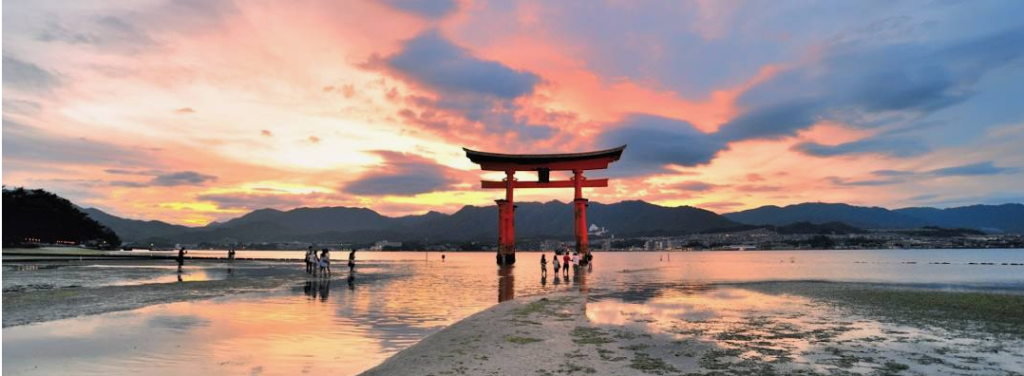
Next up is Miyajima – site of the iconic ‘floating’ torii gate set on the outskirts of Itsukushima Island – where I will be staying in a traditional ryokan that also offers a gluten-free version of a multi-course kaiseki meal. Thankfully the Japan Rail Pass I pre-purchased covers the ferry from Hiroshima to the island, which is also known for its ample deer population. I do wish I had more time to linger here, but I am excited about the overnight stay as an opportunity to see the torii at both sunset and sunrise. I also regret I won’t likely have time to visit the sites connected with the horrors of Hiroshima’s atomic past, but as that is more recent than the events in my novel, I will have to see it another time.
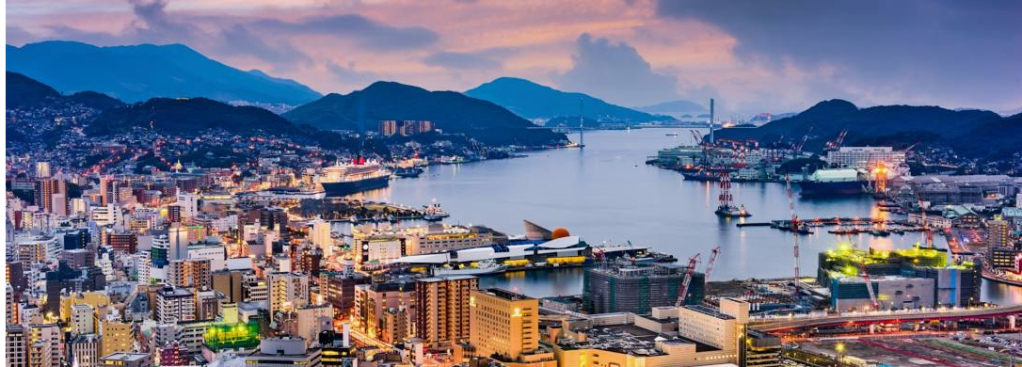
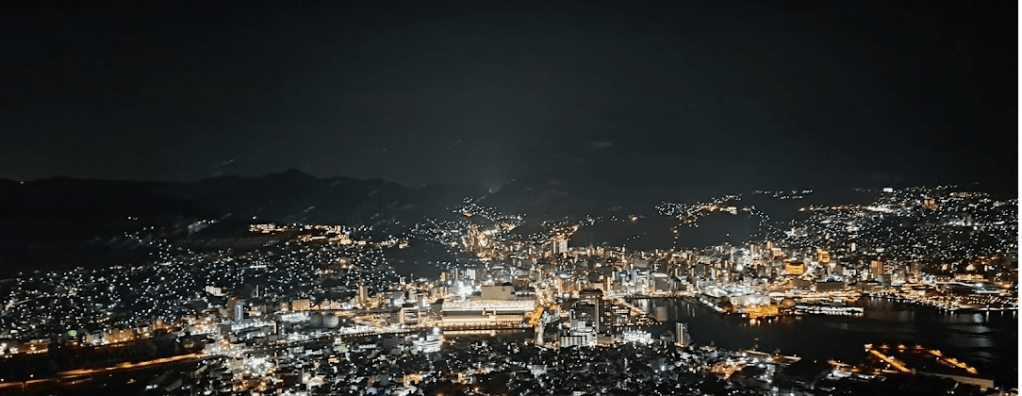
From there I head to Nagasaki to explore northwest Kyushu – Japan’s largest southern island. Since this is the area most connected with my novel, I felt it was important to have expert local knowledge, so have booked a highly recommended local guide named Yukihiro (Hero) of Go With Guide for four full-day research and sight-seeing trips specifically to fact-check and enhance the descriptions of events and locations featured in my novel. (Btw, I have now nearly completed the revised first draft, and next will enter the more thorough editing and revision stage of the whole manuscript – although I had hoped to complete this before I travelled, it has not been possible because of the amount of time required for planning [and then re-planning] this trip, as well as the recent unexpected death of my father in the US. However once we have lain his ashes to rest finally, and with the input from this trip, I do hope to finish it soon for my father’s sake, and will now certainly dedicate it to his memory).
Nagasaki’s famous harbour, evening and night views
I am particularly excited that Hero will be able to drive me all around Kyushu to visit many remote sites connected with the Shimabara Rebellion and Japan’s hidden Christians, as well as sites connected with the Dutch East India Company (VOC), since these are key subjects in my novel. These include Dejima – the artificial island in Nagasaki’s harbour where first the Portuguese and then the Dutch merchants were confined to for well over 200 years; the Dutch Trading Post in Hirado; and the myriad islands off the coast of Kyushu that offered shelter and hiding places to many Chinese merchant-pirates, shipwrecked Dutch and European travellers and thousands of exiled Japanese Christians.
Lastly, along with my ‘serious’ historical research, I am also looking forward to having fun at the Nikko Edo Wonderland Park and Huis ten Bosch in Sasebo – both of them modern-day recreations of Japanese and Dutch life in the time I am writing about. They may be a little kitsch, but I can’t really leave Japan without at least touching a bit of everything kawaii (cute), can I?
Well, I have to close this now as need to finish packing and get ready for my flight. Until I return to tell you all about it, sayonara!
*According to Wikipedia, a torii (Japanese: 鳥居, [to. ɾi. i]) is a traditional Japanese gate most commonly found at the entrance of or within a Shinto shrine, where it symbolically marks the transition from the mundane to the sacred and a spot where kami are welcomed and thought to travel through.
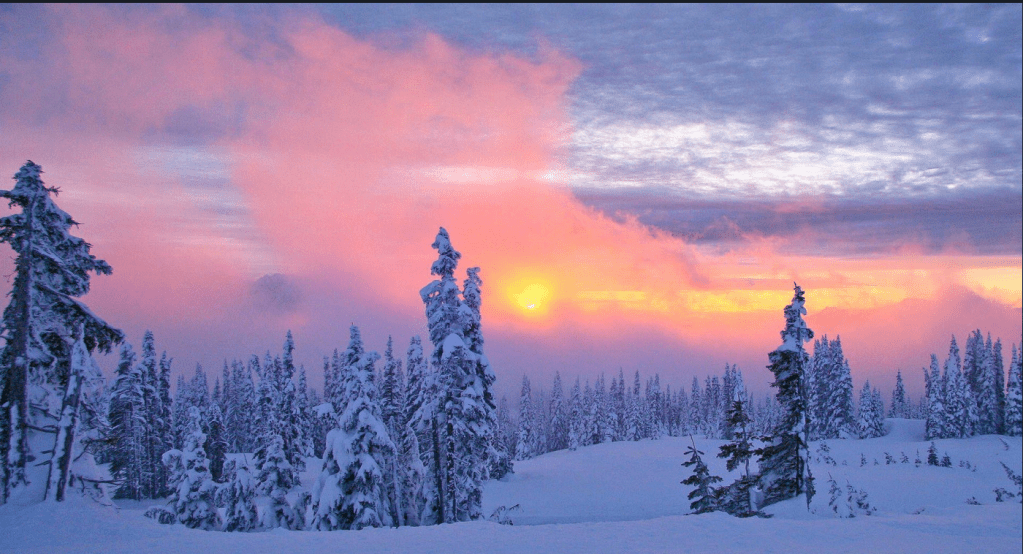
Winter has never been my favourite time of year – it’s cold, it’s dark, and apart from the few evergreen trees and splashes of red berries threaded through the hedges, or perhaps a few flashes of pale-pastel clouds or vivid sunsets, it seems so colourless and void of life. All I want to do is stay in bed and hibernate until spring returns! And even though I know this too shall pass, it’s hard to wake up every morning to another unrelentingly bleak, grey day.
Yet much as I dislike winter, I know there is a reason for this season, too – just as the Earth needs a period of dormancy before she can resume her profligate exuberance, so we as her creatures also need time to pause our endless energetic endeavours and receive the gift of rest so we will be revived for the next season of growth, life and development. It’s as if that last blaze of fiery colour in autumn, when the Earth’s energy seems like it is burning up, is a metaphorical message that when we burn out, we too need a period of inactivity to recover.
I’ve been thinking for some time about the different types of burnout and how to recover from these, so now seems the perfect time to write about it. I apologise I’ve been so busy working on my historical fiction novel WIP – I had agreed with a fellow novelist to exchange completed first drafts by the end of the year, so have been striving to make that deadline – I’ve had little time for anything else, including this blog. But having had my energy, enthusiasm and inspiration sabotaged by a recent flu brought on by physical, mental, emotional and spiritual exhaustion, I now feel I need to write it as much for myself as for others!
So I hope something in the below will be of use to you, too – and that wherever you may be in your own journey(s), you will receive the gift of rest this season offers.
What is burnout?
Burnout is defined as ‘a state of mental, physical, emotional and spiritual exhaustion caused by prolonged and extreme stress’. It occurs when we feel overwhelmed, drained, and no longer able to cope with the demands and pressures of life.
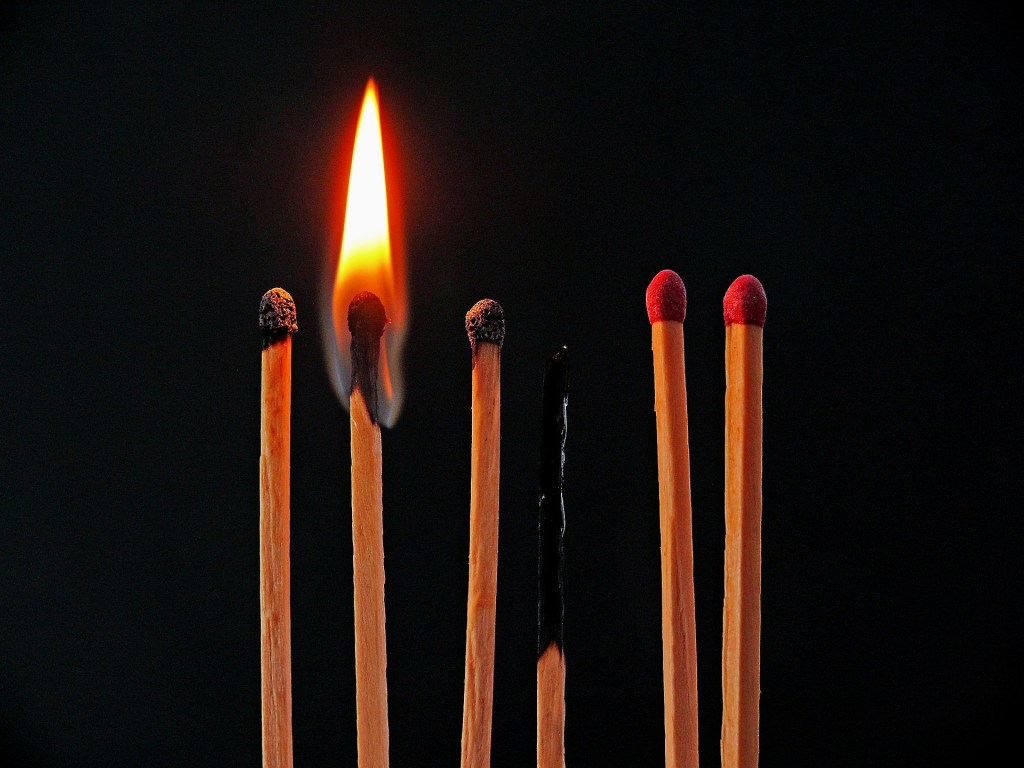
While the symptoms of exhaustion, feeling overwhelmed and drained could also describe other conditions such as depression, anxiety, isolation or grief, burnout is a unique phenomenon that requires a very different recovery strategy. What makes burnout different is that the term itself implies something that was once on fire – eg fired up with enthusiasm or aflame with passion, for example, by commitment to a cause or belief – is now extinguished.
Seen through this lens – as in, the extinguishing of a former enthusiasm or passion caused by prolonged exposure to extreme stress – the term and treatment for burnout can be understood and applied to many variations of the condition: from compassion and activist fatigue to writer’s and artist’s blocks to professional burnout from overwork; to the relentless pressures of perfectionism and productivity; to the cumulative toll on our psyches from consuming an endless stream of horrifying news media, such as we’ve had recently with the wars in Ukraine and Gaza; and just the sheer exhaustion of coping with everyday pressures that zap our energy and joy in living.
In the below, I examine each one of these and suggest remedies for overcoming them.
Activist fatigue
By token of its very name, activism implies action – it is defined as ‘the policy or action of using vigorous campaigning to bring about social or political change’. It is also described as ‘the policy or practice of doing things with decision and energy’.
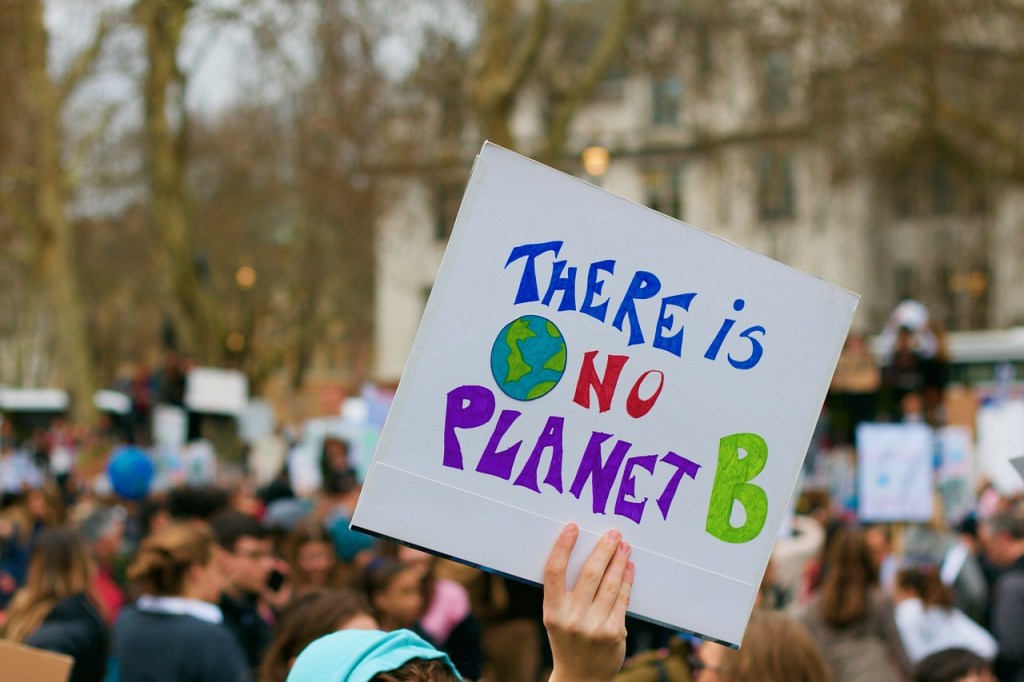
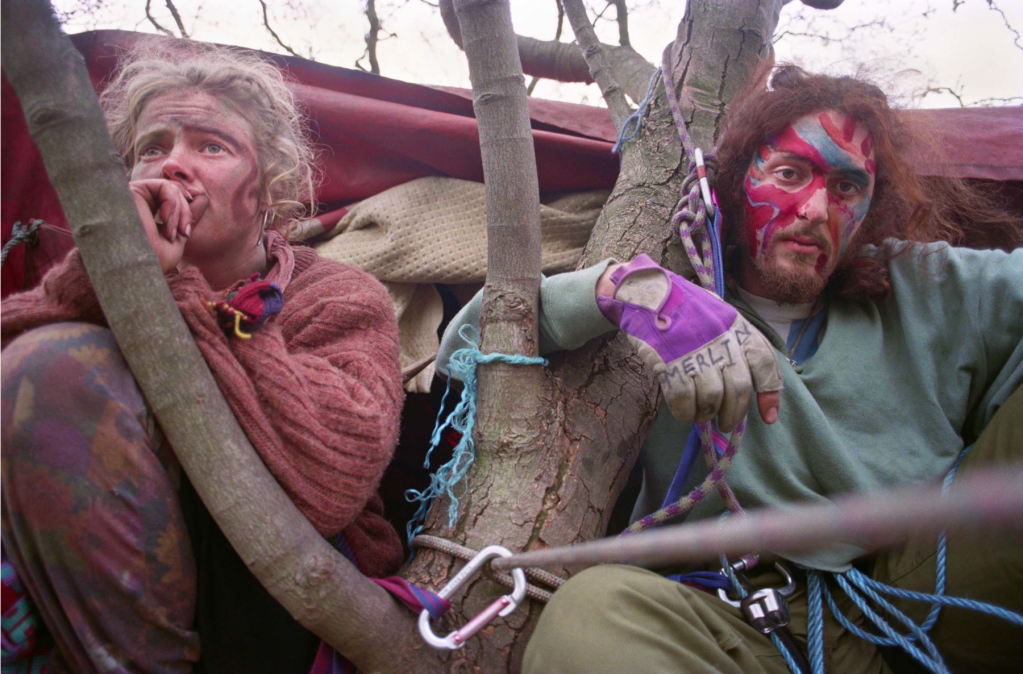
Types of activism include campaigning via protests, demonstrations (marching, public sit-ins, strikes, etc), boycotts, rallies, events and petitions via media/social media for: human rights (eg of prisoners, refugees, disabled persons, homeless, victims of war and oppression, etc); the environment (eg raising awareness of climate change or specific impacts on nature, such as pollution, tree felling and destruction of habitats, ecosystem collapse or biodiversity threats); animal rights (eg cessation of laboratory testing on animals, fairer treatment and conditions for farmed and/or circus animals, cruel caging, exploitation or poaching of animals, protection of rare or critically endangered species); and political or religious causes and platforms (eg through advocating for reform via democratic actions such as voting, organising unions or even agitating for open revolt against systems seen as unjust).
Activists tend to be passionate idealists. They expend great personal energy in the hopes of bringing about change. While it is true that sustained, collective campaigning can and does bring about much-needed societal change or reform, it is not without personal costs and challenges. For example: 1) becoming so excessively single-issue-focused – on one particular message or campaign issue – that you become blind to all other issues, including self-care and vital relationships; 2) feeling alone in a cause, thereby becoming isolated, defensive and/or resistant to others’ perspectives; 3) other impacts, such as imprisonment for anti-social or extreme behaviour; and lastly (4), what began as an idealism-empowered energy can run out and eventually crack through sustained resistance or wearing down of energies, such that the initial idealism is replaced by a pervasive cynicism and negativity.
So, how can you guard against activism fatigue?
First, it’s important to avoid single- or narrow-focused extremes – as psychotherapist Dwight Turner says, ‘It’s important we nurture the other parts of us that aren’t activists: the partner, the parent, the gardener, the friend down the pub on a Friday night’. It’s essential to maintain a balanced life in the midst of activist endeavours. Practice doing daily self check-ins to see where you might be out of balance or need to give some attention to your own self-care and other vital relationships that help you stay sane and healthy.
Second, watch out for ‘presenteeism’ – feeling like you must be present and actively involved at all times or the cause will suffer. If you find yourself thinking you must be there or you’ll let the side/cause down, you need to remember you are not God – you alone cannot save or change a situation, and burning yourself out trying to do so is only going to harm both you and discredit the cause. Besides, chances are that by standing aside, others may be motivated to join the battle.
Third, activism often provokes very intense, and occasionally very negative responses – including the negative press and reactions of UK and other governments that have taken steps to eradicate the disruption caused by climate protestors through the Public Order Act 2023 – and you may end up feeling alienated, isolated or rejected by those who do not empathise with the cause or whose ideas or solutions may clash with yours. It is bad enough to suffer negative media portrayal and fears of arrest or imprisonment for the cause, but not feeling sufficiently understood, appreciated or vindicated, even by those who should care for you, or who supposedly fight alongside you, can also take a very heavy toll. For this, you need to find a trusted friend who can offer a neutral, objective perspective and who will support you in maintaining self-care regimes.
Lastly, sustained vigorous campaigning in the midst of this can sometimes result in an inevitable sense of cynicism and despair. Some activists will eventually become so overwhelmed helpless and jaded they can reach a point of no longer caring about anything. If you find your activism has drained you this much, step away from your campaigns and practise other life-affirming pursuits until you feel able to engage again – but ensure you maintain a balance to avoid burnout.
Webster’s dictionary defines writer’s block as ‘a psychological inhibition preventing a writer [insert artist, musician, entrepreneur, poet, screenwriter, etc as applicable] from proceeding with a creative piece’. For those who earn a living through creative work, that sense of inspiration drying up and or no longer being able to create can fill you with an absolute blind panic.
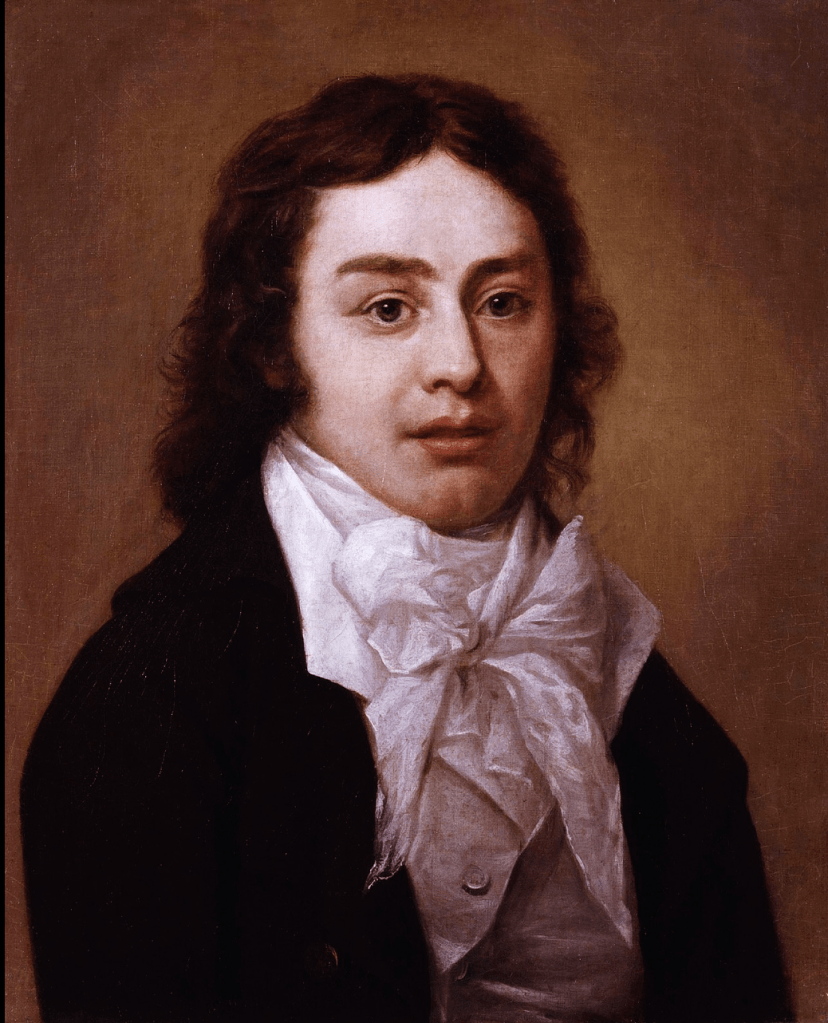
The English Romantic poet Samuel Taylor Coleridge is credited with inaugurating the concept of ‘writer’s block’ (which he described as an ‘indefinite indescribable terror’ of not being able to produce worthy work) in the early 19th century. Romantics believed their inspiration came from an external, magical source – eg the gods or muses – and that when they were not experiencing a flow of ideas or inspiration, the gods or muses were being capricious or not favouring them with divine succour.
Allied to this is the romantic notion that an artist must suffer for their work – that somehow the best creative work and beauty must proceed out of an artist’s inner torment. While it’s true pain and suffering can indeed spawn great creative work, this idea of the tortured artist has all too often been used as an excuse for self-destructive behaviour, substance abuse or other self-sabotaging behaviours.
But waiting for inspiration from muses to strike – or believing you must somehow suffer before you can truly create – is a surefire way to sabotage your creative work and self-belief as a creator. Being an artist is about doing the work, regardless of how you feel. It is ‘1% inspiration and 99% perspiration’ – so the daily act of ‘showing up at the page’/canvas/screen/instrument is the best way to maintain a vital creative practice.
But what else can we do to overcome those times we hit a wall and feel we cannot move on? When no matter how hard we try, the words or images simply do not come? When we feel completely burned out and have lost our creative mojo?
1.Don’t beat yourself up with thoughts or self-talk of being a failure. You are NOT a failure simply because you have a few days – or even weeks or months – when you feel stuck or simply cannot get into a flow. Eventually, if you keep showing up at the work, you will come out of your rut in time – ‘This too shall pass.’
2. Take a break. Sometimes the solution to something you are striving over will come as you allow your mind to relax. Go for a walk, get some exercise, take a bath, travel or do some necessary chores. This is not the same as procrastinating, because our minds are still working on the solution to a problem even when we have objectively switched off. Even unconsciously thinking about creative work is essential to producing it – it is part of the cognitive process.
3. ‘A change is as good as a rest’. Try doing a different type of creative work – for example, doodling, drawing, freewriting, writing haikus, wordplay games, playing an instrument, dancing, listening to music, collaging or any other art form that involves a playful, free-association type of approach – or perhaps try a different approach than you normally use (for example, if you are a pantser, try plotting; if a plotter, try pantsing).
4. Talk about it with a trusted friend or fellow writer – usually they’ve also been there at some point and may have suggestions that will encourage you. Knowing you are not alone in your struggles helps.
5. Imagine you are talking to someone else who is suffering from the same problem. Then try writing down everything you say – perhaps that will turn into a first draft.
6.Move around. As anyone who has suffered from insomnia will tell you, just forcing yourself to sit in front of a blank page doesn’t always do it. Sometimes the best thing to do is get up and move around. Or perhaps try tackling tasks you’ve been putting off for a while, like clearing your desk, organising files, or doing a spring-clean or declutter.
7. Work on a different section. There is no law that says you must always work in a linear fashion. If you feel clear about another scene or the ending, write that and come back to the section you were on later. Sometimes writing out of sequence will help you understand what you need to do with the section you are struggling with.
8. Change locations – try writing or painting in a different space, or perhaps a café, park bench or local library. There may be something in that new environment – a snatch of conversation, a particular smell or startling image – that will inspire you.
9. Read a book or look at paintings by favourite creators that inspire you. Regular reading and study of other authors’ and artists’ works will help rejig your own creative juices, teach you more about the craft, and perhaps motivate you to find and refine your own voice or style of working. It will also provide a much-needed escape, enabling you to travel to other locations and see things through other characters’ eyes – think of it as a vacation from your own voice and perspective.
10. Change your tools – for example, if you always write onscreen, try writing by hand. Perhaps use a writing app like Scrivener. If you always work manually in black pen or pencil, try painting using colour, or perhaps try a painting software tool like Procreate.
11. Retell your story using a different genre or style – for example, try using a basic fairy-tale ‘Once upon a time’ structure if you become stuck on plot or structural issues. Sometimes reducing the plot lines to this simpler format will clarify the bigger picture of what the story is actually about.
12. Step back and listen to gain objectivity about your work. If you feel a passage isn’t working, use the ‘Read Aloud’ function in Word to listen to how it sounds. Hearing your work read or reading it aloud is a crucial part of the editing and revision process, and can also help you see what needs attention when you get stuck.
13. Ask your characters questions about what they want, and how they are seeing or feeling in the situation(s) you are describing, and then listen to their responses.
14. Finish now – edit later. If perfectionism is holding you up, remind yourself that before you can begin the editing and revision process, you need to complete your first draft – you can’t edit words or scenes that only exist in your head! Many writers call it a ‘vomit draft’ for good reason – so don’t worry about perfecting it now. Just get the words down and commit to editing, honing and revising later.
15. Try prayer and meditation – perhaps combined with yoga and/or breathing practices. Becoming still, listening and being mindful of sensory stimuli around you will help you calm and declutter your mind, making you more receptive to fresh ideas and inspirations.
Compassion fatigue
Although it is similar to activism fatigue, compassion fatigue affects those mostly involved in the helping professions – eg nursing, teaching and/or ministry. Such persons usually begin with a genuine desire to help others less fortunate than themselves, but ultimately by engaging in self-sacrificial behaviours and putting others’ needs first to the detriment of their own, they reach a point of personal exhaustion and extreme burnout, making them unable to help or care for others.
Some years ago, I recall being challenged by a tendency to displace my own needs by caring too much for others through a book my sister sent me called ‘Women Who Love Too Much’ by relationship therapist Robin Norwood. Although this book focuses on women who become involved with unhealthy or destructive relationships in a desperate and vicious cycle of lack of self-worth and self-care, I began to see how much these principles extended to my then-involvement with Christian ministry. While the Bible says, ‘greater love hath no man (woman) than this, that he (she) lay down their life for their friends’ (John 15:3), it also says, ‘Love others as you love yourself’ (Matthew 22:39) – because in truth you cannot practically or authentically love others if you fail to love and take care of yourself.
While self-sacrificial attitudes and actions are commendably noble, they can all too easily stem from misplaced motives such as pride or an unhealthy messiah or saviour complex, or again from a woeful lack of self-worth and self-care. The phrase, ‘physician, heal thyself’ (Luke 4:23) is valid in that just as a physician who is himself/herself ill cannot heal others, so too someone who does not take time to minister to themselves will be effectively unable to minister to others. You cannot give to others when your own well has run dry!
When you find your inner well of compassion and concern for others has dried up, that is your body and spirit saying you need to begin applying self-care – for example, take time out to do things you enjoy and that build you up. Learn to listen to your body by resting, eating, sleeping and exercising when you need to. You actually need to become ‘selfish’ in caring for yourself appropriately before you become selfish in other, more harmful ways – eg self-centred, self-righteous, self-justifying, self-pitying or self-destructive.
There is a reason why God instituted the Sabbath as a rule for humans – that is because, as mentioned previously, all living systems need an enforced period of rest. As a creature of this Earth, you are not exempt from its patterns and cycles – you cannot simply go on and on and on without time out to rest. Jesus said, ‘Come to me all who labour and travail and are heavy-laden, and I will give you rest. Take my yoke and learn from me, for I am gentle and lowly of heart. For my yoke is easy and my burden is light’ (Matthew 11:28-29). In other words, those involved in ministry need to learn not to attempt to do things in their own strength, as a point of pride and self-reliance, but to do them in His strength.
1) practise mindfulness – become aware of your thoughts, feelings and physical sensations; 2) focus on your breathing, and attempt to slow it down when you become anxious or worried;
3) consider small things you can still control or change whenever you feel overwhelmed or out of control, such as your immediate work environment;
4) establish a good self-care routine such as eating, sleeping and exercising appropriately and at regular times;
5) reach out to others – family, friends, a peer group or professionals – for support;
6) set aside time for meaningful personal hobbies and activities, and to connect with loved ones;
7) take a break from news and limit the amount of time you spend online and on social media every day.
News and social media burnout
Media consumption – news, and particularly social media – has become such a part of our daily lives that we often don’t realise how much cumulative anxiety and stress our psyches, minds and bodies are subjected to through constant exposure to it. And if we consider burnout as prolonged exposure to extreme stress, it is all too easy to see how daily news consumption – even if it seems like harmless, mindless scrolling – can contribute to overall sensations of burnout and affect one’s ability to cope with the pressures of daily life.
Repeatedly digesting negative news headlines has been show in studies to affect mental and physical health through news-related stress and media saturation overload. Watching traumatic news clips of bombs exploding in a city or seeing victims shaken by war, mass violence, natural disasters or civil disruption will cause various physiological responses – your heart rate quickens; you blink rapidly; your skin pricks; your mood darkens; and your ability to make decisions or perceptual distinctions is affected.
‘They may just have read about an animal on the verge of extinction or the latest update on polar ice caps melting… [and while] they may not even recognise at first that the news has affected their mood, they’re perserverating [sic] on it – it’s bothering them.’
—Don Grant, PhD, of the American Psychological Association (APA),
Further, the fact people often use marketing strategies on social media – often enhanced artificially by Photoshop or AI – to convey or project images of perfection and success can create feelings of failure, unhappiness and distress in viewers who compare their own lives or looks with these images. Social media contributes to personal unrest and a crippling perfectionism by creating a sense of ‘FOMO’ (fear of missing out) and lack, driving efforts to compensate by overdoing activities and striving to ‘keep up with Joneses’.
Psychologists are coining new terms to describe conditions derived from news and media consumption: ‘media saturation overload’, ‘headline anxiety’, ‘doomscrolling’, ‘headline stress disorder’, media post-traumatic stress disorder (PTSD) and social media burnout (SMB). Since many people get their news from social media (more than half of US adults, according to a 2020 Pew Research survey), the trend for driving clicks through negative ‘clickbait’ messaging contributes to feelings of overwhelm, hopelessness and powerlessness to overcome or bring about positive change.
If you find your level of media consumption makes you constantly stressed, angry, resentful, depressed or burned out – for example, you experience symptoms such as body tension, over-reliance on drugs or alcohol, a rise in pulse rate, anxious or obsessive thoughts and worries impacting your sleep and normal function, lack of joy and interest in life or normal social activities – you need to insert some media guardrails.
Try the following:
1. Turn off all phone notifications.
2. Add tech-free periods to each day.
3. Limit your news consumption and social media check-ins to only 15 minutes per day – set a timer to ensure you stick to it.
4. Don’t bring phones to the dinner table.
5. Talk to people while waiting in line rather than checking your phone.
6. Journal or write about your responses to the news as a method of processing.
7. Take action – sign a petition, donate, or get involved in a charity or community response to a problem. Doing something proactive is a positive way to process your emotions so that they do not lodge in your body.
Professional burnout
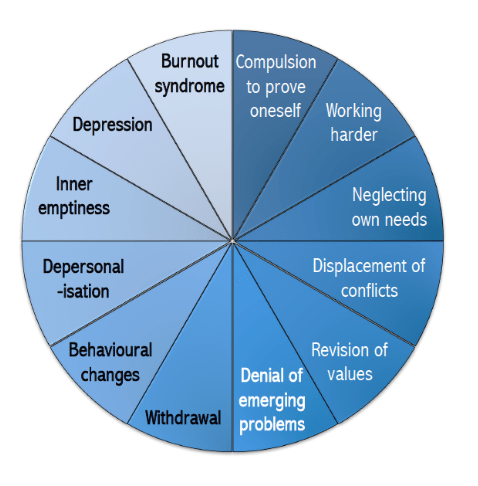
The term ‘burnout’ was first coined in the 1970s by American psychologist Herbert Freudenberger to describe the effects of chronic mental and physical fatigue in professional work. He and his colleagues usefully identified 12 stages of burnout in relation to one’s career as the following:
Stage 1. Excessive ambition – while having ambition and an enthusiastic desire to work hard and succeed is not a bad thing, the clue here is in the word ‘excessive’. What begins as a reasonable aim of progressing in your career can so easily be replaced by an inner compulsion to prove your worth to others in order to feel ‘good enough’. Answer:The moment you begin to compare yourself with others, step back and tell yourself you are already good enough and doing enough.You ARE worthy as you are!
Stage 2. Working harder and faster – If you are not careful, you soon find yourself volunteering to take on extra responsibilities and tasks, and then find your pressure accelerating beyond your normal human limitations as you strive to work harder and faster. Soon, the pressure of work begins to bleed into your personal life, and you find it harder and harder to switch off or compartmentalise. Answer:In the same way your computer will eventually crash if you have too many tabs open, once you find this blurring of boundaries between life and work happening, you literally need to switch off entirely and then restart yourself by resuming activities ONE TAB AT A TIME.
Stage 3. Neglecting your physical and emotional needs – By this stage, your priorities have shifted to placing others’ needs and demands first. As a result, you are typically omitting to look after your own needs. You may begin to skip meals or sleep erratically, fail to take time out to stretch, exercise, meditate or do proper breathing exercises, and neglect communicating and connecting with family and friends. As a result, your health and emotions suffer – you gain weight; experience insomnia; have frequent back and neck pain or other health issues; your attention wanders, making it harder to focus; and you become quarrelsome or easily provoked, which then damages your relationships further. Answer: BEFORE you sit down to work, make sure you eat a proper meal and do some morning stretches, journalling and/or meditation; schedule breaks throughout the day to stretch, breathe and go for a brisk walk; and make time every 2–3 days to schedule calls and chats with loved ones.
Stage 4: Displacing problems – When you are too focused on work, you also tend to ignore other issues and problems, including a niggling sense of things not being right. But suppressing these problems will not make them go away; you’ll just end up feeling jittery and prone to overreact to minor setbacks or perceived personal slights, which may make you overly defensive or critical. Answer: Rather than looking for someone or something to blame, schedule a DAILY CHECK-IN with yourself – either through journalling or a brief prayer or meditation – to monitor your bad habits and self-excuses. Keep a daily to-do list to help you stay on top of the little things (‘Catch the little foxes that spoil the vineyard’).
Stage 5: Revision of values – Once displacement begins to happen, it becomes all too easy to drift away from your core values and raison d’etre. Everything that gives your life meaning and purpose – friends, family, hobbies – gets sacrificed on the altar of work and your entire sense of self-worth becomes dominated by your desire to be productive and meet deadlines or achieve work goals. Answer: Work is only one part of your life – you need other things to give meaning and dimension to your life. Just as you need to eat a balanced and varied diet for physical health, so your whole being needs balance to function properly. Begin by scheduling time to reward yourself each day with a half-hour spent doing SOMETHING OTHER THAN WORK.
Stage 6: Denial of new problems – When your focus is out of balance, so too is your perceptions of others. You begin to see others as lazy or demanding, and become intolerant, unsympathetic and cynical in your attitudes towards them. Rather than seeing how much you’ve changed to become rigid and inflexible, you blame work pressures or lack of time. Answer: Here’s how failing to check in with yourself will manifest in your behaviour, which you don’t even recognise as a problem. If you’ve become blind to your shift in attitudes, you need others to hold up a mirror to you. Although it might be hard to accept criticism, ASK OTHERS if you seem different and how they think you’ve changed.
Stage 7: Withdrawal – By exclusively focusing on work, you automatically withdraw from social engagements and relationships, becoming isolated and secluded in the process, with a non-existent social life. You might not even remember the last time you had a conversation that didn’t revolve around work. The temptation here is to escape through guilty pleasures such as bingeing on drink or food, which often has a catch-22 effect of piling on shame that makes you withdraw even further. Answer: No matter how isolated you’ve become, it is essential to break out of this rut as soon as possible. Phone a friend or relative, or REACH OUT to an anonymous agency such as the Samaritans. Ask them to change the subject every time you talk about work.
Stage 8: Impact on others – Your exclusively work-focused isolation and burnout begins to have an impact on and be noticed by others. Perhaps you are always tired and irritable, your moods are erratic and unpredictable, or you do things like miss a doctor’s appointment or important meeting, or forget to pick your kids up from daycare. Answer: It’s important to BE ACCOUNTABLE to someone. If you don’t live with someone or have a friend or family member who will check in with you regularly and hold you accountable, you may need to seek external help with a professional therapist or group.
Stage 9: Depersonalisation – At this stage, you start to feel detached from everything and everyone, including yourself. You begin to feel hollow and as if you are outside your own body, merely watching yourself going through the motions of life but without any connection to your activities. Where you once felt passion, enthusiasm and motivation, you now feel indifferent to your work or unconcerned by any problems in it. At this stage, your personal investment or ability to care is drained out of you. Answer: When you begin to feel disconnected from your own personal commitments or involvement, you need to OWN THEM again by consciously using ‘I’ (I/me/my/mine) pronouns.
Stage 10: Inner emptiness/lack of worth and meaning – Your overfocus on work has robbed you of any sense of fulfilment or meaning in life. You begin to question your value and feel as if all your efforts are in vain. You begin to fantasise about quitting, moving on or leaving your career. Answer: Rather than running away or depending on external stimulants of food or alcohol to fill that sense of emptiness or further numb your hollow feelings, you need to begin to BECOME MINDFUL – take a moment to step back and recognise your patterns, then make small, incremental changes to your daily habits.
Stage 11: Depression/Existential crisis – Everything now seems a blur and has lost all sense of colour and life. You are mentally and emotionally exhausted and feel lost and uncertain of anything. Rather than being focused, you simply drift in a haze where everything seems meaningless, absurb or pointless. Answer: At this stage you likely require EXTERNAL HELP such as therapy or medication such as antidepressants. Seek help from a GP and take any medication or supplements as directed.
Stage 12: Full burnout syndrome – If you have reached this stage, you are now at breaking point, and likely to experience a full mental and/or physical breakdown. At this stage you will need extended time off from work to recover, as well as medical attention. Answer: When you have reached the end of your mental and physical limitations, there is nothing more you can do but TAKE TIME OFF and completely cease all work activities until you recover. It’s important to take as much time as you need and not try to rush this stage until you are completely healed.
Conclusion
I hope you will find some of these tactics helpful, wherever you are in your personal journey or on the stress-o-meter scales of life. As God knows the pace of modern life is only likely to increase, the varied stresses we all face are also likely to proliferate. But returning to the seasonal theme, the most important thing to recognise is that you are not a machine – you are a part of nature. And just like nature needs to rest, so do you (and I). I pray we will all take time out this winter – and regularly throughout the year – to receive the gift of rest.
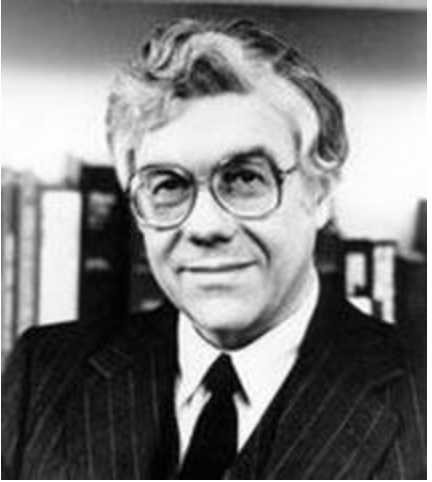
Pic credits – from top (main image) to bottom: Cover image: Resting male/man, GLady (Pixabay); 1) moritz320 (Pixabay); 2) Kevin Snyman (Pixabay); 3) Adrian Fisk, on chinadialogue.net; 4) lukasbieri (Pixabay); 5) painting of Samuel Taylor Coleridge by Peter Vandyke, 1795 (Wikipedia); 6) modovisibile (Pixabay); 7) geralt (Pixabay); 8) Dalai Lama quote, www.habitsforwellbeing.com; 9) Kamran Aydinov (Freepik); 10) Herbert Freudenberger (Wikipedia); silviarita (Pixabay).
This short story was first published in 1991 in Wilderness Tips, a collection of 10 of Margaret Atwood’s short stories; I found it in a 1992 compilation, Caught in a Story: Contemporary Fairytales and Fables, and have always remembered it as one of the most powerful, resonant and truly incandescent stories I have ever read.
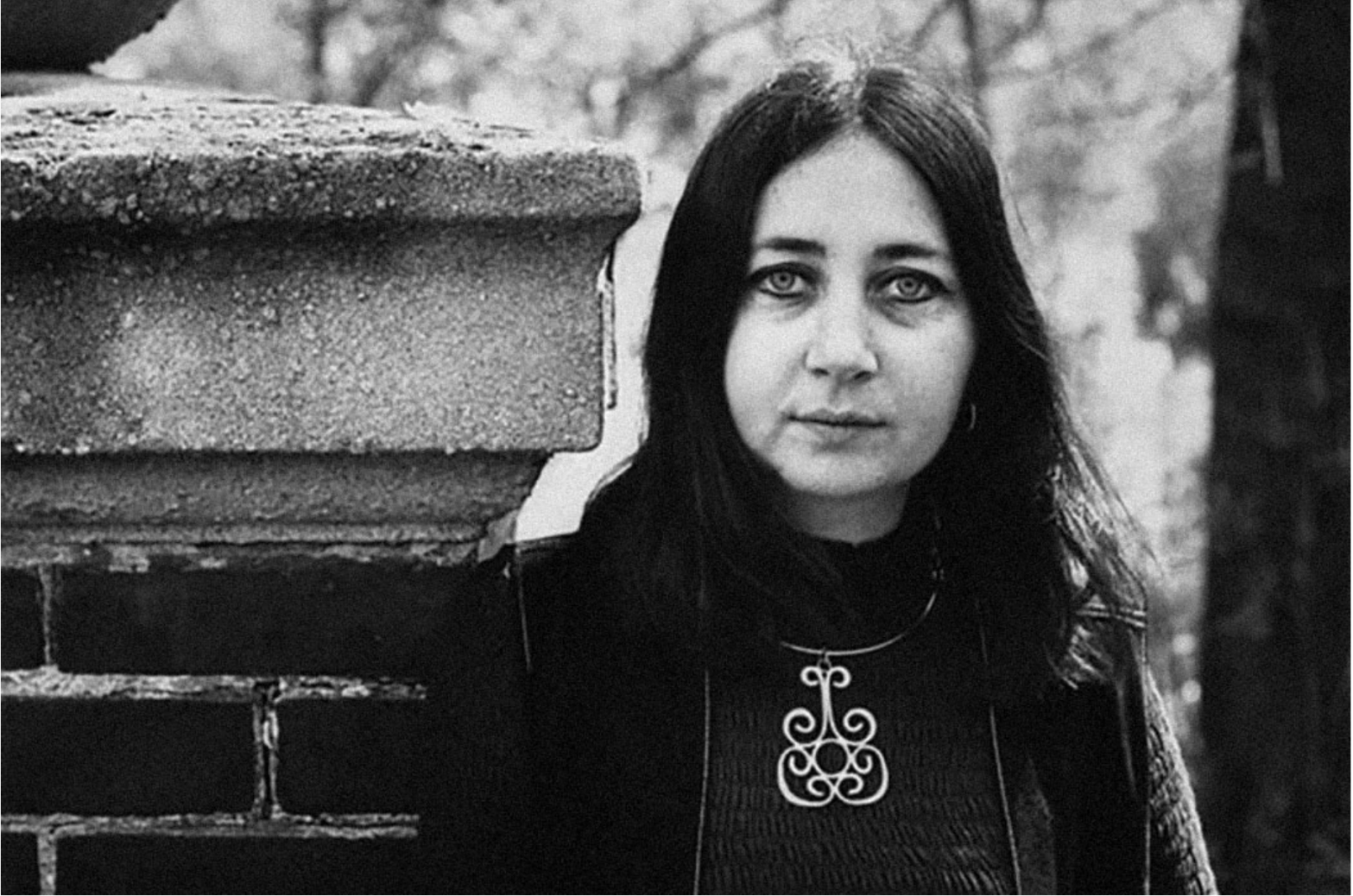
The story’s title refers to the title of what is described as ‘a series of short, connected lyrics’ read by a mysterious, gifted poetess known as Selena – likely modelled on real-life Canadian novelist and poetess Gwendolyn MacEwen (pictured; credit John Reeves / Library and Archives Canada / PA-195871) – in a café called ‘The Bohemian Embassy’ in Toronto in 1960: a time when
“Poetry was the way out then, for young people who wanted some exit from the lumpen bourgeoisie and the shackles of respectable wage-earning. It was what painting had been at the turn of the century”.
This, along with a few other descriptions of the area (“small vertical houses” with “peeling woodwork” and “sagging porches” – note the rule of three used here; it is also used in the repeated zero decades the main character encounters Selena (1960, 1970, 1980) – define the physical and emotional landscape of the story as “the sort of constipated middle-class white-bread ghetto he’d fled as soon as he could, because of the dingy and limited versions of himself it had offered him”.
Through these few brief acerbic descriptions at the beginning, Atwood establishes the era’s particular zeitgeist: the sense of being trapped and creatively stifled by suburban middle-class North America. This is a time and landscape anyone who grew up as a bohemian-inclined artist or poet in the crassness of 60s/70s North American suburban non-culture, as I did, will immediately relate to; its cri de coeur to escape these materialist shackles as soon as possible is a main reason this story has always resonated with me.
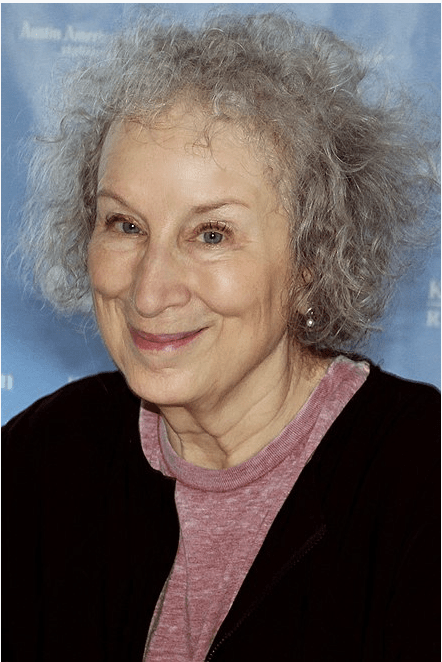
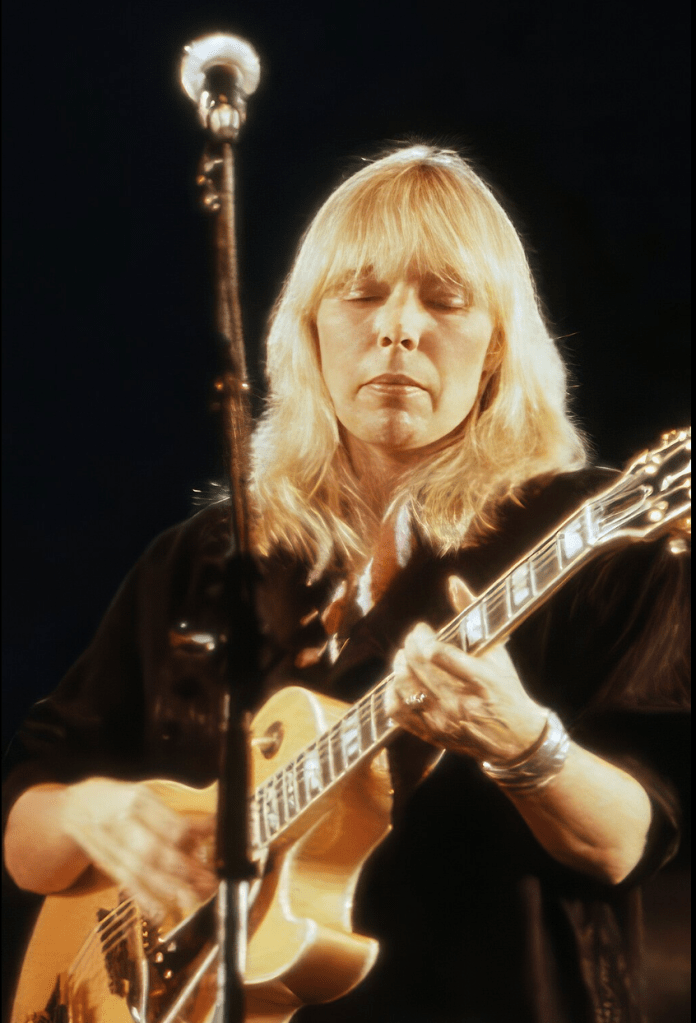
Margaret Atwood in 2015 (Wikipedia)Joni Mitchell performing in 1983 (Wikipedia)
Those around at that time may also recognise the story’s thematic similarity to the mournful lyrics of another stellar and influential Canadian (Joni Mitchell) in “The Last Time I Saw Richard”: “all romantics meet the same fate, someday – cynical and drunk and boring someone in some dark café”. I do wonder if Atwood named her character with this song in mind. This landscape is so rife with perils of soul artistic destruction, one must escape it somehow or remain trapped forever, strangled by its soul-destroying, artificial tinsel.
Yet the actual era and location specifics are irrelevant to the true meaning and power of the story, since a romantic longing for the ‘other’ or ‘beyond’ is engrained in the human psyche since time immemorial. It is this psychic universality, as well as its reference to ancient Egyptian mythology, that justifies its inclusion in a compilation of fairytales and fables. But beyond this, and of particular relevance to writers, the story is essentially a hymn (literally; see below) to the power of poetry, of story, to transmogrify our otherwise meaningless human existence by lifting it to the realms of the sublime.
Echoes of otherworldliness
While the where, when and what are established early on in the story, it actually begins with the who: an otherworldly young woman named Selena, whom the main character – a wannabe/failed but somewhat pretentious poet and academic named Richard – is trying to imagine where she came from:
“How did Selena get here? This is a question Richard is in the habit of asking himself, as he sits at his desk again, shuffling his deck of filing cards, trying again to begin. In a way, it’s the main question: because she was then, and remains, altogether improbably, an anomaly for her time and place. Or as the new physics would say: a singularity.”
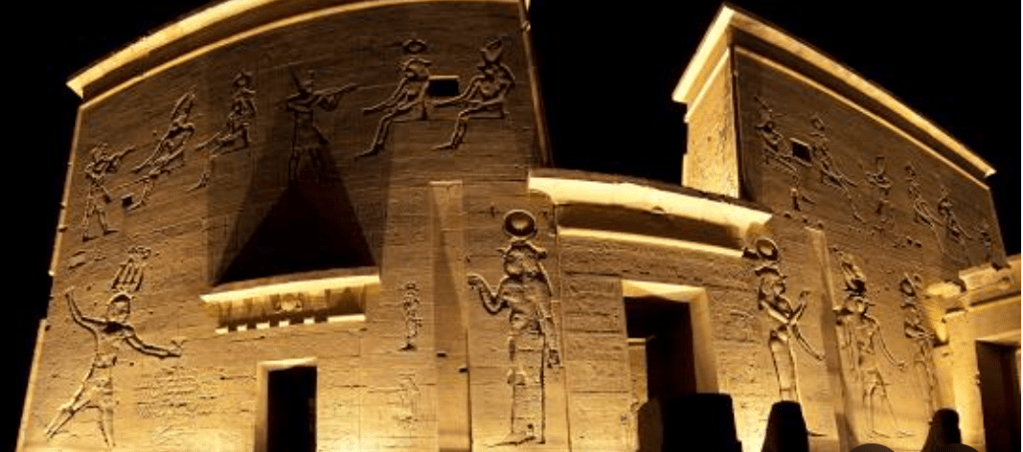
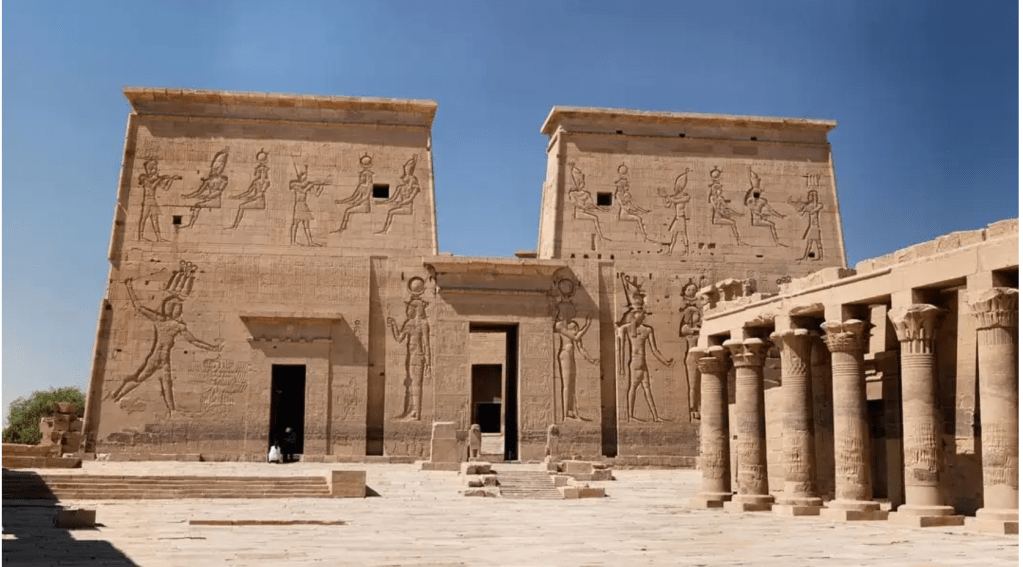
The fact the story begins with a question, then tells you straight away that this is themainquestion, underlines the peculiar otherworldliness of the poetess as not really belonging to any particular time or place. It also uses small, telling details to reveal the character and his quest immediately; we know Richard is determined to unravel and understand Selena’s origins, as if by doing so he will finally possess her – in much the same way the poem Isis in Darkness is about the goddess Isis trying to piece together her lover, the god Osiris’s, broken body as an act of love. We also know he is in the habit of failed attempts: “trying again to begin”.
Richard’s obsessive quest is driven by his own need to recover a sense of wholeness in himself, but here it is demonstrated (shown, not told) by the simple image of him shuffling a deck of filing cards: a deck (whole) broken into separate components. That they are filing cards shows he is trying to organise or systematise something he does not understand, but is determined to find answers for. The act of shuffling simultaneously indicates frequent repetition (we sense he does this regularly) and randomness (the outcome is unknowable, filled with infinite possibilities, any of which could be accurate).
The reference to physics is not accidental; it carries with it an inherent echo of the second law of thermodynamics, in which all systems are subject to decay (eg loss, breakdown, unwholeness); this also pops up in the lyrics of a song, later quoted by Selena: “Change and decay in all around I see/I’m not prepared for eternity.” Further, the meaning of a singularity – according to Einstein’s 1915 Theory of Relativity, which describes it as “the centre of a black hole, a point of infinite density and gravity within which no object inside can ever escape, not even light” – is relevant to the story’s central concept of an artist being trapped in the twin black holes of suburbia and academia, and the goddess Isis being in a realm of darkness. The physics reference also reveals a key element of Richard’s nature: he is scientifically oriented, with a need to understand a mysterious universe through a system, eg physics and cataloguing with index cards.
After beginning with a series of imaginative speculations about Selena’s origins (“he sees her landing froma transparent spacecraft, a time-warp traveller en route from Venus or Pluto”), in the next section, broken by a line space, the narrator tells us blankly:
“A factual account exists. She came from the same sort of area that Richard came from himself: old Depression-era Toronto.”
The story continues in this vein, juxtaposing the everyday, prosaic, factual/scientifically verifiable aspects of Richard’s life and the tawdry realities of Selena’s real-life existence with a much grander vision of something other, something beyond, something that cannot be defined or reduced to mere equations on a blackboard.
We are also told early on that at the time Richard meets Selena, he was “slogging through” the existential classic Being and Nothingness. He is already “feeling jaded, over-the-hill” at 22; a romantic-turned-cynic. He is presented as someone who strives to balance the metaphysical and impenetrably unknowable with facts, figures, knowable and countable verities – someone who has no belief in God, but a desperate need, somewhere in the corner of his soul that remains alive, to believe in something above or beyond himself.
When he first encounters Selena, Richard is mesmerised by the seductive power of her voice as she reads “Isis in Darkness” at the café. He is transported by the strange, otherworldly location in ancient Egypt and the rich world of imagination her lyrics evoke. He is immediately persuaded Selena is the real deal as a poet, and that all his own poetic efforts are worthless by comparison:
“He went back to his rented room and composed a sestina to her. It was a dismal effort; it captured nothing about her. He did what he had never done before to one of his poems. He burnt it.”
Yet Richard’s obsessive desire for Selena is confusing both to him and others, who interpret it as physical lust. Another non-accidental reference is the fact he toys endlessly with the order of the words ‘spiritual’ and ‘carnality’ in the title of his major academic opus (‘Spiritual Carnality: Marvell and Vaughan and the 17th Century’). Yet any carnal desire to quench his obsession with Selena is never consummated, as the one time he visits her home on a nearby island, she tells him plainly, “We can’t be lovers”. When Richard asks why, she says:
“You would get used up… then you wouldn’t be there, later… when I need you.”
Even though Richard desperately wants to be utterly consumed (or “used up”) by Selena and obsesses about her over a period of a few decades, in some part of his mind, he is aware he doesn’t objectively fancy the actual physical woman, who despite her brilliance and brief fame as a poet, has real-life needs and problems like any other woman.
This is seen in a scene where Selena turns up unexpectedly at Richard’s house, wearing a bruise and carrying a suitcase, in need of somewhere safe to stay. It is the catalyst for an end to Richard’s prosaic, middle-class marriage, as his cheating wife Mary Jo expresses her disgust at his “letching after” a woman she sees as a “weird flake” because of her cheap, charity shop clothing (Selena is described in the opening scene as wearing a tablecloth with images of dragonflies on it as a shawl).
Eventually Richard acknowledges this discrepancy between a physical desire for Selena and what it is he really craves:
“It was not lust. Lust was what you felt for Marilyn Monroe, or sometimes for the strippers at the Victory Burlesque (Selena had a poem about the Victory Burlesque. The strippers, for her, were not a bunch of fat sluts with jiggling, dimpled flesh. They were diaphanous; they were surreal butterflies, emerging from cocoons of light; they were splendid). What he craved was not her body, as such. He wanted to be transformed by her, into someone he was not.”
Two images of the Temple of Philae (Wikipedia), dedicated to Isis and her consort Osiris
Darkness and light
For all Selena’s human flaws, vulnerabilities and inevitable decline as a literary sensation – as revealed over a few decades until her untimely death – and for all his outward world-weary cynicism, low points and writerly/academic despond, Richard persists in cherishing a vision of Selena that remains untarnished with mortality. The unbelieving scientist has become a worshipper, an idolater; he has apotheosised the woman he can never own into a goddess. For him, Selena will always exist as an earthly embodiment of Isis, whose wandering in the darkness, seeking to gather the fragmented body of Osiris, emanates divine illumination.
After her death, Richard concludes that although he will never match her literary brilliance, he can at least share in her reflected glory through the act of homage in chronicling her life. As he picks up the mosaic-like fragments of her life, he, too, will become like Isis, magically gathering strength and becoming whole in the darkness:
“Isis in Darkness, he writes. The Genesis. It exalts him simply to form the words. He will exist for her at last, he will be created by her, he will have a place in her mythology after all. It will not be what he once wanted: not Osiris, not a blue-eyed god with burning wings. His are humbler metaphors. He will only be an archaeologist [note scientific reference]; not part of the main story, but the one who stumbles upon it afterwards, making his way for his own obscure and battered reasons through the jungle, over the mountains, across the desert [note rule of three again], until he discovers at last the pillaged and abandoned temple. In the ruined sanctuary, in the moonlight, he will find the Queen of Heaven and Earth and the Underworld lying in shattered white marble on the floor. He is the one who will sift through the rubble, groping for the shape of the past. He is the one who will say it has meaning. That too is a calling, that can also be a fate [note conscious shift to words related to faith / belief here].”
This passage describes a physical movement across an internal, imaginary landscape of threes towards his ultimate goal of divine transmogrification. It encapsulates the main themes and character arcs of the story: Richard progresses from smug, cynical, self-congratulating dilettante to humble, believing, artistic worshipper; from early scientific leanings to finding his true calling as an ‘archaeologist’. He finds an ultimate redemption of his own brokenness and literary failings through his concluding rule-of-three actions:
“summoning up whatever is left of his knowledge and skill, kneeling beside her in the darkness, fitting her broken pieces back together.”
The final reference to light (knowledge) in the midst of darkness leaves the reader lingering with him in the place of shadows, tasting with Richard the full bittersweet remorse of sacrificing one’s own art to a shadow occupation (in his case, as a literary academic).
For me, this story has always served as a powerful fable about avoiding this same fate as an artist, which I believe was Atwood’s didactic intention in writing it.
— A meditation on the forces that shape our planet and where man’s search for meaning fits within the cosmos
Last night I watched the final episode of the fascinating BBC Earth series presented by Chris Packham, which chronicles our planet’s history over some 4.54 billion years, according to the latest scientific findings. These are based on the geologic records found in exposed strata of rock layers, which reveal earlier epochs where life in some form – whether simple bacteria or single-celled structures, early plants and animals, even early hominids/hominins – thrived on the planet prior to five pivotal cataclysmic events that wiped out all life on Earth, including the first Earth-generated global warming event.
Yet eventually life on our planet revived, either through internal processes (eg volcanic eruptions and shifting molten rock masses, which eventually formed into our present tectonic plates) or external ones (eg the impact of asteroids colliding with Earth’s surface, releasing new chemicals and minerals such as sulphur, hydrogen, carbon, phosphorus, platinum and rhodium), the latter being described as an ‘extraterrestrial rain’.
As news headlines constantly remind us, we are presently veering towards exceeding the tipping points that maintain the planet’s hard-won polar equilibrium necessary for life – or at least, of the present mammalian and human variety – to flourish. Indeed, along with the present extreme hot weather experienced in Southern Europe, North America and China, we are also seeing rapid glacier melt and, with it, a shift in Earth’s axis – the very mechanism that controls the seasons, otherwise referred to as Milankovitch cycles (periodic changes in the orbital characteristics of a planet, affecting its climate, as in the image below [credit: NASA]).
How much of human-generated global warming built up through the proliferation of human-produced carbon dioxide emissions is contributing to this polar wobble versus other internal processes over which humans have zero control, such as mantle convection, is hard to say, but it is clear the conditions of our planet are changing rapidly. Whether our efforts – that is, presuming our leaders or mankind in general can get its act together – can actually avert another catastrophic extinction event remains to be seen. We may have time to learn a lot more about the processes that govern Earth’s polar extremes, but will we have enough time to do anything about it should another major extinction event be on the near horizon?
Life: a cosmic rock dance?
According to the science informing this series, Earth’s climate – once it had one, as initially there was no sky or ozone layer/atmosphere above it; it was merely a swirling ball of gases that ultimately morphed into lifeless rock – has altered from one extreme to another over its quadruple-billion-year existence.
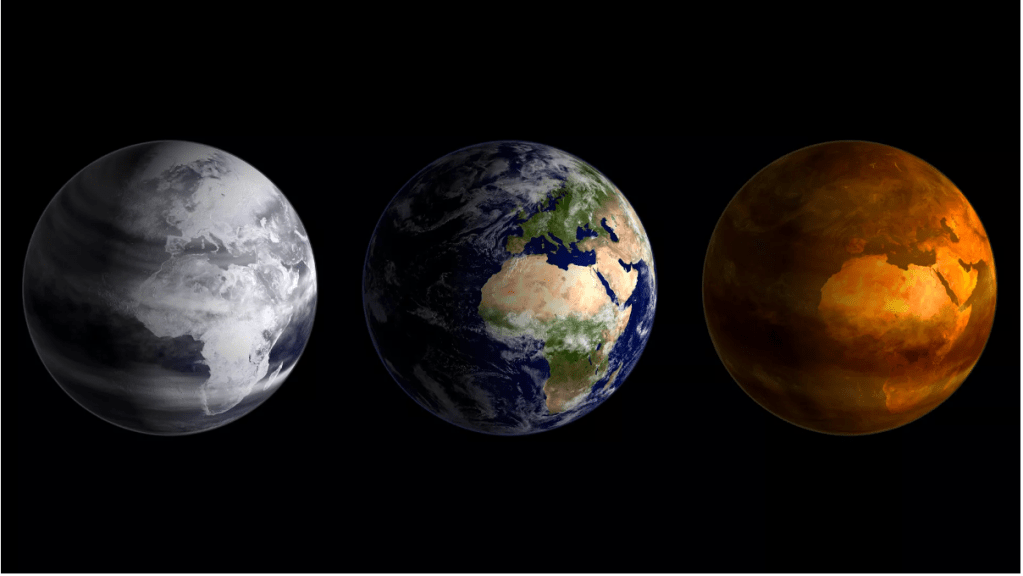
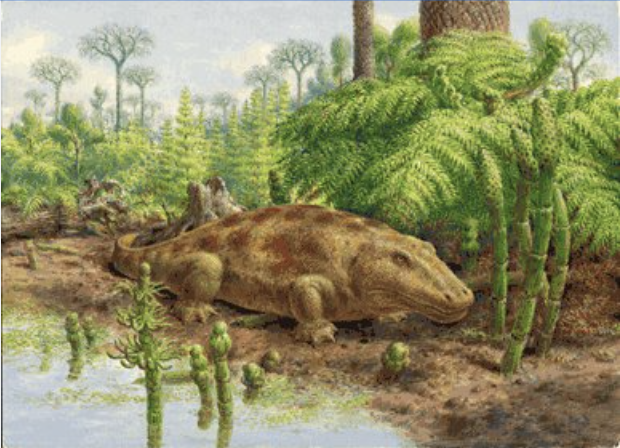
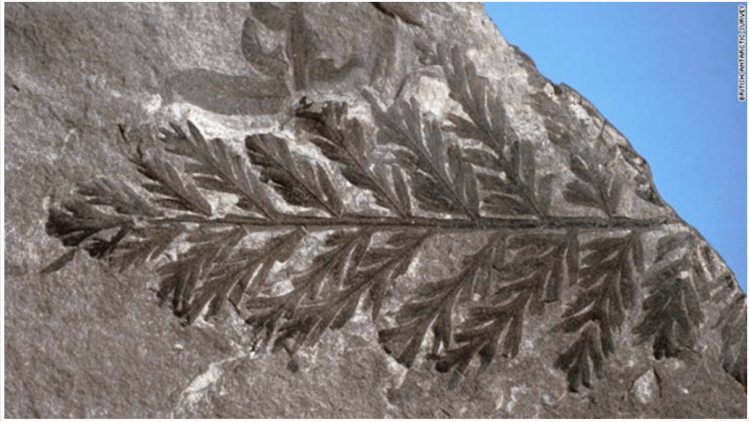
At one point, the fossil record indicates that the early ancestors of crocodiles and palm trees flourished in the northern and southern poles, while at another, ice extended over all the land masses, even those around the equator. Earth has alternately been a blazing fireball or a whited-out snowball, each time obliterating whatever life forms had evolved between these epochs. Yet without the external impacts of giant rocks from space, life could not have resumed, and we would not be here at all to ask questions or wonder at such findings.
Artist‘s depiction of polar regions once covered by rainforest (CNN)Fossilised fern preserved in Antarctic rock (Credit: British Antarctic Survey)Snowball Earth (image source: BBC Earth programme notes)
Of course, this is an entirely evolutionary view of how life came to exist on our planet. It precludes any reference to a Creator or Intelligent Designer, or even to input from advanced extraterrestrials, but instead grants such intelligence to the single entity, the primal force of Life (perhaps what poet Dylan Thomas meant when he wrote ‘the force that through the green fuse drives the flower’).
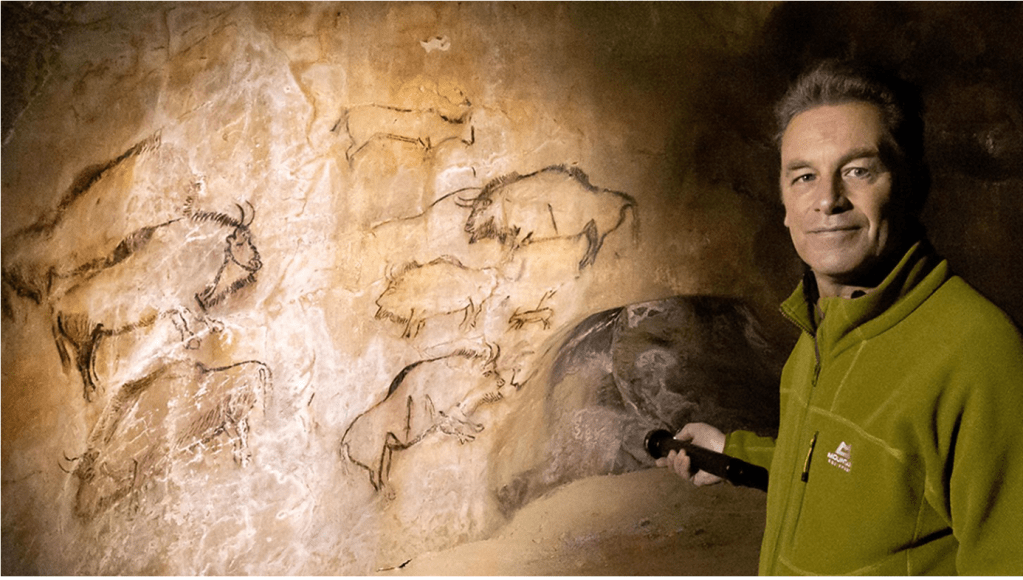
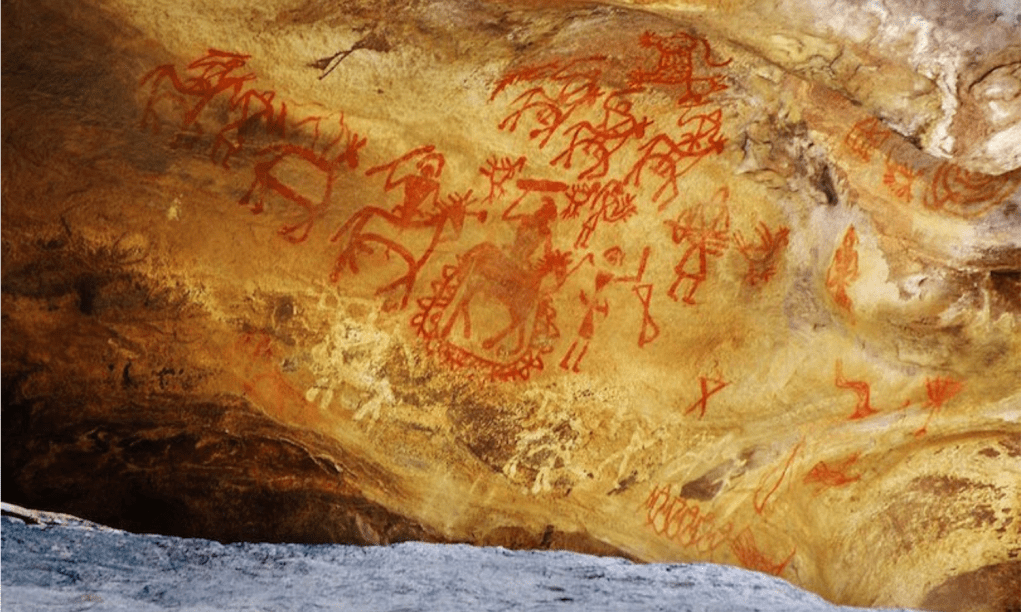
And yet there are many things within our human nature and existence that cannot be explained purely as the result of a cosmic dance of rocks. Even our earliest human ancestors, as Packham (below, in a still from the series [credit: BBC]) so enthusiastically points out at the beginning of the ultimate episode, ‘Human’ when confronting the evidence from inside the Niaux cave in southern France (which was recently predated by an even earlier find in Sulawesi, Indonesia, as well as other recent rock art finds in Spain’s La Pasiega caves, or Blombos cave in South Africa), revealed an instinct for communication, a craving for connection, a desire for art and beauty, a reaching out for meaning and cosmic significance beyond the immediate physical needs of survival. Mankind has constantly looked up to the stars, questioning our place in the universe, and our ultimate meaning or purpose.
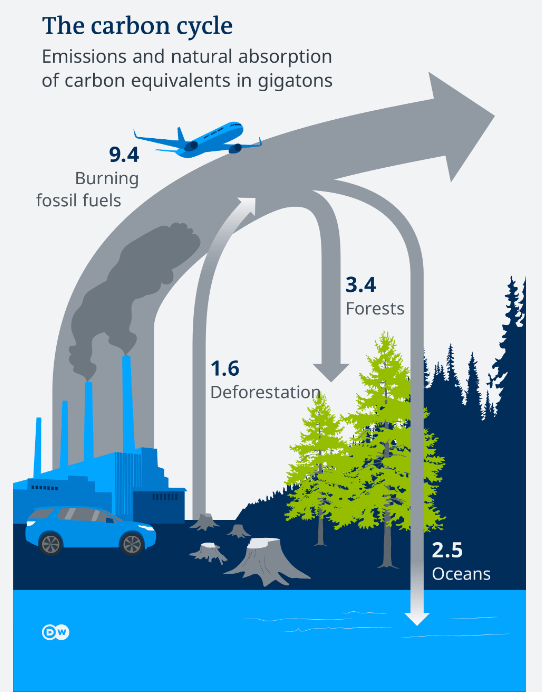
It is this trait that most marks our species out as differing from other forms of life on the planet. While other species communicate to each other, humans are still looking outwards and upwards – even beyond our own planet – to connect with other forms of ‘intelligent’ extraterrestrial life (although as my husband quipped after the programme finished, ‘You have to question how intelligent humans actually are, since we appear to be the only species actively attempting to annihilate itself’, whether through continuing to burn fossil fuels, creating nuclear bombs or even through creating AI, which supposedly has the potential to wipe out most human creativity as well as jobs). And even if there is a genuine extraterrestrial signal such as the recent simulated alien message from the Trace Gas Orbiter on Mars, SETI scientists are divided as to how – or even if – to respond to it. What if the aliens are hostile? They might simply view humans as a tasty snack!*
So where did this innately human desire for communication and connection come from? How did languages – pictorial and verbal – come into existence? Where did music come from? Where did human emotions such as love come from? Where and how did we acquire a love of beauty and a desire to mimic or recreate it through art? Or were these qualities somehow embedded like minerals in asteroid remnants as some form of cosmic DNA strands, eventually emerging throughout the 7-million-year evolution of hominins or the 1.5-million-year evolution of Homo sapiens? Are human souls really just a random collection cosmic dust and debris, sparked through multiple asteroid collisions? Are all our most significant human qualities and achievements ultimately the result of a cosmic rock dance?
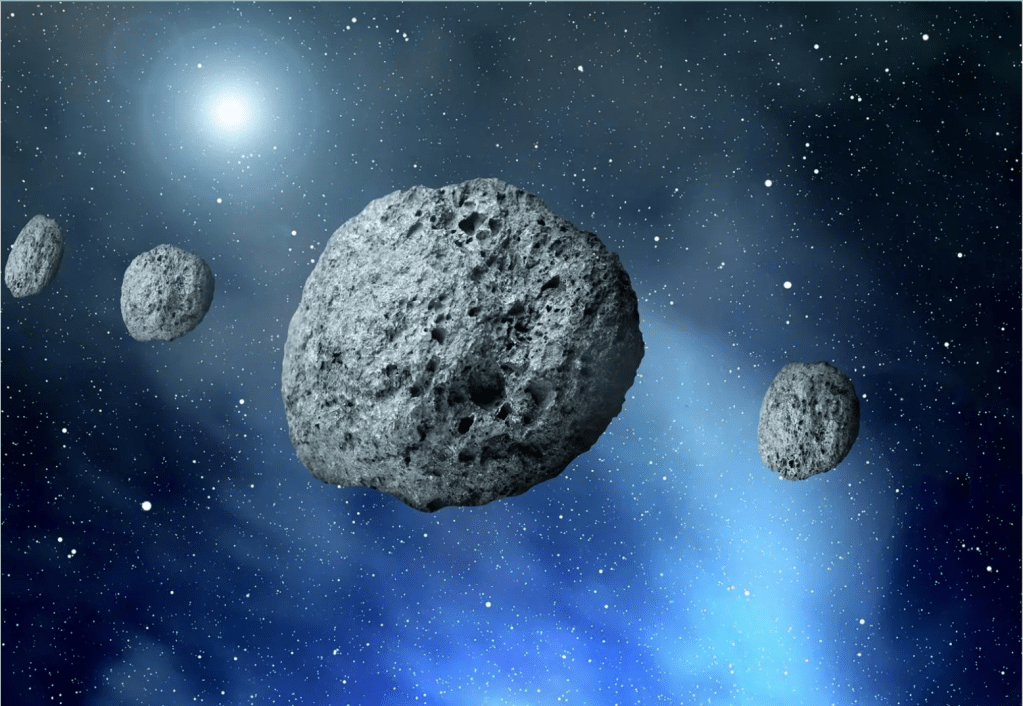
Image of asteroids below from scitechdaily.com
Surely these human qualities – especially being that they are not particularly crucial to our survival as a species and therefore seemingly distinct from any scientific evolutionary processes – speak of another extant force or being within the universe.
Whether you attribute the emergence of these qualities to earlier extraterrestrial implantation on our planet or to the presence of an actual loving Creator who designed these events so as to reach a pinnacle with the arrival of the final evolutionary apex of Homo sapiens ultimately depends on which ‘fairytale’ you find most acceptable – ultimately, we have no hard evidence of where and how life in all its forms originated, apart from the stories our planet’s rocks tell. Everything else is either scientific speculation or faith – which really aren’t as much of a polar opposite as some may think.
Genesis and rocks
There is actually much in the first two chapters of Genesis that conforms to the evolutionary models of Earth’s history Chris Packham articulates in the series, presuming of course you accept Biblical ‘days’ as corresponding to epochs lasting millions of years. (I realise the following may be contentious for both scientists and people of faith, yet I hope all who read this will allow me this space to speculate.)
A cursory re-read of Genesis 1 shows the Earth as initially ‘without form and void of life’ (Gen 1:2) – eg a mass of gases and rocks spinning around the sun. At this point (4.5 billion years ago), there was still no atmosphere encircling Earth; its nascent surface was far too hot and dry for water for water to reach it. Its atmosphere was mostly carbon dioxide, methane and water vapour.
Earth before water: an uninhabitable mass of gas and rocks(Credit: NASA/JPL-Caltech/Space Science Institute)
However, as these gases and rocks ultimately amassed into a planet, it eventually obtained the essential ingredient for life – water – as seen in episode 4, ‘Atmosphere’. Whereas Gen 1:2 says, ‘and the Spirit of God hovered over the waters’, the BBC programme notes describe an ‘an ocean of water suspended in the atmosphere’ that eventually fell on the planet as rain circa 4 billion years ago. At this point, sunlight was already reaching the planet (‘Let there be light’, Gen 1:3) and the Earth’s axial rotation meant there were periods of darkness alternating with periods of light (or the creation of day and night, Gen 1:5).
Another split occurred as sunlight divided the water vapour into oxygen and hydrogen, yet because of the ways these reacted with methane, oxygen was locked into the Earth’s crust. Yet the emergence some 2.7 billion years ago of microscopic organisms in the oceans, a kind of blue-green algae known as cyanobacteria, initiated the process of photosynthesis, raising the levels of oxygen to create an oxygen-rich atmosphere. This corresponds to the Creator’s command ‘Let there be an expanse between the waters to separate water from water’, which he then called ‘sky’ in Gen 1:6, aka the planet’s azure-hued atmosphere – created ca. 2 billion years ago when oxygen ultimately subdued methane.
Life in miniature: cyanobacteria (image source: Wikipedia)
Next was the appearance of dry land following multiple volcanic eruptions from within the Earth, which scientists inform us was initially all one massive supercontinent, Pangaea before forces under the Earth broke these up (‘And God said, “Let the water under the sky be gathered into one place, and let dry ground appear. And God called the dry ground ‘land’ and the waters around it ‘seas’.”’ [Gen 1: 9]). Although Genesis mentions nothing about asteroid impacts or the eventual formation of earlier continents up to our present configuration due to shifting tectonic plates, the series attributes this process of plate formation to asteroids bombarding the Earth some 3.2 billion years ago.
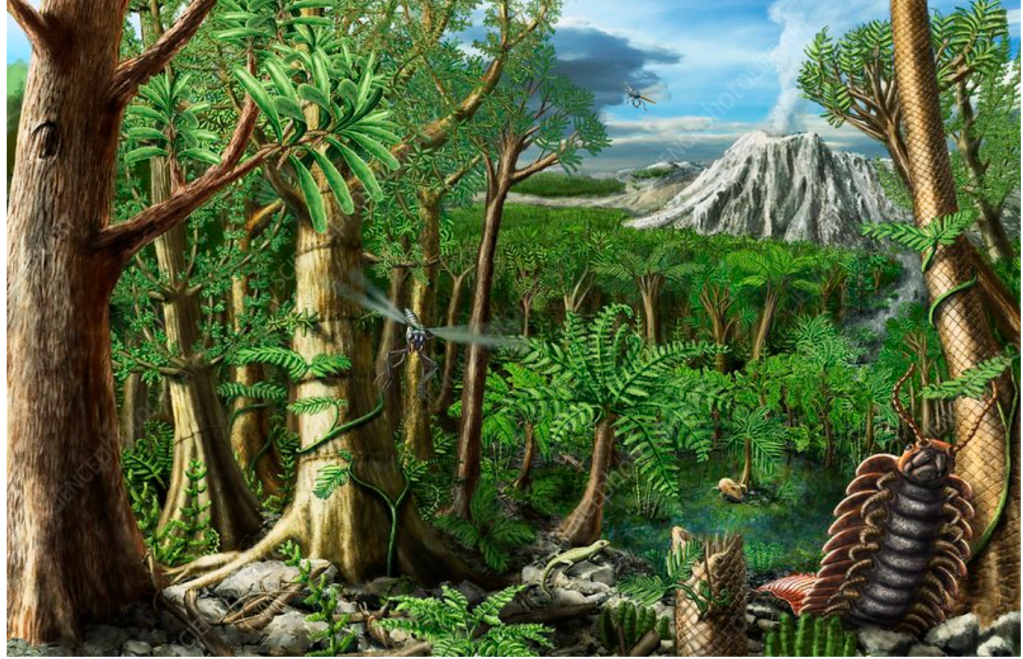
Once the atmosphere, the seas and the dry ground were in place, the stage was set for plants, trees and other vegetation to appear (‘plants bearing seeds according to their kinds and trees bearing fruit with seeds in it according to their kinds’, Gen 1:12). Eventually the hard rock was broken up and became soil, allowing plants to grow and cover the ground. Some of these first plants were giant fungi known as prototaxites, which dominated the land. The fungi had a symbiotic relationship with other plant species, and together these helped to lock away carbon in the form of coal over the 60-million-year Carboniferous period. Ironically, these very substances created in this period that allowed life on Earth to flourish is exactly what we are digging up and burning now.
BBC Earth programme rendition of the giant fungi (prototaxites) that once ruled our planet
With plants and vegetation came creatures, starting – according to evolutionary theory – around 538.8 million years ago during the ‘Biological Big Bang’ of the Cambrian explosion. Although scientists cannot agree exactly on the facts and timelines concerning earlier multicelled organisms of the Ediacaran Period (600 million years ago) or what triggered their sudden dying off, the fossil record clearly shows their replacement by the ‘sudden radiation of complex life’, a diversifying of biological life. No asteroids have been linked to this sudden explosion of diverse life forms, yet according to evolutionary theory, these simpler Eukaryotic marine invertebrate organisms eventually developed vertebrae and became fishes, which then evolved into amphibians and reptiles and then to winged birds, as per the fossil records.
Yet where scientists yet have no clear answers as to how this sudden explosion of life happened, Genesis states that in a single three-stage act, these appeared when God said, ‘Let the water teem with living creatures, and let birds fly above the Earth and across the expanse of the sky. So God created the great creatures of the sea and every living and moving thing with which the water teems, according to their kinds, and every winged bird according to its kind.’ (Gen 1: 20–21).
Life on Earth suddenly came into existence and flourished during the Cambrian explosion ((Image: Science Photo Library))
I don’t think it is purely poetic licence to take ‘great creatures of the sea’ to describe the giant sea reptiles such as Icthyosaurus and Pleiosaurus of the Mezozoic period, which followed what is billed as the ‘largest extinction ever in the history of Earth’, the Permian Extinction of 252 million years ago. This wiped out much of that biological diversity that had exploded previously, and resulted in a planet ruled by giant dinosaurs on land, sea and in the skies, the Earth’s first megafauna. They were indeed fruitful and increased in number, filling the seas and skies, until another major extinction event – the Cretaceous-Paleogene (K-Pg) or Cretaceous-Tertiary (K-T) Extinction – was caused when a massive 6–9-mile asteroid hit the Earth.
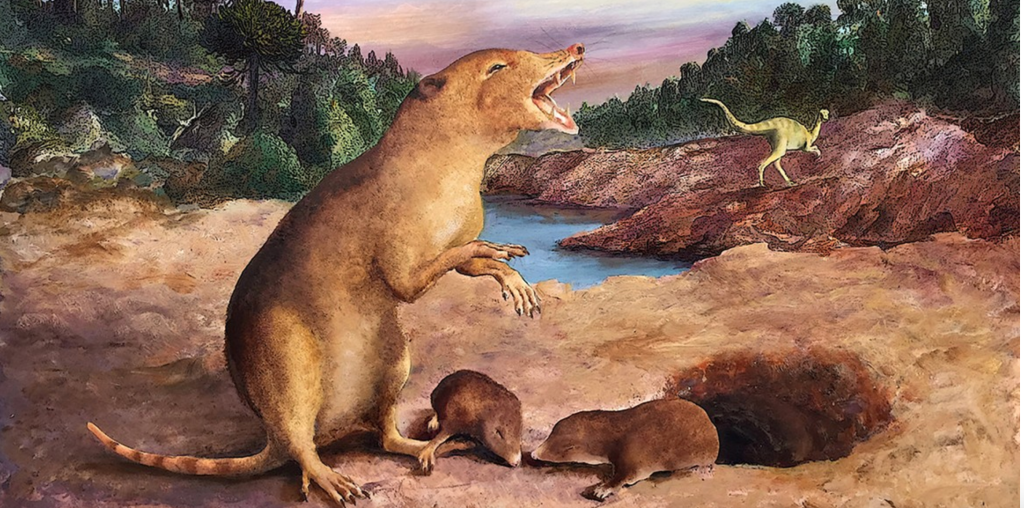
Yet this complete wipe-out of all non-avian dinosaurs at least paved the way for the next stage (day) of life on the planet: the extension of mammals from earlier, rodent-like versions such as Brasilodon and Morganucodon from the late Triassic period ca. 225 million years ago to other creatures that then diversified and filled the land, seas and skies. As it says in Genesis, ‘Let the land produce living creatures according to their kinds: livestock, creatures that move along the ground, and wild animals, each according to its kind.’ (Gen 1:24).
IIllustration of Brasilodon quadrangularis, Credit 2022 Anatomical Society/Wiley)
From this major extinction event also arose, according to the fossil record, the ancestors of our own species, the hominids and hominins (primates) – ape-like creatures that were bipedal (walked on two feet). Variable dates are given for the appearance of these species, diverging from a Human–Chimpanzee Last Common Ancestor (HC-LCA) roughly 6–7 million years ago during the Miocene epoch (24 million years ago to about 5.3 million years ago).
At this stage, Earth was warmer, and two major ecosystems, grasslands and kelp forests, came into being. Much of the flora (up to 95%) and fauna, climate and even the basic continental configurations we have today were birthed in this period. As this epoch included the proto-creation of the first humans or human-like creatures, it makes sense that it is also included within the sixth ‘day’ of God’s creation as effectively part of the mammalian spread across the Earth.
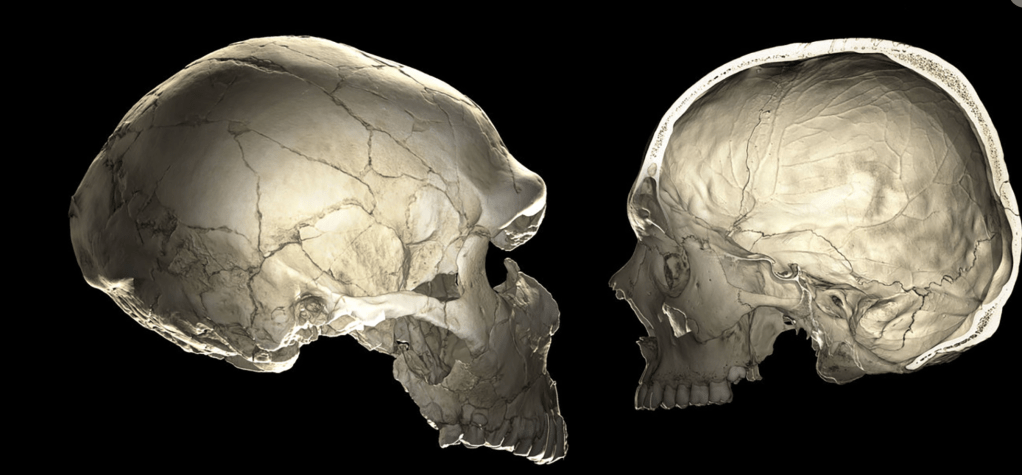
According to the fossil records, it is still unclear when exactly our modern human ancestors first appeared following an initial Africa-based relative, Homo erectus, 1 million years ago, but it is thought to have been between 200,000–315,000 years ago – some even suggest it is more like 400,000 years ago. What is clear is that the modern humans, Neanderthals (archaic humans that lived in Europe and Western Asia, but were wiped out about 40,000 years ago) and Denisovans (early humans that lived in Asia and were distantly related to Neanderthals, and became extinct around the same time, hypothetically due either to climactic changes caused by the last Ice Age or to competition with Homo sapiens’ more advanced tool use) interbred at multiple periods, as is evident in small percentages of contemporary humans’ DNA.
Therefore, it seems quite a credible explanation – at least to anyone else who does not regard geologic evidence of earlier life forms and/or evolution as a ‘polar’ opposite of the record of the Earth’s and man’s creation in Genesis – that this is how Cain got his wife (Gen 4:17). The image below, from an article on Sapiens.org, compares a fossilised Neanderthal skull to the skull of a Homo sapiens.)
Image comparing fossilised Neanderthal and H. sapiens skulls (Credit: Sapiens.com)
Humans and the search for connection, meaning
The final creation of Homo sapiens is referred to in Genesis as a distinct stage of creation, the seventh ‘day’, when God formed man (as distinct from earlier hominin/hominoid species created on the sixth ‘day’, as above). The main distinguishing characteristic of H. sapiens is a larger, supposedly more creative brain, capable of creating advanced tools, instituting farming practices (as suggested by the fossil records, beginning roughly 11,700 years ago), creating early forms of music and communicating through symbolic figures in abstract markings in cave art, which has recently been posited as linked to the creation of language. The activities of H. sapiens in tilling and working the lands correspond to the Biblical command in Genesis 2:15 to work and take care of the Earth.
The abilities of this new human species, according to Genesis, included an ability to speak, to communicate with God, to use language to observe differences between plant and animal species and name these. It also meant a shift to a consciousness of being alone, and of a need for connection and for love – hence God said, ‘It is not good for man to be alone’ and created a ‘helper’ (Eve) for him.
Humans at this stage had an evolved consciousness or intelligence, but not any moral or ethical awareness, or ability to discern ‘good’ from ‘evil’. There is no fossil record of any kind tree containing special properties able to impart these, however in Genesis the evidence of its existence or any ‘path’ or trace to it is hidden, guarded by angelic beings. Evolutionists suggest that concepts of human morality evolved as humans developed ideas such as respect and other forms of socially acceptable behaviour as a result of living and hunting collectively; presumably this also included feelings of shame or guilt through being ostracised from the social group; but what of the sense of either being in harmony or favour with, or being alienated from or displeasing to God and needing to engage in acts of propitiatory sacrifice to rekindle that?
Mankind’s earliest communication styles (image credit: Raveesh Viyas/Wikipedia)
There is debate concerning whether earlier hominins/hominoids had the cognitive complexity for spiritual belief and practice, or whether Neanderthal death and burial rites constitute any kind of early belief system or prehistoric religion. Some scholars posit the existence of early ritual or shamanic practices between 300,000–50,000 years ago, with sparse or controversial evidence from the Middle Paleolithic and more from the Upper Paleolithic eras. These took on a more established form with the development of agriculture in the Neolithic period, the period in which Stonehenge and other monumental stone structures were built.
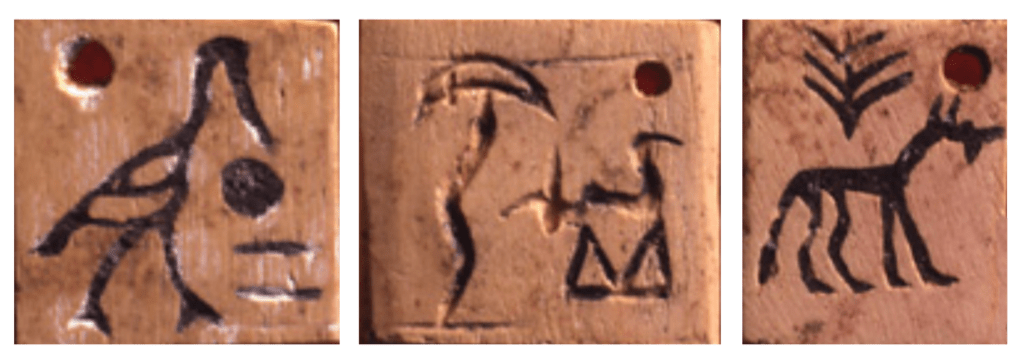
While it is likely these earlier ritual or shamanic practices signified some form of early religion, gradually developing more distinct or complex forms of meaning as humans collectively multiplied and spread across the Earth and developed their storytelling capacities, they are all in the realm of prohistory – before any written records – and therefore what we know of any prehistoric beliefs or practices is purely speculative. However, once humans developed writing – evolving from early neolithic symbols such as those found in Jiahu, China, to various cuneiform and hieroglyphic scripts (as below from Abydos, ca. 3,400–3,200BC [Credit: Wikipedia]) – they were able to record the myths and beliefs about their existence and the spiritual beings that created them, which previously only existing as oral tradition.
For example, in the late Neolithic period (ca. 4,500–2,500 BC), a hypothetical common linguistic (see Gen 11:1) and mythological parent group, Proto-Indo-European (PIE), spread from an origin point in the Pontic-Caspian steppe to cover most of Europe, Russia and India. Genesis itself was supposedly written down only 3,500 years ago, therefore oral storytelling must have continued for thousands of years before it was recorded.
Although the BBC Earth series does not refer to the cataclysmic flood described in Genesis as one of our planet’s major extinction events – presumably because it did not destroy all life on the planet in the same way earlier extinction events did – virtually every culture and continent has an oral or written flood mythology, barring Japan and supposedly Egypt (although there is one strand of flood myth where Ra sends Sekhmet to destroy part of humanity because of their wickedness and unfaithfulness), there must be an explanation for such widespread records of catastrophic flooding events.
While scientists generally consider the Genesis story of a worldwide flood to be unsupported by the geologic evidence, the recent carbon-dating of shells in sediment in the Black Sea area between 18,000 and 8,600 years ago has been mooted by some as a potentially credible source of this story. By comparison, Plato’s lost civilisation of Atlantis – which most people now believe refers to a major volcanic eruption of Thera on the island of Santorini ca 1,600 BC that destroyed the mysterious and highly advanced ancient Minoan peoples – was oddly not recorded by any other civilisation, despite that eruption purportedly being one of the largest volcanic events in human history; it unleashed 10 million tonnes of ash, gas and rock, unleashing a powerful tsunami.
Nevertheless, being that most written records of major catastrophes that destroyed earlier civilisations align human mortality with morality (as in, a punishment unleashed on mankind by God or gods on errant humans), it seems an awareness of our own fragility and mortality on an unpredictable planet is what prompts our desire for supernatural connection and meaning beyond our mere day-to-day survival. According to the Bible, since the time of Adam’s grandson Enosh’s [meaning mortal man, mankind] existence, men began to call on the name of the Lord (Gen 4:46, Amplified version); even then, man’s awareness of his mortality drives his search for God. The decrease in human lifespans of 970 years to 120 years from the pre-flood era to now, as recorded in Gen 6:3 and Gen 11:10–23, also seems to have triggered a quest for immortality – if not of a physical kind, of a lasting legacy through either genetic descendants or human achievements such as art, music, literature, and scientific or technological advances.
Human storytelling is modelled on our consciousness of our own finitude or mortality; knowing that there is an end to all things, we are prompted to find some way to make our lives meaningful.
While other species aren’t troubled by existential crises, humans are constantly speculating about the end of life on Earth as we know it, with many dramatic theories – both scientific and scriptural – as to the potential causes and effects of a global apocalypse. Considering we dwell on top of a fairly thin, semi-stable crust under which is a constantly moving flow of molten mass marked by violent eruptions, we would be foolish not to be aware of our potential annihilation as a species.
Indeed, human storytelling is modelled on our consciousness of our own finitude or mortality; knowing that there is an end to all things, we are prompted to find some way to make our lives meaningful. In every story, the beginning must follow through to a satisfying transformative conclusion or resolution where boy gets girl, good triumphs over evil, wrongs righted and wisdom gained. Without any significant supernatural or spiritual breakthrough, we seem incapable of simply revelling in existing in the moment, without fear of death or trauma. We find it difficult to consider or emulate plant forms like lilies and simply glory in our uniqueness in creation, as Jesus urged us to do.
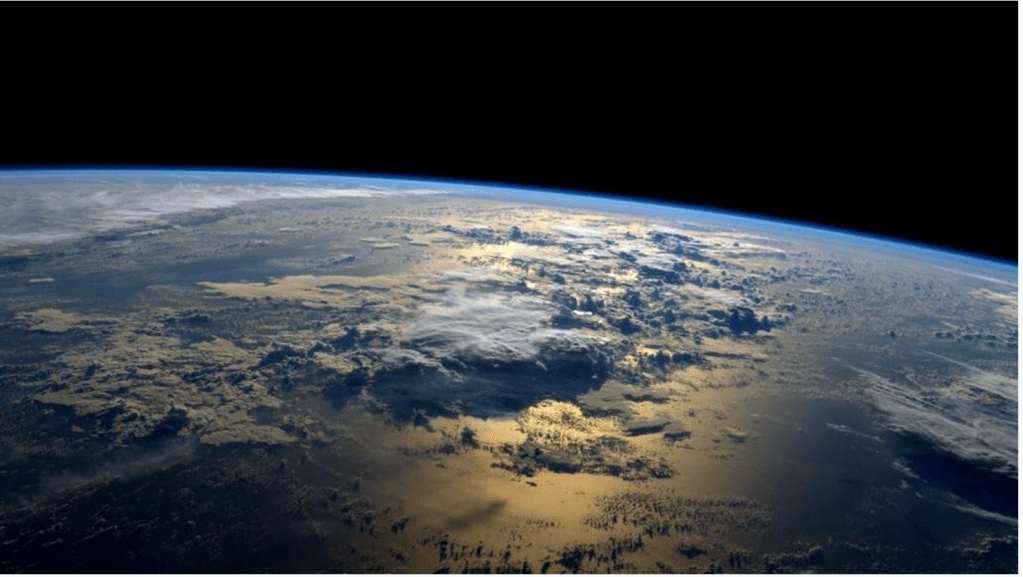
Earth: a fragile planet (Image: Clim8)
Fragile beings on a fragile planet
As seen from space, our planet must seem not only small in comparison to other planets, but also incredibly vulnerable. Apparently, Michael Collins, the Apollo 11 astronaut who flew around the Moon as Neil Armstrong landed on its surface, described his experience of seeing the Earth this way:
“The thing that really surprised me was that it projected an air of fragility. And why, I don’t know. I don’t know to this day. I had a feeling it’s tiny, it’s shiny, it’s beautiful, it’s home, and it’s fragile”.
—Michael Collins, Apollo 11 astronaut
But it is not only the molten strata beneath our feet that makes us vulnerable. We are now living in the Anthropocene age – a period in our planet’s existence where human activity is competing with the underlying geology in shaping the Earth. According to the Earth series programme notes, human population on Earth has accelerated rapidly, from just one billion 220 years ago to now 8 billion, which has had a horrific knock-on effect on the rest of the planet’s species, as now only 4% of mammals alive today are wild animals; 96% are either humans, their pets or domestic farm animals. And the destruction of our planet’s ecosystems and natural resources is rendering an increasingly uninhabitable future.
Yet man’s time on Earth’s 4.5-billion-year existence is very short – only 0.007%. And if our planet’s geologic history tells us anything, it is that even if we seem to be doing our best to annihilate ourselves by continuing to burn fossil fuels at exponential rates, the Earth is fully capable of both destroying and renewing itself, with or without us. Should another major extinction event occur, the Earth will surely survive, along with some form of life; whether or not this will contain humans is another matter – perhaps when Jesus said, ‘the meek will inherit the Earth’, he was speaking of single-celled amoeba or our planet’s first life form, cyanobacteria?
For example, if a major supervolcano eruption event were to take place, which NASA researcher Brian Wilcox says is substantially more likely than an asteroid or meteor hit, the initial effects would be local incineration and a global ash cloud that would block out the sun’s light, releasing toxic gases (hydrogen sulphide, sulphur dioxide, methane and carbon dioxide) that could plunge Earth’s climate into a nuclear winter lasting decades or longer.
The same forces of volcanic eruptions that can potentially destroy Earth can also rebuild it(Credit: BBC Earth series notes)
Yet these same forces that have the ability to obliterate life also contain the elements necessary for new life to emerge, creating new, biodiverse-rich ecosystems. As in the example of the Mt St Helen’s 5.2-magnitude eruption in 1980, the lava contained mineral- and nutrient-rich ingredients nourishing plant life such as mosses that helped break down rock and pave the way for a superabundance of new flora and fauna, some of which emerged as soon as a year later.
Considering we dwell on top of a fairly thin, semi-stable crust under which is a constantly moving flow of molten mass marked by violent eruptions, we would be foolish not to be aware of our potential annihilation as a species.
Therefore, if we humans are sleepwalking into another major extinction event – what some are referring to as a sixth mass extinction, as signalled by the present loss of biodiversity and numbers of critically endangered species – and the Earth is shifting towards becoming a less-habitable or life-hospitable planet, we can take heart from both the geologic record and the scriptures that life on our planet may be destroyed, it will eventually be replaced by a new Earth**.
As for me, when I consider my own fragile existence on this planet, I am grateful and filled with wonder at the multiple processes that took place to contribute to my own physical and spiritual existence. I have no doubt of the existence of a benign Creator who somehow encoded my cosmic and physical dust with the DNA of his handprint. I find the conflicting forces within our planet fascinating yet somehow remarkably similar to the forces that govern my own human story, the very paradoxes – or polar extremes, if you like – that make me who I am. I believe the English metaphysical poet John Donne expressed it best in the lines of Holy Sonnet V:
I am a little world made cunningly
Of elements and an angelic sprite,
But black sin hath betray’d to endless night
My world’s both parts, and on both parts must die.
You which beyond that is most high
Have found new spheres, and of new lands can write,
Pour new seas in mine eyes, that so I might
Drown my world with my weeping earnestly,
Or wash it, if it must be drown’d no more.
But oh it must be burnt; alas the fire
Of lust and envy have burnt it heretofore,
And made it fouler; let their flames retire,
And burn me, O Lord, with a fiery zeal,
Of thee and thy house, which doth in eating heal.
*Note: This article was also inspired through transcribing interviews with SETI scientists regarding the existence of extraterrestrials, included in the latest (Aether) edition of Wild Alchemy Journal. You can learn more and purchase this intriguing collection of scientific and esoteric essays and UX materials using this link: https://www.wildalchemylab.com/ar-journal
**(Isaiah 24:1, 3–6,19-21, 34:4 and 65:17; Jeremiah 51:25; Zephaniah 1:18, Micah 1:4; Malachi 4:1; Matthew 24:35; 1 Corinthians 3:13; 2 Peter 3:6–13, Revelation 21:1).
Every year, the annual ‘peace, love and salsa’ (or sun, sea and salsa) orgy that is the Croatian Summer Salsa Festival (CSSF) sends thousands of international dance revellers back to their respective homes blissfully refreshed, rejuvenated and already craving more. Some have even either made plans for a permanent lodging there, or even already bought one!
Run by Vladimir Semenic, founder and CEO of Salsa Adria Productions, along his team of festival organisers and promoters since August 2005, this festival has rapidly grown from an initially smaller and more intimate long weekend event mostly attended by Europeans to a huge, week-long+ international festival with more of a congress vibe, thanks to the presence of many of the salsa world’s top artists, teachers, performers, DJs and musicians. Indeed, this year there were quite a few who travelled from as far as Canada, Japan, Hong Kong, Mexico and Los Angeles!
So what it is about this particular dance festival that makes it so captivating? And what were the highlights of this year’s (2023) festival and tips for next year’s event?
The many different views of St Euphemia – from sun up till sun down
Well, first of all, the answer is location, location, location. CSSF is set in the beautiful, picture-postcard-perfect city of Rovinj, Croatia – a rocky peninsula on the Istrian coast, surrounded by manmade and natural harbours, relaxing pebbly beaches, lush green mountains studded with beautiful flowers and fruit trees and serene islands, all presided over by the Baroque hilltop church of St Euphemia, which affords endlessly spectacular views, particularly during the stunning nightly sunsets. As many say, “No matter how many times I’ve seen it, I will never get tired of this view!”
Another big draw of Rovinj is the opportunity to meet and connect with salsa friends from all over the world, as well as to make new ones. For many, this is one of the biggest highlights of the festival, and the reason they return year after year to add further unforgettable memories. As each edition brings as many newbies as regulars, there are always fresh encounters and connections to be made – both on and off the dance floor – as well as a chance to deepen and extend existing friendships.
Pics: clockwise from top: with Ulrike Silberkuhl at Riva Bistro; with Bernadette Anderson at the Grande Pool Party at Villas Rubin Resort; with Melanie RDC Mambo at Atlas restaurant in the old town; at the beach with the London salsa massive at CSSF 2016 (credit: Han Sean)
Rovinj also boasts many excellent fresh seafood restaurants with wonderful views of the harbour – great for those more intimate meet-ups with friends before dancing until the wee hours at the Adris Old Tobacco Factory nightclub. There are also hundreds of cafes, bars, gelaterias and shops in the squares, along the harbours and on the charming, narrow cobbled streets of the old town. Most have surprisingly affordable prices.
This year, I was pleased to discover a few new restaurants that came heavily recommended by Rovinj regulars and enthusiastic TripAdvisor reviews – particularly Riva Bistro (tip: don’t miss the spicy squid starter – a huge, tasty salad that is nearly a meal on its own – and if you like truffles, the truffle pasta is excellent [they even have GF pasta options, a huge plus in my book!]); Scuba (superb tuna tartare and octopus); Atlas (excellent fresh-grilled fish at reasonable prices); and Konoba Lampo, great for drinks on its lantern-lit terrrace directly overlooking the sea.
Of course, no first-time visit (or even regular) to Rovinj would be complete without a visit to Maestral, if not for the food (I’ve found it excellent, but you do have to wait a long time for it since it is nearly always packed), then for its exquisite sunset views of the harbour. The fact it is near the Adris and Delfin pier makes it a perfect place to staunch your hunger and relax with friends after or before dancing.
The excellent Riva BistroMe enjoying seafood risotto at AtlasA typical Rovinj menuScuba restaurant – recommendedKonobo LampoThee terrace bar at LampoMaestral restaurant – food with a view
Party, party, party!
CSSF is one long, multi-event/location party, with opportunities to continue the dance exhilaration elsewhere after the main event(s) – so for those with the stamina, you can effectively dance 24/7 the entire week! In addition to the main salsa event, there are also two Summer Sensual Days events for lovers of bachata, sensual bachata, kizomba, urbankiz, semba and other African flavours, one a four-day event in the nearby town of Opatija and another week-long pre-CSSF event in Rovinj. So you can extend your dance holiday as much or as little as you like, and according to your favourite dance flavours.
As the event programme states, “Because there can never be too many parties in Rovinj”, the official weekend party nights are preceded by two official pre-parties, one on Monday 12 June at the Adris this year, another at the Steel nightclub on Tuesday 13 June, concluding with an official event afterparty on Monday 19 June (also at Steel). There were also ‘unofficial’ afterparties after sunrise at the pier in the old town’s Main Square, and daily dancing in the sunset hours at Mulini Beach.
Enrtance to the Adris party at nightHarbour with the view of Adris Old Tobacco Factory in dayAt the evening dance party
Of course the main event – the all-night dance parties at the Adris Old Tobacco Factory featuring a fantastic line-up of top international Cuban and salsa/mambo/bachata/kizomba DJs – never fail to wow, as they are all awesome dance nights. I knew the Saturday Gala Party night would be packed so I turned up a little later (eg 4am), but the dance floor was still very busy even then.
I had many amazing dances at each party night, both with dancers I already knew as well as a few ‘lucky dips’ with those I didn’t. I can’t say I danced with any of the performers or instructors during the nightly ‘Artist Hours’ – I didn’t do any workshops or ‘MPower’ yoga/flexibility sessions either (only available to full-pass holders), but I heard the Cali-style one taught by Santee Hernandez was amazing – if I’d known about that beforehand, I would have loved to dance a fierce Cali-style salsa or boogaloo with him!
There were also daily dance pool parties (2pm–7pm, from Monday 12 June to Saturday 17 June) at the seaside Villas Rubin Resort, with one huge floor, both under a marquee and in a big open-air plaza, devoted to salsa (Cuban and salsa/mambo) and another open-air floor to sensual (bachata and kizomba, typically), with shuttle buses (for a €5 fee) transporting dancers from the Delfin pier to the entrance to the resort.
Life’s a beach… at the Villas Rubin Resort Dancing up a storm at the Grande Pool Party
Unfortunately – being that this was during the hottest hours of the day – the pool itself was not accessible to non-residents until the Grande Pool Party on Sunday 18 June (next time I might opt to stay at the resort itself just for the pool and the seaside – and of course the drinks!), but at least the excellent cocktails (Sex on the Beach, anyone?) from the resort bar helped keep those party juices flowing, as you can see in the videos here and here. There’s always loads of animations thrown in for fun, too, although sometimes there are a bit too many of these.
This year – especially for those who bought the full week-long (from 12–19 June) pass – there were two concerts, the first being salsa dura maestros Tromboranga on Tuesday 13 June and the second the Cuban reggaeton and timba group Los 4, who gave a rousing show at the Grande Fiesta in the main square of the old town on Friday 16 June, which also featured dance shows from international performers – I was particularly impressed by the solo male dancer in the IShadow Group by Yuta Higa from Japan and the energy of the all-female Cachevere Dance Group from the Netherlands. Although this is usually one of my favourite events of CSSF, it was a bit too crowded for my energy levels at the time with over 3,000 dancers dancing in the open-air square.
Dancing in the open air to Los 4 in the main square on Friday nightTromboranga warming up to play
As one of my favourite memories from previous Rovinj CSSF visits (this year was actually my 5th or 6th visit, though with a gap of about 7 years) is the legendary boat parties, with three hours of dancing on the boat and an opportunity to jump off the top deck for a cooling swim in the sea. This year, in addition to the usual Monday salsa boat party, there were several additional boat parties available throughout the week. I ended up joining three of them by turning up at the pier early and buying discounted tickets from those who couldn’t make it. Each boat party had a different vibe or flavour, but I particularly enjoyed the ‘White Delight’ boat party on Friday with DJs Rumbero and Sergi – I danced fairly non-stop for the whole cruise, which was amazing.
Just a small snapshot of the typical boat party craziness
Thinking I might miss the Monday salsa boat cruise, I booked in advance for the ‘Romantic’ cruise on Saturday afternoon, which I thought would be salsa romantica but was mostly bachata music – as bachata’s not really my thing, I just chilled mostly and enjoyed the cruise and jump off the top deck into the cooling waves, but I also took some pics and videos of others dancing. Although I still had fun and enjoyed chatting to friends, I was disappointed the Monday salsa boat party was mostly club music, with probably only three salsa tracks in total – if I’d known, I might have opted for the Cuban party boat at sunset instead. Anyway, I certainly got my party boat fix for the year!
Extras
Even when the city seems nearly completely taken over by salseros/as and bachateros/as, there are still plenty of places offering opportunities for quiet reflection, secluded sunbathing or more intimate encounters with others and, of course, the gorgeous nature. Explore the Zlatni Park Forest and the Golden Bay/Cape area behind Hotel Lone, or head to nearby Mulini Beach for some sunset dance party action or just chill out with a swim in the cooling Adriatic sea (tip: Don’t forget to wear sea shoes, as stepping on sea urchins can ruin your holiday! Avoid the sunbeds as these are astronomical). Cuvi Beach is a little further away, but you can also get a massage to soothe those aching muscles!
A perfectly relaxing dayChilling at Mulini BeachMulini Beach as sunset approachesTourists wandering on cobbled alleysFun graffitiA rather unique fashion shopCannons facing out to sea from the hilltopAt the hill of St EuphemiaA view to the seaSeaside artThe famous Balbi ArchWith Melanie D in the main squareComing back from dancing at sunriseCan you ever get tired of looking at these sunsets?
And along with the multiple crazy CSSF boat parties organised on a daily basis during the festival, you can also organise your own sunset or sunrise dolphin- and whale-watching trips, or take a leisurely boat cruise to explore the many islands. You can also easily organise a day trip from Rovinj to the exceptionally beautiful Plitvice Lakes National Park, which features crystal-clear turquoise lakes and waterfalls, and offers abundant outdoor adventure activities (hiking, kayaking, ziplining, cycling, horseback riding, deer and cave viewing, etc [see here for ideas]).
So, whether you’re an all-out extroverted dance party animal or a more introverted, reflective type craving blissful seaside relaxation in the sun – or preferably a bit of both! – this city and festival is guaranteed to satisfy your innermost desires.
If you’re keen to book next year, you might want to bear these points / tips in mind:
This festival is a great way to roll a dance marathon into a proper holiday – but it DOES NOT COME CHEAP. Even if you are being relatively conservative, it will still likely cost you £1,000 /€1,200 for the full week. So it is wise to BOOK AS EARLY AS POSSIBLE – INCLUDING YOUR AIRFARES / TRANSPORT AND ACCOMMODATION – see below for 2024 dates.
As there is no direct flight to Rovinj (the nearest airport is Pula, about 40 minutes away; there is a bus from Rovinj to Pula for only €6, but it is not always reliable), you can likely find more sustainable or comfortable travel arrangements if you plan in advance – for example, EasyJet pilot Amir Faragalla told me there’s a coach that goes direct from Ljubljana to Rovinj. If you fly to Venice or Trieste, you can likely use a GoOpti transfer to get there. And join one of the online CSSF travel chat forums via Facebook/Messenger to connect with others for cheaper shared transfers, as solo taxi trips can be outrageously expensive.
You can find reasonable accommodation in the old town – mostly large bed-sitting rooms or apartments with cooking facilities, etc – on Booking.com (I booked the Svalbe Rooms and Suites for 3 nights at €267.30), which was in a reasonably easy-to-find/get to location in the old town), or alternatively stay at a local hotel or the Villas Rubin resort, which does provide a free shuttle service to/from the city. If you are staying in a place with cooking facilities, there are two supermarkets, one by the bus station and the other on the way to/from Delfin pier.
Wherever you stay, be prepared to do a fair bit of walking on the cobbled streets, which are well-worn and can be quite slippy.
In celebration of World Wildlife Day – also for my husband’s upcoming birthday, as he requested this post – I am sharing a pictorial review of near-extinct UK species now returning to the wild, as well as those species particularly under threat by HS2. (Note: All images, unless otherwise noted, are from Shutterstock.)
Brits have long struck me as a nation of obsessive animal lovers – and we’re not talking about domestic pets like cats and dogs here, but the adorable and seemingly unique creatures such as hedgehogs and badgers, among others, that have long inhabited favourite TV programmes, children’s stories, coastlines, woodlands, and even back gardens or sheds, for those lucky enough to glimpse live creatures instead of roadkill.
Yet although Britain has lost hundreds of species – some 413 flora and fauna went extinct in the past 200 years, most within the past century, according to Rewilding Britain – the good news is that many species have been successfully reintroduced to the wild, and some are even flourishing. This includes golden eagles (pictured above), and the droves of red kites (below, top right) that daily circle the woods behind my Buckinghamshire home, their outstretched wings gracefully swooping above me as they hunt for prey or carrion.
Some previously extinct or seriously declining species began to be reintroduced as far back as the late 1700s or early 1800s. These include Scotland’s capercaillie bird (above, main pic)*, the Great Bustard (or Otis tarda, top left, reintroduced in 1832, as per the capercaillie) and red squirrels (top middle, reintroduced in 1793).
Apparently, the late Victorians, appalled at the rate of extinction, attempted other reintroductions of former native British species. These include reindeer, elk, wolves, lynx (pic 2 below), wild boar, Eurasian bison (pic 3) and beavers (pic 1), with the latter finally – only 120 years later – successfully reintroduced in a formal Scottish trial in 2009 (in addition, they have recently been reintroduced to Loch Lomond for the first time in over 400 years). The first four bison – three females and a bull – were delivered from Germany last year to a 210-hectare rewilding site, Wilder Blean Woods in north Kent, managed by Kent Wildlife Trust and the Wildwood Trust.
Such keystone species are an essential part of our native ecosystem, and in fact help shape, create and nurture the land, even helping to shift the course of rivers.
So while the Victorians might have a lot to answer for in terms of their love and endless pushing for progress (among other things), at least they began to smell the extinction coffee long before some of their present ecological emergency and climate change-denying ‘Luddite’ descendants (here’s looking at you, Steve Baker MP)**.
But thank God such resistance, despite a clear climate and ecological emergency, hasn’t stopped other British nature- and wildlife lovers from pressing on with species reintroduction programmes across the British Isles, most notably in Scotland.
“While the Victorians have a lot to answer for in terms of their endless pushing for progress (among other things), at least they began to smell the extinction coffee long before their present ecological emergency and climate change-denying ‘Luddite’ descendants”
Since the mid-to-late 20th century, many other successful reintroductions have been made. Among these are Britain’s largest bird of prey, the white-tailed eagle or sea eagle (below). Sea eagles, brought to the UK from Norway, were first re-established on the Scotland’s west coast in 1975. They bred in 1983 for the first time in over 70 years, and there are now over 152 pairs. They have even been spotted along the South Coast of England after 240 years.
More recent reintroductions of extinct or dramatically declined species include (clockwise, from top left, as shown below) 1) the chequered skipper butterfly (Caterocephalus palaemon – not to be confused with the large chequered skipper); 2) the northern pool frog (Pelophylax lessonae); 3) the large marsh grasshopper (Stethophyma grossum); 4) the little bittern (Ixobrychus minutus); 5) the sand lizard (Lacerta agilis); 6) the orange tip butterfly (Anthocharis cardamines); 7) the natterjack toad (Epidalea calamita); 8) the strikingly coloured ladybird spider (Eresus sandaliatus); 9) the pine marten (Martes martes); 10) the sea hawk or osprey (Pandion haliaetus); 11) the corncrake (Crex crex); 12) the large blue (Maculinea aurion) butterfly; 13) the northern lapwing (Vanellus vanellus); and (14) the smooth snake (Coronella austriaca).***
In addition, other extinct or disappeared species of flora that enable these species to thrive again are also being restored through various habitat restoration projects. Seagrasses, which support native oyster populations – a long overexploited and near-decimated mollusc – are once again beginning to flourish again in Loch Craignish following careful and dedicated work by Scottish charity Seawilding, as reported by the Guardian. This is essential, says reporter Phoebe Weston, because “Native oysters create nursery habitats for fish, improve water quality, remove nitrogen from the water and sequester carbon.”
“Native oysters create nursery habitats for fish, improve water quality, remove nitrogen from the water and sequester carbon”
In the same way, mosses, such as Sphagnum moss (below), while perhaps seemingly less urgent in terms of reintroduction or restoration projects than some of the other species above, nevertheless play a crucial part in creating the conditions for other bog-loving species – sundews, invertebrates and fungi – to survive. They are also part of nature’s very own ‘carbon capture and sequestration’ (CCS) system (see graph below, from ‘How Nature Helps Fights Climate Change’ [from DW Global Media Forum]).
Two species of sphagnum moss, papillose bog moss and red bog moss, were reintroduced in late 2021 to Astley Moss, a UK peatland site in Greater Manchester; likewise, lesser bladderwort was reintroduced nearby after it had become extinct over 100 years ago. Both are part of the Greater Manchester Wetland Species Reintroduction Project, which is currently working to reintroduce several rare plant peatland moss and species, such as common and hares-tail cotton grass, cross-leaved heath moss, the carnivorous great sundew, the oblong-leaved sundew, the lesser bladderwort, and other rare wetlands specialists including white-beaked sedge and bog asphodel.
Restoring these native plant species will also encourage other native wetland species to return. For example, the charity is also currently working to reintroduce the formerly extinct (last seen 100 years ago) large heath butterfly (Coenonympha tullia, left****), the locally extinct bog bush cricket and one of the UK’s rarest dragonflies, the white-faced darter.
HS2’s threat tonative species
While supporting charities and local wildlife reintroduction projects like the Manchester project is clearly essential, what else can we do to help our land and restore our once gloriously diverse wildlife – even to see these once-extinct species brought back to life and flourishing once again in Britain’s ‘green and pleasant land’?
“While supporting local wildlife reintroduction projects is clearly essential, what else can we do to help heal our land and restore our once gloriously diverse wildlife? … Well, for a start, we could stop any more unnecessary deforestation or habitat destruction such as is currently being done by HS2.”
Well, for a start, we could do our best to stop any more unnecessary deforestation or habitat destruction, such as is currently being done by HS2 – the high-speed railway project currently carving up huge swathes of British countryside, destroying many habitats in its wake, and threatening to drive to extinction many already rare, endangered and protected species that were supposedly protected under various UK, European and international environmental protection laws, as I previously reported.
Specific British animals under threat from HS2, as shown in my own hand-drawn poster above, carried by fellow HS2 protestor Sylvia Baronin von Hahn, include (clockwise from top left): 1) the great crested newt (Triturus cristatus); 2) Brandt’s bat (Myotis brandti); 3) Serotine’s bat (Eptesicus serotinus); 4) the hazel dormouse (Muscardinus avellanarius); 5) the barn owl (Tyto alba); 6) the European water vole (Arvicola amphibius); 7) the tawny owl (Strix aluco); 8) Reeve’s muntjac (Muntiacus reevesi – while not a native species, they were introduced to the UK from China in 1838); 9) the European or Eurasian badger (Meles meles); 10) the polecat (Mustela putorius); and 11) the lesser spotted woodpecker (Dryobates minor), in addition to other species currently being reintroduced, as mentioned above (eg lapwings and orange-tipped butterflies).
It does grieve my heart no end to see what was once such an ecologically diverse, rich and life-sustaining countryside being so callously destroyed. Where are Britain’s supposed animal lovers when you really need them? Why aren’t they standing in front of Westminster, like me and my friends, or encamped in trees in various ancient woodlands at risk from HS2, risking prison to try to save them?
“Where are Britain’s supposed animal lovers when you really need them? Why aren’t they standing in front of Westminster, like me and my friends, or encamped in trees in various ancient woodlands at risk from HS2, risking prison to try to save them?”
I’m truly grateful for the heroes I’ve known who spent long months in jail because they cared enough about these “least of these” to try to protect them; to me, they truly are “the best of British” (meaning of course the people – not the animals!).
Okay, that’s my little anti-HS2 rant over – for now. Meanwhile, I’ll leave you with a final pic of everyone’s favourite – and now also highly endangered – British animal species: the hedgehog (Erinaceinae). Plus a stamp from Britain’s very long-ago past (eg 1963 – 60 years ago, during a ‘National Nature Week’ – what happened to that? And note the use of shillings!). This shows that, once upon a time, Brits did care about their flora and fauna. Thank God for those who still do, and are working hard to bring them back to life.
*Capercaillie numbers have since declined by 40% in the past 15years, due mostly to habitat loss and climate change. There are now only around 1,000 left. **Several of us in my local environmental activist group, XR Chilterns, attempted to meet with Steve Baker ahead of the Climate and Ecological Emergency (CEE) Bill being signed into Parliament; he pretended to listen politely (as politicians do so well), then promptly joined an anti-global warming ‘think tank’. It’s clear that while he claims to be against HS2, he believes material prosperity and ‘progress’ is more important than nature. ** From Wikipedia, under Creative Commons Licence ***As above
When I first began this blog in late 2019/early 2020, I was coming from a place of some 25+ years as a professional freelance/full-time journalist. Being wired as a journalist means I have an in-built sense of urgency and nose for news, well as a plethora of ideas for feature-length articles and interviews, etc, such as those listed in my recent blog post (Questions for my readers).
However, I also began this blog with a desire to find my true direction and voice as a writer; I knowingly called it “a journey through the bigger picture” for that reason. I initially carried on in my journalist vein writing about many of the big issues – eg climate change, sustainability, the devastation of nature through ill-conceived projects like HS2, etc – in addition to writing about my other passions, eg art, travel, salsa.
During this time, I’ve been gradually evolving from a full-time freelance journalist to a full-time, aspiring novelist (more on that below). I may well continue to take freelance commissions as and when they come, as well as add other articles, etc to this blog, but because my work in progress (WIP) is increasingly taking the majority of my writing time, I wish to inform my readers (whether new to this blog or a long-term subscriber) about this direction, as it will likely affect the content I post here.*
An exciting journey
It is interesting and exciting to see where this particular journey is leading me. Although I have been writing creatively all of my life – my first loves were poetry (some published) and short stories; I also wrote a full-length fantasy novella for my English Literature and Creative Writing degree from Bard College, New York as an additional Narnia chronicle, since I took CS Lewis’s Narnia characters and transplanted them to Shakespeare’s A Midsummer Night’s Dream, as well as a children’s story; and there’s probably at least 200 notebooks and scraps of paper filled with multiple scribbled ‘Ideas for Novels’ during the course of my life – it was thanks to Covid that I finally decided to take one of those ideas and sit down daily to bash it out.
As I always do, I’ll shout the praises of the London Writers’ Salon, as well as its Weekend Writers’ offshoot, for not only providing a daily set writing space(s)/time(s) for writing and a tremendous global writing community, but for the many fantastic interviews with other writers across different genres and styles. I am still feeling deeply inspired by a recent interview with ‘brave new writing voice’ Jonathan Escoffery, author of stellar debut breakthrough If I Survive You, particularly his comments about the different types of “propulsive energy” (eg the energy and dynamic that propels a story) of short stories versus novels, as well as a stirring interview with Pulitzer Prize-nominated playwright Sarah Ruhl.
Escoffery’s comments have also made me reflect on how the requirements for a journalist in conveying news differs from those a novelist uses in telling a story, whichever length or form that may take.
While a journalist’s job in reporting the news is to ensure the main questions (who? what? when? where? how? why?) are answered in the first few paragraphs, a novelist or storyteller must ensure the key elements that make for satisfying and dynamic story-telling are all there: interesting, well-rounded yet humanly flawed (and therefore relatable) characters; gripping plot twists, filled with high-stakes drama; an authentic, credible voice for each character/point of view (POV), which is also linguistically true to its geographic and temporal locations; lively dialogue; evocative, painterly settings and details; rich, sensorial and occasionally startling language, littered with literary devices such as simile, metaphor and allusion, etc; and lastly a very well-defined story arc and compelling conclusion that neatly ties up every plot line while delivering that all-important punch.
The business of writing
In addition to making these mental transitions, I’ve also been learning loads (specifically about historical fiction, as that is the genre I am currently writing in), through the recent Historical Fiction 2023 convention run by History Quill. This has been not only about the actual craft of writing – for example, where and how to research effectively; polishing your dialogue so that it is both relevant to the period and yet comprehensible to a contemporary audience, yet without any anachronistic ‘wokeness’; or perhaps by analysing the prose styles of other masters of this genre, such as prize-winning Wolf Hall trilogy author Hilary Mantel – but also the (at times even more daunting) business side of writing.
While it is true I was not taught some of this business stuff at university, even if I had been, the publishing landscape – like the journalism landscape of the past 15–20 years, particularly – has changed dramatically, and will only continue to do so. The advent of new technologies and practices such as artificial intelligence (AI), non-fungible tokens (NFTs) and self-publishing (now generally referred to as the ‘indie’ or independent route, as opposed to the traditional or ‘trad’ publishing route) has shaken up the publishing industry as least as much as the work from home (WFH) revolution is shaking up the world of work.
Where will it all end up? And which route will I end up taking? That’s very hard to say at this point – for the moment, I am just focusing on getting the actual writing of the first draft done. What started out as one book has now migrated to being a three-part story (tentatively titled ‘Netsuke: A Novel in Three Parts’), and may well end up as a three-book trilogy. Who knows where this journey will ultimately lead?
I’ve already completed Part I (working title: ‘The Journey Out’), with 12 chapters at just under 70,000 words; I am 2.5 chapters away from the end of Part II (working title: ‘In Japan’), which is already 15 chapters at around 95,000 words; and I have yet to write Part III (‘The Return’), which will likely be another 10–12 chapters/80,000 words. It’s a lot of work, and specifically – since it is historical fiction, a new genre for me – an endless amount of research.
After I’ve finished writing the basic story in first-draft form, I’ll then have to go back to cut and revise mercilessly; polish and sharpen my characters (specifically, intensifying their internal conflicts and honing their POV voice); and add nuance, subtlety and refinement to the language. Then I’ll need to have it fact-, language- and regional sensitivity-checked, and likely passed to an external editor (developmental and/or structural, as even editors need editors) while searching for a literary agent who can hopefully land me a book (+ potential film and/or Netflix series) deal.
Since it has already been just over two years in the works, I’m sure this process will take me at least another full year, possibly more – so, watch this space!! (For further information on my WIP and processes, see also the next two blog posts.)
Jane, aka Small Writer at Large
*Note: As I have also been recovering from total knee replacement (TKR) surgery in recent months, this has affected my ability to dance and/or travel (sustainably or not), however I am looking forward to resuming both in the not-too-distant future (for example, I am travelling soon to Dublin to see Christian, artist and fellow writer friends). Also, there is quite a lot happening with HS2 currently, and I do plan to join Extinction Rebellion’s (XR’s) ‘Big One’ event in London in April, so will likely write about these.
Having hit my three-year anniversary of writing this blog, I’d like to ask for your feedback in terms of its further/future development. Whether you have only recently subscribed or subscribed a while ago, I am very grateful for your readership, comments, likes and shares.
Those who have been reading for a while will note I have focused, as per the descriptor at the top of the blog, on my main activities and passions as a writer/journalist, traveller, eco warrior, dancer, artist and believer. While each of these is a vital to my life, the true nature of life is change – it is never static. Life is an ongoing journey of discovery and development, which was why I subtitled the blog “a journey through the bigger picture”, as I meant to chronicle my own journey(s), as well as (hopefully) to encourage your own.
So, as this post-new year time of coming out of winter and heading into spring is usually a process of reflection and refining, I’d love some feedback from you on which topic(s) interest you most. Please see the list below and utilise the interactive tools and kindly add any comments/feedback at the end.
In terms of my own writing journey, I’ve been gradually transitioning from being a full-time/freelance journalist, copy/content writer and editor to a creative writer/novelist – specifically, of historical fiction – as I have dreamed of being all my life. I always intended to travel and live a lot, and then it down and write about it all; it seems that ‘eventually’ is finally here! So, after years of filling multiple journals – probably at least 150 (and God knows how many envelopes and scraps of scribbled-on paper) – with ideas for novels and paintings during my 50+ years on the planet, I am finally beginning to do just that.
Thanks to our inability to travel anywhere during Covid, or for me to go running off into London or abroad endlessly for work, art and salsa events, etc, I decided to pick just one idea for a novel and commit myself to it. Thus far, I have written over 150,000 words of the first draft of an ambitious epic three-part historical fiction novel (WIP title: Netsuke, A Novel in Three Parts), set in 17th century Amsterdam and early Edo-era/Tokugawa Japan. It is a mix of action and adventure (pirates! shipwreck! sea battles! samurai swordfights!), romance (spoiler alert: not exactly the happy-ever-after kind) and worldview – and, of course, art (Dutch Golden Age and Japanese). I am loosely describing it as “Shogun meets Memoirs of a Geisha meets Girl with a Pearl Earring”.
While this is an ongoing and time-consuming project (and is likely to be so for at least another year or more), the main reason I have failed to publish a blog post recently (apart from the fact I am recovering from major knee surgry) is that I’ve had such an array of topics on my mind, I could not decide which to write about, as below. Some of these may be more suitable to pitch out to other publications/publishers* – hopefully for pay! – but, as the title of my blog indicates, I am always a journalist and writer “at large” (in the free-roaming rather than the criminal fugitive sense, of course!).
Meanwhile, these are the topics I’ve considered writing about; please let me know if you are really interested in any of them. It is always far easier for me to bash out an article then to write a Shogun-length novel as I am doing, but I do get ideas for both all the time, so possibly by the time I’m ready to upload this, I will have had several more!
Artificial intelligence (AI) and creativity – I’ve been having lots of interesting conversations on this theme with fellow journalists and creatives; since it is widely expected to be the next big thing shaping our world, how will it affect us all?
Women and anger – Recent conversations have sparked thoughts about women’s anger – while usually characterised as a negative attribute by men, it has often catalysed much-needed change, and is therefore of inestimable value.
Japonisme: The West’s enduring fascination with all things Japanese – Being that I am writing a novel in part inspired by Japanese art and Japan’s historical connection with the West (via the Portuguese and the Dutch East India Company – and later the British East India Company – through trade), I’m very interested in exploring the lasting richness of cultural exchange.
Growthism’s impact on the UK’s biodiversity and tree loss – Not just HS2, but virtually all of the infrastructure projects currently planned or in development will have devastating impacts on our environment. Is it time to rethink this concept?
Where would we be without nature? – Our natural world is increasingly under threat. Yet encounters with nature are vital to our mental and spiritual wellbeing.
Salsa: Then and Now – Recent conversations with fellow salsa veterans have prompted thoughts about how – and why – the salsa scene is constantly reinventing itself, and where this is leading to. I’m considering relevant interviewees, but please get in touch with suggestions!
Sustainable travel alternatives in Europe – I am very encouraged by recent developments in this area and wish to inform and urge fellow travel afficionados to consider travel options with less harmful impacts on our threatened environment.
Soldiering on – The daily battles for our mind, emotions and faith are increasing. How can we be better equipped to fight these?
As I move forward with my novel, I have also realised I will need to begin to grow a prospective audience for this, perhaps by writing/blogging about it here – or perhaps even serialise it, chapter by chapter, by self-publishing here on this blog. Therefore, please also let me know if this interests you.
I thank you in advance for your feedback – please either post in the comments at the end of this blog, or alternatively use the interactive poll below (once I have figured out how to insert this).
Jane
*Note: I do usually – or at least often, or when there are no pre-publication clauses in effect – co- or republish to/from this blog.
PS. For those of you who are new to this blog or wish to read on, the next articles describe my writerly journey since I first began this blog in December/January 2019/2020 as a journalist and activist to where I am now on my journey as a newbit historical fiction writer.
What can you do with the in-between Christmas and New Year ‘Twixmas’ period – or the traditional extended Twelfth Night period, as per Shakespeare’s play? Dedicated to anyone still waiting for a true Epiphany (and all fellow history nerds).
I’m writing today out of a need to make sense of what has felt like a particularly difficult, amorphous and inchoate in-between period – the week-long wintry gap some clever spark has christened ‘Twixmas’ – the period twixt Christmas and New Year.
Being that I’ve been stuck at home while recovering from a total knee replacement (TKR) op in late November, this year’s Twixmas has been a particularly challenging time. Not being able to go out and socialise – particularly dancing salsa – as a bit of ‘comic relief’ from my daily, occasionally isolated grind as a writer / journalist / editor / artist-in-progress has been tough. Although I am beginning to see improvement in my mobility and flexion angles, it will be at least another 6.5 weeks or more before I can resume ‘normal’ activities, eg full-time work (I can only do two hours max at a computer at the moment) and hopefully dancing – but even so, I may have to put up with on-off pain, swelling and stiffness for a while longer.
I initially embraced this, recalling how good the previous Covid lockdowns had been for me – I’d finally begun writing that novel, and even not dancing brought a whole new group of online friends via the Facebook Co-Beat party, as well as engaging with other online groups such as my regular online portrait sessions, which I believe have helped my art skills grow.
But perhaps after so many strained Covid Christmases, this particular Twixmas has suddenly sucked the life out of me, as even my creative muses seem to have abandoned me. As writer’s block has forced me to take a break from novel-writing, I have shifted to this blog.
Twixmas blues, New Year worries
Apparently, it’s not uncommon for many to feel a kind of post-Christmas blues as the frenzy of present-buying, card-sending and festive feasting/gathering starts to fade, leaving only a tawdry taste of tattered tinsel (or, in our case, loads of prickly pine needles from a dead-too-early Christmas tree seemingly in every nook and cranny of our house), and the relentless grey skies and inclement weather conspire to keep us stuck indoors, trapped in endless television and social media repeats or facing piles of increasingly tasteless leftovers.
Coupled with that, many are beset with fresh anxieties at the thought of making yet another set of new year resolutions, particularly when these are all-too-familiar repeats of last year’s. Looking within to consider how to be a better, fuller you, you can easily get discouraged at your many failings – that gym membership you took out and barely used; those still-not-lost pounds; that noxious habit still ruling your life; that promotion you’re too afraid to ask for; that career or relationship rut that still feels impossible to exit.
Or perhaps all the key relationships in your immediate horizon are either non-existent or fraught with toxic tensions you feel helpless to resolve. And God help the more vulnerable in our society, particularly the old and infirm faced with choices of eating or heating, or struggling to get a hospital bed in the face of NHS strikes!
Meanwhile, the war in the Ukraine rattles on; Trump remains unincarcerated, though perhaps that might end soon; despite endless PM changes, the Tories are still in charge, choking key workers in transport, health and postal sectors while deliberately sabotaging democratic rights to protest; and even Covid is still affecting many, most notably in China.
Climate change continues to get worse: 60+ and rising are dead from a killer deep-freeze in the US. Yet still, all we get is greenwash and vague pledges towards renewables investment while keeping hold of ‘convenient’ fossil fuels, or worse, committing to fresh coal mines or even fracking. Despite scientists continually warning us that we’re already approaching dangerous tipping points for total climate catastrophe, most people would rather stop their ears than forgo that long-awaited long-haul holiday flight or buy in an ‘unaffordable’ electric vehicle. Even the most ardent eco activist could be forgiven for feeling like giving up!
When silence truly is golden
So, how can we break out of this stagnant-seeming period when grey skies dull our spirits and any hopes of a new year or a new us still seem so far away, or even completely unattainable? What can we do to help us snap out of this particular slough of despond?
Perhaps the answer lies in actually doing nothing. Instead of rushing to find a ‘cure’ for whatever ails us, we could try taking time out to give our relentless drive for productivity and progression a real rest. Be a human being rather than a human doing. Allow a period of dormancy, inactivity, hibernation – or even simply lots of sleep – to reframe our energies. Even when it comes to the dreaded writers’ block, sometimes the best approach is simply to take a complete break so you can come back to it afresh, with new eyes.
This is, after all, is the pattern and example of nature; many animals sleep through the entire winter. The soil and its varied life forms lie still, deep in the hush below the surface. The trees have shaken off their leaves and the ground lies fallow; snow falls and blankets the landscape, like a giant white duvet beckoning us to curl up inside and stay in a warm and cosy dreamland, coiled in foetal positions as if recalling a time unborn. All the riotous colour, vibrant, noisy, lively activity of summer is a distant memory; it will be some months before we see the first snowdrops or hear the robin heralding spring.
If nature needs an annual period of dormancy, stillness, silence and seeming deadness in order to revive and flourish once again, surely we as human creatures also need times of inactivity before our souls, minds, bodies and creativity can be reinvigorated?
Anyone who knows me will tell you I can talk for Britain (and likely Ireland and the US as well), and am always busy running around trying to cram 50 things in a day. So for someone like me, having to stay home, rest, be still and quiet – even hushing my usually hyperactive brain and restless tongue – is never an easy or painless task. In fact, it’s bl**** difficult!
Yet I do know from past experience then whenever I’ve spent a long time fighting, striving, working hard, and relentlessly pushing myself to achieve or produce without taking proper rest breaks, I can very easily burn out or ‘lose the plot’ as things get out of balance, both internally and externally. Eventually, either my body breaks down or I enter into some amorphous, inchoate head space, where everything feels out of balance, as if nothing is tangible or I’m losing my grip on everything – even the ability to string words together into coherent sentences and give voice to what I’m feeling. When even a wordy wordsmith like me loses the clarity or ability to speak or write, there is nothing for it but total, complete absence of sound. A complete whiteout of words, maybe even music. Just…. silence.
“The word ‘hovering’ describes exactly what we are doing in this in-between, Twixmas period: waiting for new life to emerge. It offers a valuable time to embrace the silence before words; the darkness before light; the formlessness before shape.”
But in taking time out to embrace this, I see how golden silence and stillness truly are. My soul actually cries out for times where all sound is suspended in a deep, luscious, duvet-warm hush. For how can we understand music without the breaks or pauses hidden inside the flow of sounds? And how can we understand poetry without the breaks that frame it? Or art, without the blank spaces that surround the images? Indeed, how does form even exist without an adjacent formlessness?
“In the beginning… the Earth was without form and empty, and darkness was over the face of the face of the deep” the book of Genesis tells us. Yet in the midst of this formless, empty space, “the Spirit of God was hovering over the waters” (Genesis 1:2). Suddenly God says, “let there be light”, and immediately within that golden light, which stood out so brilliantly against the inchoate, amorphous, endless night, all of creation came into being. But first there was an empty space before new life could emerge. Yet before this, what’s happening is hovering (meaning “staying in the same position in the air” or “remaining in or near one place”).
The word ‘hovering’ describes exactly what we are doing in this in-between, Twixmas period: waiting for new life to emerge. It offers a valuable time to embrace the silence before words; the darkness before light; the formlessness before shape.
Roll on Epiphany (or Twelfth Night)!
Some people have commented that this ‘hovering’ between Christmas and the new year seems particularly prolonged this year because both Christmas and New Year’s Day have fallen on a Sunday, meaning (at least in the UK) that the festive period is extended another few days as bank holidays.
While perhaps most will welcome the extra time off, for others it may feel a bit like prolonging the agony. Yet historically – or at least since the Council of Tours decided to make it so in 567 AD – this in-between period officially ended with the feast of the Epiphany, usually celebrated on 6 January (or 5 January, in reference to Twelfth Night [aka Epiphany Eve, similar to our own calendar-based New Year’s Eve]).
Most of us will be familiar with the idea of the traditional Twelfth Night feast and celebrations (as shown in the image below, replete with fools or jesters, lovers and people wearing crowns) through the title of Shakespeare’s play of the same name, or the classic Christmas carol “The 12 days of Christmas”), traditionally, the 12 days between Jesus’ birth (day 1) and the appearance of the Magi (day 12).*
The festival of Epiphany first originated in the Eastern or Orthodox church, which split from Rome during the Great Schism of 1054, however even before that, and as early as 354 AD, Christ’s birth began to be celebrated on 25 December, with the Roman church also celebrating Epiphany on 6 January.
Epiphany was created in honour of the Magi (the three wise men – Caspar, Melchior and Balthazzar), who came from the East bearing gifts for the infant Jesus, predominantly because the presence of non-Jewish foreigners at Jesus’ crib signifed that the Jewish Messiah also came for the Gentiles. The Magi’s gifts of gold, frankincense and myrrh is also the origin of Christmas gift-giving. The gold was particularly in honour of Christ’s – the everlasting king’s – kingship; frankincense, which was traditionally burned in the Jewish temple as an offering to God, represented Jesus’s deity, an affirmation that he is both God and man; while myrrh – traditionally used to embalm bodies – foreshadowed Jesus’s death.
The tradition of gift-giving later became associated with the 4th century Saint Nikolaos, bishop of Myra (Asia Minor), who was famed for his fondness for giving gifts. In the German version of this story, St Nikolaos would go out on his rounds of gift-giving to children on the eve of Epiphany (5 January), carrying a book with records of their behaviour. He was usually accompanied by ‘Knecht’ (or servant) Ruprecht, a sinister figure who carried a big sack on his back in which he would put all the naughty children.
Eventually, this figure (Knecht Rupert) became associated with the Christ child and was rolled into the idea of St Nikolas to create a new figure, the Weihnachtsmann, or Father Christmas – aka Santa Claus – with the time frame moving to Christmas Eve.
So now you know where all that Santa stuff came from, and why we now exchange gifts at Christmas rather than Epiphany! (I hope this encourages anyone whose Christmas parcels got lost or delayed in the post due to the postal strikes – or perhaps is still delivering them in person – you’re still effectively in the Christmastide period!)
New Year resolutions – from then to now
So, how did we move from the traditional reflective soul-searching marked in most Christian liturgical calendars as Advent – eg the period from 27 November to Christmas Eve (24 December), a time of fasting ending with a celebratory feast – to this current Twixmas tradition of soul-searching and reflection before making a list of New Year resolutions?
Apparently, the idea of new year resolutions predates the Christian church, as the ancient Babylonians were the first to do this some 4,000 years ago. For them, the new year began in mid-March when the crops were planted (for Jews it doesn’t happen until mid-September; Chinese New Year 2023 starts on 22 January; and no doubt other cultures acknowledge different dates). The Babylonians had a 12-day celebration (Akitu) to mark the occasion, where they promised the gods they would pay off their debts and return any objects they’d borrowed, believing the gods would favour them if they kept their promises.
We actually have Julius Caesar, circa 46 BC, to thank for establishing the first of January as the official beginning of the new year. The month of January is so named in honour of the two-faced god Janus, who symbolically looked backwards to the old year and forward to the new. Like the Babylonians before them, the Romans believed if they sacrificed to Janus and kept their promises of good conduct in the new year, they would be blessed with good fortune.
As with other pagan traditions, early Christians later appropriated this, using the beginning of the new year to reflect on the mistakes of the previous year and resolve to do better in the new year. John Wesley set up a new tradition of a New Year’s Eve ‘Watch Night’ in 1740, and now many denominations use New Year’s Eve as a time to pray and make resolutions for the new year.
But with an increasingly secularised society, most of these traditions of making promises to God or gods – Christian or pagan – have been replaced by a time of reflection and making resolutions to ourselves. This is now often a series of vows we make to be better, do better, than we did in the previous year, based on our personal reflection and evaluations of the year just gone.
Remarkably, even if only 8% of new year resolutions are actually kept, we still persist with this ritual – which goes to show that, whether our approach is spiritual or secular, some part of our soul recognises a need to use some time out for reflection as a springboard for personal growth and development, which has only become increasingly associated with the new year ever since the early 19th century (or some would argue even the 17th century).
So how will you mark the new year?
Perhaps the best approach to this reflective Advent/new year/Twelfth Night/Epiphany period is to ask ourselves questions: What are my core values? How well did what I actually did or achieved in the previous year align with my values? Is there anything I could or should change so that my daily life actually matches the things I believe in or hold most dear?
Perhaps, as our London Writers’ Salon end-of-year workshop suggested, we could start by making a list of all the things we are grateful for from the previous year. We can then make another list of what we’d like or know we need to leave behind, and perhaps identify five key words to characterise what we desire to be or do in the new year. (You can also see here for a downloadable PDF of further tools and tips for new year reflections, as suggested by a fellow LWS writer).
As for me, having slogged through/still slogging through a challenging Twixmas and choosing to accept this period of rest and quietude, I am looking forward to a Twelfth Night ‘epiphany’ – eg “a moment of sudden insight or understanding” – that will help me break my current writer’s block and suddenly see how I can tie up a few confusing plot issues so as to (hopefully) finally finish Part II, which was my original goal for the end of the year. I’m grateful that not only are there a range of alternative ends and starts of new years to choose from, but that as of the end of 2022, I’ve so far written 82,860 words of Part II.
I give thanks to God and to all those who have supported me in both my writing and knee op recovery period – and I look forward not only to completing Part II, but starting the final Part III of the first draft of my historical fiction novel, as well as finally (hopefully!) being able to dance again! I am personally ending this year with God’s promise that “They that wait on the Lord shall renew their strength; they shall mount up with wings as eagles. They shall run and not be weary, they shall walk and not faint” (Isaiah 40: 31). Thank you, Lord, for being the Yes and Amen to that!
Meanwhile, I wish you all a very happy new year full of good things – whenever and however you choose to celebrate it.
Jane
*Note: There is some discrepancy regarding the actual dates, based on whether you count the day of Christ’s birth as celebrated on 25 December, as day one of the 12 days of Christmas – sometimes called ‘Christmastide’, as the English christened it – or the day after, eg the 26th; this accounts for occasionally fuzzy overlap between the 5th and 6th of January.
To confuse or prolong this period even further, yet another Christian tradition sees Candlemas, or the ‘Feast of the Presentation of Christ’ in the temple (according to Jewish tradition, the circumcision and purification ceremony would have been done 33 days after Jesus’ birth), as the final consummation of the entire Christmas cycle. Candlemas is typically celebrated with many lit candles to signify Jesus as the Light of the World. Candlemas is traditionally held on the 2nd of February, marking a total 40 days around the birth of Jesus.
I’ve been asking the Lord recently about what He has called me to do and be in this time of climate and ecological emergency, where so many species are threatened with extinction, and the climate is warming at a frighteningly accelerated rate.
While some of us as believers may be aware of our calling to be stewards of His creation (Genesis 1:28 and 2:15, Jeremiah 2:7, Deuternomony 11:12), it’s hard to think of what we as individuals can really achieve when governments (such as the UK’s) and corporations are the ‘powers that be’ currently reversing net-zero goals and continuing to promote Earth- and nature-destroying fossil fuels while supposedly prioritising growthism and the economy. Do we just pray, or do we get involved as activists in local or national and global campaigns, such as petitioning for the UK government to pass the Climate and Ecology Bill? Are we to allow fear of what is coming to affect us, or do we remain hopeful, trusting God to deliver us from such a time of intense tribulation forecast to come to the Earth, both by most scientists and the Book of Revelation?
I’ve believed all my life that we are living in the last days, which Jesus describes as a time of great difficulty on the Earth, with the roaring and tossing seas perplexing many (Luke 21:25) and bringing great distress to its peoples, particularly those who are more vulnerable such as nursing mothers with small children (Luke 21:23). The latter is one reason I have never sought to have children of my own, though of course I care deeply about my stepgrandchildren and their futures, and about the futures of all children currently being brought into the world (global population has now reached 8 billion, according to Worldometer stats).
During a small-group discussion at a local ‘Community and Climate Cafe’ in High Wycombe on Thursday 27 October, where I was reflecting on articles I had just read about how the climate crisis is impacting Svalbard’s Longyearben population – the Earth’s northernmost region; here, scientists say, the Earth is currently warming six times faster than anywhere on the planet, greatly affecting local residents – and the current threat of what other scientists have warned is a coming insect apocalypse, I began feeling a deep sense of grief and loss about the impacts on this beautiful planet God created with the intent of supplying all we need to survive, as well as endless unique wonders to marvel at and praise Him for.
As I meditated on this, I was reminded that God once told me many years ago when I worked as a missionary-in training with Youth With A Mission (YWAM) that I was appointed to be a “mourner in His courts”, to serve as an intercessor. I sensed He was telling me that mourning and intercession are what I am called to do now in response to the climate and ecological emergency.
But what does this really mean, and how can I – or any other Christian or climate-concerned person who also feels called to respond in this way – apply it?
Why mourning – and what does it mean at this time?
Perhaps the reason Jesus said those who mourn are “blessed” – or happy – means that even when we are expressing or sharing a sense of grief and loss, of pouring out our hearts before God, we can know the joy of being close to His heart and concerns. Or perhaps there is some other kind of ‘reward’ involved in the act of mourning?
In the days of kings David, Solomon and other kings of ancient Israel, as reflected in Amos 5:16, there was such a thing as professional mourners, as distinct from actual family members or relatives, whose job it was to share the king’s griefs by weeping together with him. They were actually paid to go to a burial and cry and wail loudly, ripping their clothes, tearing their hair and scratching their faces. The greater the significance of the deceased, the more professional mourners were employed; this number helped establish the status of the person(s) being mourned, according to Psychology Today.
Apparently, this same custom has existed in other ancient cultures, eg China, Egypt, Rome and across the Middle East for over 2,000 years; even today, you can still use a service called ‘Rent-a-Mourner’ in Essex, UK and other locations across the world. Traditionally, such a role did not involve men, largely as not only were women better at expressing emotions, but also because of various stigmas associated with men weeping; today, of course, many of these sexual barriers no longer exist.
Yet the idea behind paying for a mourning service is that it provides a vehicle for expressing deep emotions – seen as truly appropriate – which perhaps others are either fundamentally unable or unwilling to express. But why is it important to do this?
According to US wellbeing site griefrecoveryhouston.com, “Grieving is a process that requires acknowledging our feelings. It is going to hurt. There’s no way to avoid that pain, and ignoring it will just make it worse. The way we feel has a direct impact on our mental and physical health, so it’s important to acknowledge our feelings instead of burying them away.” With the amount of outright climate denialism around, and so many not wishing to acknowledge or deal with the kinds of bleak scenarios presented in report findings from the Intergovernmental Panel on Climate Change (IPCC) and others, it seems clear someone needs to process and express grief and concern about what is happening to our planet.
Jesus said very plainly that not a single sparrow falls to the ground without His Father knowing (and presumably caring deeply) about it (Matthew 10:29). Considering some 49% of bird species are declining, with one in eight threatened with extinction, and at least 187 specied are confirmed or expected to have become extinct, according to The State of the World’s Birds report by BirdLifeInternational and highlighted in a recent Guardianarticle, report, surely that’s a LOT of birds God both knows and cares about. Shouldn’t we care too, then, as His followers? And how can be best respond – particularly if we don’t agree with the more radical tactics used by climate activist groups such as Extinction Rebellion?
The primacy of prayer
Well, apart from feeling and expressing grief at the rapid loss of birds and other species God created, the best avenue for positively channelling grief is prayer and intercession. Whether we believe we are actually in or nearing the last days, there are many prophecies in God’s word that describe the destruction of the Earth, of a third of it being utterly destroyed and / or burned up.
Accordingly, there are two responses we should make to such imminent prophesied disasters: 1) prophetic intercession, or praying as led and prompted by the Holy Spirit; and 2) fulfilling the Great Commission. But what actually is intercession?
The verb ‘intercede’ literally means “to come between parties or act as a mediator or advocate”, according to the Collins dictionary. It is also described as:
“Waiting before God to hear or receive His burden, His word, His concern, His vision or HIs promises, then responding back to the Lord and/or to the people with appropriate actions or instructions. When operating in prophetic intercession, there may be times of weeping or travailing. Sometimes one may experience pain in his/her body. There are burdens given for an immediate response and there are others you’ll carry with you over a period of time. When you have the heart of God, you’ll begin to experience brokenness, and your heart [will] begin to connect to the purposes of God’s heart (Luke 2:36).” — “Prophetic Intercession”, a 2016 article by Ora Holloway on ignitingthefireprayer.com.
According to this, the work of an intercessor can be quite challenging – even physically demanding. While we may not all feel or be practically up to such prolonged intercessory prayer and/or fasting, however, we can certainly pray regularly – indeed, even praying the Lord’s prayer (“Thy kingdom come, Thy will be done, in Earth as it is in Heaven”) is a kind of prophetic intercession.
In my case, I am grateful to join an online prayer group on Facebook three times a week, which often remembers to pray for our planet and the world’s leaders as they make decisions that will impact it. As a writer, I also frequently express my grief and prayer in writing poetry and messages like this (I have a plaque in my garden that reminds me daily that “All poetry is prayer”). So such prayer and intercession need not be lengthy, merely consistent; all we need to do is to transmit what we read or hear in the news on a daily basis to God in prayer – that is infinitely more effective and more of a truly faith-full response than allowing yourself to wallow in despair, fear, anxiety or negativity!
“Doing our bit”
After a few failed efforts to persuade various individuals in my main church (I attend two; one is a small local Anglican church, the other a very large, non-denominational charismatic New Frontiers church in the centre of High Wycombe – but this only applies to the latter), I realise my perspective and response to climate change may not be shared by all Christians.
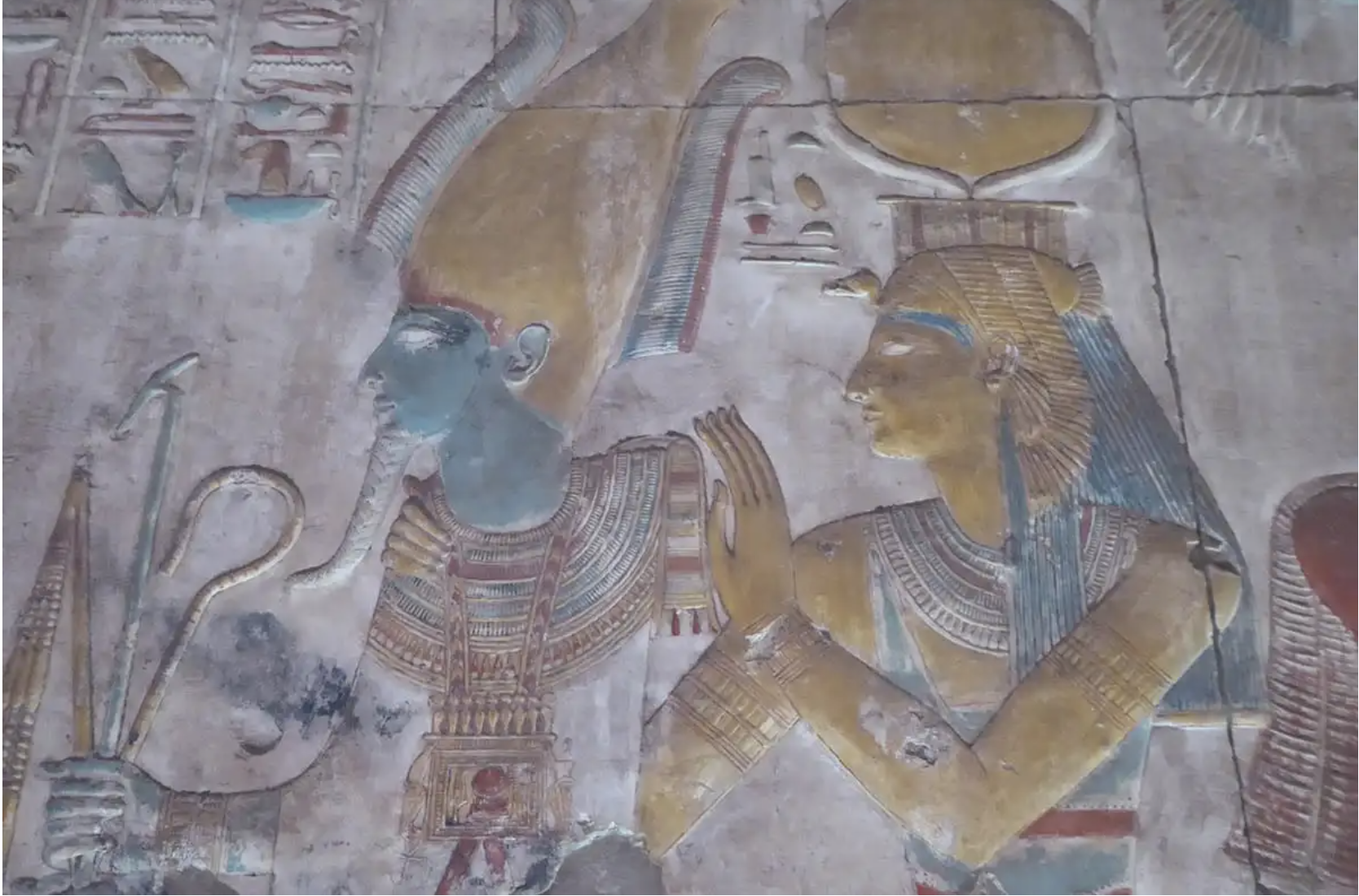
However, ultimately, it is God to whom I will answer about how I have responded to His word, His calling on my life and whether I have fulfilled it – not human church leaders who may or may not be supportive of or agree with my sense of urgency about this. If God Himself has called me to mourn and intercede for His precious creation, who am I to argue?
There was another point in time during my 20s, not long after I had embraced the gospel and been born again quite dramatically, where I believed that the Great Commission (to “go into all the world and preach the gospel to all creation” [Mark 16:15]) applied to every single person in church, and therefore everyone should be actively involved in missions – whether to Jerusalem (your immediate environs), Judea (your neighbouring areas) or the uttermost ends of the Earth (the still-unreached peoples – or some 6,825 ethnic or people groups who have yet to hear the gospel – organisations such as Wycliffe Bible Translators prioritise).
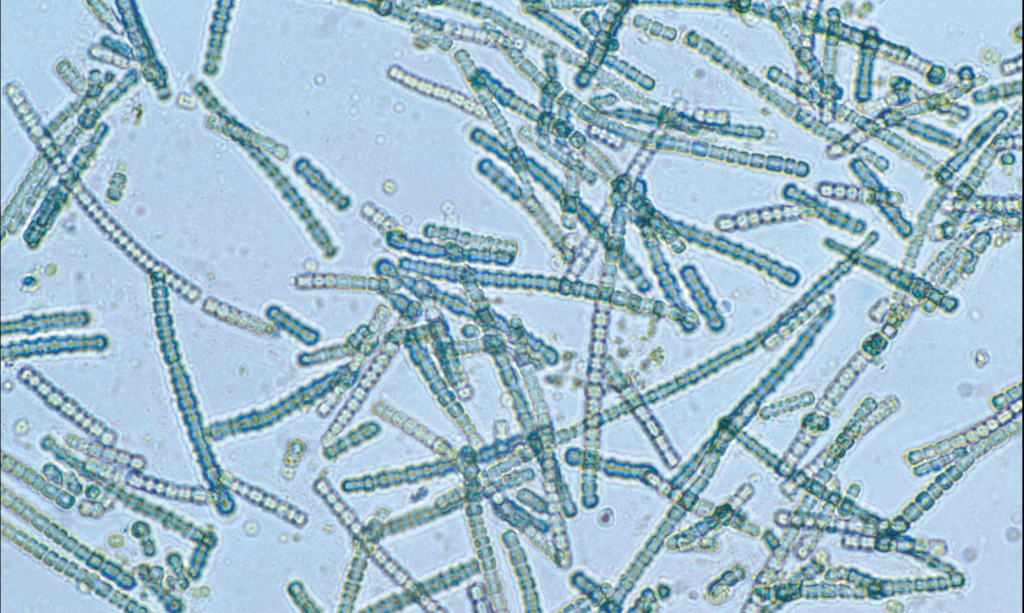
Of course, most Christians are faithful in sharing the gospel with their immediate friends, families and work colleagues, etc, but very few seem to be aware of the above statistics about the unreached – nor are many aware of the current alarming statistics re climate change impacts and biodiversity loss, which I cannot help being aware of as a journalist. While I now agree that perhaps not all are called to “go into all the world and preach the gospel”, as in further-flung, unreached nations, we are surely all called to “do our bit” by “being ready to give an account of the hope that is within” us (1 Peter 3:15).
And so, I believe, as Christians we should all also “do our bit” by being faithful to pray for His creation in this time of the Earth’s great suffering and loss. We do not really know how much time we all have left as individuals, or even as a species on a planet some believe may soon become uninhabitable if present global warming thresholds continue; surely, at this time of climate and ecological emergency, the first place we as Christians should be is on our knees.