Scene of tranquil beauty with blooming cherry blossoms from Nikko Edomura theme park
Japan is an amazing, achingly beautiful country that deserves to be on everyone’s must-visit destination list. It is full of fascinating ancient and modern historical sites with a unique cultural and spiritual appeal, set in stunning scenery and abounding with a glorious natural beauty that remains undiminished and (mostly) untarnished by time and modernity. It is home to world-leading street fashions and technological trends, and is undeniably one of the world’s top foodie heavens. What’s not to dream about?
Yet super-cool and appealing as Japan is, its culture, customs and values are vastly different (and in many ways, infinitely superior) to the West. Provided you understand, respect and observe these differences, you will be rewarded with a treasure trove of life-enhancing exchanges. Therefore, for those who have yet to visit this ‘land of the gods’, you would do well to prepare both practically and attitudinally for what will certainly be the trip of a lifetime.
Unfortunately, since the resumption of tourism post-Covid, Japan has increasingly felt the impacts of over-tourism, recently described as ‘sightseeing pollution’. March 2024 alone saw over three million foreign visitors, with 8.5m in the first three months of the year, according to Japan National Tourism Organisation statistics. Although Japan’s economy has benefited from the influx of tourists, the disrespectful behaviour of many foreign visitors has sorely tested the country’s tolerance, and it has begun to clamp down.
View of Mt Fuji from the Fuji Five Lakes area (Wikimedia Creative Commons). The town of Fujikaguchiko sits of three of the five lakes, hence tends to attract droves of tourists
Earlier this year, authorities closed certain streets in the popular Gion district of Kyoto after tourists were filmed incessantly harassing working geishas; now, timed, limited entries have been introduced for those seeking to climb Mt Fuji, and the town of Fujikawaguchiko — a renowned Fuji-viewing site — has blocked the view with a large convenience store (conbini) in an effort to dissuade crowds of unruly tourists from disturbing its wa (harmonious coexistence). Tourist taxes and differential fees or rules for visitors are also likely to become more common in future. Considering Japan has closed its borders to visitors from the West in both its recent and distant past (eg the sakoku [‘locked country’] period of over 200 years of isolation), it will be interesting to see whether it will ultimately implement any sterner measures.
So how can you travel hassle-free and enjoy the best Japan has to offer without causing offence? Based on my recent solo-travelling adventure in Japan (see previous blog post, Samurai, Sakura and Onsen Satori: 18 Days in Japan), I am sharing the following tips below in the hopes others will benefit from this advice, and will not only have the best trip possible, but ensure Japan remains welcoming to foreign visitors. There are so many things we would do well to learn from and emulate from this amazing country.
A public designated smoking area in Tokyo
Japan is very clean, and expects all foreign visitors to respect and observe this. It is often difficult to locate any rubbish bins in public places, so make sure you bring a rubbish bag with you and dispose of all your food, etc rubbish once you return to your hotel. The same applies to plastic water bottles (usually to be disposed of in recycling bins) and cigarette butts.
Do not eat, drink or smoke when walking around or in public places, except in designated areas — this particularly applies to places of worship, eg shrines and temples. However, you can eat once seated on Shinkansen trains — bento boxes are often available at the station for this purpose — and picnicking in parks is usually okay. If other Japanese individuals or groups are picnicking in an open area of a park or tourist site, that is usually a good indication that it is okay for you to do so.
If you smoke, only use the designated public smoking areas outdoors (typically near or outside train stations or conbinis). Most hotels will have an internal cubicle for smokers, but these are typically standing-room only and are often crowded. Some hotels — particularly business hotels, like the APA chains — still offer smoking rooms, which may be more convenient. (*Note: Until public smoking bans were introduced in 2020, smoking was commonly tolerated across Japan; there will still remote areas or pockets of Tokyo and Osaka [generally considered the ‘party town’] where restaurants and cafés even allow indoor smoking in some sections.)
Refrain from speaking on mobile phones or talking loudly on public trains, subways, buses, etc and onsens— even using speakers to listen to music can sometimes be overheard, so best to refrain from using these in public places.
NEVER take a picture of a Japanese person without first asking permission — this is considered very rude, and has caused lots of problems, particularly with tourists hassling working geisha for photos. Use your hands to mime taking a picture, and ask politely, Daijobu desuka? (Is it okay for you?). Although most Japanese will oblige when asked politely, be prepared to accept a negative answer and let them be.
There is no need to tip anyone (taxis, wait staff, etc) in Japan; in fact, to some, it is insulting. As Wim Wenders’ marvellous Perfect Days film celebrates, even those in lowly occupations like cleaning public toilets take great pride in their work (a kind of national ‘Zen and the Art of Public Cleanliness and Devotion to Duty’ mantra).
Although many Japanese speak English, not everyone does, so try to learn and use at least a few basic Japanese words and phrases, such as ‘Onegai shimasu’ (please), ‘Arigato gozaimashite’ (thank you very much), and ‘Sumimasen’ (excuse me, sorry). Easy Travel Japanese is an excellent site for learning these.
Be polite and respectful towards all Japanese people you encounter, including hotel and restaurant staff. Try to observe and mimic Japanese customs — for example, join the orderly queues behind the numbered carriage sections on train platforms; don’t wear rucksacks on your back on crowded subways but wear them on front to avoid knocking into others; bow and greet others using a polite ‘Ohayo / Konnichiwa / Konbanwa’ (good morning / afternoon / evening).
Japan is VERY safe, especially for women travelling solo — that being said, men have been known to grope women on packed subways (that is one reason you won’t see many Japanese women in leggings). In general, crime is low — and as my own experience proves, lost items are usually retrieved with money and valuables intact.
Pack light — you won’t need much except a few changes of clothes, especially in hotter, muggier months (from mid-April through to mid-October, depending on the time of year and location), though you will likely need a light, waterproof jacket or raincoat throughout the year. Most hotels have laundry facilities.
Only take vital personal toiletries; sleepwear is also unnecessary – All or most hotels typically provide basic toiletries (including a toothbrush and toothpastes), as well as yukatas (kimono-like cotton loungewear you can sleep in) and slippers.
In view of the weather and the preference for peak cherry blossom or fall foliage seasons, the best months to travel to Japan are generally mid-March–early May, or October–November. However, every season has its own unique joys, and you may get better flight or last-minute deals travelling outside of these more popular times.
You will do A LOT of walking, so bring 2–3 pairs of sturdy, comfortable walking shoes (not sandals or flip-flops — Japanese don’t usually wear open-toed shoes, unless with tabi socks).
Try to pace yourself— don’t over-plan. Make sure you allow time for rest breaks, discovering off-the-beaten-track places and/or inevitably getting lost, especially at bigger train and subway stations in Tokyo and Osaka (JR staff and tourist information centres usually have some English-speaking staff who can help you, however).
A Japan Rail Pass IS worth buying if travelling long distances up to set periods (eg 7, 14 or 21 days); otherwise, just buy regional train and Shinkansen tickets as you go.
Buy a Welcome SUICA or other IC card as soon as you arrive at the airport — it is very handy as you can use it on almost all regional trains, subways, buses, etc (not JR trains, however) across the country. You simply tap in and out with it, as with an Oyster card. You can also use it to pay for drinks in some convenience stores (conbinis) for food and other basic items. I put 10,000 yen on mine to cover just under three weeks of travel from Honshu to Kyushu, and still have 2,000+ yen left.
Finding your way around the train and subway lines, working out which train lines and station exits to use can be very confusing, particularly bigger stations like Tokyo, Roponggi, Asakusa, Shinjuku, Shin-Osaka, etc. If you are lost, go to the information stations or the ticket office for help, as some staff speak English and may be able to help you. Also, try to study station maps and memorise landmarks near exits.
Although you can use your debit or credit card in many places, it is recommended to carry sufficient cash with you when you cannot. I budgeted 10,000 yen (£50) per day for meals, taxis and museum, temple, etc admissions, and still had 5,000 left over! (Also, if you pre-order yen from Asda, etc, you can usually exchange it on return.)
Most hotels and public sites have free WiFi, however if you need WiFi while travelling, buy a Japan SIM card. I don’t recommend pocket Wi-Fi, as the device Gluten Free Tours Japan sent me only worked intermittently, so I had to use mobile data to communicate with them, which cost me an extra £100!
Make sure you have valid travel insurance to cover you for any medical, etc emergencies. Japan does have English-speaking medical centres, such as the one I went to in Tokyo (NTT Medical Center), but treatments are not cheap (my initial consultation and prescriptions cost over £250; altogether ca. £450 for three visits).
Use a luggage-forwarding system such as Yamato to send your cases on to your next hotel for stays of two or more days, and just pack a few items in a rucksack for one- or two-night stays. It’s cheap and infinitely easier than transporting your luggage on trains. Just ask your hotel reception staff to do this for you at check-out; they’ll be happy to oblige.
For a genuinely Japanese experience, stay at a ryokan (traditional inn) and use the onsen(public baths in restorative thermal mineral waters) — but make sure you observe the instructions, which can differ at each place. (Most hotels and ryokans with onsens usually provide a yukata, slippers and a carry-bag or box to sleep in and use when visiting the onsen.)
You don’t need a swimming costume for onsens — these are public but sex-separated. When you enter, strip off to your birthday suit and put your yukata and slippers in a locker, then sit and wash yourself thoroughly (sitting on a plastic bucket) before entering the onsen. Be careful not to fall in as I did! (This did make my fellow bather laugh, though typically people do not talk in onsens.)
Unless eating at a 5* restaurant — or paying for a multi-course kaiseki or teppanyaki dinner — most meals are relatively inexpensive. You can also find plenty of tasty, cheap and filling foods in conbinis (convenience stores — eg 7-11, Lawson’s, Family Mart, which are virtually everywhere).
Do your own research and make your own hotel, tour, etc bookings rather than paying hefty fees to an external agency, especially for a ‘self-guided itinerary’. You will save a lot of money and hassle, because in the end you are unlikely to follow their suggestions either through circumstances or personal preference. The same applies to group tours if you value freedom to explore and prefer to enjoy what you are seeing at your own pace.
Local English-speaking guides can be invaluable, especially for small-group or individual tours of historic sites and / or trips to remote regions — I was very impressed with the services of Yukihiro (Hero) of GoWithGuide in Kyushu, who not only gave valuable insights for my novel research, but kindly drove me to sites it would have been impossible to reach on my own.
If you can, plan a longer trip so you can include at least one other city or region for a more genuine experience of Japan. Although there are plenty of places truly worth seeing at least once in the ‘Golden Triangle’ cities of Tokyo, Kyoto and Osaka, there are also many less-crowded, beautiful and historically fascinating gems to be discovered in less-well-known cities and regions across the country, including in the other main islands of Hokkaido, Kyushu and Shikoku.
However, if you only have time for a few day trips or overnight trips out of the three cities, I recommend at least a day trip from Tokyo to Nikkō and/or an overnight stay in a ryokan in Hakoné, also easily reachable from Tokyo; an overnight stay in a ryokan in Miyajima is best for good, uncrowded views of the floating shrine; and if you plan to visit the Arashiyama Bamboo Forest in Kyoto, I recommend the stunning Sagano Scenic Railway journey to Kameoka and back.
Part of a multi-course kaiseki meal at the Miyajima Hotel Makoto — I was able to have a gluten-free version cooked for meA Japanese man wearing his ryokan-provided yukata and slippers, suitable for lounging in or wearing to the onsenTypical spacious private room inside a traditional ryokan, with a futon on the tatami-mat floor
TIPS FOR THOSE WHO ARE COELIAC OR GLUTEN-INTOLERANT
For those like me with gluten intolerance or coeliac disease, it is possible to eat without having any adverse reactions, even to enjoy some of Japan’s most favourite treats. However, here are a few helpful tips specific to those with this particular food issue:
If you are gluten-intolerant or coeliac, bring several packets of your own GF soy sauce or tamari packets of GF soy sauce in your suitcase (you can order them in advance from US company San-J) and carry a few packets with you to flavour your food (alternatively, it is sometimes possible to ask the food is salted only or cooked without seasoning, particularly yakitori skewers of chicken, beef, etc).
Check labels on conbini foods using Google Translate + the camera on your phone to check ingredients for any food allergies or intolerances (also applies to menus). Hard-boiled eggs are a good bet, as are plain onigiri rice cakes. If in doubt, avoid.
An increasing number of restaurants and cafés offer GF Japanese foods for those with allergies, intolerances or vegetarian / vegan preferences, especially in bigger cities like Tokyo or Osaka; you can try using the ‘Find Me Gluten-Free’ app to locate your nearest GF options. However, some GF restaurants and cafés — like the wonderful Gluten-Free T’s in Roponggi — are very small, so it is best to make a reservation to avoid disappointment.
Be aware that even if you eat supposedly gluten-free meals, cross-contamination is often an issue, as foods may be cooked using the same water or oil as non-GF foods. (Another option is to take GlutenEase or another commercial glutenase [gluten-destroying enzymes], but these are unproven and not recommended for coeliacs.)
If you or a member of your party are coeliac or worried about health issues connected with this, you may be better off making tour arrangements with Gluten Free Tours Japan, who specialise in tailor-making tours of Japan for coeliacs and those who are worried about finding foods safely because of high gluten intolerance.
However, you can usually find allergy- or intolerance-safe options at Italian, Indian, Spanish and Mexican or other Western cuisine restaurants; even some Chinese restaurants will adapt dishes for GF, but use Google Translate to check ingredients if unsure. In general, I found it relatively easily to judge which conbini foods I could eat safely, and felt comfortable ordering curries, as these are usually safe for those with GF requirements.
For Japanese food, stick to sashimi and sushi or yakitori skewers seasoned only with salt, and perhaps use your own GF soy sauce if needed. Legal Nomads provides a card in English and Japanese that explains what you can and cannot eat, which may be a useful safeguard.
Arriving in Tokyo in sakura season — when Japan’s delicate, pale-pink cherry blossoms are in peak bloom — was bound to be busy. Not only were the most famous destinations chock-a-block with tourists, but nothing prepares you for the sheer size of this sprawling cities-within-cities capital, the world’s most densely populated (37.4m). Simply attempting to navigate busy train stations can take forever — an exercise in frustration (particularly when your phone’s GPS goes doolally, as mine often did) and sheer exhaustion!
On my first exhilarating sightseeing day in Tokyo, fellow writer Tamako took me to some top tourist spots (colourful Senso-Ji Temple; a relaxing Sumida River cruise to Hama Rikyu Gardens; the huge Meiji Shrine complex; the famously busy Shibuya Scramble Crossing; and trendy Harajuku, where fashionable Tokyo youths hang out on Takeshita Street). I was agog at the numerous pet cafés and whacky animé cosplay outfits (Makeru Jackson, hai!) littering the alleys. We said hello to Hachiko, the Japanese Akita dog who waited daily for his beloved master outside Shibuya station 10 years after his death, and enjoyed a delicious iced coffee and gluten-free matcha cheesecake at Shark Coffee, concluding with a wonderful dinner at Gluten-Free T’s, which specialises in adapting classic Japanese dishes (tempura, okonomiyaki, gyoza, ramen, miso and yakisoba, etc) for people who can’t tolerate gluten (my faves were the Cajun-fried chicken and beef yakiniku — I wish I could have tried everything on the menu as it was all delicious!).
With Hachiko, the waiting dog – a popular meeting spotGroovy Takeshita Street, where you see yourself taking selfieson the videoDesignated public smoking area – these are a requirement everywhere, even outdoors Sumida River cruiseBridge over SumidaSamurai statuecherry blossoms blooming on riverTokyo’s infamous ‘Golden Poo’ sculpturePosing with a street sculptureLanterns lining the Nakamise shopping street at the approach to Senso-Ji TempleIn front of the Kaminari-mon Gate at the entrance to Senso-Jiin Asakusa. Senso-Ji is Tokyo’s oldest temple, first built in 645Tourists snapping the Kaminari-mon GateThe famous Shibuya Scramble crossing, post-scrambleNinja youths in HarajukuAnimé cosplay outfitsYou too can dress like Makeru Jackson!Rainbow cotton candy – very popular in Harajuku……as are pet cafésMore Harajuku street scenesMe with sakura in Hama-Rikyu GardensBeautiful camellias in Hama-RikyuNot sure what this beautiful plant is Close-up of sakuraPart of the moated structure of the gardens, which were also used as duck-hunting grounds by successive shogunsHama-Rikyu gardens amid skyscrapersOrnamental lake at Hama-RikyuA serene meeting house where traditional tea ceremony is servedDetail inside the house of a beautifully designed mirrorEgret in pondLanding spot for Edo-era shogunsMoats surrounding Hama-RikyuGardensTokyo Skytree Tower, as seen from cruiseFive-storeyed pagoda at Senso-JiGiant sandal of the gods at Senso-Ji. Senso-Ji is dedicated to the Buddhist bodhisattva KannonEntrance to shrine at Senso-JiThe five-storeyed pagodaat Senso-JiMe in front of the main sanctuary at the Meiji Jingu (Shinto) shrine complexDetails of impressive wooden doorat entranceOutside main sanctuary at Meiji JinguTamako in front of torii gate in Meiji Jingu Shrine complexWooden bridge in Meiji Jingu shrineStatue of Brahms in alleywayOne of many artistic-looking manhole covers on Tokyo’s streetsMe outside torii gate at Meiji shrine
By the time I returned to APA Hotel Roponggi Six — a comfortable business hotel in a great location, reasonably priced — I’d clocked up 23,500+ steps (12–13 miles) and had huge, red, hot-to-touch rashes and massive swelling on both ankles. Fearing cellulitis (fatal if untreated), I spent most of the next day trying to see an English-speaking doctor. Thankfully, NTT Medical Center prescribed antibiotics — not cheap, but necessary for doing lots more walking (7–8 miles per day, on average) and dancing.
It soon became clear this first very busy sightseeing day would be a template for the rest of my trip. Considering I came primarily for novel research, I rarely had time to journal. I barely slept, even in the luxurious 5* Hotel Okura in Huis ten Bosch or equally luxurious traditional Japanese inns (ryokans) with their wonderfully relaxing onsens — thermal pools with prescribed pre-bathing rituals and casual attire (kimono-like yukatas and slippers) — a blissful experience, guaranteed to induce satori (‘a state of indescribable, intuitive enlightenment’).
‘It was indeed the trip of a lifetime – virtually every day offered some amazing insight, experience or interaction’
One of Japan’s many species of colourful swallowtail butterflies(Wikimedia Commons)
Yet it was indeed the trip of lifetime. Virtually every day of my 18-day tour from Honshu to Kyushu offered some amazing insight, experience or interaction. Japan is a fascinating country; even when you get lost and end up wandering through some residential district as I often did, noticing little details outside people’s houses or seeing one of its many species of swallowtail butterflies or huge ‘bear bees’ grants moments of pure rapture. (As someone else said, ‘It’s the quiet places and moments that let you experience the best of Japan.’) Every landscape was imbued with flowering cherry trees, azaleas, rhododendrons, wisteria, camellias, irises and many species of trees, not only in serene gardens in ‘Golden Triangle’ cities (Tokyo, Kyoto and Osaka), but also growing wild across the country. You soon realise Japan is 70% forest — its rolling slopes resemble an undulating carpet of broccoli!
My solo-travelling adventure (a ‘self-guided itinerary’ with Gluten Free Tours Japan*) was roughly 6 days in Tokyo, with day trips to Nikkō and Hakoné; 6 days in Kyoto, Osaka, Nara, Himeji and Miyajima Island (Hiroshima); and 6 days in Kyushu, including four full-day guided tours with the excellent Yukihiro (Hero) of GoWithGuide. Most of it exceeded my expectations, with some delightful surprises (for travellers’ tips, see next blog).
Tokyo, Nikkō and Hakoné
There’s so much to see and do in Tokyo, not to mention, eat — Japan is a true foodies’ paradise, even for those like me with gluten intolerances — but it was wonderful to be there during sakura season; even at night, the blossoms magically transform the humblest streets. I had two fab nights out joining salsa musician Ayumi Suzuki for a live Latin-jazz night at Akasaka B-Flat and dancing at Studio Pepe, with shows and cake for DJ Angel Figueroa’s birthday. Salsa friends Chisato Sakagami and Nick Beaty also joined me at the Imperial Palace East Gardens (former Edo-era Shōgunal residence) for historical info amid its gorgeous gardens.
With Ayumi Suzuki (far left), Nick and members of the Latin jazz band at Akasuka bFlatMe dancing at Studio Pepein Roponggi — a recommended venue for any international salserosSakura at Imperial East GardensImperial East Gardens buildingsRhododendrons in bloom at Imperial East GardensI wrote about this in my novel, so was interesting to see the actual structureIn Imperial East Gardens parkSakura in bloom near Roponggi Station
Exciting and dynamic as Tokyo was, the 2.5-hour day trip north via Shinkansen to Nikkō — rich in onsens and scenic nature (waterfalls, lakes, mountains) — was unforgettable. First, we took the shuttle bus to the immense, cedar-lined Tōshō-gu Shrine temple complex — the mausoleum Shōgun Iemitsu built for his grandfather Ieyasu (founder of the Tokugawa Shōgunate, subsequently venerated as a deity). I was particularly interested in the copper candelabra the Dutch East India Company (VOC) offered to Shōgun Iemitsu, which he was so impressed with (apparently because of its unique revolving mechanism) he granted the Dutch trading rights lasting from 1636–1860. There were so many other fascinating shrines, temples and details — such as the famous ‘sleeping cat’ above an entrance — but you can easily feel templed out!
We topped at stunning Shinkyo Bridge, subject of numerous paintings (see cover pic) and a sacred Shinto shrine, where Chisato paid respects to the kami (nature deities). I took the free shuttle bus to kitsch but historically illuminating Nikko Edo Wonderland. Set in a beautiful spring landscape studded with sakura, this Edo era-themed park features actors dressed as samurai, artisans, merchants, peasants, guards, oiran (courtesans), kabuki actors and ninjas. Although I missed the ninja show and oiran dochu parade — in which ornately dressed courtesans walk in their mega-tall geta shoes to flaunt their grace and beauty (see pic, bottom) — I still caught snatches of traditional kabuki theatre.**
With Nick and Chisato at Tosho-gu shrineeEntrance to Tosho-gu shrine, NikkoBeautiful flowers and cedars at Tosho-gu ShrineMe and Chisato with Shogunate crest Pagoda temple at Tosho-gu ShrineThe rows of stone lanterns fascinated meGuardian gods of wind and thunder on either side of shrine entrance(next three pics)More stone lanternsTemple at Tosho-gu ShrineMore temples at Tosho-gu shrineA caption explaining the lanternsThe Dutch VOC candelabra presented to Shogun Iemitsu in 1636, which features a revolving mechanismBuilding at Tosho-gu shrineStatue of Shogun Ieyasu, founder of the Tokugawa ShogunateOne of a pair of guardian lions on either side of the statueStatue of Shogun Iemtisu, who ordered the creation of Tosho-gu in honour of his grandfather, Shogun IeyasuMain shrine buildingBarrels of sake given in tribute from prefectures all over JapanThe famous Nemurineko (sleeping cat) carving on the transom above Sakashitamon Gate A torii gate at the shrine (Tosho-gu Shrine contains both Shinto and Buddhist elements) Me with the Dutch candelabra I have written aboutOrnate shrine complex building, possibly a warehouse (there are many of these) Beautifully carved copper dragon bowlChisato paying respects to the kami (the form is to clap your hands twice, expressing your joy and respect towards the deity, then say a prayer with your hands still together, and then bow one more time.Nick, me and Chisato on Shinko BridgeOffering box at the end of the bridgeMe with Shinkyo BridgeEntrance to Nikko Edo Wonderland (Nikko Edomura) Wooden plaque commemorating the Edo-era Tokaido tribute route Artisan building at Nikko EdomuraEdo-era woodblock prints celebrating popular oiran (courtesans) and kabuki actors Kitsune (fox) mask and floral arrangementEnormously tall geta clogs worn by courtesans in the oiran dochu processionto demonstrate their seductive skillsA reproduced Edo-era craft stallBeautiful scenery in and outside Nikko EdomuraPerformance of Wakamatsu-yatraditional courtesan performanceVisitors dressed up in samurai, geisha and ninja costumesPerformance of Edo-era comic kabuki show ‘The Magistrate’s Office‘ — it was entertaining even without understanding the languageA beautiful sunny day at Nikko EdomuraBeautiful deep-pink sakura on the groundsActor playing an Edo-era woodcarverActor dressed as Edo-era guard — at the end of the day, all the staff line up outside the gate to bow to exiting visitorsThe oiran dochu procession I missed (from pic, bottom, from ‘My Shogun Adventure’)
Although I’d planned to visit YWAM Tokyo before leaving for Hakoné, I had to return to the doctor for tests (later confirmed as ‘Disney rash’, eg exercise-induced vasculitis). Thanks to two Japanese taxi angels, I miraculously made it to the hospital, got tested, got to Shinjuku station in time to validate my Hakone Free Pass, and made it to the Gora Kansuiroryokan in time for my expensive gluten-free kaiseki (multi-course dinner). This meal was to die for: fresh sashimi, sticky rice, grilled lobster and scallop, wagyu beef, and a soup containing edible gold flakes, served since the Muromachi era (1336–1573). After a frenetic day, I gladly retired to my huge, private tatami-mat room before heading to the onsen for a soothing soak — a truly Japanese (and highly addictive) pleasure!
Waking to the hum of heavy-pattering rain on the tiled roof and the view of mist-covered trees and stone lanterns from my sliding shoji windows was unforgettable; I felt in tune with poets’ and artists’ centuries-long celebrations of the wistful transience of nature. The rain meant I missed seeing famously fugitive Mt Fuji; the pirate ship cruise across Lake Ashinoko was cancelled and the vermillion-red torii gate in the lake only partially visible. However, I relished walking the cedar-lined Tōkaidō (former tribute route to Edo), and caught the bus from Hakoné to the 400-year-old Amazake-Chaya Tea House to enjoy its traditional, warm amazake (a sweet, non-alcoholic rice drink). Next door, an empty but fascinating Tōkaidōmuseum showcased various kaga/o (hammock-like slings) used to transport wealthier travellers, officials and lesser daimyō.
Morning view from my window at the ryokan in Gora, Hakoné Part of my ryokan breakfast In the ryokan dining roomGarden outside the ryokanTorii gate at entrance to Hakoné centreView of the ancient Tokaido path I walkedTall cedars along the TokaidoMist-shrouded TokaidoView of the torii gate in Lake AshinokoOutside the Amazake-chaya tea houseInside the 400-year-old tea house, with floors and thatched roof reminiscent of Tudor-era innsEdo-era kago suspended from ceiling Kago with depiction of vassals en route to EdoDisplay showing typical inn visitors resting while on the TokaidoExhibit showing vassals and their retinues en routeto EdoSandals worn by pilgrims on the TokaidoTribute chest with the Tokugawa Shogunate’s hollyhock crestImage of the cobblestoned Tokaidoon a sunnier day
Kyoto, Osaka, Nara, Himeji and Miyajima: Bucket-list delights
After taking the bus and train to Odawara, I validated my 7-day Japan Rail Pass and headed to Japan’s former imperial capital, Kyoto, for three nights. Alas it was still raining heavily, so I again missed glimpsing Fuji-san from the Shinkansen window.
Arriving late at my hotel — the wonderful Park Hotel Kyoto, with its friendly, helpful staff, excellent GF breakfasts and fab location in the centre of Kyoto, perfect for solo travellers — I decided to prioritise three sites in Kyoto, hoping to avoid busier tourist times (and any disrespectful behaviours). First, I visited Fushimi-Inari Taishi shrine, just in time to enjoy the sakura-lined canal at dusk and sample skewers of wagyu beef at the entrance. Most tourists were exiting then, so I was among a handful still processing through the shrine’s multiple vermillion torii gates at night — very atmospheric, if a little spooky. I later enjoyed sampling Japanese whiskies and gins recommended by the hotel staff.
The next morning, I took the JR train to Arashiyama Bamboo Forest. I had dreamt of walking among these gently waving bamboo trees forever; even though I didn’t arrive early enough to beat the crowds, I was so deliciously charmed by the beautiful Sōgenchi Gardens near the Tenryū-ji Temple that I floated in a dream-like trance through the bamboo grove, blissfully oblivious to their presence. The enchantment continued with a Sagano Scenic Railway trip to Kameoka and back, with gorgeous sakura overhanging the rushing Hozu River (see video). I spent a few hours relaxing by the river before returning to Arashiyama, where I had a delicious caramelised sweet-potato ice cream and curry dinner near the arty pillars dubbed ‘Kimono Forest’ — alas, by the time I returned, all of the kimono-rental shops had closed, so I missed out on this experience.
Me with sakura-lined canal in Fushimi Inari Prayer scrolls and votive offerings at the shrineStreet-food seller offering skewers (yakitori) of wagyu beef at the entrance to Fushimi InariEntrance to Fushimi Inari at duskStone guardian dogs are posted on either side of the torii gatesSacred stableInitial torii gate entranceThe multiple vermillion torii gates for which the shrine is famousMe by torii gatesTorii gates at nightShrine at Fushimi InariTorii gates at nightTorii gates at nightFushimi Inari at nightFushimi Inari at nightLeaving Fushimi InariSogenchi GardensSogenchi GardensPond with lucky frog and statue of Kannon (Buddhist bodhisattva of compassion)Sogenchi Gardens with bamboo forest Sogenchi GardensCarp pond in Sogenchi GardensJapanese tourists in Sogenchi GardensNear entrance to Tenryu-ji TempleTorii gate near entrance to Arashiyama Bamboo Forest Bamboo forest behind the gardensMe in front of the bamboo forestBamboo forestTemple near entrance to bamboo forest pathTourists along the bamboo forest pathI still felt incredibly peaceful here, despite the crowdsAt the end of the forest, on approach to the Sagano Scenic RailwayBy the Sagano Scenic Railway stationA delicious caramelised sweet potato ice cream at the stationThe Sagano train is also known as the ‘Romantic Train’Me feeling delighted on the trainTourists looking out at the rushing Hozu RiverScenes from the romantic trainJapanese woman admiring the view from the train windowMore train scenesPeacefulrural village ofKameokaAncient house with thatched roof in ArashiyamavillageDiscovering Arashiyama’s arty }kimono forest’Part of the kimono forestShops in Arashiyama showcasing ‘kawaii’ (cute) souvenirsArashiyama shop where you can buy or rent kimonos to wear for anhour or so
I returned to my hotel in time to attend a powerful, Spirit-filled meeting at Protestant church Kyoto Central Chapel, literally just around the corner from the hotel. As I mostly prayed and sang in the Spirit, God gave me several prophetic words and pictures for Japan, which I was able to share with the church, thanks to the wonderful Granny Makoto translating for me. Connecting with Japanese believers at this meeting was an unexpected blessing and a personal highlight of my trip.
With Lead Pastor Isaiah Fujibayashi (left), his mother, Granny Makoto, the pastor’s wife, and two other members of the Kyoto Central Chapel (Chuo Chapel) – a small but lively church with powerful prayer and worship, with other members across Japan joining online
On my last day in Kyoto, I had to await a prescription (with plenty of comic ‘lost in translation’ moments when asking the pharmacists for Canesten using Google Translate and hand signals, lol!) so couldn’t visit Gion as planned. However, I did make it to Kinkaku-ji Temple (aka ‘Golden Pavilion’). Perched on the edge of a large pond in the north of the city, the upper two floors of this Zen temple are completely covered in gleaming gold leaf — a stunning sight amid its peaceful gardens. I then said goodbye to Kyoto station’s striking tower before heading to Osaka for two nights.
Entrance to Kinkaju-Ji TempleBridge leading to temple and pondBuilding on temple groundsThe famous Golden PavilionMe with Kinkaju-Ji TempleSide view of temple with lake settingOrnamental lakeon groundsTrees in the centre of the lake Stonesculpture on islandA wondrous sight to see these gold-leaf tiers gleaming in the sunGolden Pavilion with small islands to side Outside my hotel in Kyoto; although near a subway, people most often cycled past. Kyoto is a very tidy, elegant city, though with many strict rules — Japan’s cultural capital is determined to preserve its heritage in as sustainable a way as possible. The friendly Park Hotel Kyoto front desk manager recommending Japanese whiskies and gins. I didn’t get to do a sake sampler, however iced plum sake soon became a fave!The 1960s Kyoto Tower near Kyoto station is the tallest structure in Kyoto
Alas, due to dysfunctional GPS and pocket WiFi, I got lost trying to find my hotel from Shin-Osaka station (a supposed 7-minute walk took over an hour!); I also got lost looking for the GF Tours-recommended restaurant, so used Google Translate to order safe (and delicious) food from an Italo-Japanese restaurant. I also missed sampling Osaka’s famed Dotonbori street-food due to a last-minute hotel shuffle by GF Tours, but enjoyed Indian, Italian, Mexican and Japanese cuisines (plus tasty conbini [convenience store] snacks, like quails’ eggs paired with ham-wrapped cream cheese).
At least getting lost a lot meant I had a great chat with Aussie rugby player Hugh Phillips, who helped me find my way to the JR station on my way to Nara Park to see the famous bowing deer (you have to give them special crackers to bow; they can be quite demanding!). It was fun to hang out with the deer and see the Tōdai-ji Temple and its giant Buddha statues, which were quite impressive. Although I’d planned to dance at Shall We Dance Café after, there were problems with the JR train from Nara, so instead I had a wonderful chat over delicious sashimi and iced-plum saké with former London-based salsero Simon Perrott.
Rickshaws at entrance to Nara ParkDeer crossing the roadMore deer crossingMe feeding the deer shika senbei (special crackersfor deer, sold in packs at the entrance for 200 yen)Deer and people in front of the12th century Nandai-mon (Great South Gate)Lake with golden pagoda poll behindClose-up of the golden pagoda pollsurrounded by sakuraDaibatsu-den (Daibutsuden) — the world’s largest wooden building, despite being only two-thirds its original sizeDeer surrounding the 17th century Daibatsu-den (Great Buddha Hall) — originally built in the Nara period and rebuilt thriceStatue of guardian temple deityJapanese man praying in front of templeLantern outside Great Buddha HallOne of two bodhisattva statues accompanying the Giant BuddhaGreat Buddha statue surrounded by lotus Statue of second bodhisattva Giant Buddha (15-foot) with details of lotus and gold-leaf figures behind the bronze statue — his open hand is as tall as a humanMe with salsa friend Simon Perrott in Nara
Although I debated going to Osaka Castle versus a day trip to Himeji Castle en route to Hiroshima, it was really no contest: Himeji is one of Japan’s best-preserved Edo-era castles (known as the ‘White Heron’ for its striking all-white exterior). It was a beautiful spring day, and the castle grounds were studded with glorious sakura; there were also actors dressed in Edo-era samurai costumes adding to the fun. I didn’t climb to the top as I also wanted to visit the nearby beautiful Kokoen Garden, with its ornamental ponds and collection of waterfalls, but went high enough to appreciate the castle’s strategic military advantage enabling lookouts to spot armies advancing from miles away.
Next, I headed to Miyajima Island to see the famous floating torii gate at Itsukushima Shrine. Taking the JR ferry from Hiroshima, I reached the island just after sunset. I stayed at ryokanMiyajima Hotel Makoto; although its GF kaiseki dinner was not as tasty or elaborate as Hakoné, the tranquil onsen, intriguing lobby artefacts and easy shrine proximity were worth it. I woke at 6am and wandered down the winding streets to the pier in my yukata and slippers, accompanied by herds of wild deer. I was rewarded by an excellent view of the floating shrine, unimpeded by the hordes of tourists who disembarked from the ferry later — it was just me, the shrine and the deer! Pure magic.
Himeji Castle – bridge approach from JR stationBoatman in lake surrounding the castleActor-guards dressed in Edo-era costumeActor playing Edo-era samurai warriorMe in front of Himeji Castle……and posing with samuraiThe sakura on the castle grounds were enchantingMe feeling pretty surrounded by pinkBeautiful cherry blossomsThe peonies were stunning tooAt the entrance to the castle, I was enticed by the offer of an informal tea ceremony……there wasn’t much ceremony, but the traditional frothy green matcha and sticky sweet mochicake were deliciousThe famous ’White Heron’ castle, one of Japan’s best-preserved, was built in 1333, with successive additions Another pic of the castleApproach to the castleThe entry gate with its low transomThe internal castle complex Figure showing the castle structureMe posing with matchlock guns, first acquired from the PortugueseCastle interiorView from second tierView from third tierEntrance to Kokoen GardensStream in Kokoen GardensKokoen gardensOn the Japan Rail train to HiroshimaPlenty of leg room!On the JR ferry to MiyajimaView of Itukushima Shrine at nightApproaching Miyajima IslandOne of several courses of my GF kaiseki meal at the Miyajima Hotel MakotoMore coursesYet more coursesMuseum-like artefacts in ryokan lobbyJapanese man relaxing in his hotel yukata and slippersMe in hotel yukataThe futon, typically in the centre of a tatami-mat floor, in my private roomin the ryokan
After a huge breakfast (grilled fish, sticky rice, eggs, fresh fruit and yoghurt), I returned to the pier to catch the return ferry. Although I boarded the wrong (regional) train back to Hiroshima, a Japanese woman very kindly got off to show me where to catch the Shinkansen. En route, I spied a tapas place; after struggling to communicate in Japanese, it was refreshing to chat in Spanish with the Japanese owner for a change! Although the JR journey to Nagasaki required a few train changes, it was incredibly relaxing, with generous leg room. I was pleased to feel I was finally getting the hang of Japanese train travel: standing patiently in an orderly queue behind the car number, and no longer confused about which trains, tickets or exits to use.
Itukushima Shrine at 6am – thankfully high tideMe in my hotel yukata with Itukushima Shrine behind meAlthough the shrine is set on a sand bar, when the tide is high it gives the appearance of floatingView of torii gate and shrine grounds with wandering deerPagoda in shrine complexPart of larger shrine complexStone lions guarding the torii gateSacred stable with horse statueWild deer – unlike in Nara, you are discouraged from feeding them Close-up of pagodaon shrine groundsStone lanterns lining the bayView of Itukushima Shrine from further along the pier
Kyushu adventures
I’m grateful my novel interests led me to visit Kyushu — not only is it filled with fascinating historical and UNESCO World Heritage Hidden Christian sites, but it abounds in pristine forests, dramatic cliffs, rolling mountains, white-sand beaches, active geothermal sites, mineral-rich onsens, countless islands and glorious wildlife. I’m also grateful for Hero’s knowledge, organisational skills and car to reach remoter places — I could never have managed these without his help!
First, we explored the vibrant cultural melting pot of Nagasaki, beginning with Peace Park/the Atomic Bomb Hyocentre Park. Set in the city’s former Ground Zero, it is now a lovely park, with several peace-themed statues donated by various nations. We then went to Dejima, the artificial island where Portuguese and Dutch merchants lived and traded from 1636–1860. It was filled with interesting exhibits and artefacts (VOC cannons, porcelains, and copious games to while away months and years of isolation). Next, we visited the 26 Martyrs Monument and Museum on Nishizaka Hill, overlooking Nagasaki Bay. Here, 26 Japanese and European Christians were brutally tortured and forced to walk barefoot from Kyoto before being crucified (as told in Shūsaku Endō’s novel and Martin Scorcese’s 2016 film Silence). As well as its many important documents and artefacts chronicling Japan’s early Catholic Christian history, the buildings’ mosaics and Gaudi-esque towers were also impressive.
Me miming the position of the famous statue in Nagasaki’s Peace ParkMy very excellent, military-trained guide Yukihiro (Hero)One of several statues donated from various nations (this, from US) following the atomic bomb attack on Nagasaki that obliterated this area before it was recreated as a park from Ground ZeroStatue of a other embracing a child, a gift from the city of Middelburg, Netherlands(the plaque reads ‘For the protection of our future’)Another statue with offerings in memoriam for those who lost their livesFurther contemporary designs in the park Statue (I believe from Poland)Wisteria in the parkReconstructed man-made island of Dejima in Nagasaki Bay, where Dutch VOC merchants lived for over 200 yearsEntrance to Dejima over rebuilt bridge Entry and exit (only of Japanese translators and officials, and courtesans) was strictly guardedEdo-era guard at entrance to DejimaMe with Dejima guardBuildings and streets inside Dejima: a mix of Japanese and Dutch stylesJapanese-style residential interiorVOC chief’s quarters with lookout towerChinese porcelain dish with VOC logoScale model of Dutch East Indiaman shipVOC cannon produced in AmsterdamDutch pistol, salvaged from the seaVOC officers’ dining quartersVOC chief’s dining quartersScale model of Dejima inside the island
We then went for lunch and views over the harbour from Mt Inasayama Observatory (though overcast, I later returned to take the ropeway cable car to the top for the glittering view over the harbour — one of Japan’s top night-time views). Next, we stopped by the 1864-built Ōura Cathedral, where Kakure*** Christians from Urakami Village shocked the world with their existence. We continued to beautiful Glover Garden, former home of 19th century Scottish merchant Thomas Glover, who contributed greatly to Japan’s Meiji-era industrial transformation; the gardens featured a statue of the celebrated Japanese diva noted for her role in Puccini’s Madama Butterfly, who is said to be modelled on Glover’s Japanese wife (she was not a geisha, however). Last, we visited Nagasaki’s Chinatown, built on the former Chinese quarter (Chinese merchants were kept in a walled-in enclosure paralleling Dejima). After a tasty GF Chinese dinner, I realised I’d lost my wallet in the car park — miraculously, it was still there!
Views of Nagasaki Bay from Mt Inasa Observatory by dayFurther view of Nagasaki BayJapan is so clean and green!Church and museumbehind the 26 Martyrs MonumentMe praying in front of the 26 Martyrs MonumentIndividual sculptures of the 26 European priests and Japanese converts who were crucified on Nishizaka Hillin 1597Example of a fumi-e image of Christ Japanese believers were made to stamp on to renounce their faithPainting of Japanese believer Gracia Hosokawa, the inspiration behind the character of Lady Mariko Toda in ShogunPaintings of the crucifixion of the martyrs with Japanese onlookers20 Japanese were martyred, along with the foreign priests (four Spaniards, one Mexican and one Portuguese from India)Beautiful mosaics on the churchIntriguing statue of a leaning martyr – Hero told me his story but I can’t recall itGaudi-like mosaic towers on the churchOura CathedralCarp pond at Glover Park and GardensHome of 18th century Scottish merchant Thomas Glover18th century cannon facing into the bayThe gardens are a mix of Japanese and Western styles View over Nagasaki Bay from Glover ParkMe on verandah of Thomas Glover HouseView of Nagasaki harbour from Glover ParkBench in park overhung with flowering wisteriaHero in a rare relaxed momentView from Glover ParkJapanese diva Miura Tamaki, famed for her role as Cio-Cio San inPuccini‘s opera Madame Butterfly View of building known as the ‘Madame Butterfly House’Dutch-style building near Glover ParkUrakami CathedralRoof of Buddhist temple in Nagasaki. After Christianity was banned, a return to Buddhism was stringently enforcedBridge in Nagasaki‘s Chinese quarterChinese bell and propeller outside building in Chinese quarterChinese gate at entrance to Nagasaki’s Chinatown districtChinese restaurant in Chinatown Inside Chinatown restaurantTasty GF Chinese mealNight-time view from Mt Inasa Observatory over Nagasaki Harbour — taking the ropeway cable car up the steep hills was amazing
Next day, Hero drove us to Shimabara Peninsula, heading south to Hara Castle Ruins — site of the infamous Shimabara Rebellion (1637–1638) that triggered Japan’s 220-year sakoku closure. Led by charismatic 16-year-old Amakasu Shirō (whose statue is on the grounds), Christian peasants and rōnin (masterless samurai) revolted against the oppression, taxation, persecution and starvation inflicted on them by non-Christian daimyō Matsukura Katsuie, whose family replaced the former Christian Arima lords; the rebels fought valiantly until being starved and finally executed. We then headed to Arima Christian Heritage Centre for further exhibits connected with the region’s turbulent Christian past before driving on to Shimabara Castle. Lastly, we visited Unzen Jigoku, a natural geothermal volcanic site filled with hissing fumaroles, where some 33 martyrs were grimly boiled to death or tortured to force them renounce their faith (also portrayed in Silence) between 1627–1631.
Hara Castle ruins on Shimabara Peninsula. The castle was perched on the edge of a cliff overlooking the sea Statue of Amakusa Shirō, 16-year-old leader of the Rebellion The castle was completely destroyed and all the remaining rebels executed after the Shimabara Rebellion was quelled ‘In the place where they crucified him, there was a garden‘ (John 19:41). Amid the ruined walls, flowers have sprung upCross honouring the slain warriorsView of bay from Hara Castle RuinsArima Christian Heritage MuseumBas relief showing Japanese Christians bravely praying before their persecutors Printing press brought from Portugal to print gospel extracts in JapanesePoster showing painting of Shirō with the banner used by the rebelsJapanese Christians continued to worship God in secret, hiding images behind a veneer of BuddhismStatue of Arima Harunobu, Christian daimyo (feudal lord) of nearby Hinoe Castle, also ruined in the RebellionAlessandro Valignano, who led the Tensho Embassy to bring four accomplished Japanese seminario students to Europe. One renounced his faith on learning of Portugal’s involvement in the slave tradeMural depicting the voyage of the Tensho Embassy to EuropeExterior grounds of Shimabara CastleMe in front of Shimabara Castle, built by heavy oppression demanded by Matsukura Shigemasa – a key factor in the RebellionArima pottery with cross motifsSamurai armour belonging to Matsudaira clanwho ruled Shimabara after Matsukura Shigemasa was executedSword and case belonging to Matsudaira clanEntrance to Unzen JigokuMe praying by hissing fumarolesOito Hell (jealousy hell) with explanationAlthough this site in particular is connected with grisly torture and execution ofChristians, the mineral-rich geothermal waters in this region are renowned for their healing propertiesCross and stone markers commemorating Christian martyrs tortured and killed at Unzen JigokuDespite the grim history, the surrounding area is quite beautiful
On the third day, we visited two Catholic churches in Sotome connected with hidden Christians — Shitsu and sister Ohno/Ono, now UNESCO World Heritage sites. We stopped to admire the sea view and visited gorgeous Saikai National Park before heading to Sasebo (home of the famous Sasebo burger) for a ‘99 islands’ cruise aboard the Pearl Queen cruise ship (99 means ‘many’; there are actually 240 small, mostly uninhabited islands, many of which were refuges for hidden Christians and wokou pirates). After this exhilarating cruise, I had a delightfully surreal stay at Hotel Okura in kitsch Dutch theme park Huis ten Bosch. The hotel, designed to resemble Amsterdam’s Centraal Station, is surrounded by windmills, Dutch-style buildings, bicycles and a mini-train station, with oompah music blaring from the lanterns along its tree-lined streets and views of Sasebo’s multiple islands behind a flat Dutch landscape. I enjoyed watching the illuminations from the 12th floor while indulging in a fabulous, truly five-star GF teppanyaki dinner (and onsen, natuurlijk).
Hero leading the way to Shitsu Church in Sotome, now a UNESCO site Shitsu ChurchInformation on the church Shitsu ChurchAdmiring the stunning scenery of the Kyushu coastline Kites flying overheadEn route through Sotome to Ono Church (Ono Village in background)Sign marking path to Ono ChurchHero leading the way up steep stairs to Ono ChurchExterior of ono churchInterior of Ono ChurchStatue of the Virgin outside Ono ChurchStunning scenery on Kyushu coast — a sub-tropical climateDramatic coastlineEntrance to Sakai National ParkStones carved with poems and translations in Sakai National ParkView of Sasebo View of the ‘99 islands’Pirate cruise ship Me at Pearl Queen Resort harbourThe Pearl QueenViews of uninhabited islandsRocky coves and inlets sheltered Christians and piratesPearl farming, for which resort is famousEnjoying the viewsMe delighting in the boat tripMore views of the islandsThe famous Sasebo burger – a leftover from the times of US troop occupation Views of the islands from Tenhaiko Observatory – with wingsStatue of esteemed scholar and educator Tanaka HozumiMe with view of Sasebo islands from Tenhaiko ObservatoryHotel Okura at Huis ten Bosch, designed to resemble Amsterdam’s Centraal StationView of Sasebo islands and mountains… with Dutch windmills This kitsch theme park offers Dutch-style bicyclesfor perusing its large groundsMe from my top-floor windowThe Dutch buildings and design surrounded by Sasebo’s natural features made me think of other VOC posts in Asia The chef carefully preparing my 5* GF teppanyaki dinner… featuring grilled lobster and scallop,delicious wagyu beef, expertly cookedA specially seasoned rice, wagyu beef cubes and fried garlic dishA delightful clam soupIce cream with fresh fruits for pudding — note the white strawberry, very popular in Japan Huis ten Bosch’s famous night-time illuminations, as seen from the top floor of Hotel OkuraMore Huis ten Bosch illuminations – note lit-up windmills
For the last day, we drove to Hirado and Ikitsuki islands, both pivotal to Kyushu’s history of foreign merchants, Christianity and wokou pirates. I walked across the bridge separating the island from the mainland before visiting the restored Dutch Trading Post (the original was destroyed since the date [1639] referenced the Christian calendar; the VOC were then moved to Dejima). Hirado’s trading past is evident everywhere: the Dutch Bridge, wharves, well and stairs used for loading and unloading goods (silks, deerskins, woods, spices, guns, Chinese porcelains, etc) traded for Japanese silver, and statues of English pilot William Adams (the inspiration for Shōgun’s John Blackthorne), Dutch VOC chief and Hirado trade founder Jacques Specx and Englishman Richard Coc(k)sof the English East India Company. Alas, time did not allow a visit to Hirado Castle perched imposingly above the bay, but we did visit the Matsura Historical Museum to observe its important collection of documents and artefacts charting the history of this prominent clan and its interactions with foreign merchants.
After a tasty GF donburi (raw seafood with vegetables and rice noodles), we crossed another bridge to Ikitsuki, and Hero took me to visit another church connected with the kakure Christians on Ikitsuki Island, most of whom have since rejoined the traditional Catholic church since the ban on Christianity was lifted. I learned that the original hidden Christian sites I’d had in mind to visit had long since been demolished, and alas we did not have enough time to visit the archaeological remains of the former hidden Christian community at Kasuga Village behind Mt Yasumandake (venerated in Shintoism since ancient times and considered holy by Japanese Christians). However, we did stop to observe tiny, uninhabited Nakae no shima Island (aka ‘Martyrdom island’), where kakure Christians still perform Omizutori (‘water-drawing’ — collecting holy water for baptism), finishing with a stop at the dramatic Shiodawara Cliffs, whose 20-metre basalt pillars, birds and butterflies provided an enjoyable and relaxing break in nature.
Bridge separating Hirado Island from Kyushu mainland Me walking across the bridge, with Dutch Trading Post behind meView of Hirado BayAnother view of Hirado Bridge – a bit like San Francisco’s Golden Gate bridgeThe stone Dutch bridge in Hirado town centre Side view of Dutch Trading Post, now a museumThe ‘Christian’ date on the building is what gave the Shogun an excuse to relocate the VOC to DejimaBlue-and-white tile showing Portuguese vessel – the sworn enemies of the Dutch, whofrequently attacked and looted themDutch BiblePainting of Jacques Specx, VOC Hirado trading factory founderDutch suit of armourMap showing main Dutch VOC trading posts in the East IndiesPainting showing Dutch ships arriving at HiradoWooden sea chest Wooden game used by Dutch VOC staffPainting of Dutch and Portuguese merchants – the Portuguese were famous for their balloon-like trousersPainting of a Dutch VOC officer, his Japanese wife and children, and Indonesian slavesDutch gold chandelier with Arima porcelainWharf used for loading and unloading trade goodsdHero walking up stairs behind Trading Post used for shifting goodsThe Dutch Wall, explainedView of Hirado harbourSteep stairs leading to Matsura MuseumTorii gate in front of Matsura MuseumExterior ofMatsura Museum, devoted to the ruling, prominent Matsura clan. They grew wealthy through trade with the Portuguese and then the Dutch, and were important feudal lordsMatsura family samurai armourElaborate palanquin belonging to Matsura clan, a type used mostly for aristocratsThe Matsura clan’s trade wealth with foreign merchants allowed them to acquire rare Chinese porcelains like thisTraditional kimonoand utensils used by the Matsura clanPorcelain plate showing Hirado’s Christian pastPair of prized Chinese porcelain vases acquired through trade with foreignersMe posing with statue of Miura Anjin (English pilot William Adams, who is buried in Hirado)Me posing with statue of VOC Hirado factory founder Jacques SpecxMe posing with statue of Englishman Richard Cox of the English East India CompanyA tasty donburi bowl of fresh sashimi, seasoned with the GF soy sauce I broughtView of Nakae no shima Island – the uninhabited island where Christians were once martyred, revered as a holy siteClose-up ofNakae no shima IslandModern-day Catholic church on Ikitsuki, but with connection to hidden Christians on the island Interior of churchDramatic basalt columns and stunning nature at Shiodawara CliffsMe relaxing with this view, which reminded me of Giant’s CausewayView of Hirado Bay with Hirado Castle perched on cliff opposite
After saying a wistful sayonara to a region and country I could have easily spent months exploring, Hero drove me to Fukuoka for my final-night stay. It was raining heavily the next morning, so I went to meet Stuart Iles, whose blog on Japanese history and culture parallels many of my interests, in the RUST café/hair salon he runs with his Japanese wife. I’d thought I’d have time for final souvenir shopping at the airport, but alas no — I guess it’s another good reason to plan a return visit!
*Gluten Free Tours Japan is an Australian-run niche business specialising in helping coeliac and gluten-intolerant people enjoy the best of Japan without worrying about food issues (coeliac diseases is virtually unknown in Japan). Although I researched, booked and paid for most of my trip myself, I also paid GF Tours to help with bookings in some GF-friendly hotels and ryokans. **See here for examplesof kabuki. ***See here for a short video explaining kakure Christians.
Apologies to my readers as it’s been a while since I posted anything, but I have had quite a lot going on in the past few months, which I’ll explain briefly here – however as I am departing today (finally!) for a three-week trip to Japan, I promise to write a review of my trip with copious images and useful tips for anyone who wishes to go there once I return. (Apparently Japan is the top destination of 2024, though it’s actually been on the cards for me to go there for some time – not only as a bucket-list destination but because I’ve been researching and writing about Japan for some time now, so I really need to see and experience it for myself!). I will arrive in time for the famous sakura (cherry blossom) season – hopefully it will look as dreamy as in the pic used here!
Since the purpose of this trip is primarily for novel research (for those of you who don’t know or haven’t read my other blog posts mentioning this, I’ve spent the past 3+ years researching and writing a historical fiction novel – my first – set in early Edo-era Japan [roughly 30–35 years after the events chronicled in James Clavell’s epic novel Shogun – now the subject of an exciting new updated series available on Disney+]), I will be going to a few remote or off-the-beaten places as well as the classic ‘Golden Triangle’ (Tokyo–Kyoto–Osaka) favourite tourist spots.
While I had originally planned to travel on a ‘Shogun Trail’ tour with a group via operator Explore! and then go off to do my own travel exploration and research, this didn’t pan out as expected (all God’s perfect plans, I’m sure), so now I will be travelling solo for the entire trip, with a ‘self-guided itinerary’ provided by Australian company Gluten Free Tours Japan, which specialises in supplying bespoke tours including specially catered foodie treats for those with coeliac disease or who are highly gluten-intolerant as I am. It’s clearly a niche business, since gluten-free food is very hard to find in Japan – apparently coeliac disease is unheard of there.
My present 18-day itinerary looks like this: I will arrive in Tokyo after nearly 19 hours in a plane going via Hong Kong, stay for 5 nights to sightsee and meet fellow Japanese writer and dancer friends, etc, and include a day trip to UNESCO World Heritage site Nikko. I then plan to visit YWAM (Youth With A Mission) Tokyo for insight into how to pray for Japan and all that God has been doing there, as reading about and researching the dramatic persecutions of Christians (as seen in Martin Scorcese’s powerful 2016 film Silence) and the history of the church in Japan has inspired a desire to pray for a fresh move of God’s Spirit in this ‘land of the gods’ (although Buddhism is also quite popular and is also strongly rooted in Japan, most Japanese follow Shintoism – an indigenous religious belief and practice that includes ritual devotion to a multitude of kami or gods).
After this, I will head to Hakone for an overnight stay. A short trip from Tokyo, this is a beautiful mountainous area famous for its stunning views of Mt Fuji, red torii gate* proudly guarding Lake Ashinoko, volcanic hot springs (you can apparently get a black egg boiled in the volcanic crater at Owakaduni; not sure if I will have time for this though), traditional Japanese inns known as ryokans offering bathing in thermal onsens – a unique cultural must-do in Japan – and its historic association with the ancient Tōkaidō coastal footpath route that visiting daimyō (feudal lords) used in their annual pilgrimage (sankin-kotai) to pay tribute to the Shōgun at Edo (Tokyo), which I have written about and am keen to walk at least part of.
From Hakone and Odawara, I will then head on to Kyoto – the ancient imperial capital of Japan, famous for its well-preserved historical Gion district where modern-day geisha can be seen strolling the cobbled streets. It has many shrines and temples, including the famous, picturesque, gold-covered Kinkaju-ji Buddhist temple. I am particularly keen to visit the Arashiyama Bamboo Forest and relax on the charming Sagano Scenic Railway train while taking in the beautiful scenery, as well as to visit the Fushimi-Inari Taisha shrine with its long parade of brilliant vermillion torii gates, though am aware I will have to get there at the crack of dawn to beat the hordes of tourists at each of these spots, or alternatively go later in the evening. I hope too to experience a traditional tea ceremony and of course get professionally attired in a kimono, perhaps even get made up like a geisha too!
Next I will go to Osaka. As well as serving as my base for day trips to the well-preserved and visually stunning Himeji Castle and the ancient capital of Nara (known for its friendly, inquisitive deer that supposedly bow to you Japanese-style when you offer them crackers), I am looking forward to exploring this lively city’s vibrant gourmet food culture – particularly savouring gluten-free variations of popular dishes such as tempura, teppanyaki, okonomiyaki pancakes, ramen and soba noodles. I also hope to enjoy the salsa version of its equally vibrant nightlife scene by visiting the Shall We Dance Café, hopefully connecting with a few international salseros/as I know.
Next up is Miyajima – site of the iconic ‘floating’ torii gate set on the outskirts of Itsukushima Island – where I will be staying in a traditional ryokan that also offers a gluten-free version of a multi-course kaiseki meal. Thankfully the Japan Rail Pass I pre-purchased covers the ferry from Hiroshima to the island, which is also known for its ample deer population. I do wish I had more time to linger here, but I am excited about the overnight stay as an opportunity to see the torii at both sunset and sunrise. I also regret I won’t likely have time to visit the sites connected with the horrors of Hiroshima’s atomic past, but as that is more recent than the events in my novel, I will have to see it another time.
From there I head to Nagasaki to explore northwest Kyushu – Japan’s largest southern island. Since this is the area most connected with my novel, I felt it was important to have expert local knowledge, so have booked a highly recommended local guide named Yukihiro (Hero) of Go With Guide for four full-day research and sight-seeing trips specifically to fact-check and enhance the descriptions of events and locations featured in my novel. (Btw, I have now nearly completed the revised first draft, and next will enter the more thorough editing and revision stage of the whole manuscript – although I had hoped to complete this before I travelled, it has not been possible because of the amount of time required for planning [and then re-planning] this trip, as well as the recent unexpected death of my father in the US. However once we have lain his ashes to rest finally, and with the input from this trip, I do hope to finish it soon for my father’s sake, and will now certainly dedicate it to his memory).
Nagasaki’s famous harbour, evening and night views
I am particularly excited that Hero will be able to drive me all around Kyushu to visit many remote sites connected with the Shimabara Rebellion and Japan’s hidden Christians, as well as sites connected with the Dutch East India Company (VOC), since these are key subjects in my novel. These include Dejima – the artificial island in Nagasaki’s harbour where first the Portuguese and then the Dutch merchants were confined to for well over 200 years; the Dutch Trading Post in Hirado; and the myriad islands off the coast of Kyushu that offered shelter and hiding places to many Chinese merchant-pirates, shipwrecked Dutch and European travellers and thousands of exiled Japanese Christians.
Lastly, along with my ‘serious’ historical research, I am also looking forward to having fun at the Nikko Edo Wonderland Park and Huis ten Bosch in Sasebo – both of them modern-day recreations of Japanese and Dutch life in the time I am writing about. They may be a little kitsch, but I can’t really leave Japan without at least touching a bit of everything kawaii (cute), can I?
Well, I have to close this now as need to finish packing and get ready for my flight. Until I return to tell you all about it, sayonara!
*According to Wikipedia, a torii (Japanese: 鳥居, [to. ɾi. i]) is a traditional Japanese gate most commonly found at the entrance of or within a Shinto shrine, where it symbolically marks the transition from the mundane to the sacred and a spot where kami are welcomed and thought to travel through.
Winter has never been my favourite time of year – it’s cold, it’s dark, and apart from the few evergreen trees and splashes of red berries threaded through the hedges, or perhaps a few flashes of pale-pastel clouds or vivid sunsets, it seems so colourless and void of life. All I want to do is stay in bed and hibernate until spring returns! And even though I know this too shall pass, it’s hard to wake up every morning to another unrelentingly bleak, grey day.
Yet much as I dislike winter, I know there is a reason for this season, too – just as the Earth needs a period of dormancy before she can resume her profligate exuberance, so we as her creatures also need time to pause our endless energetic endeavours and receive the gift of rest so we will be revived for the next season of growth, life and development. It’s as if that last blaze of fiery colour in autumn, when the Earth’s energy seems like it is burning up, is a metaphorical message that when we burn out, we too need a period of inactivity to recover.
I’ve been thinking for some time about the different types of burnout and how to recover from these, so now seems the perfect time to write about it. I apologise I’ve been so busy working on my historical fiction novel WIP – I had agreed with a fellow novelist to exchange completed first drafts by the end of the year, so have been striving to make that deadline – I’ve had little time for anything else, including this blog. But having had my energy, enthusiasm and inspiration sabotaged by a recent flu brought on by physical, mental, emotional and spiritual exhaustion, I now feel I need to write it as much for myself as for others!
So I hope something in the below will be of use to you, too – and that wherever you may be in your own journey(s), you will receive the gift of rest this season offers.
What is burnout?
Burnout is defined as ‘a state of mental, physical, emotional and spiritual exhaustion caused by prolonged and extreme stress’. It occurs when we feel overwhelmed, drained, and no longer able to cope with the demands and pressures of life.
While the symptoms of exhaustion, feeling overwhelmed and drained could also describe other conditions such as depression, anxiety, isolation or grief, burnout is a unique phenomenon that requires a very different recovery strategy. What makes burnout different is that the term itself implies something that was once on fire – eg fired up with enthusiasm or aflame with passion, for example, by commitment to a cause or belief – is now extinguished.
Seen through this lens – as in, the extinguishing of a former enthusiasm or passion caused by prolonged exposure to extreme stress – the term and treatment for burnout can be understood and applied to many variations of the condition: from compassion and activist fatigue to writer’s and artist’s blocks to professional burnout from overwork; to the relentless pressures of perfectionism and productivity; to the cumulative toll on our psyches from consuming an endless stream of horrifying news media, such as we’ve had recently with the wars in Ukraine and Gaza; and just the sheer exhaustion of coping with everyday pressures that zap our energy and joy in living.
In the below, I examine each one of these and suggest remedies for overcoming them.
Activist fatigue
By token of its very name, activism implies action – it is defined as ‘the policy or action of using vigorous campaigning to bring about social or political change’. It is also described as ‘the policy or practice of doing things with decision and energy’.
Types of activism include campaigning via protests, demonstrations (marching, public sit-ins, strikes, etc), boycotts, rallies, events and petitions via media/social media for: human rights (eg of prisoners, refugees, disabled persons, homeless, victims of war and oppression, etc); the environment (eg raising awareness of climate change or specific impacts on nature, such as pollution, tree felling and destruction of habitats, ecosystem collapse or biodiversity threats); animal rights (eg cessation of laboratory testing on animals, fairer treatment and conditions for farmed and/or circus animals, cruel caging, exploitation or poaching of animals, protection of rare or critically endangered species); and political or religious causes and platforms (eg through advocating for reform via democratic actions such as voting, organising unions or even agitating for open revolt against systems seen as unjust).
Activists tend to be passionate idealists. They expend great personal energy in the hopes of bringing about change. While it is true that sustained, collective campaigning can and does bring about much-needed societal change or reform, it is not without personal costs and challenges. For example: 1) becoming so excessively single-issue-focused – on one particular message or campaign issue – that you become blind to all other issues, including self-care and vital relationships; 2) feeling alone in a cause, thereby becoming isolated, defensive and/or resistant to others’ perspectives; 3) other impacts, such as imprisonment for anti-social or extreme behaviour; and lastly (4), what began as an idealism-empowered energy can run out and eventually crack through sustained resistance or wearing down of energies, such that the initial idealism is replaced by a pervasive cynicism and negativity.
So, how can you guard against activism fatigue?
First, it’s important to avoid single- or narrow-focused extremes – as psychotherapist Dwight Turner says, ‘It’s important we nurture the other parts of us that aren’t activists: the partner, the parent, the gardener, the friend down the pub on a Friday night’. It’s essential to maintain a balanced life in the midst of activist endeavours. Practice doing daily self check-ins to see where you might be out of balance or need to give some attention to your own self-care and other vital relationships that help you stay sane and healthy.
Second, watch out for ‘presenteeism’ – feeling like you must be present and actively involved at all times or the cause will suffer. If you find yourself thinking you must be there or you’ll let the side/cause down, you need to remember you are not God – you alone cannot save or change a situation, and burning yourself out trying to do so is only going to harm both you and discredit the cause. Besides, chances are that by standing aside, others may be motivated to join the battle.
Third, activism often provokes very intense, and occasionally very negative responses – including the negative press and reactions of UK and other governments that have taken steps to eradicate the disruption caused by climate protestors through the Public Order Act 2023 – and you may end up feeling alienated, isolated or rejected by those who do not empathise with the cause or whose ideas or solutions may clash with yours. It is bad enough to suffer negative media portrayal and fears of arrest or imprisonment for the cause, but not feeling sufficiently understood, appreciated or vindicated, even by those who should care for you, or who supposedly fight alongside you, can also take a very heavy toll. For this, you need to find a trusted friend who can offer a neutral, objective perspective and who will support you in maintaining self-care regimes.
Lastly, sustained vigorous campaigning in the midst of this can sometimes result in an inevitable sense of cynicism and despair. Some activists will eventually become so overwhelmed helpless and jaded they can reach a point of no longer caring about anything. If you find your activism has drained you this much, step away from your campaigns and practise other life-affirming pursuits until you feel able to engage again – but ensure you maintain a balance to avoid burnout.
Webster’s dictionary defines writer’s block as ‘a psychological inhibition preventing a writer [insert artist, musician, entrepreneur, poet, screenwriter, etc as applicable] from proceeding with a creative piece’. For those who earn a living through creative work, that sense of inspiration drying up and or no longer being able to create can fill you with an absolute blind panic.
The English Romantic poet Samuel Taylor Coleridge is credited with inaugurating the concept of ‘writer’s block’ (which he described as an ‘indefinite indescribable terror’ of not being able to produce worthy work) in the early 19th century. Romantics believed their inspiration came from an external, magical source – eg the gods or muses – and that when they were not experiencing a flow of ideas or inspiration, the gods or muses were being capricious or not favouring them with divine succour.
Allied to this is the romantic notion that an artist must suffer for their work – that somehow the best creative work and beauty must proceed out of an artist’s inner torment. While it’s true pain and suffering can indeed spawn great creative work, this idea of the tortured artist has all too often been used as an excuse for self-destructive behaviour, substance abuse or other self-sabotaging behaviours.
But waiting for inspiration from muses to strike – or believing you must somehow suffer before you can truly create – is a surefire way to sabotage your creative work and self-belief as a creator. Being an artist is about doing the work, regardless of how you feel. It is ‘1% inspiration and 99% perspiration’ – so the daily act of ‘showing up at the page’/canvas/screen/instrument is the best way to maintain a vital creative practice.
But what else can we do to overcome those times we hit a wall and feel we cannot move on? When no matter how hard we try, the words or images simply do not come? When we feel completely burned out and have lost our creative mojo?
1.Don’t beat yourself up with thoughts or self-talk of being a failure. You are NOT a failure simply because you have a few days – or even weeks or months – when you feel stuck or simply cannot get into a flow. Eventually, if you keep showing up at the work, you will come out of your rut in time – ‘This too shall pass.’
2. Take a break. Sometimes the solution to something you are striving over will come as you allow your mind to relax. Go for a walk, get some exercise, take a bath, travel or do some necessary chores. This is not the same as procrastinating, because our minds are still working on the solution to a problem even when we have objectively switched off. Even unconsciously thinking about creative work is essential to producing it – it is part of the cognitive process.
3. ‘A change is as good as a rest’. Try doing a different type of creative work – for example, doodling, drawing, freewriting, writing haikus, wordplay games, playing an instrument, dancing, listening to music, collaging or any other art form that involves a playful, free-association type of approach – or perhaps try a different approach than you normally use (for example, if you are a pantser, try plotting; if a plotter, try pantsing).
4. Talk about it with a trusted friend or fellow writer – usually they’ve also been there at some point and may have suggestions that will encourage you. Knowing you are not alone in your struggles helps.
5. Imagine you are talking to someone else who is suffering from the same problem. Then try writing down everything you say – perhaps that will turn into a first draft.
6.Move around. As anyone who has suffered from insomnia will tell you, just forcing yourself to sit in front of a blank page doesn’t always do it. Sometimes the best thing to do is get up and move around. Or perhaps try tackling tasks you’ve been putting off for a while, like clearing your desk, organising files, or doing a spring-clean or declutter.
7. Work on a different section. There is no law that says you must always work in a linear fashion. If you feel clear about another scene or the ending, write that and come back to the section you were on later. Sometimes writing out of sequence will help you understand what you need to do with the section you are struggling with.
8. Change locations – try writing or painting in a different space, or perhaps a café, park bench or local library. There may be something in that new environment – a snatch of conversation, a particular smell or startling image – that will inspire you.
9. Read a book or look at paintings by favourite creators that inspire you. Regular reading and study of other authors’ and artists’ works will help rejig your own creative juices, teach you more about the craft, and perhaps motivate you to find and refine your own voice or style of working. It will also provide a much-needed escape, enabling you to travel to other locations and see things through other characters’ eyes – think of it as a vacation from your own voice and perspective.
10. Change your tools – for example, if you always write onscreen, try writing by hand. Perhaps use a writing app like Scrivener. If you always work manually in black pen or pencil, try painting using colour, or perhaps try a painting software tool like Procreate.
11. Retell your story using a different genre or style – for example, try using a basic fairy-tale ‘Once upon a time’ structure if you become stuck on plot or structural issues. Sometimes reducing the plot lines to this simpler format will clarify the bigger picture of what the story is actually about.
12. Step back and listen to gain objectivity about your work. If you feel a passage isn’t working, use the ‘Read Aloud’ function in Word to listen to how it sounds. Hearing your work read or reading it aloud is a crucial part of the editing and revision process, and can also help you see what needs attention when you get stuck.
13. Ask your characters questions about what they want, and how they are seeing or feeling in the situation(s) you are describing, and then listen to their responses.
14. Finish now – edit later. If perfectionism is holding you up, remind yourself that before you can begin the editing and revision process, you need to complete your first draft – you can’t edit words or scenes that only exist in your head! Many writers call it a ‘vomit draft’ for good reason – so don’t worry about perfecting it now. Just get the words down and commit to editing, honing and revising later.
15. Try prayer and meditation – perhaps combined with yoga and/or breathing practices. Becoming still, listening and being mindful of sensory stimuli around you will help you calm and declutter your mind, making you more receptive to fresh ideas and inspirations.
Compassion fatigue
Although it is similar to activism fatigue, compassion fatigue affects those mostly involved in the helping professions – eg nursing, teaching and/or ministry. Such persons usually begin with a genuine desire to help others less fortunate than themselves, but ultimately by engaging in self-sacrificial behaviours and putting others’ needs first to the detriment of their own, they reach a point of personal exhaustion and extreme burnout, making them unable to help or care for others.
Some years ago, I recall being challenged by a tendency to displace my own needs by caring too much for others through a book my sister sent me called ‘Women Who Love Too Much’ by relationship therapist Robin Norwood. Although this book focuses on women who become involved with unhealthy or destructive relationships in a desperate and vicious cycle of lack of self-worth and self-care, I began to see how much these principles extended to my then-involvement with Christian ministry. While the Bible says, ‘greater love hath no man (woman) than this, that he (she) lay down their life for their friends’ (John 15:3), it also says, ‘Love others as you love yourself’ (Matthew 22:39) – because in truth you cannot practically or authentically love others if you fail to love and take care of yourself.
While self-sacrificial attitudes and actions are commendably noble, they can all too easily stem from misplaced motives such as pride or an unhealthy messiah or saviour complex, or again from a woeful lack of self-worth and self-care. The phrase, ‘physician, heal thyself’ (Luke 4:23) is valid in that just as a physician who is himself/herself ill cannot heal others, so too someone who does not take time to minister to themselves will be effectively unable to minister to others. You cannot give to others when your own well has run dry!
When you find your inner well of compassion and concern for others has dried up, that is your body and spirit saying you need to begin applying self-care – for example, take time out to do things you enjoy and that build you up. Learn to listen to your body by resting, eating, sleeping and exercising when you need to. You actually need to become ‘selfish’ in caring for yourself appropriately before you become selfish in other, more harmful ways – eg self-centred, self-righteous, self-justifying, self-pitying or self-destructive.
There is a reason why God instituted the Sabbath as a rule for humans – that is because, as mentioned previously, all living systems need an enforced period of rest. As a creature of this Earth, you are not exempt from its patterns and cycles – you cannot simply go on and on and on without time out to rest. Jesus said, ‘Come to me all who labour and travail and are heavy-laden, and I will give you rest. Take my yoke and learn from me, for I am gentle and lowly of heart. For my yoke is easy and my burden is light’ (Matthew 11:28-29). In other words, those involved in ministry need to learn not to attempt to do things in their own strength, as a point of pride and self-reliance, but to do them in His strength.
1) practise mindfulness – become aware of your thoughts, feelings and physical sensations; 2) focus on your breathing, and attempt to slow it down when you become anxious or worried;
3) consider small things you can still control or change whenever you feel overwhelmed or out of control, such as your immediate work environment;
4) establish a good self-care routine such as eating, sleeping and exercising appropriately and at regular times;
5) reach out to others – family, friends, a peer group or professionals – for support;
6) set aside time for meaningful personal hobbies and activities, and to connect with loved ones;
7) take a break from news and limit the amount of time you spend online and on social media every day.
News and social media burnout
Media consumption – news, and particularly social media – has become such a part of our daily lives that we often don’t realise how much cumulative anxiety and stress our psyches, minds and bodies are subjected to through constant exposure to it. And if we consider burnout as prolonged exposure to extreme stress, it is all too easy to see how daily news consumption – even if it seems like harmless, mindless scrolling – can contribute to overall sensations of burnout and affect one’s ability to cope with the pressures of daily life.
Repeatedly digesting negative news headlines has been show in studies to affect mental and physical health through news-related stress and media saturation overload. Watching traumatic news clips of bombs exploding in a city or seeing victims shaken by war, mass violence, natural disasters or civil disruption will cause various physiological responses – your heart rate quickens; you blink rapidly; your skin pricks; your mood darkens; and your ability to make decisions or perceptual distinctions is affected.
‘They may just have read about an animal on the verge of extinction or the latest update on polar ice caps melting… [and while] they may not even recognise at first that the news has affected their mood, they’re perserverating [sic] on it – it’s bothering them.’
—Don Grant, PhD, of the American Psychological Association (APA),
Further, the fact people often use marketing strategies on social media – often enhanced artificially by Photoshop or AI – to convey or project images of perfection and success can create feelings of failure, unhappiness and distress in viewers who compare their own lives or looks with these images. Social media contributes to personal unrest and a crippling perfectionism by creating a sense of ‘FOMO’ (fear of missing out) and lack, driving efforts to compensate by overdoing activities and striving to ‘keep up with Joneses’.
Psychologists are coining new terms to describe conditions derived from news and media consumption: ‘media saturation overload’, ‘headline anxiety’, ‘doomscrolling’, ‘headline stress disorder’, media post-traumatic stress disorder (PTSD) and social media burnout (SMB). Since many people get their news from social media (more than half of US adults, according to a 2020 Pew Research survey), the trend for driving clicks through negative ‘clickbait’ messaging contributes to feelings of overwhelm, hopelessness and powerlessness to overcome or bring about positive change.
If you find your level of media consumption makes you constantly stressed, angry, resentful, depressed or burned out – for example, you experience symptoms such as body tension, over-reliance on drugs or alcohol, a rise in pulse rate, anxious or obsessive thoughts and worries impacting your sleep and normal function, lack of joy and interest in life or normal social activities – you need to insert some media guardrails.
Try the following:
1. Turn off all phone notifications.
2. Add tech-free periods to each day.
3. Limit your news consumption and social media check-ins to only 15 minutes per day – set a timer to ensure you stick to it.
4. Don’t bring phones to the dinner table.
5. Talk to people while waiting in line rather than checking your phone.
6. Journal or write about your responses to the news as a method of processing.
7. Take action – sign a petition, donate, or get involved in a charity or community response to a problem. Doing something proactive is a positive way to process your emotions so that they do not lodge in your body.
Professional burnout
The term ‘burnout’ was first coined in the 1970s by American psychologist Herbert Freudenberger to describe the effects of chronic mental and physical fatigue in professional work. He and his colleagues usefully identified 12 stages of burnout in relation to one’s career as the following:
Stage 1. Excessive ambition – while having ambition and an enthusiastic desire to work hard and succeed is not a bad thing, the clue here is in the word ‘excessive’. What begins as a reasonable aim of progressing in your career can so easily be replaced by an inner compulsion to prove your worth to others in order to feel ‘good enough’. Answer:The moment you begin to compare yourself with others, step back and tell yourself you are already good enough and doing enough.You ARE worthy as you are!
Stage 2. Working harder and faster – If you are not careful, you soon find yourself volunteering to take on extra responsibilities and tasks, and then find your pressure accelerating beyond your normal human limitations as you strive to work harder and faster. Soon, the pressure of work begins to bleed into your personal life, and you find it harder and harder to switch off or compartmentalise. Answer:In the same way your computer will eventually crash if you have too many tabs open, once you find this blurring of boundaries between life and work happening, you literally need to switch off entirely and then restart yourself by resuming activities ONE TAB AT A TIME.
Stage 3. Neglecting your physical and emotional needs – By this stage, your priorities have shifted to placing others’ needs and demands first. As a result, you are typically omitting to look after your own needs. You may begin to skip meals or sleep erratically, fail to take time out to stretch, exercise, meditate or do proper breathing exercises, and neglect communicating and connecting with family and friends. As a result, your health and emotions suffer – you gain weight; experience insomnia; have frequent back and neck pain or other health issues; your attention wanders, making it harder to focus; and you become quarrelsome or easily provoked, which then damages your relationships further. Answer: BEFORE you sit down to work, make sure you eat a proper meal and do some morning stretches, journalling and/or meditation; schedule breaks throughout the day to stretch, breathe and go for a brisk walk; and make time every 2–3 days to schedule calls and chats with loved ones.
Stage 4: Displacing problems – When you are too focused on work, you also tend to ignore other issues and problems, including a niggling sense of things not being right. But suppressing these problems will not make them go away; you’ll just end up feeling jittery and prone to overreact to minor setbacks or perceived personal slights, which may make you overly defensive or critical. Answer: Rather than looking for someone or something to blame, schedule a DAILY CHECK-IN with yourself – either through journalling or a brief prayer or meditation – to monitor your bad habits and self-excuses. Keep a daily to-do list to help you stay on top of the little things (‘Catch the little foxes that spoil the vineyard’).
Stage 5: Revision of values – Once displacement begins to happen, it becomes all too easy to drift away from your core values and raison d’etre. Everything that gives your life meaning and purpose – friends, family, hobbies – gets sacrificed on the altar of work and your entire sense of self-worth becomes dominated by your desire to be productive and meet deadlines or achieve work goals. Answer: Work is only one part of your life – you need other things to give meaning and dimension to your life. Just as you need to eat a balanced and varied diet for physical health, so your whole being needs balance to function properly. Begin by scheduling time to reward yourself each day with a half-hour spent doing SOMETHING OTHER THAN WORK.
Stage 6: Denial of new problems – When your focus is out of balance, so too is your perceptions of others. You begin to see others as lazy or demanding, and become intolerant, unsympathetic and cynical in your attitudes towards them. Rather than seeing how much you’ve changed to become rigid and inflexible, you blame work pressures or lack of time. Answer: Here’s how failing to check in with yourself will manifest in your behaviour, which you don’t even recognise as a problem. If you’ve become blind to your shift in attitudes, you need others to hold up a mirror to you. Although it might be hard to accept criticism, ASK OTHERS if you seem different and how they think you’ve changed.
Stage 7: Withdrawal – By exclusively focusing on work, you automatically withdraw from social engagements and relationships, becoming isolated and secluded in the process, with a non-existent social life. You might not even remember the last time you had a conversation that didn’t revolve around work. The temptation here is to escape through guilty pleasures such as bingeing on drink or food, which often has a catch-22 effect of piling on shame that makes you withdraw even further. Answer: No matter how isolated you’ve become, it is essential to break out of this rut as soon as possible. Phone a friend or relative, or REACH OUT to an anonymous agency such as the Samaritans. Ask them to change the subject every time you talk about work.
Stage 8: Impact on others – Your exclusively work-focused isolation and burnout begins to have an impact on and be noticed by others. Perhaps you are always tired and irritable, your moods are erratic and unpredictable, or you do things like miss a doctor’s appointment or important meeting, or forget to pick your kids up from daycare. Answer: It’s important to BE ACCOUNTABLE to someone. If you don’t live with someone or have a friend or family member who will check in with you regularly and hold you accountable, you may need to seek external help with a professional therapist or group.
Stage 9: Depersonalisation – At this stage, you start to feel detached from everything and everyone, including yourself. You begin to feel hollow and as if you are outside your own body, merely watching yourself going through the motions of life but without any connection to your activities. Where you once felt passion, enthusiasm and motivation, you now feel indifferent to your work or unconcerned by any problems in it. At this stage, your personal investment or ability to care is drained out of you. Answer: When you begin to feel disconnected from your own personal commitments or involvement, you need to OWN THEM again by consciously using ‘I’ (I/me/my/mine) pronouns.
Stage 10: Inner emptiness/lack of worth and meaning – Your overfocus on work has robbed you of any sense of fulfilment or meaning in life. You begin to question your value and feel as if all your efforts are in vain. You begin to fantasise about quitting, moving on or leaving your career. Answer: Rather than running away or depending on external stimulants of food or alcohol to fill that sense of emptiness or further numb your hollow feelings, you need to begin to BECOME MINDFUL – take a moment to step back and recognise your patterns, then make small, incremental changes to your daily habits.
Stage 11: Depression/Existential crisis – Everything now seems a blur and has lost all sense of colour and life. You are mentally and emotionally exhausted and feel lost and uncertain of anything. Rather than being focused, you simply drift in a haze where everything seems meaningless, absurb or pointless. Answer: At this stage you likely require EXTERNAL HELP such as therapy or medication such as antidepressants. Seek help from a GP and take any medication or supplements as directed.
Stage 12: Full burnout syndrome – If you have reached this stage, you are now at breaking point, and likely to experience a full mental and/or physical breakdown. At this stage you will need extended time off from work to recover, as well as medical attention. Answer: When you have reached the end of your mental and physical limitations, there is nothing more you can do but TAKE TIME OFF and completely cease all work activities until you recover. It’s important to take as much time as you need and not try to rush this stage until you are completely healed.
Conclusion
I hope you will find some of these tactics helpful, wherever you are in your personal journey or on the stress-o-meter scales of life. As God knows the pace of modern life is only likely to increase, the varied stresses we all face are also likely to proliferate. But returning to the seasonal theme, the most important thing to recognise is that you are not a machine – you are a part of nature. And just like nature needs to rest, so do you (and I). I pray we will all take time out this winter – and regularly throughout the year – to receive the gift of rest.
Pic credits – from top (main image) to bottom: Cover image: Resting male/man, GLady (Pixabay); 1) moritz320 (Pixabay); 2) Kevin Snyman (Pixabay); 3) Adrian Fisk, on chinadialogue.net; 4) lukasbieri (Pixabay); 5) painting of Samuel Taylor Coleridge by Peter Vandyke, 1795 (Wikipedia); 6) modovisibile (Pixabay); 7) geralt (Pixabay); 8) Dalai Lama quote, www.habitsforwellbeing.com; 9) Kamran Aydinov (Freepik); 10) Herbert Freudenberger (Wikipedia); silviarita (Pixabay).
This short story was first published in 1991 in Wilderness Tips, a collection of 10 of Margaret Atwood’s short stories; I found it in a 1992 compilation, Caught in a Story: Contemporary Fairytales and Fables, and have always remembered it as one of the most powerful, resonant and truly incandescent stories I have ever read.
The story’s title refers to the title of what is described as ‘a series of short, connected lyrics’ read by a mysterious, gifted poetess known as Selena – likely modelled on real-life Canadian novelist and poetess Gwendolyn MacEwen (pictured; credit John Reeves / Library and Archives Canada / PA-195871) – in a café called ‘The Bohemian Embassy’ in Toronto in 1960: a time when
“Poetry was the way out then, for young people who wanted some exit from the lumpen bourgeoisie and the shackles of respectable wage-earning. It was what painting had been at the turn of the century”.
This, along with a few other descriptions of the area (“small vertical houses” with “peeling woodwork” and “sagging porches” – note the rule of three used here; it is also used in the repeated zero decades the main character encounters Selena (1960, 1970, 1980) – define the physical and emotional landscape of the story as “the sort of constipated middle-class white-bread ghetto he’d fled as soon as he could, because of the dingy and limited versions of himself it had offered him”.
Through these few brief acerbic descriptions at the beginning, Atwood establishes the era’s particular zeitgeist: the sense of being trapped and creatively stifled by suburban middle-class North America. This is a time and landscape anyone who grew up as a bohemian-inclined artist or poet in the crassness of 60s/70s North American suburban non-culture, as I did, will immediately relate to; its cri de coeur to escape these materialist shackles as soon as possible is a main reason this story has always resonated with me.
Margaret Atwood in 2015 (Wikipedia)Joni Mitchell performing in 1983 (Wikipedia)
Those around at that time may also recognise the story’s thematic similarity to the mournful lyrics of another stellar and influential Canadian (Joni Mitchell) in “The Last Time I Saw Richard”: “all romantics meet the same fate, someday – cynical and drunk and boring someone in some dark café”. I do wonder if Atwood named her character with this song in mind. This landscape is so rife with perils of soul artistic destruction, one must escape it somehow or remain trapped forever, strangled by its soul-destroying, artificial tinsel.
Yet the actual era and location specifics are irrelevant to the true meaning and power of the story, since a romantic longing for the ‘other’ or ‘beyond’ is engrained in the human psyche since time immemorial. It is this psychic universality, as well as its reference to ancient Egyptian mythology, that justifies its inclusion in a compilation of fairytales and fables. But beyond this, and of particular relevance to writers, the story is essentially a hymn (literally; see below) to the power of poetry, of story, to transmogrify our otherwise meaningless human existence by lifting it to the realms of the sublime.
Echoes of otherworldliness
While the where, when and what are established early on in the story, it actually begins with the who: an otherworldly young woman named Selena, whom the main character – a wannabe/failed but somewhat pretentious poet and academic named Richard – is trying to imagine where she came from:
“How did Selena get here? This is a question Richard is in the habit of asking himself, as he sits at his desk again, shuffling his deck of filing cards, trying again to begin. In a way, it’s the main question: because she was then, and remains, altogether improbably, an anomaly for her time and place. Or as the new physics would say: a singularity.”
The fact the story begins with a question, then tells you straight away that this is themainquestion, underlines the peculiar otherworldliness of the poetess as not really belonging to any particular time or place. It also uses small, telling details to reveal the character and his quest immediately; we know Richard is determined to unravel and understand Selena’s origins, as if by doing so he will finally possess her – in much the same way the poem Isis in Darkness is about the goddess Isis trying to piece together her lover, the god Osiris’s, broken body as an act of love. We also know he is in the habit of failed attempts: “trying again to begin”.
Richard’s obsessive quest is driven by his own need to recover a sense of wholeness in himself, but here it is demonstrated (shown, not told) by the simple image of him shuffling a deck of filing cards: a deck (whole) broken into separate components. That they are filing cards shows he is trying to organise or systematise something he does not understand, but is determined to find answers for. The act of shuffling simultaneously indicates frequent repetition (we sense he does this regularly) and randomness (the outcome is unknowable, filled with infinite possibilities, any of which could be accurate).
The reference to physics is not accidental; it carries with it an inherent echo of the second law of thermodynamics, in which all systems are subject to decay (eg loss, breakdown, unwholeness); this also pops up in the lyrics of a song, later quoted by Selena: “Change and decay in all around I see/I’m not prepared for eternity.” Further, the meaning of a singularity – according to Einstein’s 1915 Theory of Relativity, which describes it as “the centre of a black hole, a point of infinite density and gravity within which no object inside can ever escape, not even light” – is relevant to the story’s central concept of an artist being trapped in the twin black holes of suburbia and academia, and the goddess Isis being in a realm of darkness. The physics reference also reveals a key element of Richard’s nature: he is scientifically oriented, with a need to understand a mysterious universe through a system, eg physics and cataloguing with index cards.
After beginning with a series of imaginative speculations about Selena’s origins (“he sees her landing froma transparent spacecraft, a time-warp traveller en route from Venus or Pluto”), in the next section, broken by a line space, the narrator tells us blankly:
“A factual account exists. She came from the same sort of area that Richard came from himself: old Depression-era Toronto.”
The story continues in this vein, juxtaposing the everyday, prosaic, factual/scientifically verifiable aspects of Richard’s life and the tawdry realities of Selena’s real-life existence with a much grander vision of something other, something beyond, something that cannot be defined or reduced to mere equations on a blackboard.
We are also told early on that at the time Richard meets Selena, he was “slogging through” the existential classic Being and Nothingness. He is already “feeling jaded, over-the-hill” at 22; a romantic-turned-cynic. He is presented as someone who strives to balance the metaphysical and impenetrably unknowable with facts, figures, knowable and countable verities – someone who has no belief in God, but a desperate need, somewhere in the corner of his soul that remains alive, to believe in something above or beyond himself.
When he first encounters Selena, Richard is mesmerised by the seductive power of her voice as she reads “Isis in Darkness” at the café. He is transported by the strange, otherworldly location in ancient Egypt and the rich world of imagination her lyrics evoke. He is immediately persuaded Selena is the real deal as a poet, and that all his own poetic efforts are worthless by comparison:
“He went back to his rented room and composed a sestina to her. It was a dismal effort; it captured nothing about her. He did what he had never done before to one of his poems. He burnt it.”
Yet Richard’s obsessive desire for Selena is confusing both to him and others, who interpret it as physical lust. Another non-accidental reference is the fact he toys endlessly with the order of the words ‘spiritual’ and ‘carnality’ in the title of his major academic opus (‘Spiritual Carnality: Marvell and Vaughan and the 17th Century’). Yet any carnal desire to quench his obsession with Selena is never consummated, as the one time he visits her home on a nearby island, she tells him plainly, “We can’t be lovers”. When Richard asks why, she says:
“You would get used up… then you wouldn’t be there, later… when I need you.”
Even though Richard desperately wants to be utterly consumed (or “used up”) by Selena and obsesses about her over a period of a few decades, in some part of his mind, he is aware he doesn’t objectively fancy the actual physical woman, who despite her brilliance and brief fame as a poet, has real-life needs and problems like any other woman.
This is seen in a scene where Selena turns up unexpectedly at Richard’s house, wearing a bruise and carrying a suitcase, in need of somewhere safe to stay. It is the catalyst for an end to Richard’s prosaic, middle-class marriage, as his cheating wife Mary Jo expresses her disgust at his “letching after” a woman she sees as a “weird flake” because of her cheap, charity shop clothing (Selena is described in the opening scene as wearing a tablecloth with images of dragonflies on it as a shawl).
Eventually Richard acknowledges this discrepancy between a physical desire for Selena and what it is he really craves:
“It was not lust. Lust was what you felt for Marilyn Monroe, or sometimes for the strippers at the Victory Burlesque (Selena had a poem about the Victory Burlesque. The strippers, for her, were not a bunch of fat sluts with jiggling, dimpled flesh. They were diaphanous; they were surreal butterflies, emerging from cocoons of light; they were splendid). What he craved was not her body, as such. He wanted to be transformed by her, into someone he was not.”
Two images of the Temple of Philae (Wikipedia), dedicated to Isis and her consort Osiris
Darkness and light
For all Selena’s human flaws, vulnerabilities and inevitable decline as a literary sensation – as revealed over a few decades until her untimely death – and for all his outward world-weary cynicism, low points and writerly/academic despond, Richard persists in cherishing a vision of Selena that remains untarnished with mortality. The unbelieving scientist has become a worshipper, an idolater; he has apotheosised the woman he can never own into a goddess. For him, Selena will always exist as an earthly embodiment of Isis, whose wandering in the darkness, seeking to gather the fragmented body of Osiris, emanates divine illumination.
After her death, Richard concludes that although he will never match her literary brilliance, he can at least share in her reflected glory through the act of homage in chronicling her life. As he picks up the mosaic-like fragments of her life, he, too, will become like Isis, magically gathering strength and becoming whole in the darkness:
“Isis in Darkness, he writes. The Genesis. It exalts him simply to form the words. He will exist for her at last, he will be created by her, he will have a place in her mythology after all. It will not be what he once wanted: not Osiris, not a blue-eyed god with burning wings. His are humbler metaphors. He will only be an archaeologist [note scientific reference]; not part of the main story, but the one who stumbles upon it afterwards, making his way for his own obscure and battered reasons through the jungle, over the mountains, across the desert [note rule of three again], until he discovers at last the pillaged and abandoned temple. In the ruined sanctuary, in the moonlight, he will find the Queen of Heaven and Earth and the Underworld lying in shattered white marble on the floor. He is the one who will sift through the rubble, groping for the shape of the past. He is the one who will say it has meaning. That too is a calling, that can also be a fate [note conscious shift to words related to faith / belief here].”
This passage describes a physical movement across an internal, imaginary landscape of threes towards his ultimate goal of divine transmogrification. It encapsulates the main themes and character arcs of the story: Richard progresses from smug, cynical, self-congratulating dilettante to humble, believing, artistic worshipper; from early scientific leanings to finding his true calling as an ‘archaeologist’. He finds an ultimate redemption of his own brokenness and literary failings through his concluding rule-of-three actions:
“summoning up whatever is left of his knowledge and skill, kneeling beside her in the darkness, fitting her broken pieces back together.”
The final reference to light (knowledge) in the midst of darkness leaves the reader lingering with him in the place of shadows, tasting with Richard the full bittersweet remorse of sacrificing one’s own art to a shadow occupation (in his case, as a literary academic).
For me, this story has always served as a powerful fable about avoiding this same fate as an artist, which I believe was Atwood’s didactic intention in writing it.
— A meditation on the forces that shape our planet and where man’s search for meaning fits within the cosmos
Last night I watched the final episode of the fascinating BBC Earth series presented by Chris Packham, which chronicles our planet’s history over some 4.54 billion years, according to the latest scientific findings. These are based on the geologic records found in exposed strata of rock layers, which reveal earlier epochs where life in some form – whether simple bacteria or single-celled structures, early plants and animals, even early hominids/hominins – thrived on the planet prior to five pivotal cataclysmic events that wiped out all life on Earth, including the first Earth-generated global warming event.
Yet eventually life on our planet revived, either through internal processes (eg volcanic eruptions and shifting molten rock masses, which eventually formed into our present tectonic plates) or external ones (eg the impact of asteroids colliding with Earth’s surface, releasing new chemicals and minerals such as sulphur, hydrogen, carbon, phosphorus, platinum and rhodium), the latter being described as an ‘extraterrestrial rain’.
As news headlines constantly remind us, we are presently veering towards exceeding the tipping points that maintain the planet’s hard-won polar equilibrium necessary for life – or at least, of the present mammalian and human variety – to flourish. Indeed, along with the present extreme hot weather experienced in Southern Europe, North America and China, we are also seeing rapid glacier melt and, with it, a shift in Earth’s axis – the very mechanism that controls the seasons, otherwise referred to as Milankovitch cycles (periodic changes in the orbital characteristics of a planet, affecting its climate, as in the image below [credit: NASA]).
How much of human-generated global warming built up through the proliferation of human-produced carbon dioxide emissions is contributing to this polar wobble versus other internal processes over which humans have zero control, such as mantle convection, is hard to say, but it is clear the conditions of our planet are changing rapidly. Whether our efforts – that is, presuming our leaders or mankind in general can get its act together – can actually avert another catastrophic extinction event remains to be seen. We may have time to learn a lot more about the processes that govern Earth’s polar extremes, but will we have enough time to do anything about it should another major extinction event be on the near horizon?
Life: a cosmic rock dance?
According to the science informing this series, Earth’s climate – once it had one, as initially there was no sky or ozone layer/atmosphere above it; it was merely a swirling ball of gases that ultimately morphed into lifeless rock – has altered from one extreme to another over its quadruple-billion-year existence.
At one point, the fossil record indicates that the early ancestors of crocodiles and palm trees flourished in the northern and southern poles, while at another, ice extended over all the land masses, even those around the equator. Earth has alternately been a blazing fireball or a whited-out snowball, each time obliterating whatever life forms had evolved between these epochs. Yet without the external impacts of giant rocks from space, life could not have resumed, and we would not be here at all to ask questions or wonder at such findings.
Artist‘s depiction of polar regions once covered by rainforest (CNN)Fossilised fern preserved in Antarctic rock (Credit: British Antarctic Survey)Snowball Earth (image source: BBC Earth programme notes)
Of course, this is an entirely evolutionary view of how life came to exist on our planet. It precludes any reference to a Creator or Intelligent Designer, or even to input from advanced extraterrestrials, but instead grants such intelligence to the single entity, the primal force of Life (perhaps what poet Dylan Thomas meant when he wrote ‘the force that through the green fuse drives the flower’).
And yet there are many things within our human nature and existence that cannot be explained purely as the result of a cosmic dance of rocks. Even our earliest human ancestors, as Packham (below, in a still from the series [credit: BBC]) so enthusiastically points out at the beginning of the ultimate episode, ‘Human’ when confronting the evidence from inside the Niaux cave in southern France (which was recently predated by an even earlier find in Sulawesi, Indonesia, as well as other recent rock art finds in Spain’s La Pasiega caves, or Blombos cave in South Africa), revealed an instinct for communication, a craving for connection, a desire for art and beauty, a reaching out for meaning and cosmic significance beyond the immediate physical needs of survival. Mankind has constantly looked up to the stars, questioning our place in the universe, and our ultimate meaning or purpose.
It is this trait that most marks our species out as differing from other forms of life on the planet. While other species communicate to each other, humans are still looking outwards and upwards – even beyond our own planet – to connect with other forms of ‘intelligent’ extraterrestrial life (although as my husband quipped after the programme finished, ‘You have to question how intelligent humans actually are, since we appear to be the only species actively attempting to annihilate itself’, whether through continuing to burn fossil fuels, creating nuclear bombs or even through creating AI, which supposedly has the potential to wipe out most human creativity as well as jobs). And even if there is a genuine extraterrestrial signal such as the recent simulated alien message from the Trace Gas Orbiter on Mars, SETI scientists are divided as to how – or even if – to respond to it. What if the aliens are hostile? They might simply view humans as a tasty snack!*
So where did this innately human desire for communication and connection come from? How did languages – pictorial and verbal – come into existence? Where did music come from? Where did human emotions such as love come from? Where and how did we acquire a love of beauty and a desire to mimic or recreate it through art? Or were these qualities somehow embedded like minerals in asteroid remnants as some form of cosmic DNA strands, eventually emerging throughout the 7-million-year evolution of hominins or the 1.5-million-year evolution of Homo sapiens? Are human souls really just a random collection cosmic dust and debris, sparked through multiple asteroid collisions? Are all our most significant human qualities and achievements ultimately the result of a cosmic rock dance?
Image of asteroids below from scitechdaily.com
Surely these human qualities – especially being that they are not particularly crucial to our survival as a species and therefore seemingly distinct from any scientific evolutionary processes – speak of another extant force or being within the universe.
Whether you attribute the emergence of these qualities to earlier extraterrestrial implantation on our planet or to the presence of an actual loving Creator who designed these events so as to reach a pinnacle with the arrival of the final evolutionary apex of Homo sapiens ultimately depends on which ‘fairytale’ you find most acceptable – ultimately, we have no hard evidence of where and how life in all its forms originated, apart from the stories our planet’s rocks tell. Everything else is either scientific speculation or faith – which really aren’t as much of a polar opposite as some may think.
Genesis and rocks
There is actually much in the first two chapters of Genesis that conforms to the evolutionary models of Earth’s history Chris Packham articulates in the series, presuming of course you accept Biblical ‘days’ as corresponding to epochs lasting millions of years. (I realise the following may be contentious for both scientists and people of faith, yet I hope all who read this will allow me this space to speculate.)
A cursory re-read of Genesis 1 shows the Earth as initially ‘without form and void of life’ (Gen 1:2) – eg a mass of gases and rocks spinning around the sun. At this point (4.5 billion years ago), there was still no atmosphere encircling Earth; its nascent surface was far too hot and dry for water for water to reach it. Its atmosphere was mostly carbon dioxide, methane and water vapour.
Earth before water: an uninhabitable mass of gas and rocks(Credit: NASA/JPL-Caltech/Space Science Institute)
However, as these gases and rocks ultimately amassed into a planet, it eventually obtained the essential ingredient for life – water – as seen in episode 4, ‘Atmosphere’. Whereas Gen 1:2 says, ‘and the Spirit of God hovered over the waters’, the BBC programme notes describe an ‘an ocean of water suspended in the atmosphere’ that eventually fell on the planet as rain circa 4 billion years ago. At this point, sunlight was already reaching the planet (‘Let there be light’, Gen 1:3) and the Earth’s axial rotation meant there were periods of darkness alternating with periods of light (or the creation of day and night, Gen 1:5).
Another split occurred as sunlight divided the water vapour into oxygen and hydrogen, yet because of the ways these reacted with methane, oxygen was locked into the Earth’s crust. Yet the emergence some 2.7 billion years ago of microscopic organisms in the oceans, a kind of blue-green algae known as cyanobacteria, initiated the process of photosynthesis, raising the levels of oxygen to create an oxygen-rich atmosphere. This corresponds to the Creator’s command ‘Let there be an expanse between the waters to separate water from water’, which he then called ‘sky’ in Gen 1:6, aka the planet’s azure-hued atmosphere – created ca. 2 billion years ago when oxygen ultimately subdued methane.
Life in miniature: cyanobacteria (image source: Wikipedia)
Next was the appearance of dry land following multiple volcanic eruptions from within the Earth, which scientists inform us was initially all one massive supercontinent, Pangaea before forces under the Earth broke these up (‘And God said, “Let the water under the sky be gathered into one place, and let dry ground appear. And God called the dry ground ‘land’ and the waters around it ‘seas’.”’ [Gen 1: 9]). Although Genesis mentions nothing about asteroid impacts or the eventual formation of earlier continents up to our present configuration due to shifting tectonic plates, the series attributes this process of plate formation to asteroids bombarding the Earth some 3.2 billion years ago.
Once the atmosphere, the seas and the dry ground were in place, the stage was set for plants, trees and other vegetation to appear (‘plants bearing seeds according to their kinds and trees bearing fruit with seeds in it according to their kinds’, Gen 1:12). Eventually the hard rock was broken up and became soil, allowing plants to grow and cover the ground. Some of these first plants were giant fungi known as prototaxites, which dominated the land. The fungi had a symbiotic relationship with other plant species, and together these helped to lock away carbon in the form of coal over the 60-million-year Carboniferous period. Ironically, these very substances created in this period that allowed life on Earth to flourish is exactly what we are digging up and burning now.
BBC Earth programme rendition of the giant fungi (prototaxites) that once ruled our planet
With plants and vegetation came creatures, starting – according to evolutionary theory – around 538.8 million years ago during the ‘Biological Big Bang’ of the Cambrian explosion. Although scientists cannot agree exactly on the facts and timelines concerning earlier multicelled organisms of the Ediacaran Period (600 million years ago) or what triggered their sudden dying off, the fossil record clearly shows their replacement by the ‘sudden radiation of complex life’, a diversifying of biological life. No asteroids have been linked to this sudden explosion of diverse life forms, yet according to evolutionary theory, these simpler Eukaryotic marine invertebrate organisms eventually developed vertebrae and became fishes, which then evolved into amphibians and reptiles and then to winged birds, as per the fossil records.
Yet where scientists yet have no clear answers as to how this sudden explosion of life happened, Genesis states that in a single three-stage act, these appeared when God said, ‘Let the water teem with living creatures, and let birds fly above the Earth and across the expanse of the sky. So God created the great creatures of the sea and every living and moving thing with which the water teems, according to their kinds, and every winged bird according to its kind.’ (Gen 1: 20–21).
Life on Earth suddenly came into existence and flourished during the Cambrian explosion ((Image: Science Photo Library))
I don’t think it is purely poetic licence to take ‘great creatures of the sea’ to describe the giant sea reptiles such as Icthyosaurus and Pleiosaurus of the Mezozoic period, which followed what is billed as the ‘largest extinction ever in the history of Earth’, the Permian Extinction of 252 million years ago. This wiped out much of that biological diversity that had exploded previously, and resulted in a planet ruled by giant dinosaurs on land, sea and in the skies, the Earth’s first megafauna. They were indeed fruitful and increased in number, filling the seas and skies, until another major extinction event – the Cretaceous-Paleogene (K-Pg) or Cretaceous-Tertiary (K-T) Extinction – was caused when a massive 6–9-mile asteroid hit the Earth.
Yet this complete wipe-out of all non-avian dinosaurs at least paved the way for the next stage (day) of life on the planet: the extension of mammals from earlier, rodent-like versions such as Brasilodon and Morganucodon from the late Triassic period ca. 225 million years ago to other creatures that then diversified and filled the land, seas and skies. As it says in Genesis, ‘Let the land produce living creatures according to their kinds: livestock, creatures that move along the ground, and wild animals, each according to its kind.’ (Gen 1:24).
IIllustration of Brasilodon quadrangularis, Credit 2022 Anatomical Society/Wiley)
From this major extinction event also arose, according to the fossil record, the ancestors of our own species, the hominids and hominins (primates) – ape-like creatures that were bipedal (walked on two feet). Variable dates are given for the appearance of these species, diverging from a Human–Chimpanzee Last Common Ancestor (HC-LCA) roughly 6–7 million years ago during the Miocene epoch (24 million years ago to about 5.3 million years ago).
At this stage, Earth was warmer, and two major ecosystems, grasslands and kelp forests, came into being. Much of the flora (up to 95%) and fauna, climate and even the basic continental configurations we have today were birthed in this period. As this epoch included the proto-creation of the first humans or human-like creatures, it makes sense that it is also included within the sixth ‘day’ of God’s creation as effectively part of the mammalian spread across the Earth.
According to the fossil records, it is still unclear when exactly our modern human ancestors first appeared following an initial Africa-based relative, Homo erectus, 1 million years ago, but it is thought to have been between 200,000–315,000 years ago – some even suggest it is more like 400,000 years ago. What is clear is that the modern humans, Neanderthals (archaic humans that lived in Europe and Western Asia, but were wiped out about 40,000 years ago) and Denisovans (early humans that lived in Asia and were distantly related to Neanderthals, and became extinct around the same time, hypothetically due either to climactic changes caused by the last Ice Age or to competition with Homo sapiens’ more advanced tool use) interbred at multiple periods, as is evident in small percentages of contemporary humans’ DNA.
Therefore, it seems quite a credible explanation – at least to anyone else who does not regard geologic evidence of earlier life forms and/or evolution as a ‘polar’ opposite of the record of the Earth’s and man’s creation in Genesis – that this is how Cain got his wife (Gen 4:17). The image below, from an article on Sapiens.org, compares a fossilised Neanderthal skull to the skull of a Homo sapiens.)
Image comparing fossilised Neanderthal and H. sapiens skulls (Credit: Sapiens.com)
Humans and the search for connection, meaning
The final creation of Homo sapiens is referred to in Genesis as a distinct stage of creation, the seventh ‘day’, when God formed man (as distinct from earlier hominin/hominoid species created on the sixth ‘day’, as above). The main distinguishing characteristic of H. sapiens is a larger, supposedly more creative brain, capable of creating advanced tools, instituting farming practices (as suggested by the fossil records, beginning roughly 11,700 years ago), creating early forms of music and communicating through symbolic figures in abstract markings in cave art, which has recently been posited as linked to the creation of language. The activities of H. sapiens in tilling and working the lands correspond to the Biblical command in Genesis 2:15 to work and take care of the Earth.
The abilities of this new human species, according to Genesis, included an ability to speak, to communicate with God, to use language to observe differences between plant and animal species and name these. It also meant a shift to a consciousness of being alone, and of a need for connection and for love – hence God said, ‘It is not good for man to be alone’ and created a ‘helper’ (Eve) for him.
Humans at this stage had an evolved consciousness or intelligence, but not any moral or ethical awareness, or ability to discern ‘good’ from ‘evil’. There is no fossil record of any kind tree containing special properties able to impart these, however in Genesis the evidence of its existence or any ‘path’ or trace to it is hidden, guarded by angelic beings. Evolutionists suggest that concepts of human morality evolved as humans developed ideas such as respect and other forms of socially acceptable behaviour as a result of living and hunting collectively; presumably this also included feelings of shame or guilt through being ostracised from the social group; but what of the sense of either being in harmony or favour with, or being alienated from or displeasing to God and needing to engage in acts of propitiatory sacrifice to rekindle that?
Mankind’s earliest communication styles (image credit: Raveesh Viyas/Wikipedia)
There is debate concerning whether earlier hominins/hominoids had the cognitive complexity for spiritual belief and practice, or whether Neanderthal death and burial rites constitute any kind of early belief system or prehistoric religion. Some scholars posit the existence of early ritual or shamanic practices between 300,000–50,000 years ago, with sparse or controversial evidence from the Middle Paleolithic and more from the Upper Paleolithic eras. These took on a more established form with the development of agriculture in the Neolithic period, the period in which Stonehenge and other monumental stone structures were built.
While it is likely these earlier ritual or shamanic practices signified some form of early religion, gradually developing more distinct or complex forms of meaning as humans collectively multiplied and spread across the Earth and developed their storytelling capacities, they are all in the realm of prohistory – before any written records – and therefore what we know of any prehistoric beliefs or practices is purely speculative. However, once humans developed writing – evolving from early neolithic symbols such as those found in Jiahu, China, to various cuneiform and hieroglyphic scripts (as below from Abydos, ca. 3,400–3,200BC [Credit: Wikipedia]) – they were able to record the myths and beliefs about their existence and the spiritual beings that created them, which previously only existing as oral tradition.
For example, in the late Neolithic period (ca. 4,500–2,500 BC), a hypothetical common linguistic (see Gen 11:1) and mythological parent group, Proto-Indo-European (PIE), spread from an origin point in the Pontic-Caspian steppe to cover most of Europe, Russia and India. Genesis itself was supposedly written down only 3,500 years ago, therefore oral storytelling must have continued for thousands of years before it was recorded.
Although the BBC Earth series does not refer to the cataclysmic flood described in Genesis as one of our planet’s major extinction events – presumably because it did not destroy all life on the planet in the same way earlier extinction events did – virtually every culture and continent has an oral or written flood mythology, barring Japan and supposedly Egypt (although there is one strand of flood myth where Ra sends Sekhmet to destroy part of humanity because of their wickedness and unfaithfulness), there must be an explanation for such widespread records of catastrophic flooding events.
While scientists generally consider the Genesis story of a worldwide flood to be unsupported by the geologic evidence, the recent carbon-dating of shells in sediment in the Black Sea area between 18,000 and 8,600 years ago has been mooted by some as a potentially credible source of this story. By comparison, Plato’s lost civilisation of Atlantis – which most people now believe refers to a major volcanic eruption of Thera on the island of Santorini ca 1,600 BC that destroyed the mysterious and highly advanced ancient Minoan peoples – was oddly not recorded by any other civilisation, despite that eruption purportedly being one of the largest volcanic events in human history; it unleashed 10 million tonnes of ash, gas and rock, unleashing a powerful tsunami.
Nevertheless, being that most written records of major catastrophes that destroyed earlier civilisations align human mortality with morality (as in, a punishment unleashed on mankind by God or gods on errant humans), it seems an awareness of our own fragility and mortality on an unpredictable planet is what prompts our desire for supernatural connection and meaning beyond our mere day-to-day survival. According to the Bible, since the time of Adam’s grandson Enosh’s [meaning mortal man, mankind] existence, men began to call on the name of the Lord (Gen 4:46, Amplified version); even then, man’s awareness of his mortality drives his search for God. The decrease in human lifespans of 970 years to 120 years from the pre-flood era to now, as recorded in Gen 6:3 and Gen 11:10–23, also seems to have triggered a quest for immortality – if not of a physical kind, of a lasting legacy through either genetic descendants or human achievements such as art, music, literature, and scientific or technological advances.
Human storytelling is modelled on our consciousness of our own finitude or mortality; knowing that there is an end to all things, we are prompted to find some way to make our lives meaningful.
While other species aren’t troubled by existential crises, humans are constantly speculating about the end of life on Earth as we know it, with many dramatic theories – both scientific and scriptural – as to the potential causes and effects of a global apocalypse. Considering we dwell on top of a fairly thin, semi-stable crust under which is a constantly moving flow of molten mass marked by violent eruptions, we would be foolish not to be aware of our potential annihilation as a species.
Indeed, human storytelling is modelled on our consciousness of our own finitude or mortality; knowing that there is an end to all things, we are prompted to find some way to make our lives meaningful. In every story, the beginning must follow through to a satisfying transformative conclusion or resolution where boy gets girl, good triumphs over evil, wrongs righted and wisdom gained. Without any significant supernatural or spiritual breakthrough, we seem incapable of simply revelling in existing in the moment, without fear of death or trauma. We find it difficult to consider or emulate plant forms like lilies and simply glory in our uniqueness in creation, as Jesus urged us to do.
Earth: a fragile planet (Image: Clim8)
Fragile beings on a fragile planet
As seen from space, our planet must seem not only small in comparison to other planets, but also incredibly vulnerable. Apparently, Michael Collins, the Apollo 11 astronaut who flew around the Moon as Neil Armstrong landed on its surface, described his experience of seeing the Earth this way:
“The thing that really surprised me was that it projected an air of fragility. And why, I don’t know. I don’t know to this day. I had a feeling it’s tiny, it’s shiny, it’s beautiful, it’s home, and it’s fragile”.
—Michael Collins, Apollo 11 astronaut
But it is not only the molten strata beneath our feet that makes us vulnerable. We are now living in the Anthropocene age – a period in our planet’s existence where human activity is competing with the underlying geology in shaping the Earth. According to the Earth series programme notes, human population on Earth has accelerated rapidly, from just one billion 220 years ago to now 8 billion, which has had a horrific knock-on effect on the rest of the planet’s species, as now only 4% of mammals alive today are wild animals; 96% are either humans, their pets or domestic farm animals. And the destruction of our planet’s ecosystems and natural resources is rendering an increasingly uninhabitable future.
Yet man’s time on Earth’s 4.5-billion-year existence is very short – only 0.007%. And if our planet’s geologic history tells us anything, it is that even if we seem to be doing our best to annihilate ourselves by continuing to burn fossil fuels at exponential rates, the Earth is fully capable of both destroying and renewing itself, with or without us. Should another major extinction event occur, the Earth will surely survive, along with some form of life; whether or not this will contain humans is another matter – perhaps when Jesus said, ‘the meek will inherit the Earth’, he was speaking of single-celled amoeba or our planet’s first life form, cyanobacteria?
For example, if a major supervolcano eruption event were to take place, which NASA researcher Brian Wilcox says is substantially more likely than an asteroid or meteor hit, the initial effects would be local incineration and a global ash cloud that would block out the sun’s light, releasing toxic gases (hydrogen sulphide, sulphur dioxide, methane and carbon dioxide) that could plunge Earth’s climate into a nuclear winter lasting decades or longer.
The same forces of volcanic eruptions that can potentially destroy Earth can also rebuild it(Credit: BBC Earth series notes)
Yet these same forces that have the ability to obliterate life also contain the elements necessary for new life to emerge, creating new, biodiverse-rich ecosystems. As in the example of the Mt St Helen’s 5.2-magnitude eruption in 1980, the lava contained mineral- and nutrient-rich ingredients nourishing plant life such as mosses that helped break down rock and pave the way for a superabundance of new flora and fauna, some of which emerged as soon as a year later.
Considering we dwell on top of a fairly thin, semi-stable crust under which is a constantly moving flow of molten mass marked by violent eruptions, we would be foolish not to be aware of our potential annihilation as a species.
Therefore, if we humans are sleepwalking into another major extinction event – what some are referring to as a sixth mass extinction, as signalled by the present loss of biodiversity and numbers of critically endangered species – and the Earth is shifting towards becoming a less-habitable or life-hospitable planet, we can take heart from both the geologic record and the scriptures that life on our planet may be destroyed, it will eventually be replaced by a new Earth**.
As for me, when I consider my own fragile existence on this planet, I am grateful and filled with wonder at the multiple processes that took place to contribute to my own physical and spiritual existence. I have no doubt of the existence of a benign Creator who somehow encoded my cosmic and physical dust with the DNA of his handprint. I find the conflicting forces within our planet fascinating yet somehow remarkably similar to the forces that govern my own human story, the very paradoxes – or polar extremes, if you like – that make me who I am. I believe the English metaphysical poet John Donne expressed it best in the lines of Holy Sonnet V:
I am a little world made cunningly
Of elements and an angelic sprite,
But black sin hath betray’d to endless night
My world’s both parts, and on both parts must die.
You which beyond that is most high
Have found new spheres, and of new lands can write,
Pour new seas in mine eyes, that so I might
Drown my world with my weeping earnestly,
Or wash it, if it must be drown’d no more.
But oh it must be burnt; alas the fire
Of lust and envy have burnt it heretofore,
And made it fouler; let their flames retire,
And burn me, O Lord, with a fiery zeal,
Of thee and thy house, which doth in eating heal.
*Note: This article was also inspired through transcribing interviews with SETI scientists regarding the existence of extraterrestrials, included in the latest (Aether) edition of Wild Alchemy Journal. You can learn more and purchase this intriguing collection of scientific and esoteric essays and UX materials using this link: https://www.wildalchemylab.com/ar-journal
**(Isaiah 24:1, 3–6,19-21, 34:4 and 65:17; Jeremiah 51:25; Zephaniah 1:18, Micah 1:4; Malachi 4:1; Matthew 24:35; 1 Corinthians 3:13; 2 Peter 3:6–13, Revelation 21:1).
Every year, the annual ‘peace, love and salsa’ (or sun, sea and salsa) orgy that is the Croatian Summer Salsa Festival (CSSF) sends thousands of international dance revellers back to their respective homes blissfully refreshed, rejuvenated and already craving more. Some have even either made plans for a permanent lodging there, or even already bought one!
Run by Vladimir Semenic, founder and CEO of Salsa Adria Productions, along his team of festival organisers and promoters since August 2005, this festival has rapidly grown from an initially smaller and more intimate long weekend event mostly attended by Europeans to a huge, week-long+ international festival with more of a congress vibe, thanks to the presence of many of the salsa world’s top artists, teachers, performers, DJs and musicians. Indeed, this year there were quite a few who travelled from as far as Canada, Japan, Hong Kong, Mexico and Los Angeles!
So what it is about this particular dance festival that makes it so captivating? And what were the highlights of this year’s (2023) festival and tips for next year’s event?
The many different views of St Euphemia – from sun up till sun down
Well, first of all, the answer is location, location, location. CSSF is set in the beautiful, picture-postcard-perfect city of Rovinj, Croatia – a rocky peninsula on the Istrian coast, surrounded by manmade and natural harbours, relaxing pebbly beaches, lush green mountains studded with beautiful flowers and fruit trees and serene islands, all presided over by the Baroque hilltop church of St Euphemia, which affords endlessly spectacular views, particularly during the stunning nightly sunsets. As many say, “No matter how many times I’ve seen it, I will never get tired of this view!”
Another big draw of Rovinj is the opportunity to meet and connect with salsa friends from all over the world, as well as to make new ones. For many, this is one of the biggest highlights of the festival, and the reason they return year after year to add further unforgettable memories. As each edition brings as many newbies as regulars, there are always fresh encounters and connections to be made – both on and off the dance floor – as well as a chance to deepen and extend existing friendships.
Pics: clockwise from top: with Ulrike Silberkuhl at Riva Bistro; with Bernadette Anderson at the Grande Pool Party at Villas Rubin Resort; with Melanie RDC Mambo at Atlas restaurant in the old town; at the beach with the London salsa massive at CSSF 2016 (credit: Han Sean)
Rovinj also boasts many excellent fresh seafood restaurants with wonderful views of the harbour – great for those more intimate meet-ups with friends before dancing until the wee hours at the Adris Old Tobacco Factory nightclub. There are also hundreds of cafes, bars, gelaterias and shops in the squares, along the harbours and on the charming, narrow cobbled streets of the old town. Most have surprisingly affordable prices.
This year, I was pleased to discover a few new restaurants that came heavily recommended by Rovinj regulars and enthusiastic TripAdvisor reviews – particularly Riva Bistro (tip: don’t miss the spicy squid starter – a huge, tasty salad that is nearly a meal on its own – and if you like truffles, the truffle pasta is excellent [they even have GF pasta options, a huge plus in my book!]); Scuba (superb tuna tartare and octopus); Atlas (excellent fresh-grilled fish at reasonable prices); and Konoba Lampo, great for drinks on its lantern-lit terrrace directly overlooking the sea.
Of course, no first-time visit (or even regular) to Rovinj would be complete without a visit to Maestral, if not for the food (I’ve found it excellent, but you do have to wait a long time for it since it is nearly always packed), then for its exquisite sunset views of the harbour. The fact it is near the Adris and Delfin pier makes it a perfect place to staunch your hunger and relax with friends after or before dancing.
The excellent Riva BistroMe enjoying seafood risotto at AtlasA typical Rovinj menuScuba restaurant – recommendedKonobo LampoThee terrace bar at LampoMaestral restaurant – food with a view
Party, party, party!
CSSF is one long, multi-event/location party, with opportunities to continue the dance exhilaration elsewhere after the main event(s) – so for those with the stamina, you can effectively dance 24/7 the entire week! In addition to the main salsa event, there are also two Summer Sensual Days events for lovers of bachata, sensual bachata, kizomba, urbankiz, semba and other African flavours, one a four-day event in the nearby town of Opatija and another week-long pre-CSSF event in Rovinj. So you can extend your dance holiday as much or as little as you like, and according to your favourite dance flavours.
As the event programme states, “Because there can never be too many parties in Rovinj”, the official weekend party nights are preceded by two official pre-parties, one on Monday 12 June at the Adris this year, another at the Steel nightclub on Tuesday 13 June, concluding with an official event afterparty on Monday 19 June (also at Steel). There were also ‘unofficial’ afterparties after sunrise at the pier in the old town’s Main Square, and daily dancing in the sunset hours at Mulini Beach.
Enrtance to the Adris party at nightHarbour with the view of Adris Old Tobacco Factory in dayAt the evening dance party
Of course the main event – the all-night dance parties at the Adris Old Tobacco Factory featuring a fantastic line-up of top international Cuban and salsa/mambo/bachata/kizomba DJs – never fail to wow, as they are all awesome dance nights. I knew the Saturday Gala Party night would be packed so I turned up a little later (eg 4am), but the dance floor was still very busy even then.
I had many amazing dances at each party night, both with dancers I already knew as well as a few ‘lucky dips’ with those I didn’t. I can’t say I danced with any of the performers or instructors during the nightly ‘Artist Hours’ – I didn’t do any workshops or ‘MPower’ yoga/flexibility sessions either (only available to full-pass holders), but I heard the Cali-style one taught by Santee Hernandez was amazing – if I’d known about that beforehand, I would have loved to dance a fierce Cali-style salsa or boogaloo with him!
There were also daily dance pool parties (2pm–7pm, from Monday 12 June to Saturday 17 June) at the seaside Villas Rubin Resort, with one huge floor, both under a marquee and in a big open-air plaza, devoted to salsa (Cuban and salsa/mambo) and another open-air floor to sensual (bachata and kizomba, typically), with shuttle buses (for a €5 fee) transporting dancers from the Delfin pier to the entrance to the resort.
Life’s a beach… at the Villas Rubin Resort Dancing up a storm at the Grande Pool Party
Unfortunately – being that this was during the hottest hours of the day – the pool itself was not accessible to non-residents until the Grande Pool Party on Sunday 18 June (next time I might opt to stay at the resort itself just for the pool and the seaside – and of course the drinks!), but at least the excellent cocktails (Sex on the Beach, anyone?) from the resort bar helped keep those party juices flowing, as you can see in the videos here and here. There’s always loads of animations thrown in for fun, too, although sometimes there are a bit too many of these.
This year – especially for those who bought the full week-long (from 12–19 June) pass – there were two concerts, the first being salsa dura maestros Tromboranga on Tuesday 13 June and the second the Cuban reggaeton and timba group Los 4, who gave a rousing show at the Grande Fiesta in the main square of the old town on Friday 16 June, which also featured dance shows from international performers – I was particularly impressed by the solo male dancer in the IShadow Group by Yuta Higa from Japan and the energy of the all-female Cachevere Dance Group from the Netherlands. Although this is usually one of my favourite events of CSSF, it was a bit too crowded for my energy levels at the time with over 3,000 dancers dancing in the open-air square.
Dancing in the open air to Los 4 in the main square on Friday nightTromboranga warming up to play
As one of my favourite memories from previous Rovinj CSSF visits (this year was actually my 5th or 6th visit, though with a gap of about 7 years) is the legendary boat parties, with three hours of dancing on the boat and an opportunity to jump off the top deck for a cooling swim in the sea. This year, in addition to the usual Monday salsa boat party, there were several additional boat parties available throughout the week. I ended up joining three of them by turning up at the pier early and buying discounted tickets from those who couldn’t make it. Each boat party had a different vibe or flavour, but I particularly enjoyed the ‘White Delight’ boat party on Friday with DJs Rumbero and Sergi – I danced fairly non-stop for the whole cruise, which was amazing.
Just a small snapshot of the typical boat party craziness
Thinking I might miss the Monday salsa boat cruise, I booked in advance for the ‘Romantic’ cruise on Saturday afternoon, which I thought would be salsa romantica but was mostly bachata music – as bachata’s not really my thing, I just chilled mostly and enjoyed the cruise and jump off the top deck into the cooling waves, but I also took some pics and videos of others dancing. Although I still had fun and enjoyed chatting to friends, I was disappointed the Monday salsa boat party was mostly club music, with probably only three salsa tracks in total – if I’d known, I might have opted for the Cuban party boat at sunset instead. Anyway, I certainly got my party boat fix for the year!
Extras
Even when the city seems nearly completely taken over by salseros/as and bachateros/as, there are still plenty of places offering opportunities for quiet reflection, secluded sunbathing or more intimate encounters with others and, of course, the gorgeous nature. Explore the Zlatni Park Forest and the Golden Bay/Cape area behind Hotel Lone, or head to nearby Mulini Beach for some sunset dance party action or just chill out with a swim in the cooling Adriatic sea (tip: Don’t forget to wear sea shoes, as stepping on sea urchins can ruin your holiday! Avoid the sunbeds as these are astronomical). Cuvi Beach is a little further away, but you can also get a massage to soothe those aching muscles!
A perfectly relaxing dayChilling at Mulini BeachMulini Beach as sunset approachesTourists wandering on cobbled alleysFun graffitiA rather unique fashion shopCannons facing out to sea from the hilltopAt the hill of St EuphemiaA view to the seaSeaside artThe famous Balbi ArchWith Melanie D in the main squareComing back from dancing at sunriseCan you ever get tired of looking at these sunsets?
And along with the multiple crazy CSSF boat parties organised on a daily basis during the festival, you can also organise your own sunset or sunrise dolphin- and whale-watching trips, or take a leisurely boat cruise to explore the many islands. You can also easily organise a day trip from Rovinj to the exceptionally beautiful Plitvice Lakes National Park, which features crystal-clear turquoise lakes and waterfalls, and offers abundant outdoor adventure activities (hiking, kayaking, ziplining, cycling, horseback riding, deer and cave viewing, etc [see here for ideas]).
So, whether you’re an all-out extroverted dance party animal or a more introverted, reflective type craving blissful seaside relaxation in the sun – or preferably a bit of both! – this city and festival is guaranteed to satisfy your innermost desires.
If you’re keen to book next year, you might want to bear these points / tips in mind:
This festival is a great way to roll a dance marathon into a proper holiday – but it DOES NOT COME CHEAP. Even if you are being relatively conservative, it will still likely cost you £1,000 /€1,200 for the full week. So it is wise to BOOK AS EARLY AS POSSIBLE – INCLUDING YOUR AIRFARES / TRANSPORT AND ACCOMMODATION – see below for 2024 dates.
As there is no direct flight to Rovinj (the nearest airport is Pula, about 40 minutes away; there is a bus from Rovinj to Pula for only €6, but it is not always reliable), you can likely find more sustainable or comfortable travel arrangements if you plan in advance – for example, EasyJet pilot Amir Faragalla told me there’s a coach that goes direct from Ljubljana to Rovinj. If you fly to Venice or Trieste, you can likely use a GoOpti transfer to get there. And join one of the online CSSF travel chat forums via Facebook/Messenger to connect with others for cheaper shared transfers, as solo taxi trips can be outrageously expensive.
You can find reasonable accommodation in the old town – mostly large bed-sitting rooms or apartments with cooking facilities, etc – on Booking.com (I booked the Svalbe Rooms and Suites for 3 nights at €267.30), which was in a reasonably easy-to-find/get to location in the old town), or alternatively stay at a local hotel or the Villas Rubin resort, which does provide a free shuttle service to/from the city. If you are staying in a place with cooking facilities, there are two supermarkets, one by the bus station and the other on the way to/from Delfin pier.
Wherever you stay, be prepared to do a fair bit of walking on the cobbled streets, which are well-worn and can be quite slippy.
In celebration of World Wildlife Day – also for my husband’s upcoming birthday, as he requested this post – I am sharing a pictorial review of near-extinct UK species now returning to the wild, as well as those species particularly under threat by HS2. (Note: All images, unless otherwise noted, are from Shutterstock.)
Brits have long struck me as a nation of obsessive animal lovers – and we’re not talking about domestic pets like cats and dogs here, but the adorable and seemingly unique creatures such as hedgehogs and badgers, among others, that have long inhabited favourite TV programmes, children’s stories, coastlines, woodlands, and even back gardens or sheds, for those lucky enough to glimpse live creatures instead of roadkill.
Yet although Britain has lost hundreds of species – some 413 flora and fauna went extinct in the past 200 years, most within the past century, according to Rewilding Britain – the good news is that many species have been successfully reintroduced to the wild, and some are even flourishing. This includes golden eagles (pictured above), and the droves of red kites (below, top right) that daily circle the woods behind my Buckinghamshire home, their outstretched wings gracefully swooping above me as they hunt for prey or carrion.
Some previously extinct or seriously declining species began to be reintroduced as far back as the late 1700s or early 1800s. These include Scotland’s capercaillie bird (above, main pic)*, the Great Bustard (or Otis tarda, top left, reintroduced in 1832, as per the capercaillie) and red squirrels (top middle, reintroduced in 1793).
Apparently, the late Victorians, appalled at the rate of extinction, attempted other reintroductions of former native British species. These include reindeer, elk, wolves, lynx (pic 2 below), wild boar, Eurasian bison (pic 3) and beavers (pic 1), with the latter finally – only 120 years later – successfully reintroduced in a formal Scottish trial in 2009 (in addition, they have recently been reintroduced to Loch Lomond for the first time in over 400 years). The first four bison – three females and a bull – were delivered from Germany last year to a 210-hectare rewilding site, Wilder Blean Woods in north Kent, managed by Kent Wildlife Trust and the Wildwood Trust.
Such keystone species are an essential part of our native ecosystem, and in fact help shape, create and nurture the land, even helping to shift the course of rivers.
So while the Victorians might have a lot to answer for in terms of their love and endless pushing for progress (among other things), at least they began to smell the extinction coffee long before some of their present ecological emergency and climate change-denying ‘Luddite’ descendants (here’s looking at you, Steve Baker MP)**.
But thank God such resistance, despite a clear climate and ecological emergency, hasn’t stopped other British nature- and wildlife lovers from pressing on with species reintroduction programmes across the British Isles, most notably in Scotland.
“While the Victorians have a lot to answer for in terms of their endless pushing for progress (among other things), at least they began to smell the extinction coffee long before their present ecological emergency and climate change-denying ‘Luddite’ descendants”
Since the mid-to-late 20th century, many other successful reintroductions have been made. Among these are Britain’s largest bird of prey, the white-tailed eagle or sea eagle (below). Sea eagles, brought to the UK from Norway, were first re-established on the Scotland’s west coast in 1975. They bred in 1983 for the first time in over 70 years, and there are now over 152 pairs. They have even been spotted along the South Coast of England after 240 years.
More recent reintroductions of extinct or dramatically declined species include (clockwise, from top left, as shown below) 1) the chequered skipper butterfly (Caterocephalus palaemon – not to be confused with the large chequered skipper); 2) the northern pool frog (Pelophylax lessonae); 3) the large marsh grasshopper (Stethophyma grossum); 4) the little bittern (Ixobrychus minutus); 5) the sand lizard (Lacerta agilis); 6) the orange tip butterfly (Anthocharis cardamines); 7) the natterjack toad (Epidalea calamita); 8) the strikingly coloured ladybird spider (Eresus sandaliatus); 9) the pine marten (Martes martes); 10) the sea hawk or osprey (Pandion haliaetus); 11) the corncrake (Crex crex); 12) the large blue (Maculinea aurion) butterfly; 13) the northern lapwing (Vanellus vanellus); and (14) the smooth snake (Coronella austriaca).***
In addition, other extinct or disappeared species of flora that enable these species to thrive again are also being restored through various habitat restoration projects. Seagrasses, which support native oyster populations – a long overexploited and near-decimated mollusc – are once again beginning to flourish again in Loch Craignish following careful and dedicated work by Scottish charity Seawilding, as reported by the Guardian. This is essential, says reporter Phoebe Weston, because “Native oysters create nursery habitats for fish, improve water quality, remove nitrogen from the water and sequester carbon.”
“Native oysters create nursery habitats for fish, improve water quality, remove nitrogen from the water and sequester carbon”
In the same way, mosses, such as Sphagnum moss (below), while perhaps seemingly less urgent in terms of reintroduction or restoration projects than some of the other species above, nevertheless play a crucial part in creating the conditions for other bog-loving species – sundews, invertebrates and fungi – to survive. They are also part of nature’s very own ‘carbon capture and sequestration’ (CCS) system (see graph below, from ‘How Nature Helps Fights Climate Change’ [from DW Global Media Forum]).
Two species of sphagnum moss, papillose bog moss and red bog moss, were reintroduced in late 2021 to Astley Moss, a UK peatland site in Greater Manchester; likewise, lesser bladderwort was reintroduced nearby after it had become extinct over 100 years ago. Both are part of the Greater Manchester Wetland Species Reintroduction Project, which is currently working to reintroduce several rare plant peatland moss and species, such as common and hares-tail cotton grass, cross-leaved heath moss, the carnivorous great sundew, the oblong-leaved sundew, the lesser bladderwort, and other rare wetlands specialists including white-beaked sedge and bog asphodel.
Restoring these native plant species will also encourage other native wetland species to return. For example, the charity is also currently working to reintroduce the formerly extinct (last seen 100 years ago) large heath butterfly (Coenonympha tullia, left****), the locally extinct bog bush cricket and one of the UK’s rarest dragonflies, the white-faced darter.
HS2’s threat tonative species
While supporting charities and local wildlife reintroduction projects like the Manchester project is clearly essential, what else can we do to help our land and restore our once gloriously diverse wildlife – even to see these once-extinct species brought back to life and flourishing once again in Britain’s ‘green and pleasant land’?
“While supporting local wildlife reintroduction projects is clearly essential, what else can we do to help heal our land and restore our once gloriously diverse wildlife? … Well, for a start, we could stop any more unnecessary deforestation or habitat destruction such as is currently being done by HS2.”
Well, for a start, we could do our best to stop any more unnecessary deforestation or habitat destruction, such as is currently being done by HS2 – the high-speed railway project currently carving up huge swathes of British countryside, destroying many habitats in its wake, and threatening to drive to extinction many already rare, endangered and protected species that were supposedly protected under various UK, European and international environmental protection laws, as I previously reported.
Specific British animals under threat from HS2, as shown in my own hand-drawn poster above, carried by fellow HS2 protestor Sylvia Baronin von Hahn, include (clockwise from top left): 1) the great crested newt (Triturus cristatus); 2) Brandt’s bat (Myotis brandti); 3) Serotine’s bat (Eptesicus serotinus); 4) the hazel dormouse (Muscardinus avellanarius); 5) the barn owl (Tyto alba); 6) the European water vole (Arvicola amphibius); 7) the tawny owl (Strix aluco); 8) Reeve’s muntjac (Muntiacus reevesi – while not a native species, they were introduced to the UK from China in 1838); 9) the European or Eurasian badger (Meles meles); 10) the polecat (Mustela putorius); and 11) the lesser spotted woodpecker (Dryobates minor), in addition to other species currently being reintroduced, as mentioned above (eg lapwings and orange-tipped butterflies).
It does grieve my heart no end to see what was once such an ecologically diverse, rich and life-sustaining countryside being so callously destroyed. Where are Britain’s supposed animal lovers when you really need them? Why aren’t they standing in front of Westminster, like me and my friends, or encamped in trees in various ancient woodlands at risk from HS2, risking prison to try to save them?
“Where are Britain’s supposed animal lovers when you really need them? Why aren’t they standing in front of Westminster, like me and my friends, or encamped in trees in various ancient woodlands at risk from HS2, risking prison to try to save them?”
I’m truly grateful for the heroes I’ve known who spent long months in jail because they cared enough about these “least of these” to try to protect them; to me, they truly are “the best of British” (meaning of course the people – not the animals!).
Okay, that’s my little anti-HS2 rant over – for now. Meanwhile, I’ll leave you with a final pic of everyone’s favourite – and now also highly endangered – British animal species: the hedgehog (Erinaceinae). Plus a stamp from Britain’s very long-ago past (eg 1963 – 60 years ago, during a ‘National Nature Week’ – what happened to that? And note the use of shillings!). This shows that, once upon a time, Brits did care about their flora and fauna. Thank God for those who still do, and are working hard to bring them back to life.
*Capercaillie numbers have since declined by 40% in the past 15years, due mostly to habitat loss and climate change. There are now only around 1,000 left. **Several of us in my local environmental activist group, XR Chilterns, attempted to meet with Steve Baker ahead of the Climate and Ecological Emergency (CEE) Bill being signed into Parliament; he pretended to listen politely (as politicians do so well), then promptly joined an anti-global warming ‘think tank’. It’s clear that while he claims to be against HS2, he believes material prosperity and ‘progress’ is more important than nature. ** From Wikipedia, under Creative Commons Licence ***As above
When I first began this blog in late 2019/early 2020, I was coming from a place of some 25+ years as a professional freelance/full-time journalist. Being wired as a journalist means I have an in-built sense of urgency and nose for news, well as a plethora of ideas for feature-length articles and interviews, etc, such as those listed in my recent blog post (Questions for my readers).
However, I also began this blog with a desire to find my true direction and voice as a writer; I knowingly called it “a journey through the bigger picture” for that reason. I initially carried on in my journalist vein writing about many of the big issues – eg climate change, sustainability, the devastation of nature through ill-conceived projects like HS2, etc – in addition to writing about my other passions, eg art, travel, salsa.
During this time, I’ve been gradually evolving from a full-time freelance journalist to a full-time, aspiring novelist (more on that below). I may well continue to take freelance commissions as and when they come, as well as add other articles, etc to this blog, but because my work in progress (WIP) is increasingly taking the majority of my writing time, I wish to inform my readers (whether new to this blog or a long-term subscriber) about this direction, as it will likely affect the content I post here.*
An exciting journey
It is interesting and exciting to see where this particular journey is leading me. Although I have been writing creatively all of my life – my first loves were poetry (some published) and short stories; I also wrote a full-length fantasy novella for my English Literature and Creative Writing degree from Bard College, New York as an additional Narnia chronicle, since I took CS Lewis’s Narnia characters and transplanted them to Shakespeare’s A Midsummer Night’s Dream, as well as a children’s story; and there’s probably at least 200 notebooks and scraps of paper filled with multiple scribbled ‘Ideas for Novels’ during the course of my life – it was thanks to Covid that I finally decided to take one of those ideas and sit down daily to bash it out.
As I always do, I’ll shout the praises of the London Writers’ Salon, as well as its Weekend Writers’ offshoot, for not only providing a daily set writing space(s)/time(s) for writing and a tremendous global writing community, but for the many fantastic interviews with other writers across different genres and styles. I am still feeling deeply inspired by a recent interview with ‘brave new writing voice’ Jonathan Escoffery, author of stellar debut breakthrough If I Survive You, particularly his comments about the different types of “propulsive energy” (eg the energy and dynamic that propels a story) of short stories versus novels, as well as a stirring interview with Pulitzer Prize-nominated playwright Sarah Ruhl.
Escoffery’s comments have also made me reflect on how the requirements for a journalist in conveying news differs from those a novelist uses in telling a story, whichever length or form that may take.
While a journalist’s job in reporting the news is to ensure the main questions (who? what? when? where? how? why?) are answered in the first few paragraphs, a novelist or storyteller must ensure the key elements that make for satisfying and dynamic story-telling are all there: interesting, well-rounded yet humanly flawed (and therefore relatable) characters; gripping plot twists, filled with high-stakes drama; an authentic, credible voice for each character/point of view (POV), which is also linguistically true to its geographic and temporal locations; lively dialogue; evocative, painterly settings and details; rich, sensorial and occasionally startling language, littered with literary devices such as simile, metaphor and allusion, etc; and lastly a very well-defined story arc and compelling conclusion that neatly ties up every plot line while delivering that all-important punch.
The business of writing
In addition to making these mental transitions, I’ve also been learning loads (specifically about historical fiction, as that is the genre I am currently writing in), through the recent Historical Fiction 2023 convention run by History Quill. This has been not only about the actual craft of writing – for example, where and how to research effectively; polishing your dialogue so that it is both relevant to the period and yet comprehensible to a contemporary audience, yet without any anachronistic ‘wokeness’; or perhaps by analysing the prose styles of other masters of this genre, such as prize-winning Wolf Hall trilogy author Hilary Mantel – but also the (at times even more daunting) business side of writing.
While it is true I was not taught some of this business stuff at university, even if I had been, the publishing landscape – like the journalism landscape of the past 15–20 years, particularly – has changed dramatically, and will only continue to do so. The advent of new technologies and practices such as artificial intelligence (AI), non-fungible tokens (NFTs) and self-publishing (now generally referred to as the ‘indie’ or independent route, as opposed to the traditional or ‘trad’ publishing route) has shaken up the publishing industry as least as much as the work from home (WFH) revolution is shaking up the world of work.
Where will it all end up? And which route will I end up taking? That’s very hard to say at this point – for the moment, I am just focusing on getting the actual writing of the first draft done. What started out as one book has now migrated to being a three-part story (tentatively titled ‘Netsuke: A Novel in Three Parts’), and may well end up as a three-book trilogy. Who knows where this journey will ultimately lead?
I’ve already completed Part I (working title: ‘The Journey Out’), with 12 chapters at just under 70,000 words; I am 2.5 chapters away from the end of Part II (working title: ‘In Japan’), which is already 15 chapters at around 95,000 words; and I have yet to write Part III (‘The Return’), which will likely be another 10–12 chapters/80,000 words. It’s a lot of work, and specifically – since it is historical fiction, a new genre for me – an endless amount of research.
After I’ve finished writing the basic story in first-draft form, I’ll then have to go back to cut and revise mercilessly; polish and sharpen my characters (specifically, intensifying their internal conflicts and honing their POV voice); and add nuance, subtlety and refinement to the language. Then I’ll need to have it fact-, language- and regional sensitivity-checked, and likely passed to an external editor (developmental and/or structural, as even editors need editors) while searching for a literary agent who can hopefully land me a book (+ potential film and/or Netflix series) deal.
Since it has already been just over two years in the works, I’m sure this process will take me at least another full year, possibly more – so, watch this space!! (For further information on my WIP and processes, see also the next two blog posts.)
Jane, aka Small Writer at Large
*Note: As I have also been recovering from total knee replacement (TKR) surgery in recent months, this has affected my ability to dance and/or travel (sustainably or not), however I am looking forward to resuming both in the not-too-distant future (for example, I am travelling soon to Dublin to see Christian, artist and fellow writer friends). Also, there is quite a lot happening with HS2 currently, and I do plan to join Extinction Rebellion’s (XR’s) ‘Big One’ event in London in April, so will likely write about these.
As I’m due to have a major surgical operation soon – a total knee replacement (TKR) (sadly unavoidable at this stage as steroid injections are no longer working), after which both travelling and dancing will be on hold for several months – I want to celebrate my recent joyous experiences of visiting the blissfully sunny and charming cities of Barcelona and Porto, and recap the dancing fun of the CoBeatParty Live (15–17 September 2022) and the Porto Salsa Weekend (7–9 October 2022) (see separate article here – in line with plans to write shorter posts).
I chose to travel to both events sustainably – to Barcelona by train, with a return stopover in Paris and ferry journey back from Dieppe, and a return coach journey from Porto–London (also with a brief stop in sunny Paris) – which I have described elsewhere; this made both trips more ethically/ecologically viable, as well as greater adventures.
With so many competing European salsa events on every weekend, it’s impossible to attend all of them, but I chose these two because for one thing, the warmer locations would make dancing easier on my knee, and because both are vibrant cities with much to offer culture-wise beyond the dancing fun.
I’ll start with Barcelona: city of Gaudi, Modernista (Catalan-style Art Nouveau) architecture and Frank Gehry, the famed Gothic Quarter, long sandy beaches at Barceloneta – and exquisite food!
Barcelona-ahh, ahh, ahh!
I travelled to Barcelona to attend the CoBeatParty Live event – a live celebration with many of the online DJs and people familiar from the online CoBeat chat. After nearly two years of sharing and chatting online during the Covid lockdowns, it was a great opportunity to meet many of those only known online from the chat section, as well as to honour those DJs whose amazing free sets kept us all going during an otherwise bleak and salsa-free period who were there to celebrate with us and/or play for us (Dimitri Matalka, Ieva Minis Dadurkaite, Hong Kwon, Ricardo Linnell, Kamiel Piek, Xander Cage, Emilio Penaloza, Amos de Roover, Michael Gyapong, Oseyeman Edeko, Jeremy Castex, Muustafa Omar, Oswaldo Hernandez and others).
I chose to travel there entirely by train from London, spending 5 days in the city before meeting my husband for a brief stopover in Paris before heading to Dieppe for the ferry; considering the event hotel (Barcelona Expo Hotel) was only a 3-minute walk from Barcelona Sants train station, this was a very sensible choice. It was also very near to the Barcelona City Tour hop-on, hop-off tourist bus stop, which made sightseeing in the city much more doable.
Pics from the Barcelona Expo Hotel rooftop terrace and pool, with DJ Minis looking glam and nearby Barcelona Sants station in the background
The hotel closest to the venue, which most of those attending booked at, not only supplied an ample buffet breakfast, but also had a sizeable rooftop terrace bar, cafe and pool, which was where many of us – particularly DJ Minis from Lithuania and her pal Renata – chose to hang out, drink and chat. It was great to get to know these fun-loving women better, as well as to discover from Minis that she’d also had the TKR op and was back to dancing only three weeks post-surgery, which sounds amazing and possibly unusual, but at least gave me some hope and encouragement of what to aim for!
The actual event venue was a bar/restaurant around the corner, which had a covered outdoor cafe that made a convenient meeting place for many of our CoBeat familia in between/during the afternoon dance socials, a lively daily discussion and sharing spot where we could get to know each other better over food (the venue’s food service wasn’t always the fastest or best, but at least was inexpensive; thankfully, Barcelona is known for its exquisite tapas restaurants, which I was pleased to experience many of [see TripAdvisor and Forbes for recommendations of some of the best current restaurants]).
Some of the very familiar – and now met in person, finally – CoBeat salsa familia with who helped brighten the dreariness of Covid lockdowns with their daily chats and enthusiasm for salsa
Since I didn’t know how well my knee would cope – and also because I do really enjoy sketching people’s portraits – I had brought my sketching materials with me and made it known I was available to draw anyone who would be willing to sit and hold a pose for me for 15 minutes or so; sitting outside in this cafe meant I did manage to do a few portrait sketches, including of DJs Hong Kwon (Philadelphia) and Amos de Roover (Manchester – pictured with my drawing of him).
We soon discovered that not only were the daily and nightly parties at this venue – as well as the nightly afterparties at other salsa clubs nearby, such as Antilla – attended by many of our loyal and familiar online CoBeatParty faces, but also by several other salseros/as from all across Europe, the US and further afield, including many promoters and regular attendees of similar salsa events elsewhere.
This gave the event a somewhat bigger ‘congress’/marathon vibe (I put congress in brackets as there were no workshops or performances, just dancing 2–3 times a day/night at the afternoon socials, evening parties and afterparties, with the ‘chill’ socialising and party vibe often carrying on before/after on the hotel’s pool terrace) while still managing to retain the more ‘intimate’ feel of a being a true social meet-up of close friends – and indeed we did feel like that after Covid, despite only meeting for the first time here!
At times, this ‘mixed’ nature felt a little strange – almost as if the event wasn’t quite sure what it wanted to be, either a bigger event or an intimate one – but ultimately, it was fun, friendly and exciting; whether it will be held at the same venue and with the same crew next year remains to be seen, so we’ll see what the main organisers DJ Xander Cage, Adamski London and DJ Dmitri come up with.
As I didn’t quite manage to see and do everything on my tourist list (see below) – and Barcelona is always a draw for its splendid art, architecture, sandy beaches and fab food – I would certainly be interested in returning for a future event or visit here. For anyone who is an artist or a culture buff, the city is surely a must-visit!
Tourist delights
Fortunately for me, having taken a longer trip by train with plans to extend in Paris and France on my return, I’d booked to stay in the hotel for five nights, which gave me little extra time to get some proper sightseeing in before my three-night-only room-sharer Liana arrived and the event proper started.
I decided to go off on my own sightseeing using the hop-on/hop-off bus, which was about €30 for a day’s sightseeing, and included different loops/route variations taking in most of the city’s most famous sights with a map + headphones detailing each stop destination.
Despite my plan to sightsee on my lonesome, I soon met Kuki (above), a friendly solo female traveller from Thailand, and we decided to explore the city together, stopping for a leisurely (and very tasty!) lunch during a brief rain shower at the Gaudí site La Perdrera (aka Casa Mila).
Although we didn’t go in to check out the beautiful, Gaudí-esque Art Nouveau interior, we enjoyed viewing its uniquely designed exterior over lunch, then taking in views of his famous church, Sagrada Familia, shown below (I had visited it in a previous art trip to Barcelona, so regrettably didn’t choose to revisit it on this trip – but at least it was no longer covered in scaffolding as it had been on that trip, only a noticeable crane on top).
We then carried on to Parc Güell – a high, large (17-hectare) green space sited on Carmel Hill in the mountain range of Colisera, with unbeatable views over the sea and the Plain of Barcelona – which is now a UNESCO World Heritage Site.
The park is a significant landmark showcasing the work of Catalan nationalist and architect Antonio Gaudí, the foremost proponent of the Catalan Modernist school. While providing an ample home for its biodiverse wildlife, the Gaudí-designed park also features abundant lively sculptures and buildings created by Gaudí. These make this a premier tourist attraction for any visit to the city – along with other famous Gaudí landmarks – the Sagrada Familia, Casa Batlló, Casa Mila/La Perdrera and Casa Vicens.
As you can see from the wealth of pics below, visiting the park in late afternoon/early evening affords stunning natural lighting effects, with pink-tinged sunset clouds amplifying the subdued yet vibrantly eclectic, multi-hued mosaics in the buildings, walls and gates – not to omit the famous fountain lizard that guards the entrance to the park. It may be quite a schlepp from where the tourist bus drops you, but it is indeed worth it!
Clockwise from top: (1–3) The external entrance to the park is fronted by two almost gingerbread house-looking buildings; (4–6) Views of the park, gardens and large reception area; (7–9) Views of the sea and surrounding mountains; (10–12) Along the floral-enhanced walkways; (13–15) Below and aside a unique arched structure; (16–18) Rest areas below the arched structure and in the main reception area, and Gaudi’s impressive sculptural meditation on Calvary; (19–21) Multi-hued sunset views complement the multicolour mosaic benches in the main reception area; (22–27) The park entrance with its signature mosaic lizard fountain, a treasured symbol of Barcelona
Alas, I didn’t have time for the many other additional architectural, etc attractions also accessible via the hop-on/hop-off bus, such as the stunning Palau de la Musica Catlana, Barcelona Cathedral and the famous nearby Gothic quarter (Barri Gòtic), FC Barcelona football HQ Camp Nou, Barcelona Zoo with its 4,000+ animals/400+ species, the World of Banksy museum featuring 100+ of the celebrated agent provocateur’s works and the Poble Español museum, which showcases works by some of Spain’s finest artists – Picasso, Miro, Dali and others – and celebrates traditional Spanish culture.
However, I did enjoy stop off briefly at the exquisite Casa Batlló to visit its tourist shop, and viewed Frank Gehry’s amazing golden fish sculpture, El Peix, while en route to Barceloneta Beach and the harbour (you can also use a cable car here for an excellent view of the city, which I regret I did not do). There, while perusing this long stretch of coast, I also enjoyed some excellent seafood tapas and cocktails after a relaxing swim and chill time on the sandy beach, and a further stroll along its scenic promenade.
Clockwise from top: the beach at Barceloneta; the beautiful Gaudi-designed Casa Battlo; Barcelona Harbour; funky artwork in the city; and Frank Gehry’s impressive golden fish sculpture
Ah, Barcelona! Such a colourful mix of fantastic architecture, food, fun and scenery! The perfect place for a longer-weekend salsa party, or an even longer trip
Further afield/slightly out of city centre (but still reachable via one of the hop-on/hop-off buses, and definitely on my list for my next trip to Barcelona) are scenic Montjuic (Jewish Mountain – a former home of the city’s Jewish population) with its castle and extensive grounds 173m above sea level providing great views over the city, also visible by cable car. I’d also love to take a day trip out to the stunning holy monastery of Montserrat, embedded in cliffs and rock spires, with its Benedictine Abbey and collection of paintings by Caravaggio, Picasso and Dali.
So clearly, there’s loads more to see and do in Barcelona, and ample reasons for a return trip for another future edition of the Barcelona CoBeatParty Live – watch this space!
Having looked at mental health in general, now let’s address the challenges of mental health at work.
For example, how is it possible to maintain a healthy perspective when our jobs become excessively or unreasonably demanding, and we find ourselves working all the hours God sends and losing any possible work-life balance? How do we avoid becoming disillusioned or burnt out in a toxic or badly managed start-up or legacy-led company? And what about bullying bosses – how to cope with those? How can we learn to bounce back from failure or redundancy, and even thrive? Above all, how can we grow and develop our confidence and self-esteem so we can become more resilient, whatever the external economic situation throws as us?
Having experienced abundant ups and downs with work over the past decade – whether with start-ups, in full-time or temporary jobs, or as a freelancer – I hope relaying some of my personal mental health struggles and learnings may help those facing similar issues. Unless you have a completely stress-free, perfect job or no longer need to work, you will no doubt have moments where your own mental health is challenged in at least one or even several of these areas. In fact, having seen a wealth of responses from friends in all sorts of industries and roles following a post on Facebook about how a toxic work colleague’s behaviour was affecting my enjoyment of a job, it is clear such experiences are extremely common.
This blog is divided into sections and sub-sections, which include some take-aways for each main theme. While my experiences within media / journalism and freelancing may be less relevant to those working in other industries, I trust the more generic sections relating to – for example, bosses from hell, or some of the issues those now having to work from home are experiencing – will strike a chord.
The newsroom as we have known it: a buzzing, lively office manned with hard-working, dedicated reporters and editorial / production staff, all working 24/7 at locations around the world to ensure every breaking news story goes out on time and is fully accurate and well-written – Source: Wikipedia
The ups and downs of journalism post-downturn: my story
In my industry (media and journalism – specifically production journalism), the sudden financial downturn of 2008 seemingly happened at the same time as a rapid conversion from print-based publication production to digital media-based production, which together signalled the end of any job security or permanence in the industry. The old traditional ways of working with a fully staffed newsroom were being challenged by younger, digital-only disruptors, and advertisers were also moving on, thus forcing media organisations to scramble for new solutions to stay financially viable.
Many already existing newspapers, magazines, journals and other publication types decided to shed their more expensive, older print staff and replace them with younger, less-experienced or knowledgeable, but presumably more digital-savvy millennials, or alternatively rely on a bank of freelancers. Those who wanted to stay on were either asked to take a massive pay cut or forced to learn new skills. It did not matter – and still doesn’t, considering the incredible amount of ghastly factual and typographical errors one sees regularly now on all kinds of publications – whether there was any advancement in quality, because once the bean-counters took over, the main driver became how many clicks each story got.
When the downturn hit, I was working (somewhat ironically) in financial journalism, for a large and well-established media company. It was a job I had loved and thrived in, having achieved an internal award and several promotions. However, in 2008 the company suddenly decided to axe half their staff, and my position was made redundant. While I could understand the management’s position objectively, it was still a bitter pill to swallow. What was I to do with all my now well-developed skills and knowledge?
The legacy journalism newsroom of yesteryear – while it is already a nostalgic, distant memory for most of us, many new media start-ups are still based on this – Source: Wikipedia
Ironically, when I first came to the UK, everyone said, “Don’t be a journalist – be a sub-editor. You’ll never be out of work.” While that sage advice was indeed valid for many years, it did not foresee this particular crisis in the industry, nor the issues many great, highly skilled and experienced print sub-editors like me would encounter once the entire news industry converted to digital publishing seemingly overnight.
Along with a sudden intense competition for the few remaining print jobs going, there was also greater pressure to develop entirely new, digital-related skills – search engine optimisation (SEO), coding, and other technical and social media skills, among others. Some, like me, managed the transition well, and are now flourishing as digital-only journalists and production editors; others less so.
The freelance life: pros and cons
As a result of this change, over the next 10–12 years, I have worked on and off for various digital media start-ups and creative agencies, also working as a freelance journalist, copywriter/editor, newspaper and magazine sub-editor for print and digital publishers, Americanizer/Angliciser, editorial manager and proofreader/QC (quality controller) (see here for a very few examples). I also edit various academic, fiction and non-fiction book, etc manuscripts by private commission, as I had also done for several years after leaving a role as an in-house senior commissioning editor for the Quarto Group and while I was also teaching salsa part-time locally.
At one point, I hit upon a fairly lucrative annual stream of work and decided to set up my own company (Creative Editorial Limited), which I eventually shut down, as having to file tax returns every quarter was infinitely tedious – it was far easier to remain a self-employed freelance sole trader and do my tax returns annually. But in addition to the need to file self-employed taxes annually, freelancing also has its own ups and downs.
For example, fellow freelancers will recognise the adage that freelancing can be a bit like buses – you wait ages for one, and then suddenly three come all at once. While the busy times are exciting, filled with variety and fresh challenges, the quieter periods in between contracts, in-house bookings or commissions, when you might go for weeks or even months with only a few scraps of work, can be very challenging.
If you have another source of income or a spouse who can support you, such gaps may be fine and indeed welcome. But if not, it can be very stressful if you have regular bills to pay – particularly when there are issues with clients paying on time or even defaulting on pay, as alas can happen, particularly when/if companies go bust.
Today’s tools of the trade: for freelancers, working from home – or anywhere you can find a decent WiFi signal – was normal long before the pandemic. Source: Pinterest
Along with the delayed-pay issues, I’d often find – as again fellow freelancers will recognise – that companies only love you as long as they need you. As soon as their immediate crisis is over, they forget all about you. This, at times, impacted my self-esteem. Why, if they thought I was so great for several months, did they suddenly dump me or fail to answer my messages, or ghost me? At times I felt like all I did was kiss frogs: When would my prince – the promised land of regular, reliable freelance work I could just do until (if) I was ever in a position to retire and do all the creative work I longed to do – ever materialise?
As other freelancers will also recognise, when you are not working, you are always looking for work or promoting your business, which is itself a full-time job. Sometimes this situation got me down, at which point I would apply – and often interview, sometimes many times – for seemingly zillions of jobs. Some of those jobs I got – often working for new-media start-ups – turned out to have nightmare commutes or bosses, so did not last long. In these times of on-off, up-down employment, I had to fight to keep my mental health stable, through utilising some of the practices described below.
Wisely, I have always maintained my freelancing contacts as a fail-safe, and have improved my chances of remaining employed / employable by diversifying my skills and learning new techniques – for example, instead of letting the loss of print-based journalism defeat me as it did some, I did an online digital marketing diploma course with the Digital Marketing Institute (which by the way just published an excellent new year post on mental health and wellness – see here). This then opened up new streams of work via digital marketing copywriting, editing and proofreading.
MAIN TAKE-AWAYS
The switchover from print to digital news has vastly impacted journalism as we have known it. While some online news sites endeavour to maintain the legacy newsrooms values of old, this is a very fragile space. Would I advise anyone to get into journalism now? In a word, NO.
Although freelancing offers many positives – freedom from the routines of full-time work; variety; being your own boss – it is not for the faint-hearted. You must learn to make the best use of your ‘gap’ time and be disciplined with your finances, whether you are self-employed or a limited company.
Developing and diversifying your skills so you can add other streams of income is essential to staying financially viable, as well as mentally and emotionally resilient, whatever the work situation.
Most start-ups begin with a tremendous amount of enthusiasm and even high-sounding, ethical ideas. It’s easy to get caught up in an entrepreneur’s vision – but what happens when the dream fails? – Credit: Auston Distel, Unsplash
Why some start-ups fail: burnout
While the total amount of start-ups around the world is unknown (some estimates place it at around 4.4. million), it is generally agreed that at least 90% of these will fail, with 10% failing within the first year and around 70% failing within the first two to five years. As regards mental health and work, it is necessary to note that according to recent research by private equity firm CB Insights, burnout is among the top 12 reasons why so many start-ups fail.
In my own experience of working for and helping helm several media and creative start-ups over the past decade or so, although I usually started out with tonnes of energy and idealistic enthusiasm for the project, inevitably this initial buzz was subsumed by feelings of mental and physical burnout. Usually this was due to unrealistic expectations and demands – both on the part of the start-up’s founders or management and myself.
According to an article by Elizabeth Scott PhD in Verywell Mind, the term ‘burnout’ was first coined in 1974 by Herbert Freudenberger, who described it as “the extinction of motivation or incentive, especially where one’s devotion to a cause or relationship fails to produce the desired results”. Indeed, one of the main symptoms of burnout is an overarching cynicism, a sense of ‘losing the will to live’. If not addressed, this can be fatal to any enterprise in terms of its effect on teams and individuals, as well as on external clients and customers, and ultimately on shareholders / investors. One of the most reliable indicator that a company is in trouble when one or more of its employees is off work due to stress-related exhaustion and burnout. Another is a frequent and rapid turnover.
One of the most reliable indicators that a company is in trouble when one or more of its employees is off work due to stress-related exhaustion and burnout. Another is a frequent and rapid turnover.
So what causes burnout in start-ups? One of the biggest reasons is that the effort needed to get these up and running quickly becomes an all-consuming mission. Everything is at stake, both economically and in terms of reputation, as most start-ups begin with only a small amount of seed funding, with those involved often using their own savings or even their houses or entire possessions as collateral. This intensifies the pressure to get the initial business plan right, to develop a sound and viable path for growth, and thereby attract further investment.
Such pressures are not only felt by the founders or others at the top, but also by all the staff employed to bring these plans to fruition – and with less available funding for more staff, some of the key or initial employees may find themselves filling several roles or performing several functions at once.
While many early-stage start-up employees willingly accept positions on a reduced salary or with additional time pressures because they believe in the start-up’s concept and believe their involvement will enable them to realise their own professional objectives and career ambitions. However, once the start-up begins to grow and succeed, and new appointments accelerate, some of the initial staff may find their own positions or goals remain undeveloped and their personal needs unmet.
“Once the start-up begins to grow and succeed, and new appointments accelerate, some of the initial staff may find their own positions or goals remain undeveloped and their personal needs unmet.”
They may see others moved into or appointed to positions they themselves had hoped to obtain, or fail to get a hoped-for pay raise, and so struggle with feelings of disappointment, disillusionment, insecurity, anxiety, resentment and/or bitterness, or a feeling that their own sacrifices and commitment are undervalued and underappreciated.
Such thoughts or impressions – if left unchecked or not dealt with – can very quickly escalate into a mental health issue among individual staff or even within a whole team, as some will voice their frustrations and circulate a cynical, negative vibe that can quickly develop into a toxic environment, which also has more opportunity to flourish in an open-plan, shared office.
Perhaps worse, some will choose to suffer in silence, becoming progressively more disenchanted or aggrieved while outwardly keeping their heads down and focusing on the work. They may find themselves suffering from headaches and stomachaches as they inwardly churn. But over the long term, not voicing or addressing any issues takes its toll, as eventually the Herculean effort required to suppress or hide any negative feelings of disillusionment or grievance will lead to temporary or physical exhaustion, requiring the staff member to be signed off from work due to stress.
Image for Verywell Mind by Brianna Gilmartin
This is particularly the case with many dedicated, hard-working and highly skilled females employed in a senior or middle-management role in a start-up, who are often paid far less than their male counterparts. If you as a woman have a sympathetic boss who is willing to take your suggestions onboard and progress (and pay) you accordingly, as well as a supportive and non-competitive team, count yourself very fortunate – all too often this is not the case.
Due to the ‘legacy’ nature of male-dominated companies – particularly, or at least in my own experience, newsrooms and advertising agencies – many media or creative start-ups will seek to employ older, more experienced and knowledgeable (and thus ‘more expensive’) females to help mentor and train the keen but usually inexperienced or less-knowledgeable (and hence cheaper) junior or freelance staff, after which they may simply be let go as a cost-reduction strategy. In such cases, the females hired to fill these roles can easily feel they are being ‘used’.
For example, in one of the new-media start-ups I worked for, I was expected to train an in-house copy-editing team comprising five junior millennials in using the system, knowing how and when to check content and finesse the text, and to recognise the many subtle differences between US and UK grammar. I was also required to source, hire and train some 21 remote freelance staff around the world. However, I soon discovered that because of the company’s absurd freelance hourly fees (which were in fact below the legal minimum hourly wage), the work the freelancers delivered was massively rushed, rife with errors and containing some serious faults, eg plagiarism. The adage “If you pay peanuts, you get monkeys” was certainly true in this case.
Sadly, when I confronted management about this issue, the CEO refused to budge on the fees, and instead dismissed me without so much as a thank you for all the hard work and effort I had put into establishing its editorial style and workflow. I left feeling quite disillusioned, as many others also did. Although the company has continued to exist and is (superficially, at least) perceived a ‘success’, it has had a continual revolving door of exiting employees – not to mention a generally bad write-up on Glassdoor – which any investor worth his or her salt should wisely steer clear of. Employers should know that how their staff – including any disgruntled former employees – speak of them will inevitably affect investment appetite, not to omit the costs of having to advertise, hire and train new staff constantly, itself a very time-consuming and expensive business.
Employers should know that how their staff – including any disgruntled former employees – speak of them will inevitably affect investment appetite, not to omit the costs of having to advertise, hire and train new staff constantly, itself a very time-consuming and expensive business.
Inevitably, there will be many ambiguities and uncertainties as companies navigate their direction and cope with the additional challenges of growth. At such times, it is crucial for leaders and heads of companies to maintain clear and open transparency and accountability with their staff, as any failure to do so can introduce disquiet or discontent, particularly if uncertainties about the company’s direction or any ambiguities about roles continue over a long period of time. Prolonged uncertainty can lead to anxiety and symptoms of mental, emotional, physical and spiritual burnout among staff; in such times, many employees may simply lose the will to continue and quit, or be signed off sick with stress.
If you are an employee in a start-up and have begun to experience any of the symptoms of burnout, it is wise to embed some solid self-care routines into your working day – take time out to pray and meditate, spend time in nature, get some exercise, see friends, do activities you enjoy, and maintain a healthy diet and sleep schedule as much as possible. But if the situation begins to look like it is heading for a nosedive, polish your CV / resume and begin to look for a plan B. Life is really too short to put up with such abuse!
Massive boss screaming at a small employee: some bullies pick on people simply to make themselves seem bigger or more important – Source: Depositphotos
Bullying bosses and toxic teams
The saying is that “people don’t leave jobs; they leave bosses” – however, while this is certainly true, there is also the aspect of toxic teams whose behaviours can seriously affect one’s mental health at work. While I have indeed had some stellar examples of bad bosses (see below), it has more often been the unpleasant atmosphere created by ‘office politics’ that made me vote with my feet and remain a happily unburdened freelancer, regardless of any pay or perks that can come with a salaried role.
And apparently, I am not alone: a recent LinkedIn post highlighted the problem of toxicity in work teams, citing research from the BBC that showed that one in five American workers left jobs because of a toxic workplace culture, while a whopping 64% of British workers said experiencing problematic behaviours in the workplace – including uncensored / unchecked racist comments, abuse and bullying – had negatively affected their mental health.
Considering we spend a large proportion of our waking hours at work, it can be difficult to maintain our peace and external perspectives with the constant tit-for-tatting or one-upmanship that can take place in any situation where ambitious people jockey for prime positions in a company. Such behaviour can eventually wear down even the most otherwise sane and rational / objective individual and, if prolonged or abusive enough, can lead to frequent job-hopping or even mental breakdown.
While there is nothing particularly novel about political infighting in the worlds of journalism (or any sector, probably), the increasing instability and paucity of media jobs makes fighting for work and ‘security’ through mistreating others on the team quite a common occurrence. Many seem to think that getting ahead or preserving their jobs means they must of necessity abuse or put others down to make themselves look good. Perhaps such behaviours served them well in the past – for example, when they were at school – so even as they enter the workforce they continue to repeat them whenever they feel insecure or threatened. However, such schoolroom-type bullying behaviour is exactly what it appears: the perpetrators may physically be adults, but in every other sense they are children, locked in an endless competitive battle for dominance.
I’m not sure about anyone else, but I certainly have no desire to revisit that kind of junior high-school bully-victim drama at work when I am simply just trying to do my job!
Quote from author Susan Abrams Milligan on Facebook – source: Pinterest
Often the management either turns a blind eye or encourages such behaviours, meaning they not only proliferate but all too often lead to a revolving-door scenario.
One experience that particularly comes to mind was in my first job at the helm of a brand-new media start-up. Unsurprisingly, this was just after the downturn, and many were feeling insecure about the future – but rather than creating a mutually supportive atmosphere, this brought out the cynically cut-throat in some. I tried my best to hire a team of hard-working, talented people – some of whom I’d worked with before we were both made redundant by another company – who I thought would be grateful for a job.
Unfortunately, I had not reckoned on one of these hires being a snake. It soon became clear this ‘deputy’ was determined to get my job and title, and make me ill in the process. It was only later that I witnessed the full extent to which this scheming, back-stabbing, manipulative junior colleague would go, not only seeking to undermine me at every turn, but ultimately twisting circumstances to his own advantage so that he was left the sole survivor when the inevitable restructuring began. He had so thoroughly deceived and manipulated the other team members that they didn’t even realise they were also being set up to be let go.
Although I did try to bring this to my chief’s attention once I copped on to what was happening, I found this was fruitless. The snake had already wrapped his wiles around him, and in truth, while the chief was a very gentle, sweet-natured man, he was also a hopelessly idealistic and impractical visionary, who, while outwardly very supportive of my attempts to lead the team and work, did not offer any practical or personal support. Being that I was for most of the time the only female in all-male in-house team, he seemed to consider that my main function was to serve as his secretary, so any time I tried to discuss any problem with him, he would instead go on at length about his own problems (not that he actually had any).
Considering I was also putting in all the hours God sent to meet challenging international deadlines, and additionally faced a two-hour commute on either end of very long weekly press days, I inevitably suffered physical, mental and emotional burnout. Despite having initially been highly invested in the start-up’s high-sounding, ethical idealism, I concluded that this principled ethos was not matched by the in-office politicking, and thus my initial enthusiasm for the project evaporated.
Between the long hours I was putting in and the backhanded sniping adding grief to the daily grind, I found it impossible to cope with the demands of the job as well as the constant one-upmanship in my team and the complete lack of sympathy or support from my boss, so in the end regrettably felt I had no choice but to leave. Yet if I had only had proper support from the chief, or the wider management had intervened constructively in the inter-team issues before it got to that pass, it is likely I would still be there.
However, while that work scenario certainly had its poisonous moments, it paled in comparison with a subsequent job in which I was employed in a fraudulent, misleading capacity as editor-in-chief of another media start-up headed (unofficially, at least initially) by a narcissistic, bullying, security-paranoid, highly temperamental (and potentially manic-depressive, judging by his volcanic, unpredictable, yet regular temperamental mood swings), gaslighting, deceitfully charming and micromanaging boss. Compared to him, any other ‘boss from hell’ I ever had was a walk in the park – not only in his treatment of me, but also in his callous behaviour towards freelancers and the staff of the sister organisation he was also unofficially heading.
Luckily, I was not often in the office – mostly because I was usually required to work until 2–3am on weeknights and often all through the weekend and even while on holiday to meet mysterious and objectively unwarranted online publishing ‘deadlines’. However, whenever I was in the shared office with staff from the sister organisation, the way I/we coped with the boss’s chaotic and unpredictable appearances was to joke about his shambolic management and ill-tempered outbursts. While this helped build a sense of camaraderie and ‘comic relief’ from our mutual suffering, it still did not fully eliminate the toxic atmosphere whenever he was there, nor deliver us from his vitriolic, mood-swinging diatribes.
One male colleague was signed off with stress and unable to work for well over a year, so badly was his self-esteem and mental health affected; others simply exited as soon as possible to escape the abuse. Others, perhaps sucked in by either his occasional charm or vain promises of gifts, ambitious projects or financial compensation, which was relatively generous (even if dubiously sourced), managed to develop a kind of resilient strength, or simply disappeared into social media whenever the office tension rose on the back of his sporadic and vitriolic appearances.
Those who succeeded in getting out and/or have since gone on to find better jobs and causes to work for are undoubtedly much better equipped to cope in future, as unless you were suffering under a regime with a truly crazed, despotic tyrant, it likely doesn’t get much worse than this, so your coping skills need to crank up several notches.
Title/cover of a recommended book by Gary Chapman and Paul White, from an image on Pinterest
How to cope with bad bosses and work situations
While there is some debate about the actual numbers of those who leave jobs they are otherwise highly skilled at or suited to because they cannot abide a nightmare boss or toxic teammate, it is indeed very common – whether the boss or colleague in question is insecure, fearful of failing or hopelessly ineffectual, or alternatively an out-of-control, demanding and unsympathetic tyrant or spectacularly narcissistic.
While the simplest solution may, in the end, be to leave, if you really do love the job and your team, or have other reasons to stick around – for example, you need the money or it is an essential step in your career path – how do you cope with bullying bosses or toxic teams and so safeguard your mental and physical health?
First, it is important to practise detachment, whether from any targeted personal negative vibes you get from a bullying, shouting or abusive boss or from any toxic, scheming colleagues. Take time out to put yourself first: focus just on doing what makes you feel good, on meeting your own needs and building up your own sense of self-worth – you are still a person and have a life beyond the day job, so make sure you use your free time to enjoy a hobby and see your family and friends so as to reinforce your sense of self and value outside of work. Practise mindfulness, prayer and/or meditation daily to shield your mind from negative self-talk or rehashing the work agitation. If it helps, compartmentalise – and by all means, at the end of a hellish working day or week, SWITCH OFF!!
Remember that a job is simply what you do for a living – it does not define or limit you. In the same way that you cannot take any earthly goods with you when you die, so, too, your ultimate purpose and identity exists outside of work – it is not what you do, but who you are, that is of value. As a Christian, I know that my true identity and purpose is that I am a child of God – and no human, whether a nightmare boss or manipulative colleague – can ever take that away from me, even if they might upset, obsess or derail me if or when I allow them to play havoc with my mind. Recognising and remembering that your life has a meaning and value outside of work is essential to maintaining good mental health, along with a healthy sense of self-worth and self-esteem – and bringing that to your work means you are better able to bring and do your best.
Second, remind yourself that whatever you are facing is just temporary – that “this too shall pass”. If a work situation or environment is that stressed or the boss is that bad, the business will eventually fail or be taken over. Or something else will inevitably force a change, because nothing in life – not least in business – is ever stagnant; it is always moving and changing. And while such changes may or may not resolve the issues in your personal circumstances, if you have chosen to stick around, you are still growing and developing personal skills and characteristics such as fortitude and perseverance – all of which will stand you in good stead in your next endeavour.
Take time out to put yourself first: focus just on doing what makes you feel good, on meeting your own needs and building up your own sense of self-worth – you are still a person and have a life beyond the day job, so make sure you use your free time to enjoy a hobby and see your family and friends so as to reinforce your sense of self and value outside of work.
Third, focus on developing an alternative income stream. Diversifying is the key to maintaining employment, as has been reinforced over decades in my own experience of on-off freelance work. Do you have a hobby or skill you could perhaps develop and monetise? Is there something you have always longed to do, but have never been able to find time for? If you have an overbearing boss you can’t leave because of finances, or feel stuck in a rut in your present job, now might be time to build your own escape hatch. Take a course, get an additional qualification, or spend a few hours each week developing your skills and building an industry-related network outside your immediate job – such activities will not only empower you, but may even lead to a brand-new career or dream job.
Fourth, it may be hard – and indeed it is never easy – to forgive those who mistreat or abuse you, who lie to, gossip about or malign you, who try to destroy your reputation, steal your job or even threaten your sanity. But you can’t really move on or be ready for the next challenge until you do. For the sake of your own mental health – which also involves your own growth and development as a person – choose to practise forgiveness until you can truly let it go. If it helps, use your imagination to see the offender as a silly animal, or perhaps imagine them parading in their birthday suit – anything that will help you view them as a fellow flawed and vulnerable human being, as in fact we all are (“there, but for the grace of God, go I”).
I confess I’ve struggled with forgiveness at times, particularly in situations where I was abused by bad bosses or colleagues, or felt cheated after expending considerable time and effort to build up a business. There were a few times I was promised a promotion, pay rise or the perfect opportunity to develop my career potential, but something or someone inevitably let me down. There were not a few times others took credit for or profited from my work and ideas, and many times I did not get paid or paid adequately for work I completed on time and to a very high standard.
But if I had dwelt on any of those things and allowed them to dominate me, I would not have grown as a whole person or developed other skills and talents in the ways I have. Eventually, through all the work ups and downs, even those days I felt nearly swallowed up by the deep, dark tunnel of my own – and perhaps the industry’s – making, shards of light began to break through, and I began to recover. Now, having begun to walk towards that light, I know that all I need to do is just keep walking, persevering in the practices I have learned along the way.
As the saying goes, circumstances will either make you bitter or better. So choose to act with grace so that your bad work situations can become your steppingstones to a better you – and a better future.
MAIN TAKE-AWAYS
No job or start-up – however much it may pay and/or seemingly align with your values – is worth sacrificing your own health and peace of mind for.
If a toxic, negative vibe develops, leave before it gets to you, or you may suffer from both physical and mental ill health.
If you are a woman in a place of seniority, make sure your boss is one who will listen to you. If not, you are probably better off deploying your skills elsewhere.
If you are a manager, strive to maintain an open, transparent communication with your staff, even if/when you yourself do not know what is going on.
Also, make sure you take time out to check up on your staff to ensure they are okay and are still on board. That is ultimately both time-efficient and cost-effective management, as you don’t want to be caught out if a situation blows up and staff leave suddenly in the middle of a project.
If you are beginning to feel burnt out and/or can’t solve a persistent problem, remember to take a break – sometimes the answers come best when we are rested and have “switched off”.
Meditation and detaching are key to combatting issues with toxic teams and bullying bosses – for your own mental health, you need to step away – Credit: Adobe Stock/stournsaeh
My own recovery from work-related mental health issues
Along with the occasional burnout I suffered either with start-ups or full-time jobs, or as a freelancer, either juggling several jobs or clients’ deadlines simultaneously or having longer gaps between paid commissions, there were several other mental health issues I struggled with from time to time: depression, loneliness/isolation, a loss of a sense of self-worth/value (all the more so if your identity is tied to what you do for a living and you are suddenly described as ‘redundant’), and occasional social anxiety because of the stigma of being unemployed, or at least not employed in any ‘normal’ 9–5 Monday–Friday rhythm.
Now that most of the world has experienced all or some of these mental health issues as a result of the Covid-19 lockdowns, with work from home becoming ‘the new normal’, perhaps it’s easier for others to understand how it feels to be stuck at home with little social contact – and yet this is something freelancers can struggle with regularly. Apart from full-time jobs or in-house bookings lasting one to six months or perhaps over a year or two – quite often during times everyone else is off on holiday – most of my freelance work over the past two decades has been from home. And while everyone else is shuttling off to offices daily instead of sitting down to their computers alone at home, it can indeed be very lonely, particularly for a natural extrovert like myself.
During such times, I have been grateful for social media as an outlet for human interaction. Yet social media is both a blessing and a curse: on the plus side, you can freely ‘chat’ with friends and colleagues around the world 24/7; on the minus side, if you are not careful, you can easily get addicted to it and waste several hours a day scrolling aimlessly. It can also trigger FOMO (fear of missing out), especially when you see friends travelling frequently or doing other things you can’t afford or aren’t able to do.
An upside-down world: social media has turned all of our lives around – but sometimes not for the best – Credit: Christopher Ott at Unsplash
“Social media is both a blessing and a curse: on the plus side, you can ‘chat’ with friends and colleagues around the world 24/7; on the minus side, if you are not careful, you can easily get addicted to it or waste several hours a day scrolling aimlessly. It can also trigger FOMO (fear of missing out), especially when you see friends travelling or doing other things you can’t afford or aren’t able to do.”
Therefore, inasmuch as social media helps combat mental health issues such as loneliness, it can also lead to whole new issues. Consequently, I have usually found it necessary to limit myself to logging on to Facebook or other social media channels for only brief periods or at set times a day – for example, during a morning or afternoon coffee break – as otherwise it can become a very unhealthy obsession and a drain on your time. [My Uncle Bob used to say about boats that they are a “hole in the water you throw money into”; I see social media as a hole in the ether you throw time into!]
At times being either out of or between work has occasionally brought on bouts of depression connected to a sense of purposelessness, particularly if a job I was formerly invested in came to an end abruptly or negatively for some reason – for example, mass redundancies or restructuring. When you are used to waking up every morning and having a job to go to where you are totally focused for a full eight hours or more on doing work you will get some recognition and sense of self-worth / value and /or identity from – if nothing else, in the form of a monthly or weekly paycheque – suddenly not having this can be very depressing indeed.
When you are used to waking up every morning and having a job to go to where you are totally focused on doing work you will get some recognition and sense of self-worth / value and /or identity from – if nothing else, in the form of a monthly or weekly paycheque – suddenly not having this can be very depressing indeed.
There can also be an unfortunate tendency during gaps of non-work of either worrying about the future (How on earth will I be able to pay the bills / make ends meet?) or nulling over the past: If only I had said or done / not said or done such and such, perhaps the result would be different. If the situation was outside your control – such as a company going bust – it may be easier to avoid such thoughts or come to a place of acceptance about the situation, but if it ended negatively in any way that could (or should – for example, with better management) have been avoided, it may be more difficult to avoid such thoughts.
However, whether the situation was something you could or could not have changed, you still have to choose to put positive disciplines (such as practising gratitude daily for what was, and then actively letting it go [I know, this is far easier said than done]) in place to safeguard your mental health.
In my own case, it so happened a few years ago that when I found myself in one of these very negative ‘if only’ mental loops, I suddenly received a very graphic ‘warning’ dream that made me wake up with a fright and realise I simply had to change my thinking patterns, or I really was in danger of losing everything. The dream went like this:
I dreamed I was driving a car down a very steep hill on a dark autumn day, where the hill was covered in wet leaves. As I descended, the car began to spin out of control, and I woke up with a start, knowing that if I did not do something to ‘put the brakes on’ that spiral of negative thoughts, I would crash. I literally needed to choose between life and positivity over the negative thoughts that would only lead to death.
After that dream, I knew that for the sake of my mental health, it was absolutely critical to make positive choices, to choose to engage with life instead of allowing the downward spiral of negative thoughts to drown me.
I did recall from former experiences that a good way to forget about your own issues is to help others – there is always someone whose needs are greater than yours. I therefore began by getting involved in befriending and helping local elderly and disabled people through a group called ‘Bucks Angels’ (it is no longer in action, but I do still visit and care for some of those I befriended in that time). I am very grateful particularly for an older lady named Trixie, who was herself writing a novel and inspired me to begin.
I also decided that rather than allowing myself to become depressed and defeated about the inevitability of climate change, the annihilation of most of Earth’s precious and unique species of flora and fauna, and the massive political corruption behind the destruction of our local Chilterns area of natural beauty (AONB) through the white-elephant high-speed railway project that is HS2, I would instead join other ‘rebels’ in my local Extinction Rebellion group and work alongside fellow Stop HS2 activists to do all I could to raise the alarm and bring these matters to light. Although such activism may or may not eventually succeed in changing things, what has definitely made a change for me in my own mental health – particularly in combatting climate despair – is not only actively doing something about it, but also meeting and regularly engaging with other passionately like-minded individuals.
I also joined a few creative MeetUp groups – specifically the Shoal of Art group and the Wednesday “Draw Each Other” portrait group, which helped me to connect with other visual artists such as myself. Although I chose to study English and Creative Writing and follow a career in journalism and media instead of becoming a full-time professional artist (being the eldest, I had much more pressure to ‘achieve’ something career-wise – although in fact I have never really been THAT career-oriented, as writing and art have always been my real dreams), I have actually always been torn between writing and art. Both are actually an essential part of my being, and indeed my mental health has also suffered through being a blocked artist (I will talk about this next in a forthcoming blog post on Mental Health and Creativity).
By connecting with other artists through these in-person and online MeetUp groups – and subsequently by joining other writers online in the London Writers Salon – I began to regain a sense of meaning and purpose outside of work, as well as developing new, healthier work–life rhythms based around my participation in these groups. I am indeed very grateful to my fellow creatives for reminding me of my true values, and for holding me accountable to fulfilling my other avenues of potential.
I found joining MeetUp groups to be a true lifeline during times of social isolation through working from home or being temporarily out of work
Engaging with these positive, supportive community-oriented social activities has helped to reorient my values and thereby improve my sense of self-esteem and self-acceptance. After all, “It is not good for man [woman] to be alone” (Gen. 2:18) – we are NOT machines; we are humans, and we do need human contact. Even if that contact is only online, as it has been during lockdowns, connecting with others is still vital to our senses of self, meaningfulness and value.
Having learned how vital such practices are to my own mental health, I continue to make time for these groups regardless of whether or not I am working. They have become a true lifeline. As a result, I have generally found that my mental health has actually thrived throughout the entire on-off Covid lockdowns – with a particular boon being that, having joined the online London Writers Salon group, I am now finally writing the novel I have always wanted to write.
So for me, having responded to that warning dream and chosen to become positively and creatively connected with others, the lockdowns have been quite a positive and productive time for me, with many new friendships acquired along the way. However, had I not already applied these practices, it would likely have been quite challenging.
So to all those who are still struggling with a sense of isolation, I urge you to find ways to connect positively with others, whether in person or online – of course online groups are not quite the same as being there in person, particularly for a physical activity such as dancing, but even joining an online music-listening group such as the online Co-Beat Party salsa DJ sessions or Salsa Lockdown Radio has helped me to maintain the sense of being energised through salsa-related social connection.
I have also frequently turned to nature for solace, which is often recommended for combatting mental health issues such as stress, anxiety, depression and loneliness. Even before lockdown forced most of us to stay at home and be limited to walking near our homes as our only option for exercise, I began going out for regular walks in the woods behind our home, exploring local parks and wild areas in an effort to connect to nature. In the absence of human company, this was often my main comfort, particularly when my sojourn was graced with interaction with a creature in the wild or other walkers with their dogs. A brief “hello” or superficial chat about the weather at least broke the monotony of whole days alone at a computer, and reminded me I was still a member of the human race.
I also often found that simply focusing on one small, beautiful thing in nature – for example, a bug, a bird, a beautiful tree or a single strikingly coloured leaf – and silently giving thanks for that single beautiful thing, always helped lift my spirits. My husband always says, “If you’ve had five minutes of a day that was good, you’ve had a good day” – and there were plenty of days where those fleeting moments of absorption in a beautiful leaf or bird were truly the only good five minutes of my day.
“My husband always says, ‘If you’ve had five minutes of a day that was good, you’ve had a good day’ – and there were plenty of days where those fleeting moments of absorption in a beautiful leaf or bird were truly the only good five minutes of my day.”
Over time, the simple daily act of walking in nature and finding one single thing to give thanks for became rooted in my being, and together with the other practices mentioned above, it meant my heavy fog of depression began to lift.
However, I have also realised there are times our minds simply need to rest, and that I should not fear ‘down’ times any more than the good times for this reason. Just as the seasons demonstrate how the Earth itself needs a time of ‘death’ and rest throughout the winter before it can return to the exuberant busy-ness of summer, so do we as humans need such times of rest – whether that is taking time out for reflection regularly on our own as above or having a forced rest such as redundancy, loss of a loved one, or a period of illness or even breakdown.
In truth, it is during such fallow ‘resting’ times that the deep work of renewal and restoration beneath the soil takes place. As the book of that great Biblical sufferer, Job, says, “There is hope for a tree. Even if it is cut down, it will sprout again, and its new shoots will not fail” (Job 14:7), so I have come to appreciate these times of rest or non-work as a gift from God and be grateful for them instead of endlessly striving against them, knowing that this ‘season’ will eventually change.
I also found that through thanking God in advance for work and the income I needed, verbalising and visualising it as already being provided even before I see the result, has been a powerful way to turn my anxiety and financial worries around. Speaking it out loud – even if only to a seemingly empty room or silent trees – also helped lift my spirits tremendously. Not only that, but it has always in the end brought results: usually after a few days or weeks of practising this, my situation would turn around and I would get a new commission.
However, if I ever get too cocky or imagine I can make it on my own without maintaining a humble, daily reliance on God, I usually end up right back on the ground with my face in the dirt until I remember to look up and restart that process of thanksgiving. As is often said, until we learn our lessons, we are usually doomed to repeat them – in my case, it may have taken several years, but now these practices are truly daily disciplines and effectively keep me grounded and always hopeful. Which is a heck of a lot better than the alternative, I can assure you!
MAIN TAKE-AWAYS
Find ways to get involved and interact positively with others, whether through helping out with a local charity or voluntary group, or by joining an online group with a creatively oriented social focus – it is infinitely more productive than wasting time scrolling on social media.
Cultivating an ‘attitude of gratitude’ – whatever your faith or belief system – will help you get through the dark times.
Take time out to meditate on nature – it can restore your faith when all seems lost, humans let you down or you simply feel overwhelmed by the stresses and strains of modern life.
I was very thrilled and grateful to be chosen as one of the featured writers in my online writing community, the international London Writers Salon group – see the interview written by fellow writer Lauren McMenemy below, herself an accomplished creative writer and copywriter/writer.
As I have mentioned previously, joining this group – and especially the Weekend Writers offshoot available to Silver patrons – has helped me to stay focused on writing my historical fiction novel all through lockdown, and even now with the new demands of a full-time editing job and things beginning to return to ‘normal’.
I am currently nearing the end of the first draft if chapter 12 / the first act of the novel, and have written at least 65,000 words – it is clearly turning into an epic! Because it takes in several geographies over a period of around 10 years, and features both imaginary and real historical persons, it is quite a labour of imagination and research – perfect for a fact-checking geek like me who is also an unabashed romantic!
It has been an ongoing process of research, writing, more research, more writing and revising as I discover new facts and work with a large canvas, all the while seeing a very rapidly changing and dynamic situation through the eyes of my chief characters – a young Dutch artist who is sent to early Edo era Japan in 1635 to become a silk merchant with the Dutch East India Company and the kabuki-trained Japanese courtesan who becomes his secret lover.
Amid the wealth of historical detail, I aim to keep the pace exciting and filled with lively characters, drama and action-packed sequences. At its heart, it is a culture-clash love story, an exploration of the first seeds of the multiculturalism we know today and how these very disparate cultures and peoples inspired each other, creating a rich fusion of artistic traditions. Watch this space!
Writer, journalist/editor, poet, visual artist, dancer and environmental activist: this week’s patron profilee wears many hats. As “une femme d’un certain age”, Jane Cahane has lots of experience in the writing world. She’s joined the Salon to get working on her novel, which focuses on a restless adventurer — just like Jane herself. We head just north of London to meet this Salonista.
Jane (Hurd) Cahane
Based in High Wycombe, Buckinghamshire, UK
“Je suis une femme d’un certain age”
What do you write, in general?
I’m a freelance journalist and copywriter/editor by trade; used to be a poet primarily, now focusing on fiction.
What are you working on right now?
I am currently writing a novel — historical fiction, with elements of worldview, romance and action/adventure. I also have a blog and write/pitch other articles as commissioned.
Where and when do you write?
I am a natural owl but have been waking early, so typically join the 8am UK Writers Hour session, sometimes the 1pm or 4pm (in the UK) sessions, and generally on the weekends, too. I usually use the morning session to do a half-hour of morning pages/journalling and then start work on the novel, which is good to continue with or return to later (work permitting).
How do you write?
I usually type directly onto my laptop; however, it is nice to switch to longhand occasionally. My journals are also full of stray dreams, ideas and conversations with myself regarding my novel — I’ve learned the hard way that if I wake up in the night with a brilliant idea, I won’t remember it in the morning unless I make myself get up and write it down!
Why do you write?
Apart from professional reasons — for example, to earn money — I would say my motivations for writing an article as a journalist or pursuing an investigation are very similar to my motivations as a novelist: it begins with a question, a ‘what if?’. That is what leads to research, more questions, and then ideas or threads start to appear, and you can then follow that line of questioning through your writing. Sometimes a character just appears to you almost fully formed — you can hear their voice and feel compelled to tell their story. When I was more fluent in poetry, I also often experienced that the lines also just came to me fully formed, but that was also about expressing something I feel in what I see or experience, even for a fleeting moment.
What inspires your creativity?
I’m an artist so visual images are very important, as are dreams and nature. As I’ve always been a bit of a restless adventurer, loving travel and exploring new ‘exotic’ things, I love the fact my novel’s main character is travelling to all these far-flung destinations that change him so profoundly. There’s definitely a lot of me in that.
Creativity for me is often about putting together seemingly incongruous things, people or situations — perhaps different art styles or genres — to see what new things can emerge from that process. It’s also about discovering solutions and seeing the impossible.
Exploring uncharted territories inspires restless adventurer Jane
What’s your favourite book?
The Bible; D’Aulaire’s Book of Greek Myths; Geoffrey of Monmouth’s History of the Kings of Britain. Poets: John Donne, Seamus Heaney, Dante.
What’s the best advice you’ve received about creativity?
It’s not advice, really — just the value of focusing on the process, of layering, as one does in art. Focusing on process rather than perfection is important. The journey is as important as the final destination, as it is a craft we are learning and perfecting as we go. I find that exceedingly liberating.
What’s the one thing you would tell other or aspiring writers?
Don’t be afraid to step out into unfamiliar territory. Life — and art — are an adventure of becoming. So enjoy the ride! And don’t quit.
How can we discover more about you and your work?
My blog (www.smallwriteratlarge.com) has examples of my professional and published work (some of which will turn up on a Google search of my name), as well as several articles and interviews I’ve written concerning a few of my other interests and passions (the environment, art, faith, dance, etc).
Here’s how we see Jane every day at Writers’ Hour
✍️ Write with Jane and hundreds of other writers each weekday at Writers’ Hour (it’s free).
Connect with fellow writers and build a successful, creative career with London Writers’ Salon.
I first became aware of Magda Sobolewska’s amazing talent as a performer when I saw her dance a very memorable and dramatic tango based on a scene in Moulin Rouge. I later learned that as well as an international salsa teacher and performer, she has a dynamic career as a casting director for films — including one of my favourites, Loving Vincent — and runs her own successful casting company, Limelight People. Here she tells me of her exciting journey in both careers.
Magda is a very ambitious, hard-working, goal-driven, dedicated professional; it is clear her successes derive from those attributes. She first came to London from Poland after finishing university 24 years ago. Originally from a town some 200km south of Krakow, she studied marketing managing, which at the time was a very new thing in Poland. While she had several interviews for marketing roles in Poland, nothing happened. Then her dad suggested she come to London for a year to do some English classes. Although she didn’t really plan to stay in the UK, she now considers it her home. “I love London!” she says. “I love the fact you can do anything here – there are so many opportunities.”
While studying English in London, she met a hotel manager through some friends who invited her to work for the hotel. Eventually she was promoted to supervisor and then to manager, where she also worked in hospitality. Through this, she began working in the events industry, and found she really loved the buzz of organising events. She did some very big events, some of which involved even being in very close proximity to the Queen. “No, I didn’t meet her,” she laughs, “but I walked past her a few times!”
While working in the hotel industry, she got to know several film crews staying there. Some were doing big Bollywood productions, with many films being done back to back. When they were short of extras and materials for the shoots, she helped them out by sourcing extra people and props for the scenes. Through this, she got to know the owner of a modelling agency who was supplying the extras for the films, and who was very keen for her to work for him.
Magda on set with her crew of royal family lookalikes – but she also worked in the events industry, including events where the real Queen was present!
Later, after she became pregnant with her son, she got a job in the marketing department of a Polish newspaper and worked there for a while, but she found she preferred the buzz of working in events. When the modelling agency guy asked her to help him with work on a film, she agreed. As soon as she started working on the set, she realised “I can really do this!” and decided to commit to this.
Creating Limelight People
In 2008, she set up her own casting agency, Limelight People, initially working with an American business partner. The agency focuses on supplying a pool of supporting artists, dancers and extras from a range of styles and disciplines, as well as other specialist performers.
Since then, Limelight People has become a fantastic success, although setting it up was initially challenging, since “there are no university courses in casting for being a casting director – you just have to learn by working with another casting director”. Although it was a steep learning curve at first, she was very determined. She thought, “If I am going to do this, I want to do it properly!”
The timing of films means work is often highly pressurised: “When I am working, I hardly sleep – only three hours when the film is on. Because of the timing and budgets for films, you usually only have a very tight time frame in which to film, so you have to get everything right – and if the extras don’t turn up, you have to think fast to find a solution.” She quickly developed excellent trouble-shooting skills – for example, making sure she wouldn’t be left with only 250 people when 300 were needed for a scene.
Magda on set with a film crew filming on Westminster Bridge
The film industry is very much about connections, so it helped that she had already developed many of these in her early work. The first film she did after setting up Limelight People was a psychological horror film (Fired); the second film (Housefull) was a very big Indian comedy film production with 3,000 extras, and it was quite challenging as they didn’t yet have the technology in place to help organise everything.
But with the money they earned on that film, she and her business partner were able to hire a space in Shoreditch that could serve as both an office and a dance studio, which they had built inside it. “This was also around the time I started teaching salsa, so it was a happy coincidence,” she explains. In the few years they were in that studio, they did two seasons of the TV series Luther and did X-Men, as well as several other films and shows (see her full filmography credits here.)
At one point, she and her business partner Ana were approached to help produce and stream a live show for seven days a week. At that time, they were swapping shifts – in the morning, they were doing casting; in the afternoon, producing; and in the evening, she was teaching as well as raising her son, with all the challenges of being a working single mother. “Thankfully, my mum has also been here to help look after my son while I was working. Although things are a little less manic now, it is still a challenge juggling everything – but I really couldn’t stop doing either job because they are both my passion!”
Soon, she was asked to do casting for feature parts, starting with small one-liners and going up to more involved roles: “I wasn’t that keen to get involved in handling lead parts because of the level of contracts involved. I work on a lot of foreign films and organise the secondary casting (supporting actors, dancers, extras, etc) – some of those are for one scene or only for a couple of days. I also don’t really do stunt actors, because they usually bring their own team – working with stunt actors is very specialised.”
A master of versatility, Magda excels in both her passions, being a highly successful female entrepreneur and casting director as well as a gifted dance teacher and performer
Q: How do you ensure the people you hire are reliable?
“I have a database of actors, and from this I can work out how they will do. I go on the set and sometimes even do the casting while there, so I learn to know all the supporting artists by name, which is quite unusual in the industry. Through this, I show my interest and respect for the artists, so they respect me too because I treat them as a person not a number on the database.
“The film industry is very competitive, with more and more people getting into it. All the elements of the film are important – if you get one element wrong, the whole film can suffer. During the whole time of the shooting, I hardly sleep – my phone is always on in case people are letting me know the night before if they got sick, so then I have to be available to work until I can get a replacement.”
Finding a replacement at short notice can be very challenging especially with period films, because the costumes have to fit a certain size – for example, with Loving Vincent, she had to find actors who looked like the people in Vincent van Gogh’s paintings. So that can add an extra layer of difficulty to the casting.
Poster for the extraordinary 2017 art-meets-life film ‘Loving Vincent’, which Magda had a key part in supplying extras for
Q: What have been the highest and the lowest points of the work so far?
“It’s always a buzz seeing every film I’ve worked on, especially to see that the artists I cast were a part of it. I love to see my people in the film and see how well they are doing. I also do my own research around the film themes and scenarios, reading the scripts to get the background, etc and to ensure the actors are a good fit for the film and are what the director wants.
“Last year, I did a film about cricket players called 83; it should be shown this year. It required 6,000 people. The work on the film from the beginning of the main casting to completing the shoot went on for nine months. The film was about the Cricket World Cup in the 1980s, so the cast had to have the looks and the skills, as well as availability. The film is called 83 and should be shown this year.
“It’s very challenging, but I love it – it’s such an adrenaline rush. On the first day I say, ‘I can’t wait till the last day’, but on the last day, I have a rest, and then the next day I am already looking for the next film. It’s the same adrenaline rush I had when I was doing events – there’s so much to do to organise it. And then after the event finishes you rest, and then you’re like, ‘What’s next?'”
Magda with her crew of dancers and extras on a set
Q: What advice do you have about getting into the film industry?
“You just have to keep trying to get into the industry. You have to do your research to know what films are shooting, and then get your foot in the door by starting as an assistant, being a shadow or a runner. It isn’t glamorous waking up at 4am, commuting to the site, doing a 12-hour shoot sometimes outdoors in bad weather, but that is all part of the job.
“Sometimes things go wrong – for example, I lost a booking sheet the day before and had no backup; you just have to find a way to make it fix it. Twice or thrice I almost quit, but I always persevered, and my producer helped me stay. I believe if someone offers you an opportunity, but you are not sure you can do it, you should say ‘yes’ and learn how to do it later. I tend to agree to things a lot not even though I don’t know how I am going to do it, but I always find a way. I do a lot of research and ask a lot of questions.
“The perks of the job are that you get to work with some amazing people and see some amazing places that you normally wouldn’t have a chance to see. Seeing your name in the film credits is also great!”
Magda Sobolewska
The filming is usually in the UK, but she does travel a bit (France, Ireland, Scotland), and also sends actors abroad – including to India, as she’s still got a long-term connection with Bollywood. She has worked with all the big production companies in India, and laughs that she is probably better known there than in the UK.
She loves observing the whole project and getting involved in the project early because it does take time to get the whole film together, and she likes to get a feel of what the director wants. She casts extras a few weeks before the shoot once the scenes are all set up as they then have a better idea of what they need from the extras. “The casting process is really fascinating – there’s so many elements involved!”
Magda performing a tango dance routine on stage
Q: What about acting? Have you ever wanted to be in the limelight yourself?
“I have never really had a desire to be an actress – I love being behind the camera. The only time I would like to be in front of the camera is for dancing – for example, when I did Cuban Fury [for which she joined as a dancer]. I do have two acting credits though – for example, I played the mother of my son when he was cast in films.
“My dance performance experience is similar to my casting work, because when you are dancing on stage, you get into character – that is the bit of acting I enjoy.”
Q: So how did you get into dancing and teaching salsa professionally?
“Although I had done ballroom and musical theatre back in Poland, dancing wasn’t a priority for me when I first came to London. However, there was a dance company in the same building where I was working with the modelling agency, and the beginnings of a dance company at City Academy. After I became friends with them, I decided to check it out when they started teaching salsa classes there in 2007.
As soon as she had her first lesson in salsa, she was hooked. Soon she started assisting the teacher, Silvio, and within a year she was teaching her own classes. As Silvio was going away, and as she needed someone to teach with her, she met Dani K and in 2009, they started teaching together. They have now been teaching together for 12 years. Dani also encouraged her to learn to lead to help her develop as a dancer.
She has since learned a lot from other teachers – for example, she took part in Adolfo Indacochea and Tania Cannarsa’s student team in London, and honed her performance skills with Terry Allianz and Cecile Ovide. She started going to congresses and watching how teachers taught beginners. “This helped me a lot as I am now able to adapt myself to whoever I am teaching.”
In addition to teaching salsa, Magda is also Head of Partner Dance at London’t City Academy, where she teaches other partner dances such as Latin ballroom, swing and jive
Alongside teaching with Dani, Magda has been performing with Otra Danz since 2011, and is now a renowned and sought-after guest teacher at many international salsa festivals. She also became Head of Partnerwork (jive, swing, Latin ballroom, salsa, etc) classes for London’s City Academy. When she left Otra Danz in November 2019, it was to show her journey as a dancer. Cha cha is current love, and the project her heart is in.
For Magda, concentrating on the basics so she can teach everyone and explain how to do everything properly – all the mechanisms of the moves – is very important. She always tries to give her students something they can connect with, so it’s not just a mechanical thing but it becomes part of their soul, and they can feel the move as well as do it. “If you don’t have the soul when you’re dancing, then you are only half-dancing – you are just practising. To really dance, you have to have your technique and the feeling. Only when you have both together does it become dancing.”
But it was only when she found that connection in herself that she understood what to do to help others to learn. “I always try to give them something personal – just one small tip to help them to click – even when they are in a big group. It also is important to engage their minds. And when that happens – when they engage both the mind and the feelings – even those who only wanted to learn a few steps will start to see the possibilities of what they can do with it. And when they get hooked, it’s amazing!
It’s all about the smiles: Magda enjoys leading as a social dancer as much as a teacher, as here at the Teeside, UK salsa festival
Although she does have a rigorously perfectionist side, her goal is to ensure her students learn. “I love teaching – and now I have more patience and willingness to work with people personally to help them grow. I love seeing the smiles on the dancers’ faces when they start to get it and their movements improve.”
She also dances socially as a leader so people can see she practises what she preaches. Magda’s goal is to help followers know how to respond – not because they know what’s coming, but because they can feel the response – and teaches leaders what the follower needs to feel, too. Several leaders have said they’d never been taught those things.
Magda has since been offered to teaching of partnerwork classes as a solo female teacher at events and congresses – including Berlin – which she says felt like “a confirmation that I am doing the right thing”.
“Female teachers/dancers are a very important element in the salsa scene. Because it is a partner dance involving two dancers, a good female instructor can not only explain the follower’s steps, but what a follower should feel from the leader. They can also help the leader to improve the lead. For this reason, female instructors are so much more important to teaching salsa than just teaching ladies’ styling!”
—Magda sobolewska
Magda teaching at the Luxembourg Unified Dance Festival
Q: So how have you managed in lockdown, both with casting and dance teaching?
“Being in lockdown has given me the time to think about what I want to do – I want to develop my own things, not in competition to City Academy but as a compliment to it. The cha cha is something I want to fully focus on, because I love it – I have started doing a Latin fusion thing for the ladies, with heel classes, combining the ballroom Latin thing with the salsa Latin thing. In ballroom, you’ve got the standard, and then you’ve got Latin American, whereas salsa is like the street version. So I want to combine some movements and techniques from ballroom Latin in what I teach.”
She is also interested in doing something specifically for ladies – especially older ladies, because it is difficult for them because they are often labelled and subjected to limits. She knows some older ladies are scared and don’t have the confidence to try, therefore she wants to try to reach those ladies and give them a second youth, to help them to feel young and happy again via dance.
“I got this idea from another friend in Poland, who was doing something similar. I believe this can be a good thing, a niche market. I used to teach elderly people in a community centre, and I recently taught a class of elderly people, even a lady who was 94 who joined in, and this gave her a lot of joy. So I believe dance can help you to keep your youth.” One of her challenges recently was teaching a deaf girl, by tapping the rhythm on the girl’s hands – and it gave the girl a lot of joy just being able to move.
Although some projects are still a work in progress, Magda’s confidence and determination are all the tools she needs to conquer the future
Being in lockdown gave her a lot – she bought a flat and has had a lot of time with her son. It has also meant she has had more time to work through her ideas for the future, which is still a work in progress.
Now that lockdown is easing and dance classes are resuming, so is her hectic filming schedule – so the time off has helped as she is now back to working 20-hour days. But, knowing Magda – who jokes that she has more energy than many people in their 20s, and is “like a prototype for a Duracell battery” – the demanding full-on schedule will surely see her thriving and truly in her element.
“I’m a fighter and an opportunist – I’m always looking for opportunities to create something new. If I have even the slightest chance to do something, I will do it. I approach everything with the attitude that I can at least try it – because if I don’t try it, I won’t know! Developing the confidence to try has given me the courage to look for opportunities and even create them.”
If you are interested in learning with Magda, you can see her full course and private session offerings on her website.
It’s been a while since I have added any new post here – although part of the delay is that I have been awaiting corrections from an interviewee (Magda Sobolewska) to the article I wrote some time ago about her, the rest has just been simple busyness, which is about to become exponential – therefore, I will simply have to write in smaller bursts than I usually do!
It’s not that I haven’t been writing, because I have been, every day. Some of my writing has been paid copywriting for a range of products and various start-up companies; I also recently wrote another piece for The Vegan Review on the challenges of trying to adopt eco-friendly food choices when you have dietary issues, which I’ve just been requested to give an interview on, and am now having to fend off other requests for further articles or commissions on a freelance basis, being that I’ve also just started an actual full-time job (subbing on financial news website capital.com). Yet even with a never-ending supply of fresh inspirations, there is, I am finding, a limit to how much time I can physically manage either sitting at a computer or even writing by hand.
Most of my current writing is daily journalling or morning pages (this is a reference to a stellar work by Julia Cameron called The Artists’ Way, which if you have never read, I encourage you to do so – it is a wonderful tool for creative unblocking, whether as an artist or a writer, or really for any other creative work) as a précis to continued work on my current creative work-in-progress, an historical fiction novel set in 17th century Amsterdam and Japan (I am now in chapter 10, which I hope will be the end of Act 1 and ready to be sent out to a few willing beta readers [at 48,000+ words, this will be a long one, but I am really enjoying it… more about that shortly]).
Occasionally I still write poetry, which used to be my main form of writing expression from the time I was very young, when I was typically either known as ‘Jane the poet’ or ‘Jane the artist’. That lasted until my early 30s, until my first husband’s insistence on the need for rhyme in poetry (he was a musician) had the unfortunate effect of killing my natural poetic voice, which wrought a deep grief in me – I don’t find it at all surprising that in the absence of being able to express myself with words that I next took up dancing as a way of expressing myself. I have still written a few; the sudden drought of poetry hasn’t stopped me getting the odd poempublished, but they are far rarer now than they used to be – I do hope that at some point the poetic muse will return, but at the moment I am at least pleased to be writing fiction fluently.
I am also still interviewing potential whistleblowers, collecting evidence and collaborating with others on a planned investigative exposé of all the different aspects of corruption behind HS2 as a follow-up to my previous shorter investigative article, which most readers of this blog and personal acquaintances will know I am quite passionate about.
I am certainly finding this to be true – no matter how many voices my characters or other tones of voice I use in my various forms of writing, they are all aspects of myself, and do allow me to be more fully who I am. Thank you, Alice Walker!
Yet no matter what type of writing (or even editing, which at times involves substantial writing or rewriting) I am doing, I am doing my utmost now simply to just get on and do it – this is actually a huge step for me, since I have already had a lifetime of being blocked through being a perfectionist (a wonderful skill for an editor/proofreader, but it can be a real curse to any creative writer or artist). So it is a massive improvement for me that I now just focus on the processof writing. Because of my other creative work as a visual artist, I realise that writing is quite a lot like drawing and painting, in that you usually have to do an underdrawing or sketch to map out the correct positioning and perspective, and then begin to add other aspects such as shading and tonal layering to add depth and dimension. Sometimes you have to rework the whole thing, or do several different sketches to get it right, or spend a lot of time exploring similar themes – as, for example, Degas did in his many paintings of ballerinas, or Monet’s variations on the themes of waterlilies.
You realise when you work creatively that your first efforts may not be perfect right away, but that if you continue to work diligently, you will get there eventually – the important thing is not to focus on the finished product or be discouraged if it is not perfect right away, but to persist and eventually see improvement. It is the only way!
“You don’t start out writing good stuff. You start out writing crap and thinking it’s good stuff, and then gradually you get better at it. That’s why I say one of the most valuable traits is persistence.”
– Octavia E. Butler
As well as learning so much daily in my own writing process, I also learn tremendously via exchanges with other writers around the world through my daily participation in the London Writers’ Salon‘s Writers’ Hour online writing sessions (and also the Weekend Writers subgroup, which is presently a real life-saver). In these daily “50 minutes of pure, focused writing” sessions, multiple writers of all styles and persuasions say hi in the Zoom chat window, then we set our intentions for the session, listen to or share some daily ‘words of wisdom’ from other writers, and then get down to the business of whatever we happen to be working on. Some are well-established, published novelists; some are jobbing copywriters, journalists, academicians and essayists; some are poets and short-story writers; some are bloggers; and several are newbie writers working on a first novel like me (well, I did write a full-length fantasy novella – a Narnia story – for my degree in English Literature and Creative Writing from Bard College in New York back in the 80s, but this is my first ‘serious’ novel attempt, and certainly my first attempt at writing historical fiction).
After the 50 minutes is up, we then report on our progress afterwards. I am always amazed at those who manage to write a 1,000 words or more in one session – my average is 400-450 – but you have to accept your own limits and not compare yourself with others. We are all running our own race, with our own end in sight – so even if I/we only manage to crawl a few inches per session, it is all progress towards our eventual goal. And this particular forum/writing group is always so encouraging – I am deeply grateful to Matt and Parul and ‘KK’ and all the other contributors to this group for providing an unfailingly encouraging writing environment – also to others like French poet and photographic artist Nicolas Laborie, who has provided me with so much help and inspiration for my novel, as well as guidance to other aspects of the different channels on the Slack forum we are able to access as patrons (although it is free to join London Writers’ Salon, becoming a silver patron for £15 a month enables access to the Slack chat as well as free talks with other writers every Tuesday, and a whole host of other benefits I have not fully explored yet).
Re my novel
In case you are wondering what made me take the leap to historical fiction, the answer is fairly simple: I thought about what I most like to read or watch as a film – and I suppose in my wildest dreams, yes I WOULD love to see my novel made into a film! – and that was that. I confess I did struggle a bit at the beginning with defining exactly which genre (and genre conventions) it would follow, especially being that at its heart, it is a love story, but it is also a world view story – and hopefully also a rollicking good adventure, at least in places (pirates! storms! sword fights! samurais! sexual attacks!).
Right or wrong, I am presently writing in the first person – and as my main protagonist is a young man, an artist sent against his will to work in the silk trade with the Dutch East India Company (or VOC), writing his first sexual encounter recently was certainly a unique challenge! – although I plan to introduce Act 2 from the perspective of his Japanese love interest, and perhaps intersperse their points of view(s) with that of a European and a Japanese observer – we’ll see.
As this novel is already quite long and there is still much more to uncover once my hero gets to Japan (he will eventually return to Amsterdam and then back to Japan again), it is possible it will end up being similar in length to James Clavell’s epic Shogun; I realise I may need to cut & refine it, which I will do at the second draft stage. At the moment I am mostly just focused on trying to get as much of the actual correct historical details (my real-life historical characters include Rembrandt, Hendrik Brouwer, Anthony van Diemen, Francois Caron, Joost Schouten, and Philips and Petronella Lucasz so far, to name a few) and plot structure + characters together as an outline, but I intend to go back to add depth to the characters while improving/fact-checking the language (some is Dutch, some Portuguese, some French, some Japanese and Balinese) and other historical details. It will take time to get it all write, but for now I am simply enjoying the adventure – both those of my character(s) and the sheer adventure of writing in a new genre.
The writing process for me – particularly for a historical novel, which just involves so much research – is very much like a cha cha: the rhythm is definitely a slow–slow–quick–quick–slow, as quite often I will need to spend time revising content I have already written. I do always make progress incrementally, but sometimes it is slower than others!
Meanwhile, as I now need to get on with the day job, I do have to say again that it is really thanks to the London Writers’ Salon that I have made as much progress as I have done so far with my novel – not to mention helping to keep me from going completely nuts during lockdown. Writing is generally a very solitary occupation, which is especially challenging for a natural extrovert like myself. In fact, I always fantasised when I was young about being in a salon, so the fact that this is part of its title makes it, ironically, a dream come true… and most certainly it has been one of the true gifts of lockdown.
After a week marked by prolonged social media discussions on how to deal with climate grief, a close friend’s profound grief and despair due to losing her mother to Covid, and an extremely moving vigil to mourn the loss of a uniquely beautiful, much-beloved and irreplaceable site of ancient woodland, the below is a meditation on these various forms of grief — climate grief, personal grief, and solastalgia (loss of place, specifically Jones Hill Wood) — and how to work through it.
Jones Hill Wood: a very poignant solastalgia
I recently attended a vigil at Jones Hill Wood in Wendover, along with some 30–40 people — or perhaps there were more in the trees, or huddled in cars and tents. Sadly, even as we sang, shared poems, stories, verses and personal remembrances, the chainsaws could be heard felling in the background, greedily destroying this incredibly beautiful ancient woodland, described even by its Government-authorised ecocidal murderers as “a habitat of principal importance”.
For all who have ever visited this wood — the inspiration for beloved children’s author Roald Dahl’s Fantastic Mr Fox (the author lived in nearby Great Missenden, and one of the book’s principal characters is named Bunce, supposedly after farmer Kevin Bunce & Sons, on the edge of whose farm the wood sits) — Jones Hill Wood is a truly magical, irreplaceable site. For those of us who have been fighting long and hard to preserve it — even more so for the many who have been living here in the camp for over a year, as powerfully documented here — the beauty of this place has left a deep mark on our souls. The connection is so strong that its threatened loss leaves an overwhelming sense of grief and heartache — the kind of ‘homesickness’ now described as solastalgia, which is recognised as a key component of climate grief.
Tragically, despite the endless hard work by a crack ecological team in recording evidence of the increasingly rare and threatened Barbastelle bat (Barbastella barbastellus), supposedly protected by law (the Wildlife and Countryside Act 1981, for one), our hard-fought legal case against Natural England — which only recently resulted in an injunction being granted by sympathetic judge Justice Lang to stop the felling until 24 May — was overturned by HS2 ally Justice Holgate. This meant HS2 would be allowed to resume their deadly work with immediate effect, nesting/roosting season notwithstanding.
And so we gathered to grieve the loss of this precious habitat, a “mix of semi-natural broadleaved woodland dominated by beech”, and also home to oaks, ash, rowans, elders, holly, hawthorn, cherry, bluebells, foxes, glis glis, badgers, nesting birds, Natterer’s and other bats, and many other precious flora and fauna. We sat in a loose circle on the ground, near the fence HS2 workers keep moving (that part of the land belongs to Mr Liberty; they are in fact stealing an extra 1.5–2 metres all around it supposedly for ‘mitigation’ [their idea is translocate the ancient soil, a concept that is rejected on principle by the Woodland Trust and other leading ecologists — and don’t get me started on HS2’s ‘ecologists’, whom I have only ever observed arriving at a site, poking a stick in a tree or bush, shaking it around and then departing]; in reality, this further unlawful land grab is merely so they can destroy yet more ancient woodland to make way for a temporary haul road). Each person who wished to do so took turns sharing, all holding flickering candles. Local resident and bodging expert Stuart placed a crucified Mr Fox on the fence as a gentle protest.
One woman began by reeling off a few of her poems, hard-hitting rhymes that resonated with all of us. I read out the words of Psalm 24, which had echoed upliftingly in my head after a previous despair-filled episode in this year-long battle with HS2 (the infamous‘Battle of the Beancan’). Mark Keir shared the good news that at least one protestor’s case had been dropped. Val and Sylvia led us in a few gentle songs. Ghost read a history written by a World War II child evacuee of a local farm, the owners of which have since been evicted and the farm is soon to be destroyed by HS2. Jo placed a small cross on a temporary ‘grave’ made with a few feathers, twigs and stones, thanking many significant people – valiant local reporter Ann of Wendover, the team of volunteer ecologists tracking the bats, the helpful food suppliers, and all of us who cared enough to come, whether locally or from far away.
“But, take these several beings from their homes. Each beauteous thing a withered thought becomes; Association fades and like a dream They are but shadows of the things they seem. Torn from their homes and happiness they stand The poor dull captives of a foreign land.“
John Clare
A visitor from Hemel shared memorably about how he had realised our spiritual energy never dies, but goes into something else. He said he had been pondering which animal he would want to come back as, but had finally concluded he would want to come back as a tree – “because then I would be giving oxygen to the world – and maybe some of you would climb up among my branches, and save me so I can keep on saving you”. Nearly last, but not least, legal warrior Kestrel stated that “until the last tree has been cut down, we will keep fighting”. That is indeed what all present have been doing fervently for a year or more, ever since the camp at Jones Hill Wood (JHW) was first erected.
Jones Hill Wood — credit Imogen May
And yet recent conversations reveal that responses to ecocidal grief and loss vary widely. Despite those of us who were present at this vigil – some, like me, local; others travelling for hours from all over the UK – frequently shouting out tirelessly for witnesses to come and share our grief, to assist us in honouring this magical wood before it is nearly completely destroyed, we encountered the usual excuses from many – “I can’t bear to see it – it makes me too upset”, “I’ve already done all I could”, “You can’t fight it, the system is totally corrupt”, “It’s a done deal, you’re wasting your time”, etc etc. I have lost much time and psychological energy this week contending with comments on social media from some who sadly chose to take my pleas for support and physical presence at JHW as an effort to make them feel guilty. This at times has felt deeply alienating, as what I had mostly hoped for was empathy. Grief of any kind is always so much harder to bear when those we think will support us don’t, for whatever reason. It makes the loss so much harder to shoulder.
But as I and several other vigil attenders commented, out of all the horror of this abysmal ecocide and the shattering loss of our legal battle to protect this ancient wood and its creatures, the very best thing to come out of it has been the sense of kinship, deep empathy, fondness and connection we have all felt towards each other in our shared grief and purpose.
I remember once hearing a saying that has stuck with me ever since, particularly whenever I have discovered a kindred spirit after feeling alienated because of my views or beliefs: A friend is someone who sees the same things you do. I may not otherwise have much in common with everyone present — we represent a wide range of creeds, colours, ages, tastes, education levels, skills, geographies and even nationalities — yet here in this wood, sharing this moment of grief together, we were all indeed one, and the same. As Jo said, “You’ve all become my family now.”
Climate despair: Suffer in silence or galvanise in action?
This image describes well the sense of being plunged deeply into the despair of climate grief and how it is hard to shift out of such heavy feelings to take action
Probably one of the most profound things about grief is that it is a deeply personal issue – and being that we are all unique, one-of-a-kind individuals, we all have different ways of processing and responding to it. When our friends or loved ones are overwhelmed by grief, sadness and loss, we have to allow them to go through the process of grieving (as outlined below) in their own way and time. All of our good or best intentions, or efforts to cheer them up, can never make the pain go away — and in some cases, it may even make it worse. Therefore, if we love them, we have no other option but to practise “the radical act of letting things hurt”. There can be no moral judgement or standard, one-size-fits-all timetable for how long it takes to work through grief — it is not something one can simply ‘snap out of’ just because someone else says we have to.
The differences and similarities in the processes of dealing with grief are very clearly seen when it comes to dealing with the topic of climate grief, the emotional toll of which is now finally being recognised as a genuine psychopathological illness. According to a 2016 report on climate change and mental health, “perhaps one of the best ways to characterise the impacts of climate change on perceptions is the sense of loss”.
As mentioned above, solastalgia is the fancy scientific name for the sense of abject desolation arising from the loss of a significant or emotively charged place (such as JHW) — it is a psychological phenomenon most keenly observed in those forced to leave their homes or familiar terrain as a result of disaster, for example war, persecution, genocide, pollution, drought, famine, floods, avalanches, rising sea levels, hurricanes, volcanic eruptions and deforestation. Alas, we now know this phenomenon will only increase and become even more pervasive the hotter the planet gets, the more unsustainable this Earth we call ‘home’ becomes.
Ever since climate change started making international headlines — perhaps beginning with Swedish teenager Greta Thunberg‘s decision to sit alone outside her school in August 2018 holding a placard announcing Skolstrejk för klimatet (‘School strike for climate’) in a concerted protest about global leaders’ refusal to address the looming climate catastrophe — the world has been deeply divided about how to respond to climate grief and anxiety. In just 16 months, Greta’s actions launched a global youth protest movement that inspired over 4 million people to join the global climate strike on 20 September 2019. She met the Pope and the US President (then the resolutely climate-sceptical Donald Trump), and also became Time‘s 2019 Person of the Year — pretty impressive results for a then-15-year-old girl with Asperger’s!
However, perhaps Greta’s most significant achievement has been her ability to give voice to the sense of rage, futility, despair and grief many of us now feel about the inevitable losses we will all soon experience as a result of climate change. “How dare you?” she thundered at world leaders gathered at a UN Assembly in September 2019, “You have stolen my dreams and my childhood with your empty words.” She fearlessly and blatantly accused them of failing to act, of fiddling while the entire planet burns: “Sorry, you’re not doing enough!”
Greta’s courageous activism has also helped give birth or fresh impetus to many radical environmental groups such as Extinction Rebellion (XR), whose catchphrase, ‘Love and Rage’, sums up the emotional status behind this global effort to impact corporate and political decision-makers to do more to combat climate change before it is truly too late. Motivated by a deep sense of alarm, rage and grief about the coming environmental apocalypse if sufficient measures are not taken to prevent temperatures rising above the pre-industrial level 1.5°C threshold, as outlined in the 2018 Intergovernmental Panel on Climate Change (IPCC) Special Report, XR has consistently demanded the formation of a Citizen’s Assembly that will enable climate-alarmed citizens to take action to avert disaster.
As with any large-scale, global movement of diverse human beings, there have been some disagreements and diverging paths within XR; it has now developed several sub-groups, of which HS2 Rebellion is but one*. However, XR officially espouses a welcoming, tolerant and non-shaming/blaming culture that seeks to balance occasionally provocative, militant and/or disruptive activism — such as the October 2019 Canning Town tube incident, which divided many members and is currently perceived by several of its leaders as misguided —with a loving, self-compassionate emphasis on regenerative culture (or ‘regen’) — practising deep levels of community, interpersonal and self-care in order to be able to recuperate from intense actions or long-term resistance, and thus become more resilient in the face of adversity and hostile reactions so as to be able to continue the fight.
While the effect of such divergent movements has perhaps been to lessen the unity and thus overall impact of XR — not least also significantly hampered by the Covid-19 lockdown, as well as UK Government moves to add limitations and restrictions to democratic rights to protest — there have also been simple, but occasionally marked, differences in the practices, tools and methods its diverse individuals have chosen as aids in processing climate grief. Some are perhaps more naturally inclined to direct or ‘aggressive’ political actions, whereas others prefer a gentler path of helping to heal the Earth through a range of nature-friendly efforts such as rewilding or other ecologically important and sustaining work. Others are more comfortable, skilled and effective in petitioning, lobbying — for example, attempting to persuade MPs to back the Climate and Ecological Emergency (CEE) Bill — or utilising social media in “armchair activism”.
Yet whether XR rebels are happily risking arrest by engaging in radical, potentially dangerous actions such as lock-ons and recently tunnelling under Euston Station to get their points across, or are patiently doing most of the time-consuming legal or political legwork behind a computer screen, the effect for all of any prolonged interfacing with the spectre of potential planetary annihilation is often severe burnout, coupled with an overwhelming and psychologically disabling feeling of climate despair. Aware of the capacity for this, XR set up an Emotional Support Network to help activists who are burned out or so climate grief-stricken they are unable to function. This resource, along with other regenerative practices such as simply spending more time enjoying and appreciating the very nature we are fearful of losing, is seen as the best ways for individuals to combat climate grief.
Along with our common mortality, another facet of being human is our need for social connection, even in the midst of overwhelming and often isolating grief. This very human need for connection is so deeply woven into the fabric of our psyches that even the most introverted or rugged individualists need that sense of connection to manifest somehow — for example, American naturalist Henry David Thoreau, influential author of classics Walden and Civil Disobedience, who spent nearly his whole life living alone in a cabin in the woods by himself, still emerged with books eager to impart his story to society and ultimately change it as a result.
Unsurprisingly, XR itself arose from a small group of activists, friends and academics who all saw the same thing — the climate and ecological emergency — and, led by Gail Bradbrook and Roger Hallam, decided to do something about it collectively. Although ideas for something similar had been around for a few years, in October 2018, they decided to spawn a movement that could help empower others to “be (part of) the change you want to see”, and so officially launched XR.
Spending time in nature — even just focusing on a single item, such as a beautiful flower or butterfly — can be an aid to combatting climate and other griefs
Yet some will still ask: Why act? If the world will all end soon, and we are all powerless to stop it, what is the point? Shouldn’t we all just stay in a place of grief, embrace what little time we have left doing the things we love with the people we love? And what about our need to take time simply to enjoy the beauty and glory of this precious yet fragile planet, while we still can?
Of course, this is all true — and, as XR’s experience and tenets testify, any programme of activism MUST be balanced with regen practices, which for those who experience profound climate grief should certainly include time spent in nature. As has been noted:
“We are only just beginning to understand the effect of nature on human health. One in six of the UK population suffers from depression, anxiety, stress phobias, suicidal impulses, obsessive-compulsive disorders and panic attacks” [not to mention addictions caused by over-reliance on various substance — food, alcohol, drugs, nicotine, sex, etc]. Treating such mental health issues cost the National Health Service £12.5bn, and the economy up to £41.8bn in dealing with the human costs of reduced quality of or loss of life. Yet studies show that time spent in nature [even for hospitalised patients who have a view of nature form their windows] has the power to alleviate most of the symptoms of these disorders.”
So, for those feeling overwhelmed with personal or climate grief or stressed by thoughts of a potentially uninhabitable planet for their children and grandchildren, time out in nature is essential.
However, beyond the ever-present need for regen, the general consensus among the climate-concerned/climate grief-stricken (see below) is that the best tonic for the sense of futility and the ever-present guilt of “not doing enough” is action — specifically local, political or community-based actions that have a clear focus and an immediately observable, beneficial effect on the environment. Whether this will also involve more radical behaviours such as smashing windows, stopping trains or living in a treehouse in a threatened woodland is entirely up to the will, personalities, and mental/physical abilities of the individual — clearly, such actions may not be suitable or acceptable for everyone.
The five stages of grief: personal and climate grief
University of Montana profession Steve W. Running, who was part of the 2007 Nobel Prize-winning team that put together the 2007 IPCC report, was the first to explain the stages of climate grief
For those who have either not yet made the leap from awareness of climate change to alarm to despair and then to activism — as per my own personal trajectory, and that of many other environmental warriors and XR members I know — the process of working through climate grief follows a very similar pattern to Swiss psychiatrist Elisabeth Kübler-Ross’s seminal 1969 work on grief, On Death and Dying.
Kübler-Ross’s outline of the five major stages of grief is now seen as a classic paradigm for counsellors seeking to help alleviate the depression and other mental health issues grievers experience. The received wisdom regarding these stages is that they tend to go in a cycle, and are not always linear — in fact, some may be repeated on and off as individuals process their grief. Some people experience all of the stages, occasionally simultaneously, while others may only experience a few — and some may experience none at all. However, as these are now accepted as fairly standard aspects of the grieving process, they are worth noting in any discussion of grief, as explained below.
I have summarised these and also made reference to the climate grief variation of this model, as first articulated by University of Montana professor Steve W. Running, who was a lead contributor to the Nobel Peace Prize-winning 2007 IPCC report.
5. acceptance — exploring options, new plan in place, moving on
Denial
Shock and denial are initially helpful in that they help to cushion the blow when you have suffered a really painful loss, such as the unexpected death of a loved one. You experience a kind of numbness where you can’t believe what has happened and how it has irrevocably changed your life. Denial is essentially your psyche’s way of saying, “I can’t handle this now”. But as it is only once the bandages are removed that the healing process in your body will begin, the same is true of how your psyche heals from grief. As the shock and denial start to fade, the healing process can begin.
When this stage is interpreted in the climate grief version, this is reflected as complete denial of the existence or reality of climate change. People simply refuse to accept that it is happening or to recognise the impacts of manmade greenhouses on a warming climate, and instead blame any temperature rises on natural processes. While there are many types of climate change denier and climate conspiracy theorists, typically this is intertwined with the vested interests of the fossil fuel industry. For the most part, those who reject the idea that climate change is happening tend to do so because they are aware on some level that if it is true — as those of us now familiar with the science know it is — it will necessitate massive amounts of personal and systemic change. And we all know that change of any kind is a very scary proposition for many, hence the resistance to the truth.
Anger
After the initial shock and denial subsides, suppressed emotions begin to arise — with angry thoughts being a predominant feature: Why me? It’s so unfair! Where are you God! How could you let this happen? In the midst of their confusion and distress, grievers often misdirect blame onto others to avoid experiencing the painful sense of helplessness and frustration at not having been able to stop the loss. Yet while anger is not always healthy, the anger connected with grief is actually a vital part of the healing process. Giving voice to feelings of rage helps channel the griever’s awakened energies into making the painful but necessary changes that will ultimately help the griever move forward.
Anger is also an extremely significant aspect of the climate grief cycle. Once it becomes undeniably evident that climate change is indeed happening —far faster and with far more devastating consequences than any single country or group of leaders is presently prepared to deal with —sheer, incandescent rage is typically the first emotion most people feel as the veil of denial lifts and acceptance occurs. Greta Thunberg’s incensed “How dare you!” echoes exactly the feelings of everyone who has suddenly woken up to the fact that all the dire scientific warnings and climate change models — many of which have actually been around since the 1970s, with varying degrees of accuracy — have been steadfastly ignored, hidden or covered up by world leaders and a heavily fossil fuel-dependent society. It is often this anger that prompts people to join activist groups such as XR (perhaps quite logical, then, that its catchphrase is ‘Love & Rage’).
Bargaining
The next classic stage of grief is bargaining. This often manifests as an attempt to ‘make a deal with God’: Please God, if you can only do just this one miracle, I promise to be a good/better person forever. You falsely believe that by negotiating, by offering to make some major sacrifice or commitment, it will enable you to get your life ‘back to normal’ (eg before the event that caused the grief) or forestall the grief in some way.
Most of this bargaining is fed and empowered by guilt, and attended by endless ‘if onlys’: If only I had done x, y wouldn’t have happened. My loved one might still be here today if only I had been there to get him/her to the hospital in time. If only I had not gone back to get my keys, the accident would never have happened. If only I had listened to my instincts and got him to see a doctor sooner. If only I had left work on time, I might have been able to save her. The list goes on. And on. Depending on their personality, cultural background and personal capacity for guilt or ‘navel-gazing’, some grievers can get stuck in this stage for a long time.
For those who began their journey from a place of climate change denialism and have now (technically) accepted it as a reality, the bargaining stage tends to take some form of reasoning that perhaps it is not really quite as bad as scientists predict. The bargainer will likely attempt to put a positive spin on such predictions by asserting that, for example, the warming of normally frozen locations might be good in that it will open up new places (Antarctica, for example) to tourism or human habitation. Or they may place their hopes in their political leaders’ commitment to achieving net-zero carbon-neutrality targets by 2050, or in other greenhouse gas-reducing solutions such as renewable energy technologies.
This image on Pinterest describes that heavy sense of depression that is the most common symptom of grief
Depression
The penultimate stage is the most common, immediate and well-recognised form of grief. Those who have suffered a profound loss of any kind may speak of having their hearts broken, of feeling they are no longer able to go on, of feeling life no longer holds any joy or meaning for them, of being unable to stop crying, or of feeling overwhelmed by a sense of hopelessness, but not wishing to talk about it. They may feel as though a heavy fog has descended on them, and they may not wish to get out of bed or attend any normal activities, but instead seek to withdraw from others.
Although depression usually has the effect of flattening one’s mood, it can also manifest in many ‘hidden’ ways, such as a seemingly out-of-character or unnatural elation. Sufferers may seem agitated, extremely anxious or fearful, or physically affected such that they are no longer able to eat, sleep or work. The simplest tasks seemingly become impossible. Often, suddenly bereaved wives or husbands may not live long after their partner’s death, whether through desire to be reunited with their loved one in the hereafter or a simple loss of the will to live.
At this point, some may try to alleviate these unbearably painful feelings by turning to drink, drugs, sex or other addictive substances or behaviours, which only work as a mask in the short run, delaying or preventing the person from dealing with or moving on from their actual grief. In some cases, the secondary problems arising from reliance on these methods can take over, causing far more severe long-term issues such as complete mental or marital breakdown, job or home loss, physical injury or illness, or even death.
In fact, it is probable that depression is a constant throughout the grieving process; even when moving forward to the final stage, a sudden memory or reminder of the loss can trigger fresh feelings of depression or sadness.
The depression stage of climate grief will plunge some into a state of despair, alternating with panic about the inevitable and irretrievable doom of the planet. They often feel overwhelmed and bewildered by what seems an impossible situation, and find themselves unable to think clearly about or act to find any potential solution. However, even if they reach this state, they will eventually realise that it is simply impossible to live here forever — they must stir themselves to take some kind of action, however small, to feel satisfied they are at least ‘doing their bit’ to fight the situation. Doing so is a step forward, as it is effectively empowering them for the next step.
Acceptance
In Kübler-Ross’s final stage, the griever eventually works through the gamut of their feelings and begins to move into acceptance of the loss. While never admitting the loss as okay in itself, they begin to realise that life does go on, and so must they. They feel that despite the not-okay-ness of the loss, they themselves will eventually be okay — and they accept that that is what the person or thing lost would wish for them.
This time of adjustment will be marked by many ups and downs, by good days and bad days. Sometimes the sadness will flood them anew with fresh feelings of pain, but it will eventually lift. During this stage, people may find new friends or activities that, while never replacing the loss, will help provide a fresh focus and impetus to get on with the business of life. This process can eventually lead to a new direction or new purpose, for example remarriage or rebuilding one’s life in a new setting.
Those who have accepted the scientific reality of climate change and the present ecological emergency, and have begun to move forward from a place of climate grief and despair, generally recognise that they will need to make some necessary and radical changes to their own lifestyles. Frequently, having begun this process, they also seek to help and educate others, often by advocating for change through personal, local national or international policies or the political arena. They may become active in championing new technologies or even resuming ancient practices that seem to offer viable solutions, for example rewilding as a tactic to reduce biodiversity loss by the reintroduction into uninhabited landscapes of specific species such as bison, wolves or beavers.
For those at this stage, the only ‘solution’ that is non-viable is not doing anything — for them, inaction is simply unacceptable. As such, this final stage of activism, when balanced with understanding others who have not yet reached this place, acts like a resolution to the famous existential dilemma of ‘doing’ versus ‘being’: in this case, to be IS to do, and to do IS to be.
Alas, the very fact we are human means we are mortal — we all, at some point, will die. So, too, will everything in this present world. Even if we had succeeded in preserving the injunction against HS2 — or even yet win a further appeal, as the legal team are still working on it — the trees and creatures we gathered at Jones Hill Wood to honour will not last; they are made of the same perishable materials we ourselves are. Ashes to ashes, dust to dust, atoms to atoms, Et in Arcadia ego. Yet it is the very fleeting essence, fragility and transitoriness of life is what gives it its greatest beauty and poignancy — like butterflies who hatch and spread their gorgeous wings but briefly, only to spawn eggs and then die within days, weeks, months or a year at best.
For those who believe in the resurrection as I do, who are persuaded that there is another life beyond this ‘veil of tears’, there is some consolation in knowing that death is not the final story, that indeed, “There is hope for a tree; though it is cut down, it will sprout again, and its new shoots will not fail” (Job 14:7). Yet even knowing that spiritually or intellectually doesn’t always immediately lift the deep sense of loss and distress we feel when something or someone we have loved and invested so much hope, tears and fervent prayers in saving leaves us alone finally and is with us no more.
“For there is hope for a tree; though it is cut down, it will sprout again, and its new shoots will not fail.”
Job 14:17
Personally, I am deeply grieved by every single evidence of roadkill; it literally breaks my heart every time I drive past a dead bird, badger, deer or squirrel on the side of the road. While it is comforting to know Jesus said, “Not even a single sparrow falls to the ground without your Father knowing about it” (Matthew 10:29), it is less comforting to consider all the human injustice and corruption behind the destruction of our natural world, which is seemingly ‘allowed’ by God — not to mention the sense of betrayal occasionally felt because of unanswered prayers or unsympathetic humans. I have prayed fervently every day for HS2 to be stopped, for some kind of miraculous reprieve to save Jones Hill Wood; in this case, we nearly thought we had succeeded in stopping it, so the blow of the legal reversal and the imminent destruction of the wood feels incredibly disappointing.
Yet here we are, still fighting, still hoping, still praying. As Kestrel had said, “Until the very last tree is cut down, we will keep fighting.” For as the grief model we have looked at tells us, this is really the only way forward for such a profound place of grief.
*As a movement largely populated by either relatively well-off youths inspired by Greta or older activists often characterised as ‘aging hippies’ — many of whom have continued protesting various ecological, humanitarian and military causes since as far back as the late 1970s — XR has sometimes been criticised as being “too white”. Following the horrific, racist-inspired murder of black hip-hop artist George Floyd at the hands of Minneapolis police in May 2020, XR began to embrace the Black Lives Matter movement in addition to the vegan movement now under Animal Rebellion, another XR division.
Someone in my writing group this morning shared this powerful poem by Maya Angelou – so sharing here:
When Great Trees Fall
When great trees fall, rocks on distant hills shudder, lions hunker down in tall grasses, and even elephants lumber after safety. When great trees fall in forests, small things recoil into silence, their senses eroded beyond fear. When great souls die, the air around us becomes light, rare, sterile. We breathe, briefly. Our eyes, briefly, see with a hurtful clarity. Our memory, suddenly sharpened, examines, gnaws on kind words unsaid, promised walks never taken. Great souls die and our reality, bound to them, takes leave of us. Our souls, dependent upon their nurture, now shrink, wizened. Our minds, formed and informed by their radiance, fall away. We are not so much maddened as reduced to the unutterable ignorance of dark, cold caves. And when great souls die, after a period peace blooms, slowly and always irregularly. Spaces fill with a kind of soothing electric vibration. Our senses, restored, never to be the same, whisper to us. They existed. They existed. We can be. Be and be better. For they existed.
In this time of global social distancing and virtual everything, how are global dance competitions surviving? Here I review some of the challenges and opportunities
Ever since the Covid-19 pandemic struck in March 2020, dance — that most physical form of creative expression — has been one of the hardest-hit creative industries, affecting performers, choreographers, teachers and promoters everywhere. Nowhere has this been more painfully seen than in the usually lucrative sphere of national and international dance competitions.
The traditional model of live events featuring scores of individual and group dancers in glittering venues packed with adoring fans and anxious families across multiple cities is now simply a no-go zone. Hundreds of events have been forced to cancel or shut down, resulting in massive financial loss or even bankruptcy as managers have had no option but to issue refunds. Some hoped to forestall financial troubles by offering partial refunds based on a future rescheduled event, yet even planning when and how to reschedule has proved a logistical nightmare, since no one knows how and when the pandemic restrictions will end, and physical competitions can safely resume.
Most competitions have attempted to adapt by adjusting live competition formats or by offering online versions — some more successfully than others. However, if — God forbid! — the pandemic continues to keep us all in a virtual limbo, it will ultimately serve the global dance community to use this time to discover what does or doesn’t work.
With that in mind, here are some of the more notable competition successes and failures, along with a few current online competitions whose unique approaches may offer fresh inspiration.
TV hits and misses
Amid initial speculation of a reschedule of NBC’s popular World of Dance Championship Series, Executive Producer Jennifer Lopez initially issued a statement announcing that the show would be “postponing or changing the dates of all domestic and international events based on the Centers for Disease Control recommendations and restrictions”, noting it is an “ever-changing situation”.
However, as of March 2021, World of Dance was firmly cancelled, blamed on reduced ratings and lack of a crucial viewing demographic following the final August 2020 show from Season 4. Although that show’s format was adapted significantly to accommodate Covid-19 restrictions, introducing new items like a “Blind Battle,” a “Callback Vote” and a “Qualifier Twist” in an effort to replace the missing live audience energy, it failed to fire viewers sufficiently to justify the show’s lavish production expenses and the whopping $1 million prize money.
As Lopez told Variety in an interview, “We were trying our very best to make it what it should have been for those people who fought so hard to get there… [but it was hard] without an audience cheering them on.” Co-judge Derek Hough had previously told the magazine, “It did feel a little weird in the ballroom”; while he had hoped “the magic of television to create that energy with pyros and sound effects” would still be able to “capture the energy”, it clearly wasn’t enough for viewers.
Likewise, So You Think You Can Dance?made headlines recently as the Fox TV favourite’s Summer 2021 season was also abruptly cancelled — a double letdown as it was hoped this year’s show would go ahead after the Summer 2020 cancellation. As Fox producers explained in a statement, “In response to the COVID-19 pandemic… we cannot meet the standards we’ve set for viewers and contestants in light of the show’s unique format, intricate production schedule and limited time.”
While other popular TV dance competition shows such as Dancing with the Stars and The Masked Dancer — which usefully featured its own creative version of face masks — did go ahead, one of the reasons So You Think You Can Dance was unable to proceed is that it has a strictly public audition process, which is impossible under the current government guidelines. This has also been a challenge for many other national and international dance competitions that rely on public auditions and audience reactions to help choose and eliminate contestants.
As for Strictly Come Dancing, the UK’s ever-popular version of Dancing with the Stars, despite reducing the show’s usual run of 13 episodes to nine, the 2020 season remained a huge hit as viewers flocked to their sets to receive the much-needed escapism the show reliably delivered. Clearly, the UK show’s tried-and-tested formula of celebrity contestants paired off with pro dancers is a winning theme even Covid can’t kill. As BBC Executive Producer Sarah James commented, “The passion and dedication for Strictly shone through more than ever last year as they all sacrificed so much to deliver an unforgettable series during unprecedented and challenging times.”
So, for TV competitions, it seems simply adding new variations on routines or relying on special effects doesn’t always guarantee the wow factor in these challenged times. There clearly must be something intrinsic to the content or format itself that makes the competitions work – and if that all-important je ne sais quoi can’t be a live show and audience, what elements are certain to deliver?
Salsa competitions — but not as we’ve known them
Thankfully, as those of us in the global salsa community know, the energy and fire of the best salsa shows can never be completely diminished by being a virtual-only offering — that at least eliminates one element of the risks of hosting competitions. Yet in a scene bursting with multi-talented, passionate solo, couple and group dancers, the main challenge for salsa and other dance competitions and contestants in transitioning to online is how to make these truly stand out.
Having made the move to virtual this year and partnered with Romania’s Fantastic Art Dance Company, World Dance Movement’s international virtual dance competition is highlighting the all-important aspect of having a stellar judging panel on board, giving aspiring contestants the extra incentive of an opportunity to showcase their skills in front of renowned celebrity judges for prizes including prestigious scholarships and contracts on Royal Caribbean cruise ships. The celebrity judges providing crucial feedback include Brian Friedman, Tiler Peck, Medhi Walerski, Tricia Miranda, Bill Goodson, Dusty Button, Kat Wildish, Joshua Pelatzky, Assaf, Peter Oxford, Claudia Cavalli, Vito Cassano, Jessica Franco, Karine Newborn, Phineas Newborn III, Emily Bufferd, Ginger Cox, Damiano Bisozzi, Ashley Carter and a surprise guest judge.
With 25 participating countries and over 200 categories in styles including bachata, salsa, samba, tango, mambo and urbana, the renowned World Latin Dance Cup took the bold step to host a month-long, virtual-only competition in February 2021, with the final qualifying competition taking place in April 2021. The virtual show didn’t disappoint in terms of sheer dazzlement of the performances, but apart from their Instagram clips, the competition can only be accessed by using the Settle app, which may have limited some audiences.
Although World Dance Group’s World Salsa Championship’s 2020 event for ESPN-TV was cancelled due to Covid, it was relaunched as a virtual-only event in Puerto Rico with the $2,020 prize money still on offer. One of its specific emphases was on looking for the “most liked dance video of 2020” in a nod to the power of social media to influence popularity and dancer recognition, which WDG CEO Noel Roque said in a blog is an essential tool for dancers who wish to build a ‘brand’ and public awareness of their skills and personalities, as well as to monetise their offerings.
Fired specifically by the challenges of pandemic-required virtual competitions, the latest global salsa and Latin dance competition to arise is Agozar’s Like My Dance. With the stated aim of “locating the most creative and innovative salsa dancers for the television and movie industry”, this competition has added a new dimension to the online dance competition format by inviting contestants to “go beyond their wildest dreams” by utilising video special effects, with the videography skills themselves featuring as an element of the judging. The competition on 12 June (final results on 19 June 2021) will be accessed both via the Like My Dance website and social media channels Facebook, Instagram, YouTube and TikTok. Offering a first prize of 1,000 euros from sponsors Agozar, Burju Shoes, All Out Salsa, CoBeat Party, Salsa Y Control, Planet Salsa, V Dance Club and Fuego Shoes, it will be judged across multiple areas including musicality, timing, chemistry, technique and choreography by world-renowned salsa performers and teachers Nelson Flores, Magna Gopal, Steve Star Mambo TV, Ismael Otero, Rodrigo Cortez, Paula & Ricardo, Osbanis & Anneta and Cecile Ovide.
Elsewhere around the globe, other initiatives are striving to keep contestants motivated and signing up to compete by adding new enticements to the competition programmes. The Canada Salsa and Bachata Congress has launched a Choreography Contest that is levelling the competitive playing field by offering all dancers an opportunity to create a winning choreo with a prize of C$400 to a brand-new, nationally themed song, “A Bailar Canada”. The track was specifically created for the contest by legendary Latin musicians Marc Quinones and Tony Succar.
Meanwhile, Down Under, Doudoule Latin Dance Camp has launched a Dance Battle Australia 101 competition via Facebook. Seeking to provide a platform for salsa dancers to “take their dancing to new heights”, the event offers dancers an opportunity to improve their musicality, improvisation, creativity, performance confidence and dance ability through battling it out with other dancers for an AU $5,000 prize.
A virtual future?
As in everything with the pandemic, it is hard at this stage to say what the future will hold, and when – and how, and where — competition events will be able to return to “normal”. For those studios and dance teachers struggling to make ends meet or adapt to the medium of online teaching — as well as for the millions of dancers whose ability to experience their chief joy in life has been challenged — getting back to the true physical sphere of dance can’t come fast enough. And yet for those whose creativity has been stretched and resulted in the emergence of brand-new approaches, the challenges of Covid have also brought many blessings and valuable lessons.
As World Salsa Championship’s Noel Roque reminds us in his blog, pandemic or no, we are already half-living in a virtual world, with most of our connections — even in dance — dominated by social media. Therefore, whatever the future has in store for all of us, for those dancers and competitions that wish not only to survive but to thrive, it will require not only reappraising the tried-and-tested formulas that are guaranteed crowd-pleasers, but also the wit and imaginative ability to create new formats, new channels and new methods for self-expression within the limits of a virtual-only space.
Beyond that, the challenge for both international competitions and the dancers who lead, judge and compete in them is how best to use social media and other tools to create memorable experiences and build a brand and platform. So here’s to all those channels that are presently earning their worth in cyberspace by keeping the competitive spirit alive and well!
The theme of this blog came to me following an inspired exchange with a friend (who happens to be a God-fearing and sensitive Muslim) about the fact most people go about in their own little bubbles, unaware of and largely unconcerned about what is going on in the world around them. The context of our conversation was the consequences of gross social and political injustice and environmental disaster, two items that have been highlighted during this time of lockdown and remain at the forefront of the news through issues such as the Black Lives Matter movement.
At the time, I felt inspired to comment that if you think about it, the whole time we are in our mother’s womb, we are in a bubble, protected in “the secret place, where [I was] woven together in the depths of the earth” (Psalm 139: 15). As we are born and continue our journey through to adulthood, most of us tend to remain in this same self-oriented bubble, generally only aware of or concerned about our immediate spheres, e.g. our own lives and circumstances, or perhaps we may extend our bubble to include our family, friends, churches, immediate communities or our individual nations. Very few of us, it seems, deeply or daily consider the lives and needs of other individuals and communities around the world, or are aware of how our individual and collective actions as a nation affect others — including the approximately one million species presently at risk of extinction, largely as a result of human activity — who share space on our planet. And yet we know our Father is constantly aware of and attentive to even the death of one single sparrow (Matthew 10:29). Shouldn’t we be likewise attuned? And where is the church’s voice in all of this?
This is what I hope to address in this blog — to understand what God has to say about the kinds of ‘bubbles’ He provides by looking at the promises indicated by Psalm 91 and reflecting on how Jesus read these, as well as to consider His call to us as Christians to imitate His Son, who as we know left the comfortable ‘bubble’ of Heaven to come to Earth, because “God so loved the world that He gave His only Son, that whoever believes in Him should not perish, but have everlasting life” John 3:16) — in which case this may mean breaking out of our own bubbles of self- and/or immediate-bubble absorption in order to make a loving, positive, just and lasting impact on our world.
We enter the world in a bubble of protective fluid in our mothers’ wombs — the amniotic sac where we were “woven in secret” (Ps. 139:15) (Credit: http://nitidlife.com/)
Media: ‘fake’ news, bad news and selective inputs
It seems implausible we could still be so entrenched in our own worlds and positions, and remain largely unaware of what is happening elsewhere in the world when the resources we have available today through commercial travel and technology have truly made us all global citizens. While it might make sense if, as in past centuries, we still lived in remote, unconnected communities and were dependent on messages being delivered by horseback or carrier pigeon, that is hardly the case now.
Alexander Graham Bell, father of the telephone (Credit: Biography.com)
Ever since Alexander Graham Bell first dreamed the telephone into existence, the revolution in communication has continued apace — now, even in emerging economies such as Indonesia, Brazil or Nigeria, up to 83% own a mobile (cell)phone, 60% use the internet (World Wide Web) and 49% use social media (2018 statistics); and now even the harshest and most remote continent, Antarctica, is being opened up for touristic exploration. Surely, if anything, we should be all too aware of what is happening outside of our own bubbles rather than remaining ignorant?
Unfortunately, being bombarded constantly with an excess of information — which, with the proliferation of ‘alternative’ digital news sources such as various social media channels (Facebook, Twitter, Instagram, You Tube, etc), is unavoidable these days, unless you live in a desert with no Wi-Fi access — can have the effect of causing people to feel unbearably overwhelmed. Along with the tandem development of an increase in ‘fake news’, unsubstantiated rumours and non-fact-checked reports circulated both via unreliable news sources as well as on social media, many people elect to switch off entirely — or worse, only tune in to those channels that promote views and coverage of things that confirm their own biases, fears or prejudices. The facility for critical thinking, informed praying and general awareness is thus further harmed, often having the opposite effect of enforcing and even narrowing our bubbles to the point of irrelevance.
Yet the plain and uncomfortable fact is some of the things we have access to daily information and updates on — e.g. the impacts of climate change — have the potential to affect all lives on the planet drastically in a very short timeframe indeed, even within our own life span. We can try to tune it out, as many news channels appear determined to do, with frivolous information on celebrities’ lives or other less-challenging titbits, but we certainly cannot claim we didn’t have the ability to access the information and so become aware of what is happening, because we do. It is available 24/7, any time we desire to find out, on the Internet.
Extinction Rebellion protestors, whose climate anxiety is expressed in the motto ‘Love and Rage’, occupy London’s Oxford Street in October 2019
Of course, there are also those on the other end of the spectrum, for whom awareness of climate and other emergencies is indeed very real, and whose sense of rage, despair and helplessness to alter the world’s current trajectory is a very real thing. They are the ones actually reading the increasingly frequent scientific and other reports warning of impending climatic doom, and becoming activists (or, as some would have it, anarchists). To most people, they undoubtedly sound like Noah, constantly banging on with the negative news of potential flooding from massive sea-level rises due to melting polar ice caps. But on the whole, they remain a small minority, especially within the church. How is that? Surely if such things are indeed coming, we would all be hearing from God about it?
But… perhaps He is speaking, even via these ‘negative’ scientific or secular reports, and we are simply not listening? Perhaps our personal theology or churches encourage a convenient climate denialism — or we believe that once things get near the point of no return (as, in fact, we are by most accounts already reaching), God will somehow intervene and rapture us out? Or for those who aren’t sold on the idea of a supernatural ‘beaming up’ of God’s people, surely our leaders will ensure underground bunkers will be available on the Earth when we need them, or perhaps scientists will yet figure out how small colonies of earthlings can restart on Mars or other habitable planets? After all, didn’t He give Noah enough warning so he could build a boat and rescue enough genetic material through the pairs of species he crammed on the ark to restart life on Earth after the Flood?
God’s terrarium
The Earth is like God’s terrarium as it is covered with a protective bubble, the atmosphere
In thinking further about the womb / bubble analogy, we can easily extend this concept and apply it to our planet as a whole. We know from science and Nasa pictures that our Earth itself is enrobed in a protective bubble, the atmosphere. This atmospheric bubble is what makes life possible on our planet; without it, we would not survive.
Our planet is the only known planet within our solar system with an oxygen-rich atmosphere that is capable of sustaining life. Whether you believe life exists on other planets, galaxies or solar systems (outer space), or perhaps once existed on other moons within our own solar system, there is nothing presently to substantiate the existence of life anywhere else but here on Earth. It remains unique, and we as beings who are capable of having a relationship with God are also unique.
With all of the other amazing diversity of flora, fauna, terrains, microclimates and elements on our planet, this marvellous biome we inhabit is effectively God’s terrarium — as we are told in Isaiah 40:22: “He sits enthroned above the circle of the Earth, and its people are like grasshoppers. He stretches out the heavens like a canopy and spreads them out like a tent to live in.”
Life on Earth would not exist at all without a set of very exact and unique conditions, which for believers are sure evidence of the handprint of God
On further consideration of the unique properties of our planet’s design, we can clearly see the very precise handprint of God in many other aspects. Astonishingly, life on Earth would not exist at all without a series of very exact conditions — for example, our sun is stable and its position in relation to other stars and forces in the galaxy renders it safe from other hazardous forces in the galaxy such as gravitational pulls, collapsing stars (supernovae) and gamma-ray bursts.
Also, Earth’s position in relation to the sun allows it to receive just enough energy to allow water to exist as a liquid on the surface; any closer and the liquid would evaporate, any further and it would turn to ice. But it is specifically thanks to our planet’s particular bubble — its fantastic, life-protecting atmosphere — that Earth is shielded from the sun’s harmful ultraviolet (UV) radiation, meteors and other space debris. Our atmosphere absorbs heat from the sun by using gases to trap the heat (a natural phenomenon known as ‘the greenhouse effect’), thereby helping to regulate its temperatures to the exact degrees possible to sustain life — just as you would ensure tropical plants survive in your own greenhouse.
Further, there are six layers of protective gases that comprise our atmosphere — roughly 78% nitrogen, 20% oxygen, 0.93% argon and 0.04% carbon dioxide, along with other smaller trace elements of neon, methane, helium, krypton, hydrogen and water vapour. These make up our relatively thin atmosphere (the thicker part of it is 300 miles; some of the higher bands extend further, but most of it — specifically, the ozone — is only ca. 15–20 miles from the planet’s surface). These six layers are:
Layers of the atmosphere – Credit: Randy Russell, UCAR
the troposphere, which is the air we breathe; this is the layer closest to the Earth’s surface;
the stratosphere, where planes fly and where the ozone region lies;
the mesosphere, which begins about 50km from the surface;
the thermosphere, which is where the aurora occur, and where the International Space Station (ISS) and other space shuttles and satellites circle the Earth;
the exosphere, which is the upper limit of our atmosphere, which extends halfway to the Moon or further into outer space; and
the ionosphere — a dynamic, fluid region of electrons and ionised atoms critical to Sun–Earth interactions, which also makes radio communications possible.
According to scientists, the high-altitude (roughly 15–35km above the Earth) ozone layer that floats within the stratosphere came into being through early plant-like organisms that emitted oxygen into the atmosphere. Typically, ozone is created when ultraviolet (UV) light strikes ordinary oxygen molecules and causes them to split into two oxygen atoms (O2); the O2 atoms then combine with unbroken oxygen to create ozone (O3). The ozone atoms then create a layer of UV ray-screening gas, which acts as a kind of blanket around the Earth, shielding us from harmful, cancer-causing UV radiation. The thickness of the ozone layer over the Earth fluctuates with the seasons and latitudes, with higher concentrations typically in the northern latitudes.
Therefore, we can see that even in the intelligent design of our home, God foresaw the need for a protective bubble to shield us from the impact of the sun — and without it, we cannot survive. The bubble He designed to protect us is secure and stable, and yet….
Holes in Earth’s bubble: warnings of warming
Sadly, this very unique bubble (atmosphere) that protects life on Earth is now seriously under threat — and even more sadly, from the very beings it was designed to protect.
Swedish physicist Svante Arrhenius, who won the Nobel Prize for Chemistry in 1903
The first prediction of global warming due to excesses of carbon dioxide in the stratosphere — and thus negatively impacting the protective blanket of ozone — was actually made as far back as 1896 by Nobel prize-winning Swedish physicist Svante Arrhenius, who used the principles of basic chemistry to estimate the extent to which increases in carbon dioxide in the atmosphere raise the Earth’s surface temperature. Arrhenius proved that even the slightest raises in carbon dioxide levels could upset the delicate balances our Creator set to control the atmosphere and temperatures on Earth, thereby causing a negative ‘greenhouse effect’ of heat-trapping gases and water vapour that could potentially redirect harmful radiation back to the Earth and result in an unstable and non-life-sustainable warming of the Earth’s global mean temperature.
This theory was picked up again in the 1960s, when American scientist David Keeling recorded a progressive build-up of levels of carbon dioxide at the Mauna Loa Observatory in Hawaii. He noted that carbon dioxide had become higher in modern times than at any other time in recorded human history, and was the first to make the connection between human-caused (anthropogenic) warming of the Earth’s atmosphere through the influx of manmade carbon dioxide-emitting instruments such as cars, airplanes and factories. Scientists agree that since the 1880s — after the Industrial Revolution had been in effect for several decades —Earth’s average surface temperature had already increased by 2°F/1°C, and that human-caused increases of carbon dioxide and releases of heat-trapping gases into the atmosphere were the likely culprits.
But the excess of man-made carbon-dioxide emissions is not the only worrying chemical culprit in the global-warming scenario.
Scientists have confirmed the ozone shield is being depleted well beyond natural levels
Since the 1970s, scientists have observed a steady depletion in the amount of ozone (O3) in the stratosphere, along with some sizeable pockets (ozone holes) of thinning ozone layers, specifically around the Earth’s polar regions. Although a certain amount of ozone depletion in the atmosphere occurs naturally as a result of sunspots, latitudes and seasonal fluctuations, scientific evidence has confirmed that the ozone shield is being depleted well beyond natural levels. This ozone depletion occurs because of the interaction of chlorine and bromine atoms with ozone atoms; one chlorine atom is able to destroy 100,000 ozone molecules.
Most of the chlorine in the upper atmosphere (stratosphere) is a result of human activities, as the human-produced halocarbons frequently used in refrigeration, aerosols and cleaning chemicals — such as chlorofluorocarbons (CFCs) and hydrochlorofluorocarbons (HCFCs) —are not breaking down chemically in the lower atmosphere so ascending to the stratosphere, where they destroy ozone atoms, thereby letting in more UV radiation to the Earth.
While God did give man dominion over the Earth and all its creatures (Genesis 1:26), He did not give man dominion over the heavens. We may have discovered ways to launch planes, rockets and satellites into the atmosphere, thus disrupting what He intended to serve as our protective bubble, but this is precisely without His express direction — and, as we are now aware, there are grave consequences as a result of man’s careless interference with the atmosphere and perhaps through his attempts to gain dominion over it through space exploration, the impacts of which on contributing to our ozone holes are as yet unknown. We may have rattled God’s terrarium in seeking to be gods ourselves, but arguably this is now being reflected back to us now as a warning we have overstepped our bounds (or bubble).
Unfortunately, as ozone can be depleted much more rapidly than it can be created naturally, this has led to the increasing size of the ozone holes over the arctic regions. These are not really ‘holes’, but rather a large area of the stratosphere with very low amounts of ozone. Since 1985, the large gap or ‘hole’ of ozone-rich content over the continent of Antarctica has been observed getting gradually larger and deeper each springtime, with a corresponding increase in ozone depletion over the Arctic and more densely populated regions of the Northern Hemisphere. The thinning ozone, combined with the presence of carbon dioxide-loaded air pollution in this region, is letting in greater degrees of UV radiation, which is in turn accelerating the Earth’s warming and adding record heat waves in previously frozen northern areas.
The infamous Thomas Fire ravages Foothill Road in Ventura, California on 12/5/17 (Credit: Patti Antilla, via Pinterest)
Trials by wildfires
The traditionally frozen regions of Siberia saw a record heatwave on 17 June 2020, with temperatures reaching 100.4°F/38°C, sparking worldwide alarm among scientists and others. Simultaneously, the prevalence of forest fires in the region saw an unprecedented threefold increase, with a whopping 4.3 million hectares destroyed by out-of-control blazes in 2019.
Along the nine million square miles / over 23 million square kilometres of Arctic landmass, the rapid acceleration of climate change is radically altering the landscape and lifestyles of indigenous peoples. Animals such as beavers that previously lived in warmer climates are suddenly flocking to this newly warming and more habitable land. While scientists might have expected the tundra to thaw gradually, the fact is that it is thawing almost literally overnight — and the entire Arctic region is warming twice as fast as the rest of the world. Not only is this abrupt change to a radically different climate profile truly alarming, but it signals the development of other problems, which are in fact all linked to global warming’s vicious cycle.
As more trees burn and the previously frozen areas of tundra in Siberia, Alaska, Greenland, Scandinavia, Canada and other Arctic regions begin to melt, more carbon dioxide is released into the atmosphere. This phenomenon is not only occurring in polar regions, but across the world, as wildfires due to global heating are on the rise — in recent summers, much of California on the US West Coast has been on fire, and the Amazon rainforests has suffered some of the worst fire ravages, with 4.6 million acres of irreplaceable carbon sink destroyed in 2019 alone.
These wildfires not only destroy the trees that act as the Earth’s natural filters for removing carbon dioxide and ensure we have cleaner air to breathe, but the carbon dioxide released through the fires also unleashes other harmful greenhouse gases which, in addition to further carbon dioxide, continue to warm the planet. And as a warmer Earth is also a drier Earth, this contributes to the escalation of further forest fires — thus becoming a self-perpetuating cycle of destruction.
Stock image showing frozen methane bubbles. Researchers on an expedition to the East Arctic Sea found an area of water bubbling with methane from a fountain deep beneath the surface of the water (Credit: ISTOCK)
Permafrost thaw ponds in Hudson Bay, Canada, near Greenland (Credit: WikiCommons)
But the worst may still be yet to come. The wildfires and thawing frozen ground are exposing wide swathes of long-dead ancient matter such as frozen plants and animals, some of them remnants of the last Ice Age that have lain buried under the permafrost for millennia (or perhaps longer). As these hit the warming air and begin to thaw and then decompose, they release other destructive, climate-warming gases, including methane. Tundra is one of the world’s largest carbon sinks; it has effectively trapped huge bubbles of methane gas under its permafrost, which scientists warn further warming and thawing could unleash as much as 240 billion tons / 243.85 billion tonnes of carbon, or 1,400 gigatons, into the atmosphere.
What’s more, many as-yet-undetermined pathogens and bacteria also lie dormant under the permafrost — if we thought the Covid-19 pandemic was alarming, we likely haven’t seen anything yet.
What is certain is that if these harmful gases continue to escape into our atmosphere, they will accelerate warming to an uninhabitable degree for man and the other creatures on Earth. Our planet could ultimately become like Venus — at 900°F / 465°C, it is the hottest planet in our solar system, with a runaway greenhouse effect caused by clouds that trap the heat in a dense atmosphere composed mostly (96%) of carbon dioxide, with nitrogen, carbon monoxide, sulfuric acids and other gases, and only trace amounts of water — although some scientists consider it may at one point have been habitable. However, if you were looking for a literal manifestation of the Biblical descriptions of Hell, Venus would surely fit that!
Is global warming how God will judge the world by fire?
We know that God, through His promises, which cannot be broken, made a covenant with Noah after the flood, assuring him that “Never again will all life be cut off by the waters of a flood; never again will there be a flood to destroy the Earth. I will put my rainbow in the sky as a sign to you and every living creature of my promise, which will last forever” (Genesis 9:11–12).
He also promised that “As long as the Earth endures, seedtime and harvest, cold and heat, summer and winter, day and night will never cease” (Gen. 8:22) — so even during any of the former ice ages and times of global heating, there will still be seasonal fluctuations in temperatures on the surface of the Earth, as these are regulated by Earth tilting on its access at an angle of approximately 23.4 degrees (note: Earth’s tilt may vary slightly every 40,000 years; it is possible some variation in climate conditions affecting glacial rebound and land mass may affect this further).
Ross Ice Shelf, Antarctica
Thwaite’s Glacier, Antarctica
If we choose to take God at His word, that means even with scientists claiming that climate change is melting ice caps and raising sea levels that could ultimately swamp low-lying coastal regions, flood cities and wipe out many islands across the world (and God only knows what will happen or be released when the 400+ lakes or “springs of the great deep” [Gen. 7:11] hidden on the frozen continent of Antarctica, and under the Ross Ice Shelf and Thwaites Glacier are released), that isn’t going to happen — at least not as the final judgement / apocalypse that will wipe out the Earth. Instead, 2 Peter 3:7 makes it clear that “By the same word, the present heavens and Earth are reserved for fire, being kept for the day of judgement and destruction of ungodly men”. So those of us who know and believe in God and the revelation of His word know that when God decides to judge the Earth, it will be destroyed by fire rather than by flooding.
I confess that, having grown up in the US at a time when the collective fear of nuclear bombs wiping us all out featured heavily in the news and in popular culture, and was being circulated as yet another excuse for yet another war, it seemed a given this would likely be the way the world would end. To quote a line from the Kingston trio’s ‘The Merry Minuet’, “And we know for certain that some lovely day, someone will set the spark off, and we will all be blown away.” Perhaps more relevant to today’s growing recognition of the impacts of climate change are the last lines of the son, which go on to say, “What nature doesn’t do to us will be done by our fellow man.”
When I later became a Christian, I considered the Earth’s destruction by nuclear war was clearly what was meant by the passage in 2 Peter 3:10 that says, “But the day of the Lord will come like a thief. The heavens will disappear with a roar; the elements will be destroyed by fire, and the Earth and everything done in it will be laid bare.” Although the threat of a human-caused nuclear apocalypse is objectively still very real (apparently nine countries — China, India, the US, Israel, France, the UK, Russia and North Korea —now have a combined 16,000 nuclear warheads, which is enough to destroy our planet several times over), the pace with which the Earth is heating and the impact on the ozone in our polar regions is happening so rapidly, this seems to be a far more likely cause of our planet’s fiery demise.
If the present thinning ozone around the poles — those gaps in our protective atmospheric bubble — continue to increase, the chances of Earth being struck by a meteor or other space debris, or burned up through intense UV radiation heat and noxious gases such as carbon dioxide and methane, are very high indeed.
Man and nature: a warning about stewardship
As the lines of the Kingston Trio song cited above indicate, while we may be experiencing a temporary hiatus from the kind of man-made disasters that can obliterate the planet, nature — or God through nature, if you will — is doing plenty to us at present: we have increasingly unstable weather patterns, a rapidly changing climate, an increase in devastating hurricanes, floods and earthquakes, and, of course, our current global pandemic crisis.
Make no mistake about the coronavirus pandemic: there is an exact correlation between our out-of-control killing, eating, exploiting and abusing of wild animals, and the pandemic we are now experiencing, along with others that may soon head our way, which are typically zoonotic in origin (e.g. spread to humans through wild animals). Studies have shown coronavirus is linked to one of the most commonly illegally trafficked animals, the pangolin.
A frequent victim of the so-called ‘wet markets’ in Asia, where they are sold for meat and their scales for use in traditional ‘medicine’, this shy, scale-covered creature — a primitive form of anteater, but in fact their own taxonomic order — is now among the world’s most endangered animals, with all eight species variations (four in Asia, four in Africa) on the red list, and two on the critical list. And if all of them go, there will be nothing like them left on the Earth.
All eight species of pangolin in Africa and Asia — the creature thought to be behind the coronavirus crisis — are at risk of extinction (Credit: Wikipedia)
Surely our God, who created all of the wonderfully unique and fantastic diversity of species such as the pangolin, cares about the fact a full one million of His creatures are now threatened with extinction (some estimates put this at one-quarter of all species), with several of His most beautiful, unique and oldest animals on the critically endangered list? And surely, He will also hold us accountable for the death and decimation of these creatures at our hands?
Before the Fall, man was only allowed to eat from fruit-bearing trees in the garden (Earth) God had commanded man to look after and tend (Gen. 2:1516). Yet post-Fall and Flood, God gave dominion over all creatures to man, and all creatures were now allowed to be eaten for food. As God told Noah in Genesis 9:2–3, “Everything that lives and moves will be food for you. Just as I gave you the green plants, I now give you everything.”
Most Bible commentaries suggest Genesis 9:4–5 (“But you must not eat meat that has its life blood still in it”) means we are to respect the fact that it was only because of sin that He now allowed animal meat consumption, but we were still to ensure that no animal was consumed alive or cruelly, and to respect the soul of the animal that was contained in its blood — so as not to partake of its flesh lightly.
If God is aware of and concerned by the death of a single sparrow, surely we should be alarmed about species extinction (Credit: Dreamstime)
Despite the above, there is no Biblical indication that man has ever been excepted from the work of looking after God’s creation, including all of the animals that share the Earth with humans. As the ‘Second Adam’ and as our Redeemer and model of being free from the curse of sin and death that was set in motion by the Fall, Jesus told His disciples that “not one single sparrow falls to the ground without your heavenly Father knowing about it” (Matthew 10:29). While Jesus then goes on to speak of how God has numbered every human hair, this does not in any way detract from the previous statement’s revelation of His care for every single tiny sparrow. Therefore, we must believe that God cares for every single animal, bird, fish and insect on Earth — and He expects us to do so also.
As others have suggested, the presence of pandemics such as coronavirus may well be nature’s — or at least the threatened pangolins’ — revenge against humans for taking animals’ lives cruelly and with their blood still intact, as in the wet markets where they are sold and often consumed alive. If we humans have broken this law, and have so grossly failed in our calling to be stewards of the Earth, it stands to reason that all of the other laws on which our Earth depends for its stability may also be shaken — and we know that God has promised in several places in both the Old and New Testaments, most notably in Hebrews 12:26 and Haggai 2:6, that He will “yet once more shake both the heavens and the Earth”.
Therefore, it seems our present situation, along with all the other radical climatic changes taking place on our planet, are in fact God’s messengers shouting at us to wake up before it is too late — before the bubble of His protection is removed and the Earth enters into the time of His final judgement.
Christians and God’s protective bubble
In view of all these things, how should believers — those who know Jesus, are redeemed by His blood, and are part of the Bride Jesus said He will be coming back for — supposed to respond in the face of such imminent potential catastrophes? Should we simply believe in and trust in God’s protection and ultimate redemption, and get on with the business of living our lives as faithful witnesses? Or should we remain informed, watchful, praying and actively preaching and witnessing, trying to wake others up to prepare them for potential hardships and hopefully to lead them to repentance and a saving knowledge of Christ?
Although there are many passages in the Bible that speak of God’s supernatural protection and deliverance in times of trial, Psalm 91 is perhaps one of the best-known and most relevant, particularly during this current situation with the Covid-19 pandemic:
3"Surely he will save you
from the fowler’s snare
and from the deadly pestilence.
4 He will cover you with his feathers,
and under his wings you will find refuge;
his faithfulness will be your shield and rampart.
5 You will not fear the terror of night,
nor the arrow that flies by day,
6 nor the pestilence that stalks in the darkness,
nor the plague that destroys at midday.7 A thousand may fall at your side,
ten thousand at your right hand,
but it will not come near you.
8 You will only observe with your eyes
and see the punishment of the wicked.
9 If you say, “The Lord is my refuge,”
and you make the Most High your dwelling,
10 no harm will overtake you,
no disaster will come near your tent.
11 For he will command his angels concerning you
to guard you in all your ways;
12 they will lift you up in their hands,so that you will not strike your foot against a stone.13 You will tread on the lion and the cobra;
you will trample the great lion and the serpent."
As the psalm states above, God does indeed promise to protect His faithful flock from plague and pestilence — defined in Collins dictionary as “any disease that spreads quickly and kills large numbers of people” such as Covid-19. This passage assures us that if we look to God in faith, and take refuge under the protective ‘bubble’ of His wings, He will protect us; the plague will bypass us and not even come near us, even if scores of people around us become infected and die, as we are aware is presently happening all around the world.
As wonderful and reassuring as this is, it does not mean that Christians should become complacent about God’s protection, which shows a deep lack of respect or proper fear (as in awe) of God — or is even foolhardy. Considering some American right-wing evangelicals have reportedly died after refusing to wear masks or personal protective equipment (PPE) because they claim they are covered by the blood of Jesus, this has only given the world yet another occasion to mock God because of what some unwise followers do or advocate doing.
Yet Jesus Himself, when He was being tempted in the wilderness by Satan whispering the above passage in Psalm 91 and trying to incite Him to prove God’s word by jumping off a high temple, responded by quoting back the commandment, “Do not tempt [or: put to test] the Lord your God” (Matthew 4:6–7). This demonstrates that along with the need to use common-sense precautions, it is offensive to God if we arrogantly presume on or recklessly test His provisions, including His protection.
Furthermore, we are exhorted to exercise prudence, caution and wisdom, be alert to dangers coming, and to anticipate and be fully prepared in advance for any coming disasters. Both Proverbs 22: 3 and Proverbs 27:12 state plainly that: “The prudent [or wise, sensible, shrewd] see danger coming and take refuge [hide themselves], but the naive [simple, thoughtless, fools, the inexperienced] proceed [pass on, go ahead, keep on going – presumably in the same faulty direction they were heading] and suffer the consequences.”
In other words, in order not to be caught out when danger and disasters come, and to ensure we can truly avail of His divine bubble of protection, we need to be alert and watchful — because in fact, if the wise man wasn’t occupied with looking ahead down the road, he wouldn’t see the danger approaching on the horizon and so be able to avoid it. Therefore, God does indeed promise to protect us if we trust in Him, but He also expects us to do our part by being alert and watchful, and by being prepared.
The resurrected Jesus, as depicted in the Church of the Holy Saviour, a mediaeval Byzantine Greek Orthodox church in Chora, Istanbul, Turkey (Dreamstime)
In terms of the dramatic climate change our planet is already experiencing — which anyone can easily observe if they are not too involved in their own little bubbles of work, church and family life — God is giving us very clear signs that we are indeed entering into a period of great tribulation. Whether or not we as Christians will also go through the Tribulation first or be raptured out before it transpires, we still need to be ready and prepared to cope with either eventuality. This requires both remaining steadfast in our faith and keeping our eyes fixed on Jesus, as well as being aware of and prepared for all of the effects climate change will bring.
Unfortunately, as most of the worst effects of climate change will disproportionately hit poorer and ethnic minority communities around the world the hardest — as highlighted in a recent UN report, among other sources — we should certainly as agents of God’s compassion focus on how we can help others who have less resources to deal with these.
As we know, Jesus Himself commended the wise and faithful servant who was busy doing his Father’s will — which we know from John 3:16 is that no one should perish but come to a saving faith in Jesus, so that means continuing to “Go into all the world and preach the gospel to every tribe and tongue and nation”(Matthew 28:16–20), as well as reaching out in compassion to meet the needs of the poor and oppressed. Therefore, we should be not only concerned about ensuring our own relationship with God is solid and we are ready to meet Him, but we should also actively seek to reach others, particularly to help them prepare with the trials and tribulations a dramatically changing climate will bring.
Moving the church out of its bubble
Sadly, except for the typically small minority who respond to the call to “Go into all the world and preach the gospel to every tribe and tongue and nation”(Matthew 28:16–20), and those who actively work for social justice for the poor, it seems most individual Christians and churches are still ensconced in their own local or national bubble, remaining either unintentionally (or perhaps even intentionally, considering those who are resistant to becoming involved in anything remotely political, which might appear contentious or controversial) unaware of the looming environmental emergency. In effect, most Christians are either vastly unaware or vastly unprepared — or both.
Worse, some may even be in complete climate denialism, or unwittingly supporting fossil fuel industries that are destroying many poorer communities around through their investment portfolios. On an encouraging note, Pope Francis has urged churches to divest from fossil fuels, and at least 20 churches and Christian organisations in the UK have agreed to divest at the start of 2020). Yet in terms of the scale and acceleration of climate change we are presently witnessing, this is effectively a drop in the ocean.
However, as groups such as Extinction Rebellion are now more actively highlighting the intense spiritual crisis that comes with climate anxiety and awareness, surely this represents a massive opportunity for Christians to become involved and address this climate anxiety with God’s message.
One thing is certain: in view of the times we are in (and even if this is out of Biblical context), we must take Jesus’s words to heart: “Whatever you do, do it quickly” (John 13:27). Because if we fail to act now, the door of the ark may soon slam shut, and we will miss our narrow window for redemption.
1 “Behold, how good and how pleasant it is when brothers dwell together in unity!
2 “It is like the precious oil poured on the head, running down on the beard, running down on Aaron’s beard, down upon the collar of his robes.
3 “It is as if the dew of Hermon were falling on Mount Zion. For there the Lord commands His blessing — even life forever more.”
New International Version, slightly amended with reference to other versions
Unity in the body of Christ has long been deeply important to me. I’ve often joked that if you want to get a burden for unity, go live in Ireland — it’s not just the fighting in the north between Catholics and Protestants I witnessed as a student there in the 1980s, but also in the south, between the various denominations and charismatic groups, the house churches and independents, all of whom at times have seemed deeply divided on doctrinal matters and styles of worship.
As I began to pray for revival over the years, I felt God distinctly sharpened the point about unity to me — Jesus cannot return for a divided bride, so we urgently need to “put our house in order”. It has therefore been my constant prayer and intercession, and frequently the theme of my meditation as I have read and studied the Bible, read up on church history, and witnessed countless divisions and misunderstandings among many otherwise well-meaning individuals who appear hopelessly unable to walk or work together. So, how can we both understand and achieve unity?
I believe that while God has revealed His will and His command for unity, He has also given us the answers to the vital question of how to achieve it. This is what led me to meditate on the symbolism in this wonderful psalm in the Old Testament, as well as other relevant passages in the Old Testament, the gospels (specifically Jesus’ prayer for his disciples in John 17:20–23) and New Testament epistles — particularly Ephesians chapter 4 — which I will also discuss later.
For now, let’s look at this very short, but deeply meaty, “psalm of David” to unpack a little of what it says — I have referred to others’ notes on these from the Israel Bible commentary online, among other sources.
Symbolism and significance of the ‘song of ascents’
First, this psalm is described as a song of ascents — which means ‘going up’. It was typically applied to the Jews’ pilgrimages to Jerusalem, the Holy City, to worship God in the Temple, because Jerusalem is set on the top of a hill and the temple stood on a mount crowning the hill. Therefore, the 12 tribes of Israel traditionally ‘go UP to Jerusalem’ to worship God in the temple.
In addition, ever since the time of Abram/Abraham, who built his first altar and called on the name of the Lord on the hills of east of Bethel (Genesis 12:8), worship was traditionally offered on hills or high up on mountains, as these were seen as being nearer to God or a place of closer communion with Him. The physical, geographic depiction of ‘going up’ to a high (or higher) place to worship reveals the truth that the highest act of commitment and devotion we can give to God is to worship Him, particularly in challenging times or when we struggle with doubt, can’t understand what He is doing in our lives, or feel unable to hear His voice. This is when our act of worship is most truly a ‘lifting up’ or ‘going up’ of our souls.
The ‘high places’ also represent places of difficulties or struggle. Elsewhere in the psalms and in Habakkuk, God is the helper who “makes my feet like hinds’ [deers’] feet to walk upon my high places” (Psalm 18:33, Habakkuk 3:19) — in other words, as the psalmist and prophet express, it is God Himself who provides them with the strength and graceful ability to manoeuvre the steep, rugged, mountainous terrain of their struggles. Only a very skilled and agile creature such as a deer or mountain goat can navigate some of those incredibly challenging, near-vertical places, as was so delightfully depicted in Hannah Hurnard’s allegorical classic, Hind’s Feet on High Places.
Our ‘high places’ can also represent the steep divides and seemingly intractable clashes we experience in human relationships, where misunderstandings, strife, wounded spirits, griefs and temptation to seek revenge can be rife. In such times, we may feel helpless to change the dynamic, and so must learn to rely on God to give us this same ‘hind’s feet’ grace to deal with our own ‘high places’ of pride and selfishness as we seek to restore our broken relationships, knowing we cannot do this in our own strength.
History is filled with evidence of mankind’s inability to solve deep, longstanding rifts created by centuries of conflict in places such as the Middle East and the US, where tribal and racial tensions teeter constantly on the brink of explosion. Here even the greatest skills of human diplomacy, statesmanship or political manoeuvres fail to wrest the kind of lasting peace and justice humanity longs for, with often tragic consequences. Yet disunity and division in the Body of Christ — whether from the past historical conflicts between the Orthodox and Roman Catholic or Catholic and Protestant traditions, or between individual Christians in the church — also breaks God’s heart.
It is therefore all the more significant that Jesus described His disciples as a “city set on a hill whose light cannot be hidden” (Matthew 5:14). His unified body, the church, is called to triumph over the world’s ‘high places’ of darkness and division by demonstrating unity, peace and love — which, indeed, “is life forevermore”. The powerful light emitted when this is present is one our broken world is desperately crying out for.
David and disunity
Second, Psalm 133 is described as “A psalm of David”. While we don’t know when it was written, we do know there were several times in David’s life when he had problems with disunity — for example, his own brothers did not treat him very kindly when he was growing up, although he is recorded as bringing them food when they were at the battle front (I Sam 17:28). But his greatest heartache was the toxic relationship among his sons, especially when his son Absalom killed his other son Amnon because he had raped his sister Tamar (2 Sam 13:28).
Michelangelo’s famous statue of David
He may have been reflecting on those bumpy moments between Moses and Aaron, as described in Numbers 12:1. Or perhaps he was instead thinking positively about his close, brotherly bond with King Saul’s son Jonathan, as described in 1 Samuel 18:3. Such deep love surely provided a sharp contrast to the murderous hatred and jealousy he experienced daily from Saul — either way, David had experienced enough disunity in his own life to realise exactly how “precious’ and rare indeed true unity is.
Now, note that the word “behold” means “Stand aside, look at and give your full attention to this amazing thing!” God is trying to get our attention here to the awesomeness that is revealed when His body is fully functioning in unity. He wants us to observe how significant it is because this reveals His heart for us to be one in love, in Him — as a Father, He has no greater joy than to see His children loving each other and living together in unity .
Such unity is “good” because it reveals the WILL of God; we know it brings joy to His heart. It is also “pleasant” — it is always much more enjoyable for us to be at peace and harmony with our brothers and sisters than have to deal with constant strife and friction.
The Jews who were on their way to worship God in Jerusalem had to make a pilgrimage by camping (“dwelling”) in tents along the way. This surely brought many opportunities for conflicts to arise as their differences were brought into sharp relief. Some were old, some young; some families, some single; they represented all walks of life and occupations, and came from different tribes and regions, possibly with different dialects and customs. As they travelled and dwelt together in tents along the way, their relationships would have been sorely tried and tested. Therefore, part of their journey in going up to worship in Jerusalem would have been about learning to be at peace with each other, in much the same way it’s both preparation for the act of worship and part of our calling as believers to learn to dwell, walk and work together.
Going with the flows
Now, the next descriptions concern the opposite direction — this time it is not about something or someone that is going up, but instead the flowing down and extending out of two types of liquid: oil and dew. This in itself is significant, as it is the very essence and nature of a liquid to flow. Therefore, the choice of these two ingredients is in itself a message to us about how to maintain “the unity of the Spirit in the bonds of peace” (Ephesians 4:3): it means we have to stay liquid — to “go with the flow”, literally, by remaining yielded to and in tune with the Holy Spirit.
Oil symbolises the blessing and glory of God being poured out and flowing down, as well as symbolising the outpouring of the Holy Spirit. It is God’s desire to pour out His Spirit on all flesh (Joel 2:28), but also on and through us as His first fruits (Acts 2:17) so that the rest of the world will be blessed and come to know Him through us.
The oil being poured out on Aaron’s head signifies a few things: first, it is symbolic of Aaron’s priestly anointing, calling and ordaining; second, it is symbolic of Jesus — the high priest of the new covenant and the Head of the church, the Body of Christ. Note that Moses and Aaron were both anointed and called of God to minister, but whereas Moses spoke face to face with God as a prophet and leader of the people, Aaron stood in the Holy Place, received from God, and ministered to the people as a priest. They were both significant callings, which together completed God’s work among the people.
Fragrant oils were also poured on guests’ heads as a form of welcome
Oil was also used in the Middle East as a common form of blessing for visitors, as it was poured on guests’ heads as a welcome as they entered their host’s abode. The oils used for this purpose would have been perfumed or blended with aromatic spices, which would have been both a soothing and sanitary way of refreshing guests who would likely be weary, sweaty and probably quite smelly after travelling through desert lands in the hot sun.
When the oil is sprinkled on the robes, they become holy (Exodus 29: 21) — so the oil running down from the head and flowing down onto the collar and then on down the robes is symbolic of how the presence of the Holy Spirit works in and through us to purify and sanctify us. That it begins with the head is symbolically significant, because in order to be holy, we must have a truly renewed mind. And just as the head directs the body in actions, so we must remain connected to the Lord by keeping our eyes on Him. It is by being jointly engaged in maintaining our focus on and connection to the head that we as a body can achieve unity of purpose and effect.
The outflowing of the oil onto the outer garments and then onto the feet and ground pertains to our commission to “go into all the world and preach the gospel” (Matthew 28: 16–20). That is why the apostles were told to wait in Jerusalem for the outpouring of the Holy Spirit; it was the New Testament version of the ordaining and consecration by outpoured oil.
Mountain ‘dews’
The other significant liquid here is the dew. Note that dew is a common symbol of the Lord’s bountiful blessings (as seen in Prov. 19:2, Isaiah 18:4, Hosea 14:5, Micah 5:7). While rain is always traditionally seen as a sign of God’s love for mankind because it makes crops grow so we have food, dew is related to divine blessing because it forms from condensation of atmospheric water vapour, which does not form if there are clouds. Therefore, God’s dew can only wet the earth if we do not harbour any ‘clouds’ of grievances, bitternesses or unforgiving attitudes towards each other.
The geographical location of Mt Hermon is to the north of Jerusalem (eg where Mt Zion is), rising up above the Upper Jordan Valley — so the melting snows from the mountain were referred to as ‘dews’ because they flowed down from the mountain to refresh and revive the parched desert landscape. Such dews were often the only water available for crops and drinking etc; they were a vital source of sustenance as they flowed in to feed the Jordan River and the oasis of Jericho. In a dry land such as Israel, the melting snows or ‘dews’ became very precious indeed.
A snowy Mt Hermon is a significant source of water, or ‘dew’
Unity is our command. The place of unity, then, as described here, is where the Lord “commands” or “bestows” His blessing — the blessing of eternal life in Him (“life forever more”) .
We are in fact ‘commanded’ in the New Testament to seek unity. We know that we have eternal life in Jesus and have become part of His resurrected body as members of His body; yet all the members of the body need to function in one accord for any movement to take place. In the same way a human body would get nowhere if its arm and leg went in separate directions, so too does God need the members of His body, His church, to act in one accord. Only then can He achieve His direction and purposes.
God’s will for us to be at peace first with Him, and then with each other, is revealed in the symbolism of the cross: it points both vertically, heavenward and horizontally, from side to side, along with Jesus’ outstretched arms. Before He was crucified, Jesus prayed earnestly for His disciples to be one: “My prayer is not for them alone, but for all those who will believe in me through their message, that all of them will be one, Father, just as you are in me and I am in you. May they also be in us so that the world may believe that You have sent me. I have given them the glory that you gave me, that they may be one as we are one: I in them and you in me. May they be brought to complete unity to let the world know that you sent me and have loved them even as you have loved me.” (John 17:20–24).
Likewise, in Ephesians 1:10, Paul describes this will and plan of God “to bring all things in heaven and on earth together under one head, even Christ”. He reminds of us of the command to seek and preserve unity: “Live in harmony with one another… insofar as it depends on you, live at peace with everyone” (Romans 12:18) and of the royal law, the law of love: “Love your neighbour as yourself… love does no harm to a neighbour.” (Romans 13:9–10). So, as his disciples, we know that unity is God’s will and His plan; it proceeds from his nature, and is also His command.
So how do we achieve unity?
Yet how do we, practically speaking, achieve unity when we are so different and so easily misunderstand each other, disagree, and fail to see eye to eye on matters of doctrine or principles, or judge each other harshly while omitting to ‘walk a mile in another man’s moccasins’? Well, this is where, in Ephesians chapter 4, Paul provides the answers:
“Be completely humble and gentle; be patient, bearing with one another in love. Make every effort to keep the unity of the Spirit through the bond of peace. There is one body and one Spirit — just as you were called to one hope when you were called — one Lord, one faith, one baptism; one God and Father of all, who is over all and in all.” (Ephesians 4:2–5, New International Version). Humility — and honouring each other — is the foundation stone of unity.
“It was he who gave some to be apostles, some to be prophets, some to be evangelists, and some to be pastors and teachers, to prepare God’s people for works of service, so that the whole body of Christ may be built up until we all reach unity in the faith and in the knowledge of the Son of God, and become mature, attaining to the whole measure of the fullness of Christ.” (Ephesians 4:11–12, italic emphasis mine). Just like Aaron and Moses had different callings and functions as prophet and priest, together they were anointed and appointed by God to lead and serve the people of Israel — so too in valuing and humbly receiving from others according to their different gifts and ministries, we may all become mature and grow in grace and spiritual wisdom.
“Therefore, each of you must put off falsehood and speak truthfully to his neighbour, for we are all members of one body… do not let any unwholesome talk come out of your mouths, but only what is helpful for building others up according to their needs, that it may benefit those that listen. And do not grieve the Holy Spirit of God, with whom you were sealed for the day of redemption. Get rid of all bitterness, rage and anger, brawling and slander [gossip], along with every form of malice. Be kind and compassionate to one another, forgiving each other, just as God in Christ forgave you.” (Ephesians 4:25, 29–32, italic emphasis mine.)
I understand from this last passage that we are called to be absolutely real, open and honest with each other, not to wear masks or pretend to be something or someone we are not. That is how we can learn to truly understand and empathise with each other, and therefore build each other up rather than tearing each other down.
I call on all of my brothers and sisters in Christ, whichever your denomination or doctrine, to endeavour to practise these behaviours and ways of speaking with each other. In these days of deep division and despair across the world, we must urgently seek to shine that light of unity, so that indeed we may fulfil Jesus’ earnest prayer that the world may know and see his love and the Father’s love, and that we may be one and mature or fully formed in grace, even as they are one.
An Irish blessing
My good friend Shay Phelan in Dublin, Ireland
As I began this meditation by referencing the troubles of division and disunity among Christians I had witnessed as a student and young Christian in Ireland, I’d like to close with a few quotes from my dear friend and brother in Christ, Shay Phelan. Shay, a trained and gifted actor, singer-songwriter and compelling speaker, has made it his life’s mission to memorise the entire book of Ephesians, and to preach and share from this wherever he goes. He and a fellow Christian have walked across Ireland and elsewhere in the British Isles to share the gospel and display the bond of unity in the Spirit they share.
Here are some quotes from his own meditation on Ephesians 4 that are specifically relevant to what I have been sharing; if possible, I will add the entire PDF for download, or please message me at jane@smallwriteratlarge.com for a complete copy.
“We need to be open to receive from all God’s people in the wider church, when they have something God wants us to learn from them. And it may well be that we have something God wants us to share with them. Do you see the abortive nature of our divisions? If I cut myself off from you, then I lose the gift to me that you are in God’s scheme of things. And I rob you of the blessing God has given me to share with you. No wonder there is so much immaturity still in the Body of Christ.”
“There is something about the word mature that suggests to my mind all the perfection of a glorious summer’s day. The mature person has poise and wisdom; he or she knows how to measure what they hear with the truth, and how to graciously and respectfully, and with confidence, speak the truth, yet the mature Christian humbly accepts that they may not always get it right. The mature Christian is diligent in the Lord’s work and yet maintains a deep, inner rest, an unswerving trust in God. He or she knows how to give and receive love in the joy of Christ.”
Shay Phelan, Excerpt from Reflections on Paul’s Letter to the Ephesians
“Speaking the truth in love is a key phrase for how we may proceed to grow together in the church. How many times have I won the battle but lost the war, as it is said, because of the tone of voice or the attitude behind my words? I may be correct in my point of view, but completely wrong in my attitude to the person with whom I am in debate.
“In Paul’s second letter to Timothy he gives him much advice for his role as pastor. In chapter 2 verse 24 – 25 he says: “…the Lord’s servant must not quarrel; instead, he must be kind to everyone, able to teach, not resentful. Those who oppose him he must gently instruct, in the hope that God will grant them repentance leading them to a knowledge of the truth….”
“Every time I forget to apply these words in a difficult conversation, I find I lose my sense of peace. If I have become defensive or arrogant in tone, I am better off shutting up, even though I may be correct in what I am endeavouring to say. Though not a pastor, as a son of God I am called to speak the truth in love and that is what brings real growth.
“As we mature and grow together in Christ we are interlinked and connected, just as the various parts of a body are connected, and we are built up in love”
“Let’s finish this message with those verses from Psalm 133 we quoted earlier:
“How good and pleasant it is when brothers live together in unity… For there the LORD bestows His blessing, even life forevermore.”
N.B. In the wake of George Floyd’s death and the ensuing riots across the US, UK and elsewhere, I have been seeking the Lord in prayer regarding how we, as believers, should respond. I felt the Lord spoke two simple words to me: ‘feet’ and ‘brothers’. As I prayed about it further, I felt He was saying that those of us who are perhaps unintentionally (or even intentionally, which of course is another matter) guilty of any sense of a racist kind of white privilege urgently need in this time to demonstrate a real servant heart towards our black brothers and sisters, both through doing active listening to them as they share their experiences of ill-treatment and racist abuse perpetrated on them, and so metaphorically help to ‘wash their feet’ of all those festering scars and pains inflicted on them — even as Jesus did when He washed the feet of his disciples and urged them to wash one another’s feet. Perhaps even a public foot-washing ceremony, which all churches of all denominations all around the world could be used as a symbolic act of love, service and healing. May God lead us all into His ways of peace. Amen.
In this time of Covid-19 lockdown, many are finding relief from the isolation tedium by rediscovering forgotten hobbies and long-held interests, as well as connecting with others who share the same passions via online tools such as Zoom. The UK and other governments may downplay the necessity of the arts in terms of their willingness to fund them, but at times of crisis, they are necessary to our health and wellbeing. Indeed, where would we be without art?
Over the past few years, one of the things that has helped keep me sane, positive and creatively productive is developing my drawing and painting skills through joining various Shoal of Art Meet-up groups run by Mark Lovelace, as well as other working artists and teachers such as Debra Collis and others. This practice has been vital for me as much in my occasionally sporadic freelance journalism, etc career as during the current lockdown situation, as it provides a very welcome opportunity to break the tedium of working from home on my own by meeting up with fellow like-minded artists or artists-in-progress (as in fact we all are — Paul Gardner’s oft-cited quote, “A painting is never finished; it only stops in interesting places”, which itself derives from Leonardo da Vinci’s quote, “Art is never finished, only abandoned”, should perhaps be reworded to apply to any artist or would-be artist).
Most of the Shoal of Art-run groups focus on producing portrait sketches and paintings from life – e.g., with live models – also drawings and paintings based on old and recent masters at the National Gallery in Trafalgar Square, London. The groups are open to all artists in various stages of developing their skills; some are professional or ‘full-time’ artists, while others are serious or semi-serious dabblers.
As for me, I grew up in an artistic household, and so learned to consider the practice of art and creativity in general to be essential to life and wellbeing in the same way others value team sports and developing athletic skills as vital to one’s social, personal and physical development. My mother — a professional fashion illustrator and a lifelong craftswoman and quilter — raised my sister Betsey and I to express ourselves creatively through visual media; in addition to doing art projects at home, we studied it in school and were known for our artistic talents. But whereas my sister continued to focus on art, specifically ceramics, into university, eventually becoming a professional fine artist with a specialism in equine art, I was torn between studying art and writing at university as I was also interested in English literature and creative writing, so perhaps naturally gravitated towards publications work — for example, I created and edited an illustrated literary magazine during high school that featured stories, poems and artworks from myself and other colleagues, and edited the school [and later, Bard’s] newspaper.
Perhaps Paul Gardner’s oft-cited quote “A painting is never finished; it only stops in interesting places” — which itself derives from Leonardo da Vinci’s quote, “Art is never finished, only abandoned” — should be reworded to apply to any artist or would-be artist
Left: Me in high school editing the literary magazine I also designed and contributed to
So while art may be one of my ‘roads not taken’, since in the end I went with English Lit/Creative Writing (I also excelled in writing about art when I studied Renaissance art history), I have continued to study and write about art, visit galleries regularly, maintain friendships with other artists, and draw, paint and take art classes on and off throughout my travels and living abroad – which is why I realised how much I needed to continue to practise this in London during my ‘time off’ from freelance engagements. To me, indeed, art is life as life is art.
I also find that as a somewhat extroverted artistic type, I’ve always enjoyed sketching people as it provides the perfect opportunity to tune out, reflect and observe others while simultaneously being around them, as occasionally I just need a balance between being around people 24/7 and total solitude. But another obvious benefit of being in a group with other artists is that although the process of drawing and painting is itself a solo activity, there is the valuable aspect of peer-learning in that you can see and learn from others’ techniques, processes and practices. It’s also nice just getting to know the rolling group of eclectic regulars and visitors/newbies from around the world who join the cafe- or pub-based life-drawing sessions, as well as those who meet at the National Gallery — if you are an artist or artistically inclined, it is a wonderful way to add to the richness of visiting London as one of the world’s leading cultural cities.
For the National Gallery meet-ups, we usually meet in the reception of the Sainsbury’s Wing at 10.30am, then decide which room(s) of the Gallery we will focus on. If you ask nicely at one of the information desks or in the cloakroom – and of course only when they are available – you can usually borrow a stool to sit on too. We then go off to sketch for a couple of hours before finally meeting downstairs in the Espresso Bar to chat and exchange views of our work over a coffee.
Above: a few of my sketches from the National Gallery – not all my best, perhaps
There are a few other artists who come along to join for a coffee and chat and then go off to continue drawing on their own, as well as others who seem to sketch in the cafe regularly. Now, during the lockdown, we are making use of the gallery’s extensive online catalogue while we are working from home, which at least allows for more diversity in materials. Occasionally Mark or whoever is leading the session will urge the group to focus on a particular theme or technique — as in a recent online National Gallery session, where the focus was on capturing spring light as it was reflected on a figure and landscape.
Although I struggled with the particular problems of working with a variety of soft/hard and chalk-/oil-based pastels on plain mixed-media paper (I was advised later by another artist in the group that I should have used a special pastel paper, since it absorbs and smooths the colours better), the two hours I spent trying to replicate Seurat’s Morning Walk were nevertheless a joyously glorious — if deeply messy — challenge.
The portrait and life-drawing sessions, on the other hand, usually involve working with a professional model for a small fee (typically between £7–£15 per person attending). The model will hold timed poses for periods ranging from 10–40 minutes long; some of them are happy to have their image taken if you need to carry on working to finish a drawing, whereas others are not — it’s always best to ask rather than assume.
The life-drawing sessions with a model are held at various evenings or days throughout the week — with some on the weekend, too — and at various pub locations in London, although most are now functioning just as effectively online, typically at the same times as the London sessions ran. I have infrequently attended the paid-model sessions at the Archduke pub near Waterloo station on Sundays from 2–4pm, and once or twice produced drawings I have been quite pleased with. However, I find working with the model online from home at least allows for more opportunities to explore using a variety of media.
But now that we can join these paid sessions online from home, it is so much easier to mix paints to use in our sketches – I’ve only just started experimenting with adding watercolour to my charcoal or pencil sketches, or even working directly from my paintbox, but this is an area I do wish to grow in (so far, I have mostly used pen, pastels, charcoals, graphite pencils, etc, but now in addition to using watercolour, I would like to try using a brush with ink, as I have observed others using in portraits and see this can be quite effective and expressive).
There are also several free ‘Portraits in the Cafe’ sessions involving drawing each other in quick 5- to 15-minute poses. In non-lockdown times, these sessions are usually held at the Roman Road site of the Muxima Cafe in Bow – a Time Out ‘Best Cafe in Bow’ for two years running. It’s a friendly, relaxed and quietly bohemian venue, perfect for an evening of social portrait sketching – if a little out of the way for me (however, I usually head into London to dance at SOS on a Sunday night, so the timing – from 6–8pm, is actually perfect). Of course these are also now being done online, again at the same time as the Muxima sessions. Below are a few of these 5- to 15-minute portrait sketches from the live Cafe sessions, as well as some of our more recent online sessions.
I’ve also benefitted occasionally from joining Mark Fennell‘s workshops at his studio in Henley-on-Thames, which involve portrait painting in oils. As this is a new or less-familiar medium for me, I still need to work on mastering blending the pigments, but I am pleased with some of my results, which were included in a local art exhibition last year (see below).
Most of the artists who attend are very experienced – some are also professional artists – and bring their own canvases, oil paints, spirits / mixers, brushes and other materials, as well as their knowledge of how to use them; if not, Mark kindly helps out by providing materials some hands-on tuition, as well as the photographs of the subjects and materials if needed.
Mark Fennell, self-portrait; a class in session, with my own efforts below
Above: Inside Mark Fennell’s studio in Henley-on-Thames; my oil painting of one of the characterful subjects Mark presents in his class sessions; my first two oil portraits, both done in one of Mark’s workshops, were included in an exhibition of local artists’ work in Micklefield, put together by Reverend Wendy Bull, vicar of St Anne’s and St Peter’s parish in Loudwater to showcase work by fellow artists in her parish.Below: another ‘Portraits in the Café’ session in progress at Muxima Café in Bow Road, London.
Fellow artists at Shoal of Art’s ‘Portraits in the Cafe’ session at Muxima Cafe on the Roman Road in Bow, London
Interview with Sassia Michel, Creator of Salsa Lockdown Radio
As I said recently, one of the best things to come out of this global shutdown is the tremendous burst of creativity and innovation it has prompted from the international salsa dance community in an effort to help keep us vitally connected while we’re apart. Here I talk to London-based DJ Sassia Michel about what led her to create the online radio station Salsalockdown, the benefits this format provides for both dancers and DJs – including from her own perspective as a DJ – and whether there is a post-pandemic future for the channel.
JC: So Sassia, what was it that inspired you to set up the Salsa Lockdown Radio? Have you worked in radio before and was it always your plan to create an online radio station? Or did it only happen because of the virus?
DJ Sassia Michel
SM: No, I never worked in radio before. I was always interested in streaming live video and audio and about 10 years ago, I found some software for streaming straight to Facebook. But the idea for the radio actually came to me right after the lockdown.
On Friday the 20th of March they announced the lockdown, and my first thought was, ‘Oh no! We are not going to have any salsa!’ Then on Saturday morning I woke up with the idea of making a radio station to help keep people going. I thought if they can’t go anywhere to dance, at least they can listen to music any time through having access to a 24-hour radio. The idea was not to stop that salsa momentum and passion while we are locked down.
So I got up at 8am and started to think about how I was going to do it. I took my laptop and tried to work out how I was going to get the radio going using that streaming software. Then I thought, ‘Wouldn’t it be even better if we can have a chatroom so people can literally come and talk, and still stay connected by talking and exchanging ideas. If they are at home alone and feeling lonely, it will be a nice place for them to come and chat.’
After I found the software to stream, I realised I needed to create a website and then find a way to get the radio software on it. I found the artwork for the site, then a platform I could put it on. So then I spent the whole day working on it, about 7–8 hours. I wanted it to be available that night, straight after the lockdown, so we could keep going with salsa. I also knew I had to do it right away, because I knew if I waited, I might get lazy and not get it done. So I decided to do it in one day and then take more time to decide what to do with it.
DJ Sassiawith her salsa-mad mum Yolette, who asked her for help to find a way to keep listening to salsa during the lockdown
That day, my mum – who is alone in France – texted me asking, ‘How can I listen to salsa? Can you send me some salsa tracks I can listen to while I’m locked down?’ And I was like, ‘Wow! That’s amazing – that’s exactly what I’m doing! So now you will be able to go to this website and listen to salsa 24/7. And rather than just having a few tracks, you can have it running for the whole of the lockdown.’ I was so happy my mum asked me to do this as it was exactly what I thought dancers would be saying – ‘We need salsa! How can we do it?’ So it would be great that Salsa Lockdown would be right there.
As soon as I had had the idea, I messaged a friend in salsa, who said, ‘Wow! That’s genius! Go for it!’ So as soon as I had made it, I shared it with my friend. She came back and said, ‘Yeah change this, do this that way’, and then boom! Salsa Lockdown was born.
JC: So what about the different DJ sets? The CoBeatParty is doing that too, with lots of sets from DJs around the world 24/7; how is it different on Salsa Lockdown?
SM: On the day I created the radio, I thought, ‘You know what, it’s not going to just be a 24-hour radio – I will get DJs to play on it too. And it’s not going to just be me playing, it’s going to be other DJs playing too, because they’re also probably missing playing for people.’
It also seemed like this could also be a way for people to get to know the DJs better too, because dancers don’t usually care about the DJs when they are just standing there playing a set. You might get a few dancers coming up at the end and saying how much they liked a song or songs, but that’s it.
So my idea with the live radio is that it would be a great opportunity to create that friendship and community thing, and to get the DJs interacting with the people listening to their set as part of that community. For most of the DJs, apart from Tuli maybe, they haven’t ever done a proper radio show, but from a DJ’s point of view, this is different from DJing on the floor because first, you don’t see the dancers.
“DJing online has been a new and exciting experience since it gives you the chance to interact with the crowd on the chat on a more personal level – you can share thoughts, anecdotes and opinions while listening to the same music we usually only dance to, which you can’t do in a social situation. I loved that it gave me the chance to explain details about the music and the history behind certain rhythms, and to engage with the crowd in a less-superficial way.” [If you missed Alexistyle’s set on Salsa Lockdown, you can also catch him here on the CoBeatParty Online Salsa Congress]
—Alexis Ruiz, London/Guatemala
I usually say to the DJs, ‘You don’t have dancers in front of you, therefore you’re not trying to make people dance. But I want you to take them on a journey – on your journey.’ So I am challenging the DJs about speaking on the microphone, and having people interact with them – and the result is that they love it!
I did the DJing myself that first Saturday on the radio – I think we only had about 10 people listening, some of whom were close friends – and although I actually played for them, it was more like a talking thing as I was asking them, ‘What should we do with Salsa Lockdown? How should we make it work? How often should we do it?’ Because I wasn’t playing for them like the other DJs on the CoBeatParty, I played a bit of Haitian music. And I realised after that first night of doing this that it wasn’t about me, but it was working with the dancers and the DJs in the best way to keep everyone in the salsa community together.
But I also think it gives the opportunity to DJs to really show a bit of themselves – like when you have those people in the chat room, it’s not about making those people dance; it’s about helping those people to understand about the music a bit better, or discovering something interesting that they didn’t know before. So the DJs on Salsa Lockdown have the freedom to play anything they would not play in a normal set.
“The first thing I noticed was I didn’t have immediate feedback like you get on a dancefloor, where you know straight away if the dancers like it – instead, all you had was the live chat. But once I got used to it technically, I saw that even though it was not immediate, you get a lot of detailed feedback where people are explaining what it is they like in the music, which was much more interesting. If you’re DJing at an event, you may get some people coming back and saying, ‘I really liked that track’ – but here they are telling you why. So it wasn’t immediate, but the quality of the feedback was so much better.”
—Sebastian Mamborado, Czech Republic
I know as a DJ I have so many tracks I love, but I don’t feel like it’s going to fit with a salsa party or work on a dancefloor, so I think that’s what the difference is – as a DJ on Salsa Lockdown, you have that opportunity to really be yourself and take people on a musical journey wherever you want, because those people who are coming to listen are the real music lovers. I usually tell them, ‘Be you! If you want to play something, play it! It’s not for dancing, so you can tell people more about your music and why you choose to play that.
So I think this is what makes it a real different experience for the DJs – at least, that’s the way I see it; you should talk to some of them and ask them too.
JC: So what about your own musical journey as a DJ and the Haitian salsa you played on the first night? You mentioned your mum was into salsa; is that what led you to become a salsa DJ?
SM: I come from a musical family. My dad was a famous musician in Haiti where I grew up. He didn’t play salsa, but he played the piano and a few other instruments in the popular national music known as konpa [otherwise spelt kompa or kompas, from the word compass]. So I grew up in music, really, and that’s how I got my love of music. I was also a musician – I played the saxophone and used to play with jazz bands in France after we moved there.
Sassia and her twin sister Tassia with their musician father in Haiti
When me and my twin sister were little kids, our mother loved to go and dance salsa and bachata, to go to the shows and classes, and to listen to salsa music from the Dominican Republic. As she often couldn’t get a babysitter, she took us with her – so we were exposed to salsa from a very early age.
When I moved to London from France and was exposed to the DJ world in London, I just kind of fell into DJing. It wasn’t something I really planned to do, but it just came to me, and I embraced it. I am really happy now that I often get to share my music at some of the best events in the UK and also internationally, as it says on my bio on the revised website.
JC: You mentioned you played some Haitian music on the first night of the radio – I remember listening then and thinking that was really cool that you were playing that as I didn’t really think of Haiti as a place for salsa music. So it’s great you could share that with us and educate us about that since it is your background.
SM: Yeah, I also thought the Salsa Lockdown would give the DJs the opportunity to bring more diversity to the music we are listening to because it is not just playing for people who are dancing in a club, so they can bring things we haven’t heard much before – including in my case the Haitian music.
Normally, you might get one track in a night from a Haitian band that sometimes plays salsa; I tend to throw in one every few sets I do, and in salsa parties around the world, they might include some Haitian salsa or you might get some traces from Haitian bands, but no one actually knows it’s from Haiti because it is sung in Spanish and sometimes in Creole. I remember as I was growing up, although most of the music was sung in French, you would always hear one song in Spanish.
Back in the day, those Haitian bands had a close relationship with Cuba and Dominican Republic as these islands are not far away from Haiti, so the influence was there in some of the Haitian bands and music, especially in the konpa – but I do need to research it myself more to really know the history.
“Haitian bands had a close relationship with Cuba and Dominican Republic as these islands are not far away from Haiti, so the influence was there in some of the Haitian bands and music, especially in the konpa”
On that first day when I played the Haitian salsa on Salsa Lockdown, it was because I thought, ‘Hmm, I don’t have any dancer in front of me, so I can play what I like’ – and it did make me feel really good to play that music because it is something I know and it is from my country, so I was showing a bit of me that I don’t normally get to share with others on a dancefloor. And it really surprised me that so many dancers who were listening to it on the radio were really into it – now I think I could probably do a whole set just on salsa in Haitian music!
But that’s really the idea of the radio: it gives DJs a chance to be who they are, share a bit about themselves and do something different.
JC: It’s a bit like the DJ version of that ‘Share Your Salsa’ initiative Toan and Tina set up ages ago at TNT – but here it’s DJs sharing their musical journeys, which is really cool. So what’s the plan and the schedule for the other DJ sets on Salsa Lockdown?
SM: Well, at the moment, I try to have live sets on Friday, Saturday and Tuesday nights – a lot of us were used to coming to Funky Mambo on that night, and I wanted to keep the momentum going for the dancers. So I am working with Funky Mambo to do that for as long as we are in the lockdown, and they also recommended some DJs.
DJs that have played already:
DJ Rupert, UK
DJ Alexis Ruiz, London/Guatemala
DJ Mari, Prague
DJ Vincent, Paris
DJ Erick the Saint, London
DJ Tuli, London/Venezuela
DJ Martina, London
DJ Jeff, London
DJ Mamborado, Prague
DJ LaFuriosa, Lyon
DJ Mario, Italy
DJ Duste, Sweden
I’ll also look around and see what’s going on with other DJs on the CoBeatParty or elsewhere, so depending on that, I might also add something on a Sunday so we can have a relaxing night – for example, I just decided to have some special starting this Sunday with Magna Gopal sharing her music and talking live on the radio.
“Ah, I loved it. I loved it so much I thought I have to start a radio station myself! Music is one of my favourite forms of expression, but verbal communication is another — and if you mix the two at the same time, well, that’s paradise for me! For each song I could explain why and what I liked about it and any memories attached to it — that level of sharing was so fulfilling at a time of limited human interaction! Through the questions I asked, I could feel people were also craving that same feeling of sharing as they would engage with me in many different levels. And of course, getting live feedback on specific parts of the music… you never get that level of detail playing for the dance floor!”
—Martina Petrosino, London/Italy
In the next couple of weeks, we have some fantastic DJs coming… this Saturday (25 April), we have DJ Ajad from Japan – I’ve heard he’s the best DJ in Asia, from what I understand, so I’m really excited about getting to know him. We also have some from Spain and one from Greece coming, so that’s fantastic. And when they come, they also bring new listeners from all over the world, so that’s fantastic, and I really feel so blessed to have that I have all these DJs from around the world that want to do this.
DJs that are coming soon:
DJ El Nene del Bronx, Spain
DJ Ajad, Japan
DJ Mortin, Romania
DJ Khoos, Australia
DJ Paolo, Spain
DJ Sam Sleek, London
Magna Gopal
So far, we have some people tuning in from everywhere – but it’s mostly 10 countries or so, with the majority coming from the UK, Slovenia, Czech Republic, France, Germany, Estonia, the US and Spain, which are usually the countries the DJs are coming from. The most we’ve had tuning in at any one time is around 70 or so, but it’s usually around 30–35 – which is fine for now, as it’s often the same people who are the regulars listening, which makes it feel like a small party and community, and that is how we get to know each other. But every time we have a DJ from a different part of the world, they also bring people from their own countries, so that makes it really interesting.
I also have the radio on all the time, so I can see who is tuning in and connecting from all over the world to listen to it, so I think this is really great to have this available all the time. Most people might tune in and listen for an hour or so each day, which is great as they can access it whenever they like.
JC: So what about the future? Do you plan to keep going after the lockdown ends? If so, will you keep the radio the same, or do you plan to do anything different?
SM: Well, yes, I would really like for it to continue. Maybe not exactly in the same way or at the same time, because once the lockdown finishes, people will want to go back to the parties, and they might not have time to tune in. But I think we could certainly have some special radio shows, maybe every two weeks – for example, some interviews with artists, dancers, performers and promoters coming and talking about themselves, so again we can feel closer as a community.
We can also have some live sessions with people debating things with DJs and other guests, so we can keep that sense of community and the educational thing going with quizzes and talks and things, because there really does seem to a real hunger for learning these kinds of things among the dancers.
Coming soon: Magna Gopal
There’s so many things going on online now – you can go and listen to CoBeat or do online dance classes every day, but I want Salsa Lockdown to be really about growing the sense of community. It’s about listening, learning, understanding and getting to know people better – the dancers, the DJs and the musicians – everyone really.
So far, we’ve had so many great chats, such great quality with the music and so much wonderful education from people like Alexis, and I really don’t want that to go to waste, so I’ve just added a podcast section on the site so people can listen to those talks any time. I’m also making some other changes to the site with new graphics as well as the original art. I had a lot of help on the graphics from Marian from Prague, who did all the Photoshopping of the DJs onto the graphic, so I’m going to keep that.
As for other changes, well I just really need to put the time into it to promote it – that’s not really my thing, but I do need to put the time into it. I like the intimacy of the small community listening to it now, but it would great to get some more people tuning in from all over the world, and really to grow that diversity element. I don’t want it to be just about the DJs coming to do the show, but to really grow that diversity element, so we as a community can continue to learn and grow. So many people have come back to me and told me how much they appreciate this initiative, so I think most of them want this to continue. I know I do!
Eventually I would also really love to have some live concerts, to have live music streamed onto the radio. It would be great if a band was playing live somewhere in the world, and we could stream it straight onto the radio so anyone anywhere can enjoy it.
JC: Wow, that sounds great! I certainly look forward to it continuing in that way! One last question then: if you can get it sorted out so you can get a live concert or band livestreaming on the radio and website, who as a musician would be your number-one dream band to play first?
SM: Believe it or not, I am listening to a lot of Cuban music now, and there’s a band I really love – it’s called Havana de Primera. I saw them play in London once and I just fell in love with the singer’s [Alexander Abreu Manresa] voice. So I’ve been listening to them a lot because I love his voice – you can really hear his soul in his voice, and that is wonderful.
I’d also like to have Tromboranga playing on the radio, but for my very first livestreamed concert, it has to be Havana de Primera! [She sent me this link so I could hear for myself]
…Lastly, a big shout out to:
I’m really grateful I’ve had so much help and support – including a little donation (a big thank you to those people who did that) – from so many people who have been behind me and really supportive of me. First, I want to say thank you to my family – my twin sister Tassia, my mum Yolette, and my other half WJ for always believing in me. I especially want to mention the two ladies who have been my other eyes on this project, Katja Kliewer and Polina Levontin – thank you for your friendship. And thanks to Jana Kleineberg and Alexandra Bailey for their help with the new logo.
Of course, I am also thankful to all of the DJs who were on board straight away and played for us, and for everyone else who has been a big help and support to me on this project from day one – Toan Hoang, Ovidiu Suciu, Alex Shaw, Marian Grocky, Jamil Bacha, Rupert Boyle, Helen Sweet, Phil Marsden, Martina Petrosino, Loïc Thomas, Vincent Amiche, Julien Arnaud, Ulrike Silberkuhl, Adele Minniti, Dustin Hogg, Coco Jacoel-Robertson from the Agozar team, Miho Miha Shigematsu and Cliff Joseph from Funky Mambo, Karen McGuire, Hannah Galbraith and Alex Buckley, Ashwin Mannick, Sofi Cook, Jane Cahane, Rachel Naunton and Stefan Dosch.
Thanks to the abundant creativity, generosity, vibrancy and innovation of the international salsa community, keen dancers like me have been able to get our fix 24/7 during lockdown, with round-the-clock sets from some of the world’s very best salsa DJs streamed live on via the CoBeatParty Facebook page – including the world’s very first online-only salsa congress, which featured some amazing dance and music workshops from Eddie Torres Jr and Princess, Joel Domingo and Maria Palmieri, Alexistyle Ruiz, Joaquin Arteaga from Tromboranga and others.
Other initiatives have arisen almost daily ever since the global lockdown in response to the Covid-19 pandemic began, with an explosion of online dance-oriented exercise sessions, classes and workshops in salsa, bachata, kizomba and other popular partner-dance styles offered for free (mostly).
While various London radio stations have hosted salsa sessions for a while (e.g. DJs Tuli and Hughie leading The Latin Explosion on Colourful Radio and DJ Del Salereo offering Cuban vibes on Back2Back FM, for example), radio seems to have found a new lease of life online through DJ Sassia Michel’s excellent Salsalockdown channel. Featuring various UK and international DJs on rotation, this online radio channel offers dancers a chance to chat with each other and interact in real-time with the DJs, some of whom have delighted in the opportunity to explain their musical preferences, introduce some unusual offerings (DJ Martina Petrosino, especially), or quiz the listeners with fascinating snippets of musical history and explanations (thank you, Alexistyle and Jamil, for the fun quizzes, and for sharing your wealth of knowledge about musicality, the instruments and the history of salsa! We have all benefitted greatly from it).
While this plethora of dance and musical offerings online has indeed been very welcome at this time of social distancing (which of course means not dancing socially), it has also sharpened the distinctions of what it actually is that truly keeps us connected as dancers: it’s the music.
Whenever someone asks me why I like dancing with partner X or partner Y, or what it is that makes a truly great dance, I’ve tried to explain that in my opinion, the best dances happen when both dancers are simultaneously feeling and expressing the music in the same or a responsive way. They don’t necessarily need to be doing exactly the same steps, patterns or movements – in fact, the dance is often like a conversation, in-joke or flirtation between two consenting adults – but they do need to be responding to the same elements in the music, and also correctly within the timing and style of that music. And unless both dancers are in tune with and truly connected with the music, they won’t achieve a perfect connection when they dance together.
Social distancing has revealed what it is that truly keeps us connected as dancers: it’s the music.
In truth, while I can’t deny missing the buzz of face-to-face and skin-to-skin encounters, and indeed like many others at this time, I am craving physically connecting in real-time on a dance floor, I’m also deeply grateful for the chance to practise other forms of connection at this time – nature, art and writing are all things that are actually best practised and enjoyed in solitude; so is listening deeply to and really understanding and feeling the music. The ability to do that is absolutely essential to excellence as a dancer, so this time is in fact a real gift to anyone who really wants to be a good and certainly a great social dancer or performer. And that is one reason I can truthfully say that, even as a dancer, this period of ‘inactivity’ is truly a blessing in disguise, as it will enable us to take time out to listen more deeply to the music we all know and love to dance to.
But even on a social level, this time out we are experiencing has benefits. Being an undeniable extrovert as well as a long-time social dancer (I first began dancing salsa 23–24 years ago; I was also teaching a full syllabus of Salsa and Related Latin Dances and writing about salsa for over 10 of those years), I can’t say I don’t feel connected to other dancers, thanks to the above initiatives. Given my dedication to going out at least a couple of times a week to dance, and attending at least a few major international or London-based salsa festivals each year, it is hardly surprising that everyone who knows me expected me to feel quite bereft or at least deeply challenged by not being able to go out and social dance, but truthfully – for the moment at least – I’m fine, even grateful for the break.
…When life hands you Covid-19, make a CoBeatParty!
Admittedly, I’ve missed having a reason to get glammed up, but even that has had its moment online, thanks to the Agozar team inviting me to join them in a ladies’ version of the men’s ‘Brush’ routine, which was a lot of fun (I’m near the end, transforming from my high-vis Bucks Angels volunteer jacket to a congress-ready look).
Although these do have their limits compared to being there in the flesh, at least we now have a range of social media and real-time meeting apps such as Zoom allowing us to connect and chat with each other in real time via text or video. Occasionally, when we’re chatting online, the actual social connection is surprisingly better than the real-life situations it is temporarily replacing, as for one thing, you can actually hear what others are saying. Online chats mean you don’t have to compete with the noise and distractions of a crowded club, dance class, bar, dance festival, or even a boozy congress party, and so and are able to appreciate all the quirks of your friends’ unique personalities.
Will the close physical contact we as dancers are used to enjoying at international congresses (as here – Vienna Salsa Congress, December 2017) become consigned to the dustbins of history? That is the burning question on many salseros’/as’ lips at this time
I’m sure this is the main reason for the popularity of pre- and after-parties at congresses: people just want to get to know others and also be known more intimately, as that way you can make deeper connections and lasting friendships – which of course we can’t really do when we are all too busy dancing. So, by eliminating the background noise and distractions – as well as the desire to run off and dance as soon as we hear a great tune – we can truly focus on what the other person is saying, enabling a deeper, richer understanding and more genuine personal connection.
It’s hard to imagine how we would be able to remain connected without these online channels; we’d probably all feel like we’re hiding out in a dark cave on some deserted island. Which, if this situation drags on interminably – as some suspect it will do, given the virus’s rate of global multiplication – we may well effectively be doing. But right now, it still seems like a gift – a challenge to the most creative among us to make the best with what we’ve got – so perhaps a salsa-relevant version of the saying should be, ‘When life hands you Covid-19, make a CoBeatParty!’
As for me, I’m still feeling grateful… whether I’ll still feel like that after another few weeks or months of non-physical lockdown isolation remains to be seen. Watch this space!
As the global fashion industry comes under increasing scrutiny for its carbon footprint and contributions to social and ethnic injustice, is it time to give high-street fashion the boot?
Increasingly these days, I discover I am not the only person – and notably, not the only woman, since most fashion advertising specifically targets us – who is beginning to the see the connections between the fashion industry and the environmental catastrophe we are facing, and to feel a kind of moral nausea about the whole idea of shopping.
I find myself in a very strange place, having seemingly morphed overnight from someone who used to love to shop, whose eyes glittered magpie-like on the latest shiny, bling-y thingy, into someone who now finds the whole concept of shopping completely uninteresting – even to the point of being physically repugnant. How did this happen?
This sensation inevitably flares up after glimpsing shop window after shop window in shopping centre after shopping centre, all boasting the invariable pre-, mid- and post-season sales racks, with heaving ‘fashion’ items piling up like so many Ghosts of Christmas Must-Haves Past. Following hard is that sinking feeling that comes with knowing that eventually, most of this once-coveted mass is only going to end up swelling landfills in much poorer countries that are already overburdened with the task of cleaning up the West’s discarded seas of plastics.
Therefore, if I/we are ever going to have any hope of getting away from this mindlessly devastating consumerism, we will have to start by asking hard questions that will make us more conscious about what we buy, where (and how) it comes to us (eg the supply chain), what we value and give our attention to, and – more pressingly – why.
Fashion vs. food: how cotton threatens life
My personal queries about the fashion industry began after I watched bubbly investigative reporter (and latterly Strictly Come Dancing star) Stacey Dooley’s BBC production, Stacey Dooley Investigates: Are your clothes wrecking the planet?. Here, Dooley reveals the direct cause-and-effect links between the fashion industry and environmental disaster, showing, for example, how cotton-growing in the Caucasus region had caused the Aral Sea (originally the world’s fourth-largest freshwater lake) to shrink to a mere tenth of its original size, bringing devastation to the land, health, lives and livelihoods of its communities.
Sadly, after decades of growing cotton for export, this huge and once-abundant lake had almost entirely dried up, leaving the surrounding communities stranded without any fish for food or income from fishing. And with less fresh water to drink, the people were forced to drink the heavily chemical- and pesticide-laden water from the dried-up lake, resulting in multiple cases of cancer and lung disease.
While I had always considered cotton to be a more sensible, Earth-friendly, natural, breathable and ‘sustainable’ fabric, cotton is actually about as far from sustainable as it gets. It is not at all a ‘nice’ fabric – at least not to anyone who has to grow or produce it.
Cotton – which grows naturally in warm climates in the US, Brazil, Asia (including China, Uzbekistan, Pakistan) and Turkey – is in fact a very thirsty plant. It requires 20,000 litres (5,283 gallons) of water just to produce one kilogram (2.20 pounds) of cotton. According to a Refinery 29 report, “it takes 2,720 litres of water (as much as you’d drink over a three-year period) to make one T-shirt, and 10,000 litres of water went into making your favourite pair of jeans.” That is an awful lot of water, especially considering many countries around the world are already contending with problems caused by severe drought, water shortages, pollution and erratic rainfall. Cotton farming is also responsible for 24% of insecticides and 11% of pesticides, despite using only 3% of the world’s arable land.
Fashion may be fun – but we cannot drink clothes or eat shoes!
But cotton production is not the only factor in environmental damage. The article quoted above also points a glaring fistful of stats at the fashion industry in general: “A 2017 report revealed that, in 2015 alone, the fashion industry consumed 79 billion cubic metres (nearly 20.9 trillion liquid gallons) of water – enough to fill 32 million Olympic-size swimming pools. That figure is expected to increase by 50% by 2030.” Considering how much water goes into producing a single garment, the environmental footprint of a simple pair of jeans and T-shirt becomes truly unsustainable. In addition, the fashion and textiles industry accounts for 10% of global carbon emissions, and is second to oil as the world’s greatest air polluter.
Therefore, if we care at all about the future of life on our sorely abused planet, we must seriously evaluate the true costs of the clothes we wear – and stop buying anything we don’t actually need. Our planet simply cannot endure much more abuse in the service of our dedicated following of fashion, which typically results in acres of landfill once consumers have tired of their insta-fashion garments and discarded them. The average consumer today buys 60% more fashion items than in 2000, but discard half of these garments. Such blind consumer behaviour is ultimately suicidal: if we destroy our drinking water, air, soil and other resources in the process of creating and following fashion, we are lost. Fashion may be fun, but we cannot drink clothes or eat shoes!
Textiles exhibition, Charleston Museum, Charleston, South Carolina, US
Fashion and slavery: a fundamental evil
Along with the environmental destruction wreaked by excessive cotton-growing as cited in the Aral Sea example, a recent visit to the Charleston Museum highlighted how this seemingly pure, natural fabric is also deeply intertwined with the grave social injustices inflicted during America’s shameful history of slavery. Just as today’s fast-fashion brands rely on the nimble fingers of children in sweat shops to keep consumers queuing to buy their brands, so the colonial South relied on the dirty business of slavery to build its empires of water-hungry cotton, indigo (a plant that produced a sought-after blue dye) and rice.
During the height of the transatlantic cotton and textiles maritime trade of the 18th and 19th centuries, the US became the third-largest producer of cotton after China and India. This was thanks entirely to the unscrupulous US slave traders who purchased and enslaved billions of Africans, and then sold them to plantation owners. The owners then forced their slaves to work in the blistering heat, digging and planting their cotton fields, harvesting their crops, then spinning, weaving and tailoring their fabrics into the fashionable garments craved in ‘polite’ society parlours on both sides of the Atlantic.
Enslaved Africans working the cotton fields of the American South
The enslaved who were captured and dragged from the wetlands-rich west coast of Africa – an area steeped in centuries-old cotton- and rice-growing knowledge – brought with them the exact skills and experience needed to turn the plantation owners’ swamps into profitable land. But instead of being recognised and rewarded for their skills, they were brutally manacled to the holds of ships bound for major US slave ports such as Boston and Charleston, where they had to endure horrifically cramped, inhumane conditions for 2–3 months, with few surviving the notoriously dangerous ‘Middle Passage’ across the Atlantic (typically one in six perished per voyage). Throughout the journey, and continuing into their lives as slaves, they were frequently sexually and physically abused. Those that survived were ripped from their families on arrival at port, and then bartered for according to their age, sex, strength and skills.
Once the buyers claimed their purchases as ‘legally owned’ property, the slaves were then subjected to all manner of base cruelty and oppression, without any basic human rights or dignities – it was illegal for them to learn to read or write, as their owners greatly feared an uprising if the enslaved had too much knowledge. Yet without the knowledge, skills, expertise and back-breaking labour – often in malaria-infested swamps – of the enslaved, none of the South’s opulent mansions, exquisite silk and lace garments, and graceful antebellum plantations would ever have existed.
A comparison with today’s slave workers
While we may retrospectively deplore this treatment of slaves as barbaric, is today’s society really any different? Especially when high-street fashion moguls such as “unacceptable face of capitalism” Sir Philip Green of British fast-fashion retail giant Arcadia Group (owner of Top Shop/Top Man, Miss Selfridge, Dorothy Perkins, Burton, Evans, Wallis, and the controversially now-defunct British Home Stores) have built their fortunes on the backs (literally, in some cases) of the presently ca. 260 million under-15-year-old children employed in slave labour in impoverished areas of countries such as India, Nepal, Turkey, Pakistan, Uzbekistan, Indonesia and Colombia?
Although cotton is not, strictly speaking, a ‘fast fashion’ fabric (which usually refers to synthetic materials like polyester or poly-cotton blends) because of the amount of time (and growing conditions — including the vast reserves of water required) it takes to produce it, pure cotton still accounts for 39% of all fibres worn today, and 58% of all non-synthetic fibres worn by people around the world.
Sadly, the treatment of slaves in the cotton fields of the South foreshadows today’s global fashion industry and its reliance on cheap labour, which specifically exploits the most vulnerable peoples in poorer regions of the world – women and children. The working conditions, threats to health, and lack of basic human rights such as education and a living wage – not omitting frequent evidence of physical and sexual abuse – female and child workers endure are a near-exact parallel to the damning situations African slaves faced.
Above, clockwise from left: Disgraced Arcadia chief Sir Philip Green; children work cotton fields in Uzbekistan; African woman sifting cotton buds; a cotton gin (Source: Wikipedia)
Because of their size and agility fashion chains cynically exploit under-15-year-old children, who are forced into the hard labour of cross-pollinating the cotton plants, harvesting the crops, and then put in further long hours working in cotton mills. There they spin, weave and dye the fabrics subsequently mass-produced as the clothes we buy from high-street chain stores. The children are paid a pittance for their labours, and frequently threatened with expulsion from school by their governments if they do not work the cotton fields during the summer months. Children also rarely benefit from their wages, as these go straight to their parents. Many become ill and malnourished; most have very little freedom to play and enjoy a normal, healthy childhood.
Women in supply chains also suffer gross injustices. A 2018 article in the Guardian cites two reports by Global Labour Justice highlighting 540 incidences of gender-based sexual and physical abuse in fast-fashion favourites Gap and H&M’s supply-chain factories across Asia (Bangladesh, Sri Lanka, Cambodia, India, Indonesia) over five months. The report also found the female workers were often forced to put in excessive hours of unpaid overtime and work at an incredible pace due to underbid contracts.
Female workers in a garment factory in Bangladesh (Source:
From 2017–2018 in India alone, female workers using cotton gins in 4,000 mills processed 37.7 million bales of cotton – that’s a whopping 8,550.2kg (18,850 lbs – based on a standard bale at 500 lbs / 226.8kg). The cotton was then mass-produced for high-street consumption in the fast-fashion chain stores, where it is sold for competitive prices far above the production costs and pay rates for this extensive labour.
How fashion enslaves us all
While we may lay the blame for such harsh conditions and exploitation on the profit-hungry high-street retail bosses like Sir Philip Green, they are not the only ones who are culpable – such onerous supply chains exist purely to accommodate consumer demand. And if it is was not for our seemingly endless lust for new things, to be in step with the latest fashions, such a toxic, abusive and oppressive system would not flourish.
Let’s be clear: the demand side of the fashion supply-chain cycle is NOT driven by the need to clothe an exponentially growing global population. Yes, human beings do need clothing, however the fashion engine is driven purely by human greed, further accelerated by fashion marketing and advertising, and the scores of celebrities and models who endorse (whether wittingly or un) such environmentally and human-destructive brands. The sole purpose of fashion advertising campaigns is to make us feel we are missing out if we are not seen or snapped wearing the latest fashions. It is no surprise that one of the most popular social media channels carries the prefix ‘Insta’ = instant (fast) fashion.
One of the definitions of fashion (according to Collins Dictionary’s American usage) is “the way in which something is made or done; manner” – except that we are more often not actually the creators or choosers of what we make, do or wear, and the style in which we do or wear it; we are in fact the followers. The leaders are whatever the Vogue or In Style or all the other fashion mag editors and bloggers tell us we must have or do in order to be on-trend, to fit in, to look cool, to be popular, desired or successful. When we feel a compulsion to buy something merely to fit in, we are no longer our own masters, but slaves (as Grace Jones put it, ‘Slaves to the Rhythm’ – but in the case of fast fashion, the seasonal changes are what dictate its rhythms).
Black Friday shoppers in London (Source: Money Talks News)
It is one thing to follow fashion, to be interested in trends or ways to subtly adapt our style of dress and appearance to be in vogue, and yet another to be completely enslaved by it. That compulsive, all-consuming ‘need’ to be the first to own or wear a garment – that fiercely competitive streak behind the queues of ‘Black Friday’ shoppers lining up outside stores and shopping malls every year after the US holiday of Thanksgiving (an irony in itself) – is symptomatic of a deeply dysfunctional, blindly self-centred insecurity. We won’t be happy until we get that item we believe is essential to our success, status, fashionability or desirability, and we demand to have it now.
And sadly, it is our selfish, ego-driven demands that are feeding the cycles of oppression and abuse in the supply chain; our need to have it now that puts workers under constant pressure to deliver faster and cheaper goods. That is the other reason it is called ‘fast fashion’ – because of the pressure required to deliver it, borne by the workers.
Fashion and capitalism: challenging our beliefs
The capitalist economy underpinning our most obsessive consumerist behaviour is founded on the belief that the purpose of life is to create and perpetuate wealth, and to be able to demonstrate the outward trappings of success – always being one up on the mythical Joneses. It is an inherently toxic and destructive ecosystem purpose-made to accommodate a survival-of-the-fittest, law-of-the-jungle mentality that relies on the cruelty of consumption to remain at the top of the food chain. Yet the same system that so violently oppresses and enslaves female and child garment workers also keeps us slaving away at our desks, neglecting our families and abusing our health, just so we will be able to purchase our much-craved items, stay in fashion, and be recognised and admired by others. Instead, we should ask:
So why do we do this to ourselves, to our only home, and to others who share our planet with us? Can we not simply choose to be content with what we have – or better yet, learn to share?
With all the evidence stacked against fashion, we need to evaluate our part in the cycle of greed that drives environmental devastation, socioeconomic deprivation, injustice and oppression, and ask ourselves why we are so easily manipulated into supporting something so obviously unethical. If we care about making a different and better world – both for ourselves and our children or those we will bequeath it to, we must step away from the cycle, refuse to get on it. We must somehow say no to fashion’s siren call, to the desire to jump on the latest bandwagon to feel included.
We must start making some very tough choices. It requires a deep and radical rethink about what we actually need, a reappraisal of why, some research about the supply chain of the particular garments and brands we most like, and quite a lot of discipline and discernment to eschew the worst offenders and find viable alternatives. We must start making some very tough choices. It requires a deep and radical rethink about what we actually need, a reappraisal of why, some research about the supply chain of the particular garments and brands we most like, and quite a lot of discipline and discernment to eschew the worst offenders and find viable alternatives.
Other bloggers have published their own remedies for avoiding the above issues, including guides to the top brands to avoid; both Attitude Organic and the guide above on US chains, from Vanessa Adams, as well as several others, name H&M, Zara and Gap as the three worst offenders.
Other companies that figure high on everyone’s list of worst offenders include: Amazon, Primark, Mango, Uniqlo, Target, ASOS, Top Man/Top Shop, Forever 21, Monsoon, Matalan, Benetton, Wet Seal, C&A, American Apparel, Pretty Little Thing, Esprit, Dorothy Perkins, TK Maxx, Urban Outfitters, Nike, New Look, Esprit, River Island, Missguided, Sports Direct, Adidas, Boohoo, George, Pull&Bear, Victoria’s Secret, J Brand, Massimo Dutti, Armani Exchange, Peacocks, Charlotte Russe, Next, M&S, Old Navy, Express, Muji, Louis Vuitton… the list goes on.
So how to look good without harming anyone/anything?
First, while de-cluttering is certainly good for our souls as well as our overstuffed closets and drawers/living spaces, the problem with discarding clothes is that unless we know for certain they will be properly recycled to those who need and will wear them, we may simply be adding to the already serious problems of landfill (57% of discarded garments go to landfill; only 10% are actually recycled and 8% reused. The remaining 25% are incinerated). In Hong Kong alone, 253 tons (2013 figures) of textiles and discarded clothing are sent to landfill each day, with 15 million tons of textile waste (of which 12.8 tons were discarded) recorded in the same year, according to the Environmental Protection Agency.
Remember: true ‘fashion’ is as much about how you wear your clothes as what you wear
Therefore, we should: 1) hang on to our garments for longer – and concentrate on taking better care of them so they will last longer. That means employing the ‘Make do and mend’ strategies used by our ancestors in wartime.
Second, if hanging onto items is important for all the reasons above, then surely that also requires us to 2)be much more choosy about what we buy. Along with consciously investing in more sustainably and ethically produced garments (see here for suggestions of European-based brands, and here for US/UK brands), we should be careful that we only buy clothes that are made from durable, natural fabrics, fit well and not too snugly to accommodate weight fluctuations, suit us and are something we enjoy wearing.
If you are unsure what suits you, ask a friend to help you sort through your wardrobe, and consult an online version of the original book such as Colour Me Beautiful to help you work out your colours. That will help you to determine and to 3) stick with a colour palette that suits you, with a few seasonal adaptations.
If you find you have unsuitable colours in your wardrobe, consider 4) hosting a swap or ‘swish’ party with similarly fashion- and waste-conscious friends so that you can swap or recycle your unwanted garments. Alternatively, if you and a friend both like a certain style or colour, and wear similar sizes, you could try sharing items of clothing to get the maximum amount of wear from them.
Along with making do and mending, swapping or sharing with friends, you can also ty to 4) recycle items from your own wardrobe – sometimes clothes you haven’t worn for a while can give you a ‘new’ look, particularly if you try pairing them with different items or accessories, or wear them in a new way – this is actually what fashion magazines should help us all to do. After all, true ‘fashion’ is as much about how you wear something as what you wear. Channel your inner Audrey Hepburn – that insouciant scarf around the hat, turned-up shirt collar, or multi-stranded jewellery always looks fresh, feminine and stylish no matter what decade it was first worn, so any look modelled on her style is likely to have a reliably classic nous.
Last but not least, try to 5) buy ‘new’ clothes from vintage, consignment or charity shopsas a first port of call. If you live in or near an expensive area, you should always look there first as charity shops in these areas are more likely to hold high-quality, better-lasting goods that should also stay in style and in good shape for much longer.
And as we sign off on January’s resolutions, let’s all aim to make this year the year we finally and fully divest from fast fashion in all of our purchasing decisions.
As 2025 closes and a new year begins, I am – finally, hallelujah! – writing the last chapter of my epic historical fiction Netsuke novel/trilogy. After a year filled with challenges, blessings and slow-but-sure transformations, I look forward to 2026.
Since losing both my dad and my husband in 2024, my biggest challenge has been adapting, gradually, to a new life and pace on my own. While I would give anything to hear Roland’s voice and have him near me again – even sitting on the sofa with him and watching his silly parrot videos endlessly! – the spectre of his now-empty chair no longer overwhelms me with heart-wrenching sobs as they once did, but now feels more like a sign of his presence just being quietly with me as I go about my day.
To help myself focus make a positive transition, I made a collage of our happy travel memories and hung it in his room and put a framed photo of us in a restaurant on the dining table, reminding me of happier times and so it feels like he is with me when I sit down to eat. And when I go out, I secretly raise a glass to him, knowing how much he always enjoyed live music and watching me dance. Small gestures like these have helped ease and release the feelings of grief and loss into something more… well, if not fully acceptable, certainly more bearable… liveable, even. As the analogy goes, the central egg yolk of grief stays with you, but the egg-white of life spreads on and outward.
That is not to say I have not had bad days or felt deeply lonely at times, especially when the more painful realities of coping on my own – as per the situations I describe below – have felt existentially threatening. While some of the these have prompted me to make my first tentative forays into the surreal world of online dating (more on this in the next blog), I am also beginning to feel surprisingly content, even when forced to be home on my own as I have been for the past few months.
I say ‘surprising’, as while this is difficult for a fun-loving extrovert like me, I have also begun to realise I am far happier simply keeping in tune with my body’s own rhythms and need for rest instead of frenetically running around as I usually do, trying to pack so many things into a day, or marching to another’s rhythm. And although I am keeping quite busy meeting up with friends and family, continuing with my art, writing, church and local community commitments, and working steadily away on my novel, I am also learning to say no, to listen to my body, to feel comfortable giving in when I need to rest, and taking life slower in general. Accepting solitude, even learning to embrace and enjoy it, certainly does make life easier, even if it might not be what you would have chosen! At least it is a far less-scary prospect to me than it was when I was first widowed or warned by God that I would be.
I suppose more than anything this signifies a gradual acceptance or maturity, or perhaps both. Solitude is certainly more suited to serious writing than endlessly gadding about, although I do know I would struggle to be continually productive if it weren’t for my fellow London Writers’ Salon (LWS) community and other writing colleagues. We do all need accountability, and I do miss someone to talk to about my daily ups and downs – though I am grateful for friends and family near and far who check in on me regularly!
Me with my stepdaughter Tania in the summer – meeting with her and my stepson Antony regularly has been a real blessing
Dance, travel and social highlights
Although I travelled quite a lot in 2024 – La Palma, Japan, the US, Ireland, the US again, some of which (both trips to visit my mum in Charleston, South Carolina) were tinged with sadness and loss – I had not attended a single European salsa festival the whole year. So, I decided to focus on these in 2025 as I felt I deserved some fun, and instead of taking long-haul flights, prioritising travel by train as much as possible – generally easier for short-haul European trips. While I did do some train travel in Europe, unfortunately I had to cancel my planned Eurostar journey to Paris and then on to Barcelona via TGV as had some last-minute hiccups renewing my UK passport, which meant I was obliged to get a new US emergency passport so the names matched.
January was a great way to ‘start as you mean to go on’ at one of my favourite salsa festivals: the Magic Slovenian Salsa Festival (MSSF) in Ljubljana. The dancers are great, and the general atmosphere is so joyous it really helps break the post-NYE January bleakness. I saw many dear friends and made new ones, also went with a salsa group led by the inimitable Angie Salsera to the Postonja Cave Park, an incredible crystal cave where you can also see tiny pink ‘dragons’ (olm). I had also had many brilliant, smooth and inspiring dances, and am looking forward to MSSF 2026 in a couple of weeks. This time, I am planning to visit the scenic Lake Bled – just hoping it will not be too cold!
Dragon Bridge, LjubljanaMe posing in front of the Magic posterEating out with friends in LjubljanaClockwise from top: the famous dragon bridge in Ljubljana; me in front of the Magic Festival poster; having a meal out with good salsa friends in the city; with Angie Salsera and fellow travellers at the Postonja Caves
I next went to the inaugural Amsterdam Salsa Weekend in March, which I travelled to via Eurostar, with the plan of extending my trip to do some useful novel research by visiting relevant VOC (Vereenigde Oostindische Compagnie) sites in Amsterdam and Den Haag, including a trip to the Nationaal Archief headquarters and a wonderful visit with my dear friend Melanie exploring other cities (Utrecht, Scheveningin, Nordwijk, Delft), which I described in depth in a previous post. Although my main purpose was novel research – including going onboard a replica Dutch East Indiaman at Het Scheepvarthuis Museum (2025 was certainly a year for visiting ships!), visiting the VOC and other relevant sites in Amsterdam and the archives, etc. I had a lot of fun dancing at the festival, doing the canal boat trip organised by festival promoter Gunes Diker, dancing at Winkel von Sinkel in Utrecht, and meeting friends old and new in Amsterdam and elsewhere in the Netherlands. I also glimpsed the most handsome man I have ever seen at the Archives!
With Sabrina Sanz and other salseros on the Amsterdam canal boat tripThe replica Dutch East Indiaman at Het Scheepvarthuis MuseumWith Melanie at the beach in NordwijkIn Utrecht for Winkel von SinkelBuying flowers in a Dutch market in Den Haag
In May, I finally completed my original bucket list (made just before my 45th birthday) by travelling with Great Rail Journeys (GRJ) to visit three Scandinavian capitals, Oslo, Stockholm and Copenhagen. While not all of it was actually a rail journey – we had to fly first to Oslo and then back via Copenhagen, and did some of the journey through Sweden by coach – and was more of a whistle-stop tour, particularly of Oslo and Copenhagen (only two days each), at least the three sunny days in Stockholm with extra free time did give me a true flavour of that capital plus an opportunity to do some dances classes with my salsa/tango friends Leo and Johanna. My fellow LWS writer/editor friend Kat Trigarsky took me around Stockholm to visit some of her favourite places in and near the trendy Södermalm area, and the tour boat trip provided a fabulous view of Stockholm’s multiple islands. I also had some truly excellent, exquisite but VERY expensive meals (NOT included in the GRJ package).
With fellow GRJ travellers – they were quite a friendly group, though I was only one of two solo travellersEdvard Munch self-portrait at Oslo NasjonalmuseetI had lots of good food in Scandinavia – really expensive, but dishes like this reindeer specialty at Oslo’s Nasjonalmuseet were worth it!Another amazing dish: raspberries on gluten-free waffles with brown butter ice cream OsloSwedish meatballs with lingonberry sauce – miles better than Ikea!Boat tour of StockholmWith Leo and Jo of JLDance at their studio in StockholmCopenhagen’s colourful Nyhavn districtWell you couldn’t not love Copenhagen’s famous Little Mermaid statue!Skål! (Cheers!) with fellow writer/editor Kat Trigarsky at a bar in Stockholm’s trendy Södermalm district
Next up was the crazy, full-on Barcelona Salsa Rave 2025 festival at Santa Susanna, Spain (at a beach-side resort some distance from Barcelona), in mid-September, for which I had won a free pass at the 2024 Funky Mambo New Year’s Eve party . It was a fabulous, last-blast-of-summer party (not least for my eardrums when trying to sleep with DJs cranking up the volume as the drinking and partying accelerated), and a great time hanging out with salsa friends from London and abroad. I shared quite a few champagne breakfasts at the venue hotel with new and old friends, and also travelled post-festival with my new Austrian-Italian friend Petra to the mountain monastery of Montserrat via GetYourGuide who also kindly offered me the opportunity to stay in her rented yacht in Barceloneta – a very unique, fun experience I would gladly repeat!
Hotel Don Angel, site of the SalsaRaveWith the usual suspects from London at the Barcelona Salsa RaveWith Petra on the yacht in BarcelonetaWith DJ Ricardo LinnellThe crazy DJ crew at the SalsaRave pool partyAt the Monastery of Montserrat
Then I went to the Back2Mambo salsa event in Prague in mid-October, hosted by The Dance House. I had heard so many rave reviews of their parties in exquisite venues and had given up on attending the ever-popular spring Prague Salsa Marathon, so reckoned B2M would be my best bet for Prague. Alas, just before I went, I developed a severe flare-up of plantar fasciitis by wearing the wrong shoes for tango in Covent Garden with Pablo of Tango Space, then walking the long distance from Liverpool Street to Tony Crossbody’s ever-groovy ‘Salsa Mondays’ night at the Barrio in Shoreditch. While that did put a dent in my dancing, after doing foot stretches and icing vigilantly, I finally managed to dance for several hours pain-free. I also had fun meeting salsa friends for dinner, and really enjoyed doing a relaxing river cruise along the Vtlava River on a sunny day – a perfect way to see the city without too much foot stress!
With Mambo Bee at B2MWith the dinner gangWith Andie Dion post-B2MPrague from the Vtlava RiverOne of several stunning historical bridges in Prague – was a great day for a river cruise
Although I had planned to go to the Vivaz Salsa Festival in Sofia, Bulgaria in July, this weekend took place on the anniversary of my husband’s death, so I cancelled as it did not feel appropriate. Instead, I focused on preparing a memorial celebration for Roland in August with a few close friends and family to mark the completion and installation of his hand-carved wooden plaque at the Chilterns Green Acres Memorial centre.
I also did a few other short trips in the UK over the summer – to Boscombe Pier with my friend Margaret; to Eastbourne to see the replica of Magellan’s ship, the Nao Victoria, at Sovereign Harbour; and to Shepton Mallet for Christian festival New Wine – and had other memorable times dancing in London, meeting up with friends locally and in London, and celebrating my birthday at the fabulous Paradise Under the Stars show, all of which were further highlights of 2025 (see pics in next sections below).
Unexpected challenges
Since my trip to Prague, I have either been ill or faced various emergencies that have been quite challenging, particularly as I’ve been on my own when they happened. Whereas before, my husband would have always been there to help and/or rescue me, So I’ve had to ‘man up’ and learn how to deal with these problems myself. While my single female friends have gently pointed out that they have been dealing with these issues by themselves for years, it has still been quite a shock after nearly 30 years of marriage to have to learn how to manage on my own!
Tropicana-themed ‘Paradise Under the Stars’ was a wonderful birthday treatMy birthday celebration at Paradise Under the Stars in London with LuisaWith Sofi, Del and others at the Villa Cubana bank holiday party
For example, although I have become used to using taxis and coaches to get myself to and from the airport without Roland driving me there or collecting me, the delayed EasyJet return flight from Prague to Gatwick meant I’d missed my pre-booked coach home and had to wait in the cold and wet for several hours for the next coach first and then for an Uber, consequently developing a bad cold that lasted for nearly a month. At first, I felt miserable not being able to go out except for occasional trips to the shops for groceries and with only my cat for company, but I had no option but to wait until I was better and no longer contagious. (Being that the past few months have been a less-than-social time, I’ve added some other 2025 highlights with friends in London/elsewhere.)
Next, I began having serious car problems. My heretofore reliable, second-hand Nissan Micra had been making a very strange noise and I no longer felt safe driving into London. I soon discovered very quickly how much a woman on her own appears like gold dust to mechanics! I had a battle with Kwik-Fit for a refund after they charged me an arm and a leg for fitting new tyres and doing other works that did not actually fix the problem, claiming (after the fact) that they don’t handle engine issues, which it clearly was. Fortunately, I eventually found reliable local mechanics who did the work required on the engine; they were still expensive, but at least the horrible sound was gone.
With salsafriends Hannah, Red Rowan, Terry Lewis and Caroline in Regent’s Park for the MamboCity Sunday social In Regent’s Park for MamboCity Sunday social
However, the very first time I braved driving to London to dance at Funky Mambo, the car again began making a strange noise. Furious after shelling out nearly a thousand pounds to get it fixed, I realised on arrival that the sound was caused by a flat tyre – despite these being brand-new tyres. Having no spare, however, meant I had to phone AA. Although my friend Amar offered to wait with me until the AA man arrived, I discovered AA do not carry spare tyres. Instead of Roland driving down to London and sort me out, I had to sit in my car and wait the full five hours it took for the towing van to arrive and my car to get loaded into it to take us both back to High Wycombe, by which time I was freezing (and the cold I had finally got over returned with a vengeance). I then had to find a local tyre-fitter to sort out a new tyre the next day. Although I felt vulnerable, I survived – but now I do carry a spare tyre with the kit to fix it. I just wish I hadn’t been so stubbornly resistant when my dear Dad tried to teach me about cars!
Attempted dressing like Susannah Hoffsof the Bangles for Noy Morita’s fun 80s rockstar-themed birthday party in early December – just before my accidentI loved this guy’s costume as Grace Jones – definitely the best, apart from Noy as Tina Turner, of course!
The last major disaster after this and the second bad cold of the season in end-November/early December was a serious accident at home that has left me with 22 stitches on the right side of my face and several sprained ligaments in my left foot. Stupidly walking back into my house while texting a reply to one of my many online admirers, I tripped over something – I still have no idea what – and went flying face-first into the kitchen door handle. Shaken and nauseous, I managed to peel my body off the floor, use paper towels to stem the bleeding and phone 999. I am grateful for the expert stitching I received at Wexham Hospital from a former plastic surgeon’s assistant, also that it was only the side of my face that was affected, not my eye, ear, nose or cheekbone! Henceforth I will take my fellow writers’ advice and claim my Zorro-like scar was acquired while researching swordplay for my historical fiction novel – certainly sounds sexier than a painful warning one should never walk and text!
The upshot of all these rather painful lessons is I do believe I am at last be getting the message from God/the universe to slow down, take it easier, become more mindful, stop multitasking endlessly and do just one thing at a time. When I told my stepdaughter Tania this after she kindly came to collect me from the hospital, she burst out laughing, saying she could clearly hear Roland’s voice exclaiming ‘Finally!’ (Thank you, honey!)
Fellow portrait artist friends Angelika, Shirley and Sylvietta at the opening of our group show in AugustWith my Kings friends Alan, Diane, Liisa, Marketta and Tania in Hurley in JulyWith Mark and Kathryn at the Draw Each Othergroup showWith Modesta and Secil at Mambo Con Son 2025With journalist and ex-TIJ colleague Taha Siddiqui at his book launch in JuneVisiting the Nao Victoria at Sovereign HarbourinJune
The End is Nigh! + 2026 resolutions
As of now, just after dancing and celebrating the New Year, I am pleased to report that after nearly five years on-and-off (2024 being mostly a write-off), I am finally reaching the end of my epic historical fiction novel-in-progress (tentatively entitled The Netsuke, though this may change).
At present, I am writing the concluding chapter to Part 3, focusing on tying up the loose plot ends of this part of the novel. After this, I plan to print it all out, read it through, and begin the revision/redrafting process after a bit of a break. I hope giving it a rest will help me in deciding whether and how I should split it into three or more books – at nearly 270,000 words, it is certainly too long for just one novel! I will likely also need to revisit all my copious research notes on the VOC etc, and perhaps get some specialist Dutch and Japanese fact- and cultural sensitivity checks done on it.
When I am ready, I will then start editing and restructuring the novel – with an especial focus on the point of view (POV) of each part, perhaps giving more voice/character arc to another principal Japanese character – to the best of my own developmental editing (DE) capability, and perhaps if/when I hit a wall after feedback from other beta readers, working with a book coach or other DE. That will at least be one level of edit before I then copy-edit, proofread and do a final fact-check of it, which may or may not also require specialist Japanese and Dutch input. As per Matt Bell’s excellent book on editing, Refuse to Be Done, I will simply carry on until it is well and truly DONE.
With some of my fellow LWS historical fiction writers Anna, Tali, Nicolas and Sallyann at London’s National Theatre
After that – or even during it – I can then begin researching my next historical fiction novel; this one will be based on a real historical person, a female who fascinates me. I am also revisiting the Narnia novella I wrote for my degree, as I think some publishers might be interested in it – we’ll see.
People who are not writers often fail to realise that writing a book is not a simple one-off process, as in you finish writing it and then bam! you publish it; in fact, the ‘normal’ or minimal number of revisions/drafts is at least three. I have already revised and shortened part one, originally completed in 2021, and spent most of 2023 revising and rewriting the 2022-completed part 2 in 2023, changing the POV from the dual perspective of both my Dutch male protagonist (Joost van Alkmaar [btw Joost rhymes with ‘toast’]) and his Japanese love interest (Suki) to being only in his POV following feedback from some of my beta readers (I may make her story a separate, stand-alone novel, unless I find a better way to work it into the present story).
I also introduced a new antagonist (a tricky Chinese pirate character modelled in part on the famous Zheng Zhilong) and changed the plot focus after realising the significance of the Shimabara Rebellion in the revised part 2, which led to the more exciting, dramatic plot twists in Part 3, which I began writing the first draft of in February/March 2025.
Along with these, my immediate 2026 goals are to tackle several major house-decluttering tasks I have been putting off while focusing on the novel; I am sure doing these will help clear my mind as well as my environment for the next revision/redrafting stage. I also plan to resume gym classes, focus more on painting, perhaps attempt some novel illustrations. And I plan on meeting in person some of the online admirers I’ve been chatting to for a while – I will write about this as discovering the ins and outs of online dating has been quite eye-opening!
As for salsa festivals this year: apart from MSSF, I have not yet booked anything, as will have to see how I go – however, I am interested in a few festivals I was tempted to go to last year, eg the Bergen Mambo Weekend (another cold one!) and perhaps the Mambo Marathonias in Crete, we’ll see. I still have a Eurostar ticket to Paris and a discount for another GRJ trip, so may plan one of those in the Amalfi Coast.
I also plan to visit my mum in Charleston, US in the spring; I hope travelling with Aer Lingus via Ireland will help circumvent any hassles about entering the US (yes, even as a US citizen, I do find this scary!), as well as giving me an opportunity to reconnect with Christian and fellow writer friends in Dublin and elsewhere in Ireland. God knows the current state of the US is deplorable; I can only add to entire world’s fervent prayers and New Year’s Eve wishes that the nightmare-in-charge and his cronies will finally be gone – I am sure I am not alone in making that my main prayer for the year ahead!
‘Weeping endures for a night, but joy comes in the morning’… ‘You turned my mourning into dancing; you removed my sackcloth and clothed me with joy’ (Psalm 30, verses 5 and 11)
The great 20th-century Christian apologist, writer and Oxford don CS Lewis wrote a book called Surprised by Joy — an autobiography detailing his spiritual journey from atheism to a profound Christian faith. In it, he described how, as a young man, he had been tantalised by a brief experience of something he could only describe as ‘joy’, leading to a lifelong search to discover the source of this intense, Sehnsucht–like longing, desire or yearning. Ironically — perhaps — as a certified bachelor, Lewis was later surprised by falling very deeply in love with a fellow writer and poet named (Helen) Joy Davidman, a young, divorced American Jewish convert to Christianity whom he initially married purely to enable her to relocate to England.
Tragically, four years after they wed, Joy died of cancer at the tender age of 45. Despite a few brief years of remission that allowed them to develop a greatly happy and fulfilling marriage — as much a meeting of minds as a union of bodies — God did not answer further fervent prayers for healing. This loss, as unexpected as him finding love, severely rocked Lewis’s faith. Despite the fact he had written apologetic discourses on suffering (The Problem of Pain) and was aware this joy he had sought was something ‘other’ beyond this earthly life, so not to be confused with mere mortal happiness, it perplexed Lewis deeply that a loving God had given him such a profound earthly happiness only to cruelly snatch it away. He later wrote about his personal grief journey with heart-breaking honesty in A Grief Observed.
CS Lewis and his wife, the writer and poet Joy Davidman [Credit: Wikipedia]
The proving (testing) of Lewis’s faith through these life events is very much a testament to the fact that even though we may believe in and love God with all our hearts, souls, minds and strength, we are still not exempt from pain and suffering, which, when it experienced, make this life seem utterly barren, absurd and devoid of meaning. As much as death is the opposite of life, grief appears to be the opposite of joy.
However, I use the word ‘appears’ intentionally, for Lewis’s earlier search for joy and Platonic leanings also prove — in the most profoundly existential way — that true joy is something ‘other’ than earthly happiness. For the chief problem with earthly happiness is that it can and does eventually fail, fade or die. Indeed, by ‘law’ it is bound to do so, in much the same way as the law of gravity works — eg, whatever you throw up will come down — or, say, the second law of thermodynamics works (eg, all systems tend towards decay), when applied to any earthly being or even any political, humanist, romantic or religious entity, whether a human love affair or humanistic movement, eg the Hippie Movement of the late 1960s/early 1970s. Sooner or later, these things will all come to naught, largely because their essence is temporal.
The crowd celebrating at Woodstock in 1969 [Credit: James Shelley]. Despite its enduring music and fashion legacy, the hippie movement of the mid-1960s–mid–1970s eventually ended due to multiple events — violence at the Altamont concert (1969), the end of the draft for the Vietnam War (1973), the resignation of Richard Nixon as president (1974), the fall of Saigon (1975)
So, is there any real hope for joy in this life, or are we all doomed to futility in our search for it? And what, in fact, is joy — if there is indeed such a thing as true joy?
Ancient and contemporary perspectives: mankind’s quest for joy
In many ways, my own spiritual journey and faith crises due to grief and multiple losses — eg jobs, vocations, children, divorce, bereavement, identity, a sense of home and/or belonging, and not a few unfulfilled dreams and/or unrequited romantic dreams (in the broader sense of the word; see CS Lewis’s helpful list of seven forms of Romanticism in the preface to The Pilgrim’s Regress*) — mirrors Lewis’s. However, as much as his accounts of his personal spiritual struggles and learnings resonate with me and no doubt millions of others, they are far from being the only reason I have related so profoundly to to his unique mind ever since I first discovered him in my early 20s.
Caspar David Friedrich, ‘Wanderer Above the Sea of Cloud’ (1818), widely regarded as one a classic masterpiece of the German Romanticist movement, and an invaluable depiction of the meaning of Sehnsucht
As an example, in one of my earliest spiritual moments, which occurred around the time I was conducting what I considered a highly rational, means-tested, critical-thinking approach to a search for faith in God out of a place of existentialist near-atheism, was a sudden, profound insight that came to me as ‘the soul is of longing, but the spirt is of fulfilment’. In other words, while Sehnsucht is the expression of a soulical longing or desire for fulfilment, it can never be truly fulfilled without the spirit. That is not to say we can’t experience profound happiness, a sense of fulfilment, and moments of true joy and rapture in life, but that for true fulfilment, all our soul’s (mind, will, emotions) longings must be augmented by the extra-dimensional aspect of spirit. And by spirit, I mean that spark by which we are all united (or not) with the eternal (meaning Spirit, God, our Creator, the divine).
At the time I received this insight, I had been studying the writings of various poets, philosophers and theologians — from ancient Greek/early Roman (eg Pythagoras, Socrates, Plato, Aristotle, Epicurus, Philo, St Augustine), to early mediaeval–Renaissance–Reformation (St Anselm of Canterbury, Boethius, St Thomas Aquinas, Dante, Eriugena, Machiavelli, Omar Kháyyám, Abelard, St Francis of Assisi, Sir Thomas More, Erasmus, Pico della Mirandola), and to early modern era to the contemporary period (Descartes, Hobbes, Locke, Grotius, Montaigne, Pascal, Voltaire, Hume, Jean-Jacques Rousseau, Kant, Edmund Burke, Hegel, Henry David Thoreau, William James, Carl Jung, Joseph Campbell, Kierkegaard, Jean-Paul Sartre, Camus, AJ Ayer, Nietzsche) — in addition to my other BA courses (art history, literature, cosmology, languages).
St Augustine of Hippo, Philippe de Champaigne, 1645. In his ‘Confessions’, St Augustinefamously declared that ‘Thou has made us for Thyself, and our hearts are restless until they find their rest in Thee.’ [Credit: Wikipedia]
As a result, my mind was a swirl of philosophical, scientific and theological questions. I had also read sections of the Koran, books on the Tao Te Ching and the Baghavad Gita before I finally sat down in the woods, alone, to read the Bible with an open mind, asking God to reveal himself to me if He was real and applying all my literary criticism training to the Word (I urge everyone to do this, as that is what did eventually persuade me that both the old and new testaments have one overarching Author, whose voice I began to hear quite clearly for myself after some time — something I never experienced reading other spiritual holy books, despite these also containing great wisdom and insights).
Amid this spiritual quest, I was also, as a creative person, looking at all the highest achievements of humankind in the arts, and reflecting on what these expressions of the soul revealed. I began to see how much all art, music, literature, architecture, science, philosophy — actually, every earthly form of creativity — expresses this Sehnsucht or deep longing for an earthly fulfilment of mankind’s greatest desires for a lost Eden, a humanistic Utopia or a perfect romantic union. Yet in nearly all these examples, there appears to be a gap where something vital is missing, as perfectly symbolised by Michelangelo’s famous painting of God and Adam in the Sistine Chapel, where there is a gap where their hands fail to touch.
As humans, we all receive that divine spark from our Creator; our mission on earth (should we accept it, haha) is to find and fill that gap. Or, as that other great 4th century theologian and philosopher, St Augustine of Hippo, put it, ‘You have made us for yourself, and our souls are restless until they find their rest in you, Lord’, ‘To fall in love with God is the greatest romance; to seek him, the greatest adventure; to find him, the greatest achievement’ (Confessions]).
I believe this is the essential meaning of Friedrich Schiller’s poem “Ode to Joy’”, set to rapturous music by Ludwig von Beethoven, and Johann Sebastian Bach’s “Jesu, Joy of Man’s Desiring”: all of mankind’s artistic endeavours are really a search for God, for a revelation of the infinite Other, which can only be found in true spiritual union with God. (On a side note, the etymology of the word ‘holy’ in English derives from Proto-Germanic hailaz, meaning ‘healthy, whole’.)
Therefore, I conclude that any discussion of or meditation on joy must also consider the distinctions between earthly, temporal joys and spiritual — and thereby eternal — joy.
Temporal (soulical) joys vs eternal (spiritual) joy
There are many things in life that can give us tremendous earthly happiness, fulfilment and joy. For most people, a happy marriage, a comfortable family life and healthy children are the main things that provide happiness and a sense of fulfilment. We tend to idealise those blessed with such gifts as having the ‘perfect’ life, although this may not mean they do, as even the happiest marriages and families may have their own secret trials and sorrows. It also does not mean that those who do not have a satisfying mate, children, living parents, a functional biological family or even a home to call their own do not have other blessings to make up for such perceived ‘lacks’ — they may thrive through being an active member of a church or other community group, having a pet(s), a network of close friends, varied interests and hobbies, or a life filled with adventure.
Many earthly things can give us joy — for me, being in nature and dancing are two things that automatically fill me with joy[Credit: Unsplash/Austin Schmid)
Other things, too, can provide us with earthly joys: participating in cultural customs and rituals and celebrations that reaffirm a sense of ethnic or national identity; having an exciting or rewarding job, subject of study or vocation; the sense of teamwork and collective purpose from engaging in an important or dangerous mission, eg war, civic protest, relief work, etc; enjoying creative play and then developing the skills and ideas to achieve artistic excellence; participating in dynamic sporting or other live events, eg rock-music concerts; even simple, literally earthly, pleasures such as cooking, hiking, gardening, fishing or birdwatching, where we can feel close to nature in an organic way.
I think, for example, of that thrilling moment in the film Chariots of Fire when athlete and eventual missionary Eric Liddell wins the Olympic race, the sheer overwhelming joy of running poring through every frame. As he said, ‘God made me fast. And when I run, I feel His pleasure.’ His sentiments are certainly true for me — no doubt as well as for countless other salsa or other kinds of dancers, whether professional or purely social dancers — for I know without a doubt that God made me a dancer, it is one of the gifts He has given me, so truly I am filled with joy when I am dancing, especially whenever I have a great dance with someone where we as individual dancers and the music form a perfect ’trinity’ of flow, of connection. That is certainly one of life’s great ’free highs’ for me, as is the wonderful exhilaration of hiking up a steep summit or path and finally reaching the top/end where you can look out over the land spread out before you and realise how far you’ve come. As well as a literal pleasure, it is also a perfect metaphor for achievement, for spiritual and other journeys, and for personal growth.
Eric Liddell winning the 400m finals at the 1924 Paris Olympics [Credit: Wikipedia]
The thing with all these earthly joys is that they help us to feel vitally connected, not only with other humans or ancestral traditions, but also with something deep inside us — our spirits, if you will. But we must always bear in mind with any earthly joys that they are by nature transitory. Families, marriages, romances, jobs, careers, creative successes, health, pets, financial or even national security can all be subject to what Shakespeare described as ‘the slings and arrows of outrageous fortune’ (Hamlet, Act III, Scene I). Then what happens when we lose these vital connections to others or even to ourselves? If our souls are crushed and our spirits dimmed through grief or loss of any kind, how can we reconnect and find meaning? Recover that spark that ignites true spiritual joy?
As Lewis’s story — and perhaps our own experience of grief or loss — tells us, the absence of those things that constitute our earthly security and happiness may cause us to doubt the goodness of God, the provider and source of all good. Like Lewis, we may also be rocked when the foundations of our sense of wellbeing, identity and self-esteem are destroyed; we may then feel adrift, bereft, purposeless, faithless, meaningless. As a result, we may become vulnerable, all to prone to throwing ourselves into mindless addictions — TV, social media, drink and drugs, overeating, overworking, overspending, etc — to numb the pain of our losses. We may despair of ever finding hope, joy, love, purpose, meaning or connection again.
The current threats to democracy are presently being felt across the USas the once-proud ‘Land of the Free’ falls prey to fascist dictatorship[Credit: Former president Joe Biden’s blog]
It is at such times that we are most spiritually vulnerable, and at such times our spirit (inner man) most deeply needs to be reunited with God, ‘the author [originator] and perfecter [completer, finisher] of our faith’ (Hebrews 12:2). Because if we are wise, we realise that indeed, all earthly things we put our hope and security in can and will be shaken. Anything we love and that gives us joy and happiness is sadly, like our mortal bodies and the creation itself, subject to death and decay; we can lose them unexpectedly any day, and suddenly all those things we might have taken for granted — such as our homes, freedoms, rights and democracy — can be lost or taken away from us. And as for any earthly utopia, system or revolutionary movement, one only needs to study history to realise that these, too, seem doomed never to last.
This may fill us with despair, and yet if we turn to God, we find a remedy in His promises. For example, God says, ‘For the mountains may be removed and the hills be removed, but my steadfast love shall not depart from you, nor shall my covenant of peace be removed’ (Isaiah 54:10). Therefore, if we are in Christ, we can know Him as our inner anchor and our rock that will never fail us, no matter what happens in the external world or in our outer circumstances. These are not the basis of our identity, once we have surrendered our lives to God and become new creations.
This is the true meaning of faith, and why it is different from mere hope, because ‘Faith is the substance [foundation, tangible reality] of things hoped for, the evidence of things unseen’ (Hebrews 11:1).
Transcendental (non-earthly or spiritual) joy
I’d like to take a moment now to recount a recent story that is in fact the reason I felt prompted to write this meditation about joy.
As I’ve shared previously, I’ve been on my own personal and spiritual-growth journey with bereavement since losing both my father and husband last year. I’ve had to learn to slow down, take time to allow my body, mind, soul and spirit time to recover, and to experience what’s been referred to as the ‘seesaw of grief’ (from the course on The Bereavement Journey), whereby a mourner oscillates from periods of deep grief, sadness and loss to a place of being able, finally, to move forward and engage with life again, even if still carrying the lost loved one inside our hearts. So that is what I have been doing, just trying to restore my own rhythms, recover or discover what ‘the new normal’ means for me, while also trying to explore new things (eg tango lessons, travelling with a group, etc).
However, last Sunday, while en route to visit my husband’s grave before spontaneously deciding to drive all the way down to Eastbourne, Sussex, UK to see a replica of Magellan’s first round-the-world ship, the Nao Victoria — an exciting adventure in itself — I was listening to and singing along with some worship songs livestreamed from my church (Kings Church High Wycombe) when another worship song suddenly came on. And as I began singing along with the words of this song (“I Know Who Holds Tomorrow” , which went something like, “Many things about tomorrow/I don’t seem to understand/but I know who holds the future/and I know who holds my hand.”
Pure, childlikelaughter in the Holy Spirit [Credit: Tracey Michae’l Lewis–Giggetts]
As I sang these lyrics, I suddenly had a tremendous release of spiritual (or Holy Spirit) joy that manifested in me erupting into pure, childlike laughter, which flowed from the very centre of my being. Now I was nowhere near feeling any kind of earthly joy or happiness at that moment, so this was certainly something ‘other’ — from another dimension. While I have had a few brief moments like that in my past experiences of worship, this was entirely unique, especially as it lasted for a good 20–25 minutes.
In my mind’s eye, what I saw was that amid a nuclear explosion consuming the Earth and everything suddenly being blown to smithereens, as is described in the New Testament (“But the day of the Lord will come like a thief. The heavens will disappear with a roar; the elements will be destroyed by fire, and the Earth and everything in it will be laid bare” [2 Peter 3;10]), and then Jesus appears and everything — all this waste, suffering and destruction — is completely consumed by the even greater light of His presence and love. Having just been reading the news and worrying about the possibility of World War III taking place following the US attack on Iran, this was much on my mind.
Now, you might think it’s weird that I would be filled with laughter at such a picture; also, tbh, I don’t normally give much time of day to what eschatologists say or like to argue about the supposed ‘The Rapture’ (the Second Coming of Christ), as I’ve always been theologically on the side of needing to be prepared for not having a supreme ‘Deux ex machina’ event to save us from a destruction we have so wilfully brought on ourselves. However, what made me laugh and be so suddenly and truly filled with what I can only describe as an abundant outpouring of pure Holy Spirit joy was that I could hear Jesus’ words at that very moment, not aloud but deep in my spirit, saying: “When all these things begin to happen, stand and LOOK UP for your redemption is drawing near!”
William Blake, ‘The Ascension’, 1805–1806 {Credit: The Fitzwilliam Museum Collection]
It was this — the command to look up and away from earthly worries, joys, fears and concerns, and see God, in the person of His Son, Jesus — that filled me with laughter (as in a sense of ultimate freedom) and, dare I say it, a sense of pure, unadulterated, bliss and ‘rapture’. Frankly, until this moment, I had never understood why the Second Coming of Christ has always been called this, but now, indeed, I do know and understand it!
I spoke before about how all mankind’s longings as expressed in art over millennia were all ultimately about the search for God, and how unfortunately everything we find joy in on earth is ultimately subject to death, decay, demise. But now I truly see how the whole plan and purpose of God is indeed, as the scriptures say, to restore, redeem and transcend (go beyond) all we know of this: “For God was pleased to have all his fullness dwell in Him [Jesus], and through him to reconcile to himself ALL THINGS, whether things in heaven or things on Earth, by making peace through his blood, shed on the cross” (Colossians 1:20).
So for those of us know who know Jesus, who have put their faith in Jesus, in his death on the cross for us and resurrection, and thereby become “a new creation” whereby our spirits are united with God’s Spirit, what seems like a scary and horrible event is indeed the beginning of “a new heaven and a new earth, for the first heaven and earth had passed away, and the sea was no more” (Revelation 21:1).
Now, could you possibly get more transcendental than that?** Maranatha! (Come, Lord Jesus!)
*CS Lewis’s list of seven forms of romanticism (as in literature) include 1. Adventure stories, often including exotic locations, eg Treasure Island, Robinson Crusoe, The Lost City of Z, Twenty Thousand Leagues Under the Sea; 2. Fabulistic or fantastical stories, eg his own Chronicles of Narnia or Tolkien’s The Lord of the Rings trilogy, fairy tales and/or science fiction in general; 3. stories dealing with ‘Titanic’ characters, eg Beowulf, Fionn MacCumhail, Greek myths; 4. macabre and surrealistic stories, eg the writings of Edgar Allen Poe, Frankenstein, Kafka on the Shore, The Wind-Up Bird Chronicle, etc; 5. Stories where egoism and subjectivism feature heavily, eg The Bell Jar, The Catcher in the Rye, Metamorphosis, Notes from the Underground; 6. Novels about revolution or revolts against civilisation/tradition, eg Les Miserables, Mutiny on the Bounty, Animal Farm, The Sympathizer, etc; and 7. Writings or art romanticising nature/the love of natural things, eg the writings of Henry David Thoreau, William Wordsworth, Walt Whitman, etc.
(As Bradley J Birzer concludes in his article on this for The Imaginative Conservative, “Only, really, in the last of these categories could one firmly place what is normally defined as ‘Romantic’ in the sense of the Romantic authors of the early nineteenth century,” eg what is normally construed as the Romanticist movement. I must admit, I have always considered myself an echt [true] romantic, since virtually all these forms have appealed to me deeply at some point in my life.)
Grand Canyon National Park, Arizona, US — site of my first experience of transcendental joy [Credit: National Park Foundation]
**Speaking of which, my very first experience of spiritual ‘transcendence’ occurred when I was 17. At the time, I was travelling along the famed US Route 66 highway with my then-hippie boyfriend (who perhaps ironically was named Virgil) over the summer holidays, and we decided to stop at the Grand Canyon and admire its stunning panorama. As I climbed down into the canyon and stretched myself out on a rock, I suddenly became aware of a tremendous presence that seemed to be related to something ancient and eternal. At the time, I simply attributed this to the canyon’s estimated 1.7-billion-year age.
However, as I laid on this rock and meditated, I suddenly had a profound sense of leaving my present earthly existence and becoming one with whatever this presence was. At the time, as I was reading Nietzsche for an Advanced Placement English course I was due to start in the autumn for my final year of high school, so when I finally emerged from the canyon, I ecstatically declared to Virgil, “I’ve just transcended the ego!”
This spiritual experience in nature led me initially to change my self-described philosophical views at the time to being a “pro-pantheistic Christian existentialist” (I only used the term ‘Christian’ vaguely as although I had been leaning towards atheism — or as much towards atheism as one can get as a romantic — It was only later, after I came to faith in Christ, I realised that what I had experienced in the Grand Canyon was the eternal presence of God, or what my native American forbears call The Great Spirit.
I have just returned from a whirlwind, seven-day tour by rail (mostly) of these three great Scandinavian capitals – Oslo, Stockholm and Copenhagen – with Great Rail Journeys. Now that I am relatively recovered from all the extensive walking and sightseeing tours and the challenges of hauling my too-heavy bags from one place to the next via train, coach, boat and plane, I will attempt to answer the question everyone keeps asking me: which was my favourite city? This is hard to say, as each original Mediaeval city is formed by and set on water in stunning surrounds – therefore nautical, nature-based and nice in their own ways.
Scandinavia was in fact the last place on my original bucket list*, partially because I had never been able to choose between Norway, Sweden and Denmark – hence the appeal of a tour encompassing the supposed ‘best of’ each country’s capital. Tbh, much as I wish to see the Northern Lights and snow-covered fjords, I am not a fan of cold weather; considering I had already missed seeing the aurora on a previous trip to Iceland, my expectations of seeing them were low. I am also not a fan of fossil-fuelled travel, so even though this trip required flights to/from London, most of it was eco-friendly. Besides that, I had heard Scandinavia was prohibitively expensive – even more so than Japan – so my husband certainly would never have gone! But as I had promised my dear godmother Yogi (alas now deceased) I would visit Copenhagen for her someday, I wanted to do that while hopefully seeing fjords, Swedish lakes and forests in a sustainable and hopefully less-cold way (it was in fact only a little cooler than London – a mix of sun, cloud and rain, but sometimes even hot – so I hardly needed all the wintry jumpers, hats, scarves and wellies I packed!)
Our group on arrival in Oslo, with the tour group leader (Rob) pointing out our restaurant for dinner that night – here is the sketch I did of Jess later (she’s the one next to the tour leader)
Being that I had also undertaken an entirely rail-oriented trip to Amsterdam on my own recently (see previous blog post) and had ‘done’ Japan by rail last year on my own, both specifically novel-research trips, I decided to experiment with travelling with a group tour this time, largely to see whether as a new widow it would help fend off some of the inevitable heartache of no longer being able to share my adventures daily with my hubby. Of course, you never know exactly what to expect when you go on such trips without knowing anyone in advance, but most of the group was pleasant, friendly and helpful, if some a little less eager to team up in our supposed ‘free’ time. That was fine with me, as I certainly have my own interests – eg art, dance, history and writing – so had planned to meet up with friends in each city.
Although most of my fellow travellers were couples in the retired or 40+ age range, there was one other solo female traveller, like me quite independent and well-travelled, and one younger girl (Jess) travelling with her nan, who was quite funky and interesting (note: some of her pics shared on Whatsapp ended up in my gallery; I know it is her Little Mermaid statue pic I have used but am unsure of the others, which should rightly be credited to her). While I’d hoped to sketch several of my fellow travellers, she was the only one capable of sitting still long enough to get a decent likeness, despite having ADHD. I was also grateful to her and a few other older women for kindly offering to carry some of my things, as it was at times a trial having to lug all the layers I invariably needed to peel off to keep up with the pace of train platform changes, etc.
Panoramic view of Oslo’s scenic harbour with its stunning modern Opera House, Munch Museum, ferris wheel and mountains and fjords in the distance
Of Munch and Mountains: Oslo
Our first port of call was Oslo – a city I’d always been interested in visiting, especially having once helmed the Norwegian-owned, new-launch renewable-energy publication Recharge as chief sub-editor/production manager. Originally a newspaper published as an offsetting exercise by fossil fuel-rich business media conglomerate DN Media Group (publishers of leading business daily Dagens Næringsliv [DN]), it is now mostly a website, however I’d unfortunately been far too burned out by the excessive working hours of the job to stick around long enough to be sent to the Oslo HQ.
Apart from bicycles, everything is powered by hydroelectricityin OsloTiger sculpture outside Oslo’s central stationCentral Station square and hotel in OsloFunky innovative sauna-cum-live music, arts/crafts, restaurants, bars and quiz venue SALT, easily walkable along Oslo’s scenic harbourFloating stainless steel and glass sculpture ‘She Lies’ by contemporary Italian artist Monica Bonvicini, based on Caspar David Friedrich’s ‘Das Eismeer’ (Sea of Ice) in Oslofjord’s inner harbourContemporary sculpture alluding to Thor’s hammerFragment of Viking runes inscribed on stone
However, as we soon learned from our local guide the next day (Tuesday) after arriving late afternoon on Monday, settling into our comfortable 4* hotel, The Clarion Hub, and going for a meal near the train station (a tasty though rather basic meal of chicken, salad and vegetables, followed by a creamy fruit pudding), although Norway continues to mine and produce fossil fuels for sale abroad, it now runs almost entirely on renewable energy (specifically hydroelectric). Indeed, there were electric cars, bikes and plenty of wind turbines everywhere. I found it highly gratifying that at least my hard work on that publication had contributed in some small way to the country’s admirably sustainable commitments. Norway is much further ahead than the UK in net-zero commitments, and with good reason: its spectacularly beautiful nature and traditional industries, heavily reliant on the sea and fishing, are highly vulnerable to climate change.
Norway is much further ahead than the UK in net-zero commitments, and with good reason: its spectacularly beautiful nature and traditional industries, heavily reliant on the sea and fishing, are highly vulnerable to climate change.
Unfortunately, due to some sudden railway works, we had to leave earlier than expected on Wednesday morning to catch our train to Stockholm, so we were only able to snatch a few glimpses of Norway’s spectacular mountains, lakes and fjords from our coach and train windows. Also unfortunately, the main Oslofjord cruise ship was cancelled on our one available day, and although a city cruise was included in our tours of Stockholm and Copenhagen, it was omitted from the Norway section – a major fault in my opinion, since this would have been the most scenic harbour to see by boat. And although the weather was fine and sunny (if a little cooler) on our arrival and the day we left, it was much colder and wetter on Tuesday, which meant trekking around in the rain to see the main sites the tour guide took us to (the innovative Deichman Bjørvika public library; the stunning modern Oslo Opera House – sadly closed; the 13th century Akershus Fortress; the Vigeland Sculpture Park, with its range of sculptures depicting the human form in various stages of life; and the fascinating National Museum, one of the best national museums I’ve ever been to).
Oslo’s amazing modern public library – all free – with its ceiling light sculpture celebrating connectedness of ideas Me posing with a statue outside the Oslo Opera’s bar/restaurant, EufemiaAt Akershus Fortress overlooking Oslo’s harbourCannons were later added to the fortress during the 17th and 18th centuriesSculptures depicting the human form(s) in various stages of life in the Vigeland Sculpture ParkOur Norwegian guide spent quite a bit of time waxing philosophical about the meanings of the sculptures and the tiles below, signifying paths taken in lifeLots of colourful flowers added to the extended sculptural exhibits along the bridge Exterior of Oslo’s National MuseumThere are apparently four different versions of Munch’s most famous painting, ‘The Scream’, one of which was also in the National Museum (the others are in the Munch Museum, I believe)Sculpture of a Norwegian woman carrying her dying son after a battleI was grateful the museum provided sketching materials, so made a sketch of the sculptureOne of the exhibits of art nouveau furniture in the National Museum, a style very popular in ScandinaviaArt Nouveau was of course followed by Art DecoExhibit of the dining parlour of the king and queen with their period costumes Asian-themed paintings and inlay on a pianoMediaeval Norwegian tapestryAn early self-portrait by MunchOne of many moody, romantic Norwegian landscape paintings Another landscape painting showing Norwegian glaciersPeriod costumes worn by Norwegian royaltyContemporary clothing also featured in the exhibitOne of my favourite Munch paintings, ‘Madonna’, 1894‘The Morning After’, Edvard Munch, 1894–1895 Munch: Self-portrait with a cigar, 1895My fantastic meal of grilled reindeer on puréed carrots in the National Museum restaurantBrown cheese ice cream with raspberries on gluten-free waffle – it was far yummier than it sounds!
I would have liked to visit the Viking Ship Museum on Oslo’s Bygdøy peninsula, which was sadly closed; however, I did manage a brief stroll along the harbour to take in the scenery of its fjords and visit its newest arts and culture centre plus sauna, SALT, to enjoy its entertaining live-music scene. And although I had intended to go to the state-of-the-art Munch Museum with its 13 floors and 11 gallery spaces devoted to Norway’s most famous artist, after so much walking in the rain, I was happy to stay inside the warm National Museum, which had a great selection of Edvard Munch’s most famous paintings (including one of the versions of ‘The Scream’) in addition to historical artefacts and costumes over millennia. After sketching and examining the exhibits for a few hours, I enjoyed a wonderful dish of grilled reindeer on puréed carrot with root vegetable crisps, a marvellous GF ‘brown cheese ice cream’ and raspberry waffle and two knock-out elderflower spritzes in the museum restaurant.
As I’ve heard the Oslo–Bergen rail trip is truly spectacular, I do plan to return to visit Oslo again at some point to see the sights and do the fjord cruise I missed, as well as to meet up with Norwegian salsa friends – perhaps for the 2026 Bergen Mambo Weekend?
ABBA-Dabba-Do: Sunny, Swinging Stockholm
It was a beautiful, warm, sunny day as we journeyed through Sweden’s densely forested and lake-studded countryside – it is almost entirely flat, in contrast to Norway – via coach to the quaint railway station in Kristinehamn and then via high-speed rail to Stockholm’s busy central rail station. By the time we arrived and got settled into our hotel (Hotel C, conveniently near the station and other forms of transport – trams, buses, canal boats, metro, rail), I couldn’t wait to change into lighter summer clothes to head out for a brief coach + walking tour of the original Mediaeval settlement. Known as the Old Town (Gamla Stan), it is set on its own island (the city of Stockholm is actually a network of 14 islands, all connected by some 57 bridges). There we had an introductory 3-course group meal including meatballs, lingonberries, mashed potatoes and pickled cucumber, followed by a pudding – infinitely better than the Ikea version!
Statue of Ibsen outside Stockholm’s national theatre
“He who possesses liberty otherwise than as an aspiration possesses it soulless, dead” — Hendrik Ibsen, Swedish author and playwright
The next day (Thursday) we went first for a guided tour of the city with a local Swedish woman who took us through the train station to point out some of its artworks and recommended nearby restaurants before heading across different bridges to return to Gamla Stan. After wandering around listening to her explain the city’s history as she pointed out its impressive Royal Palace, its beautiful, pastel-hued Storkyrkan (Stockholm) Cathedral, various statues, 16th and 17th century buildings and many colourful shops along its maze of narrow, cobbled alleys, I opted to take a break outside a charming café (Grillska Huset, dating back to 1649) in its main square, Stortorget, where the Nobel Prize Museum is located, to sketch its famous well and a few of its colourful buildings. I also bought some colourful souvenirs from shops selling handcrafted Swedish wooden horses, apparently the country’s national symbol.
Leaving Norway by train for SwedenView of one of many lakes criss-crossing the countriesKristinehamn railway stationTypical wooden houseAnother view from the trainArriving in charming, sunnyStockholm You know you’re in Sweden when…Tourists along Stockholm’s busy pedestrianised shopping streetView of cathedralStockholm… a city of multiple bridgesWalking towards Gamla StanJoyous sculpture overlooking the harbourNobel Prize Museum, Gamla StanColourful buildings in the main square in Gamla StanStorkyrkan CatherdalScriptural quote on building in Gamla StanMe alluding to the posture of King Charles XIV John’s statue in the square named after him Colourful handmade Swedish dala horses – its national symbol – in a shop on Gamla Stan’s cobbled alleys Our evening group meal was in a mediaeval cellar decorated with historical instruments(I believe the top one is a balalaika)A few very congenial members of our tour group enjoying a drink The meatball and mash dinner was certainly better than the Ikea version!
Next up was a scenic boat tour of Stockholm’s many islands (not the entire archipelago, which includes over 3,000 islands) where the freshwater Lake Mälaren – Sweden’s third-largest lake – meets the Baltic Sea. As it was a gorgeous, sunny day as well as a national holiday (Ascension Day), many Swedes could be seen outdoors relaxing and sunbathing on one of the islands’ sandy banks or swimming from houseboats or piers. During the cruise, the guide pointed out several attractions for further exploration, including Stockholm’s renowned ‘Museum Island’, Djurgården.
I was grateful to relax on this gentle cruise and save my energy for two planned dance classes later that night with my Swedish dance teacher friends Johanna Jo (tango) and Leonardo Lazcardo (mambo shines) of JL Dance, but before that we reconvened in Gamla Stan to enjoy a traditional Swedish fika – afternoon coffee, pastry (a giant cinnamon bun) and gossip. I didn’t really have time to grab any dinner before I had to leave for my classes but felt stuffed enough on the GF alternative cake (made from Daim chocolate) I was served to keep going for the three-hour classes – both were fabulous and a lot of fun, also giving me the opportunity to experience Stockholm’s dance scene like a local as well as using its metro system and catching up with friends I hadn’t seen since 2018.
On the next day (Friday) – our free day to explore at leisure – it was unfortunately colder and wetter in the early part of the day, which made pursuing any additional sight-seeing plans a little tedious. While some of our group had elected to go to the ABBA Museum, I – and apparently half of Stockholm – went to the Vasa Museum on Djurgården via the tram to see the city’s famous 17th century royal warship that was eventually salvaged after sinking in the harbour, having only sailed a mere 1,300 metres. Fascinating as it was, the Vasa Museum was far too crowded to really enjoy or see all of it, with entrance queues stretching down the road and similarly lengthy queues for the film and toilets. I would have liked to grab lunch at the museum restaurant, but I couldn’t find it so gave up. Obviously not the best choice for a rainy national holiday, but I am still glad I saw it.
Boat cruise tour of Stockholm’s harbour and many islandsExterior of the Vasa Museum onDjurgarden (Museum Island) Apparently rock-climbing is popular with locals…as is boating (obviously)Swedes making the most of the sunny weather, sunbathing and swimming off the rocksYou can see how forested most of these islands areA touch of DutchwindmillVaried architecture from different periods can be seen among Stockholm’s main islandsReplica of an earlier wooden sailing ship The traditional cinnamon ‘fika’ bun Swedes enjoy with a coffee and gossip Me with my dance teacher friends Leonardo Lazcardo and Johanna Jo I had so much fun at their classes (tango and mambo shines) – would definitely recommend!Inside the Vasa Museum, where the salvaged sunken ship is exhibited along with films and artefacts found onboard Underside of the ship’s prow with defensive cannonThe ship’s highly decorated transom with mythological figures symbolising the king’s status and authority What the transom would have looked like before the ship sunkLife-size model of a Swedish woman who had been on the ship when it sank, recreated from skeletal remainsBust of a young seaman recreated from the skeletal remainsThe Nordic Museum at the entrance to Museum IslandStatue of a merman and mermaid from Swedish folklore en route to SodermalmAt the lookout point on Sodermalm My fellow LWS writer/editor friend Kat Trigarsky kindly offeredto show me around her favourite parts of Stockholm; this is the hill leading to the lookout point Enjoying drinks at the ABBA-owned Rival Hotel
As my feet were a bit achy and I was hungry, I sat outside under the awning to await my fellow historical fiction writer and friend Kat from London Writers’ Salon, who had offered to take me to a few of her favourite places in Stockholm, including a bakery for some soup, wonderful GF bread and another fika cake. Had I not arranged to meet her, I might have tried to go to the Viking Museum, Nordic Museum or other museums on Museum Island, but at that point I was grateful to relax over a fika before heading up steep hills to a charming lilac-covered lookout point on trendy, arty Södermalm island, which offered a great panoramic view of the city. As the sun came out, we went via a charming, sculpture-filled park for drinks and chats at the Hotel Rival. Owned by ABBA’s Benny Andersson, it is one of the island’s many trendy boutique hotels with an art-deco cinematic feel and relaxing bar/bistro. There we discovered we had both worked for Incisive Media at some point in our careers.
I later found out about a one-off free salsa dance event in Slussen, which several of my Swedish dance friends would have been at, but by that time my feet were finished, so had to miss it to ensure I could be packed and ready to leave early the next day via coach to Malmö and then by rail over the famous Øresund Bridge to Copenhagen. Would be great to return for more dancing and sightseeing here at some point though!
The famous Little Mermaid statue, the symbol of Copenhagen(credit: Jess Rubin)
As mentioned, one of the main reasons I’d taken this tour was to fulfil my promise to my US godmother that I would someday visit Copenhagen, where her wealthy Danish family had lived. Apart from that, my only other incentive for visiting this city were the memories of being charmed by MGM technicolour musical Hans Christian Andersen – starring the inimitable actor-singer-dancer-comedian Danny Kaye – and of course the even more wonderful fairy tales written by the eponymous Danish author.
Arriving in the early evening on Saturday, our tour guide leader Rob arranged to meet us in the lobby once we’d settled in our rooms for a brief walk to orient ourselves in the city, suggesting we explore on our own and find somewhere to eat ahead of our full-day tour and final group meal the next day. Unfortunately, my salsa friend Steven – a US expat living in Copenhagen – had injured his leg so was unable to meet me as planned (he’d suggested we go to the trendy crafts, music and street-food haven Reffen for relatively cheap, fun food and to watch the sunset as locals do, but I didn’t fancy trying to figure out how to get there on my own).
It being still a very nice, warm, sunny weather, I decided to walk to the end of the main pedestrianised walking/shopping street (Strøget), which runs through the old Mediaeval city and its Latin quarter (so called because of its former Latin-speaking affiliations), in the hopes of reaching the colourful Nyhavn harbour before sunset and getting some decent pictures. Along the way, I was distracted by an appealing-looking Pan-Asian restaurant (The Market Asian), which offered outdoor seating, so asked if they could do their cheaper (haha) taster menu as gluten-free, which they confirmed. While the food and saké-based cocktails were delicious and truly top-notch, I was quite shocked to find I’d been charged for the tap water, so between that and the supposed bank conversion surcharge, the meal was twice as expensive as I’d expected – okay, Copenhagen is famous for its innovative gastronomic cuisine, but as Steven said later, it was far too expensive, and I should have contested the tap-water charge. Had it not been for these two unexpected items on the bill, I would have given this place a 5* rating, but nearly £100 for a single meal is certainly OTT!
Crossing the Oresund Bridge by high-speed rail – note the turbines from the Lillgrund Wind FarmprojectThe Rådhuspladsen, or City Hall Square, near the entrance to the Strøget shopping streetFountain at the entrance to the StrøgetDetail of fountain at entrance to the Strøgetwalking streetChurch along the StrøgetCharming boutique shops off the Strøgetwith bicyclesThe Market Asian, where I had my fantastic but oh-so-expensive mealFirst batch of 4-course startersSecond lot of starters with a different sake tonicFinally made it to Nyhavn later that eveningI can’t recall who this impressive figure mounted on a plinth is, but he isn’t on a horse so obviously isn’t a king!Lots of locals out chatting and relaxing by one of the city’s wide canals
Perhaps due to this shock and/or the saké, I then proceeded to get lost; thankfully, almost everyone in Scandinavia speaks English, so they helped me find my way down to, from where it was a straight path along the walking street back to the hotel. It being a Saturday night, I passed several groups of drunken hen parties as well as fashionable men and women dressed to the nines for a night out on the town. By the time I left Nyhavn, it was much cooler, so I was glad I’d brought an extra layer. Returning to the room, I was surprised to find an English-speaking Danish channel as well as a BBC channel in the room, so took advantage of that to catch up on news.
Although the weather report suggested the next day for our coach, walking and canal-boat tours would be cool and rainy most of the day, it was only cloudy with occasional sprinkles in the morning, warming up considerably when the sun came out in the afternoon. We began our one-day tour of Copenhagen with a very chatty and amusing actor-turned-tour guide named Anders, who took us first by coach around the city, explaining its Mediaeval and more recent history – including the intriguing, semi-autonomous Freetown Christiania hippie/anarchist commune in Christianshavn, first established in 1971. He even asked the bus driver to take us up his street so we could see his wife waving from the window! We also stopped by to pay our respects to the city’s famous Little Mermaid statue, which we later saw again by canal boat.
We then went by foot to the Amalienborg Palace, a series of royal residences arranged in a circle, where we were in time to watch the daily changing of guards at noon. After that, we headed to Nyhavn, where we dispersed to find lunch in a shady spot along the harbour as it was now full sun and hot. Since Anders had raved about Danish hotdogs, I decided to keep it cheap by buying a bread-less, bacon-wrapped one from a stand, adding plenty of mustard and washing it down with an Aperol Spritz. Anders said goodbye to us and we next boarded a canal boat for another tour – this time by water – of Copenhagen; while it was true we saw many of the same things, just from a different perspective, and the canal guide told us many of the same jokes Anders had done, she also memorably entertained us by bursting into song (mostly songs from famous musicals, though not the Danny Kaye one) every time the boat had to manoeuvre under yet another low bridge. (Apparently Danish tour guides must train for two years to get a guiding qualification, but it seems a perfect day job for supplementing artistic careers!)
Approaching Amalienborg Palace with its cathedral in the backgroundOur very funny actor tour guide introducing us to the royal residences at Amalienborg PalaceThe changing of the guard at Amalienborg PalaceThe colourful taverns, restaurants and residences lining the old harbour at Nyhavn, from where the cruise departs The other side of Nyhavn Nyhavn harbour, just before our cruiseEvery time we went under a bridge, our guide burst into songModern warehouses cum residencesin Copenhagen harbourThe royal yachtDetails of state and church buildings seen from the boatMe taking photographsof the contemporary, waterfront CPH Theatre Historic church set right on the water’s edge
After the boat trip, we had a bit of free time to explore; I was determined to make it to the stunning NY Carlsberg Glyptotek Museum (Glyptoteket), which both guides had pointed out contained several important French Impressionist and other works from 1800–1930, with two additional exhibits on Degas and Gauguin. Although I had a bit of a walk and a very short time to get there, I did make it there for the last hour, so was able to see most of the major paintings, sculptures and artefacts that interested me, as well as enjoy a bit of time in its central botanical ‘winter’ garden. Sadly, the staff were a bit anxious to close ahead of the 5pm closing time so weren’t helpful in allowing me to use a toilet below**, but otherwise it was a great museum/gallery to visit, and I am glad I made the effort to get there.
I toyed with the idea of trying to zip into the nearby Tivoli Gardens next, at least just to see the actual gardens (apparently this first world-first amusement park was a major inspiration for Walt Disney), but I didn’t have much time before we were expected to go meet for dinner at a restaurant along the Strøget, and I reckoned it would likely be quite an expensive ticket for the amount of time available. Rather than return to the hotel to meet the others, I decided to go ahead early to the restaurant (Hereford Village), where the rather rude staff refused to let me use the toilet as our group was registered under a different title. That, plus the fact the food there was quite bland (another boring breast of chicken with salad, some coconut soup and a pudding I couldn’t eat), put me in rather a bad mood.
Exploring more of the city’s charming, historic walking streets en route to the museum Posing by a fountain with statue celebrating a military victoryThe impressive exterior of the Glyptoteket Museum…And inside the museum’s winter gardenSculpture in the centre of the winter gardenOne of the many fascinating pre-Roman antiquities in the museum Etruscan muralNeo-Babylonian reliefof a lionPaul Gauguin, ‘Femmes Tahitienne’, 1894Claude Monet, ‘Les Pyramidesá Port-Coton’ ‘Women Picking Fruit’, Émile Bernard, 1888Edgar Degas, bronze copy of ‘The Little 14-Year-Old Dancer’, 1888Entrance to Tivoli Gardens on Hans Christian Andersen Boulevard
However, after a brief rest back at the hotel, I decided to join our group for drinks in the upstairs lobby, which was indeed very pleasant, particularly as the drinks and nibbles were all on the house – as again they were until the coach came to pick us up the next day to take us to the airport. Alas it was raining very heavily in the morning, so while I went out to the square after getting packed and dressed, I realised I had no energy to go anywhere else in that weather. A pity, perhaps, but c’est la guerre!
So, which city wins the golden apple?
All my fellow travellers were keenly asking each other this as we made ready to depart – some also asking what our next trip plans would be. Quite a few of them had done other tours with Great Rail Journeys and seemed keen to sign up for yet another, but as for me, I had mixed feelings in view of the cost – compared to having done other rail trips in Amsterdam and Japan largely by making my own itinerary, it did seem like it would be more cost-effective to travel on my own. However, I did enjoy meeting many of the people on the tour, some of whom I may see again, whether on another GRJ trip or elsewhere, but it was at times exhausting to have to make early starts and travel all day, with less of a sense of a true leisurely pace (that is, unless you are naturally a morning person, which I am not).
Our tour group having drinks in the lobby of our hotel on the last evening of the tour in Copenhagen
I did feel a little disappointed that we had only had a very brief time in Oslo; the rest of the tour had seemed quite expensive trip for what was only a whirlwind view of such an attractive and interesting region. I could certainly spend more time in Oslo and Stockholm, so would be likely to go back to those, but charming as Copenhagen was, I did agree with Steven in the end that it is too expensive to eat out in (no wonder the Danes generally prefer to enjoy their renowned hygge culture by having friends round for drinks and food in their homes!).
Ultimately, I’d say Oslo was best for scenery and art/culture; Stockholm was best for architecture, shopping, relaxing and socialising – it did seem like the most hospitable, easy-going city, you could easily imagine yourself living there. And while Copenhagen is charming, you do need deep pockets (or good friends there) to really enjoy it!
*For those who haven’t heard this story, just before my 45th birthday I woke up in a cold sweat, having always believed either the world or my own life would end by then, and what flashed through my mind were all the places I still wanted to see, so I made a list and have now been everywhere/done everything on that list (obviously, I am not dead yet and the world – while constantly tilting towards it – has not ended yet, so perhaps it’s time to write a new one).
As my recent trip to the Netherlands revealed, there is so much to discover and admire about this small yet mighty country, notwithstanding the darker elements of its colonial past. These are some key highlights and takeaways.
When you think of the Netherlands – or ‘Holland’ as it is often mistakenly called (Holland proper is only two provinces, North and South Holland, of the country’s 12 provinces and 342 municipalities) – what usually comes to mind are the things the country is most famous for: vibrant, multicoloured fields filled with row upon row of every variation of tulip one could imagine; windmills, used to manage the flow of water across its numerous polders (low-lying land masses the Dutch reclaimed from the sea by an ingenious engineering feat involving dykes, canals and… windmills); painted wooden clogs, traditionally worn by Dutch farmers working their seawater-reclaimed fields; rich, creamy rounds of Edam and Gouda cheeses covered in red wax; blue-and-white Delftware pottery, a home-made imitation of costly Chinese porcelains; canal-veined cities lined with charming houseboats, flower-filled bicycles and tall, narrow houses with their signature scalloped, gabled roofs (halsgevels); and world-renowned museums filled with works by some of its most influential artists – Rembrandt, Vermeer, Hals, Van Eyck, Bosch, Van Gogh, Mondrian, to name but a few.
Windmill visible in a busy urban settingA tourist-shop window in Amsterdam with Dutch clogs and tulipsDelicious creamy Dutch Edam cheeseAmsterdam’s world-famous Rijksmuseum (see pics below of artefacts and paintings viewed there
Many who come to Amsterdam – the country’s second-largest port after Rotterdam, the biggest port in Europe and the world’s 11th largest port – do so as much for its infamous ‘Sin City’ reputation as for its network of stunning, tree-lined canals, rightly earning it the title of ‘the Venice of the north’. As a city founded on and greatly enriched by international trade (more on this below), it has long welcomed people from across the world, including refugees fleeing from religious persecution who found a haven in its narrow alleyways and hidden places of worship. These include the intriguing Ons’ Lieve Heer op Solder (’Our Lord in the Attic’) Museum, a hidden Catholic church in the attic of a 17th century merchant house – one of two still standing – and the beautiful Portuguese Synagogue in the old Jewish quarter, built in 1675 for the many Sephardic Jews expelled from Portugal and Spain in the 15th and 16th centuries, which also houses the world’s oldest Jewish library (Ets Chaim).
Yet Amsterdam’s background of religious tolerance also led to it becoming a centre of progressive thinking and liberalism, notorious for its ‘anything goes’ permissiveness. Since the 1970s, tourists have been flocking here in droves to enjoy hedonistic party weekends, titillated by the abundant opportunities for nightclubbing, drinking Heineken, sampling its famed coffeehouses where you can freely buy and smoke cannabis and other ‘soft’ drugs, or visiting the infamous red-light districts (Rosse Buurt), such as De Wallen. In this area, inside its Mediaeval, cobbled-street centre near the 14th century Oude Kerk (old church) and the Anne Frank House museum, you can wander around gawking at its 300 one-room red- or black-lit cabins where prostitutes openly flaunt their services amid an array of other sex shops, sex theatres, peep shows and even a sex museum. Notably, the Netherlands was the first country in the world to legalise same-sex marriage (2001) and euthanasia (2002), and the Dutch are equally renowned for their permissive attitudes towards prostitution, recreational drugs and LGBTQ+ rights.
Outside the Portuguese SynagogueInside the Portuguese synagogueHidden Catholic church ‘Our Lord in the Attic’ in the roof of a wealthy German merchant’s housePriest’s room inside the hidden churchMap showing network of hidden churches in AmsterdamAmsterdam’s famed red-light district, De Wallen
As for me, my personal motivations for going to Amsterdam – apart from joining the fun and fantastic inaugural Amsterdam Salsa Weekend and joining its fun-filled canal cruise (if going next year, make sure to join it), being there at the start of the spring flowering season and travelling on by train to visit my friend Melanie in Den Haag – were because of my continuing curiosity about this seemingly paradoxical country and its peoples. What is it that makes the Dutch so famously artistic and industrious, as well as so infamously permissive – especially in a country that was once fervently religious, known for its strict Reformation-era Calvinist teachings? What is it about these easy-going, placid-seeming and endlessly pragmatic peoples that makes them so welcoming and tolerant towards exotic cultures and practices? And how did such a small country – much of it reclaimed from the sea – become such an influential, world-leading power?
These are questions I’ve been asking while researching my historical fiction novel-in-progress, which was another reason for my visit.
Having fun with others from the salsa weekend on a city canal cruiseAmsterdam’s famous 7 bridgesWith Gunes Diker, organiser of the Amsterdam Salsa WeekendWe‘re on a boat!Taking a canal cruise is a great way to see a lot of Amsterdam
Research motivations and revelations
They say if you if you like Amsterdam, you’ll like the rest of Europe. Indeed, while undoubtedly unique, its characteristics also at times resemble a mixture of other European cities such as Berlin, Bruges, Ghent, York, Prague, and Scandinavian cities like Copenhagen and Stockholm. Its Venice-like canals and artists famous for emulating the chiaroscuro techniques used by Italian master Caravaggio also lend it a more Mediterranean feel. Its architecture is simultaneously Mediaeval, Baroque, Gothic, Early Modern Era and eminently contemporary, reflecting centuries of European history. Knowing something of the Protestant Reformation (1517–1648) and Catholic Counter-Reformation (1545–1648), it is almost as if Amsterdam’s very stones reflect this conflict, as traces of both religious movements can be found across the city.
Then there is the phenomenon of Dutch citizens’ remarkable competence in multiple languages, including English, which is not only widely spoken but is also the nearest linguistic equivalent to English. And although it is full of peculiarly Dutch characteristics, Amsterdam feels international, but in a particularly European way – like a microcosm of all that is essentially European, or even essentially human. Perhaps this is thanks to its legacy of thinkers such as Desiderius Erasmus, the famous Dutch scholar and Renaissance humanist who was a leading figure in the European Enlightenment.
But despite having lived in Amsterdam for two years in my early 20s (I worked in the communications department of Jeugd Met Een Opdracht (Youth With a Mission) in the building opposite Centraal Station with the words ‘God Roept U’ [God loves you]; I also spent many days and nights ministering to prostitutes and drug addicts in the nearby Zeedijk), I never understood why there were so many Surinamese and Indonesian people in the city, or why the Dutch national dish is rijstaffel (literally, rice table) and why a typical street-food snack is chips met sate (chips with Indonesian satay sauce).
The Dutch–Indonesian national dish, rijstaffel
That is, not until some 25+ years later, when I visited the ‘Kyoto to Catwalk’ exhibition at the V&A and learned about how the Dutch East India Company (Vereenigde Oost-Indische Compagnie, or VOC) had a lasting impact on Japan, being the only Europeans allowed to live and trade in the country during its 200+-year sakoku isolation from the outside world. I had never heard of the existence of the fan-shaped artificial island called Dejima in Nagasaki, Kyushu, Japan, where the Dutch lived and traded, but I was fascinated by the exchanges in knowledge (medicine, science, arts and crafts, etc) between the two countries. How could I have lived and worked in Amsterdam for two whole years and never heard of the VOC or known of its role in Japan?
A porcelain netsuke of a Dutch East Indiaman attached to a Dutch Christian inro containing hidden Catholic palm shrines – a key inspiration for my novel
One element of this exhibition that particularly intrigued me was a cabinet filled with netsukes (small, intricately carved toggles usually attached to an inro [a small box used to carry things, eg snuff, which would hang from men’s obi sashes] – now very popular as collectors’ items, in part thanks to Edmund de Waal’s best-selling The Hare With Amber Eyes). Among these was a large netsuke of a Dutchman carrying a rooster (apparently the Dutch engaged in cockfights during their long periods of seclusion on Dejima), next to another netsuke of a beautiful Japanese dancer. This made me wonder: what would relationships between the Japanese and the Dutch have been like then? I can’t possibly imagine two such wholly different peoples! Then I recalled Vincent van Gogh’s obsession with Japanese prints; was this also due to this connection?
I decided to research and write about it as a way of answering these questions – hence the raison d’etre for the historical fiction novel I have been working on for the past four years. (I now have more than enough material for three or four novels; I’ve also written about my research trip to Japan in a post last year, including my visits to the Dutch VOC factories in Hirado and Nagasaki, as well as key Edo-era Christian sites [see here].) I began reading everything I could find about the VOC and its highly successful ‘silk for silver’ trade negotiations with Japan, which was what funded the company’s ludicrously lucrative spice trade. I also researched the various events in Japan that led to it forming a ‘special relationship’ with the Dutch after expelling the Portuguese.
One of books on the VOC I found in an Amsterdambookstore; the VOC’s logo is emblazoned in gold on the cover
Until I began this research journey, I had little or no prior knowledge of the VOC, which, as it turns out, was an incredibly significant entity. For example, the VOC was the world’s first multinational corporation and the first to implement branding via its recognisable logo; it was also the first company to issue publicly traded shares, contributing to present-day stock exchanges and financial markets. It was a key contributor to the development of global trade networks, and its colonial activities were a precursor to modern-day globalism, as well as to the spread of capitalism. Also, its mariners discovered the continent and islands of Australia, Tasmania and New Zealand.
But the real mind-blower is that its domination of the East Indian spice trade made it the richest company the world has ever seen, in its heyday earning the equivalent of $7.4–$8.28 trillion, or more than 20 of the world’s largest corporations combined. Who would have thought you could get that absurdly rich from nutmeg, mace, cloves, pepper and cinnamon? Well, the Dutch certainly spotted – and ruthlessly monopolised – that niche market! And let’s not forget its additionally highly profitable privateering operations, mostly via attacking the richly laden galleons of its official Portuguese and Spanish enemies – effectively, a legalised form of piracy.
Who would have thought you could get that absurdly rich from nutmeg, mace, cloves, pepper and cinnamon? Well, the Dutch certainly spotted – and ruthlessly monopolised – that niche market!
Yet among some of the VOC’s more positive contributions – such as promoting cultural exchange via scientific learning, medicine and the arts (referred to in Japan as rangaku or ‘Dutch learning’) – there were also many dark, shameful and negative aspects of the Dutch colonial presence. For those who, like me, never knew much about this, the Dutch trade empire was truly global, spanning Africa, Asia, both Americas, and both the East and West Indies. There was in fact also a Dutch West India Company – the GWC, or Geoctrooieerde Westindische Compagnie – which had 92 Dutch settlements in Brazil, Guyana, Surinam, the Caribbean, North America and several countries along Africa’s Gold Coast. However, although it also traded in fashionable commodities such as sugar, coffee, cacao, tobacco, salt and cochineal, it was primarily involved in the triangular transatlantic slave trade. This has already inspired me with the subject of my next historical fiction project – a real-life artist who worked with the GWC in the West Indies.
Exterior of the former Oost-Indische Huis in Amsterdam – now part of the university The courtyard of the VOC headquarters, where desperate recruits would climb the walls in desperation to sail east The imposing façade of theOost-Indische HuisAll that remains of the Dutch East India Company’s luxuries in its former HQ Paintings of VOC colonial settlementsin Batavia and elsewhere in AsiaContents of a VOC recruit’s sea-chest
I now realise the national stain of the GWC’s involvement in the cruel transatlantic slave trade and the VOC’s genocide of indigenous Indonesians – eg the Banda, Amboyna, Batavian and Lamey Island massacres – is most likely the reason I never heard about the VOC even while living in Amsterdam for two years. It seems as if the city would prefer to hide this legacy, almost to the extent of erasing its memory – for example, the once-proud Oost-Indische Huis compound, the original VOC headquarters, has since been taken over by the University of Amsterdam; far from containing a wealth of artefacts and informative exhibitions, there were only a handful of paintings and furniture on view – a rather paltry testament to its international powerhouse past.
The only viable remnant of the VOC’s once-vast importance is the building’s imposing façade and courtyard, which centuries ago would have thronged with thousands of desperate recruits attempting to scale its walls, so great were their hopes of returning with riches beyond their wildest dreams. Sadly, the long sea voyage routinely killed roughly 45% of the crew on each ship (see pics below of a replica Dutch East Indiaman ship, the Amsterdam, at the city’s maritime museum, Het Scheepvaartmuseum – after years of writing about life onboard a merchantman, it was exciting to be on one!)
Exterior of Amsterdam’s Scheepvaarthuis MuseumReplica Dutch East Indiaman ship the AmsterdamOn the main deck of the shipView of the crow’s nest The fine-dining table reserved for the captain, surgeon and senior merchants and officers onboardMuskets and fine porcelains in the captain’s dining areaCarved figureheads on the ship’s sternThe captain’s privy – the rest of the crew simply relieved themselves off the beak head near the base of the bowAlthough the captain or senior merchant slept in a fine bed, the rest of the crew slept in swinging hammockssuspended from the raftersProvisions for the long sea voyage: wax-covered cheeses, bread, pickled vegetables, tinned meat and ship’s biscuit, and plenty of grog (typically a mix of rum, water and sugar) The cargo used for trading – eg textiles, porcelains, silks, ammunition – was stored in wooden crates in the hold Dining table for the rest of the crew, who usually ate a thin gruel and biscuit washed down with lots of grog
However, though it may seem hard to find direct evidence of the VOC’s legacy in Amsterdam, virtually almost everything you see and admire as you stroll its streets and alleyways can be attributed to its spectacular trade success in Asia and the New World. This not only financed and furnished the most resplendent houses visible along the prestigious Herengracht, Prinsengracht and Keizersgracht canals, but also provided patronage for Dutch Golden Age artists to produce all those illustrious works of art showcased in the Rijksmuseum (which also contains several VOC and GWC paintings and artefacts, some retrieved from shipwrecks).
Although it was clear from viewing the VOC and GWC artefacts on display in the Rijksmuseum and the legends accompanying these that the museum is earnestly attempting to address the injustices of slavery perpetrated in the name of commerce, it is also true that much of its magnificent artworks and other treasures would likely never have existed without the VOC – arguably, without the VOC’s success, the United Republic of the Netherlands might never have existed either. And its travels also uncovered other scientific marvels, such as the botanical specimens brought back from the new world (some of which you can see in the city’s small but worthwhile Hortus Botanicus).
Chinese porcelain plate with a Dutch East Indiaman ship on it, likely commissioned by the VOCStatue of a Balinese dancerMore examples of fine Chinese porcelainsA cabinet and tapestry from the GWC’s settlements in the New WorldJapanese lacquer and inlay cabinetJapanese swords and weapons-carrying boxesDiorama of an Asian market, such as those the VOC would have traded its wares and/or bought and sold slavesPlants of various kinds were brought back to Amsterdam from the colonial outposts of the GWC and VOC, such as these examples in the Hortus Botanicus
Deep dives in the VOC archives
After a week of dancing and visiting the above in Amsterdam searching for vital evidence about the VOC’s background and legacy, I then went down to Den Haag by train to visit the Nationaal Archief, which is where most of the original book-keeping ledgers and documents pertaining to the VOC in Japan and other locations relevant to my novel – eg Tonkin (northern Vietnam), Formosa (Taiwan) and Batavia (Indonesia) – are to be found.
Being that since 2003, these have been listed as a UNESCO world heritage (Memory of the World), they are quite valuable. Not only do they contain detailed information concerning the day-to-day activities and expenditures/profits of the Dutch East India Company, but they also record the company’s actions and the impacts of its colonial presence on the various societies in Asia with which it interacted over the 17th and 18th centuries. While the Huygens Institute and its partners have been in a process of scanning, transcribing and digitising the documents, with five million scans thus far for their GLOBALISE project, some of these digital archives – as per the info available on the official VOC site – were either difficult to make sense of or even at times contradictory, therefore, I still felt a great desire to see and handle the original papers myself.
Of course, in view of both their historical value and the fragile condition of these centuries-old documents – all of which were written in a neat, old-fashioned cursive handwriting with a quill and ink, either on parchment or in bound book-form ledgers that had survived ship transfers, etc – the Nationaal Archief staff understandably have quite stringent policies on the conditions in which people are allowed to view them. Researchers are usually required to reserve documents in advance and schedule a time to pore over these in the building’s Reading Room. Although I had exchanged several emails requesting to view several documents from their online inventory, I didn’t receive a conclusive reply before I was due to travel, so in the end, I just went there in the hopes I could persuade them to allow me to be admitted to the Reading Room to view these.
Dutch National Archives building in Den HaagFrontispiece to the ledger of the VOC in Tonquin (Tonkin – North Vietnam) from 1643Sample page showing list of items traded and sums receivedfor goodsAlphabetised list of VOC staff and records of wages received (poor wages were one of the reasons many staff resorted to private trade)Further records of goods shipped for trade and sums receivedDaily journal of events from the factory in Tonkin, 1638
Thankfully, the Dutch National Archives building is in Den Haag’s Centraal Station, so it was easy to go straight there once I arrived after leaving my luggage in a locker at the station. I then had to queue for an hour or so before I could present my request. I do thank God for the sudden inspiration of explaining that as one of my novel character’s jobs for the VOC was schrijving (bookkeeping), seeing the actual paper and writing would add essential authenticity to my story. I was thrilled when they smilingly accepted my request and agreed to look up the documents to see which were viewable, but I still had to get an official ID/Nationaal Archief card made and wait another few hours before the documents could be found and made available to read in the Reading Room. By the time the staff brought out the large box filled with hand-written ledgers spanning several years of the company’s trade in silk and other goods from Tonkin to Hirado, it was nearly closing time, so in the end I had to leave and return the next day.
The results of [using Google Translate] were so hysterical I laughed out loud – for example, one of the phrases said ‘Keep on trucking’, hardly a phrase in use in 1638!
While on the first day they had told me I’d need to purchase a USP to be able to make scans of the documents onto my laptop and had also insisted on setting each ledger on a silk pillow, on the second they said I could use my smartphone to take pictures. It occurred to me I could use my camera with Google Translate to help decipher the handwritten script, which was also in an older version of Dutch. The results were so hysterical I laughed out loud – for example, one of the phrases it picked out was ‘Keep on trucking’ – clearly not an expression that would have been in vogue in 1638!
It also rendered many of the words in a range of languages – Greek, Latin, Danish, Afrikaans, German, French, Swedish, English, etc – which if nothing else confirmed the international composition of the VOC staff. However, I did get some useful contacts from the staff, who also informed me there was a gap in the records during a period in which, due to the dramatic needs of the story as well as to inconsistencies I’d uncovered online, at least made me feel better about being creative with the facts. Now that I have my pass, I hope to revisit in future!
Panoramic view of Amsterdam with windmill in sight
Tilting at windmills?
The Vermeer Centrum (museum) in Delft was once the home of the city’s Guild of St Luke, an important fraternity of artists
Although my research efforts as above were at times frustrating or even disappointing, I did discover many things of incidental relevance to my novel. For example, when Melanie took me for a wander around the wonderful city of Delft, I discovered the building that now houses the Vermeer Centrum Delft museum was originally the Delft home of the Guild of St Luke, the official fraternity of artists and artisans that fostered the careers of many Dutch Golden Age painters. This was useful for me, as I had described my artist character’s membership of the Guild of St Luke, though he would have been in the Amsterdam chamber.
I also benefitted from visiting the Rembrandthuis museum and seeing how 17th century artists’ paints were made (stone or other natural substances were ground into a powder with a mortar and pestle, then mixed with linseed oil to make a smooth paste), the brushes, palettes and easels they used to paint with, and Rembrandt’s students’ and assistants’ copies of his works.
The entrance to the Rembrandthuis museum, the room where the artist would have sold and displayed his workStones and other natural pigments sources before grinding into a paste Rembrandt’s palette and brushes next to his easelRembrandt’s amazing collection of natural and human-made objects brought from Asia and the New World
However, the most fascinating takeaway was the artist’s personal collection of exotica sourced from various VOC and GWC voyages – samurai and conquistador helmets, native spears, Amazonian Indian headdresses, butterflies, rocks, plants, and various animal skins, shells and skulls (see pics above). This certainly provided a unique insight into how the companies’ voyages in Asia and the New World fuelled both the artistic output and imagination of one of the Netherlands’ greatest artists.
It was also fabulous to visit some of the country’s other charming cities, landscapes, markets and vibrant cultural life; I was indeed very grateful to my friend Melanie for kindly taking me so many places – the Winkel von Sinkel Sunday salsa event in Utrecht, which had a great crowd of dancers; Delft, for a wander around its beautiful city and nice lunch by the canal; to the harbour at Scheveningen for a tapas dinner in a trendy (and pricey) new restaurant; to see some of Den Haag’s sights and sample its incredibly inexpensive (by UK standards) flower market; for lunch and cocktails at a groovy seaside beach club in Nordwijk; and for an inspiring art walk with her legal historian friend Esema and a classical music concert in the charming Roswijk neighbourhood. So yes – the Netherlands certainly has much more to offer than just windmills, tulips, sex shops and counterculture coffeehouses!
Me and Melanie having fun dancing at the Winkel von Sinkel Sunday salsa event in UtrechtDownstairs in the café at Winkel von Sinkel Outside the café overlooking UtrechtIn Utrecht with its stunning Mediaeval Dom Tower behind me – the tallest church tower in the countryAnother view of the Dom Tower, considered the defining symbol of Utrecht’s canal-lined centreOutside the Museum Prinsenhof Delft, formerly the convent of St Agatha and residence of Prince William the SilentCanal-side dining in beautiful DelftMelanie with her legal historian friend Esema on the art walk in RoswijkA delightful classical music concert, part of the Roswijk neighbourhood art walk experienceWe can see the sea! A beautifully sunny though still a little chilly beach in NordwijkEnjoying cocktails and delicious food at the popular laid-back beach club in NordwijkThe setting almost makes you feel as though you’d reached one of the VOC’s island outpostsIn Den Haag’s excellent flower market
So… did I solve the riddles of the Dutch character, get to the bottom of its colonial past or plumb the legacy of its contributions to the modern world? No, but after years of online-only research, it was wonderful to see some places I’d only read about or seen pics of on a screen. I will continue with my research, however, and possibly return for future visits, as this 11-day trip has made me aware there is still so much to see and learn. For now, I am still ploughing through Simon Schama’s brilliant, epic dissection on the culture behind the Dutch Golden Age, The Embarrassment of Riches – a fitting title for a culture that has been simultaneously blessed and cursed with the abundance of its spoils and its multi-hued/-storied history of exploitation and enlightenment.
As Oscars night draws near, I ask what makes a film truly great and remember a few films that had the most profound, life-changing impact on me
In a few days – commencing Sunday 2 March at 4pm (PCT) – the Academy of Motion Arts and Sciences (AMPAS) will present the 97th Academy Awards (aka, the Oscars) ceremony at the Dolby Theatre in Hollywood. With such a wealth of stellar acting, dynamic, original, evocative and beautifully produced films, tensions are running high as predictions of the top winners chop and change daily.
Considering all the heated hypes and gripes the annual Academy Awards season usually brings, you’d be forgiven for thinking cinema’s real power lies in the political dramas lurking behind the scenes — rather like the conniving cardinals in taut papal thriller ‘Conclave’. Indeed, over the Oscars’ 97 years, these have often overruled common sense, the most well-argued and logically deduced bettors’ odds, and even skyrocketing box-office stats (see Adam White’s article on the reasoning behind some bewildering recent choices and Donald Clarke’s far-from-exhaustive list of historical Oscar upsets).
This year’s Oscar race is no exception, with former front-runners ‘The Brutalist’ and ‘Emilia Pérez’ currently bogged down in racist and AI controversies, and rival awards (Critics’ Choice, Screen Actors’ Guild, Golden Globes, BAFTAs, etc) now tilting the scales in favour of ‘Anora’, ‘Conclave’, ‘A Complete Unknown’ or possibly ‘Wicked’. Even body-horror film ‘The Substance’ or moving Brazilian abduction saga ‘I’m Still Here’ stand a decent outside chance (the latter, also up for Best International Film, could easily win that award, particularly as the idea of a French team receiving the prize for Mexican-centred ‘Emilia Peréz‘ is just plain awkward on many levels).
Of course, there could, as always, be several last-minute curveballs swerving in the direction of ‘harrowing, transcendent’ ‘Nickel Boys’, based on Colson Whitehead’s 2020 Pulitzer prize-winning novel, or perhaps visually spectacular sci-fi space opera ‘Dune Part Two’. And that’s just the Best Picture category.
When we get to the Best Actor, Best Actress, Best Supporting Actor and Best Supporting Actress nominations, it is even tougher to call. While Adrien Brody’s performance as Holocaust-tortured architectural genius László Tóth is as undeniably monumental as Ralph Fiennes’ conflicted cardinal is devoutly nuanced, it is hard to fault the impressive dedication of all three principals in the Bob Dylan biopic, who not only sang, performed and convincingly portrayed real-life musical icons (Timotheé Chalamet as the enigmatic Dylan, Monica Barbaro as a steely-sweet and sexy Joan Baez, and a genius turn by Edward Norton as 60s folk legend Pete Seeger), but seamlessly evoked the zeitgeist of that epic ‘times-they-are-a-changin’ generation.
Before her nosedive into notoriety, Karla Sofia Gascón seemed a shoo-in for best actress; now the battle is seemingly between established actress Demi Moore (‘The Substance’) and newcomer Mikey Madsen (‘Anora’). Yet the Academy could still surprise us by choosing Fernanda Torres’ raw, emotive performance in ‘I’m Still Here’ or Cynthia Erivo’s queen of green in ‘Wicked’ (although her 2019 portrayal of Harriet Tubman was far more deserving). I haven’t seen ‘A Real Pain’, but most pundits consider Kieran Culkin’s Best Supporting Actor win a done deal (even if to my mind Norton really should win for his work in ‘A Complete Unknown’). If Emilia Peréz has any winners now, it will likely be Zoe Saldaña taking home the Best Supporting Actress role. Likewise, most believe ‘Anora’s Sean Baker will win either Best Director or Best Original Screenplay, if not both.
What makes a film truly great is ultimately the power of its story and the deftness with which that story is articulated by the actors, directors and all the other contributing elements combined
As for all the other categories — Best Adapted Screenplay, Best Animated Feature, Best Animated Short Film, Best Live Action Film, Best Documentary Feature Film, Best Documentary Short Film, Best Film Editing, Best Costume Design, Best Makeup and Hairstyling, Best Original Score, Best Cinematography, Best International Feature Film, Best Original Song, Best Production Design, Best Sound and Best Visual Effects — while there are a few variant entries (most notably Latvian nominee ‘Flow’, the ultimate ‘Save the Cat’ film, up for both Best Animated Feature and Best International Feature Film), however, the 10 Best Picture nominees still dominate, leaving ample room for each to still get a golden gong in some category. Or not, as may well be.
So what constitutes a great film?
Although I’ve so far only seen five of the films nominated for this year’s Best Picture award, watching these has prompted me to ponder what it is that makes a film truly Oscar-worthy — or at least nomination-worthy — and whether these are destined to become classics or swiftly forgotten. Alas, too many films ride into Oscar glory simply because they conveniently capture some transient flash-in-the-pan topical issue or simply stun audiences with their sheer, audaciously overwhelming oddity — for example, 95th Academy Award-winner ‘Everything Everywhere All At Once’ springs to mind.
While most big-screen movies offer only a few hours of momentarily rhapsodic but ultimately time-wasting escapism, there are some rare films that make you see the world differently, changing you in both subtle and profound ways that linger long past the end credits
While most of the big-screen movies that have been produced over the past century offer only a few hours of momentarily rhapsodic but ultimately time-wasting escapism, there are some rare films that make you see the world differently, changing you in both subtle and profound ways that linger long past the end credits. Often, it’s the lush cinematography, the sweeping musical score, the lavish sets and costumes, the period details or the sharp editing which, combined with the acting and direction, give winning films a certain je ne sais quoi; it is for good reason these other Oscar categories exist.
A powerful musical score, jaw-dropping cinematography or dazzling special effects can make a film stand out among the nominees, but what makes a film truly great is ultimately the power of its story and the deftness with which that story is articulated by the actors, directors and all the other contributing elements combined. Everything in the film — from the sound to the editing to the locations and set designs — must serve to amplify the central narrative; it must neither intrude nor distract from the story.
To my mind, the goal of a truly good film — and the time test of what makes a great or even a classic one — is that it brings the story to life in such a singularly vivid way that individual scenes, characters, soundtracks and memorable lines stay with you forever, becoming an integral part of your inner cultural landscape. To me, what defines a film classic is, like with a literary classic, that it is one whose story is so deeply immersive and expertly executed that you are drawn to return to it time and time again to relive its enveloping magic, and can always take away something new from repeat viewings.
The goal of a truly good film — and the time test of what makes a great or even a classic one — is that it brings the story to life in such a singularly vivid way that individual scenes, characters, soundtracks and memorable lines stay with you forever, becoming an integral part of your inner cultural landscape
Some film adaptations of novels alter the story for brevity or dramatic effect — such as the woefully underrated and surprisingly un-nominated 2024 film of the Alexandre Dumas classic, ’The Count of Monte Cristo’, which would certainly have been on my Best Picture list — or are disappointingly second-rate versions of the book. Other films, such as the 1939 Hollywood retelling of Margaret Mitchell’s US Civil War novel Gone With the Wind (see below for discussion of the film) may surpass the novel in terms of enduring popularity; even if modern ‘woke’ sensibilities may dissuade people from watching it, Clark Gable’s famous parting words, ‘Frankly, my dear, I don’t give a damn’ will undoubtedly live on forever. And although Jane Austen fans would still read her books regardless of any silver screen appeal, let’s just say the shirtless Colin Firth as Mr Darcy in the BBC version of Pride and Prejudice hasn’t hurt its popularity.
I confess when it comes to film adaptations of literary works, I sometimes find it easier to watch the film than read the actual novel. Yet if the film has done the book any justice — or perhaps even more so if hasn’t — it often succeeds in whetting my appetite to read the novel and see how well it has been rendered on film by comparison, as it did with the 2012 Keira Knightley version of Tolstoy’s classic Anna Karenina. I also admit to frequently spending ages either Googling the source material — often on a fact-finding mission if any anachronisms jar — or reading alternate reviews, particularly when the ending is ambiguous, as with ‘The Brutalist’. If I read too many contradictory reviews, I feel compelled to see the film to reach my own verdict. I am grateful to ‘A Complete Unknown’ for making me listen to and read the lyrics of countless Dylan songs; I now have a much greater admiration for and interest in his music.
The Gate Picturehouse, Notting Hill Gate, London (credit: the cinema’s website)
Cinema: A life-long love affair
Having been an avid film fan most of my life, I’ve watched thousands, if not millions, of films — from the earliest black-and-white silent-era movies to glorious technicolour spectaculars to Hollywood classics to musicals to foreign and ‘arthouse’ films to low-budget indie films to documentaries to big-screen literary adaptations, and more. These have also included virtually every genre — sci-fi, fantasy, Western, crime, suspense/thrillers, action/adventure, romance, biopics, comedies/rom-coms and even horror. Although I don’t really do horror — let’s face it, real life is frightening enough — I still get chills though when I think of Nicolas Roeg’s 1973 classic suspense/grief drama ‘Don’t Look Now’. I suppose that makes me a true cinephile, perhaps nearly as earnestly nostalgic about it as the lead character in Guiseppe Tornatore’s 1988 heartfelt homage to cinema, ‘Cinema Paradiso’.
Like the child in that film, I spent hours as a child glued to televised black-and-white film classics, consuming endless romantic melodramas, action-adventure and suspense films. I had a special love for foot-tapping extravaganzas showcasing the legendary hoofing talents of stars like Jimmy Cagney, Eleanor Powell, Fred and Ginger, Gene Kelly, Cyd Charisse and Rita Hayworth, and credit this early obsession with fostering my love for dance and so-called ‘natural dancer’ abilities.
I also collected and devoured classic books on film like Daniel Blum’s A Pictorial History of the Talkies, Kevin Brownlow’s The Parade’s Gone By and Garson Kanin’s Hollywood, and read and studied most of James Agee’s essays on film. I quite possibly would have been a film critic in an alternate life path, but that is another of those ‘ones that got away’ — which is one reason I’m writing this now. We all have our own stories about the things that have most shape and influence us; these are merely my own.
Five of my most memorable, life-changing films, and why
My life-long, obsessive interest in film has changed, charged, inspired and informed me. It has helped form my tastes, views and values in many of the same ways my mutual passions for art and literature have done. Being both a writer and a lover of story as well as a visual artist and lover of image, it is natural I would be drawn to a medium that excels in delivering both at experiential, deeply immersive levels.
Being that I would also class myself an echt ‘romantic’ by nature — I have certainly ascribed to all seven definitions of romanticism defined by CS Lewis in his preface to The Pilgrim’s Regress at some point in my life (see here for a discussion of this) — almost all the films I am most drawn to or influenced by are ‘romantic’ in at least one of these ways. This is not to say that what most people would consider ‘romantic’ in film — eg, films filed under ‘romance’ as a genre — aren’t also worthy or deeply appealing, but the films on my list are mostly ‘romantic’ in the sense of presenting a romantic view of nature, of the past, of exotic, foreign worlds, of adventure, of grand or failed causes, or of some deeper transformation, perhaps something that echoes that sublime and elusive ‘joy’ Lewis spoke of, which we all either knowingly or unknowingly yearn for.
In fact, I would argue that as a medium, film is in itself inherently ‘romantic’, in that it seeks to be transcendent — and when it is done well, it has the ability to stimulate the kind of intense longing and desire Lewis describes. While a good film — say, a comedy, a romance, a brilliant suspense drama or action-adventure movie — can be deeply satisfying on many levels, the best films evoke a deep sense of longing and desire for something ‘other’ — for instance, a perfect romance or a world where justice and truth prevail, or heroic exploits whisper of eternity (I think particularly of the closing song and vision of Russell Crowe’s dying warrior in ‘Gladiator’, to me the most stirring part of that film, and the bit that makes it both a true classic and infinitely re-watchable).
So, here is my rather eclectic list of the top five films that have — and are perhaps still having — a lasting impact on my life, along with the reasons why I have included them here. They are in order of impact, as well as chronological viewing. Where possible, I have included a YouTube link to either a clip, trailer or the full film. As most of these films I watched in my more impressionable childhood and teenage/young adult years, they are of course much older and perhaps forgotten or unknown films, but that’s one reason I wished to share them. I will also include briefer mentions of other films — including a few more recent ones — that have also impacted me significantly or I consider truly great for other reasons.
5. ‘Le Sang d’un Poete’ (The Blood of a Poet), 1932, Jean Cocteau, starring Enrique Riveros and Lee Miller and ‘La Belle et la Bete’ (Beauty and the Beast), 1942, Jean Cocteau, starring Jean Marais and Josette Day
Above, left: Le Sang d’un Poete (1932) and La Belle et la Bete (1942), both Jean Cocteau
I suppose I have cheated a little by including two Jean Cocteau films under the same number, yet both make use of surrealist symbolism in uniquely romantic ways. Despite the fact colour films were already in production by the time of the second film, it was also shot in black and white, to mesmerising effect; although only the first film is silent, the second’s choice of black and white only heightens its sense of magic.
Told in four parts, ‘Le Sang d’un Poete’ simulates the poet’s rich inner, imaginative life and subconscious influences during his symbolic journeys through a mirror into other worlds. I don’t think there is anything that more truly — and poetically — conveys the inner life of a poet. Likewise, Cocteau’s marvellously soulful and truly enchanting version of the ‘Beauty and the Beast’ fairytale is streets ahead of both the Disney 2017 version with Emma Watson and Dan Stevens and the 1991 cartoon version, which in fact borrowed significantly from this earlier classic.
While most people would likely cite Luis Buñuel’s ‘Un Chien Andalou’ (1929) or ‘L’Age d’Or’ (1930) as the ultimate surrealist classics, for me, these two Cocteau films do more than shock; their languid beauty seduces you to enter their lucid dream-like world and compels you to become a co-creator/imaginer — the kind of deeply immersive, intoxicating experience that is infinitely inspiring to artists, poets, storytellers and dreamers everywhere. Beyond that, seeing these films opened my mind to other French avant-garde artistic developments, preserving my inherent romanticism amid the deepening existentialist persuasions of my youth.
4. ‘The Thief of Baghdad’, 1940, Produced by Alexander Korda (Hungary), starring Indian actor Sabu, British actors John Justin and June Duprez, and German-English actor Conrad Veidt
Still from the film showing Abu (Sabu) stealing the ‘All-Seeing Eye’ jewel from the (credit: Brian Rxm, Coins in Movies)
To me, this film represents one of the most gloriously effective uses of technicolour in the history of cinema, perhaps second only to the 1939 Hollywood classic ‘The Wizard of Oz’. Its alluring, exotic locales and hints of treasure, beauty and mysterious cultures abroad forever incited my thirst for travel. Despite its conformance in four of the five leads to the diktats of the era — a time where Asian and Black actors were still routinely played by white actors wearing yellow or blackface makeup with seriously scary eyebrows — it’s impressive that Korda not only chose excellent Indian actor Sabu for the titular thief, but also used several ethnic Chinese and other Asians as extras in the film, which helped lend this otherwise otherworldly Arabian Nights fantasy an air of authenticity.
‘The Thief of Bagdad’ tells the story of a blind beggar in ancient Basra (in reality, Prince Ahmad of Bagdad) who relies on the help of his dog (in reality, cheeky street thief Abu) to help him defeat the evil sorcerer Jaffar, who has taken over his kingdom and sent his love, the Princess of Basra, into a deep sleep. After they are shipwrecked, Abu frees a genie who grants him three wishes, including helping Abu steal the magical ‘All-Seeing Eye’ jewel. The jewel enables him to restore Ahmad to his throne and be reunited with the princess, freeing Abu to set out for new adventures on a magical flying carpet.
Between its fantastic and adventurous storyline, characterful acting, excellent cinematography, memorable musical score and superb (for its day) special effects, this film earned its place as a much-loved, classic historical fantasy film.
3. ‘Gone With the Wind‘ (1939), Victor Fleming (director), David O. Selznick (producer), starring Clark Gable, Vivien Leigh, Olivia de Havilland, Leslie Howard, Hattie McDaniel and Butterfly McQueen
Clark Gable as the infamous Rhett Butler with Hattie McDaniel as Mammy. Despite its ‘racist’ slurs, McDaniel’s role in GWTW was nevertheless significant for making her the first African-American to win an Oscar(credit: Warner Brothers)
Based on Margaret Mitchell’s best-selling, Pulitzer prize-winning 1936 novel of the same name, this story of the US Civil War from the perspective of the doomed Deep South and an equally doomed triangular love affair, although recently removed from HBO due to its controversially favourable depiction of slavery in the Old South, is nonetheless an epic Hollywood classic everyone should see at least once.
Told in two parts, the story begins with its spoilt Southern-belle heroine, Scarlett O’Hara (Vivien Leigh), surrounded by her bevy of plantation beaus, each keen to join what to them is a cause worth dying for: the defence of their ‘charmed’ (not for the enslaved African-Americans who facilitated their existence, however) lifestyles against ‘those awful Yankees’ in the more progressive North who want to abolish slavery. Scarlett’s selfish, childish nature is contrasted with the serene but godly Melanie Hamilton (Olivia de Havilland), who happens to be Scarlett’s love interest’s, Ashley Wilkes’ (Leslie Howard) intended. As the men run off to war, Scarlett encounters cynical Charleston rogue Rhett Butler, a rich, self-made man who has no illusions about the South, yet who gradually develops romantic delusions about winning Scarlett’s affections. Increasingly, as the war rages on, lives are lost, plantations destroyed, and poverty, disease and the threat of ‘carpetbagging Yankees’ demanding taxes take their toll. Seeing their dreams of victory turn as tattered as the women’s dresses and all her dreams of a life with Ashley lost, Scarlett vows not to let this defeat her.
The second half explores the main characters’ development against the backdrop of the postwar Reconstruction era. They are all older, yet not necessarily wiser: Rhett still cherishes the hope that he and his now-wife Scarlett will be happy; Scarlett still covets Ashley, who is happily married to Melanie; Ashley still dreams of the South as it used to be, unwilling to adapt to their new circumstances as Scarlett has; Melanie still maintains her saintly, blithely unaware love for Scarlett, despite the latter’s desire for her husband; and the O’Hara’s remaining Black servants Mammy (Hattie McDaniel) and Prissy (Butterfly McQueen), are still enslaved, just tireder and in nicer digs. It takes the loss of Rhett and Scarlett’s beloved daughter Bonnie and Melanie’s death to make everyone realise they’ve been cherishing unrealistic ideals that essentially have no real value.
British actress Vivien Leigh as Scarlett O’Hara surrounded by her plantation beaus just before the war breaks out (credit: Warner Brothers)
At nearly four hours long, it takes a big commitment to watch it, however I read the novel at least nine times in my childhood and have watched it religiously once a year ever since. Why? Because beyond the annoying and patronising racism of the Old South, the dramatic ‘burning of Atlanta’ and gruesome battle and hospital scenes, and even beyond the undeniably electric chemistry between Clark Gable as Rhett Butler and Vivien Leigh as Scarlett O’Hara, it is essentially a story about surviving against the odds, even in the midst of poverty, disease, death — all the horrors of war, which the film certainly does not shy away from — as well as about disappointed and unfounded romanticism. And for that reason, it remains a film that will always inspire me to battle on through my own darkest moments — “Because, after all, tomorrow is another day!”.
2. ‘The Seventh Seal’, 1957, Ingmar Bergman, starring Bengt Ekerot (Death) and Antonius Block (the Knight)
Bengt Ekerot as Death and Antonius Block as the questing Mediaeval knight in the famous chess match scene (credit: Ned Carter Miles, Little White Lies)
I first saw this arthouse classic in my late teens, not long after I had embraced existentialism, though in fact I was still wrestling with philosophical questions about meaning and the purpose of existence, which ‘The Seventh Seal’ expertly articulates. Set in stark Swedish landscapes and filmed entirely in black and white, it is about as graphic a display of absolutes — in this case, life (symbolised by the travelling players) versus death (the literal person of Death) — as you can get.
As the film opens with its brooding landscape and intense operatic score punctuated with quotes from the Book of Revelations, you are immediately aware it is going to be challenging to watch. However, as soon as the central story commences (Death comes to claim the life of a Mediaeval knight who returns from the Crusades to a plague- and doom-ravaged village; filled with fleshly fears of death and stalling for time, the knight challenges Death to a game of chess and the two discuss life, death and the existence of God), you are drawn into this compelling drama. Meanwhile, their grim discussion is interspersed with scenes featuring the joyful, innocent — and thereby ‘holy’, as Bergman intimates — family life of Jof and Maria, part of a group of travelling players, whose childlike innocence and ‘divinely inspired’ visions make them seemingly impervious to and freed from the existential threat of death.
Perhaps if I had not seen this film, I would have followed through with the logical conclusion of existentialism — eg that there are no absolutes and that life is ultimately meaningless, therefore there is no reason (apart from the fleshly fear of death expressed by the knight) to go on living — however the transcendent image of the joyful, innocent, ‘holy’ family made me aware that indeed, life can be beautiful, and there is hope in human love and childlike trust. It is a choice we must all face at some point, and Bergman makes this point most simply and profoundly.
1. ‘Brother Sun, Sister Moon’, 1972, Franco Zeffirelli, starring Graham Faulkner, Judi Bowker and Alec Guinness, with music by Donovan
Judi Bowker as Clare and Graham Faulkner as Francesco, before he renounced the world and became St Francis of Assisi (credit: The Movie Watcher’s Guide to Enlightenment)
This film changed my life more profoundly than any other I have ever seen. Having battled with existential doubt and been challenged by the vision of innocence in ‘The Seventh Seal’, its story of the simple, radical choice of the young aristocratic Italian nobleman Francesco to reject war, ambition and the earthly goods his wealthy merchant family provided to embrace a life of poverty, chastity and obedience in union with God and nature, so exquisitely depicted under Zeffirelli’s masterful direction and enhanced by Donovan’s meaningful soundtrack, made me, like Francis, “see the light” about what is most truly meaningful in life.
The film begins with Francesco having returned from fighting in the warring Italian Mediaeval states of Assisi and Perugia ill and suffering from what appears to be post-traumatic stress disorder caused by the horrors of war and amplified by visions of his rowdy, arrogant past. As he begins to recuperate and spends time in nature, he finds God and begins a deep inner change, eventually catalysing his rejection of his father’s wealth and decision to serve the poor in a memorable scene where, having been beaten after throwing his father’s rich textiles into the street, he strips off entirely and renounces both his name and his family, and walks out of Assisi naked to follow God as an ascetic.
During this period, he becomes friends with stunningly beautiful noblewoman Clare, who ministers to the city’s lepers. Not long after Francesco hears God calling him to rebuild the ruined church of San Damiano, he is joined by other brothers, including Clare, who also takes a vow of chastity, poverty and obedience to join him, forming a similar group of sisters. Ultimately, when he is descried as a troublesome lunatic and summoned to appear before Pope Innocent III (Alec Guiness), the pope memorably acquits him with the line, ‘In our obsession with original sin, we have forgotten original innocence.’
‘Room With a View’, 1995, James Ivory, starring Maggie Smith, Helena Bonham-Carter, Daniel Day-Lewis, Julian Sands, Judi Dench, Simon Callow and Denholm Elliot — based on EM Forster’s 1908 novel about Edwardian-era Brits in Italy, it is perfectly acted, with beautiful cinematography and a lush soundtrack. Probably my favourite romantic drama of all time.
‘Raise the Red Lantern’, 1991, Zhang Yimou, starring Gong Li — Set in 1920s China, this film introduced the western world to the stunning beauty and talents of Chinese-Singaporean actress Gong Li, and the formidable directing talents of Zhang Yimou. Its exquisite cinematography — where every scene and still is breathtakingly sublime — made me gasp aloud with pleasure. An international treasure.
‘Midnight in Paris’, 2011, Woody Allen, starring Owen Wilson, Marion Cotillard, Rachel McAdams, Adrien Brody, Léa Seydoux, Corey Stoll, Tom Hiddleston and Michael Sheen — Love him or hate him, this is Woody Allen at his best. Rightly won ‘Best Original Screenplay’ for its charming, fairytale-like story of an American writer in Paris who time-travels to 1920s Paris to meet the writers and artists he admires, only to discover through Cotillard’s mysterious beauty that whatever famous period you are in, there will always be another period that someone else considers the true golden age. Brody’s cameo as Spanish surrealist painter Salvador Dali is a scream.
‘Aguirre, the Wrath of God’, 1972, Werner Herzog, starring Klaus Kinski, and ‘Fitzcarraldo’, 1982, Werner Herzog. starring Klaus Kinski and Claudia Cardinale — both films concern visionary but ultimately doomed quests in South American jungles made by raving madmen, played to perfection by Kinski and embellished by lush cinematography and musical scores. The first, based on a true story of a tyrannical 16th century Spanish conquistador who leads an expedition down the Amazon in search of El Dorado, destroying everyone as his madness progresses; the second, based loosely on a true story about Irishman Brian Fitzgerald, is about an opera-obsessed madman who attempts to drag a boat overland and bring opera to the Amazon.
‘Death in Venice’, 1971, Luchino Visconti, starring Dirk Bogarde, Bjorn Andrésen, Marisa Berenson and Silvano Mangano — based on the 1912 novella by Thomas Mann but altered so the main character is a composer, allowing for an exceptional classical score including works by Mahler and others, it explores themes of beauty, art, desire and mortality; essentially, unrequited romantic desire.
‘Silence’, 2016, Martin Scorcese, starring Liam Neeson, Andrew Garfield, Adam Driver, Tadanobu Asano, Issey Ogata and Ciáran Hinds — this harrowing, emotionally powerful film, based on the 1966 novel by Japanese author Shusako Endo, tells the story of a Jesuit missionary sent to Japan during the time of persecution of Japanese ‘kakure’ Christians following the 17th century Shimabara Rebellion. It has been a key inspiration for the historical fiction novel I am presently writing, set in this period in Japan but from the perspective of a Dutch artist working with the VOC who becomes an unexpected hero when he tries to rescue Japanese Christians from execution.
‘Apocalypse Now’, 1979, Francis Ford Coppola, starring Marlon Brando, Robert Duvall, Martin Sheen, Lawrence Fishburn and Dennis Hopper — A powerful and disturbing 20th century retelling of Joseph Conrad’s 1899 novella, Heart of Darkness, transplanted from 19th century Congo to the Vietnam War. A US army captain is sent on a mission to Cambodia to track down and assassinate murderous renegade Colonel Kurtz, rumoured to have gone insane. ‘The horror! The horror!’
‘Wings of Desire’, 1987, Wim Wenders, starring Bruno Ganz, Solveig Dommartin, Otto Sander, Curt Bois and Peter Falk – Filmed partially in colour, partially in black and white, this intriguing film shows two angels watching over a still-divided Berlin from the tops of its buildings, listening in to the thoughts of the mortals below; one of the angels (Ganz) falls for beautiful trapeze artist Dommartin and decides to fall to earth to experience simple human joys and love.
‘The Crying Game’ (1992), Neil Jordan, starring Stephen Rea, Jody Whittaker, Jaye Davidson, Miranda Richardson and Adrian Dunbar, and ‘Mona Lisa’ (1986), Neil Jordan, starring Bob Hoskins, Cathy Tyson, Michael Caine and Robbie Coltrane — I mention these not only because they were both powerful, poignant and well-acted films, but also because I co-hosted a writing workshop with Irish writer-director Neil Jordan in Dublin around the time he was directing ‘Mona Lisa’, and I am incredibly proud of his achievements for Irish cinema and for writing a completely different spin on the IRA.
Of course I could go on and on here, but there is a limit. Having discussed this piece with other writers and friends, I’ve also had several interesting answers about the films that have stayed with them the longest, and why; these have included ‘Sense and Sensibility’ (1995), ‘The Intouchables’ (2011) and ‘Before Sunrise’ (1995). Of course, while everyone’s views are subjective and say as much about them as persons as they do about the individual films, it is ultimately testament to the power of such films that they evoke similar responses in so many others.
So, putting aside the peculiar whims of past or upcoming Academy choices for now: what is it that, to you, makes a film truly, madly, deeply great? Which of the 10 nominated films would you have given the gong to? And what are your own favourite films of all time, and why? I’d love to hear your comments.
As someone has said, sometimes our greatest achievement of the year is simply surviving it. Indeed, 2024 was truly an annus horribilis — a profoundly challenging year for me, filled with grief and loss (both my father and husband, within a few short months of each other), and the unexpected, unwelcome adjustments these have incurred. In the wider world, it’s been one disaster after another: record flooding in Europe, the US and elsewhere; the ‘hottest year on record’ [again!]; notable species decline, particularly insects/butterflies, bringing us ever-closer to a ‘silent spring’; the horrific wars in Russia–Ukraine and the Israel–Hamas conflict, with Jerusalem becoming ‘a cup of reeling to the nations’ (Zechariah 12:2); and Trump’s supposed election win, with all the evil that portends (not to mention a mostly useless UK Labour government thus far).
Yet looking back over the year, I see many underlying themes of grace and comfort — not to mention several timely bona-fide miracles — amid what was undoubtedly the hardest year of my life. Even if my only achievement of 2024 has been surviving it despite everything, I have not lost my faith, my joy, my hope nor my desire to carry on. And for that I do sincerely thank God and others walking by my side in times I’ve felt most alone.
The year began with a brief (one-week), last-minute TUI holiday to the island of La Palma in the Canary Islands. I had always wanted to go to the Canaries; seeing the amazing, primordial rainforest and lunar-looking volcanic terrain of La Gomera featured in Chris Packham’s BBC ‘Earth’ series had accelerated that desire. Besides, I felt I needed some winter sun. Although I had hoped to go to Charleston for my dad’s birthday (six days before Christmas), my mum had urged us to delay visiting until May. Some part of me also sensed we needed a ‘romantic’ trip away, just in case our plans of celebrating our 25-year anniversary revisiting our honeymoon in the Amalfi Coast did not work out. This turned out to be prescient, as we did not know then that Roland already had stage IV lung cancer and would not survive to reach our 25th.
Images of La Palma, Canary Islands
While I now know why the romantic break didn’t quite happen, at the time I was very hurt and upset that Roland seemed too tired and/or unwilling to do much with me, not even go for short walks or swim in one of the many resort pools, let alone hike the steep rainforest trails at Cubo de la Galga. Most days he wouldn’t go up with me for breakfast or lunch, saying he wasn’t hungry. But each time I went to the dining room alone, I received pitying looks from staff: Look at this poor woman eating all by herself — how tragic! I now realise Roland would have struggled with his breathing since the resort was set on a slope and we were on the second floor without a lift, but at the time I thought he no longer cared to spend time with me.
On Sunday, I went to sit on a bench facing the gigantic volcanic mountain slope before me while listening to a live-streamed broadcast from my church and began crying out to God about my loneliness and frustration. It was then He warned me I would lose my father, my mother and my husband, though He did not say when or which order. I felt Him tell me to look up at the mountain, where the words of psalm 121 came to me: ‘I lift my eyes up to the hills, from where my help comes — my help is from the Lord, the maker of heaven and earth.’ God reminded me He is my rock and will never forsake me.
View of the volcanic mountains behind the resort, where God spoke to meDining alone — at least the view was greatHiking in the rainforestEntrance to the Cubo de La Galga rainforestOne of many beautiful sunsets on La PalmaView of the sunset from the dining room at the La Palma Princess Resort
I soon also realised — and have since been reminded over the year — it was God’s direction that brought us to La Palma, not my whim. Although it was impossible to get to La Gomera via ferry from La Palma then, the TUI reps suggested we join a coach trip to the island’s premier astronomical observatory, Los Roques de la Palma, for stargazing. Perched 2,396 metres above sea level on the rim of the Caldera de Taburiente National Park, it has one of the world’s largest array telescopes. Although it was very cold at that altitude, the volcanic scenery was stunning, and we saw Saturn’s rings, Venus, the Milky Way, Pluto, distant galaxies, and close-ups of stars in familiar constellations such as Orion and the Pleiades.
On our way to the star-gazing siteI enjoyed hiking around the volcanic area of the observatory……while Roland stayed by the bus and enjoyed a coffeeBeautiful view of the famous ‘Sea of Clouds’below the observatoryVarious array telescopes at Roque de Los MuchachosTwo condors flying overheadJupiter with some of its moonsWith fellow star-gazers Saturn, visible through the telescope
There is such comfort in meditating on the heavens as per psalm 8; whenever we feel lost or alone, we can always look above to the constant patterns of stars in the skies, and feel reassured of God’s presence watching over us. And looking back over the year, I can see that although I was terrified of being alone at the beginning, God has indeed kept His promise, continually supporting me in my darkest moments and showing up in a few miraculous ‘Godincidences’.
Further warnings and comforts
Although God had warned me of these impending losses, I didn’t expect them to happen so soon. A few weeks before I was due to fly to Japan in March for my meticulously planned novel-research trip, my father had a fall at home; as they say, when older people fall and break a hip, it is usually the end for them. Unfortunately, his dementia meant he couldn’t endure physio, so his hip was pinned temporarily and he was moved into hospice. I debated cancelling my Japan trip and flying there straight away to be with him, but as my sister was coming from Montana and my mum said my father would want me to travel and finish my novel, I did not — but at least I could be there virtually via Whatsapp video.
As my father’s health began to ebb, we were all watching and waiting anxiously; though my mum had already left the hospice and gone home, she felt prompted to return to the hospice just as soon as I resumed messaging them. I was able to be with him via Whatsapp as he took his last breaths, passing away peacefully as I sang him to sleep.
Dad in hospice, early MarchDad not long before he passed… such a similar loving, gentle look on his face as on Roland’s
My mother said later my dad had been so miserable he had been praying to die, so we were grateful he was now at peace with God. Although I was distraught to miss the funeral, someone managed to send me a video and I stayed up watching it in my hotel room in Japan. It seemed like everywhere I went and saw the pale-pink Sakura blossoms in Japan, I thought of my father and the fragility of life, but I was comforted by the serenity and peace of the beautiful Japanese landscapes.
I have already written of the amazing ways God led me as I travelled solo, arranging my meeting with a church and speaking to me prophetically there; I am also grateful for the help and fun shared experiences of all those I met in Tokyo and on my travels across the country, as well as for the many Japanese ‘travel angels’ who kindly provided assistance and guidance — it truly was a blessing. In retrospect, I believe God used this trip to underline for me that even when I travel alone, He is always with me, guiding and protecting me. And despite it being difficult to travel so soon after my dad’s passing, I am glad I went then as I did not know what would be coming next.
The Arashiyama Bamboo Forest — one of my top experiences in JapanWith salsa friends Nick and Chisato in NikkoThe stunning Kinka-jui Golden PavilionThe beautiful but all-too-brief cherry blossom season in Japan has long been a metaphor for the fragility of life The stunning Himeji CastleItsukushima Shrine, Miyajima – another highlight of my trip
While I was in Japan, Roland met with my stepson Antony and stepdaughter Tania, who overheard him coughing heavily and urged him to get it checked out. I’m sure they are grateful now they had this special time to spend alone with their father, as it wasn’t long after I returned and we began to prepare to go to the US for my dad’s burial that the scan results came back, revealing a shadow (suspected tumour) on Roland’s left lung. We debated whether he should travel, but the doctors said we had to wait for further test results, so they okayed him to go.
Amid discussing this, I had a vivid dream where Roland was driving his car in the US and suddenly stopped. I was in the back seat but got out quickly to check on him and discovered that although his inner ‘motor’ was still working, his skin was waxy and pale. I woke up terrified and ran downstairs to see if Roland was okay, but he was fine — his usual laughing, joking self, even when I told him about the dream.
However, the dream turned out to be prophetic, as the day after we returned from visiting my mum and seeing my newly engaged cousin Steve with his fiancée Mabel in Charleston for my dad’s US funeral in May (see pics below; a few more happy memories), we met the oncologist, who confirmed it was stage IV lung cancer.
A week later, Roland suffered the first of several strokes while driving us home from a pub meeting with my church group. He failed to see a traffic island and drove over it, trashing the tyres. Although we managed to get the car home safely, I was deeply shaken, aware something was seriously wrong with him.
The next morning, Roland woke up crying and complaining of a horrible headache and pain in his arm, and what he called ‘frazzled’ vision. It seems these initial symptoms were also prophetic of the types of strokes he would soon suffer, as the first one took away the use of his arm; the second affected his emotions; and the last blinded him.
God’s timing vs our timing
I’ve already written about the ‘unexpected journey’ of my husband’s illness and eventual death, though what I haven’t acknowledged — and couldn’t until now — is that despite all the intense pain, horror and trauma of Roland’s illness and eventual death, and all my anger over the failures of the hospice and medical staff I believed had accelerated his demise, God’s hand was in the timing of everything.
I know I could never have managed looking after Roland in hospital throughout June and for the three weeks he was at home in July without my mother being there, which was only possible as she was no longer looking after my dad. She stayed downstairs with him each night, ready to wake me when he needed help. Also as his illness occurred before the schools had broken up, my stepdaughter Tania was able to visit and care for her dad daily. As God says, ‘a cord of three strands is not quickly broken’ (Ecclesiastes 4:12); indeed, He used this time of the three of us taking turns looking after Roland to bind us together profoundly as ‘team Roland’.
Although she has now lost both her mum and dad, Tania has gained a step-mum and grandmother who are both intensely proud of the strong, loving and beautiful woman she has become. God promises to be a ‘father to the fatherless’; He has also comforted us through each other, enabling us to shift our focus from those we’ve lost to those we still have. I will forever treasure my mum and Tania for all they gave to Roland and to me during this very challenging time — they were literally a Godsend at a very trying time.
With my beautiful stepdaughter Tania in Higginson Park, MarlowWith Tania and my Mum = team RolandWith my mum on my birthday, seeing the stage adaptation of ‘Spirited Away’With Tania at the Battersea Park concert on the August bank holiday
I am grateful, too, for all the practical help and support of my stepson Antony and the many thoughtful, loving, food gift-bearing and generous back rub-giving visits of our close friends and family, the daily prayers and concerned messages, all of which lessened the otherwise huge and horrendously lonely burden of care I shouldered. Even though my mum was anxious to get home after what ended up being seven weeks, I am grateful she stuck around for my birthday and briefly after the funeral in August. I was also extremely grateful for the generous financial and other compassionate care, visits and practical help of family and friends during the funeral prep and immediately after when I was the most overwhelmed, scared, confused and heartbroken.
Although I had told God I wasn’t ready to be a widow, I know He only gives us grace for things when we need it, not before — and although He doesn’t spare us from walking in the valley of the shadow of death, He does walk with us and sends ensigns of His care and protection. While it has taken me several months to get over the intense guilt, anger and regret I felt at not being with my husband in the moment of his passing, I now believe it was right that it was Tania rather than I who was with Roland in his last moments, as I believe he knew she was the one who most needed to be with him then.
Antony with his dad My friend Margaret giving Roland a wonderful back rubLong-time friend and best man at our wedding Colin Caffell, who happened to be in the vicinity to visit Roland
Also, many people — including the senior ward nurse from the hospice, who finally came to speak to me at length about it in October and reassure me they had attempted to administer both foods and medicines via syringe, to no avail — have said I could have easily been there and only stepped out of the room momentarily to use the toilet when Roland passed, so I have had to accept that. And although I found it hard that Roland died in hospice rather than at home as he desired, realistically I know I wouldn’t have found it easy to continue living in our home if he had passed away here.
The nurse also pointed out that because Roland’s illness was so advanced, it was surprising he had continued as long as he did. I do count it as a sign of God’s mercy that his suffering was not too prolonged, but at least I had a little more time with him than the doctors estimated, including the few ‘happy’(er) memories and videos of him while he was laughing and joking with us and the physio team in hospital and at home. I am sure Roland knew he didn’t have much longer, as he told me he didn’t want to leave me.
Perhaps this was part of the reason for the timing of Roland’s final miracle, two weeks before he passed. As a church friend had prophesied when we first got the diagnosis, God used this illness to bring Roland to Himself. Although I was exhausted and my faith felt weak and sorely tested after praying so desperately for his healing and seeing his symptoms only worsen, God sent another friend, Liisa (pictured below, left with her recently published book) to join me in interceding for Roland.
After we prayed in the Spirit for a while, I sensed something had broken in the heavenly realms; then, she sat with Roland and asked him gently if he was willing to accept Jesus as his Lord and Saviour, and he affirmed that yes, he did accept Jesus as his Lord and Saviour. Considering I had been praying for this for over 25 years and had almost given up — Roland had always resisted, even telling me to ‘stop that nonsense!’ when I was praying and singing to him in hospital — that was indeed a miracle, and very timely as he passed away about two weeks after that. I do wish it hadn’t taken a horribly painful illness and impending death to make Roland ready, as it would have been far better to share our faith together in life, but better late than not at all!
I am also deeply grateful that before Roland came faith, my Jewish cantor friend Yoav (above right) offered to come sing for him in Hebrew; I had felt led to contact him about doing something for Roland’s funeral, but he said he wanted to come meet him first so he could be inspired for how to do this. I knew Roland’s time in Israel as a young man had been a time when he felt closest to God, so I felt this would be significant for him — as it indeed was. The two of them really connected as they sang together, and Roland remembered all the words in Hebrew. Yoav had also brought Roland a rock to remind him that God was his rock, echoing what God said to me in La Palma!
God then gave me a wonderful picture of a handsome, healthy, younger Roland sitting under a fig tree in Israel, holding a ripe fig in his hand and looking around excitedly and expectantly, as if waiting for someone — which I trust is either the Lord or me, or both. It is so good to receive an image of life and to be able to visualise this instead of always beholding an image of death; even though I have also had many moments in the past few months of grieving and reliving the trauma of his illness and death, it is this image that stays with me most now, for which I do heartily thank God.
The valley of Baka
As the summer began to change to autumn, I began to dread the onset of winter, thinking I wouldn’t cope with the usual seasonal affective disorder I suffer from as well as being on my own in our house. But then God spoke to me through my favourite psalm, psalm 84, verses 5–7 (alternate translations/meanings in brackets): ‘Blessed are those whose strength is in you, whose hearts are set on pilgrimage. As they pass through the valley of Baka [weeping], they make it a place of springs; the autumn rains also cover it with pools [blessings]. They go from strength to strength, till each appears before God in Zion.’
It seemed God was saying He would surprise me with blessings even in autumn; and in truth I’ve since realised one of the biggest keys to working through grief is gratitude — even when times are darkest and it’s hard to find joy, if we look, we will still find it. Tania had told me that whenever she thinks of her mum and dad, she finds a white feather, which I still find to this day on every daily walk I take. This acts as a wonderful reminder that my loved ones are still with me as I think of and remember them.
I also believe that, just like the story of the single footprints in the sand — which I was reminded of as I walked along beaches south of Dublin on a brief trip to visit close friends in Ireland in October — that He has been with me through this journey, sometimes carrying me even when I couldn’t sense His presence or doubted His love. Surely the prayers of my faithful Christian friends and comforting, sympathetic words of family and friends have also helped me through these dark times, but mostly it has been God with me and in me, just as this psalm says.
With good friends Helen and Marie on the beach in Dublin, near Bray Head, in October I also spent time walking alone on the beach in Ireland, knowing that even in sorrow, God was with me
I had one final amazing ‘Godincidence’ of 2024 in Charleston in December, the day before I flew back to the UK to spend Christmas with Tania’s family and Antony. I’d gone to a service at the church my dad used to go to, when one of the Christmas carols sang about Mary’s labour trials giving birth to Jesus and the pain of seeing her precious Son die an agonising death on the cross. This was a real grief trigger for me as I had felt so maternal when caring for Roland, especially as when he was crying from being in such intense pain, his wailing seemed just like that of an anguished infant. I felt wracked with inconsolable sorrow and desperately needed to get out in the sunshine.
Later my mum and I drove into Charleston, intending to visit the historical quarter and Battery. We stopped for a walk around Colonial Lake, near where she once lived as a child. While posing for a selfie, a lady offered to take our picture. We got talking to her and discovered she was a retired hospice chaplain and a professional grief counsellor. Talk about perfect timing! Everything she said to us about grief and how to process it was so completely spot on. My mum recognised it was probably somewhat due to her own suppressed grief that had brought on her vision issues with a sudden onset of wet and dry macular degeneration. She sat and talked for us for some time, offering to send me some links for further reading. Neither my mum nor I could get over the timeliness of her appearance, as she came just when we were both feeling overwhelmed. Another sign God is good, and His timing is everything!
Moving on and into 2025
Although 2024 has truly been an annus horribilis in many ways, I can see how God has worked through all the difficult lessons, visions, dreams, words and Godincidences to transform it into an annus mirabilis, or year of miracles. I know I will still have times of grieving and further adjustments to go through as I adapt to a new life on my own, but I am no longer afraid of being alone and am now learning to appreciate the freedom to set my own course — with God’s guidance, of course. If I continue to move forward with gratitude and look for His hand in everything, I am sure things will only get better.
My lovely but reticent rescue cat Willow
I am also grateful for some surprise blessings at Christmas and new year’s in that my cat Willow — a Christmas gift from a cat rescue Roland gave me in 2014 — has finally decided to sit on my lap. It’s taken her 10 years, but she is finally doing it regularly now, and I am so grateful for her companionship and the nightly cat cuddles. I also had a wonderfully joyous time at the New Year’s Eve/New Year’s Day salsa extravaganza in London hosted by Funky Mambo, and even won two prizes (an online dance tutorial and a free pass to a salsa event later in the year)! I left the New Year’s Day party on a real high, delighted to get to get my on2 dance joy and mojo back after a frankly up-and-down dance experience over the year.
One thing I didn’t manage to do in 2024 was finish my historical fiction novel. Although I’d felt really inspired with plans for writing an exciting concluding part 3 of the first draft after my on-foot research time in Japan, all the events of the year knocked me sideways, and I realised signing up for a 100-days challenge to finish it by the end of the year was simply too ambitious. Although I have written a few chapters and done bits and pieces on it, largely working on trying to nail the synopsis, I have yet to complete it.
With fellow LWS writer Anne McCarthy in DublinWith Malaysian ‘House of Doors’ author Tan Twan Eng in LondonWith Bard friend Jill Jackson at the French Institute, LondonFellow ‘Ganbaru’ (Japanese historical fiction) writer Kate Shanahan and her husband Kermit at the Rye, High WycombeWith salsa friends at a candle-lit Fleetwoord Mac concertWith salsa friends at an outdoor dance party in Hyde Park With my long-time friend Jerry, who has inspired me to try to learn tangoTango teachers’ performance at Re in Piccadilly
Although this has been hard for me as I am normally a highly goal- and deadline-focused writer, and I’ve seen other friends go on to finish and publish their books this year, I couldn’t help things happening as they did. However, I’ve been told by a few writer friends who’ve also lost their partners that although it can take a while to get the writing mojo back, it does eventually come. So this is something, along with my other forms of creative expression — eg art and dance — I look forward to recovering my joy in this year. I’m open to new editing and work experiences, having recently completed my first developmental editing commission, and am at least thinking about where else I might want to live, although it is still far too early for making decisions just yet.
I’ve also begun experimenting with tango, thanks to our old friend Jerry’s and his partner Ann’s encouragement, and hope to continue with that, as well as adopting new lifestyle changes to improve my health and overall fitness. In addition to the salsa travels I’ve got lined up, with the first one being the Magic Slovenian Salsa Festival 2025 in a few weeks’ time, I’ve received invitations to visit diverse parts of the world — Australia, Pakistan, Athlone, South Africa, Chicago. However, after three major long-haul flights in 2024, I’d prefer the romance and sustainability of travelling by train wherever possible.
So here’s to 2025 and continuing this journey, giving thanks for the gifts of life, faith, friends and family — onwards and upwards!
Answering the question ‘what happens after you lose someone/suffer a major loss?’ is one of those how-long-is-a-piece-of-string-type questions, in that a. each person handles and processes grief differently; and b. the truth is that you never really stop grieving. Even when you move on, there is always that big black hole of sorrow inside that never really goes away — as Lois Tonkin described it, grief is like a fried egg, where the big, yellow yolk is still very obviously there regardless of the white moving-on-with-life activities expanding in the pan.
As for me, the expanding periphery/egg-white analogy is very relevant, as although I’ve kept myself busy trying to get back into my normal daily/weekly routines of writing, editing, sketching, woods walking, church and community commitments, dancing, etc — including recently meeting up with international friends visiting London and travelling to Dublin to see friends — the internal core of grief is still very much there. I’m keenly aware that, like an unpredictable volcano, those feelings can well up and explode at any moment; this has happened rather consistently in the now nearly three months since my husband Roland’s death. So, while earnestly re-engaging with things that normally give me joy and purpose in life — my faith, spending time in nature, travel, art and writing, reading — I’m aware of my need to allow plentiful gaps to process those sudden spools of grief and heartbreak that come seemingly out of nowhere. Because they do.
My focus now is to finish part 3 of the historical fiction novel-in-progress (the working title is still Netsuke, though I’ve since come up with better title alternatives) I’ve been working on since Covid, which I hope — perhaps vainly, but one can try — to complete by the end of 2024. It is a huge challenge to do this after a nearly 8-month gap, first in Japan on a novel research trip, then in the US to bury my father, then dealing with my husband’s sudden illness and death (see previous posts ‘It Starts Like This: An Unexpected Journey’ and ‘Postscript: My Lemonade’), then preparing his funeral and sorting out all the inevitable post-death paperwork, bills, etc. I’m very grateful I haven’t had to deal with probate, as several well-meaning people in the monthly Bereavement Café I’ve attended at the GreenAcres Chilterns site where Roland is buried suggested. Yet I know I must finish this novel, not only for me, but as way of honouring my husband and father. Both were highly invested in me finishing it, then hopefully publishing it and being successful. I owe it to them both to do my best; it also helps to have this goal.
Some things have been harder to let go of or move on from, however. It took me forever to finish reading Richard Powers’ wonderful Nobel prize-winning tree novel The Overstory — for one thing, because it is so marvellously well-crafted/written — but also because I had been reading it to Roland while he was in hospital and he’d commented how it had made him feel connected to me, so I’ve tried to time my visits to his woodland grave site with sections I wanted to read to him (also, as he had said he wished to be buried and become a tree, it is deeply meaningful to be reading aloud a novel about trees while sitting in his woody patch).
I still haven’t been able to put away all the photo albums I got out to look at and comfort myself with happier memories of when my father and husband were still alive. I haven’t yet removed any of my husband’s things, as it is nice to have a sense he is still here — his place on the settee is still surrounded with his personal effects, as if he had just popped out and will return any moment. I still wear his wedding band on my cross necklace. And sometimes I wear his clothes or cologne, which is as close to feeling his physical presence with me as I can get. Perhaps this sounds sad or absurd, but it has helped me to feel he is still with me.
Amid transitioning from my sudden losses to attempting to get on with my life and novel, I’ve also been processing the very existential threats currently on the horizon and in the news — the impacts recently felt in the US, Europe and elsewhere of catastrophic climate change-related natural disasters and the ongoing war in the Middle East, chiefly — both of which are, to me, blatant signs that we are truly entering the (end) times. I am greatly aware of the Silent Spring effects of disappearing species, with record absences of butterflies, birds, insects and mammals. On top of my personal grief and the seasonal affective disorder (SAD) feelings I experience each autumn, I have also felt a deep sense of sadness or ‘homesickness’ (‘solastalgia’ — see below) for all we have collectively lost in allowing our beautiful planet to go to hell. At times the rage, despair, grief and deep sense of loss makes me long to hurl myself into Roland’s grave, yet spending time in prayer and meditation in nature, listening to the Earth’s cry for redemption, as I did recently while walking on Ireland’s rugged coasts, gives me peace, as I remember God promises to redeem both us and His creation (Romans 8:18–20).
So, I persist in hope, not only of being reunited with my husband in eternity, but of joining him in ‘a new heaven and a new Earth’. While humans may be aggressively hurtling us all into the next world war and beyond the known tipping points for survival, thus dooming our own and future generations, there is always hope in God and nature’s own powers of resurrection and renewal. As Jesus Himself advised his disciples when discussing the end times, ‘When you see all these things begin to take place, stand up and lift your heads, for your redemption draws nigh’ (Luke 21:28). Amen.
Meanwhile, I will leave you with my recent prose efforts in relation to the above, both of which are also written in second-person POV, as I have found this a helpful tool for expressing challenging emotions. Please feel free to comment (at the very bottom of this WordPress page) as you may desire. Next time I hope to report on my novel’s progress.
AFTERMATH: STILL LIFE WITH VASES
For weeks the house is filled with flowers… so many you struggle to find clean vases for all the bouquets regularly appearing, proffered by friends whose motto is ‘say it with flowers’ whenever words flourish only as noisome weeds. You take each bunch silently, swallowing each syllable of sorrow behind your thin mask of I’m okay-ness, then mouth a terse thanks before retreating to let your torrents flow unseen.
You survey the windowsills and tables inside your house, looking for space amid all the cards and containers commemorating your loss. You see each vase is already full; you must conjure some other accommodation. You notice certain flowers are already fading, their perished petals dropping tiredly on the tabletop. You discard the wilted debris, deliberating over blooms whose lingering scents remind you of his struggle to cling to life, even as he exhaled his last breaths. It’s another goodbye you aren’t ready for… will never be ready for, even though he’s already been gone for months now.
As you select the most seductive stems from the new bouquet to revivify each vase, you hope this simple act of rearranging will somehow help you recompose the clutter of your decomposed life, will reframe the rigour mortis that threatens to set in whenever you contemplate the stacks of paperwork and forms to fill in, the endless notifications and legal frameworks no one told you would soon repopulate your time. Life is complicated, and then you die — and then it gets even more complicated, you grouse to anyone who asks, hoping humour will help dissolve the ennui, provide a deus ex machina to absolve you of this very pedestrian punition. When every moment marks a further gaping black hole, another eternity of staring out a window, longing for him to come home yet knowing he never will, why must you endure so many endless, soulless telephone transactions with various entities and institutions?
To divert yourself from such dull duties, you peruse holiday brochures offering sun-soaked solo adventures, or phone friends abroad, hoping to take up that once kindly offered visit. You contemplate enrolling in courses that once vaguely interested you but now seem utterly compelling, as if a slight stroll through libraries littered with the words of dead men will somehow electrify you back to life. But in the end, all your activities and plans seem like mere ephemera, like will ’o’ the wisps whose wonders evaporate under the sheer weight of exhaustion. Sometimes all you want is a cup of tea and a bed you can crawl into and never get out of. Yet each morning you wake alone, realising he is no longer with you, your trusted partner in the tangled tango of life.
You try to reconnect with once-plural pastimes in your shared social circles, but the missing half of you remains an ever-present shadow. You go through the motions of engagement, exerting enthusiasm even as your smile wanders, waiting for him to nod, to speak, to laugh. For the invisible shadow to manifest and make your aloneness magically disappear. Some will applaud your energy, encouraged by your persistent re-entering of life, as if this affirms those choices they, the still-living, deem essential. But the alert watchman inside you — the one that sees each hidden, heavy sigh, each interlude of overwhelmed inertia, each tear that tears across your face unbidden every time you hear familiar tunes — is not fooled. No matter how much you try to deny the gaping hole where he no longer is, it dogs you daily, decimating your defences.
You tiptoe on until the tripwires of memory tumble you, hitting you like a tsunami all over again. You cry rivers, realising all you have left of him is a collection of photographs, a few videos saved on your phone, the ones you play over and over just to hear his voice, to remember what it sounds like. You know all your goings and doings have been too soon, your gawky gaiety too forced. So, you retreat under the heavy mantle that serves as your emotional cocoon, telling yourself you must slow down, resume the tempo of those first tentative steps, allow yourself to falter even as you stumble forward.
Outside, the seasons are already moving on. Soon the cruel winds of winter will blow clusters of dried leaves against your door; you will find yourself separating the brown leaves from those with more vibrant hues, like all those blooms you’ve endlessly rearranged all summer. You will count each day and month since he died, weighing moments of rapturous, delighted memories against those times you wailed like a forlorn, frightened child. And when you can no longer bear the endless ‘what ifs’ and ‘if onlys’, you will start again, slowly, sucking in each ragged breath as if it were your last.
SOLASTALGIA
When you take up counting again, you start to notice the fields, once full of buzzing bees and charmed butterflies, are now empty. The lively birdsong that previously punctuated the forest with its joyful presence is now silent, only a vague imprint echoing along the tracks and curved corridors of trees. You weep, wishing you were born into a different world, a different time. You long for a distant age and time when nature and man were not at war, when every creature flourished in abundance, when granaries were full, and forests were verdant and alive. The deep grief and loss you feel at every vanishing species is too much, coupled with your recent losses. The only comfort is that those you loved and lost are now safely home, free from existential concerns of an imminent ecological collapse. But what of those still living? How will they — will you — go on?
You want to fight, to demand justice for the earth, but know all too well that those who fought vainly to save the earth are now shackled in prison cells, hoping for a justice that never comes. You pray vainly for politicians to reorder their priorities beyond the doomed Anthropocene growthism that dominates their plans before it really is too late, and the window of possible protections closes irrevocably, yet you know this battle is already lost. They are too much in love with their profits, with the myth of infinite growthism, with the idea that AI will save the world. It might be some kind of life, Jim, but not as we’ve known it. Not as all those who have loved life in all its infinite, myriad, abundant diversity have known and striven to care for it. Not as you’ve known and loved and fought for it, doing your best to protest, to warn, to reduce, reuse, recycle.
Yet every day, the headlines reel with news of the latest eco-disasters: floods, wildfires, deadly hurricanes and tornadoes, roads and bridges obliterated by avalanches, sea levels swamping coastal dwellings, swallowing whole islands. The power will be out for many months in several states, leaving remote individuals and rural communities stranded. You hear with horror how refugees fleeing climate disasters drown, their boats collapsing, thousands of lives lost. You weep and you weep and weep again, yet you know this is only the beginning of sorrows; the fourth angel has yet to sound his trumpet, plunging the world into darkness.
But to you it is already dark; your only hope now is a salvation not of this earth, nor of man’s endless ingenuity. The worlds of men, of science, are far too narrow for an apocalypse you always knew would come, sometime, likely in your own lifetime. You knew the warnings, read the science, saw the writing on the wall five decades ago when you were still filled with a hippie-fied idealism. Even then, you felt the urgency of doing everything you could now, of living as if the premise of tomorrow did not exist.
So, you go to your place in the woods, your refuge from the madness of men, where the only ones who will listen and cry with you are those few silent, ancient sentinels still left standing. They are waving their branches, wanting humans to listen to their warning hum. Will the trees speak to you and tell you what to do, now that the end — your end — is near? You hope when they speak your ears will be alert enough to hear and act, truly.
Meanwhile, the rest of the world continues with its set times and schedules, blithely unaware. People wake blinking into their morning coffees like nothing new or strange is happening, like they can still plan and manage their careers, save up for their lavish, jet-fuelled holidays, buy and sell houses, marry and beget, enrol in university courses where the syllabus is already as archaic and extinct as the dodo. You wonder, will the information age ever wise up? Will some genius engineer an innovation that can withstand the power of prophecies as old as the oldest tree rings, able to stem the miseries of Earth’s final furious unleashing?
You take up counting again, cautiously: how many days you — we all — might still have left on this earth. How many hours you have each day to wake, eat, sleep and somehow make a difference. How many statistics glaring on charts, still unheeded. How long it was since you last held your breath, astonished at the simple beauty of a butterfly beating its wings.
Another pithy saying people often blithely use is: ‘When life hands you lemons, make lemonade.’ Being that I am a writer, the only thing I know how to do with all the sh** that has happened this year — first my dad’s death, then my husband’s a few short months later — is to write about it.
I was inspired to write the first passage below after discussing the short story “How” from award-winning American writer Lorrie Moore’s 1985 debut collection Self-Help in a recent London Writers’ Salon Storycraft session I briefly contributed to. I noted how powerfully, deftly and effectively the author had used the second-person point of view (POV) — a technique I have used before in other stories and ‘proems’ (lyrical prose pieces) as a way to process and articulate difficult emotions. How else could I describe all I have been through? After I wrote the first one, the others followed, mirroring my thoughts and feelings in each section of this final, unexpected journey.
So here is my lemonade: three short prose pieces about my experiences with Roland’s illness and eventual death, as follow.
IT STARTS LIKE THIS
At first the change is so sudden you are blindsided by shock. Your nerves curdle and fray; everything is a whirl of confusion and panic. The familiar, lived-in but haggard, ragged features have taken a turn; the smile is lopsided, and the once-velvet voice is whooshed with slight slurs, shattering the soothing sounds you have loved and needed for so long.
You try to keep your daily routines in order, but the changes are happening so fast the chaos can’t be controlled. Your head is only occasionally inching above the parapet before yet another incident drags you down, plummeting into dizzying depths you don’t even have time to decipher. The calendar you’d hoped to mark with trips to sun-soaked seascapes is now just notching details of this unfolding disaster. You can’t keep up with all the calls, all the texts of concerned family and friends asking, asking, asking… all those questions no one knows the answer to. How long does he have? Will he be able to come home? When can we see him? Will he ever see again? You know you need to pencil in time to have a nervous breakdown, but there is no time… yet. Too much to do. The grief and despair you know will eat you alive is crouching out there somewhere, a hungry predator pacing in the shadows. You can hear its faint roaring in the background, intertwined with strains of strident death marches.
A few months ago, you vaguely sensed your time together may be short. Yet you thought you’d still have years to make your dreams of an improved tomorrow happen. To revive the passion that had begun to feel a little faded, jaded, displaced, discarded. To remember what it was like to feel deeply in love, to ache for each other’s arms, the thrill of close-breathed ecstasies. Once upon a time, we were happy. Once upon a time he was handsome, virile, strong, solvent. Once upon a time you were young and beautiful, and he looked at you, eyes aglow with love and desire. He still tells you you’re beautiful, that you’re the love of his life, even though when you look in the mirror now, all you see is flab and wrinkles and ever-harder-to-hide grey hairs. The trajectory of this love story is etched in familiar photos and well-worn grooves in opposite sides of the sofa, sung to yearly rhythms of morning coffees, afternoon hellos, evening meals and goodnight kisses, punctuated with occasional extravagances.
Now such comfortable commonalities gleam like rare and costly pearls. Inchoate sobs strangle in your throat as you cry for just one more minute, one more hour, one more day, one more week of normal. You hear the doctor’s harsh hard words: years and months are no longer possible. Yet you cling to hopes of miracles, puffing pitiful prayers as waves of sorrows wash over you each time you come up for air. Surely a just and loving God will not break this battered reed, extinguish this smouldering wick?
Your mind reels, still recounting the horrors of how it began. The horrors of how it will end paw at you, the predator lurking in the shadows, sharpening its claws. You feel its raw wet tongue lashing at you through growling teeth, its furious fur brushing against your skin. You know it is coming but do not welcome this bridegroom to your bed. You prefer to remain married to amazement, to this amazed love that has lasted so amazingly long, to all those years of wonder where the power of touch, taste, smell and myriad sensate joys engulfed you.
Now your only thought is to keep moving through that door into a new amazement, knowing he will be there waiting on the other side, under his vine and fig tree, looking up aglow with love and expectation as his bride takes his side.
Jane Hurd Cahane, 21 June 2024
NUMBER CRUNCHING
You’re already on day 15 of the endless merry-go-round of carers, district nurses, palliative specialists, GPs and visitors constantly rocking up at the door of the house you once thought a haven. You can’t sit down for more than two seconds; as soon as one leaves, another arrives; the phone rings and rings again, yet another urgent discussion, yet another consultant weighing in with their estimable opinions.
You secretly call them the circus, all these multiple faces bearing badges with names you can never remember, some smelling faintly of foreign climes. You are suddenly cast into the role of lion tamer, though your whip is as frayed as your nerves. Sometimes the lion is on top of you, gorging your battered, battle-weary soul. You want to run away and not join the circus, to find a refuge from the weight of all the decisions thrust at you, weighing you down. Whose hands are his life in now? Who is calling the shots?
You argue and debate with some of them about the mounting milligrams of morphine needed, how best to deliver these. Their callous-seeming calculations make the singular conundrums of compassion circle crazily in your brain. Is this a kind of slow death, a mercy killing, or merely mercy? you wonder. How much longer will this go on? How much longer does he have? How many days before a bed becomes available? Oh God, please stop this! Will it ever stop? Where is the miracle we asked for? Where are all those we thought were here to help?
Meanwhile, the agonising, heart-rending cries of pain continue. You watch in horror as he shrivels and fades daily, becoming dozier with each dose. It wounds you to see him rejecting all those nice meals you and his close friends made for him, preferring weakened, sweetened sips. A little honey with your poison, sir? You can’t sleep in case he wakes and coughs again, needing more and more of the soothing poison. Days and nights begin to blur and merge; you’ve forgotten what day and season it is, whether it is day or night, summer or winter. You’re vaguely aware significant things have happened in the world — wins of persuasive political parties, sports successes, celebrity comings and goings — but you’re too tired to take anything in. It all seems so hollow, so peripheral, so inconsequential.
The spectre of doubt clobbers your windscreen as you drive into the raging rainy night, solemn sobs racking your breast. At times you feel angry, cursing those you feel failed you — the system, friends and family, yourself, even him, maybe God too. You want to believe it is all part of the plan, that each of his thinning hairs have been counted, the numbers of his days known and measured. Yet every day some new crisis clouds your view, new tears river down your cheeks. For better or worse… but how much worse will it become, you wonder? How much more pain and suffering can you take?
You know some part of you is hardening, wearing thin and dissolving into bobbing blurs of regret, fears, vague reprimands directed at an even vaguer entity. You are too weary to think straight, even to pray; the hopes that once buoyed you seem subdued and distant, flung to some far shore whose horizon is no longer visible. You crave the caverned days of certainty, of sunshine and rainbows and tomorrows. A future now tossed overboard. You know that anchor you’ve clung to for so long is somewhere, but the maelstrom has misplaced it, and it now seems like a strewn fragment of a collage your marbled mind is making in those rare hours of half-sleep.
But again, you hear him howling your name, and all those tired thoughts dissemble into disarray as you leap into action. You never thought you’d be someone’s champion, this hardy hero, but here it is — your unwanted cape, your undiscovered crown. Perhaps in some version of eternity you will wear these, once you and he are finally awake, once this nightmare passes. But for now, you can only ache and act, your reflexes as honed and poised as an oiled pulley hoisted by a creaking crane.
Jane Hurd Cahane, 13 July 2024
ET IN ARCADIA EGO
Death comes at noon — three days, 72 hours, multiple misread minutes, several seconds earlier than what you were expecting. They told you they could not say exactly when it would come, but he beat you to it, dying 45 minutes before you struggled through the traffic, the confusing roadworks, the disassembled streets and signs, arriving to a disfigured corpse, a faint last warmth in that withered, bluish hand. You hear his daughter say he went peacefully, but what peace is there for you now, knowing you missed his final moments?
You fling your tired, exhausting body on top of his, hoping your still-alive pulse will transcend the trapped stillness, breach the yawning gap, revive him in one last almighty miracle. Death kissed him last before your lips reach his, hoping your breath will give him life, that his sleep-caked eyes will open and see you there, and feel the love that fought to keep him here, in the land of life you still inhabit. You know Death is smirking, mocking your hopes, but still, you hope against hope, leaning into him, holding his hand as the piled sobs wrench from your parched and quaking throat.
And all those final words, promises, memories, benedictions, blessings, oaths you meant to utter while he could still hear them now stumble and stutter from your mouth, a pathetic, pitiful parade. Relatives and friends gather round you, wrenching you from this crime scene with healing hugs and helpful words, but you are still wound up and furious at everyone, mostly yourself. You try to trade that torment tearing at you for tumultuous tirades against all those you believe failed him, failed to feed him in his final hours, failed to handle his fragile body with the same tender care you had for him, failed to read and interpret the signs accurately, and lastly failed to tell you in plain words how quickly it would all happen. You rage and rage at them, subdued only by their acknowledged errors of failures to listen when you spoke your truth about his needs, his wishes and desires. The realisation that it is now too late to amend the damages hits you and you are helpless: it couldn’t be helped, it happened, you must give up the fight, move on somehow… but you know you can’t. This peculiar anguish is a nasty last trick of Death. You watch, recoiling, as he sets down his cards, a triumphant smirk gleaming in the dark, his hollow, coal-burned eyes fretting you when you try, vainly, to sleep.
The strangled sobs go on for days. Sometimes you are absolved and peaceful; others you are still deep in the mire of your own troubled morass: a mass of guilt, anguish, anger, doubt and unending, ineffable sadness. Why won’t they just go away and leave me alone to grieve in peace? you wonder. Haven’t I had enough of the blunt doctors, the endless busy-bee, matter-of-fact nurses and pharmaceutical administrators, the caring but nosey friends phoning you at all hours? And now you must also contend with Death’s booming business, that other callous calling card laid at your door. You want to hang a wreath, a sign, a something that shouts, ‘Go away!’, that pleads for some humanity, some dignity, some respect. But things must be done. Paperwork must be signed. The invoices and bookings and arrangements must all be sorted. The body must wend its way to join the worms in fresh-turned soil, the last home he will ever have.
Inevitably, you will stand by the gravesite, the chanted prayers and Nigguns niggling at your soul as you say a final farewell, proclaim a ceasefire from all the stress and striving for different conclusions of the past few months. You know you’ll have to walk away, rebuild, restore, replant this garden that has been your shared life for so long, but for here, now, his body will be planted, take root in the mothering soil, and ascend along the trail of roots to become one with the tree that towers above you as you stand blinking brokenly in the dappled sunlight. You know the seed from this species of fig won’t flourish in a wintry English soil, but you cast the seed into the grave anyway, hoping against hope you will someday eat its fruit.
What do you think of when you hear the quote, ‘Life is what happens when you’re busy making other plans’*? Does one of those delightful ‘God incidences’ spring to mind? Or perhaps you were just out on your normal coffee break when you lock eyes with the person you instantly know is the love of your life, or some chance acquaintance offers you the gig of your dreams. Perhaps you’ll have a surprise visit from a long-lost friend or some other encounter that changes your world forever. Or perhaps you arrive home to a house that’s been burgled, or you find yourself grappling with the devastating impacts of an unprecedented natural disaster. Or you suddenly realise that all the dreams you had for your life have morphed into a tedious nightmare, and you no longer recognise yourself. Or basically, other sh** just happens.
Well, welcome to my life. A few months ago, while still mourning the loss of my father (he passed away at 93, on 23 March, just before I was due to travel to Japan for novel research), I was hoping to finish and then begin revising my historical fiction novel WIP. I had also begun making plans with my beloved husband Roland to travel to Italy for our silver (25-year) wedding anniversary celebration on 20 August. Our plan was to drive via the south of France to Positano and Capri, along Italy’s famed Amalfi Coast, to relive our fantastic honeymoon, and perhaps hire a villa for family and close friends to join us. We planned to stay for the whole month of August, sipping limoncello as we watched sunsets sink behind a glorious, lemon-scented seascape.
“A little over a month, these plans were abruptly, irrevocably shattered. I went from joyous expectation of living my best creative golden years in retirement with Roland to being a stressed-out, exhausted, fretful and panicked ‘woman on the verge of a nervous breakdown’.”
But a little over a month after I had come back from Japan and we had gone to my mum in Charleston, SC for my father’s burial, these plans were abruptly, irrevocably shattered. I went from joyous expectation of living my best creative golden years in retirement with Roland to being a stressed-out, exhausted, fretful and panicked ‘woman on the verge of a nervous breakdown’.
It’s now only July, but my March/April Japan trip already feels like a dream from another lifetime. Time may fly when you’re having fun, but there’s very little about this wholly unexpected and scarily fast-moving journey I could possibly describe as ‘fun’.
How it started
This unexpected sh** happening journey began on 24 May, when Roland and I went to meet the oncologist to discuss the CT, MRI and EEG scans she’d taken of his lungs in late March, while I was in Japan. He’d begun to feel like he was struggling to breathe unless sitting up, and had a continuous, painful cough. Dr Sim said the scans revealed a very large, malign tumour in Roland’s left lung; while it had not yet affected other organs, it had spread to his lymph nodes. There were also several blood clots present. Although this indicated his cancer was already at stage 4 (terminal), we thought it sounded hopeful that the combined chemo and immunotherapy treatment she proposed could extend his life for another 2–3 years.
Roland was still vaping at this time, so was relieved the oncologist hadn’t demanded he stop; with hindsight, we should have realised this was NOT A GOOD THING. I nodded vigorously when the nurse attending this session urged him to exercise gently, though I realised just how serious his breathing issues had become when we went on a walk the next day, and I saw how he could not even manage half of the walk to the end of our street, but instead had to stop every few metres to sit on a wall and catch his breath.
Soon Roland began to experience other sudden symptoms: headaches, sleeplessness, nausea and what he described as ‘crackles’ or ‘fairy lights’ on the peripheries of his vision, and headline characters that jumbled and danced incoherently off the page. I didn’t realise how bad his vision was until he drove over a traffic island, destroying both side tyres in the process — not at all normal for a careful driver. The next morning, I woke to find him crying because of an intense pain in his arm, back and shoulder that didn’t respond to pain relief. It was clearly time to call the emergency number the oncologist gave us, which told us to go to the nearest accident and emergency unit.
We then spent a gruelling 14 hours at Stoke Mandeville A&E, waiting for a CT scan and results; the staff only informed us at 2.30am that they would keep Roland in overnight to do yet another scan in the morning. I tried to sleep in the chair next to his bed, but it was far too noisy and my eyes were playing up without the drops I put in nightly, so I decided to drive home at 3.30am — a very traumatic experience as I got lost trying to follow a confusing GPS signal down several dark, twisty country roads, and was so unnerved by a driver following too closely behind me that I ran over a poor animal in my distress.
“Roland seemed his normal, jokey self, laughing at his glamorous hospital attire and woeful hospital meals. I thought it would be a simple matter of a brief chat about his scans and then he’d come home; we only thought this might help speed up the chemotherapy treatments.”
They kept him in a second night for a consultation about the MRI results, which showed he’d had a mild stroke. When I met him at hospital, Roland seemed his normal, jokey self, laughing at his glamorous hospital attire and woeful hospital meals. I thought it would be a simple matter of a brief chat about his scans and then he’d come home; we only thought this might help speed up the chemotherapy treatments.
However, the next morning I got a call from the ambulance paramedic telling me they were taking him to the stroke unit at High Wycombe Hospital because he’d had a second, major stroke overnight, this one affecting his speech and disabling his right arm. This was only 1 June — a little over a week after the initial cancer diagnosis.
The clots thicken
The following day when we were visiting him, I, my stepdaughter and stepson were each taken aside separately by a visiting consultant I thereafter nicknamed ‘Dr Doom’. Doom said the X-rays showed Roland had yet another complicating condition on top of his cancer and COPD (chronic obstructive pulmonary disorder): something called ‘pleural effusion’, a buildup of phlegm or mucous around his lungs. He said in view of Roland’s advanced cancer, this additional complication was effectively untreatable, concluding that in his own estimable opinion, Roland only had ‘a few weeks at best’.
I was shocked, horrified and angry. Less than 10 days ago, the oncologist had suggested he’d have another 2–3 years with treatment; now this consultant had suddenly concertinaed this to weeks. How dare this man play God like this, oh-so-callously shortening my husband’s life by such drastic measures? Where was his bedside manner? I informed him I had only just lost my father and was not prepared to lose my husband this soon as well. ‘You can keep your damned statistics!’ I declared. ‘I believe in a God of miracles and compassion, and I and my husband will fight this together! Besides, people from all over the world are praying for him!’ Dr Doom merely shrugged and looked at me like I was nuts, thenceforth studiously avoiding me whenever we passed each other in the hospital corridors.
A week after Roland’s admission to the stroke unit, the ward’s head consultant and team of junior doctors suggested trialling taking Roland off the anti-coagulant pills (Apixaban) he had been taking for some time and instead give him ‘risky’ injections of Fragmin (Dalteparin) for one week. Despite their dire warnings, this tactic seemed to improve his condition, temporarily pausing any further stroke or stroke-like impacts and enabling Roland to begin recovering from the first major stroke. He worked hard with the physio team, slowly regaining his walking mobility, strengthening his weak arm and hand, and learned to speak slowly but normally — the slight droopiness in the corner of his mouth disappeared and he no longer sounded amusingly like a pirate. I could see how hopeful he was about coming home and resuming a ‘normal’ life, albeit realising he would need the proposed chemo and immunotherapy to extend his life.
Unfortunately, almost as soon as they stopped the Fragmin injections (they said they could only give him these for a week; one of many debatable points in his treatment) and returned him to Apixaban, Roland began having further strokes or subarachnoid haemorrhages (brain bleeds) as blood clots repeatedly attacked his brain. The second major stroke affected his memory and made him excessively emotional and weepy, something he had no control over — it was at times deeply touching or somewhat comical that he’d be in floods of tears and gratitude for the slightest kindness shown him, even when it was a nurse coming to give him an injection. The third major stroke occurred about a week later; he was sitting in the stroke unit garden with the physio team when he suddenly experienced a searing headache and lost his sight.
They continued to keep him in the acute bay for three weeks to monitor his breathing (oxygen levels), blood pressure (at times dangerously low), sugar levels (Roland also had type 2 diabetes) and swallowing, which was especially challenging as his problems with COPD/breathing (particularly with that problem of extra mucous buildup in his lungs and throat) made that very difficult. Roland could only comfortably manage thickened orange squash drinks, protein shakes, yoghurts and custard puddings — or perhaps might have tried to eat the pureed meals they served him for a while, but eventually got tired of eating these — so I and my stepdaughter visited him daily to bring him the kinds of soups, ice creams/ice lollies, yoghurts and drinks he would actually eat, team-tagging with each other during the day when her kids were at school to ensure one of us was always with him.
I returned every night, staying with him long after official visiting hours finished at 10pm; although it was tiring to be there so many hours each day, in retrospect, I am deeply grateful for this time, as we were able to grow closer. At one point, during his more critical observation phase, God gave me a very clear picture of him curled up in a foetal position in the ground, receiving nutrients from the sun, plants and insects in the soil. I read to him from The Overstory, which he said helped him feel connected to me.
I sat with him and prayed for him or sang gently to him whenever he became confused and disoriented, not recalling where he was or what had happened to him. I explained he’d had a series of strokes, that the thickened blood from the cancer was like a hurricane in his head, and comforted him with the image of Jesus calming the storm for his terrified disciples. I said Jesus is always with him, even if I had to leave to go home. I saw how the night nurses thought I was spoiling him, that as soon as he came home, he’d be ringing the bell every two seconds, but to me there was no choice: I had to be there, as I knew each moment with him then was precious. I’m grateful we had one night cuddling in the hospital bed when the staff were preoccupied; I just wish he hadn’t felt it necessary to mention this to the nursing staff the next day, as it wasn’t allowed.
“I sat with him and prayed for him or sang gently to him whenever he became confused and disoriented, not recalling where he was or what had happened to him. I explained he’d had a series of strokes, that the thickened blood from the cancer was like a hurricane in his head, and comforted him with the image of Jesus calming the storm for his terrified disciples.”
Once he became blind, they stopped giving him physiotherapy; we still took him into the garden by wheelchair so he could get some fresh air. However, this did not stop him being mobile. On the morning I went to collect my mum from Heathrow (she had simply announced she was coming and booked her flights from the US; much as I worried how she would cope with the long hours I was spending tending him at hospital, her presence in the coming weeks turned out to be a true godsend), I received a worried call from the ward informing me they’d found him on the floor at midnight, and had no idea how he’d got there. At this stage, he was becoming increasingly agitated and unsettled, always resisting every effort to get him to lie down in the bed as it was too hard and painful to breathe with him lying down, so I assume he simply tried to get out of the bed and then perhaps stumbled and fell onto the floor. They performed another scan that showed he’d had yet another subarachnoid haemorrhage, but it wasn’t clear whether this was the cause or effect of his supposed ‘fall’.
After that worrying episode — possibly because they didn’t wish to risk any further potentially reputation-damning issues — they gave up trying to put him into the bed, and instead set him in a big purple recliner chair, where he remained day and night. By this stage, the medical team in the stroke unit had concluded they had done everything they could for him, and he should be discharged to come home immediately; our house had already been turned upside-down to accommodate his hospital bed, commode and perch chair, and a whole cabinet for the carers and community district nurses to use. I was increasingly worried about any further oversights of his care in hospital, and anxious to get him home so we could look after him properly and ensure he still had opportunities for exercise rather than being left a bed- or chair-bound invalid.
While they deliberated about the details of his care package, one of the palliative nurses held up his release, insisting he needed to be reviewed by her ‘breathing specialist’ colleague. Against Roland’s privately stated wishes, she had the nursing team fit him with a port so that he could begin to receive subcutaneous injections of morphine. I was furious when this nurse tried to suggest, aided by this ‘specialist’ (another doctor with zero bedside manner), that he be transferred immediately to hospice — it felt scarily like their intention was to get him drugged up to his eyeballs and effectively euthanise him.
At this point, my faith in the medical profession’s compassion, coordination (since it seemed most of them either disagreed or failed to communicate with each other effectively), capacity or willingness to listen to me as the person actively fighting on for Roland’s best interests and extended life, and even their actual professional skills, was already highly strained — a recurring feature of the next few weeks.
The home stretch
Finally, as Roland himself had said he preferred to come home rather than being transferred immediately to hospice, they grudgingly assented, warning me I’d likely only have carers coming twice a day for 20 minutes each time — though in fact the care coordinator I’d spoken to had already offered a 4x daily arrangement of two carers for periods of up to 45 minutes each. One member of the community physio team came by to assess the house while we waited, and helpfully demonstrated how to assist his position in the hospital bed, but still we had to wait for what seemed like an incomprehensible amount of time before they seemed ready to let him go.
The hospital coordinated with the ambulance team, who gently carried him through our front door and seated him directly in his favourite, well-worn spot on the settee, which we’d covered with cushions to support his lame arm and make as comfortable as possible. As it was already the weekend when he came home, we had an initial succession of hijab-clad female carers — most of whom hailed from Somalia and lived in the outskirts of West London — looking after him until more locally based carers could be found. I’m grateful one of these visiting women demonstrated for us how to place our hands firmly on his chest whenever he had one of his excessively painful coughing fits, which to some extent relieved the pressure. A few of them also mentioned how, in their own cultures, it was always the women who looked after their elders, never the sons, who nonetheless received the entire inheritance. This was a sobering point, which helped me on occasions where I struggled with feeling his busy or faraway sons had mostly left the daily care for their father in the hands of us three women (me, my mum, my stepdaughter). What would have happened to him if we hadn’t been there?
Once these temporary carers were replaced by two gentle, sari-clad local Asian women, they helped maintain Roland’s mobility by assisting him to the camp chair in our garden daily as part of their routine. Although it was sad he was no longer able to sit and watch the birds as he’d always enjoyed, at least he could have fresh air and maintain some level of mobility. I was also deeply grateful for regular visits from each of his dedicated male friends, who could more easily lift him to/from the settee to the garden and/or the commode than myself and my 89-year-old mother, and who graciously loaded our fridge and freezer with food, drinks, soups and the ice creams and lollies he loved to suck on, which often helped relieve his distressing coughing fits.
We also had a succession of various community district nurses and Rennie Groves nurses coming daily to give him his Fragmin or morphine/Midazolam injections — thankfully, he did not seem to suffer any further strokes while at home, despite the increasing pain he suffered and the daily ramping up of levels of morphine (both orally and via a slow-release patch, as well as finally via syringe driver) to relieve his pain. Over a three-week period, these went rapidly from an initial 0.25ml via teaspoon or syringe into his mouth to some 35ml–40ml delivered subcutaneously via the syringe driver in a beeping box attached by tube to the port they’d put on him while he was in hospital.
“So many times I felt like I had no say or control over what they were doing; in addition to feeling powerless to stop the spread of his cancer and intensifying of his pain, it often felt like the house was no longer our own, that the circus had taken over and it was essentially the hospital all over again, just with familiar soft furnishings.”
While I fought this at times, fearing he was being drugged into oblivion and immobility far too soon, I could not argue with the fact his pain was intensifying daily, and he did in fact need as much relief as they — and we — could give him. But so many times I felt like I had no say or control over what they were doing; in addition to feeling powerless to stop the spread of his cancer and intensifying of his pain, it often felt like the house was no longer our own, that the circus had taken over and it was essentially the hospital all over again, just with familiar soft furnishings.
But despite the fact it was mostly just me and my mum caring for him after the circus of carers and nurses ceased visiting at 8–9pm, we amazed ourselves by managing to assist him physically on several occasions to move to the commode from the settee, or from the bed to the commode and then to the settee. On two occasions, we heard him crying in distress in the middle of the night, and discovered that despite his blindness, he’d managed to escape, Houdini-like, from the bed by exiting near the railing gap and using his good arm to follow the railing to the bed because he was desperate to use the commode, even with diaper-like pants fitted.
My mum gamely slept downstairs with him so she could keep watch and alert me if we needed middle-of-the-night emergency assistance or pain relief, as I found it impossible to sleep with all the noise and light from his machines (the air mattress on the hospital bed, designed to prevent bed sores, also made a constant, strange whirring noise — while it was somewhat soothing, its occasional restarts were sometimes quite noisy). While we did have occasional Marie Curie volunteer night respite, alas this still did not guarantee we didn’t have to get up in the middle of the night to assist in moving him when he was in pain or distress.
In between — or sometimes simultaneously — the daily circus visits, we also had regular or occasional visits from family and friends, including some of my friends from church and our local female vicar. They sat and talked with him, brought us cakes, made us teas and did the washing-up. Everyone who visited Roland took turns rubbing or massaging his back, which gave him some relief from the rapidly spreading cancer. My stepdaughter and I took turns lovingly massaging his feet and arms or cleaning and reinserting his dentures (a steep learning curve I referred to as a ‘dental breakdown’), and she often played calming angel or other gentle music for him, which helped soothe him to sleep, once he’d gradually assented to spending more hours in bed.
While earlier in his home stay, he was still embarrassingly ‘leaking’ tears of gratitude during these visits, always thanking people for their kindness in coming to see him, towards the end these joyful-seeming tears were replaced with tears of agonising pain. He hurt everywhere, and often screamed bloody murder whenever the carers or I tried to move him, even when we were trying to help him to be comfortable or to enable to swallow food or medicine. But after a string of hiccups with his medications or prescriptions and confusion between the various medical personnel attending him added extra layers of unnecessary stress, I finally took his friend’s suggestion and phoned 999 to help him remain hydrated, thinking they might take him back to hospital and put him on a drip. I was amazed to see how the ambulance paramedics were able to get him drinking pure, non-thickened water without causing a harmful coughing fit, simply by administering this via syringe deep into his throat. Why hadn’t the other doctors and nurses explained this simple, seemingly life-saving trick?
Hospice horrors
Finally — not long after my mum had suffered a minor fall and I’d seen the terror on her face when his deeply drugged and heavy body swayed towards her, nearly knocking her over — someone from the Florence Nightingale hospice phoned to say they had a bed in a private room available for him and would be sending an ambulance to collect him later that afternoon. I wanted to protest, to keep him with us until after the weekend, but I was also afraid the coveted private room wouldn’t be available if I didn’t say yes then.
I notified the carers of this change, but then had to ask them to come back as the ambulance delayed for several hours as Roland had suddenly made a very strong-smelling final statement on the situation, and it would be far too awful on the hottest day of the year thus far for him to have to endure a long ambulance trip without being first cleaned up. I’m unceasingly grateful for their willingness to help him at short notice; they certainly deserve far better wages for a distinctly difficult job.
We followed in the car, arriving before the ambulance, which I can only assume had been held up by numerous road closures along the narrow country lanes leading to Stoke Mandeville. Roland was visibly distressed and uncomfortable as he arrived; clearly the journey had been very traumatic for him, strapped vertically as he was in a stiff stretcher for 45 minutes until they transferred him into his hospice bed. I tried to comfort him by rearranging his position and angle in the bed as I’d been doing ever since he was in hospital, giving him one of the hospice lollies to suck on to calm him down.
We were all exhausted at this point, and my mum was hungry, so we’d planned to go eat at a pub as soon as he was settled and sleeping. First, there were forms to fill in and a few lengthy consultations with the hospice medical staff about his various drug regimens and what he could or could not eat. I was at pains to explain that he was still swallowing ample amounts of yoghurt, smoothies, soups and liquids via syringe, and asked them to be sure they kept him sufficiently hydrated and offered him an ice lolly any time he became distressed as I had done. I mentioned the half-finished lolly I’d put in the freezer, telling them to be sure to give him the rest of it.
Despite their nods of assent, I remain uncertain as to whether any of the following night and weekend staff took any notice of my carefully exhorted instructions for his proper care, as the next morning I received a call from another attending doctor informing me Roland had already ceased swallowing, which indicated he wouldn’t last the week — ‘only a few short days’. I was so distraught and exhausted I didn’t feel I could drive there safely, so gratefully accepted a lift from our local vicar friend Wendy, who offered to take us up so she could give him the last rites of holy communion (one of my Christian friends, after we’d interceded intensely for his healing for some time and I’d sensed a breakthrough, had boldly asked Roland if he accepted Jesus as his Lord and Saviour, and he had; despite his ‘lite Jew’ reticence, his sufferings had opened that door for him).
I’ll forever regret I didn’t just stay when our vicar had to leave, as Roland suddenly grabbed my arm, as if begging me to stay. How could I have been so stupid and missed that, thinking we still had time? I told him I’d be back soon, as I intended to go home, cook my mum a meal, have a brief nap and return to stay the night. My stepdaughter took my place by his side, saying she had things she needed to tell him. I knew his close friend and oldest son would be visiting him in the morning, and probably also wanted some private time with him. However, although I zonked out after dinner, I suddenly woke at 4am, vividly realising that the staff had only left him — a blind man — a plate of clingfilm-wrapped sandwiches and a pot of custard of all things, which they obviously hadn’t bothered to open or feed him.
“I’ll forever regret I didn’t just stay when our vicar had to leave, as Roland suddenly grabbed my arm, as if begging me to stay. How could I have been so stupid and missed that, thinking we still had time?”
I tried phoning the ward to complain and intended to drive back up in the wee hours, but the person who answered the phone merely said there had been no changes and advised me to save my strength as it could take several days. So the next stupid thing I did was not following my impulse to drive up then to ensure I could give him some proper nourishment and hydration, as although Roland had indeed begun to go through some noticeable changes — not least because the hospice staff had offered to shave him, not knowing he’d only want a beard trim, so had stopped halfway when he got distressed, leaving him half-shaven — all I could think of was surely their failure to feed or give him liquids via syringe had hurried his demise.
My final error — or perhaps their final error — happened the next morning. Because I knew he’d have visitors early on, I’d planned to go to church, eat quickly with my mum, then drive up and stay the night, having already arranged for a friend to drop my mum home. I was determined to bring with me all the foodstuffs I knew he could still ingest via syringe, along with the cologne I always associated with him, and laid these out, ready to collect. But as soon as I’d parked, the hospice phoned and said, ‘He’s started to go through changes; we thought you should know, considering the distance.’ Alas, because they didn’t use the actual words, ‘HE’S DYING — YOU NEED TO COME NOW!!!’ I assumed from the other things they’d said about this process of changes that it might take a few hours, so stupidly went ahead into the service. Although the sermon (on Isaiah 53, about how Jesus’ physical features on the cross were ‘marred beyond recognition’) was macabrely relevant, I kept checking my phone, distractedly.
Not long into the service, my stepdaughter texted to say Roland had passed away peacefully 10 minutes ago, not long after his friend left and she arrived. I bolted out of the church, panting as I called her to read all the final words I’d written out that morning to say to him, desperately hoping he’d somehow still hear them. I drove home, grabbed the things (minus the food) I’d meant to bring him, and subjected my mum to my broken-record wailing and self-rebukes for failing to act on my impulses, cursing the staff and endlessly asking myself, ‘What is wrong with me? How could I have been so stupid!?’ I was so distraught I completely missed the turnoff for the hospice, but as soon as we arrived, I rushed to his room and flung myself on his corpse, kissing his gaping mouth, hoping against hope I could somehow revive him, that he’d sit up and respond.
But I was too late. Roland was already gone, even though his good hand still seemed warm and responsive as I held it, begging his forgiveness and pouring out my tearful farewells. Although my stepson and his wife, who arrived not long after me, said they’d also had those ‘if only I’d come earlier’ thoughts, and comforted me with hugs and the assurance Roland would have wanted me to be in church, receiving comfort and spiritual help, I still struggled with my horror of having missed his final moments. I was also still very angry about the hospice failing to feed him — his half-eaten ice lolly was still in the freezer — and all the other medical people I’d dealt with throughout his illness who’d failed to listen to me as the person closest to Roland. At least the foreign-accented hospice nurse who spoke to me about the body patiently listened while I exhausted my litany of grudges and acknowledged their collective failure to hear me.
‘My heart will go on’
Grief is a funny thing: you think you’ve cried so much you must have completely emptied every single inner bucket, but then the slightest thing sets you off, and there you are, bawling your eyes out again.
All I really wanted to do in the immediate aftermath of Roland’s passing was crawl around the house in my pyjamas sobbing, then watch Titanic and sob some more until that creaking carcass of grief, hurt and anger was finally broken and absolved, left to sink to the bottom of the sea. Celine Dion’s famously weepy theme song about the tragic death of the heroine’s lover aboard the doomed ship — ironically the theme song of our 1999 wedding — had been playing loops in my head for days, and I felt compelled to watch it. But then again, after two full months of 24/7 stress, I was still utterly exhausted, and my immune system finally caved in, giving me a full-on head cold. I wasn’t even up for sitting numbly in front of a screen.
Unfortunately, in the immediate aftermath of a death, there’s always plenty to do: all the anxious friends and relatives you need to notify, all the medical items cluttering up your space and needing to be collected and disposed of, all the tidying away of clothes and personal care items no longer needed, all the official papers and forms and plans that need signing, doing, making, arranging. Even when your loved one is finally at rest, you can’t. It seemed I was still in the same place I’d felt I’d been in all throughout Roland’s illness and time at home where I was desperate for some privacy, some time to grieve in peace, yet even now when the house was emptied of the daily circus, it still eluded me.
“The Irish-sounding, down-to-earth district nurse who called to collect his medicines said it was common for people who were caring intensively for someone to miss their loved one’s final moments; she said, ‘the reason why is because they’re saving a seat for you, love’.”
Once my mum and I finally had the energy to sit and watch the three-hour epic film, I’ve found reflecting on it has helped ease my initial raw pains. The Irish-sounding, down-to-earth district nurse who called to collect his medicines said it was common for people who were caring intensively for someone to miss their loved one’s final moments; she said, ‘the reason why is because they’re saving a seat for you, love’. That’s exactly what I thought when we watched the elderly Rose dreaming she was once again on the Titanic, meeting her elegantly dressed lover at the clock and finally free to rejoin him forever.
When I think of Roland now, I try to see him as he was on our wedding day, so handsome, virile and strong — not how he was in his final moments, all stiff and blue, with his crazy half-shaven beard. I’m pretty sure now that’s why I needed not to be there; that wasn’t what he wanted me to see, his face ‘marred beyond recognition’.
And so, I must now embrace the message of this song. I must pack my suitcase full of our best memories, and mentally travel to those sunny Italian climes without him yet with him, knowing that as I hold these close, my heart will indeed go on.
*NOTE: This quote, while attributed to John Lennon, was actually first published in a 1957 Reader’s Digest article by Allen Saunders; other writers have probably derived a similar meaning (see this fellow blogger’s post for a similar take).
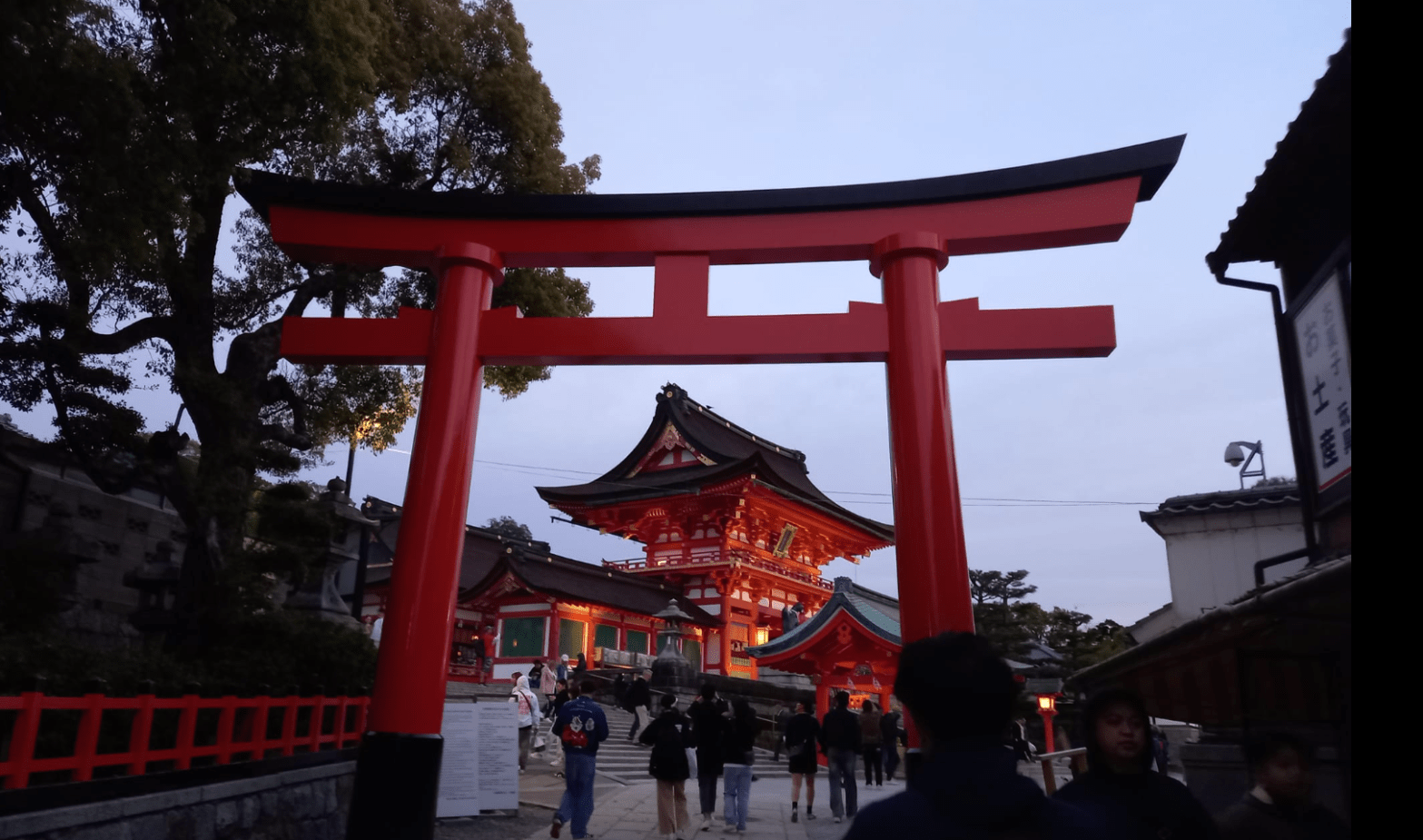
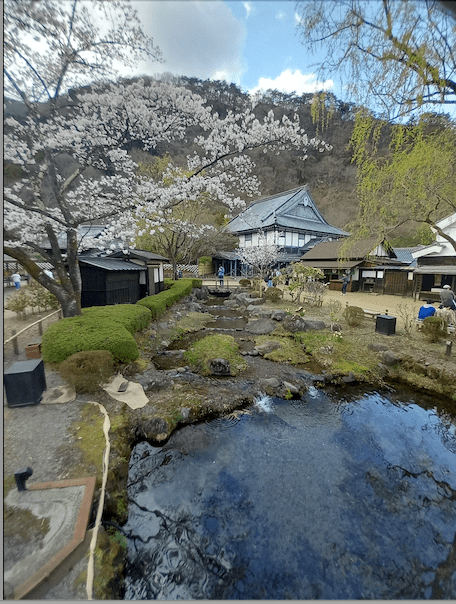
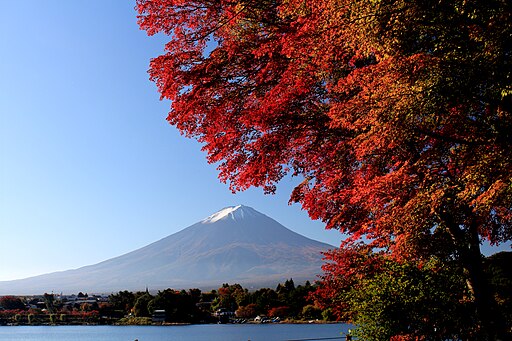


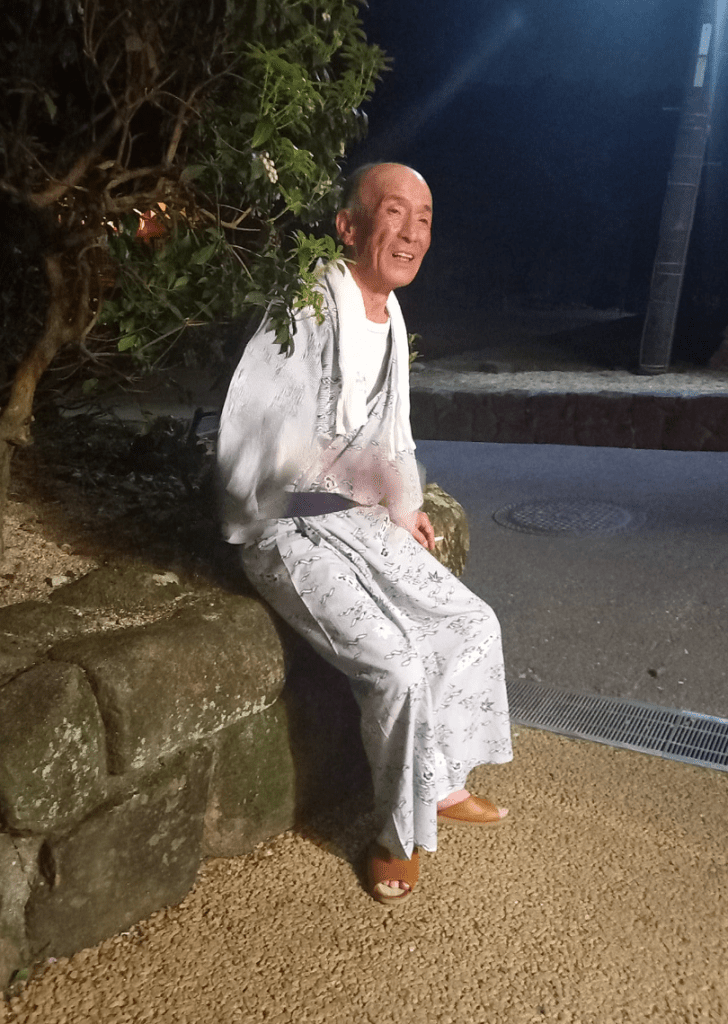



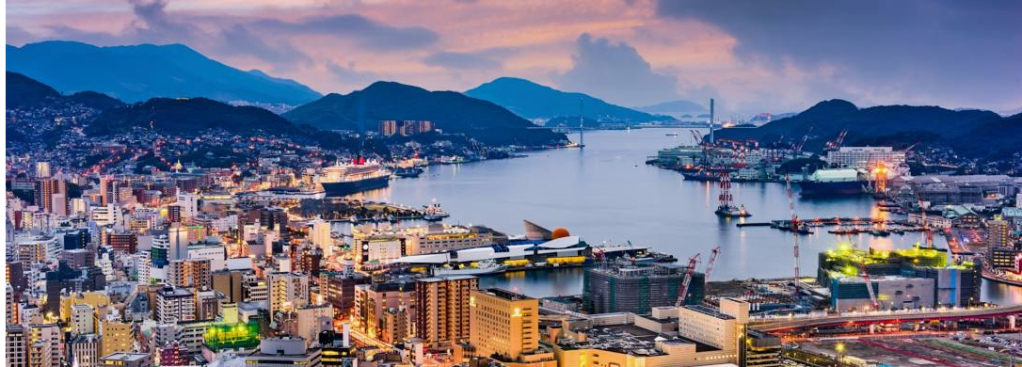
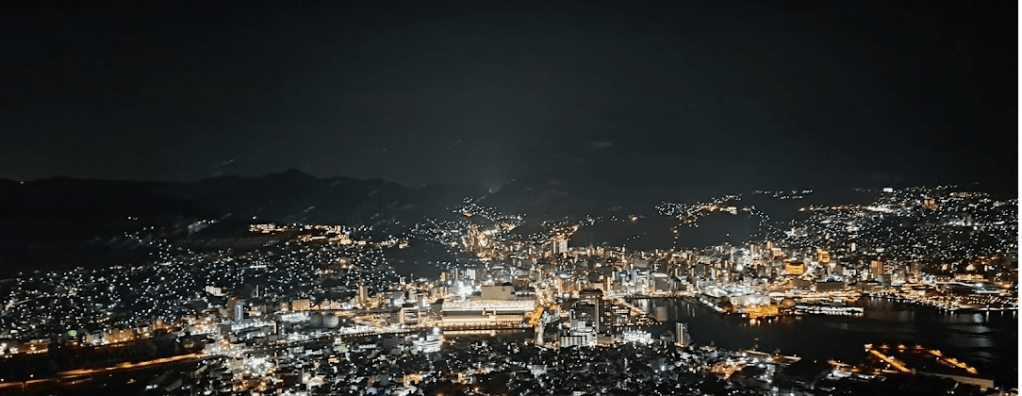


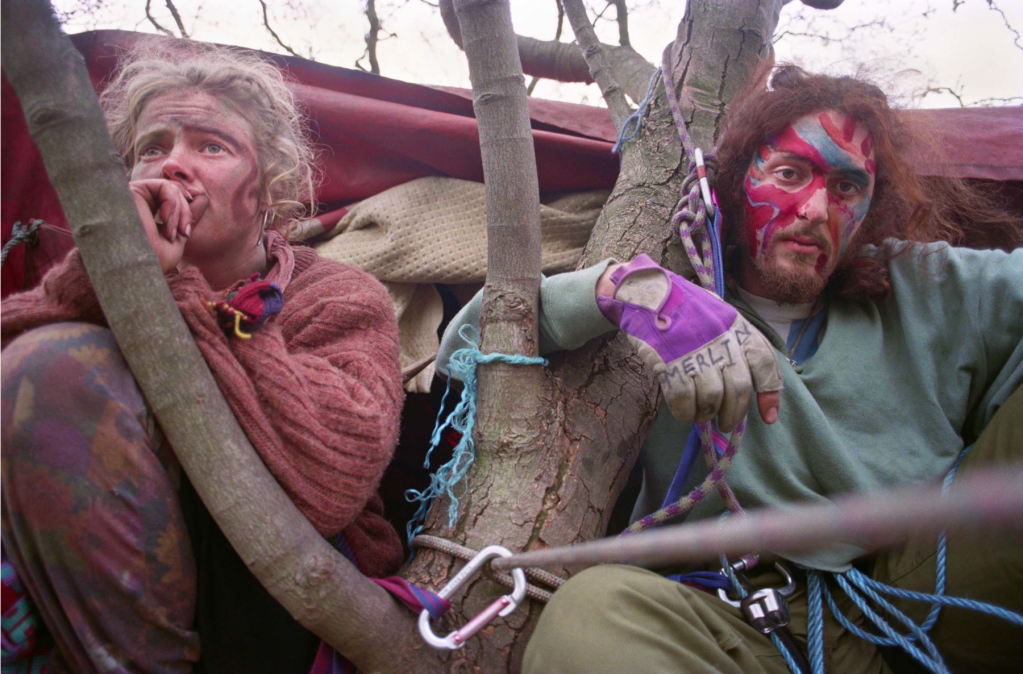

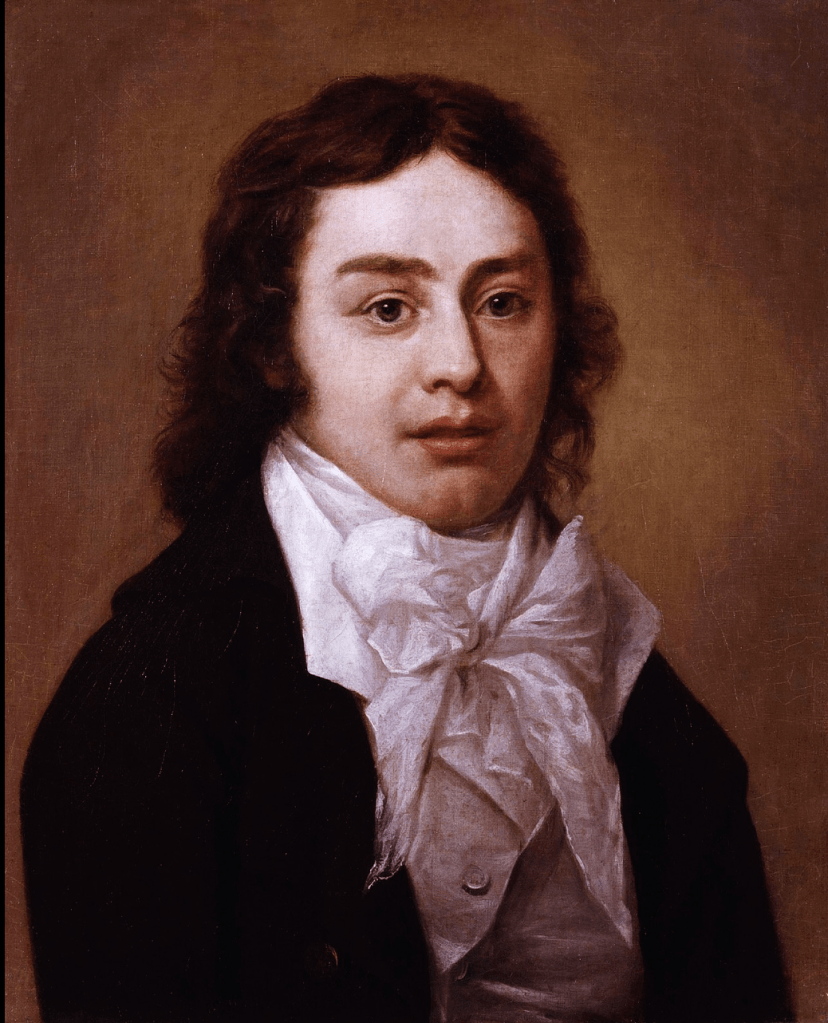




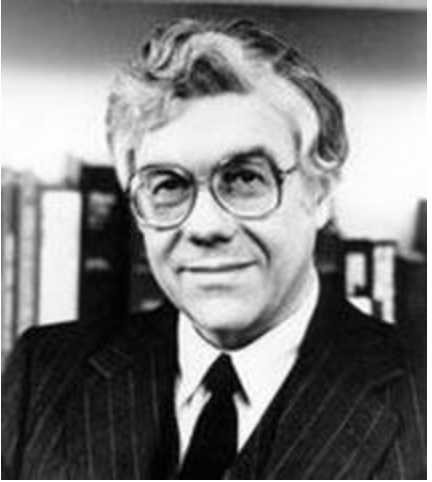
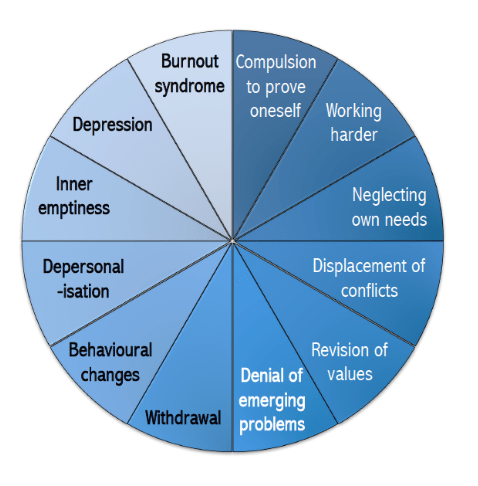
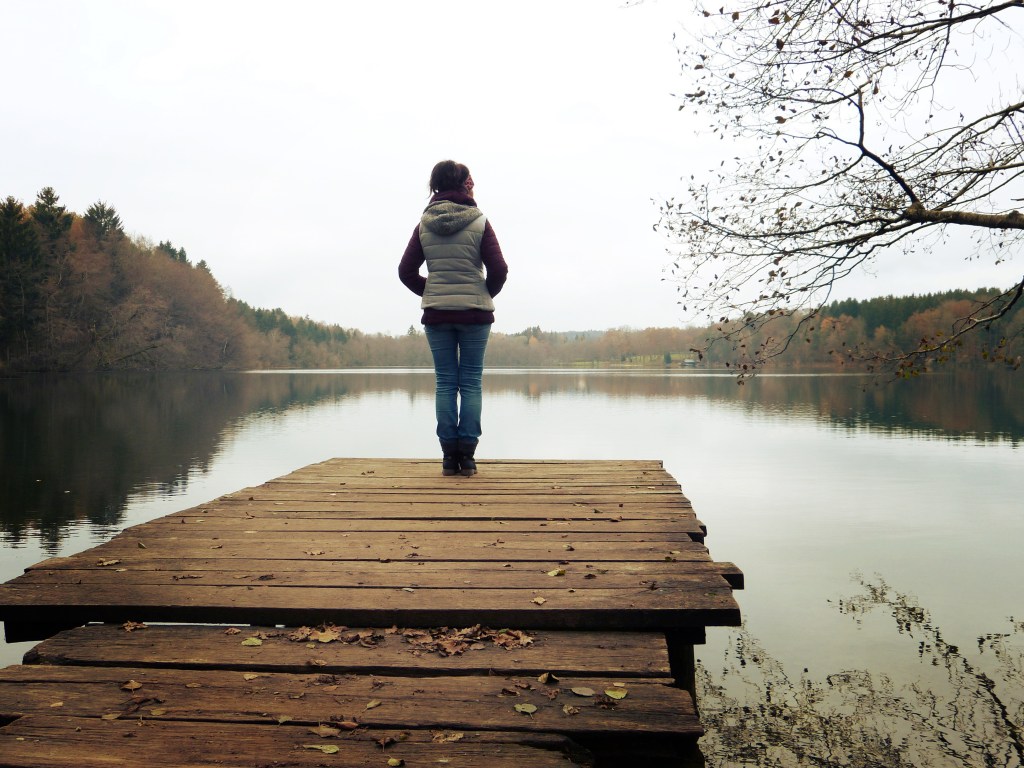









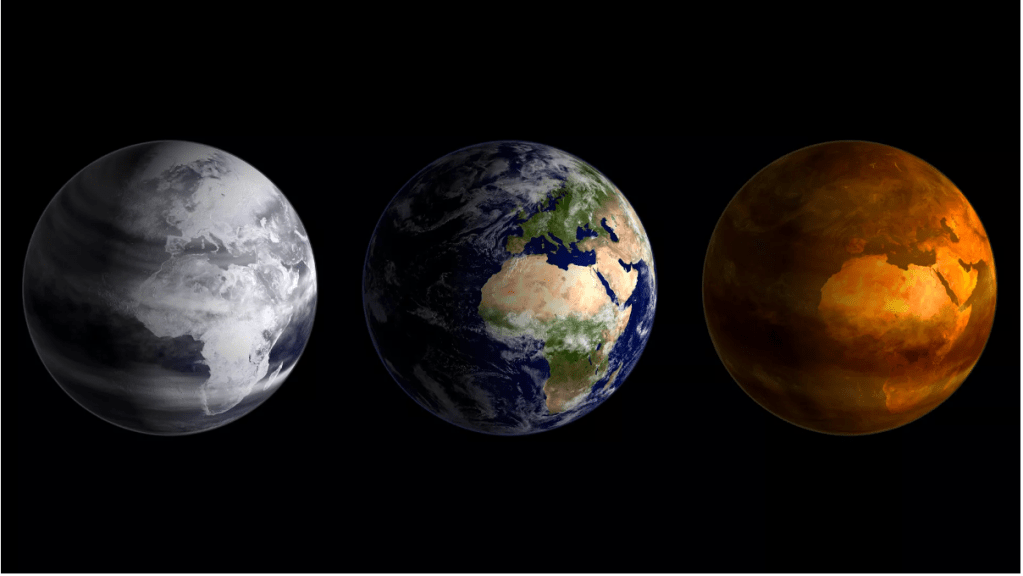









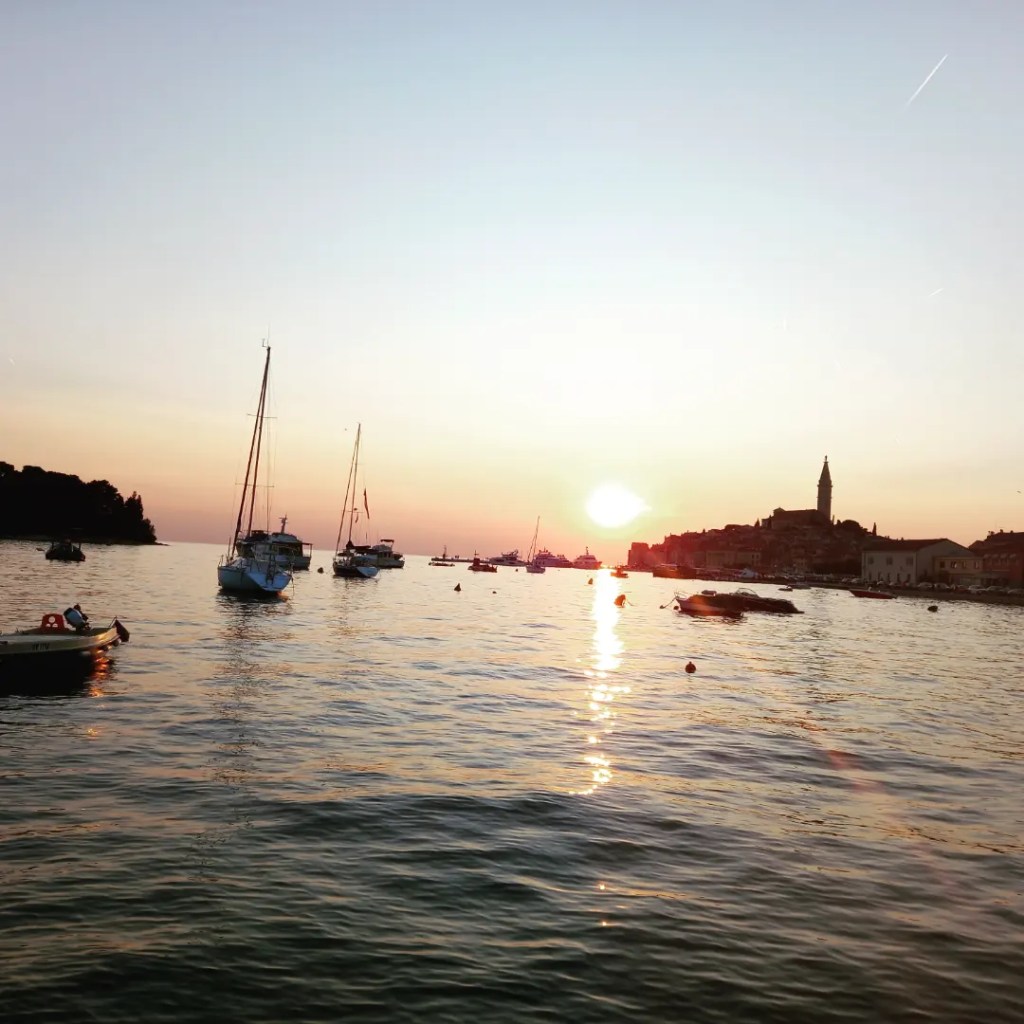


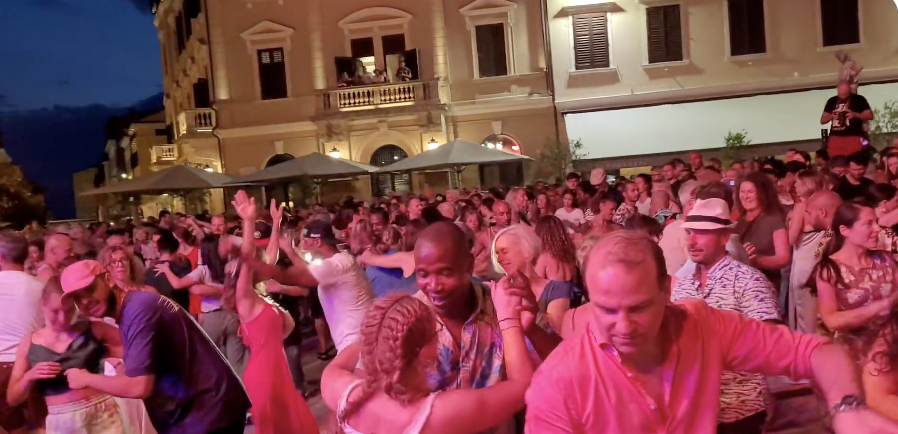
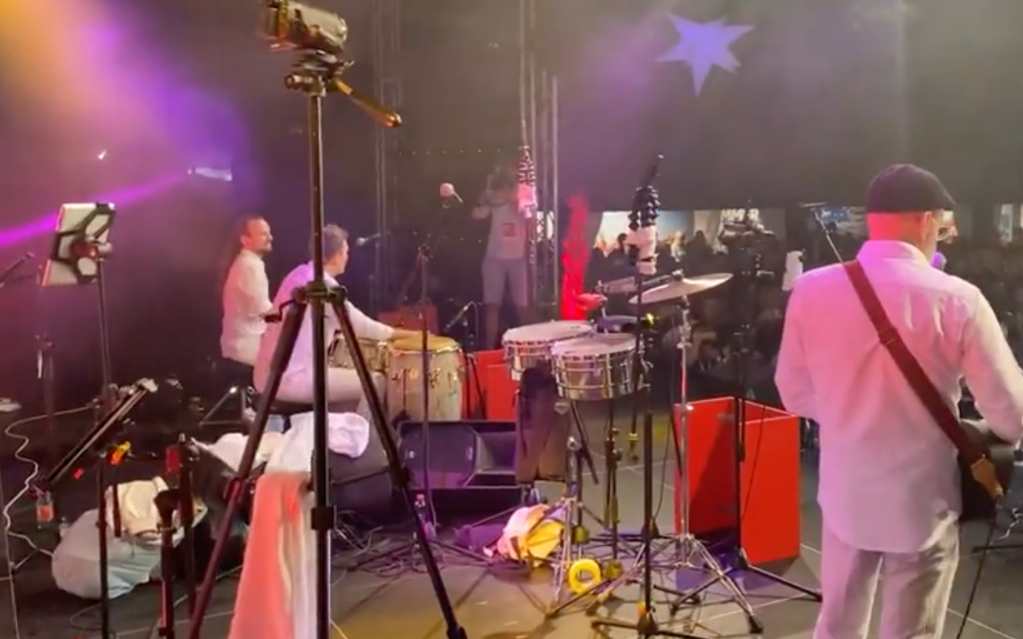




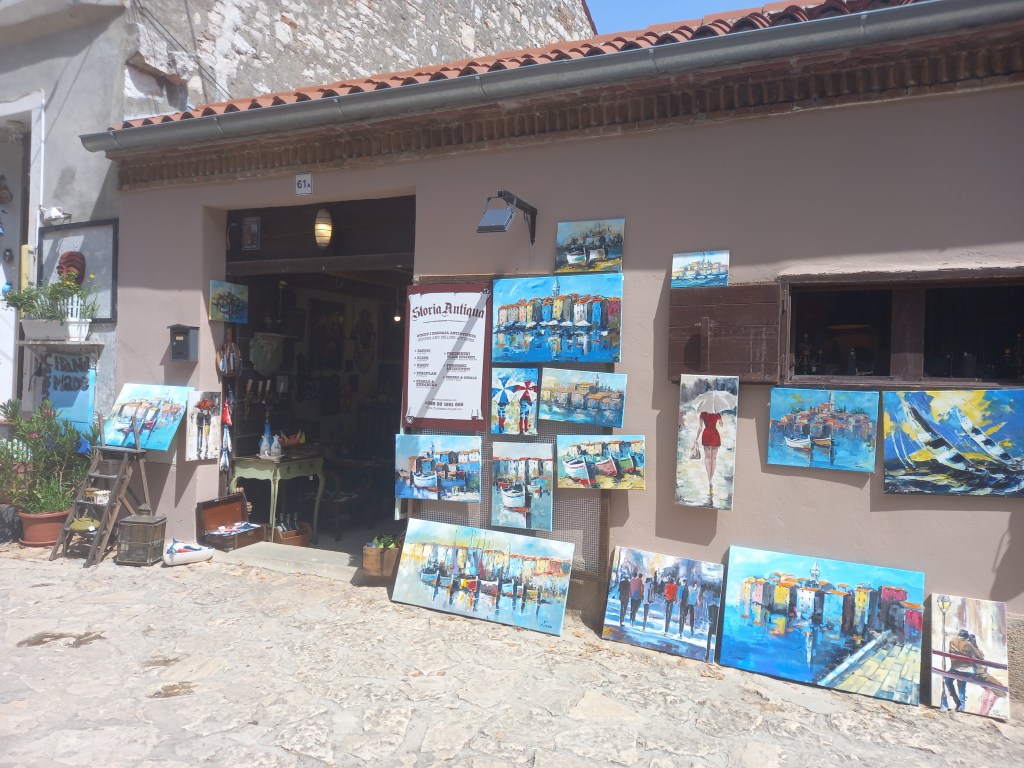
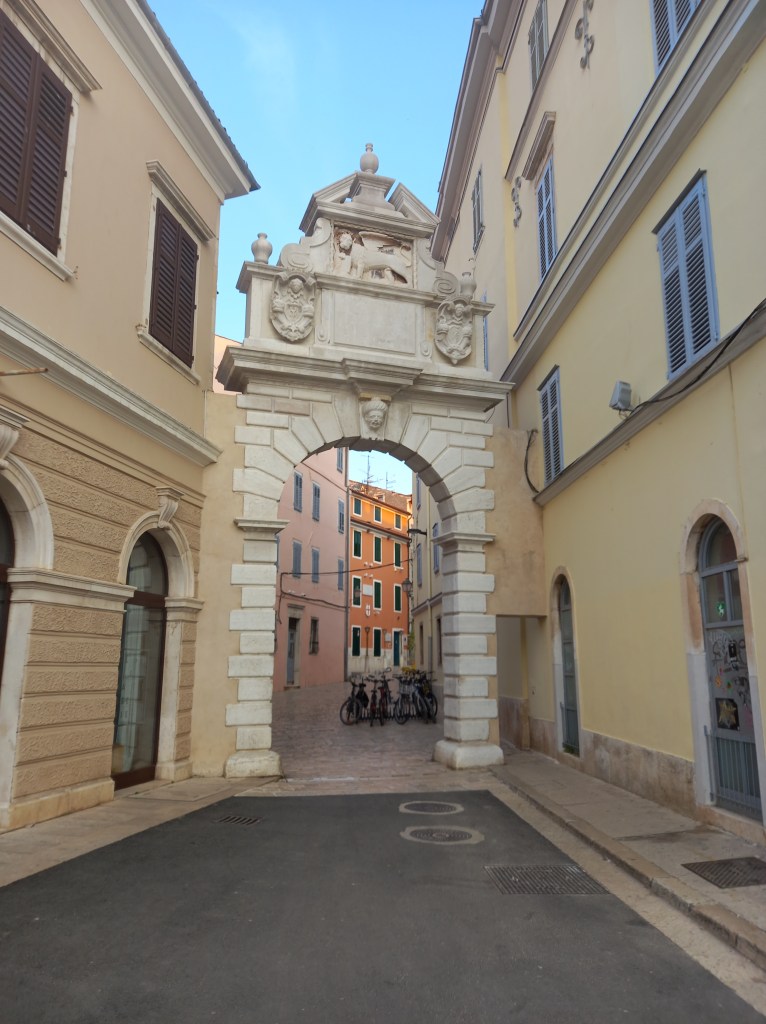

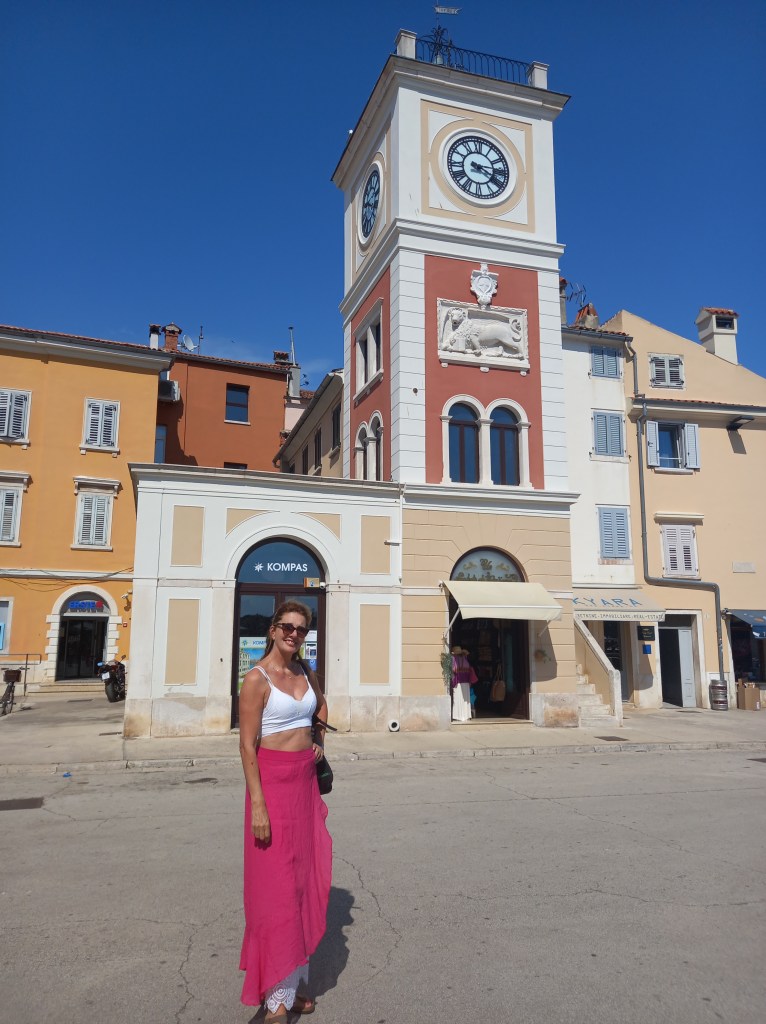
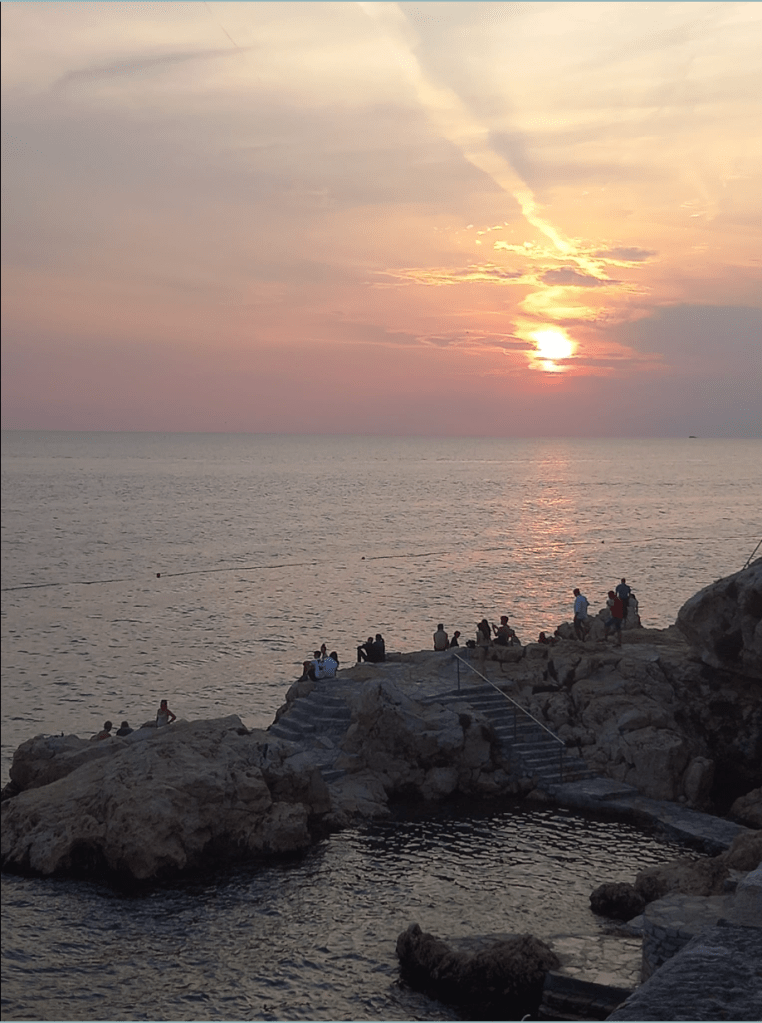
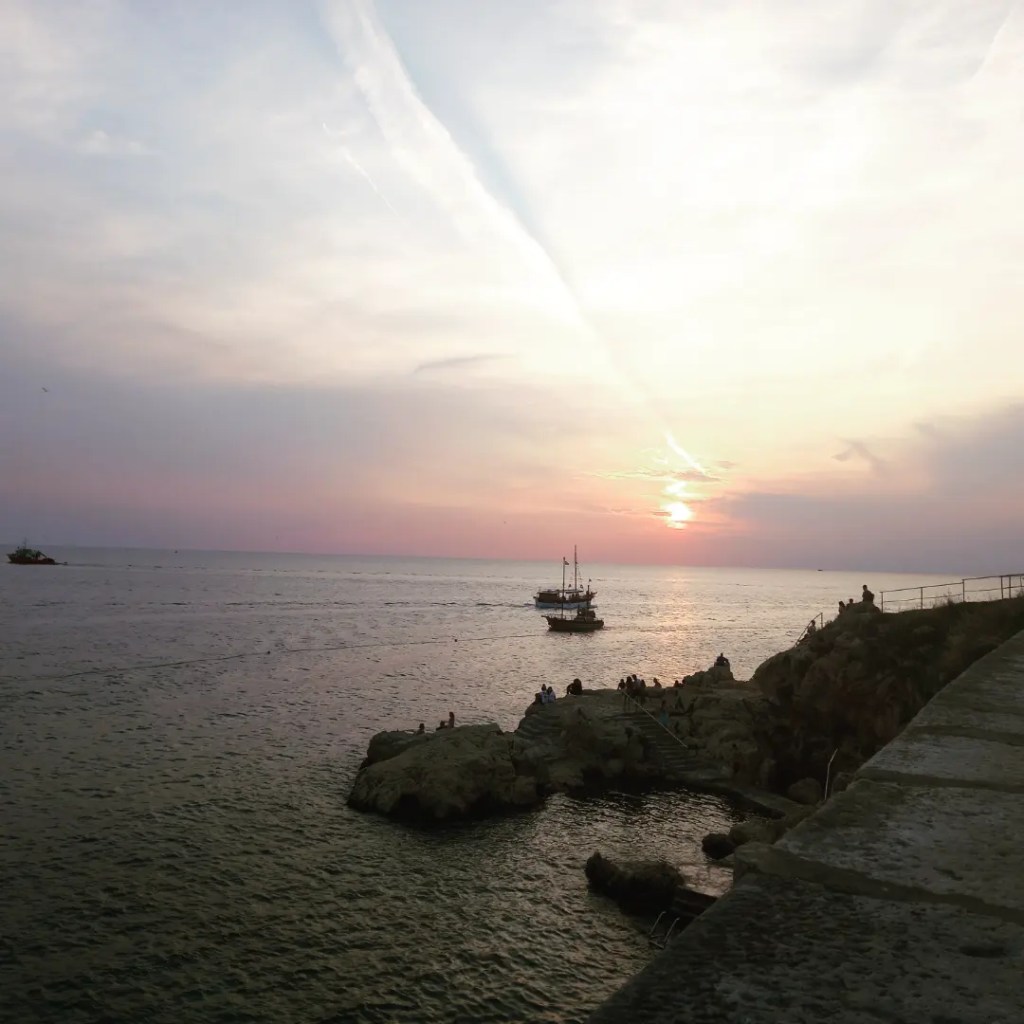
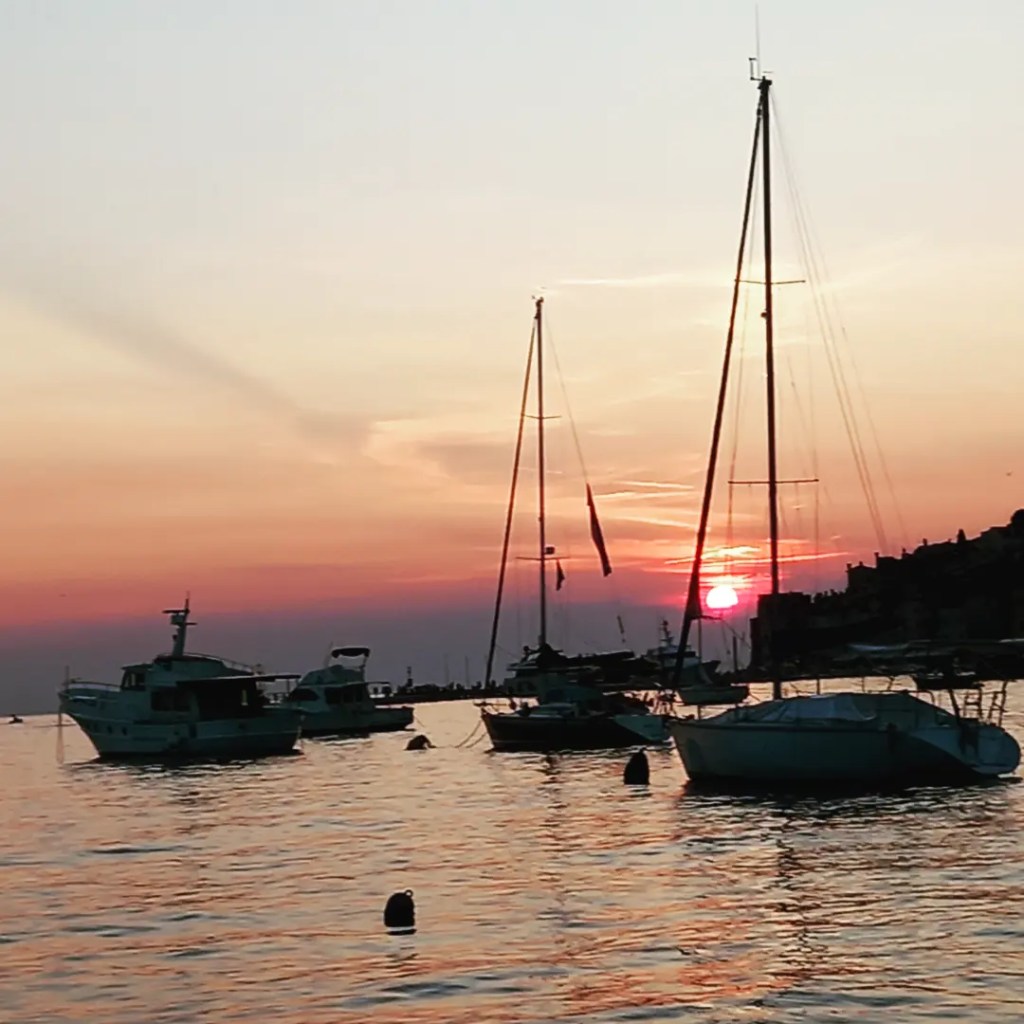

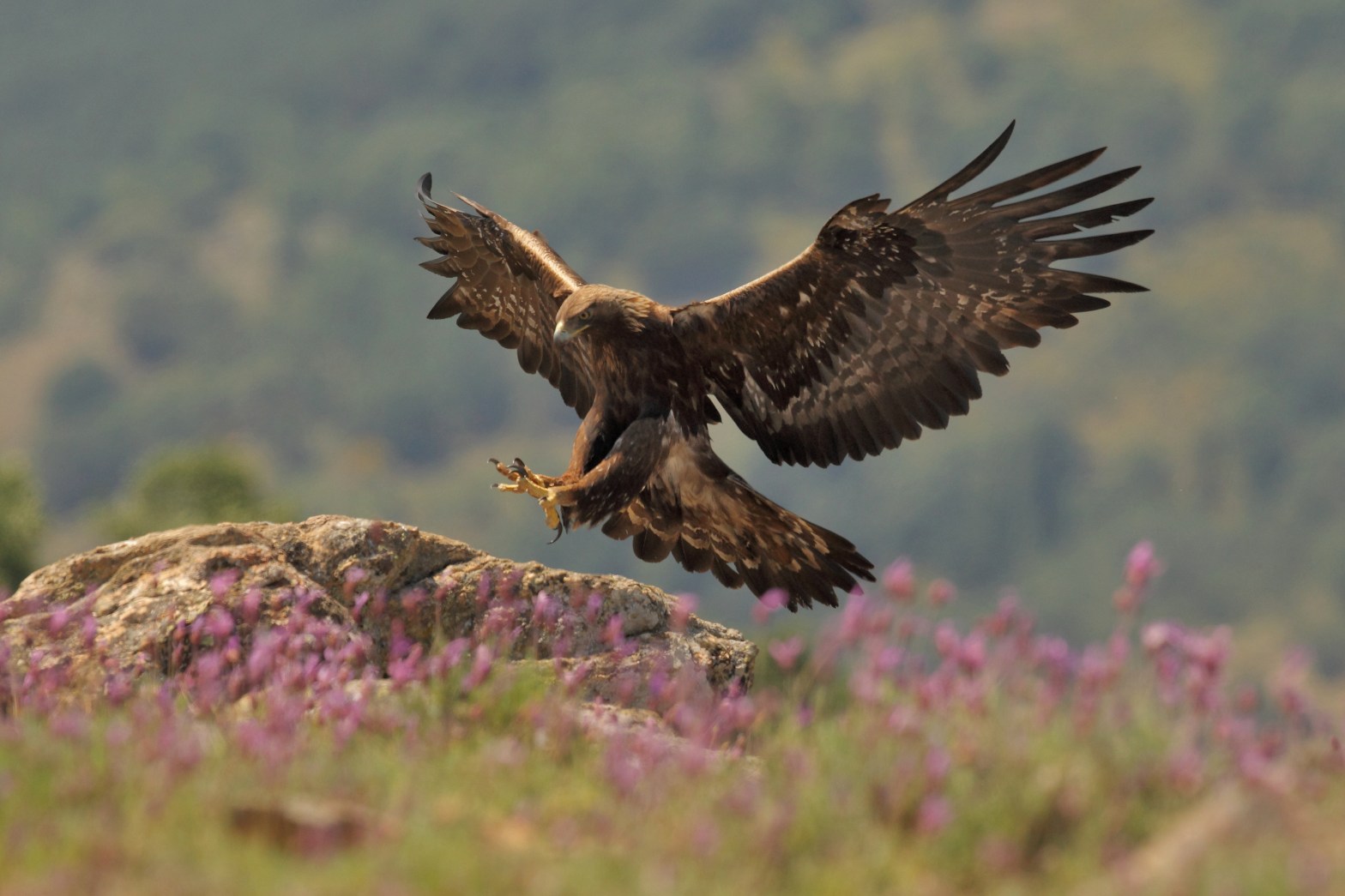









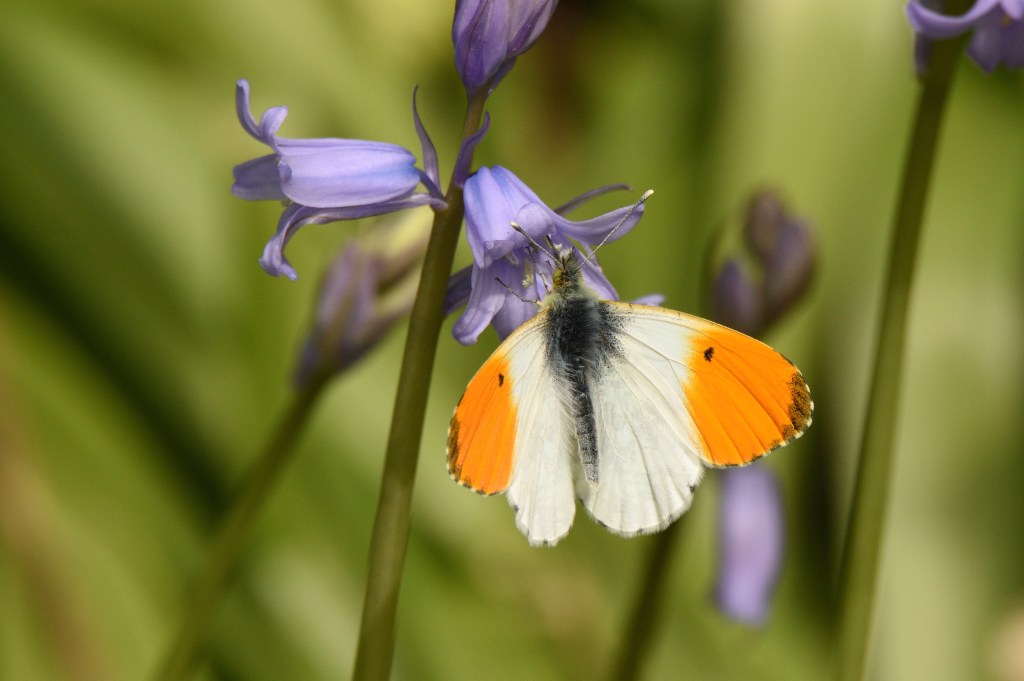





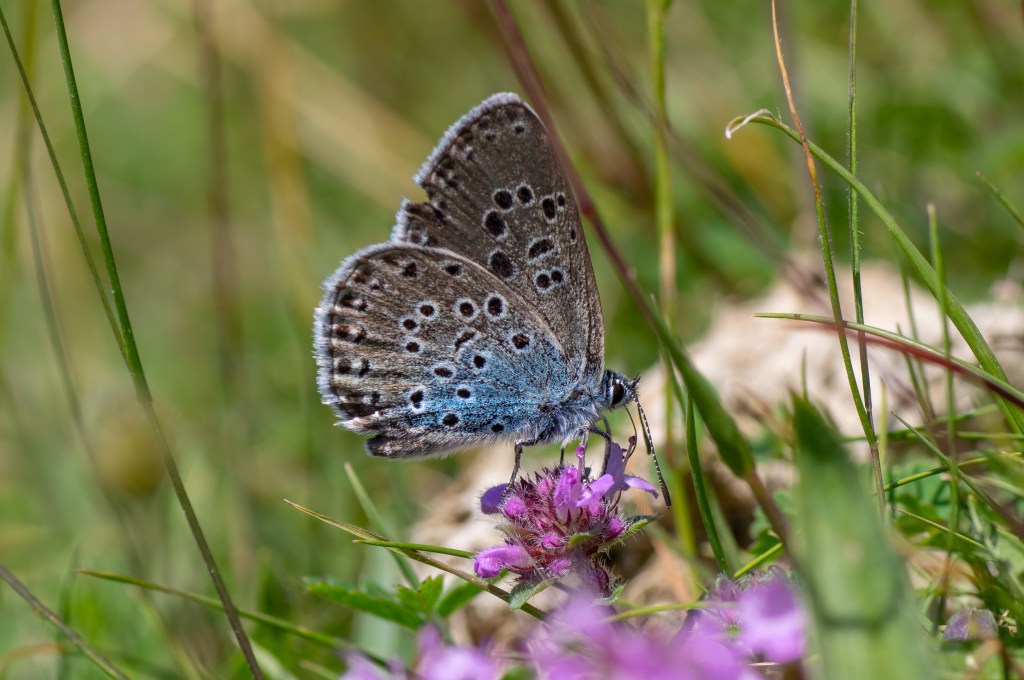
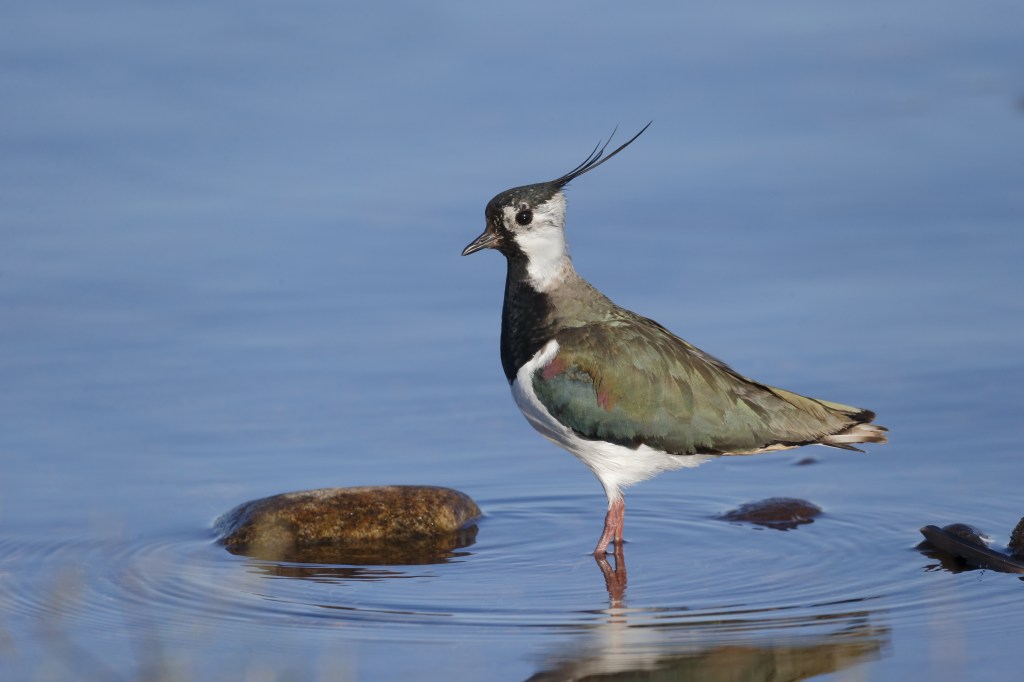


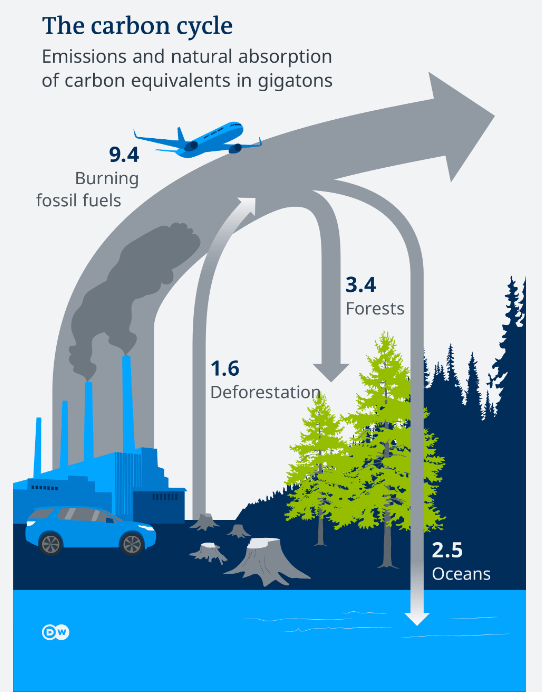
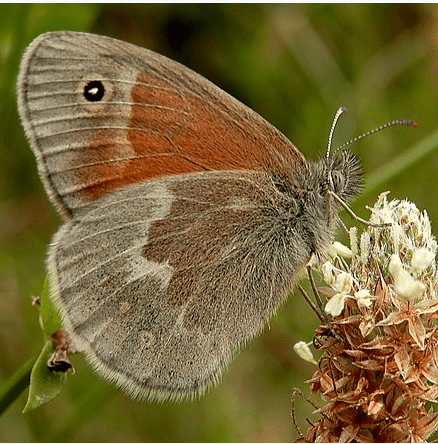













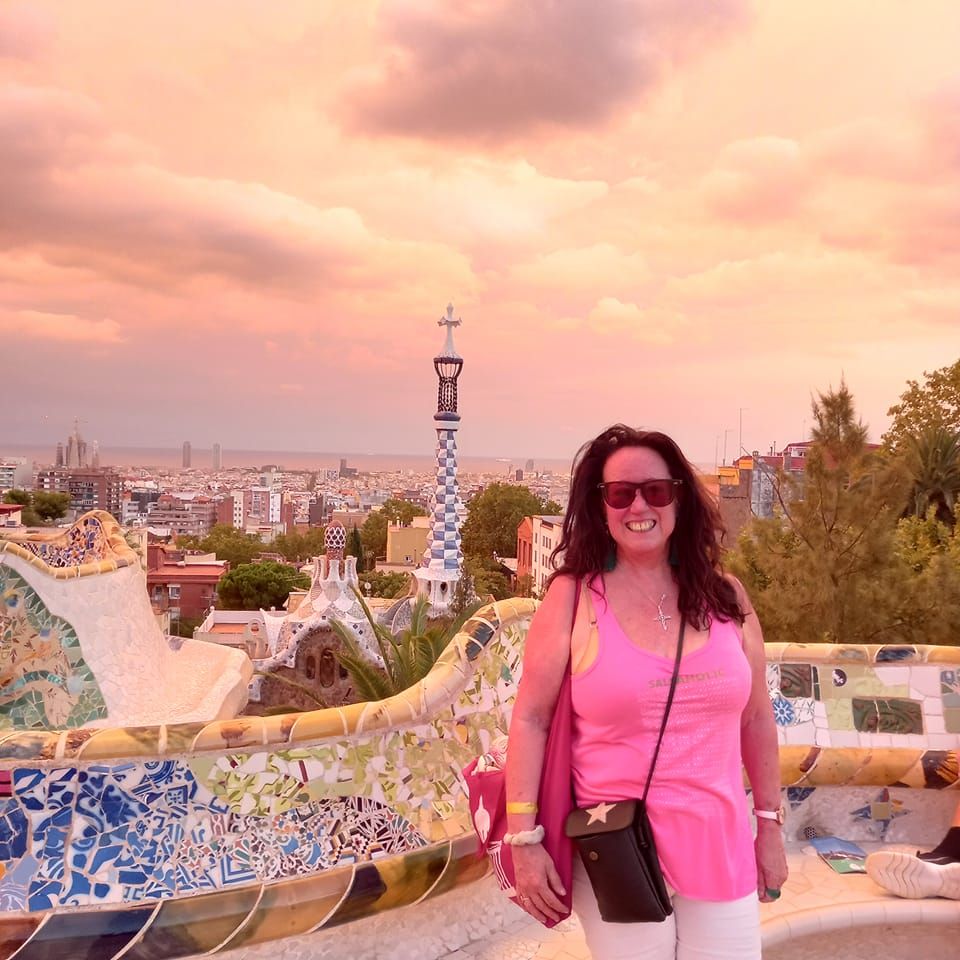








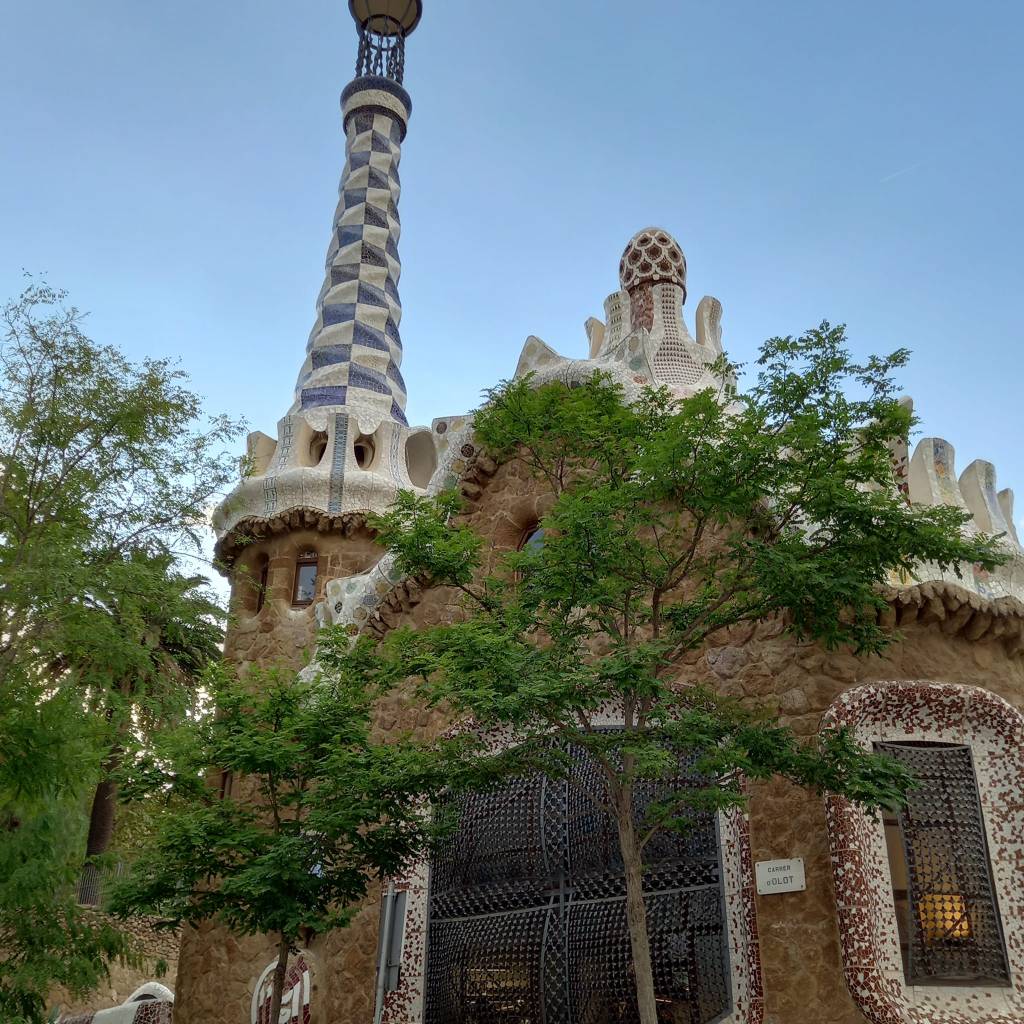












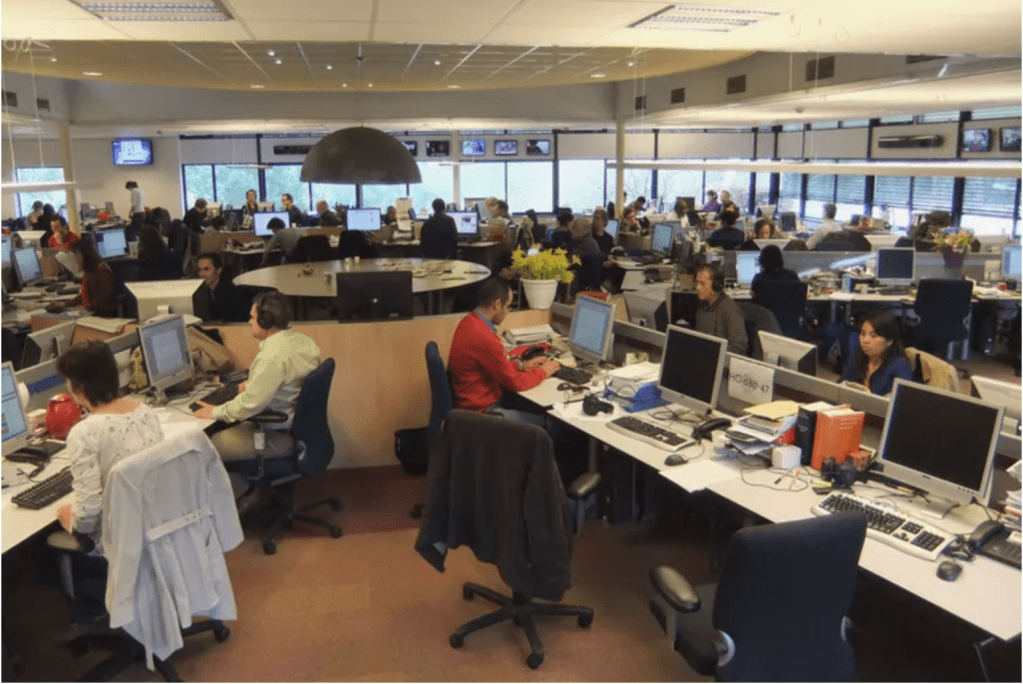



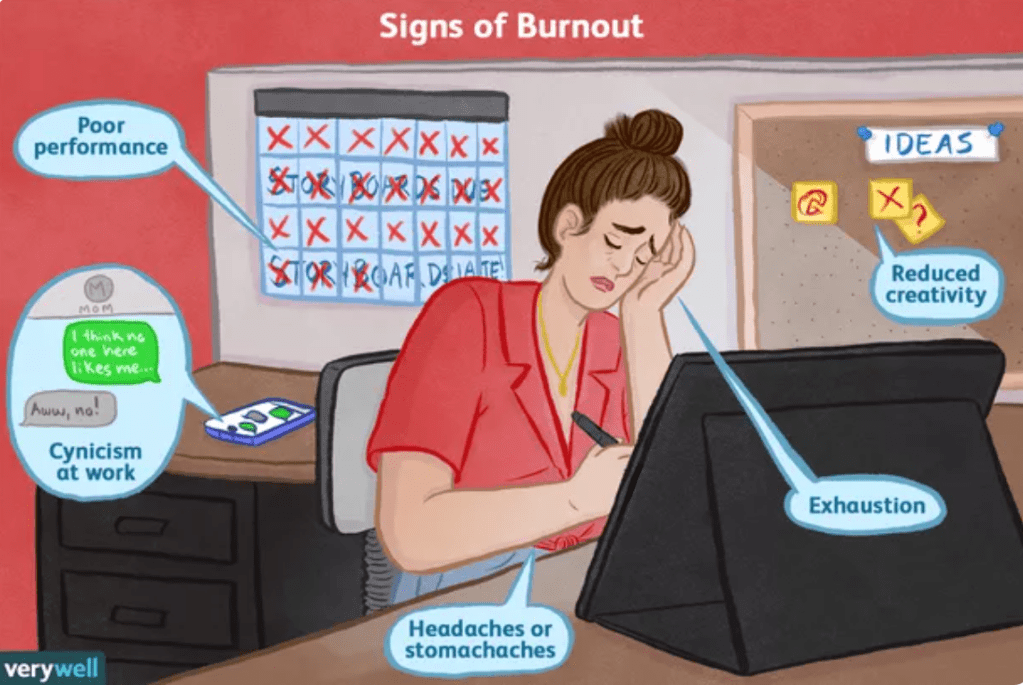

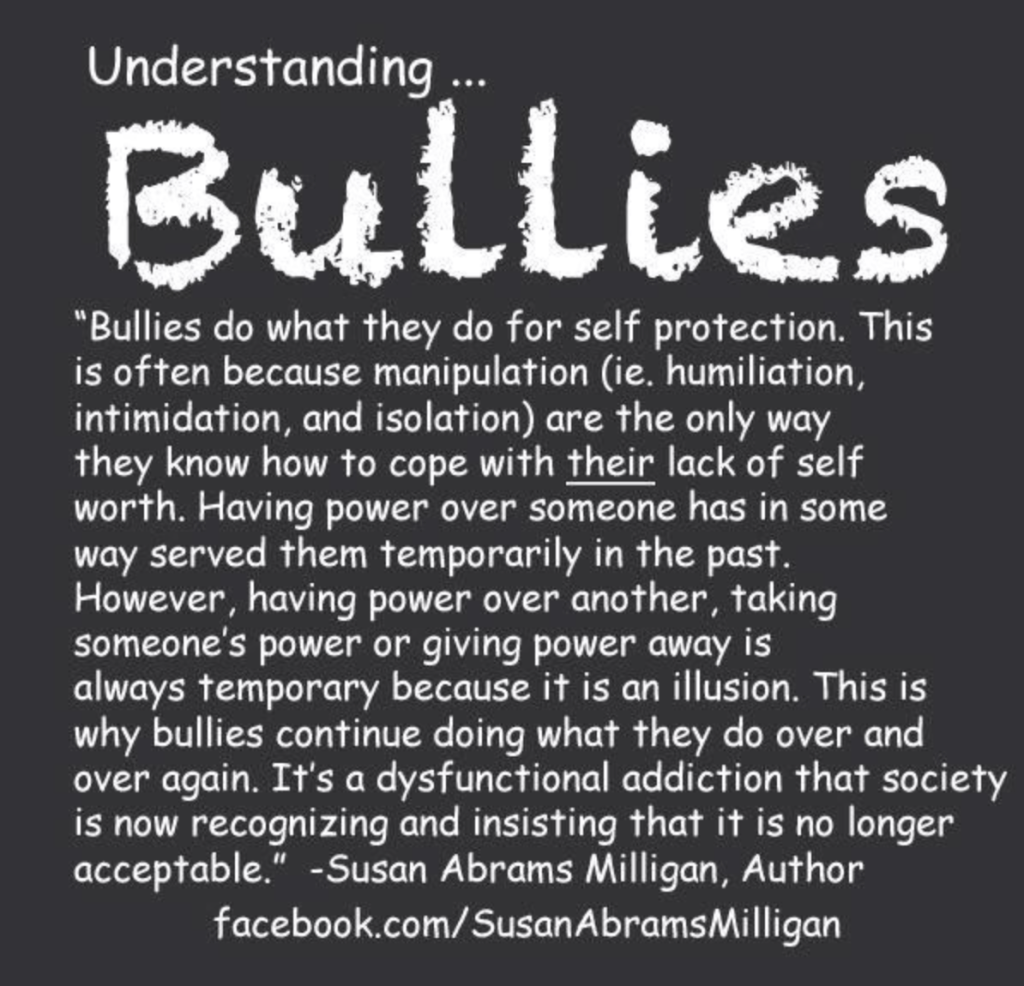
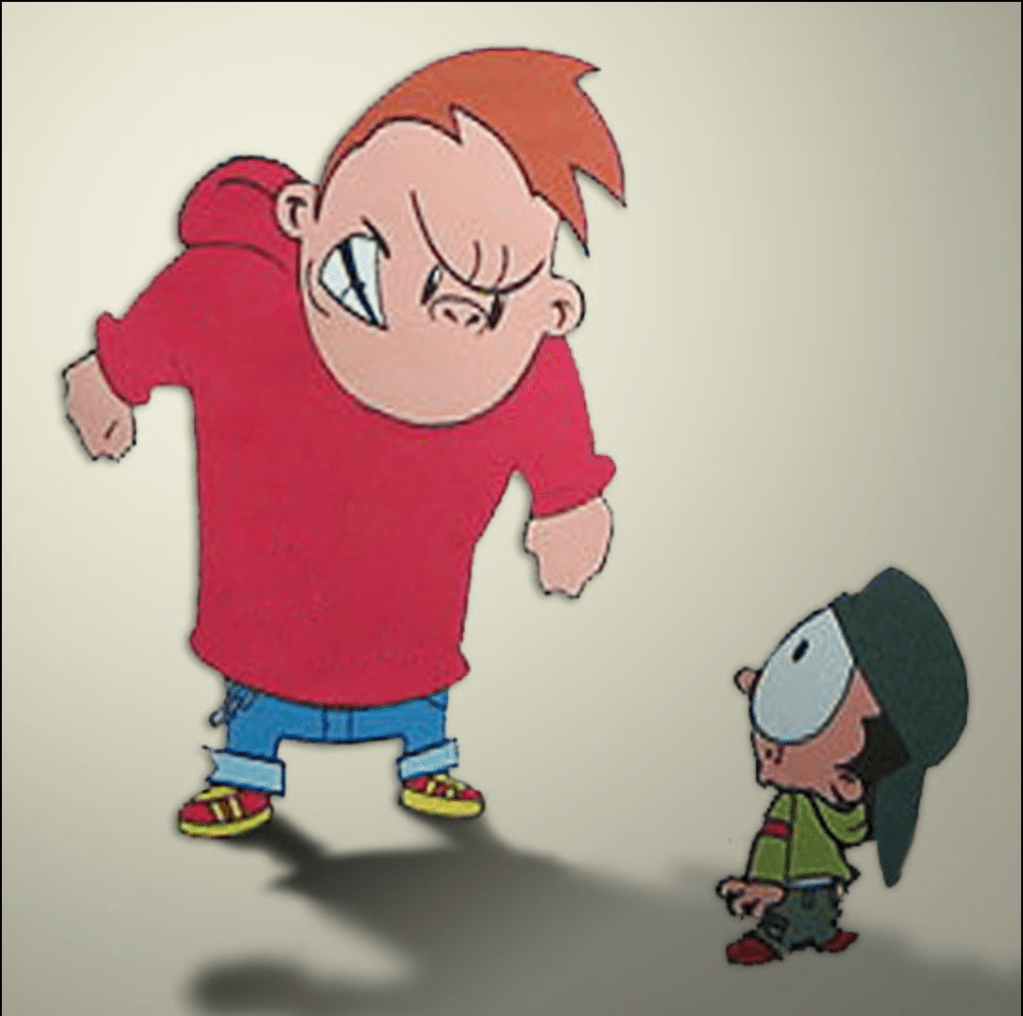




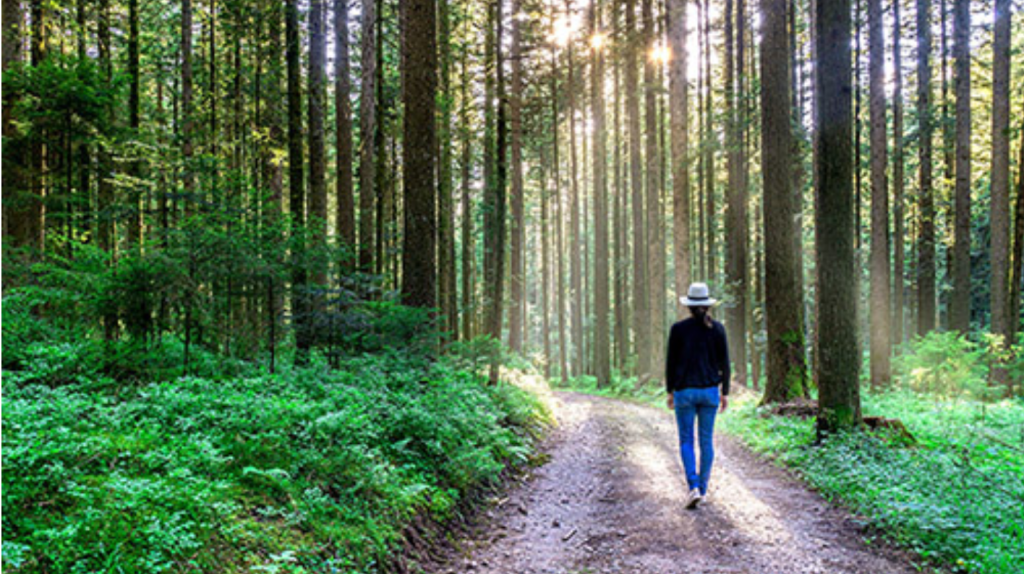



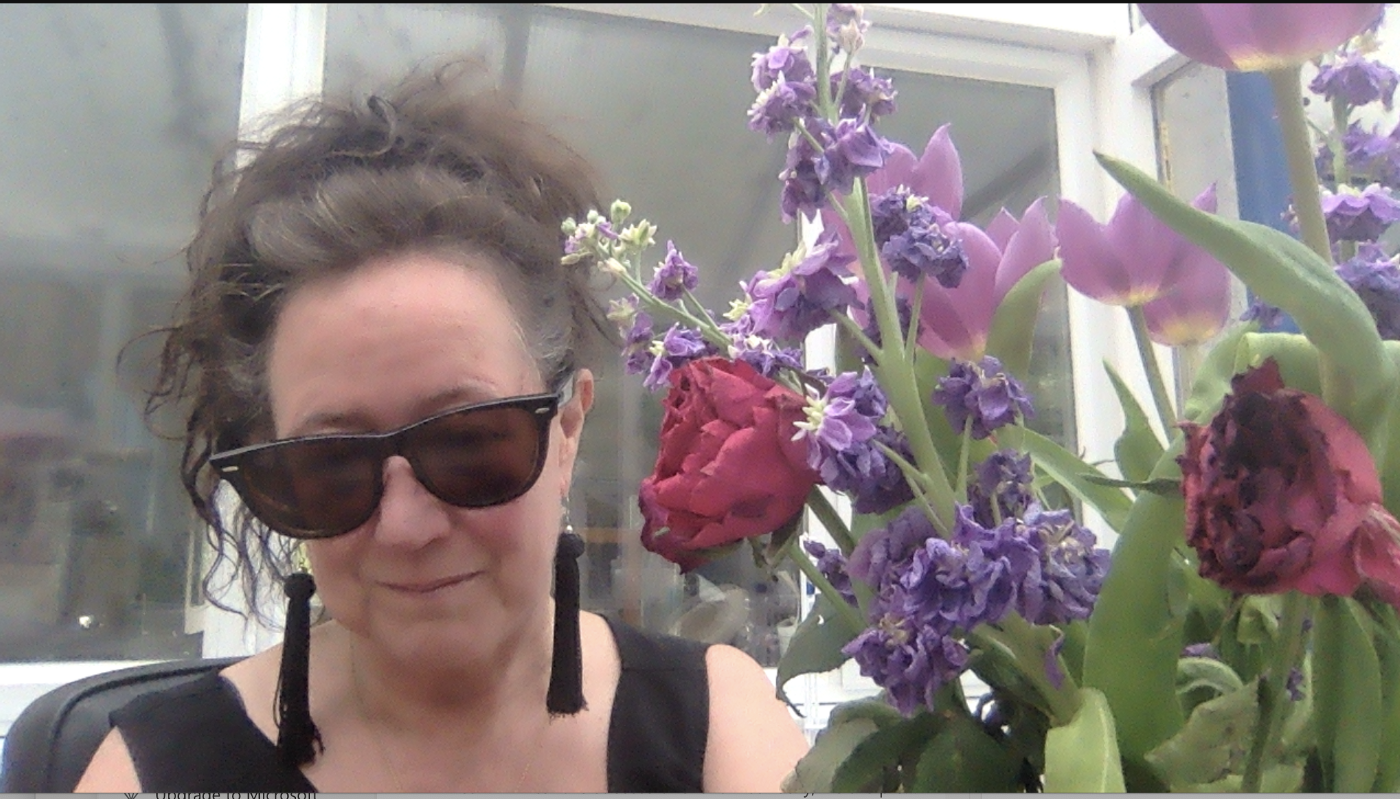





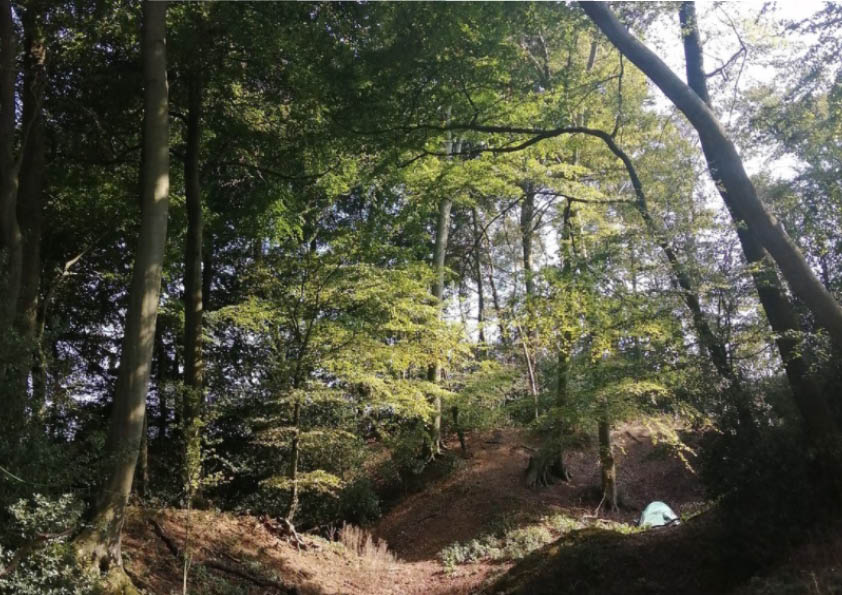
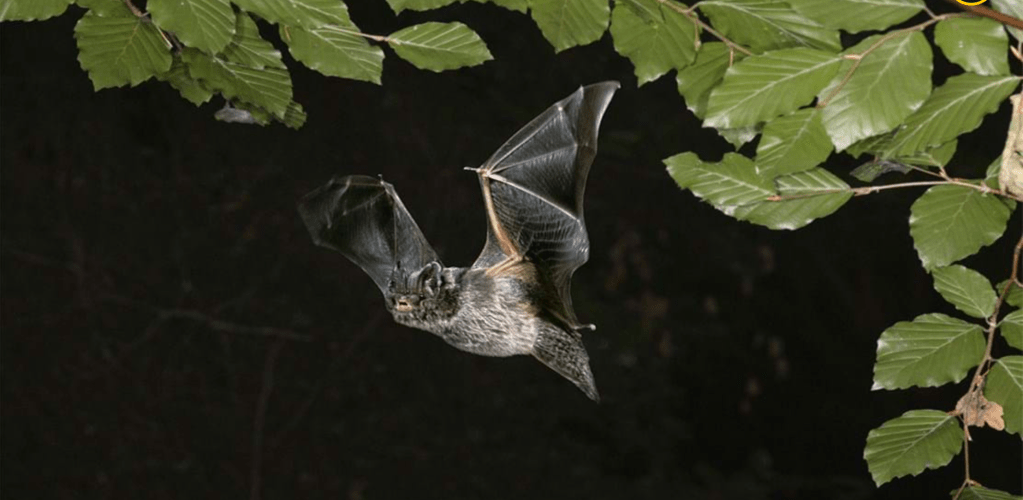

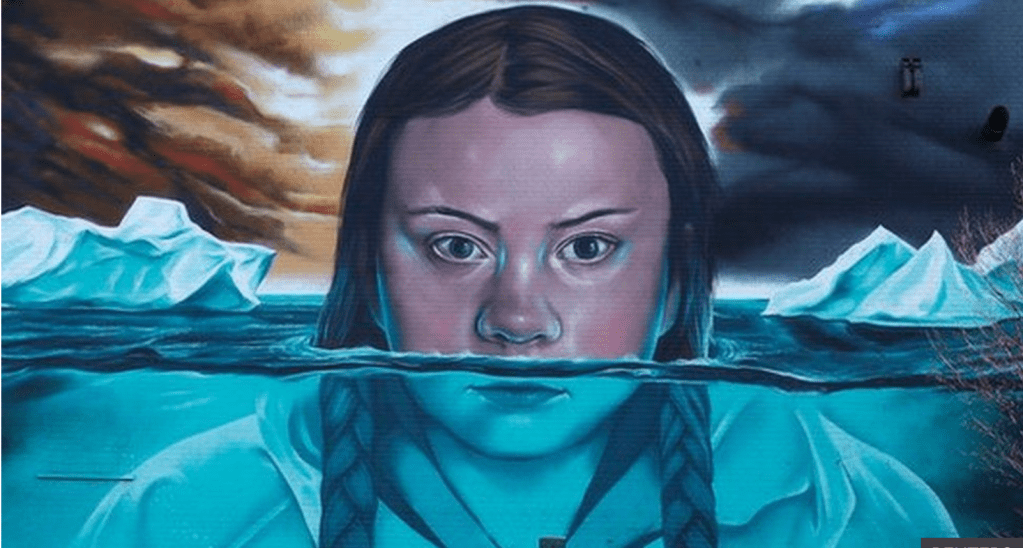
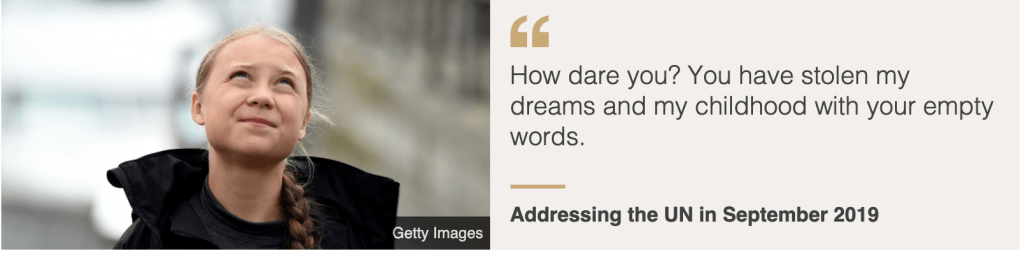


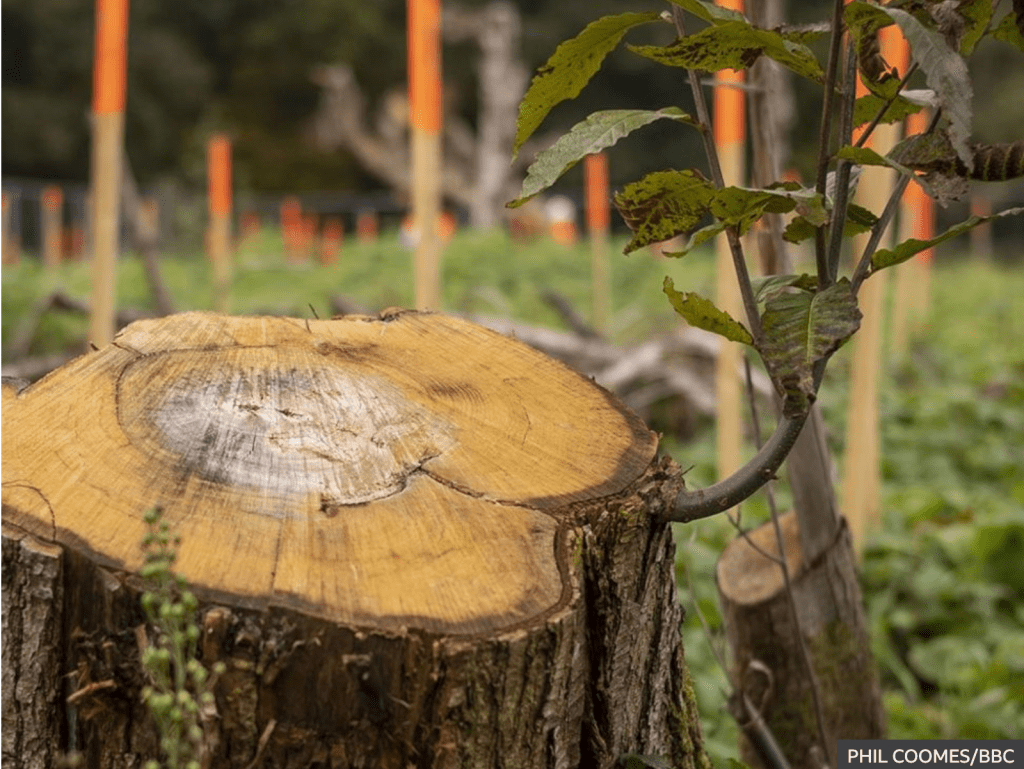



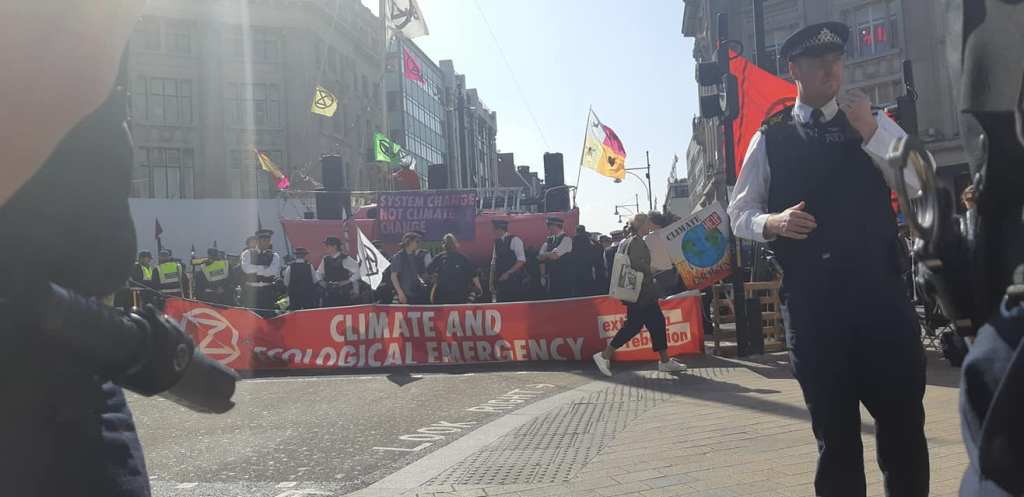


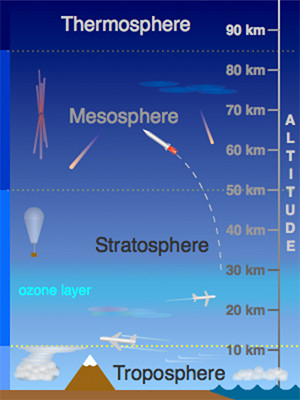








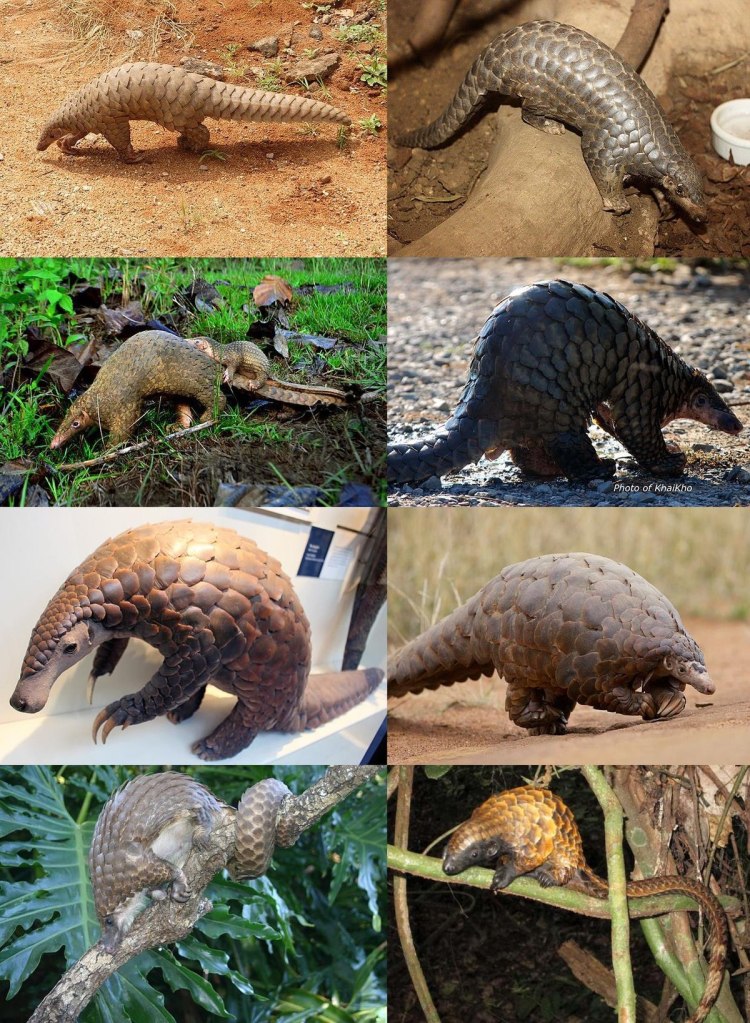


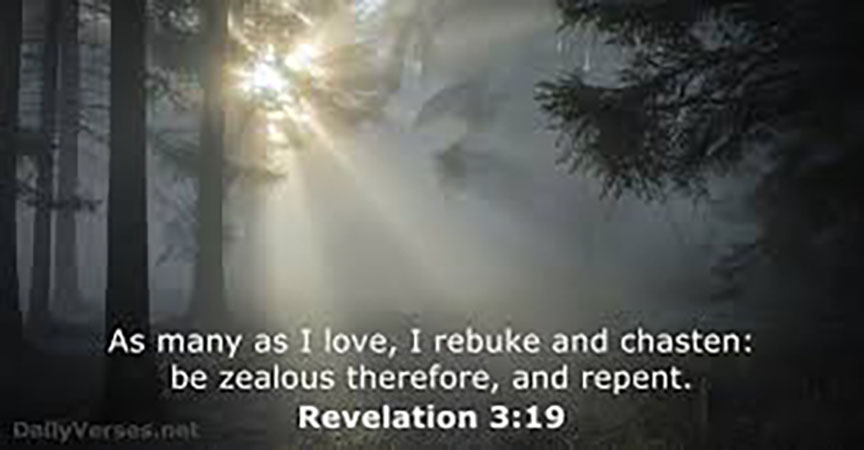

































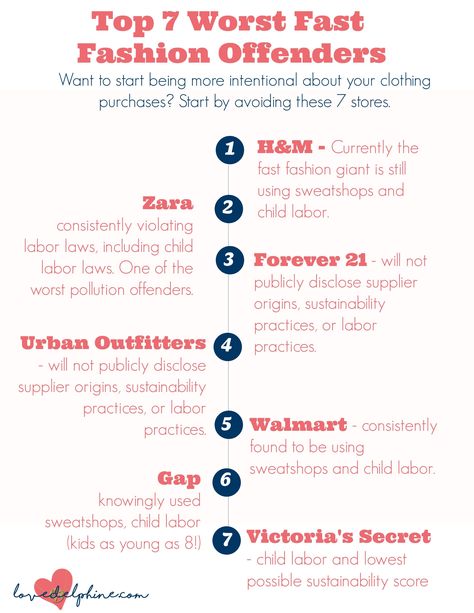









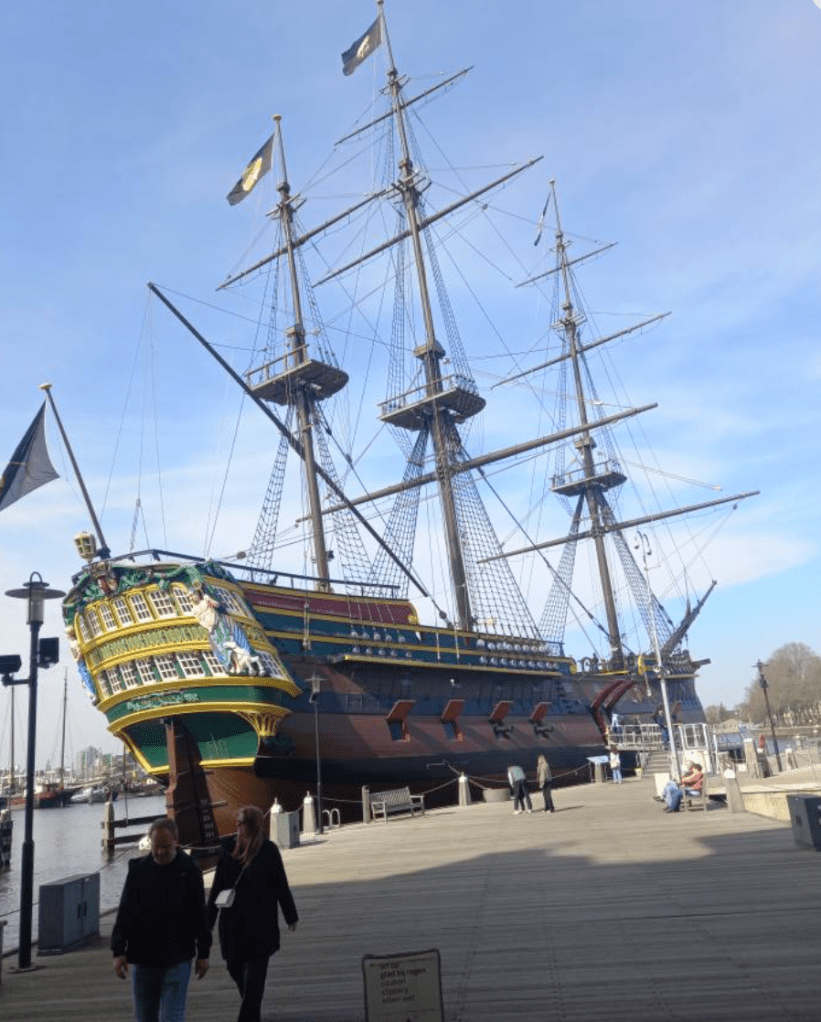
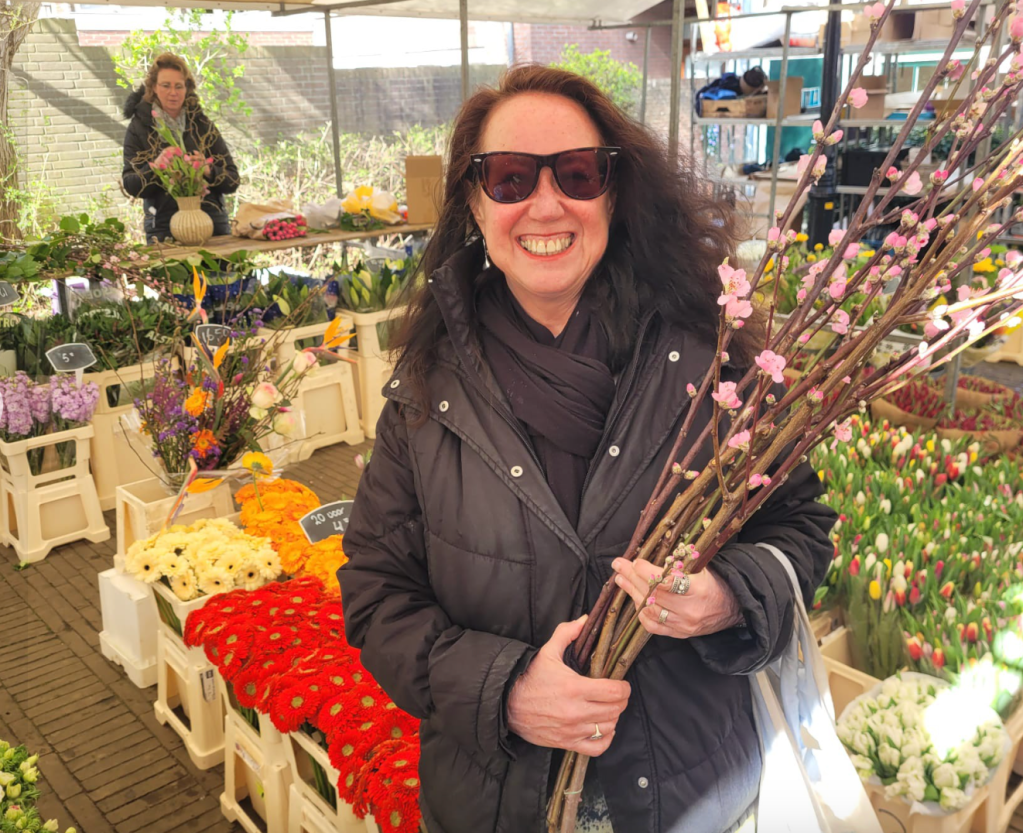
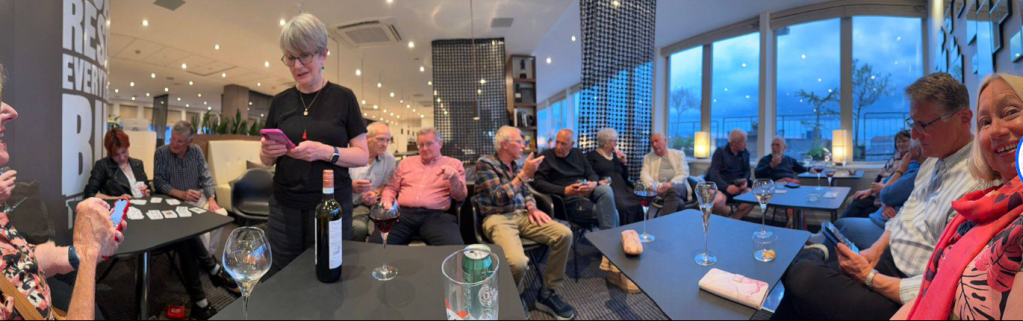
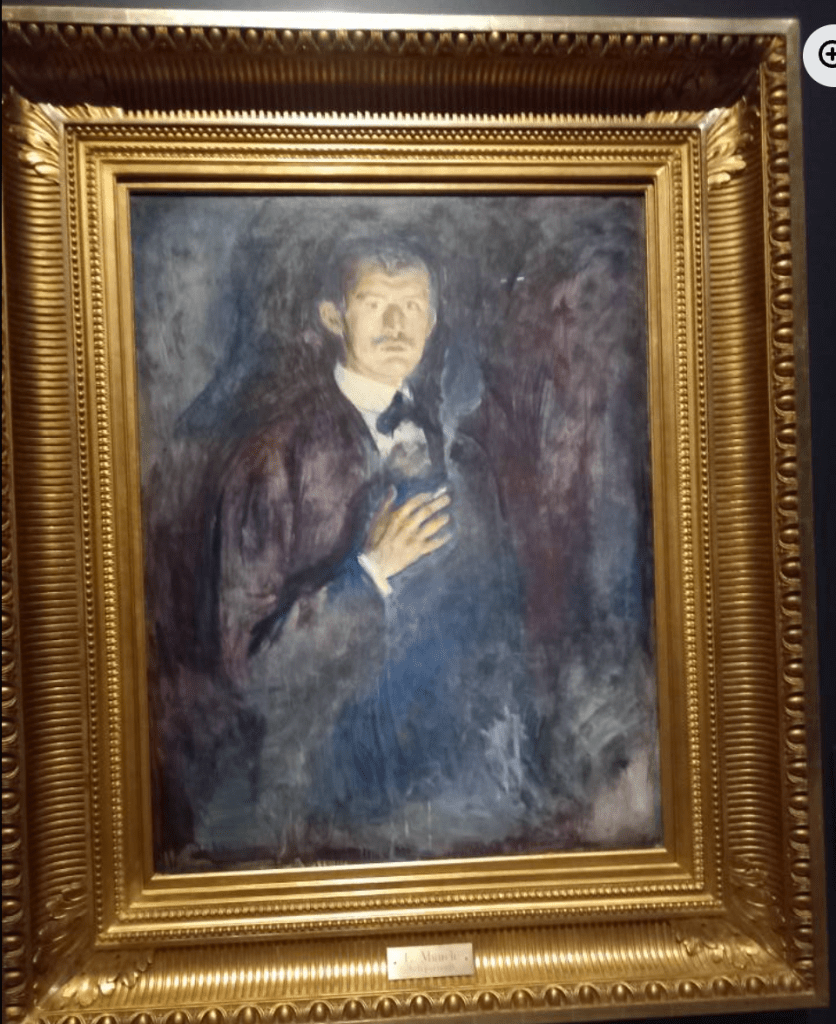


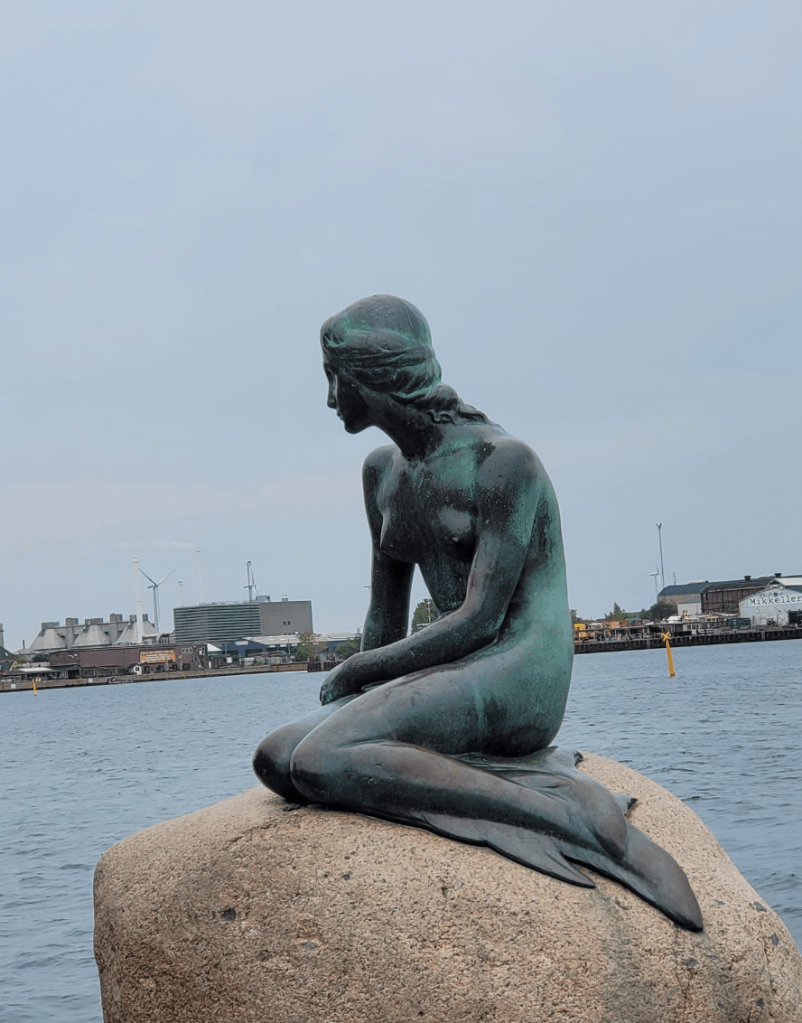
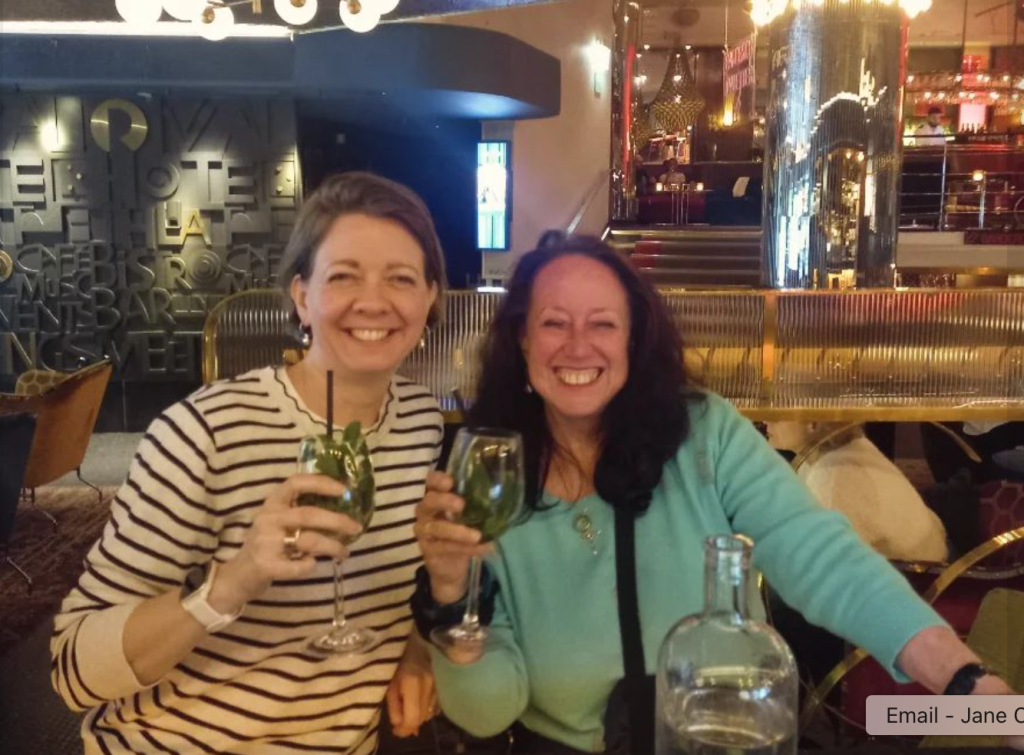

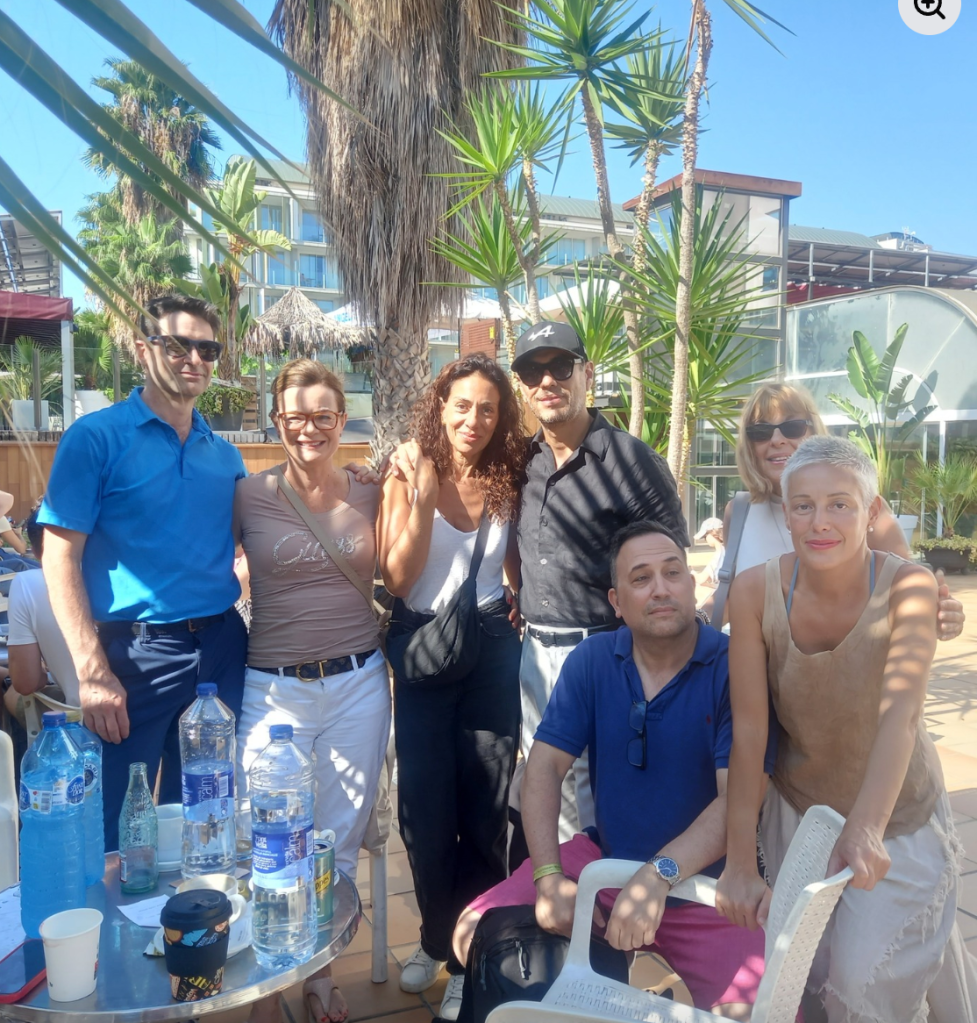

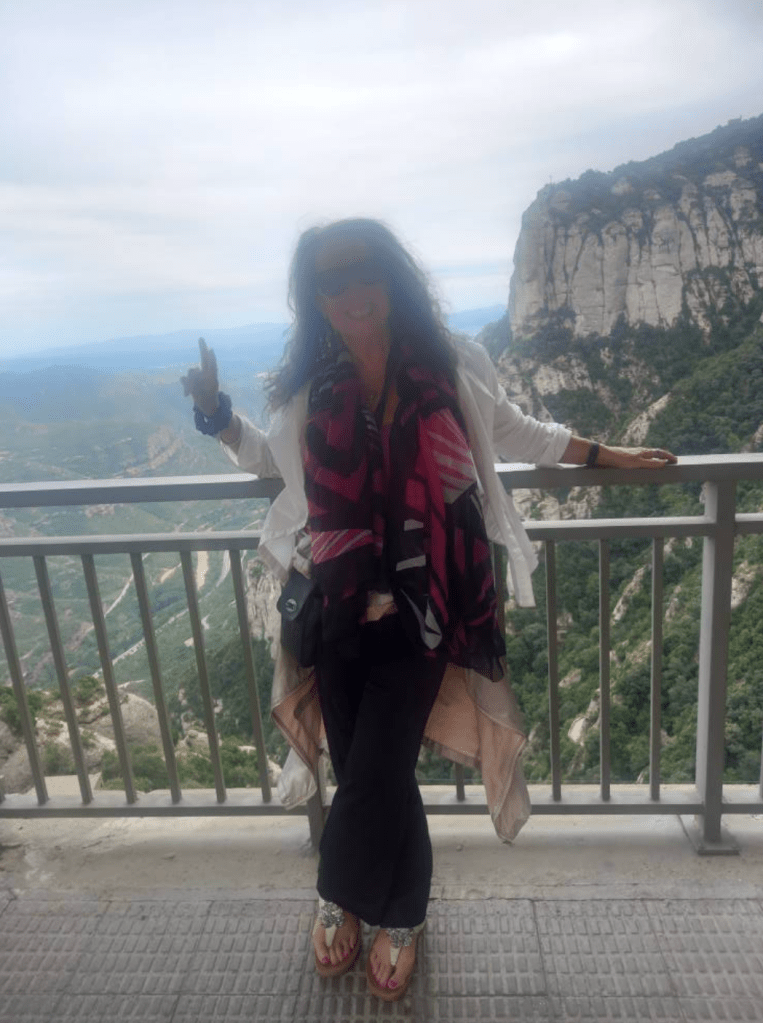


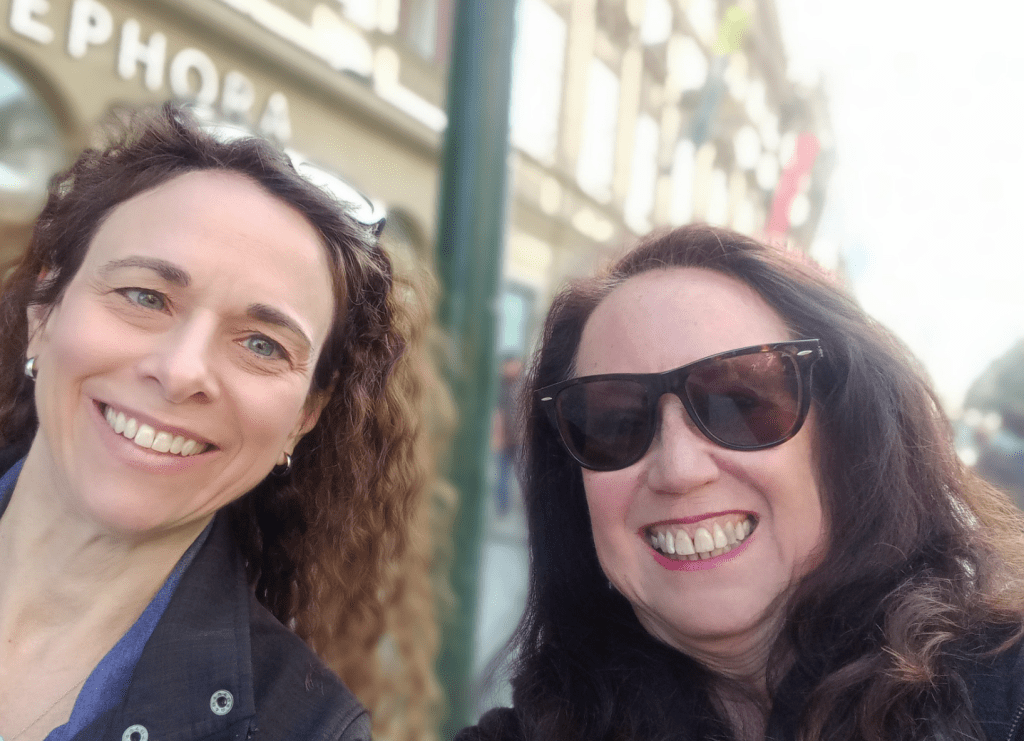
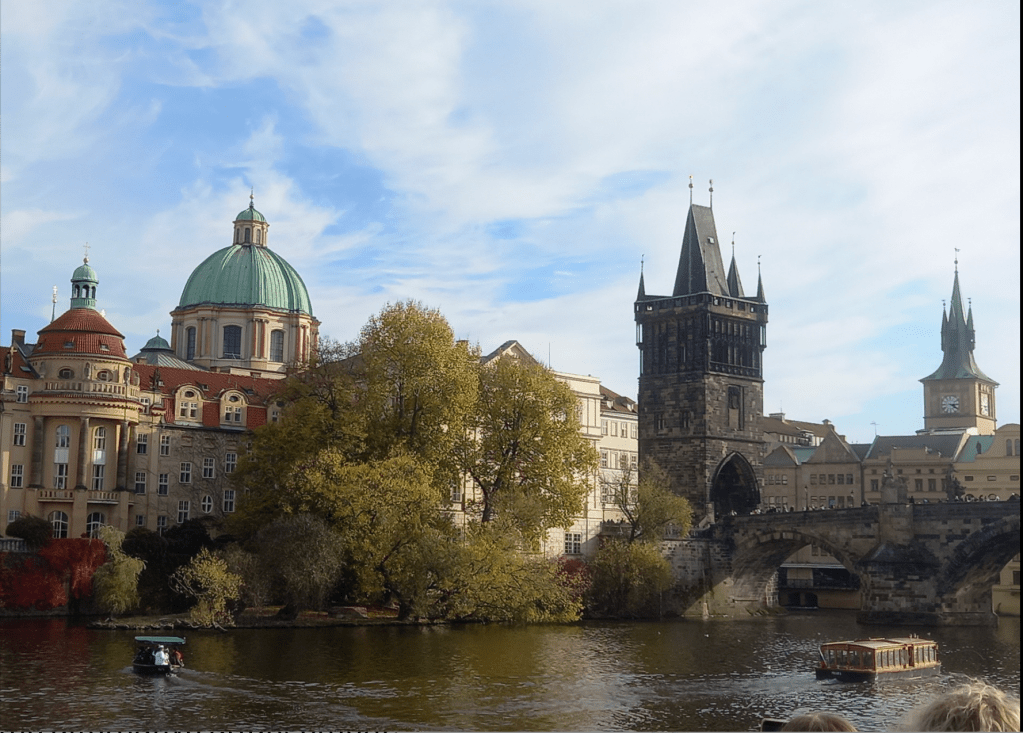
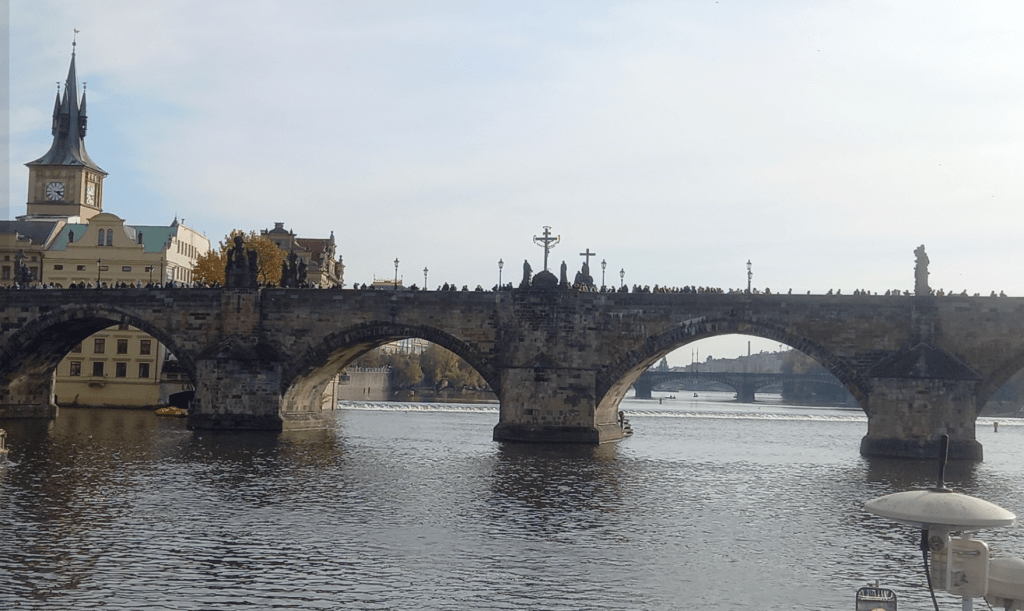
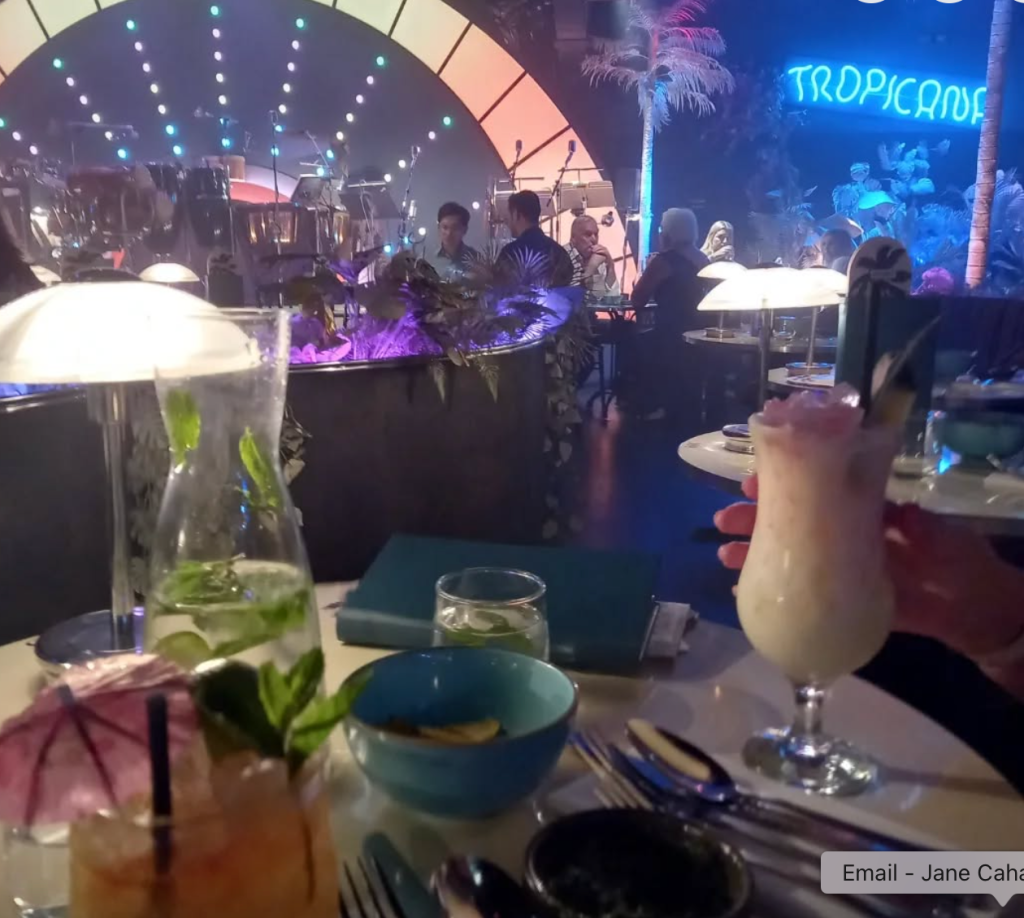



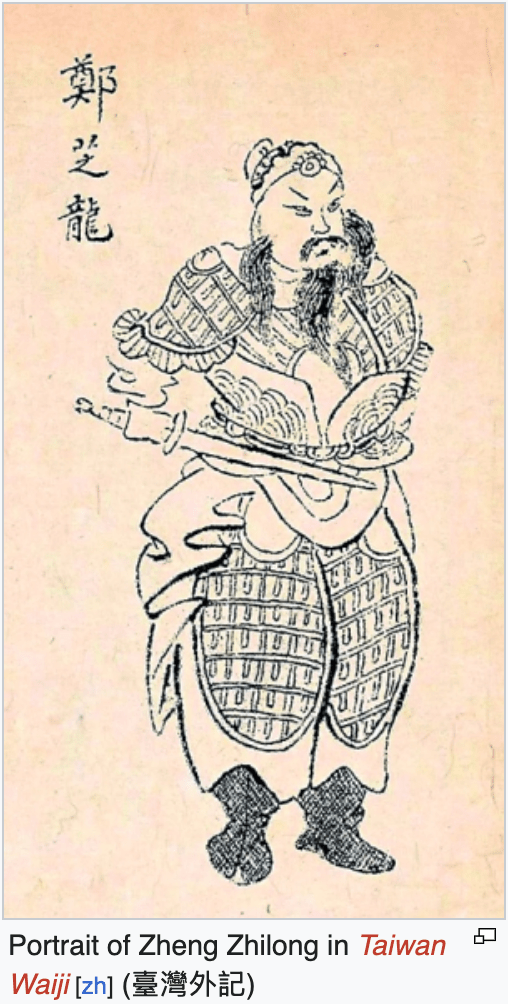
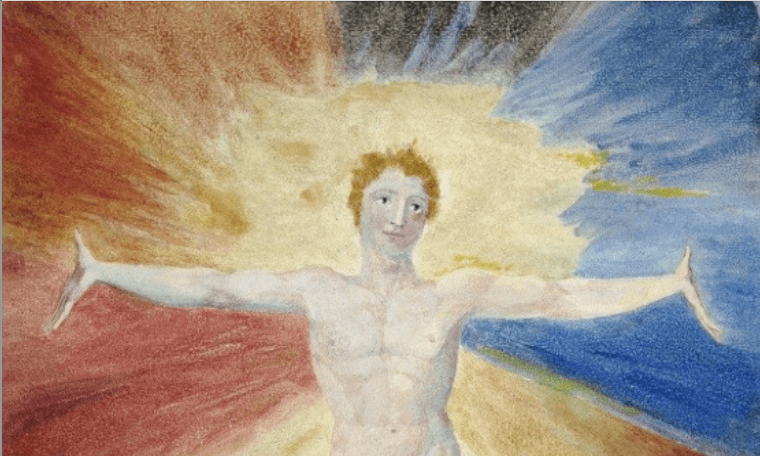

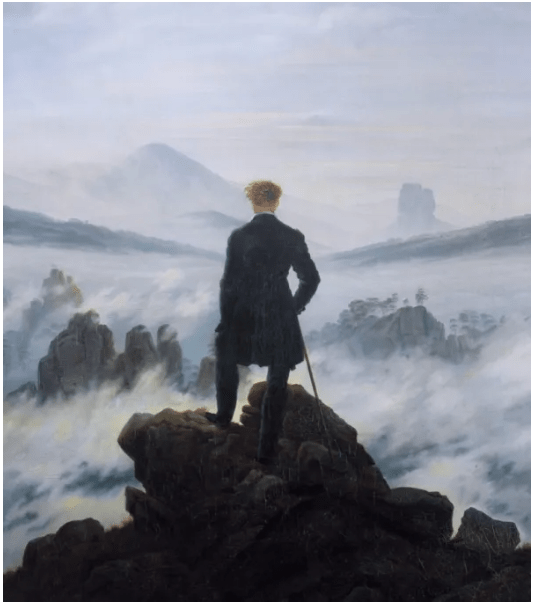

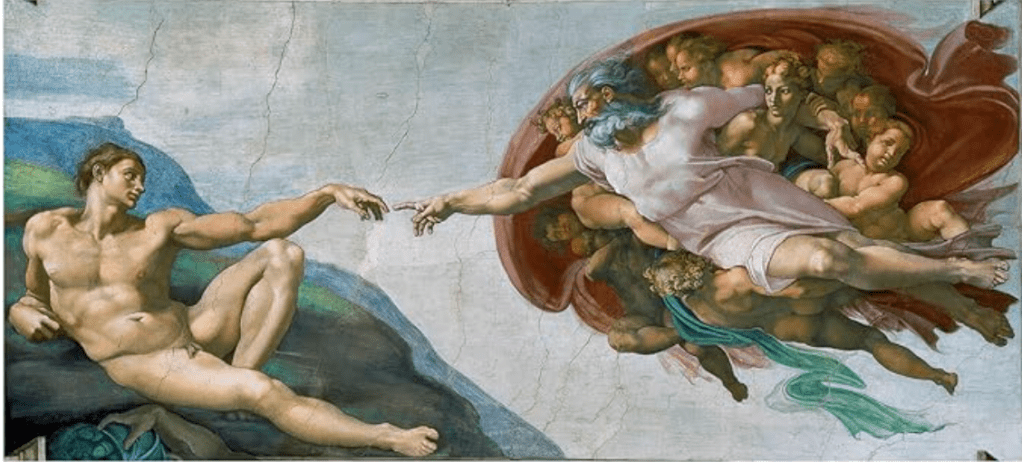




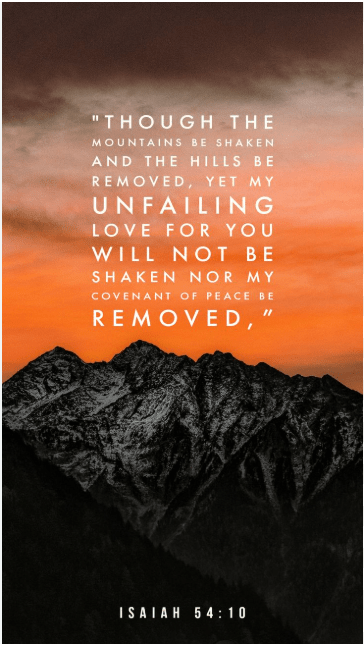

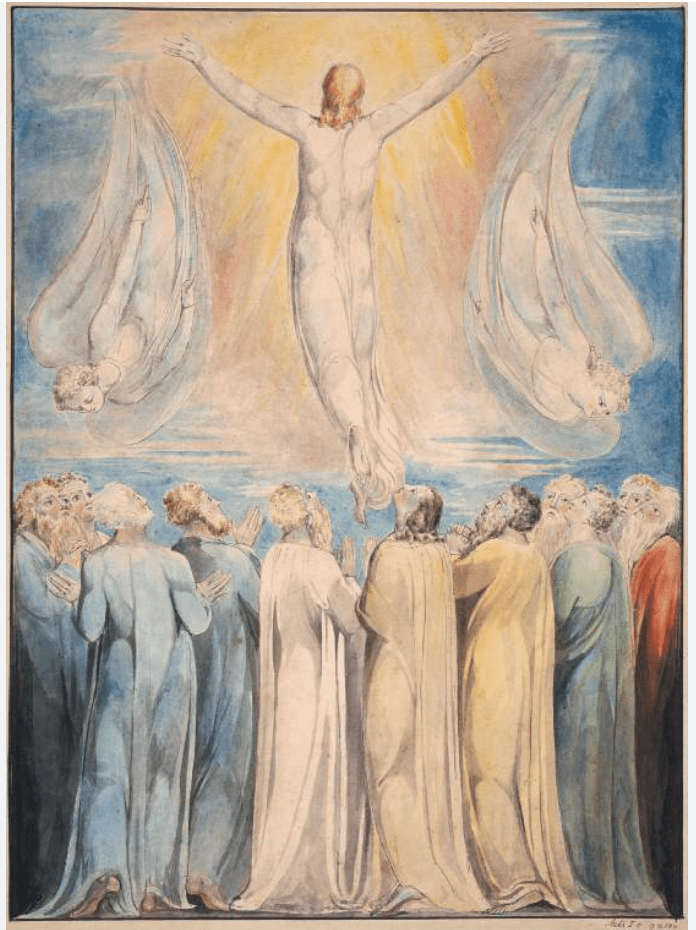





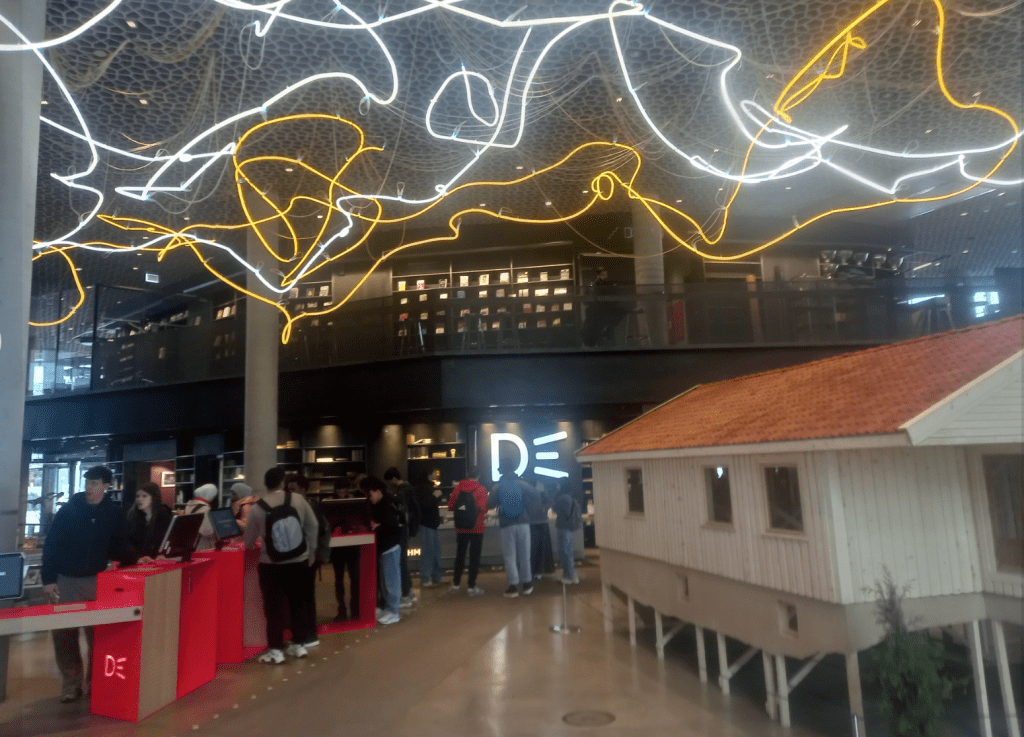
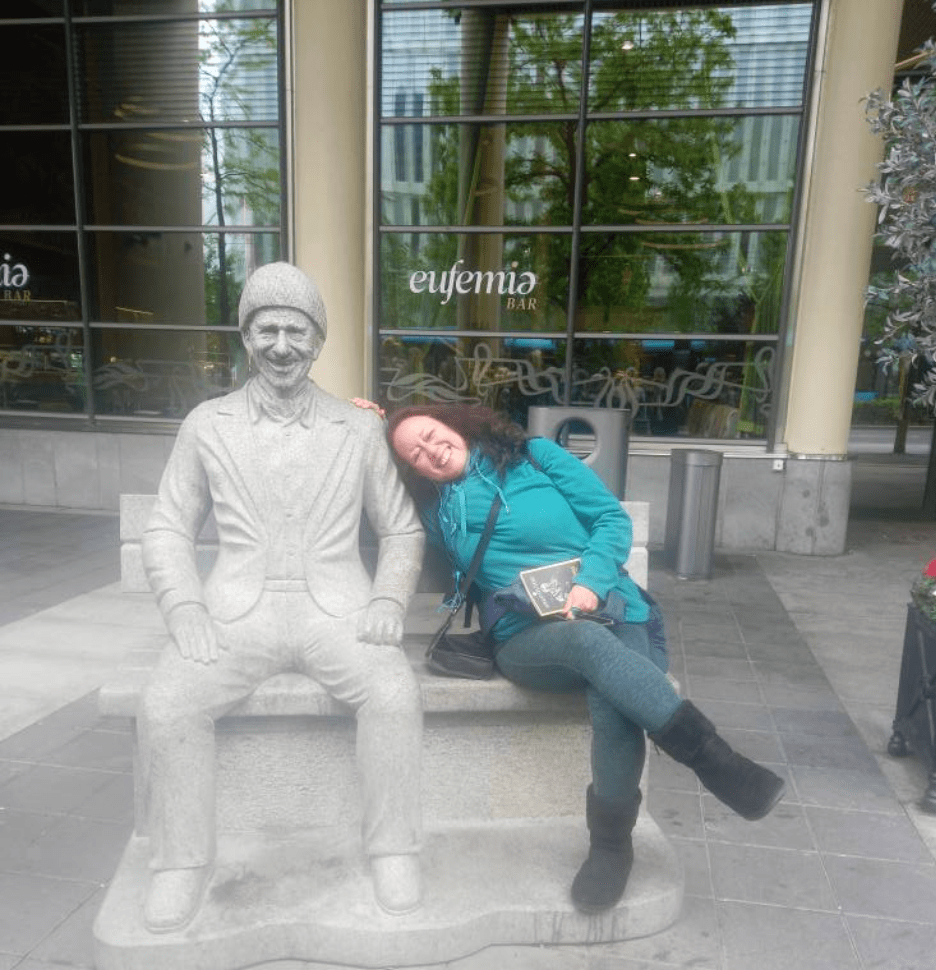

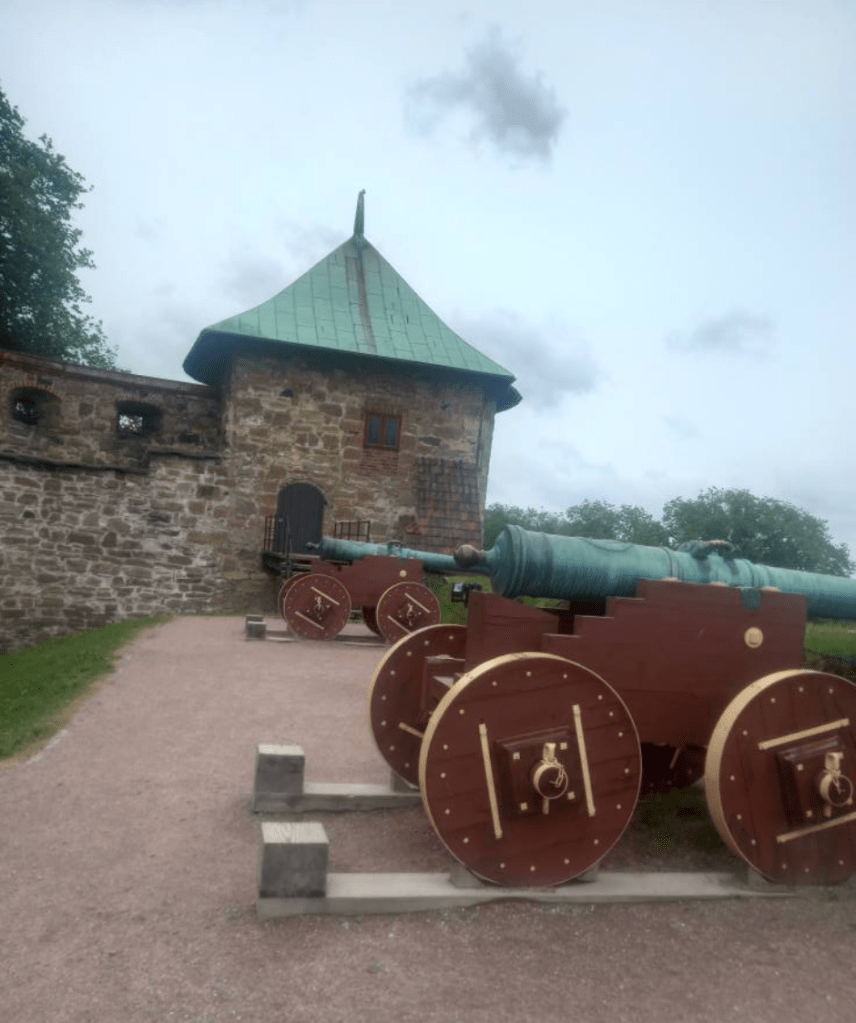
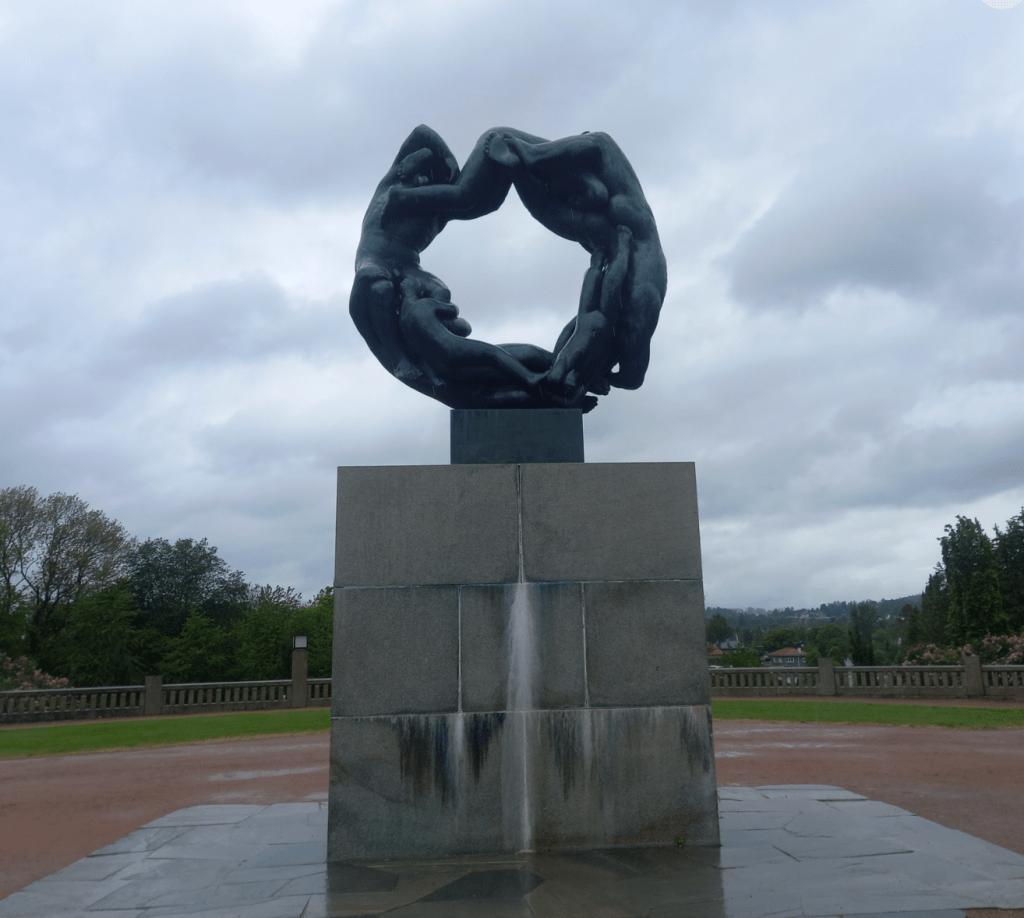














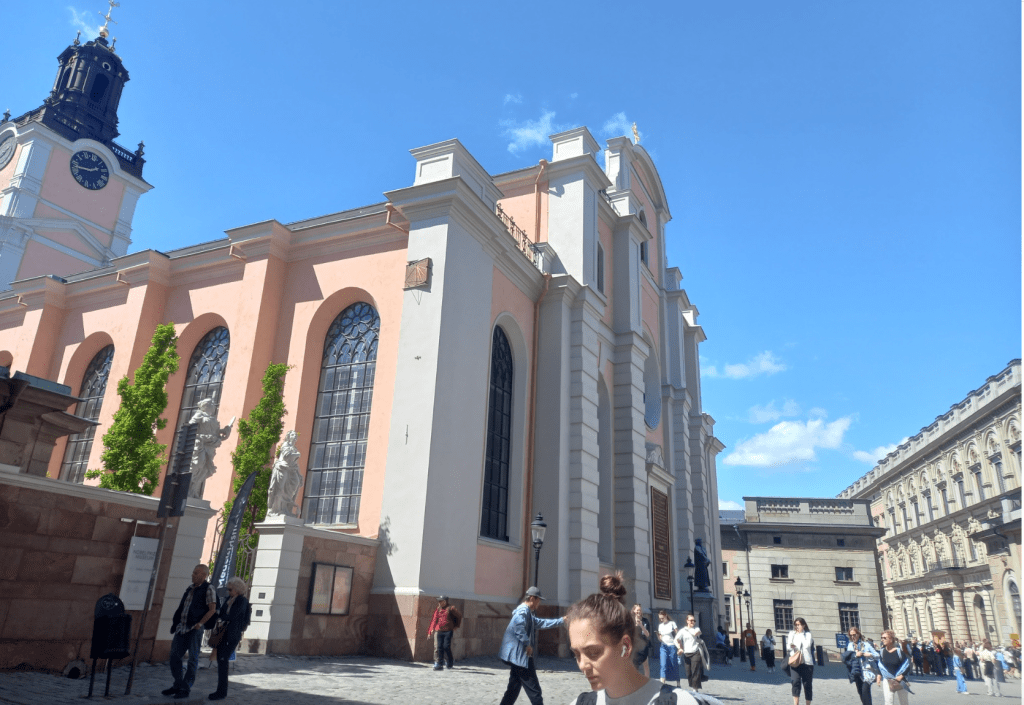
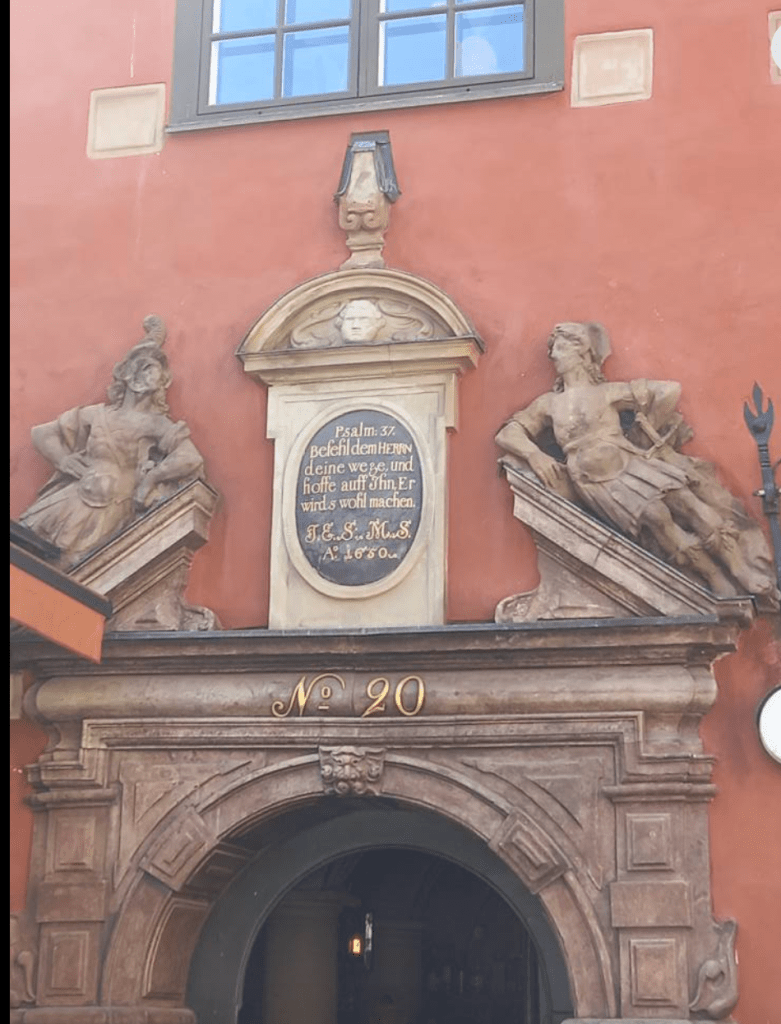
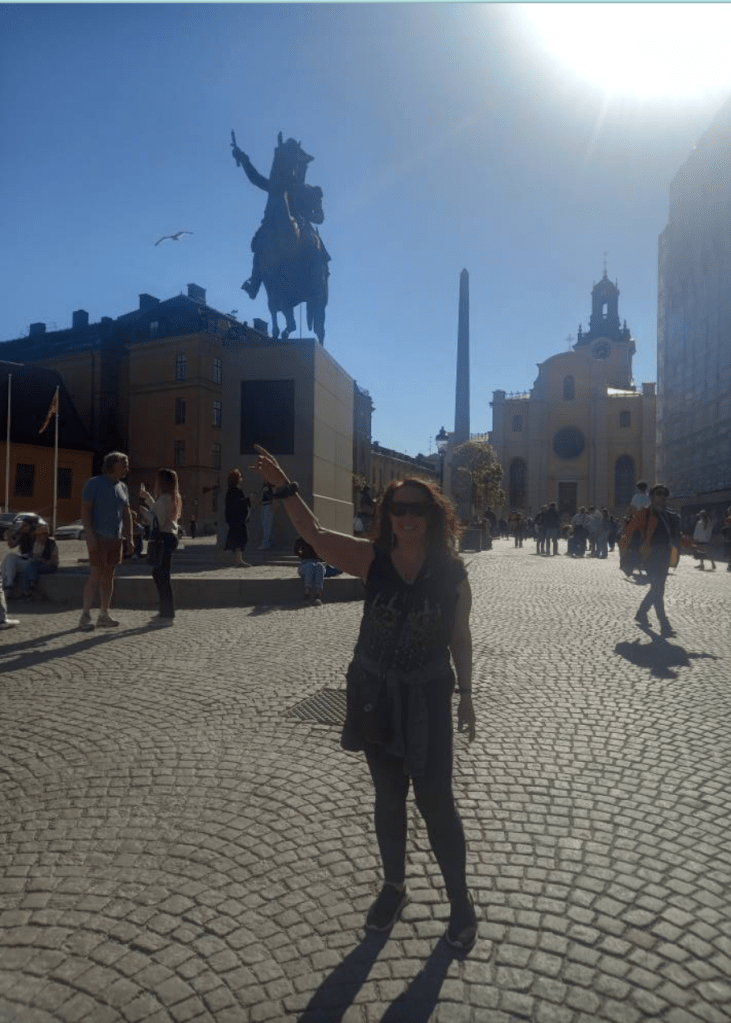


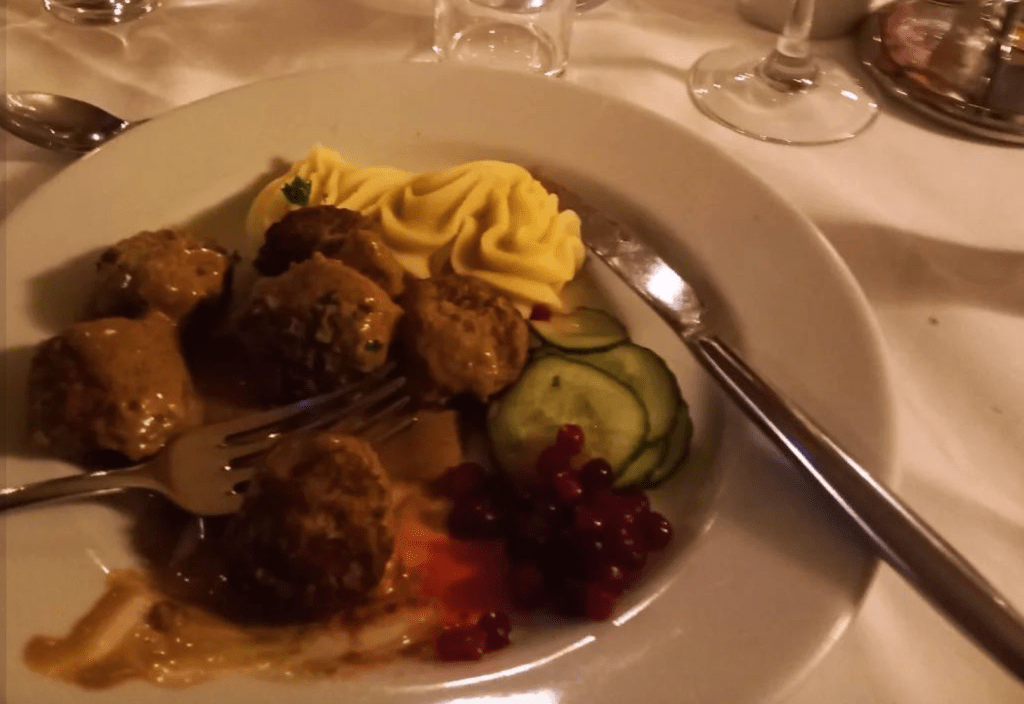




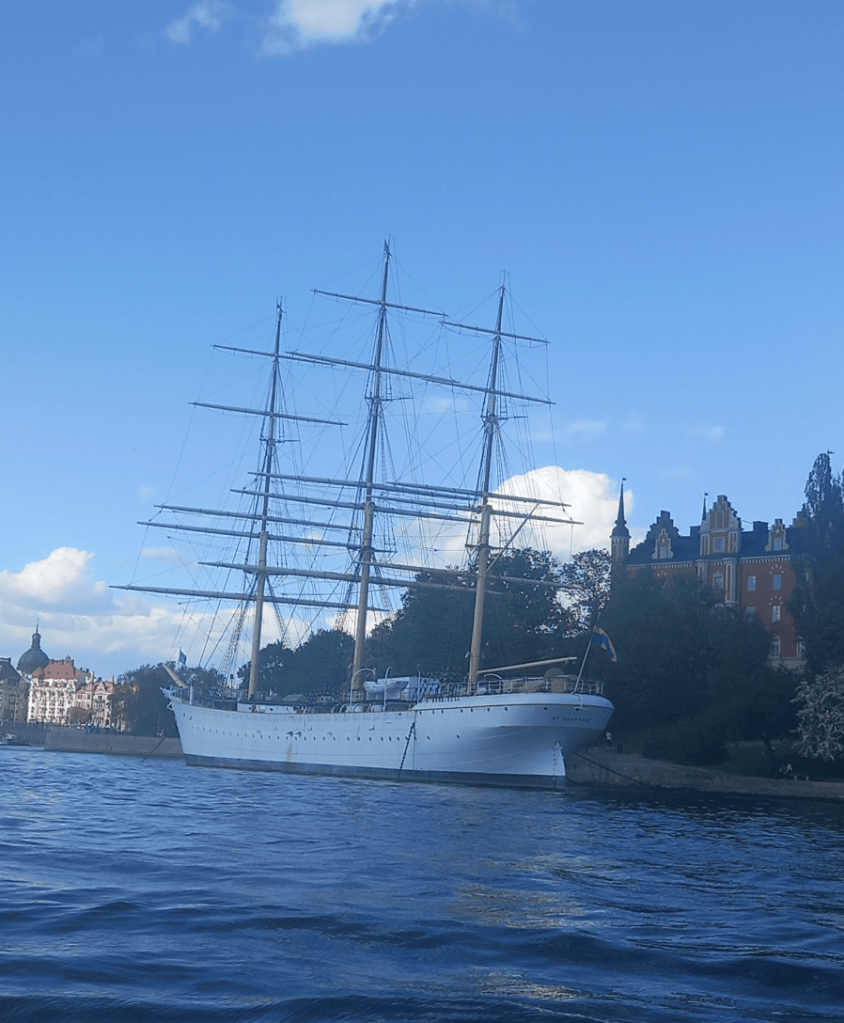
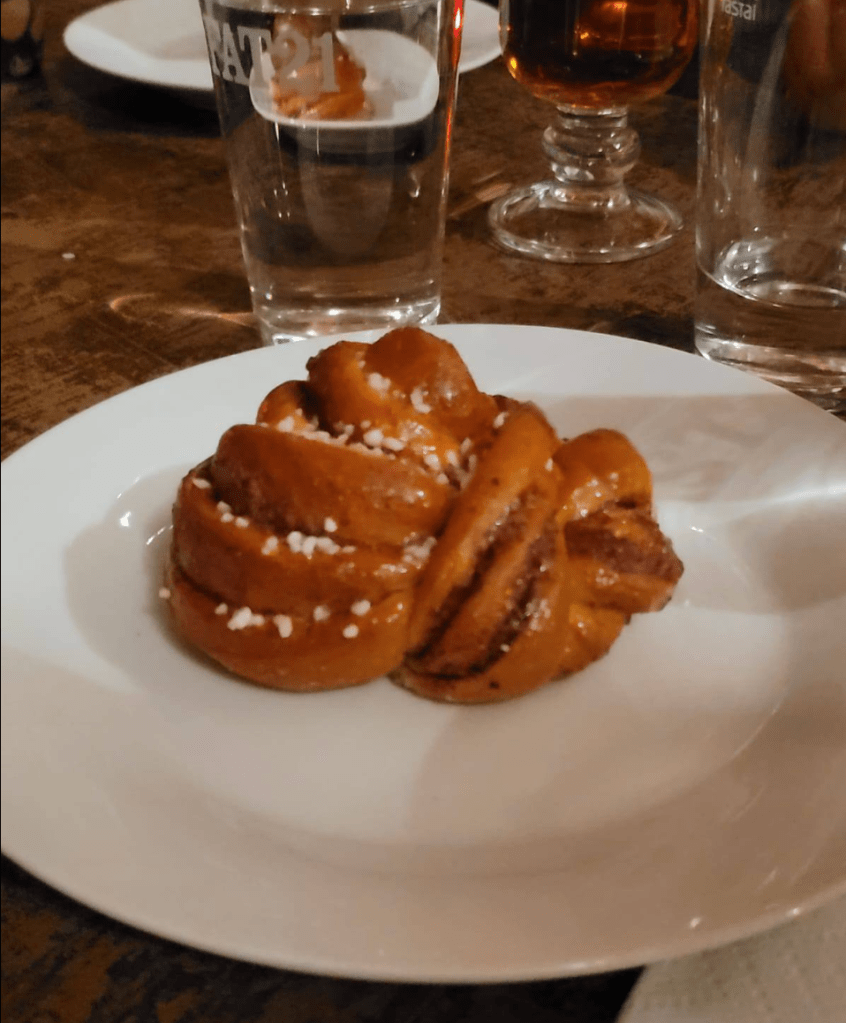




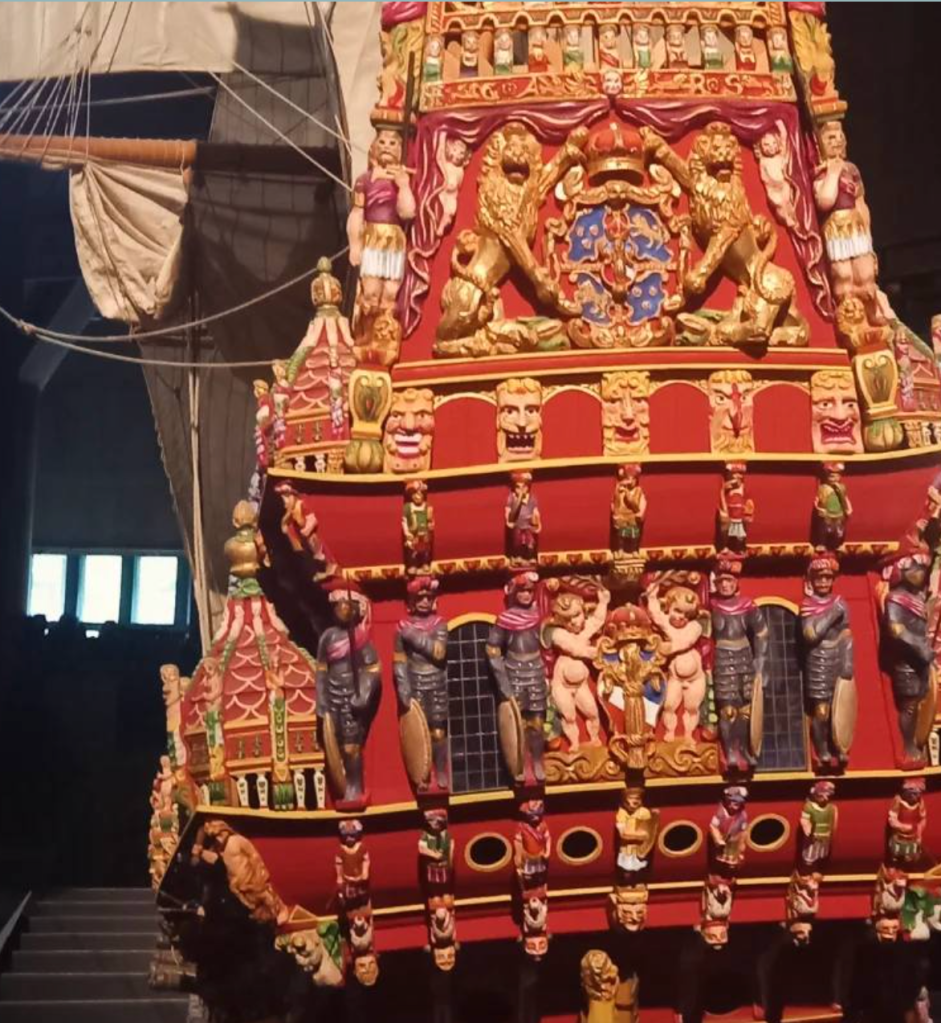



















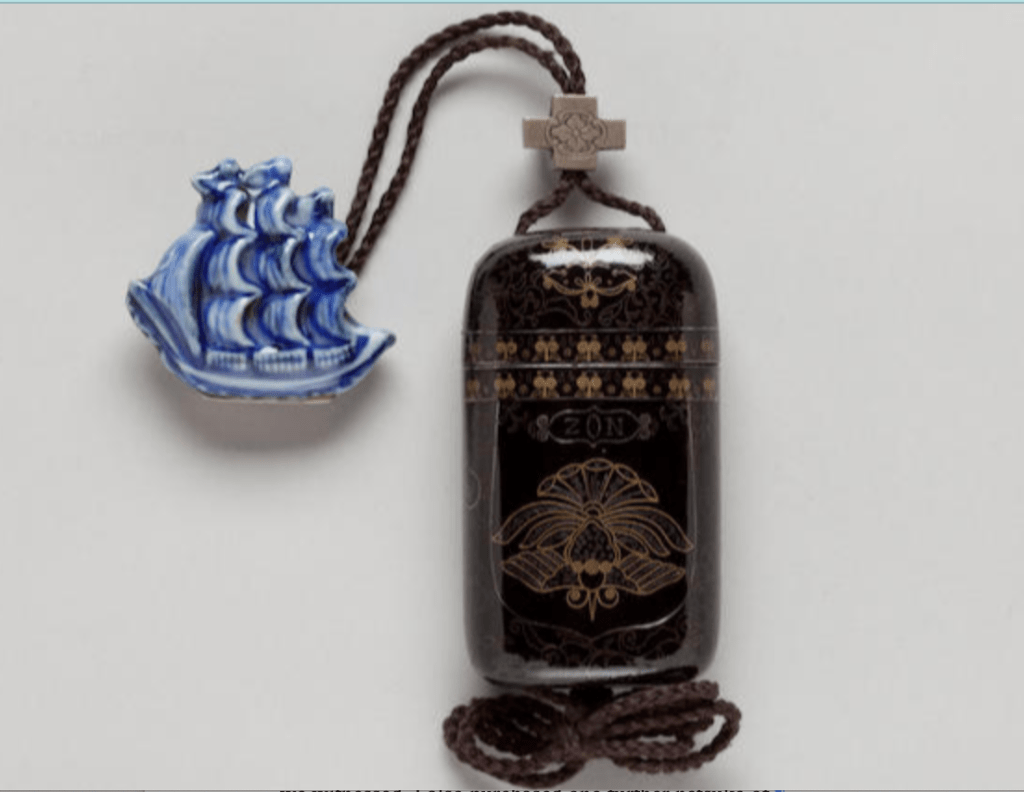



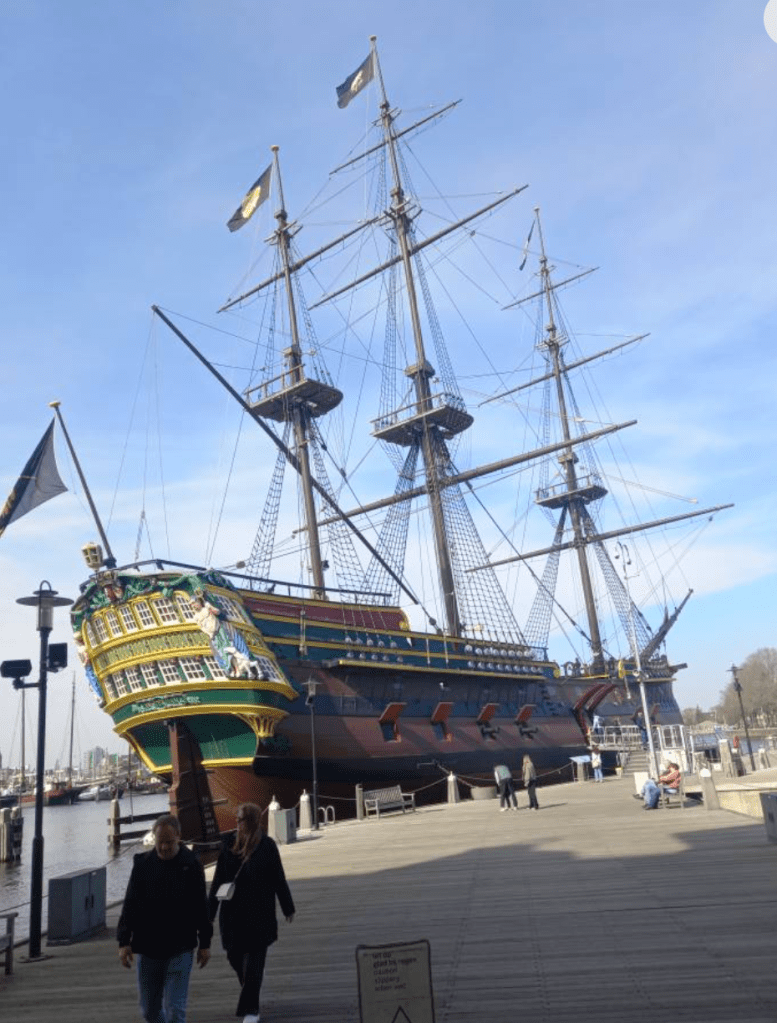



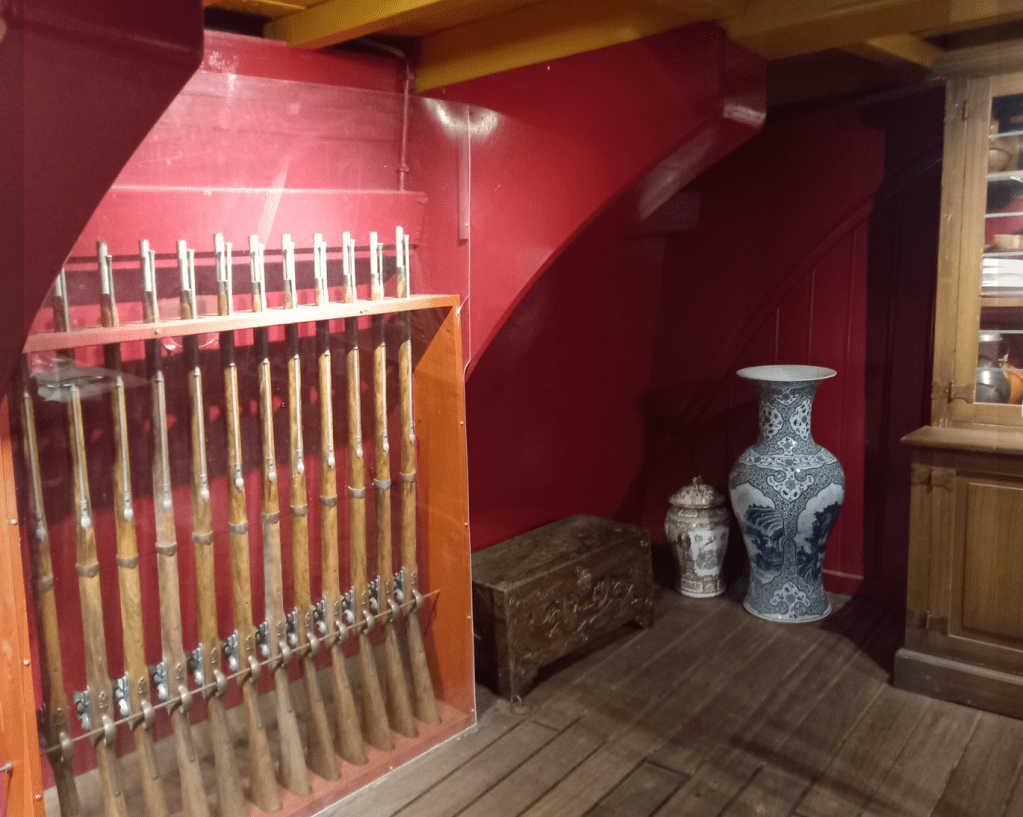
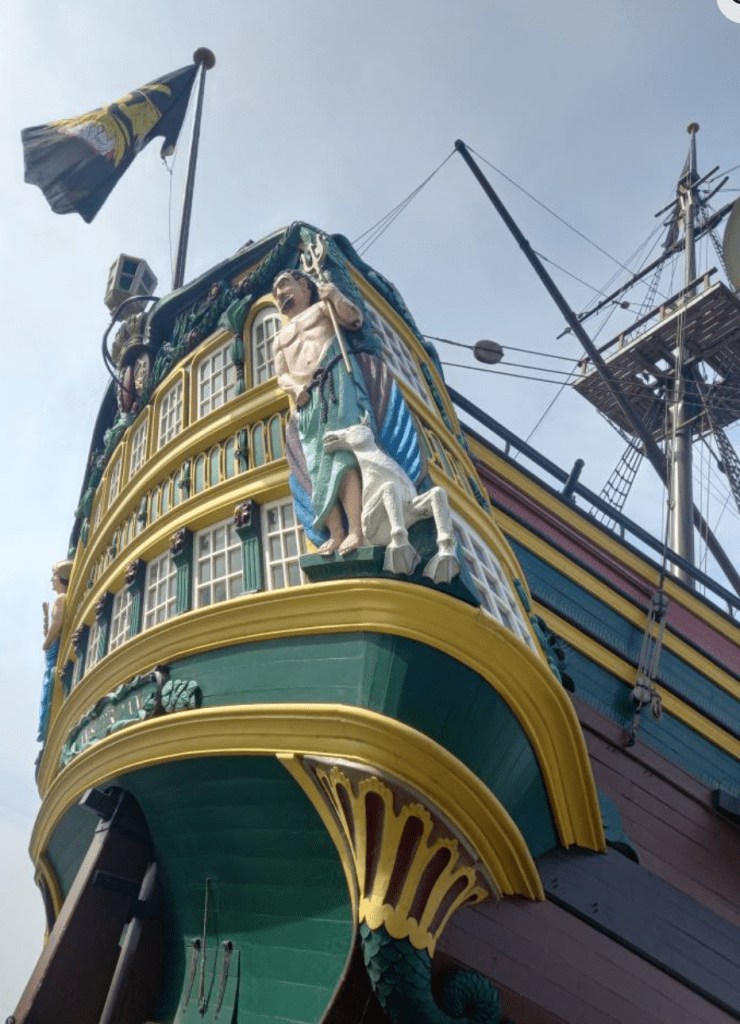

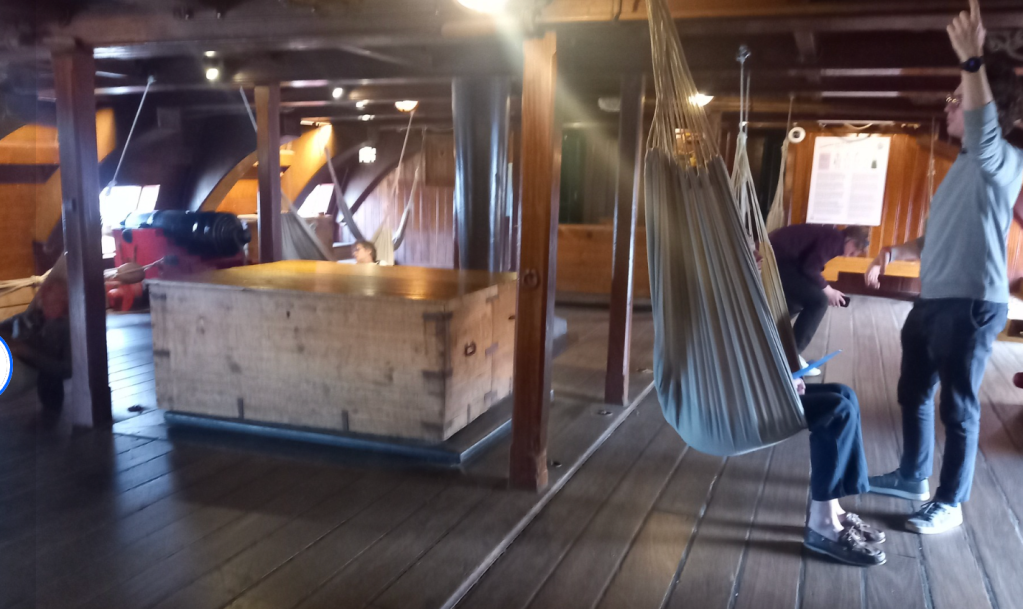
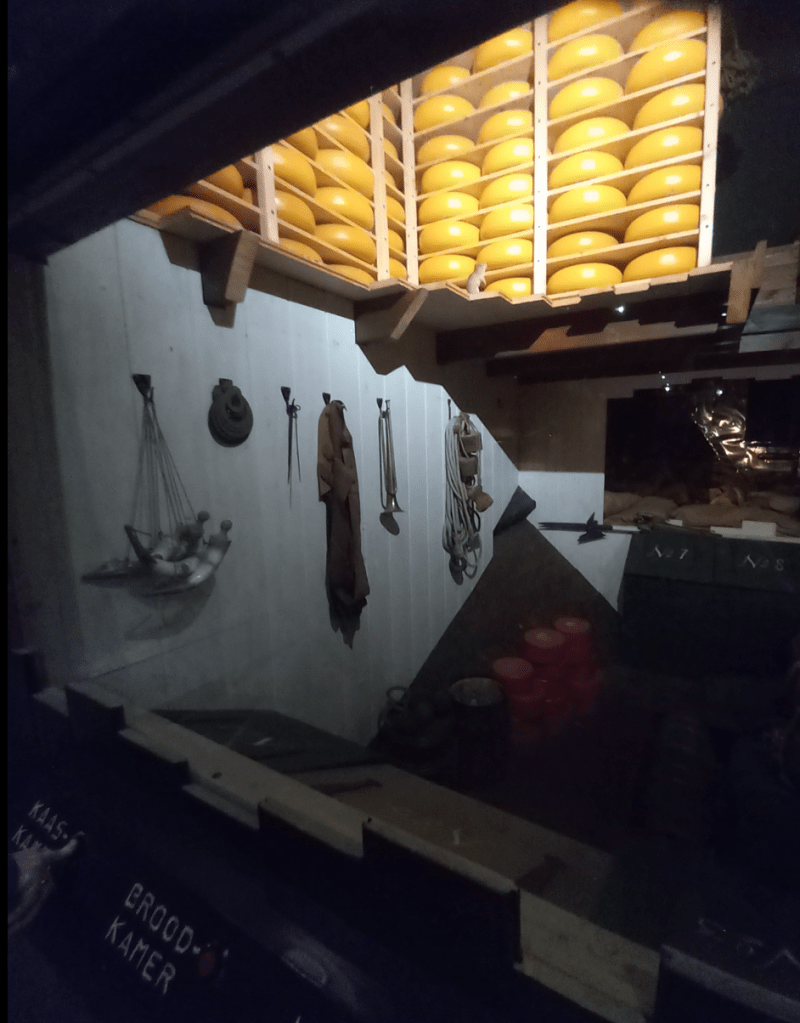
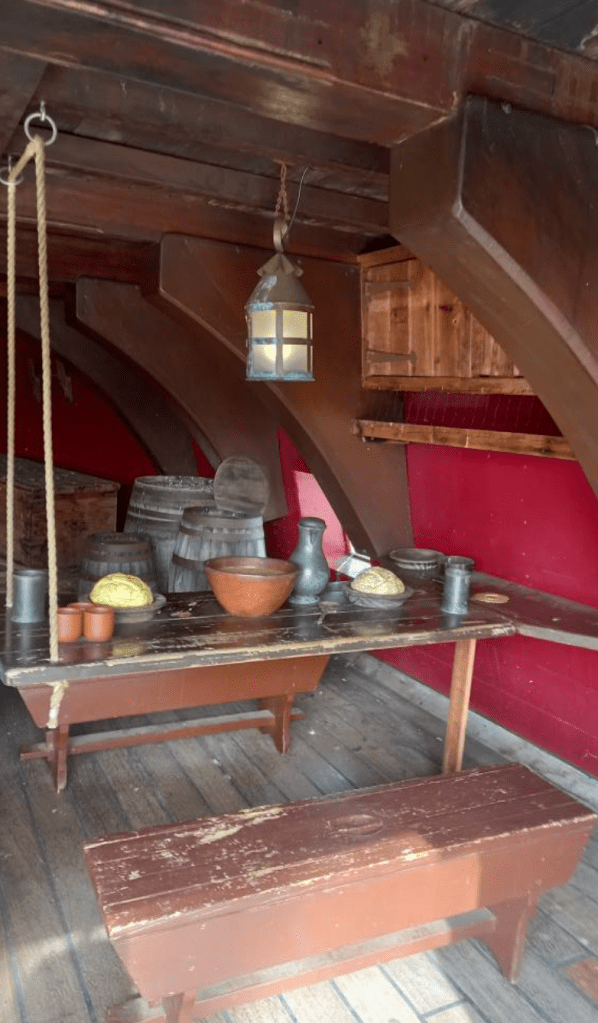
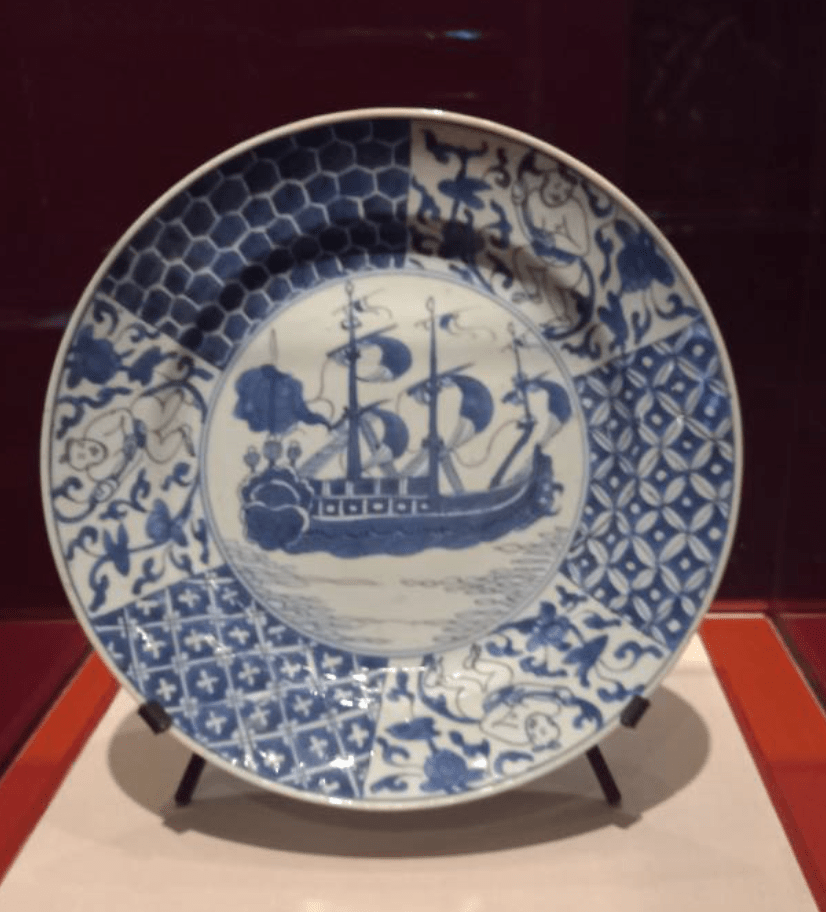




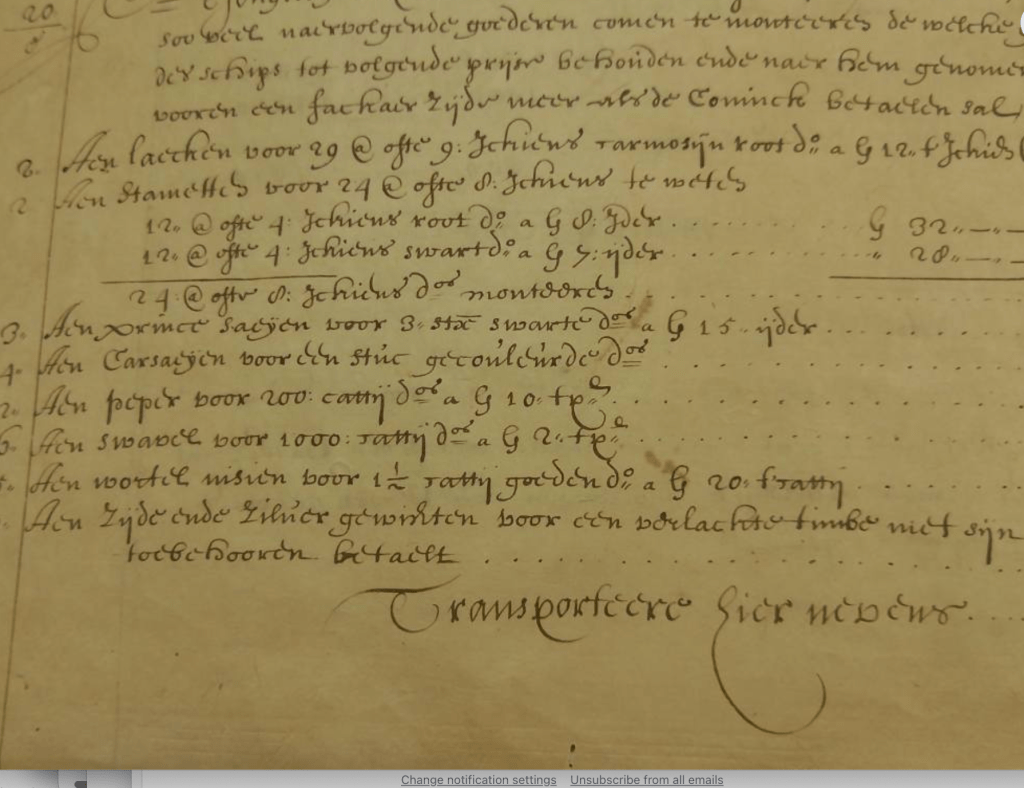



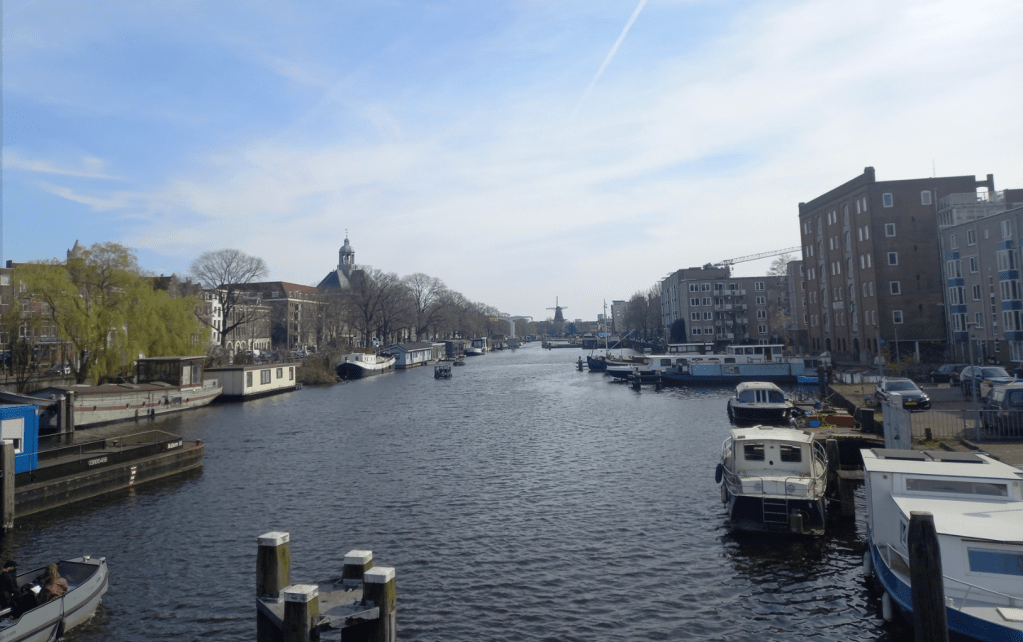

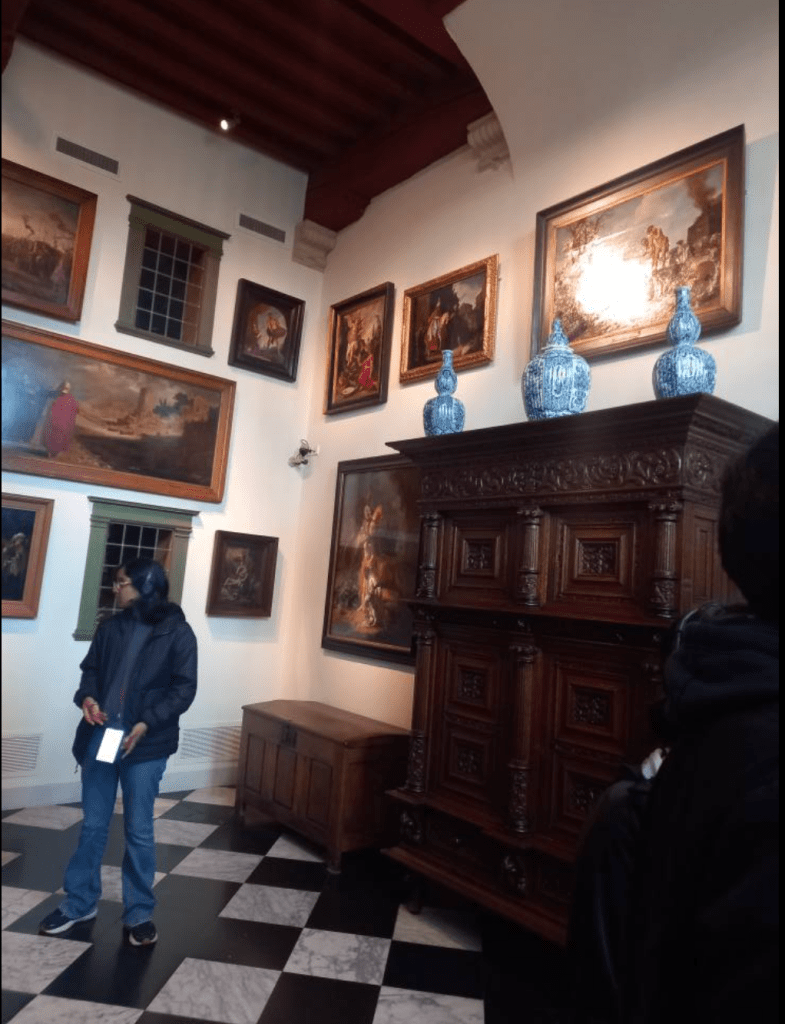

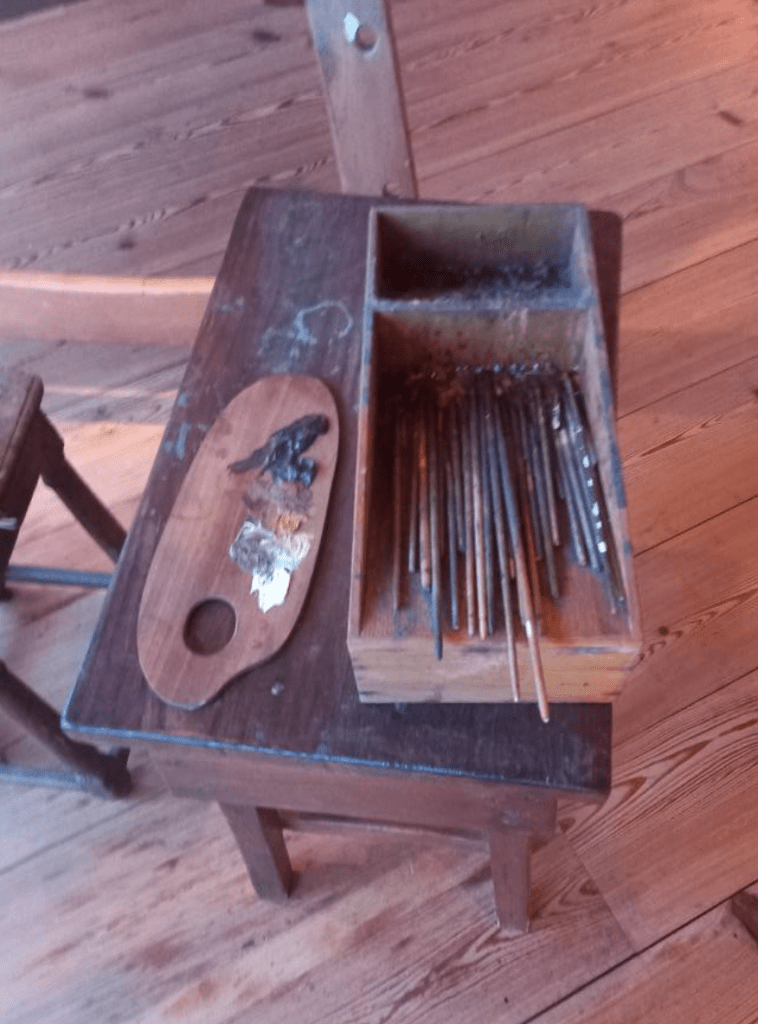
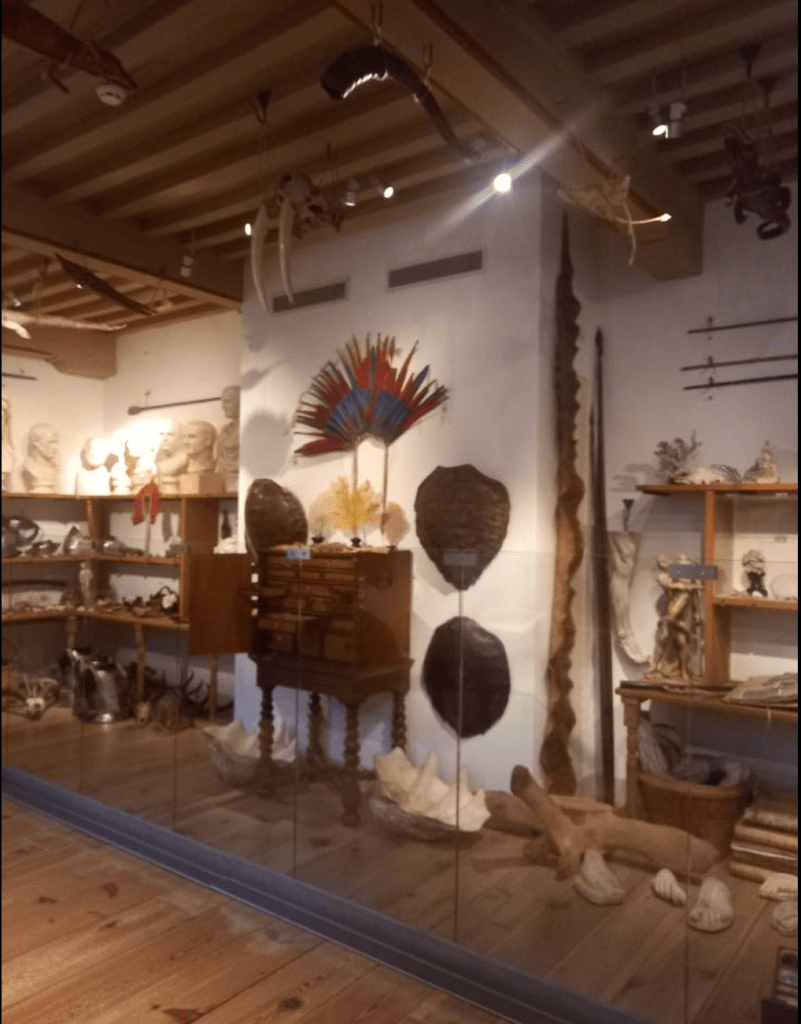

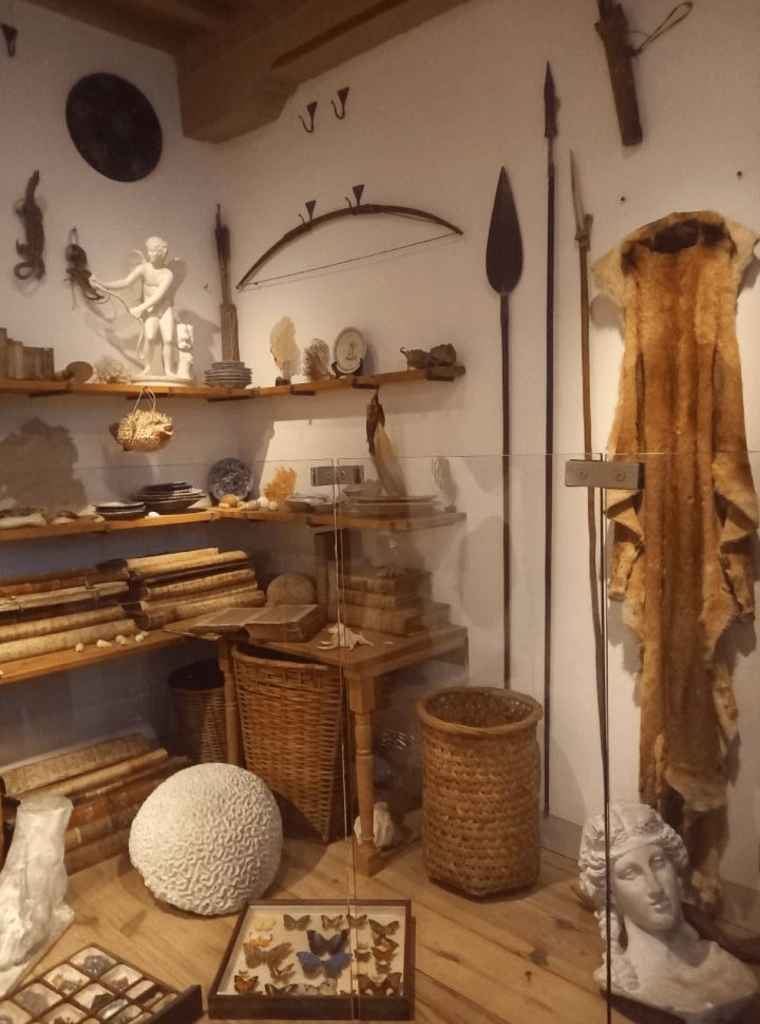
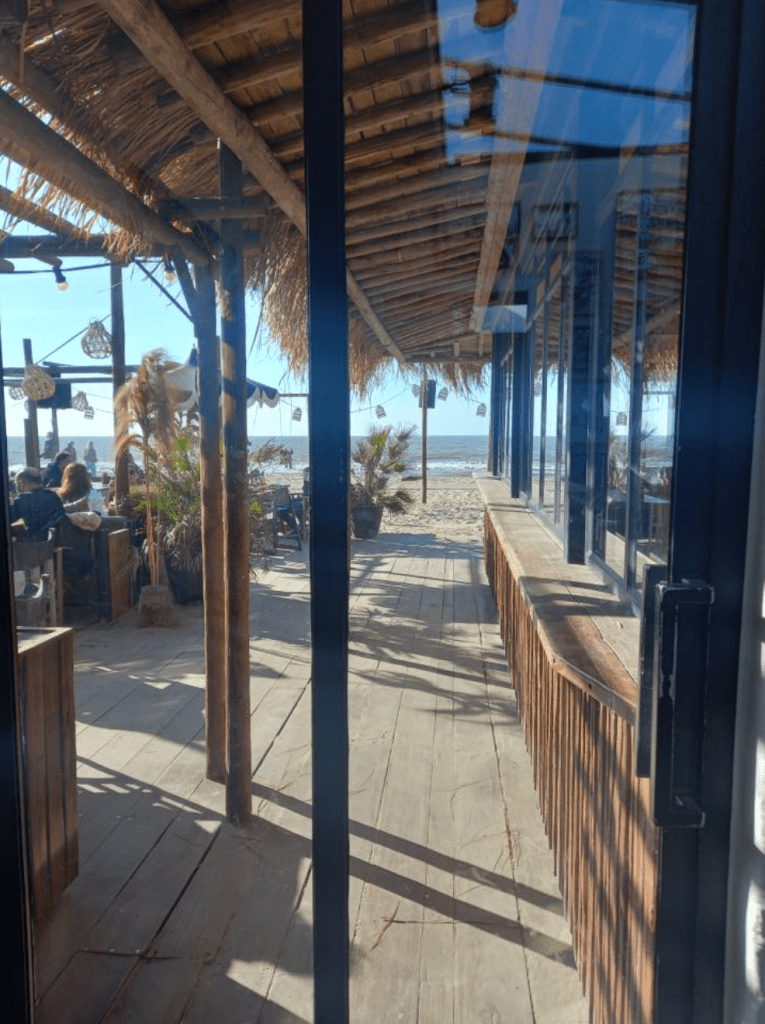


























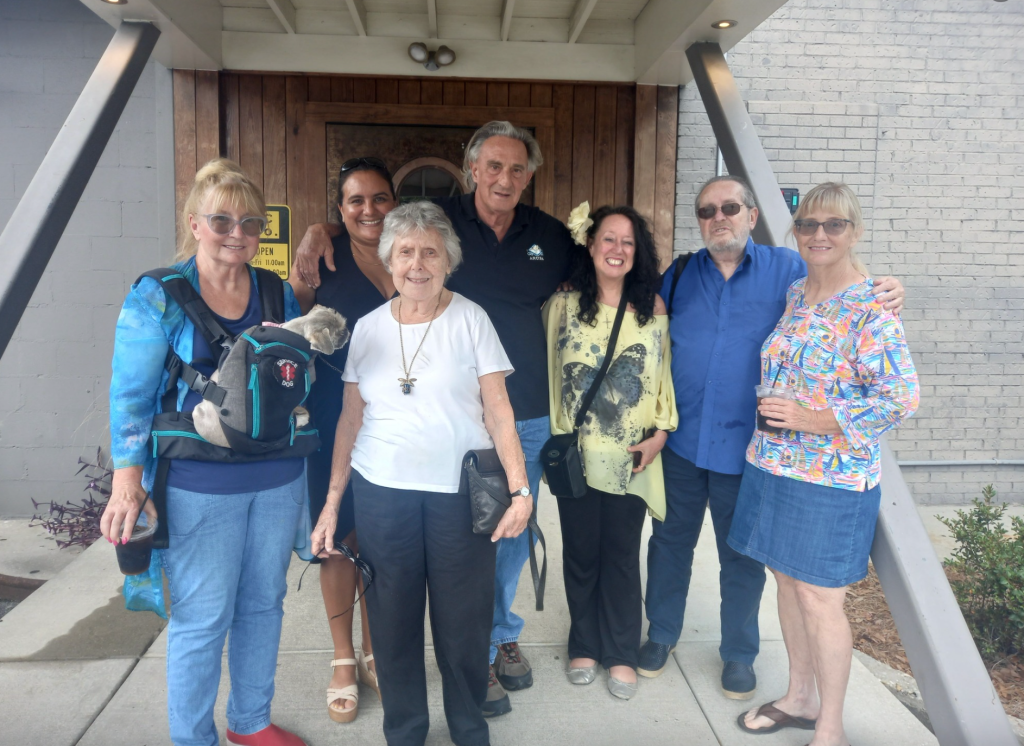


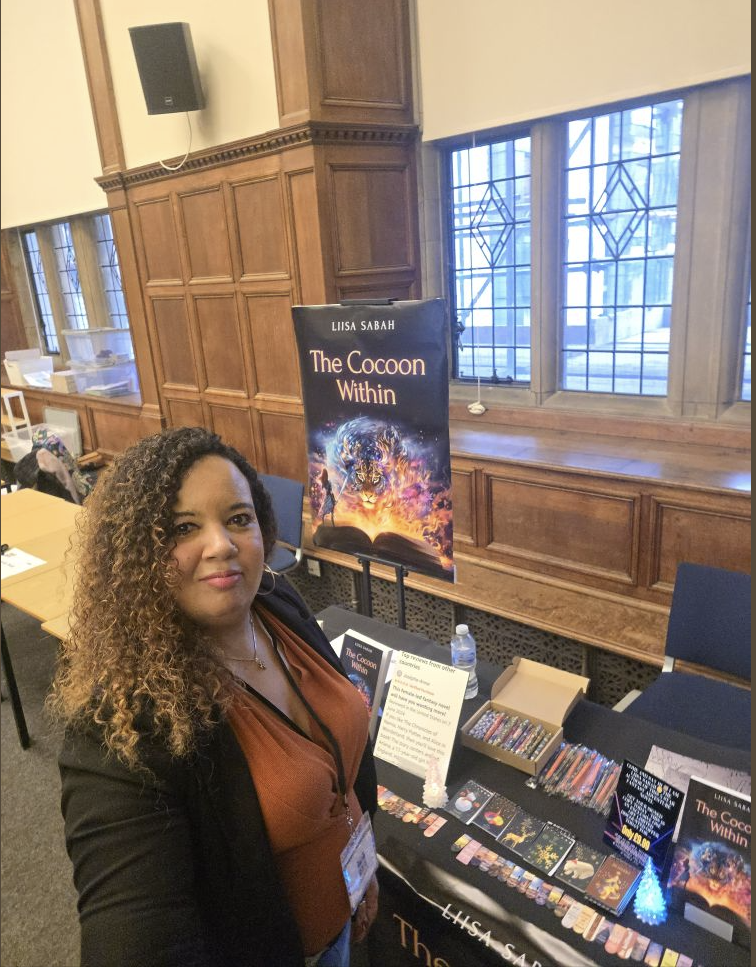





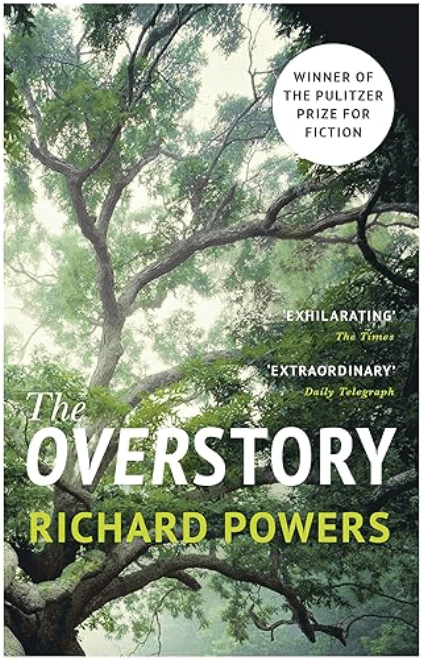





 Small Writer at Large