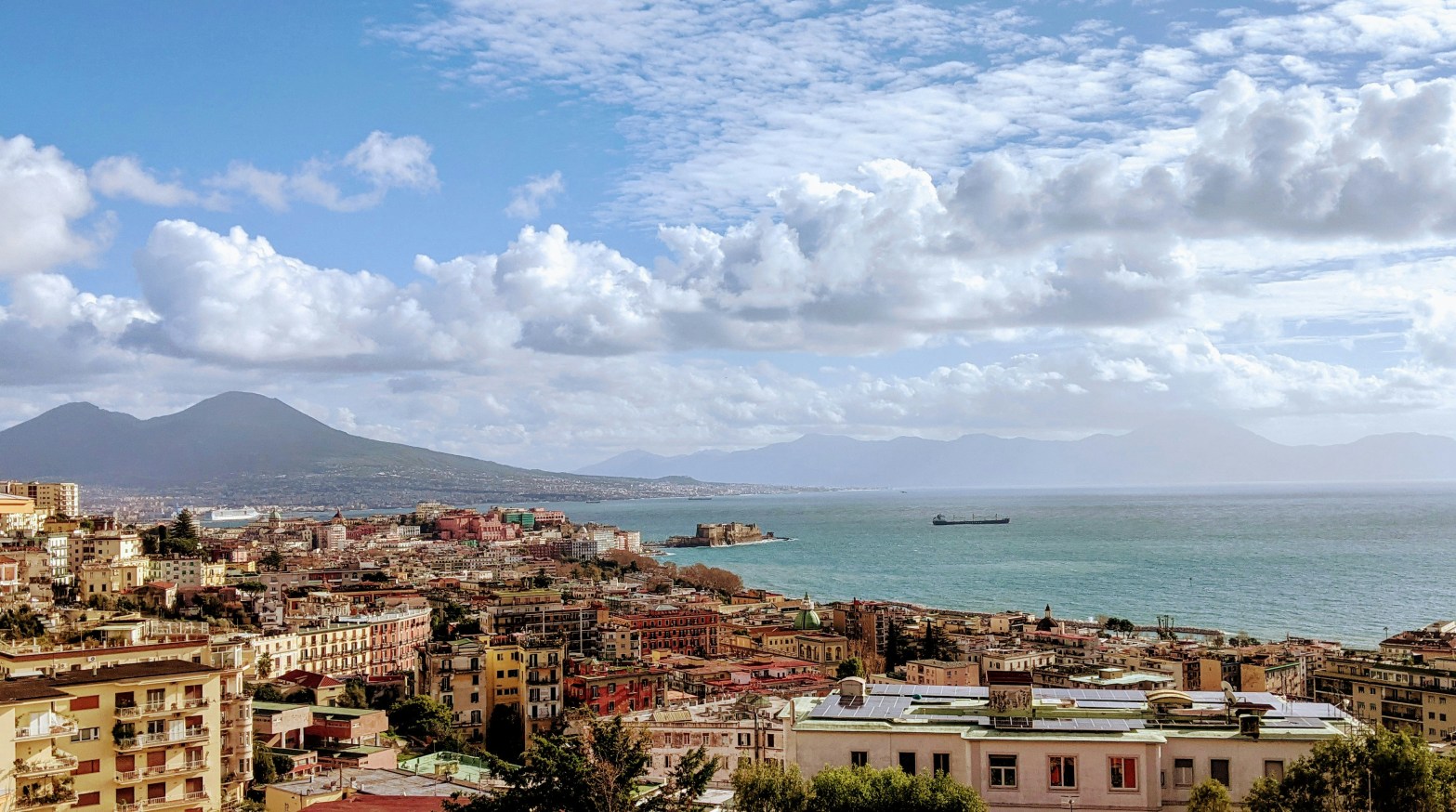

Thanks to German writer Johann von Wolfgang Goethe, the Neapolitan phrase ‘See Naples and die’ (or Vedi Napoli e poi muori, as quoted in letters informing his 1787 Italian Journey) is invariably what comes to mind when visiting this fabled Italian city. The phrase — originating during Naples’ golden age of wealth and prosperity under Spanish Bourbon rule — translates roughly as: ‘Having seen the city’s breath-taking beauty, opulent buildings and magnificent surrounds, you can die happy, knowing your life is now complete.’
After a recent 12-day trip visiting Naples, then Capri, then Sorrento, and finally Ravello via Positano and Amalfi by land and sea, I agree this marvel of the Mediterranean is about as near an Earthly heaven as it gets. Inhaling and imbibing lemon-scented and limoncello-infused produce, cruising around the Sorrentine/Amalfitan Coasts and diving into their shimmering azure seas (or ‘wine-dark’ as in The Odyssey, should you get strong winds), savouring Neapolitan food and the city’s lively street life, or gasping at its splendid architecture and poignant archaeological ruins — all within the shadow of the still-active Vesuvius volcano — is a heady sensual deluge that lingers in the memory long after. Indeed, what more could any honest hedonist, antiquities aesthete, soul-starved satori-seeker, famished foodie, fashionista or Instagram travel junkie ask for?
So, now I’ve seen Naples, is my life complete? Can I die peacefully? Or does it demand a return (or multiple) visit(s)?
Paying respects
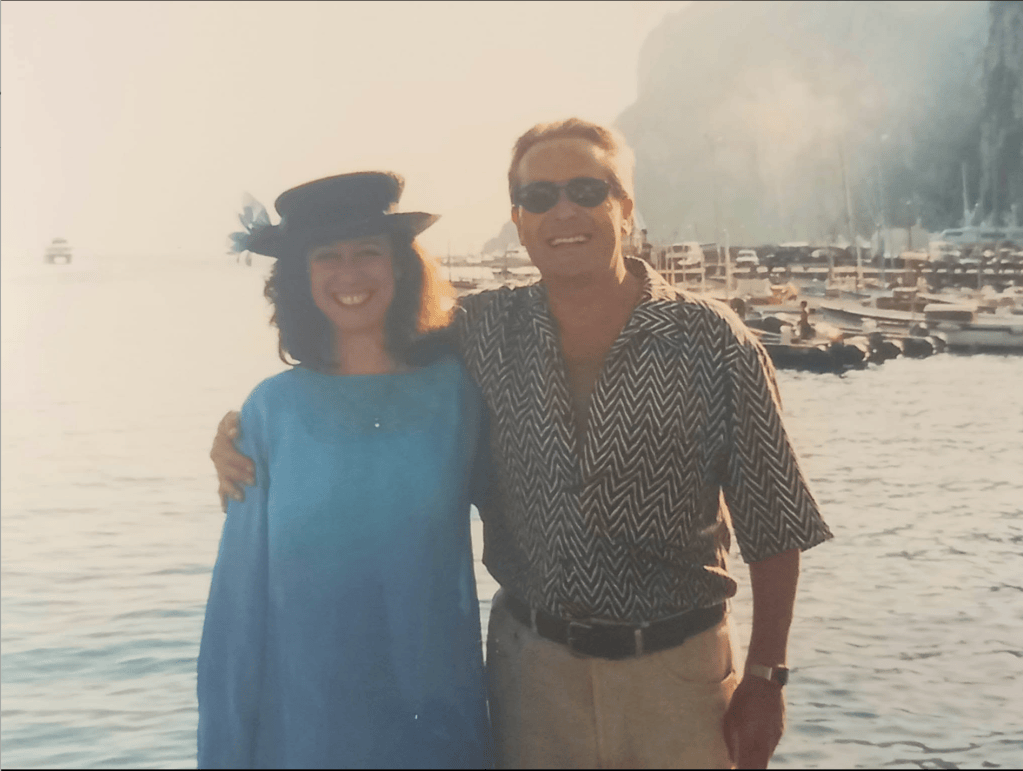
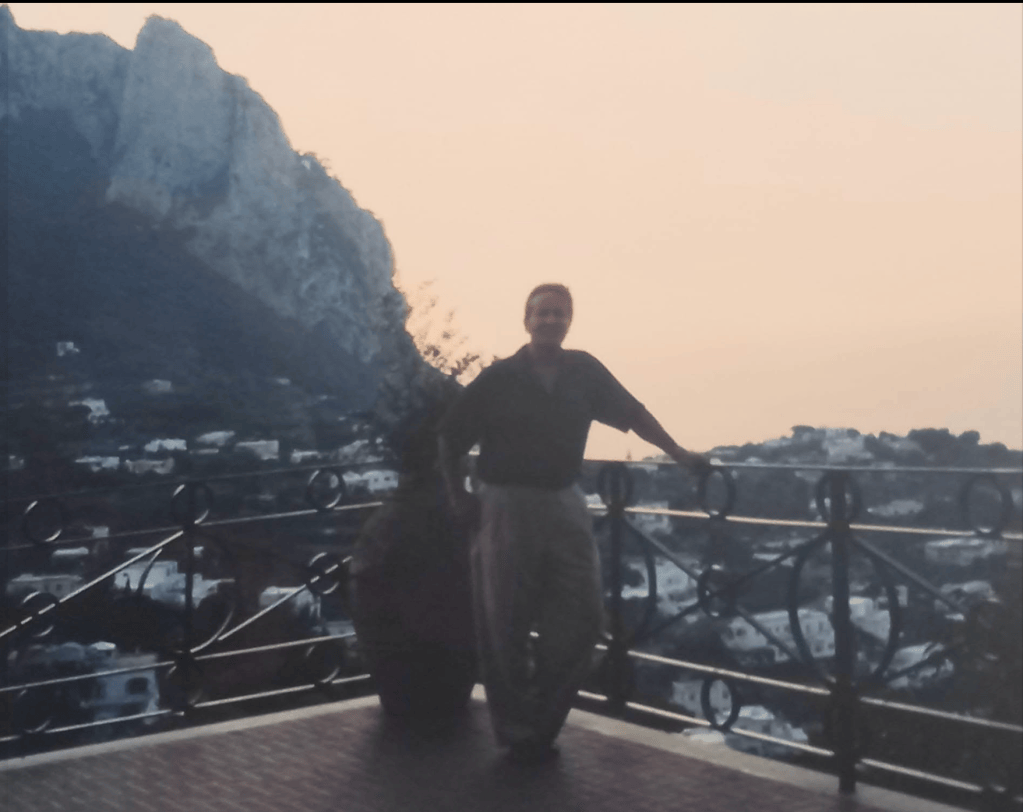
In truth, I first visited the Amalfi Coast 27 years ago, when my husband Roland and I came for part of our extended honeymoon in France and Italy, so this was already a return visit (minus Naples itself, which we had bypassed at the time). Having driven via Paris and then via Lyon, Milan and Lake Garda (another must-see Italian gem) to reach Verona for the Arena di Verona Opera Festival, we first went to Siena for the historic Palio di Siena horse race (where 10 of Siena’s contrada [neighbourhood wards] compete in three frantic laps around the Piazza del Campo, all in colourful Mediaeval costumes) before stopping in Rome to pay our respects to the Colosseum, the Pantheon, the Spanish Steps, the Vatican and the Trevi Fountain, We then drove south for the pinnacle of our honeymoon: Capri and along the Amalfi Coast to Positano and Ravello.
Although we had planned to celebrate our 25th wedding anniversary in August 2024 by revisiting these honeymoon locations, Roland sadly passed away a month beforehand. Amid my grief and trauma, all I could think of was how that cruel twist of fate meant I would never again be able to relive the romance of our first years and travels together with him. While I did briefly toy with the idea of going there on my own as planned, at the time that was not only impossible — it was already mid-August by the time we’d held his funeral, and everything was either booked up or insanely expensive — but also far too sad to think of being there on my own without him. Whatever Goethe intended, it surely wasn’t to see Naples and drown your sorrows by leaping into the sea!
But after some time of slowly processing grief and learning to focus on celebrating the positive memories from the life we’d shared (I made a lovely collage of many of our other memorable trips around the world — recommended for anyone recovering from losing a spouse), I still had a strong desire to return there. In truth, I only vaguely recalled how beautiful it was, but I sensed such a trip would be life-affirming (as it was).
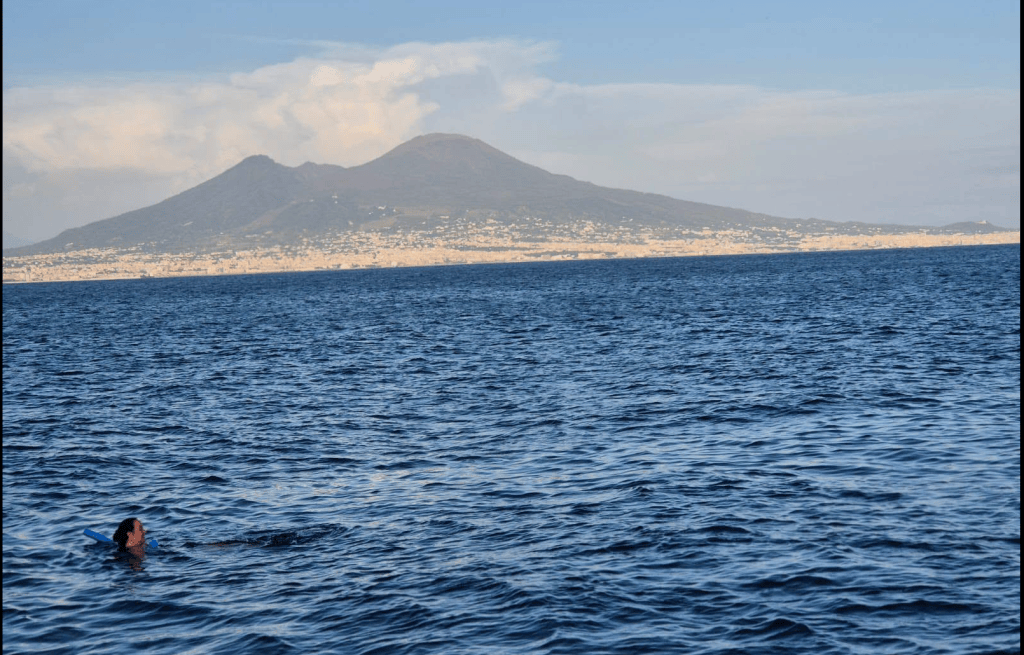
Therefore, I am deeply grateful to a close female friend who had also known and loved Roland, but who had never been there herself, for kindly agreeing to travel there with me this year. This meant not only could I revisit places I had most cherished from that wonderful honeymoon, but could visit other places and do things with her I knew Roland would never have been up for — such as diving into the sea from a boat or climbing to the top of Vesuvius — thus giving me a chance for some closure (and perhaps also symbolically embracing my new solo life/readiness to move on).
I am sure seeing me enjoying myself there, judging by the positive comments I’ve had on pictures of my adventures from friends, has made my husband in heaven smile. And I now have plenty of new memories that will live on with me and make me smile forever.
To die for, to do again or to give a miss?
Being that my travel companion was super-busy before we travelled, we barely had time to discuss our plans and make any arrangements together, so having a prior knowledge of Capri and the Amalfi Coast meant it was mostly me who took the initiative in choosing the bulk of our pre-booked itineraries for each locale. However, as neither of us had been to Naples, we agreed to start and finish there, with roughly a third of our time sightseeing in the city before moving on to the Amalfi Coast.
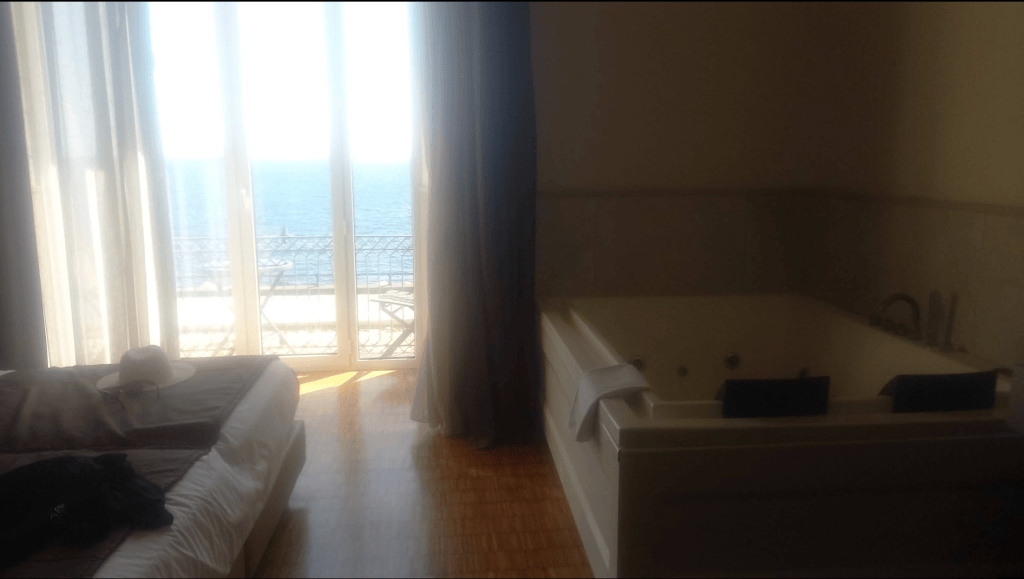
Since we’d decided to arrive at Naples airport at roughly the same time (early afternoon) and travel together to our hotel (the Partenope Relais — a four-star, cinema-themed hotel in Chaia with sea views and a blissfully relaxing in-room jacuzzi), I thought it would be a wonderful introduction to our holiday to join the three-hour sunset cruise with Aperol spritz around the Bay of Naples, as indeed it was!
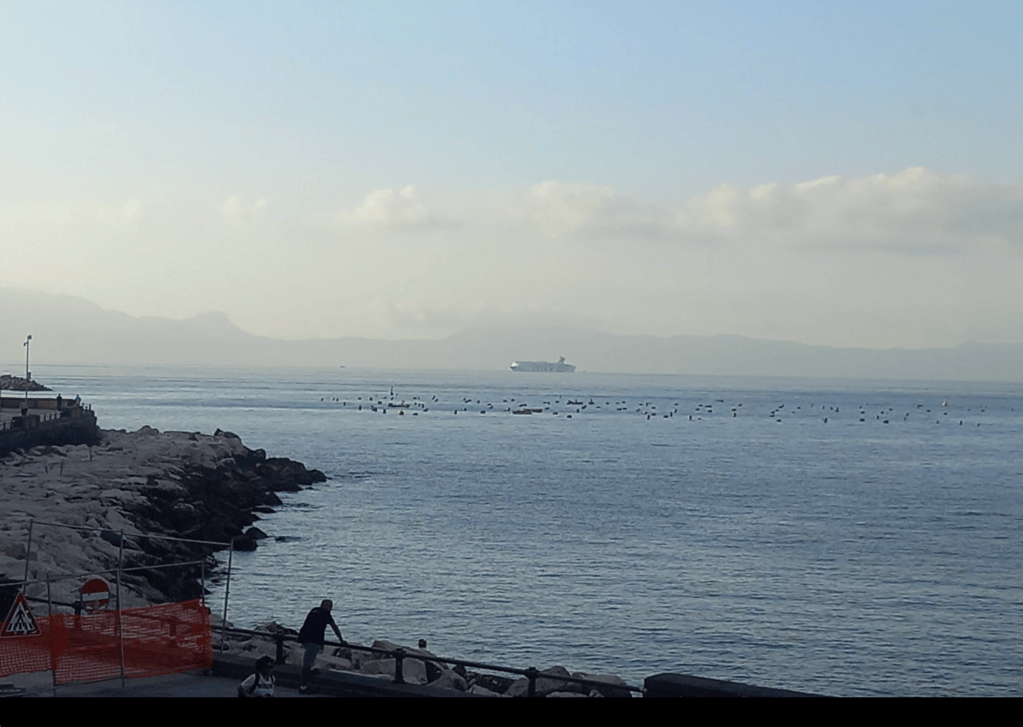
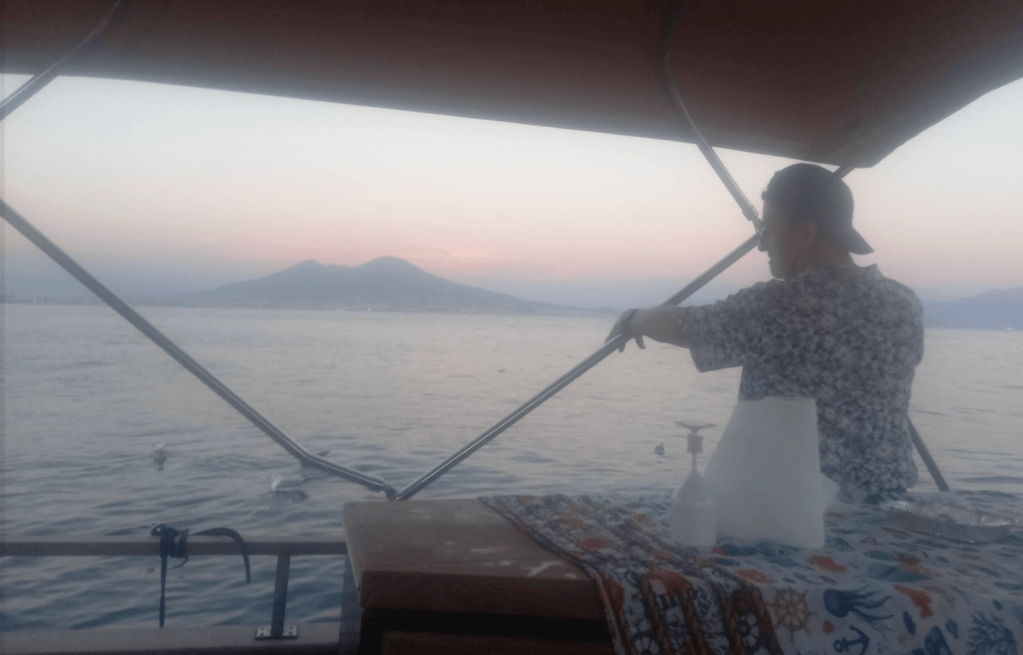
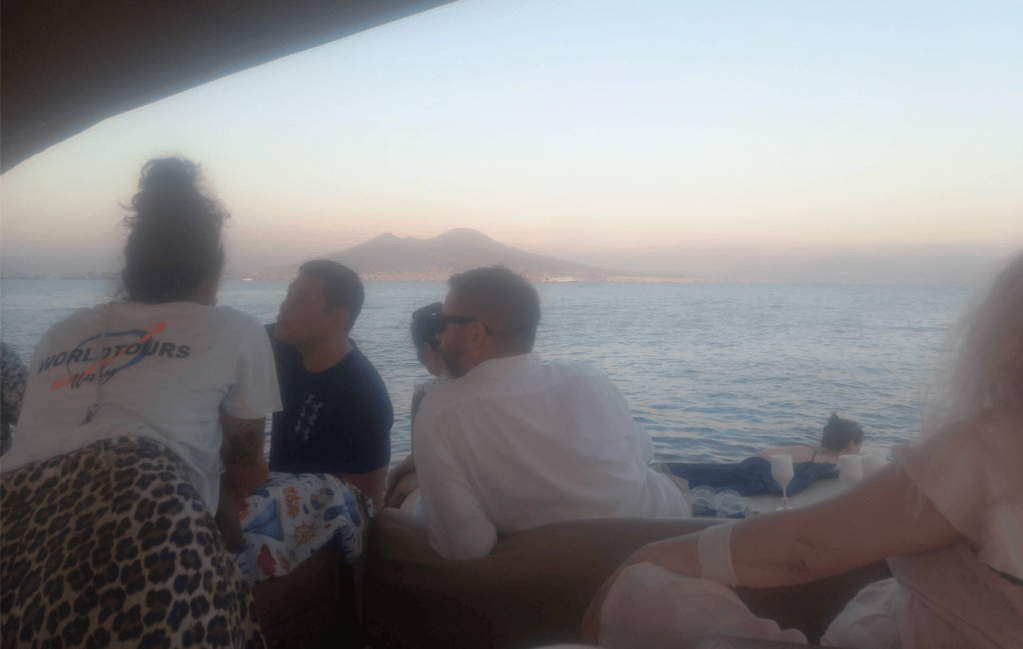
This was undeniably one of the highlights of our trip, as even though my friend wasn’t keen on swimming or drinking Aperol spritz (she made do with the prosecco), the weather, water and lively atmosphere on the boat with our guide, captain and fellow sight-seers was warm, inviting and exciting — not least after we’d stopped for our swim, and later, as the guide played some Latin music and she and I kicked off dancing salsa on the boat. Even though it wasn’t the most brilliant sunset I’d ever seen, the views of the city and its coastal grandeur — and of course Vesuvius — were utterly breathtaking. I’d certainly give this experience a 10/10 and gladly do it again!
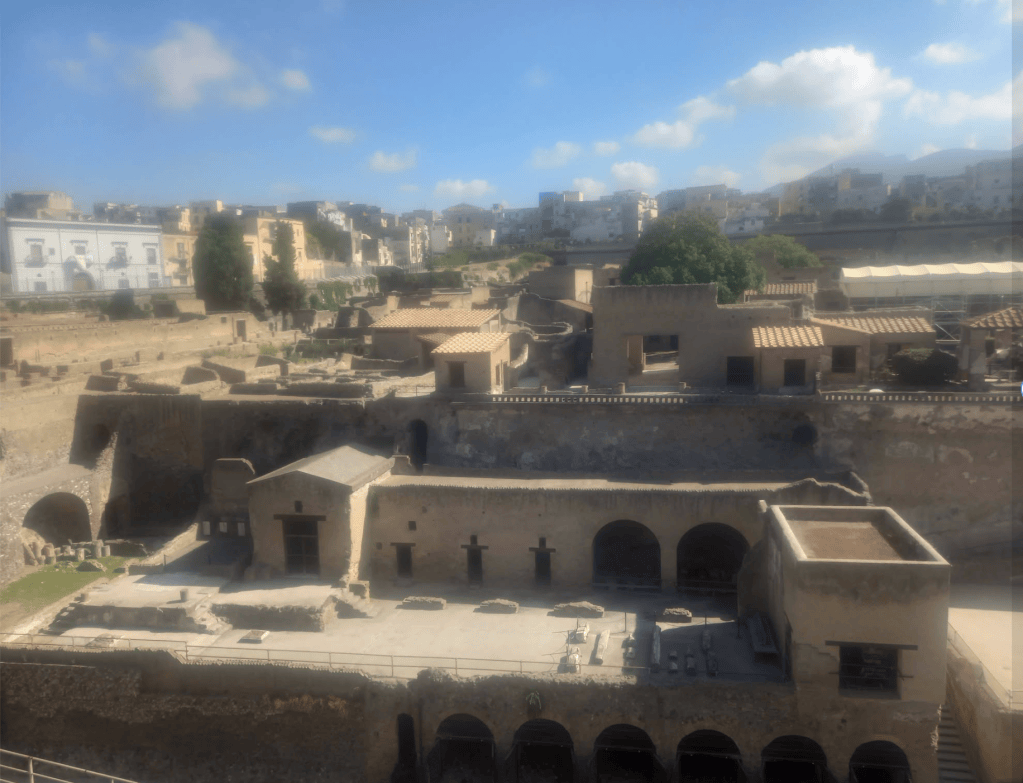
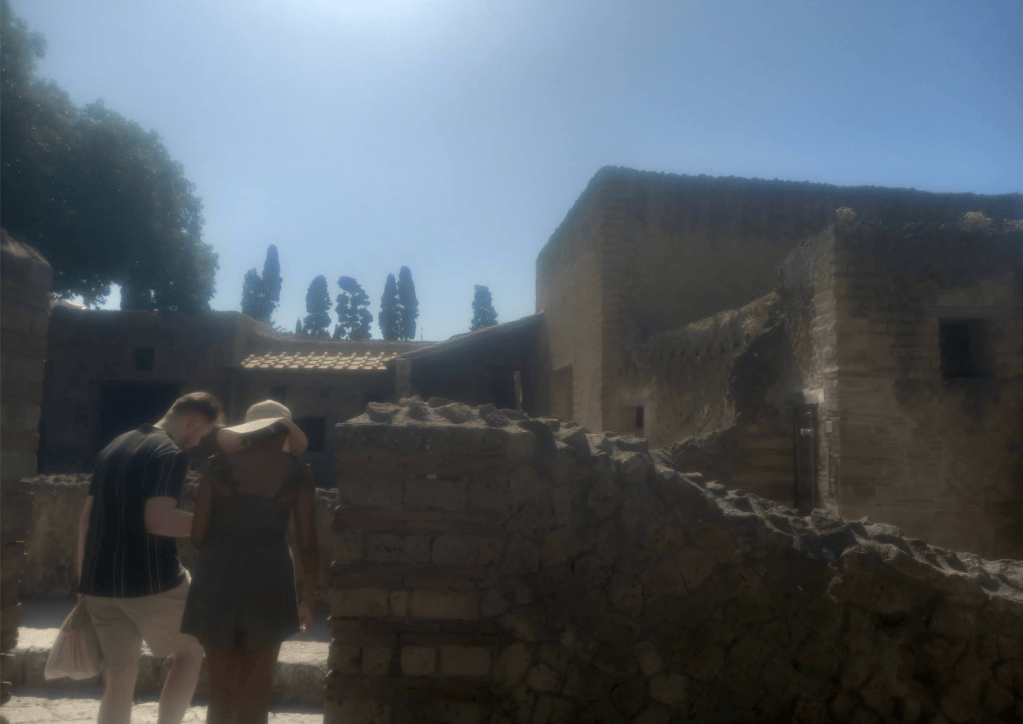
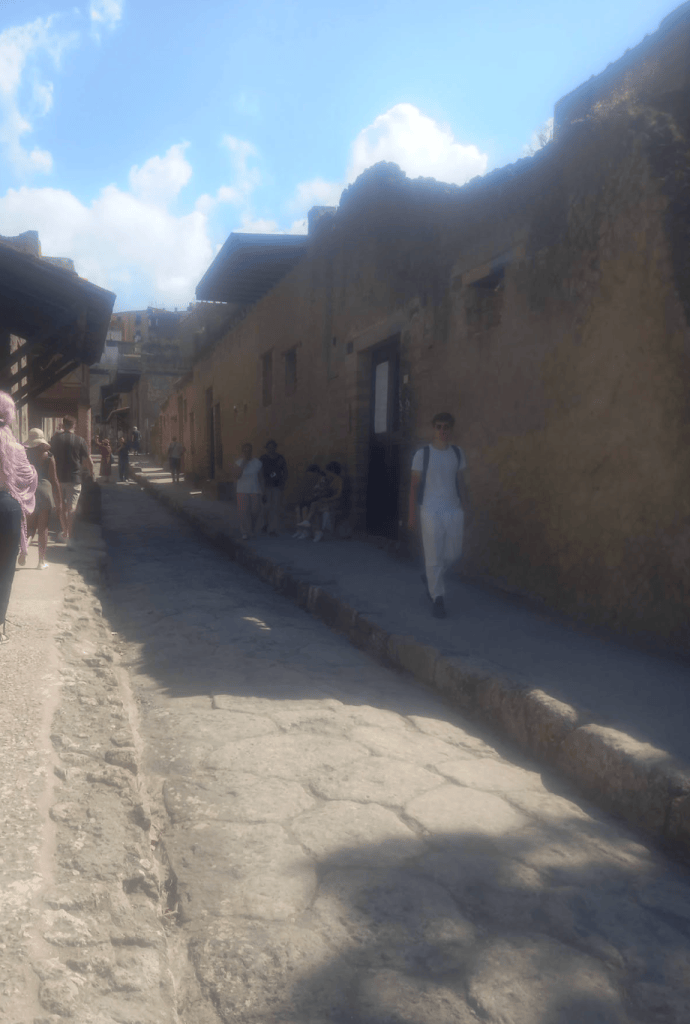
Surely no trip to Naples is complete without a visit to Pompeii to see its poignant vestiges of ancient lives frozen at the moment of death, but having been before, I was keener to see Herculaneum. Despite being smaller, this archaeological park features the remains of an ancient fishing village wiped out at the same time (79 AD) as its more famous cousin. Being less crowded, it was infinitely easier to navigate than Pompeii. Although we went on a guided tour, it Is quite easy to reach this site from Naples on your own, as you simply take the Circumvesuviana train (line 1) from Central Station – Piazza Garibaldi and get off at Ercolano Scavi, from which it is a 10-minute walk.
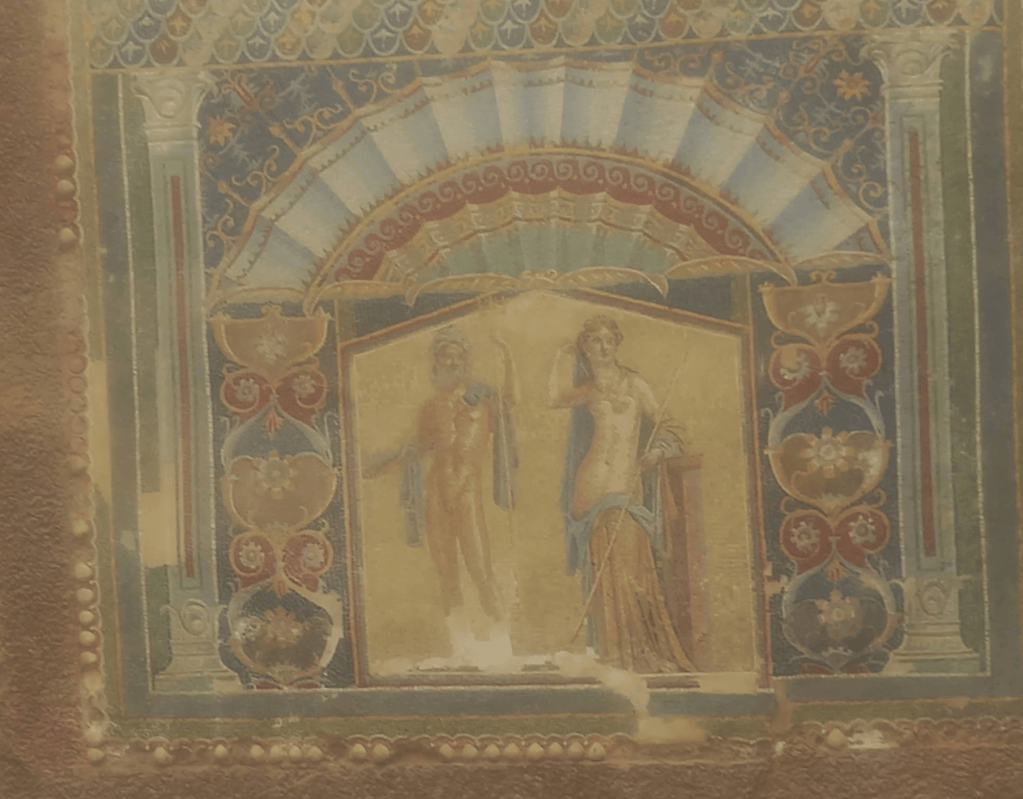
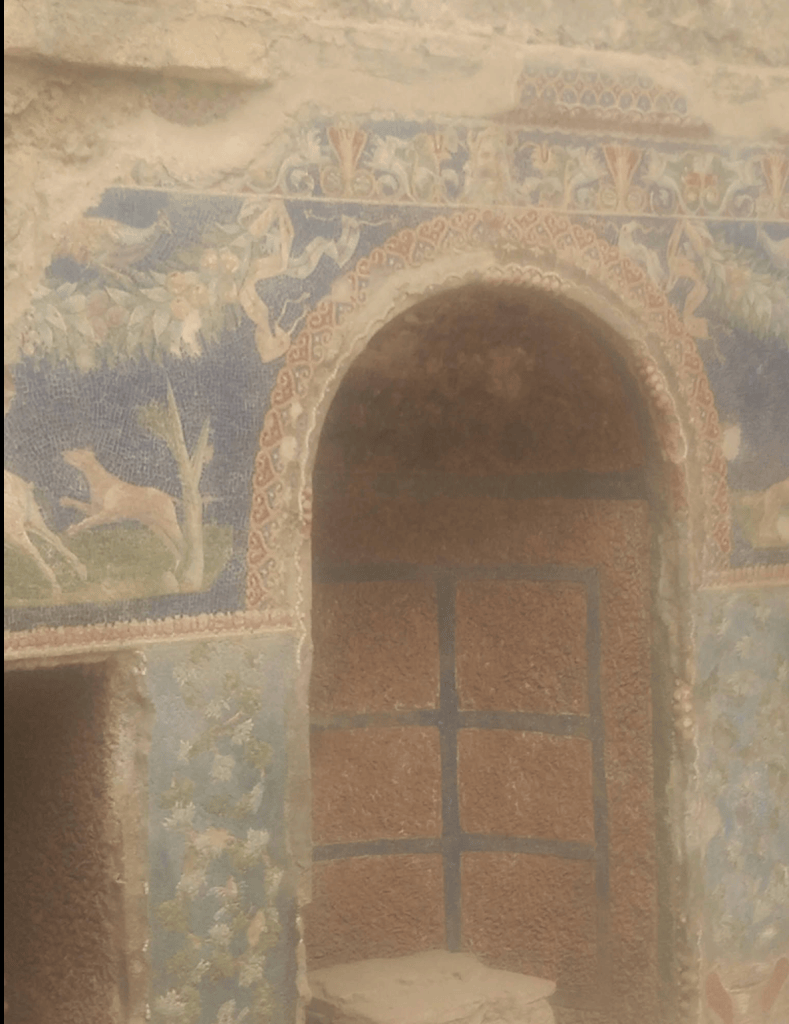
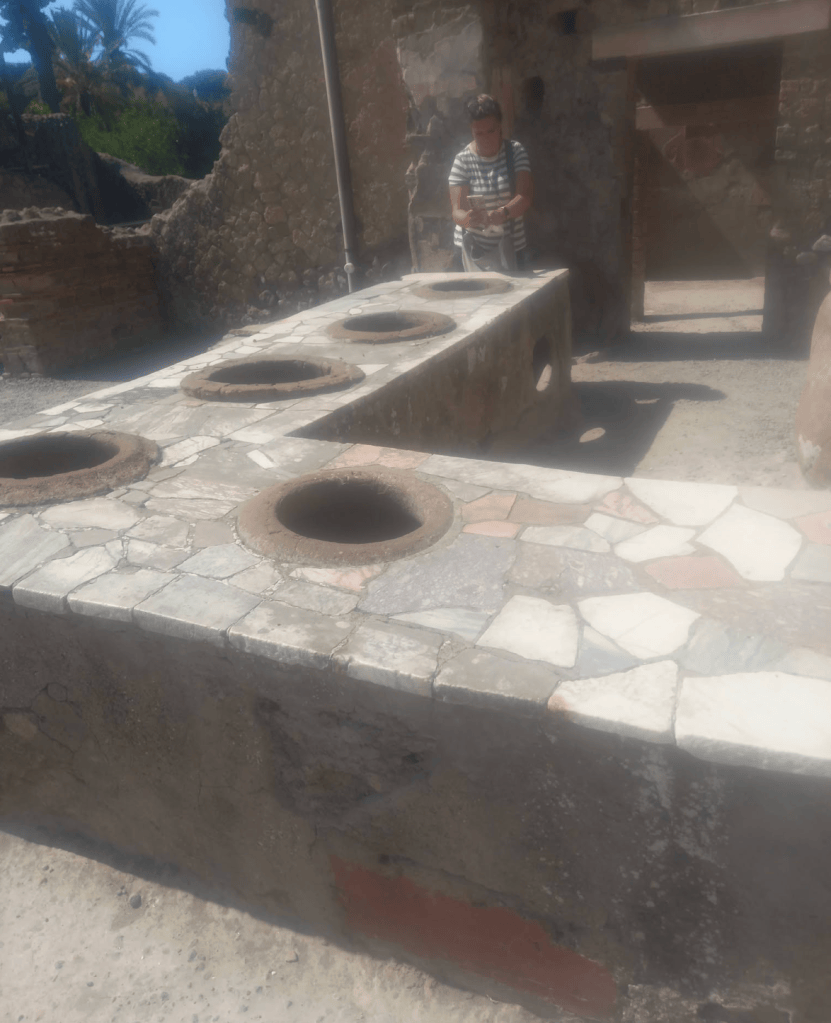
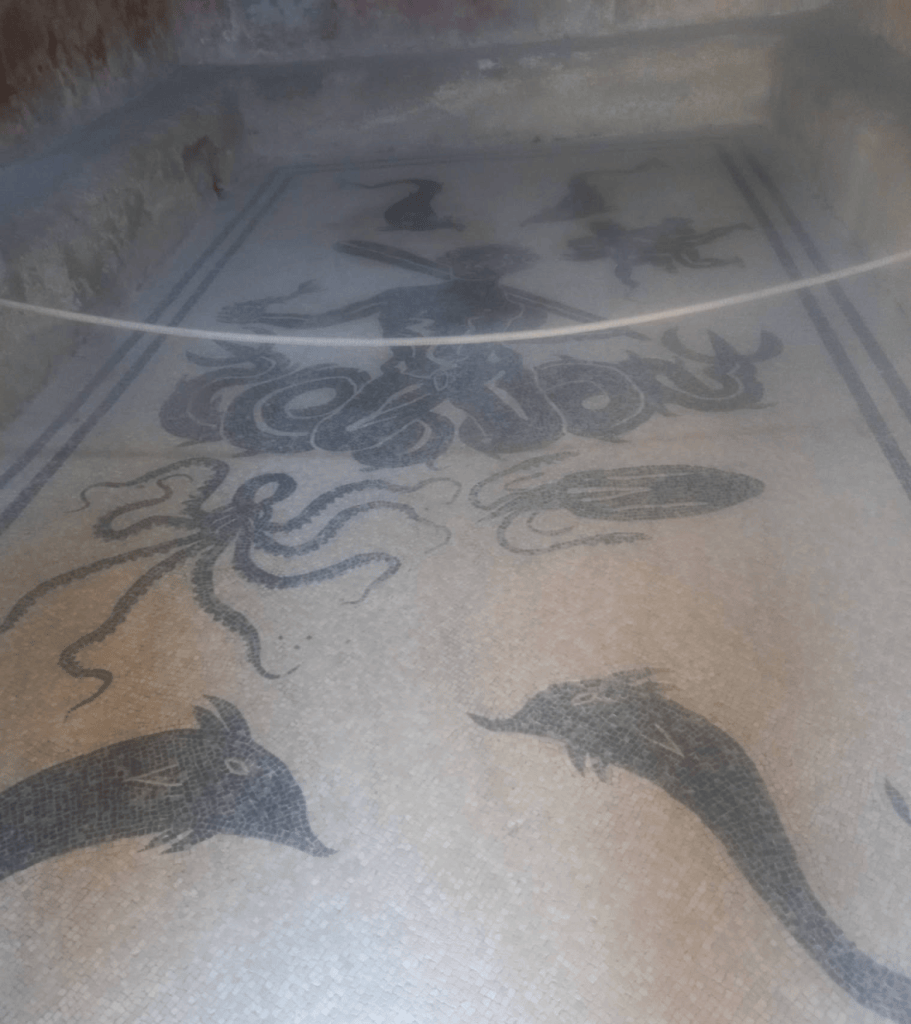
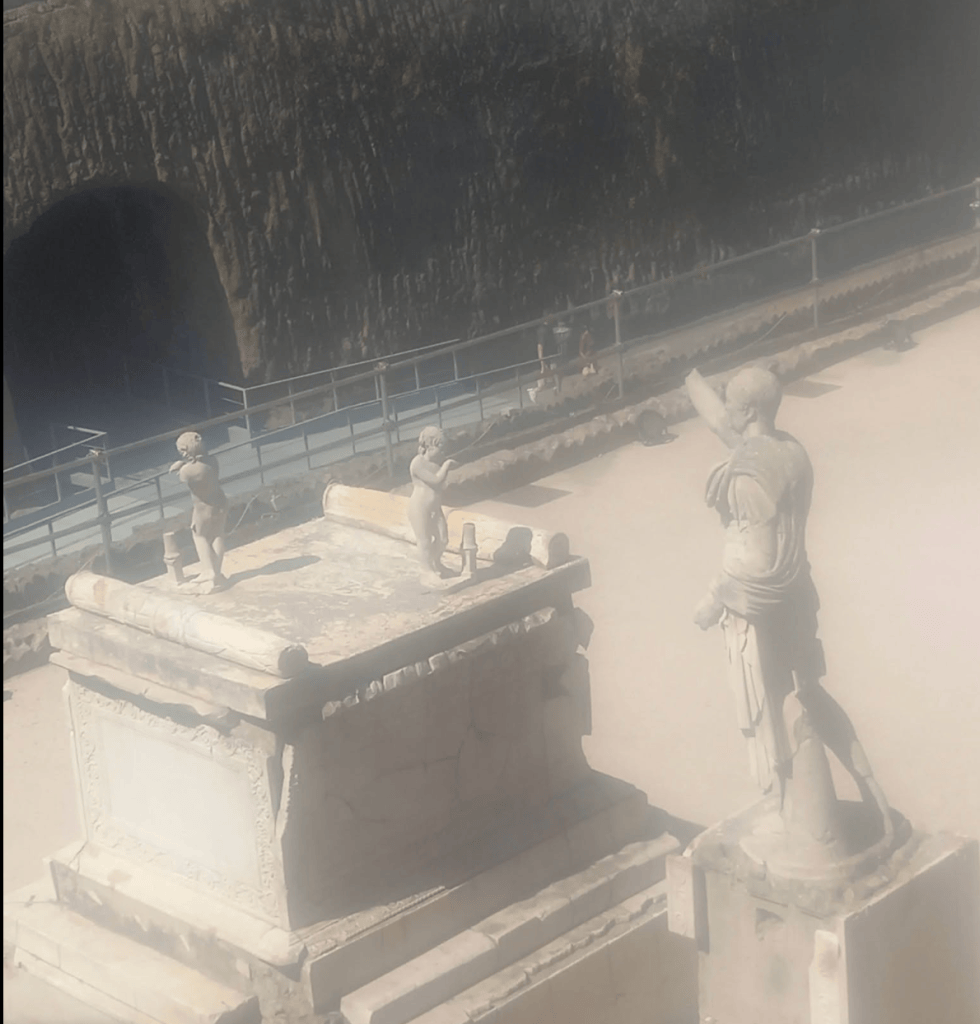
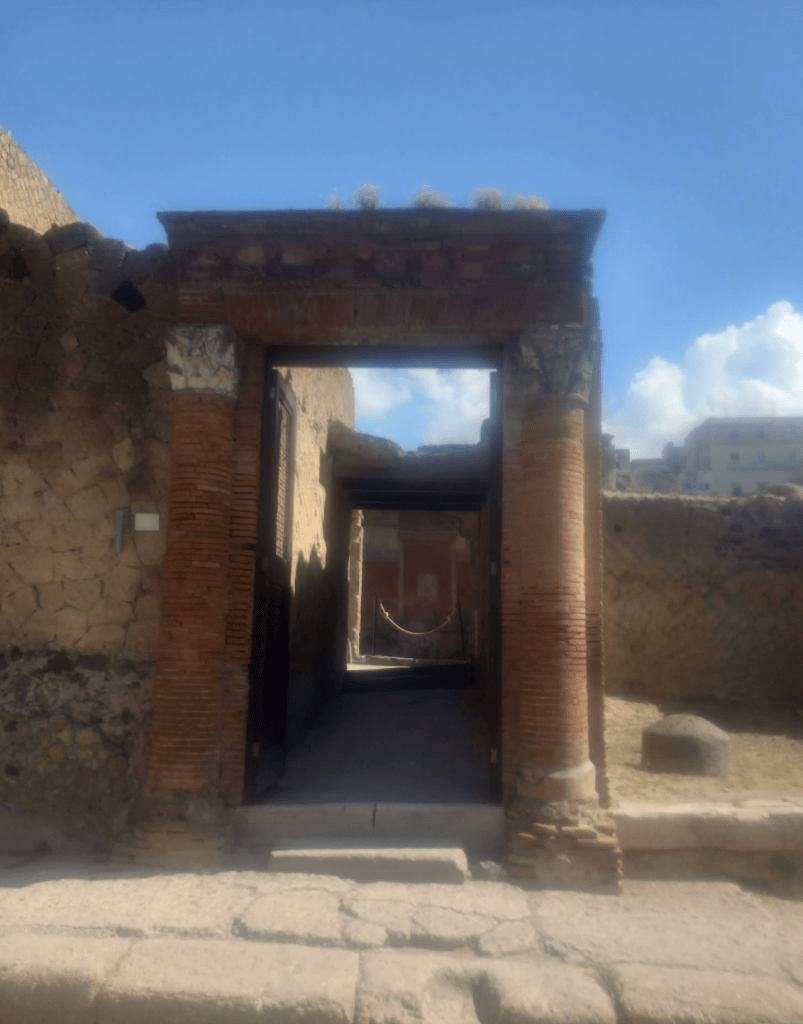
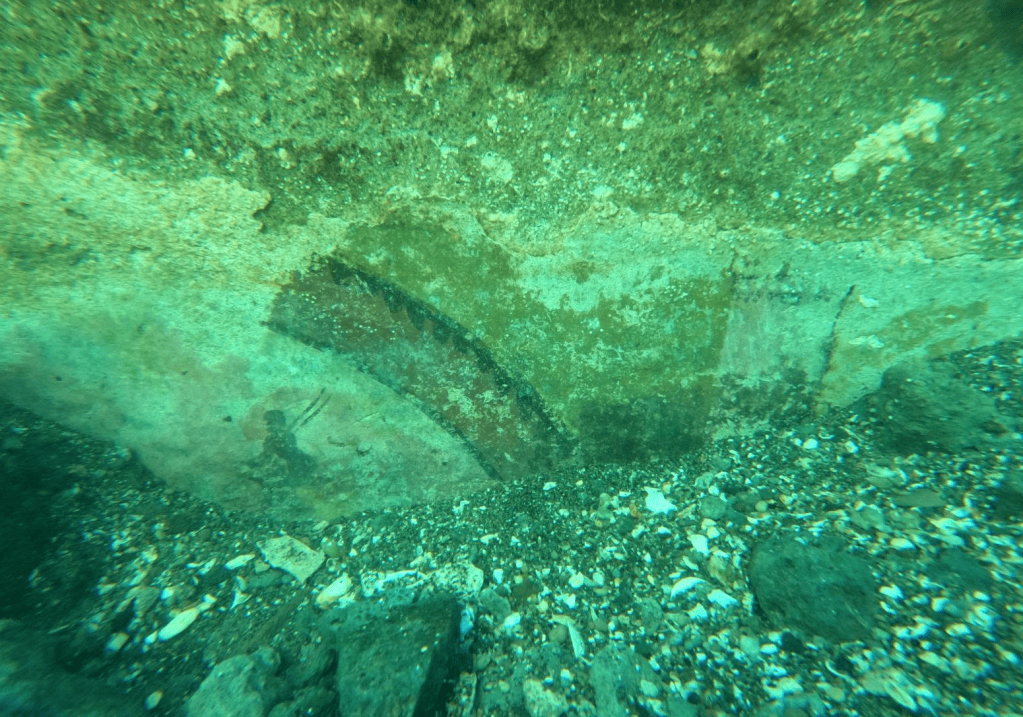
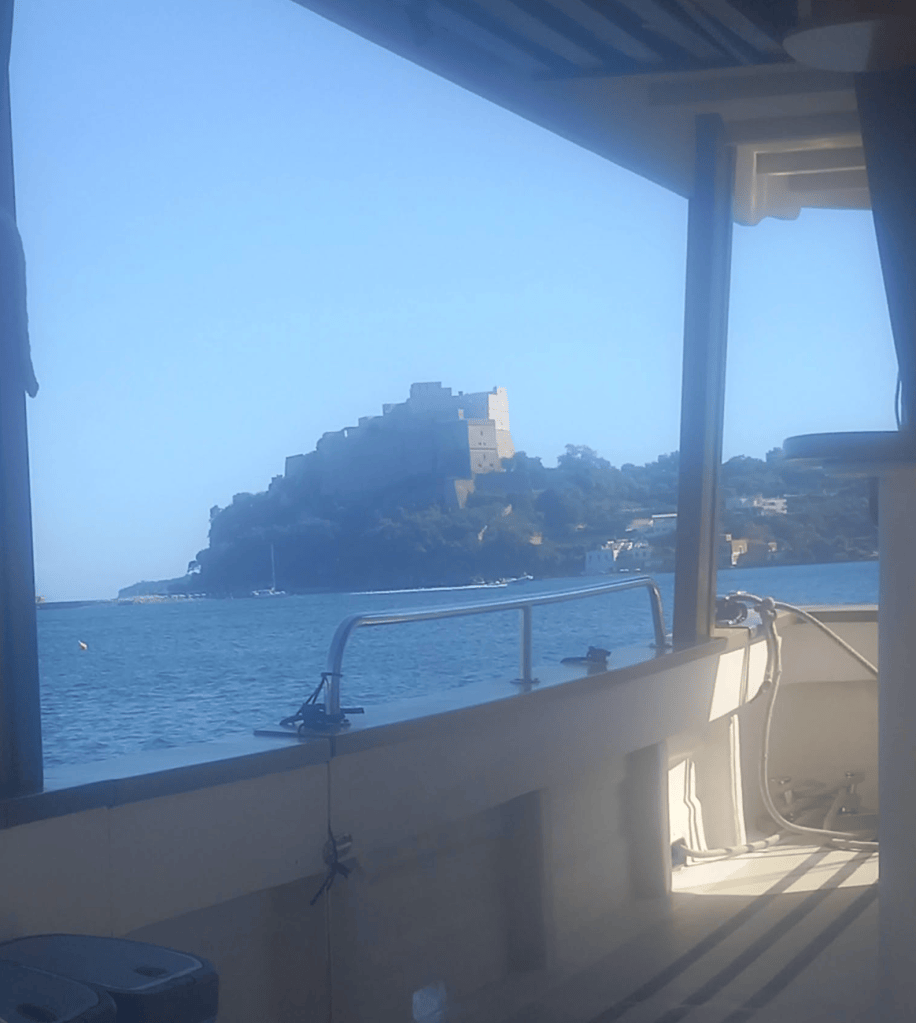
We contemplated seeing either Pompeii or the Museo Archeologico Nazionale di Napoli (MANN) — the museum hosting most of the actual finds from both Herculaneum and Pompeii — on the same day, but in respect of limiting our on-foot exertions, we instead opted to visit the Submerged Archaeological Park of Baia for an afternoon glass-bottom boat tour. Spurred by photographs offering glimpses of statues, mosaics and the tantalising underwater ruins of this nearby coastal town that had mysteriously vanished under the sea, we made the trek by private driver to the small fishing village of Baia (about an hour or so’s drive from Naples, passing Posillipo, Pozzuoli and Bacoli, and opposite the islands of Procida and Ischia).
The village itself was lovely, but the actual boat trip was disappointing. As our guide explained, the summer-long heatwaves had turned the sea a murky, algae-infested green, and a recent underwater collapse meant the statues and other ancient buildings were not visible. I’m sure it would have been fascinating if we could have seen more than mere faint impressions of underwater mosaics, but as we could not, I can only recommend either scuba diving or visiting in cooler seasons (but check before going).
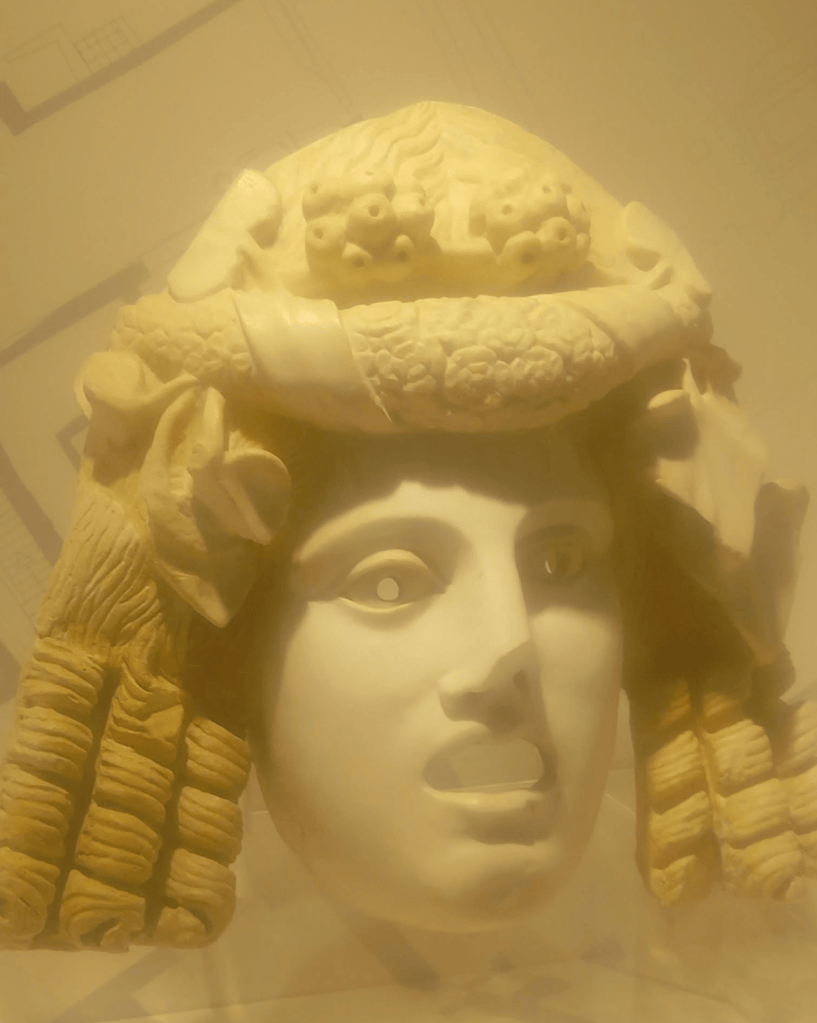
Having decided to travel on to Capri from Naples, stay overnight on the island and then wait until we got to Sorrento to visit Pompeii, we spent our last day in Naples visiting MANN in the morning. A well-designed, exquisitely arranged museum, it is a must-see for any true lovers of art, antiquities and architecture, as the pics of its various sculptures, courtyard, frescoes, mosaics, paintings and other artefacts from Herculaneum and Pompeii demonstrate below. However, if you do plan to go, make sure to book skip-the-line tickets to ensure admittance.
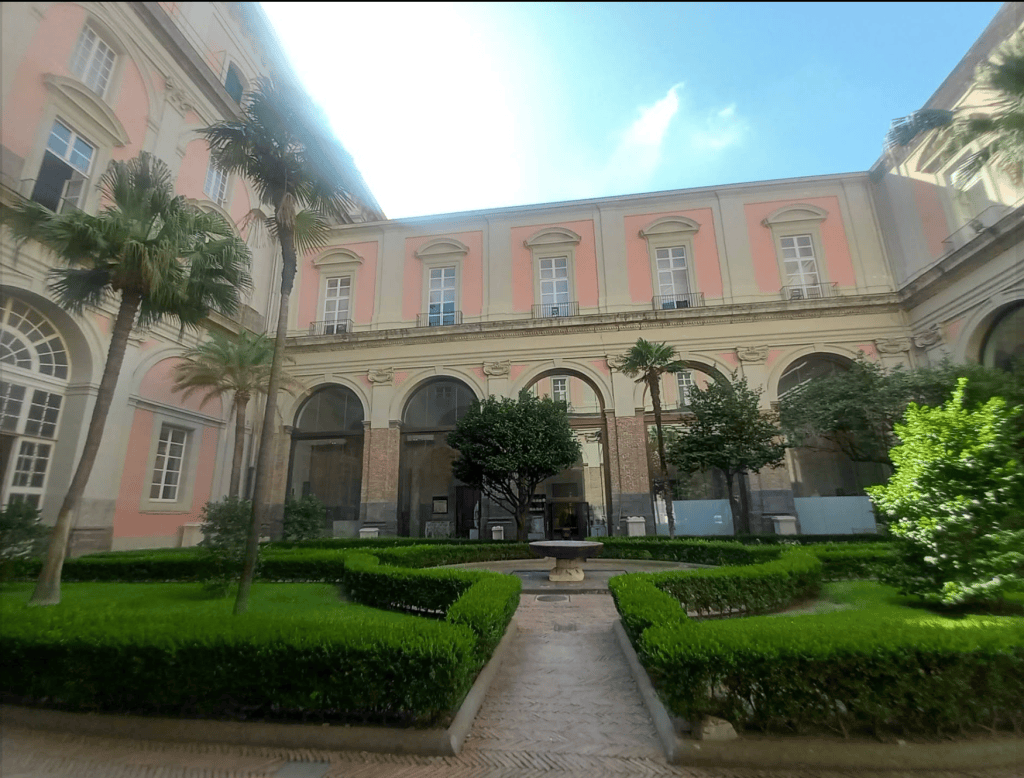
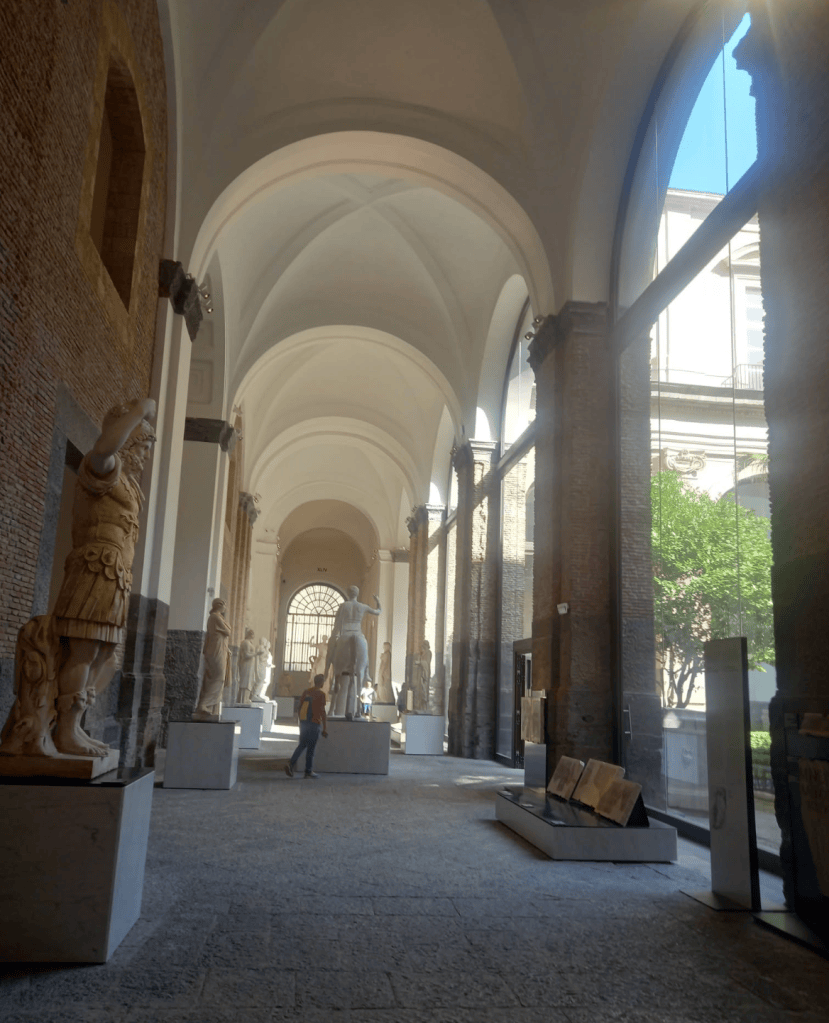
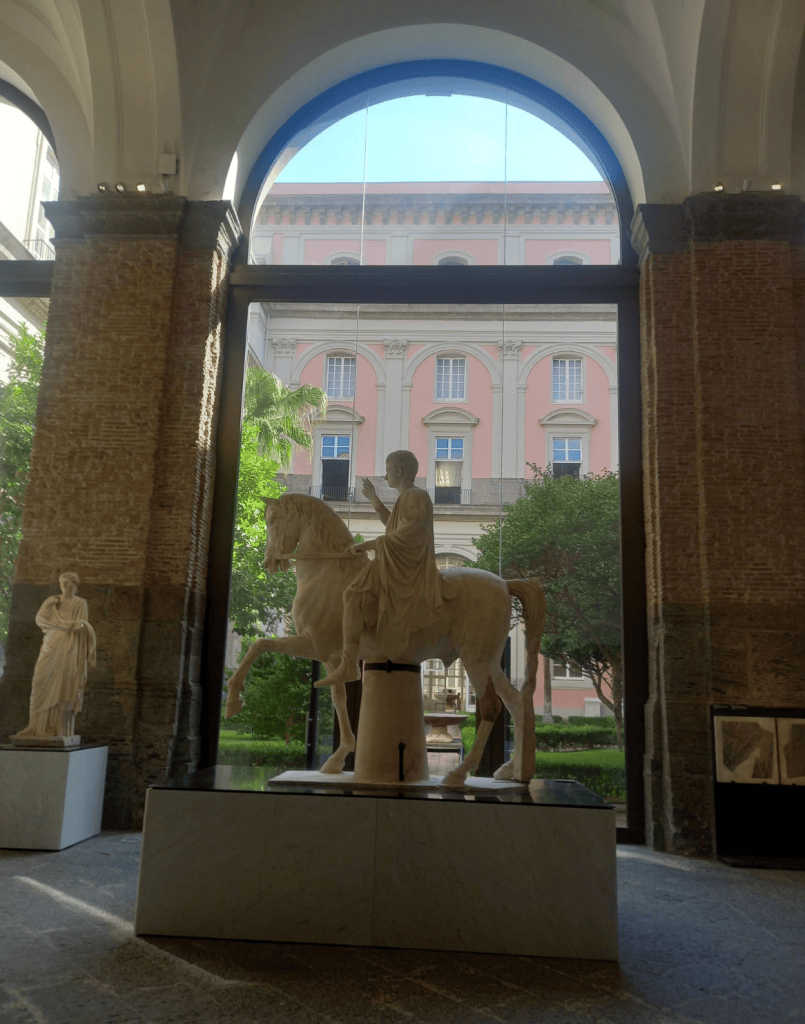
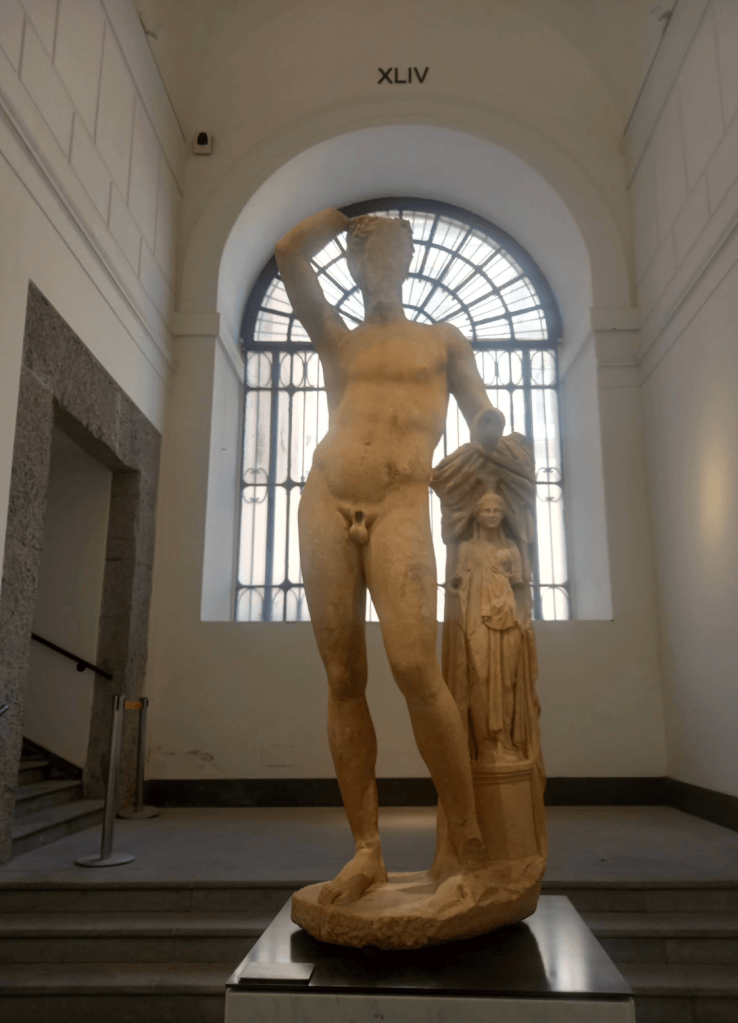
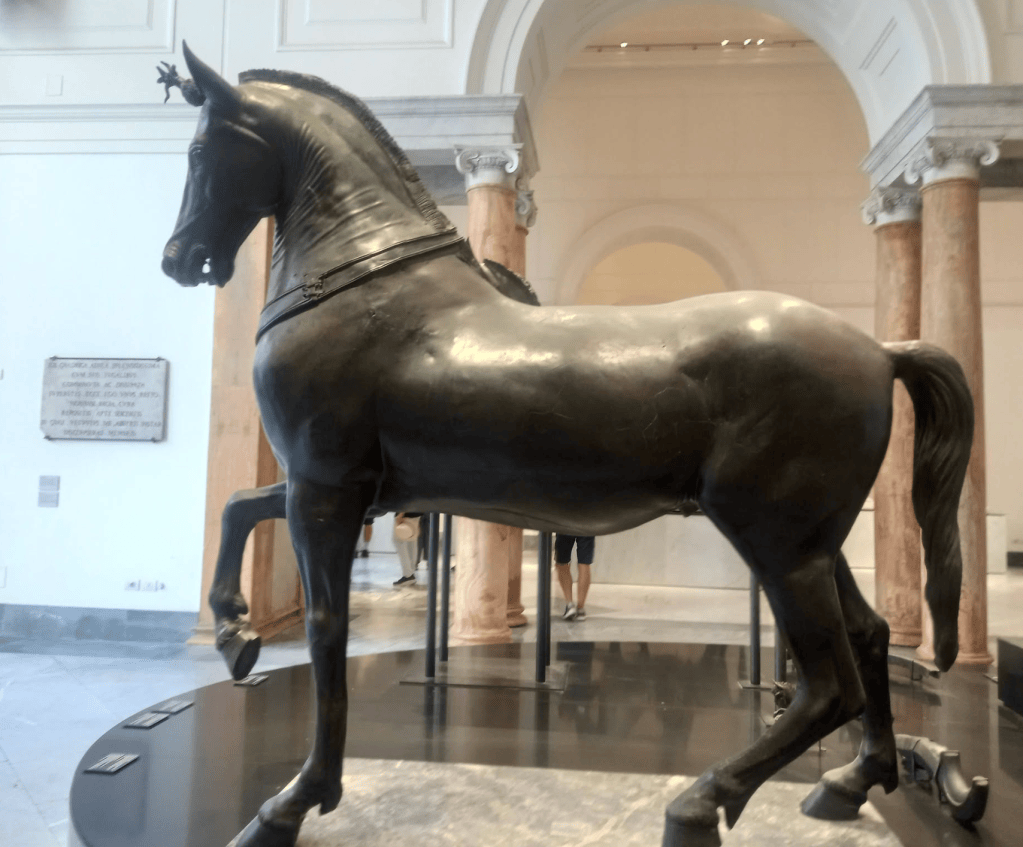
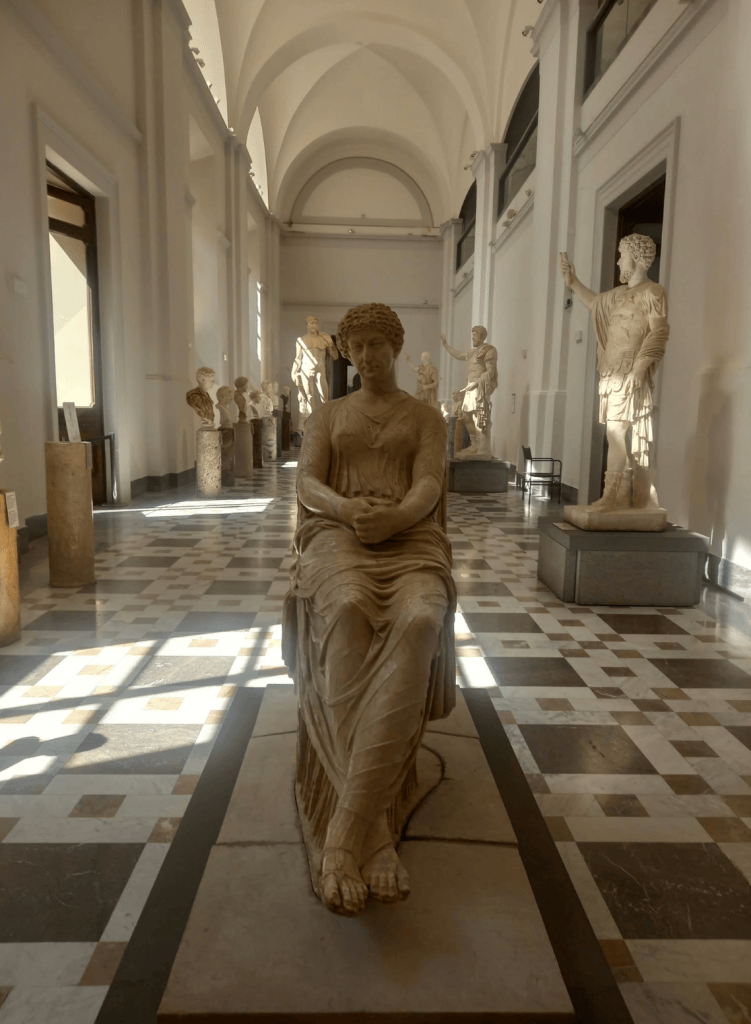
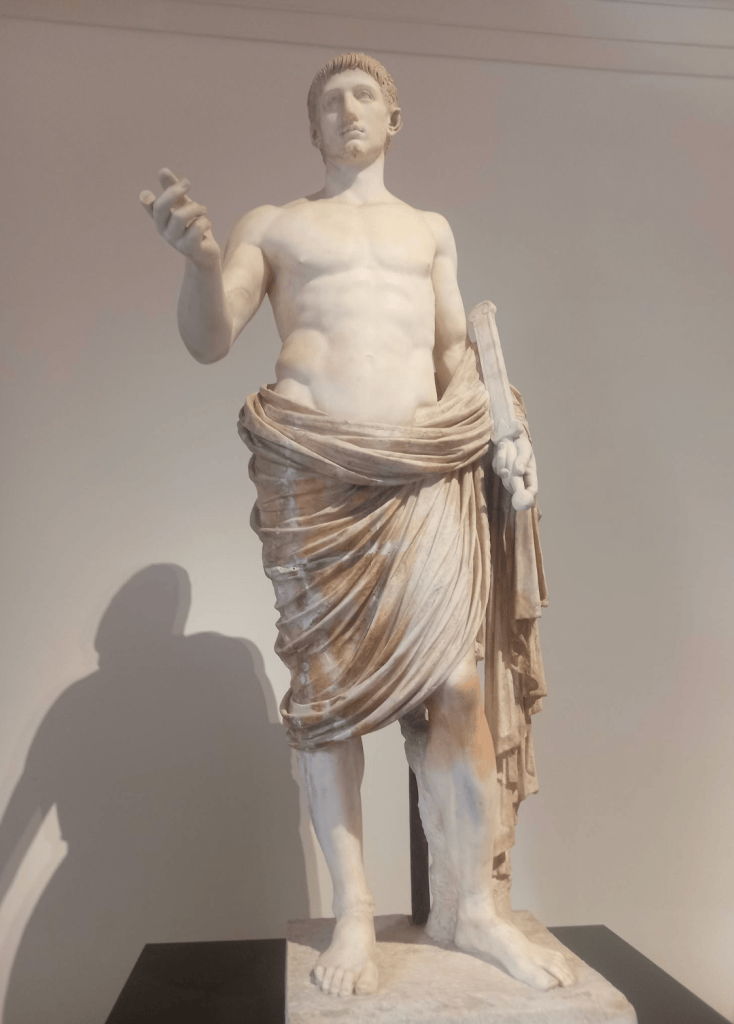
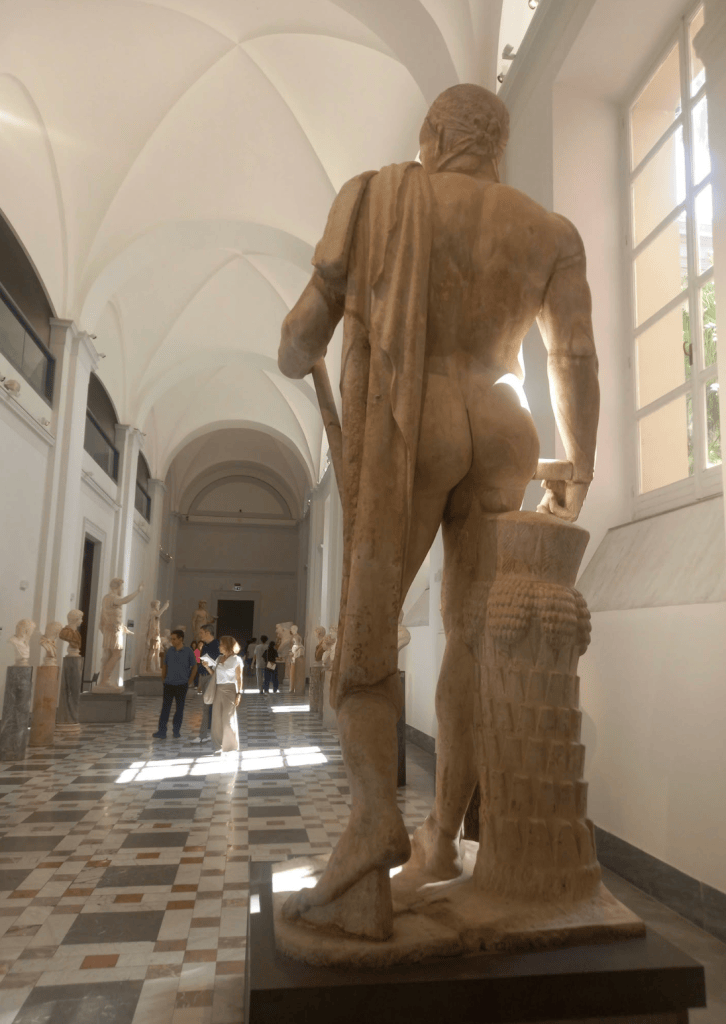
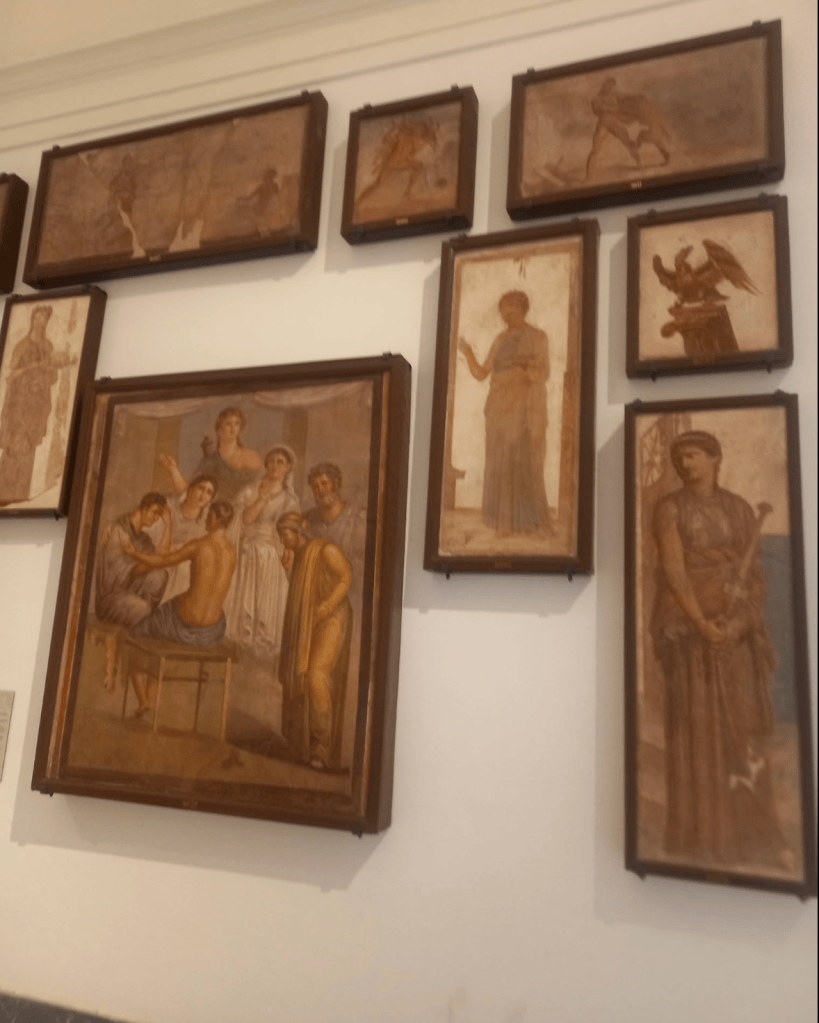
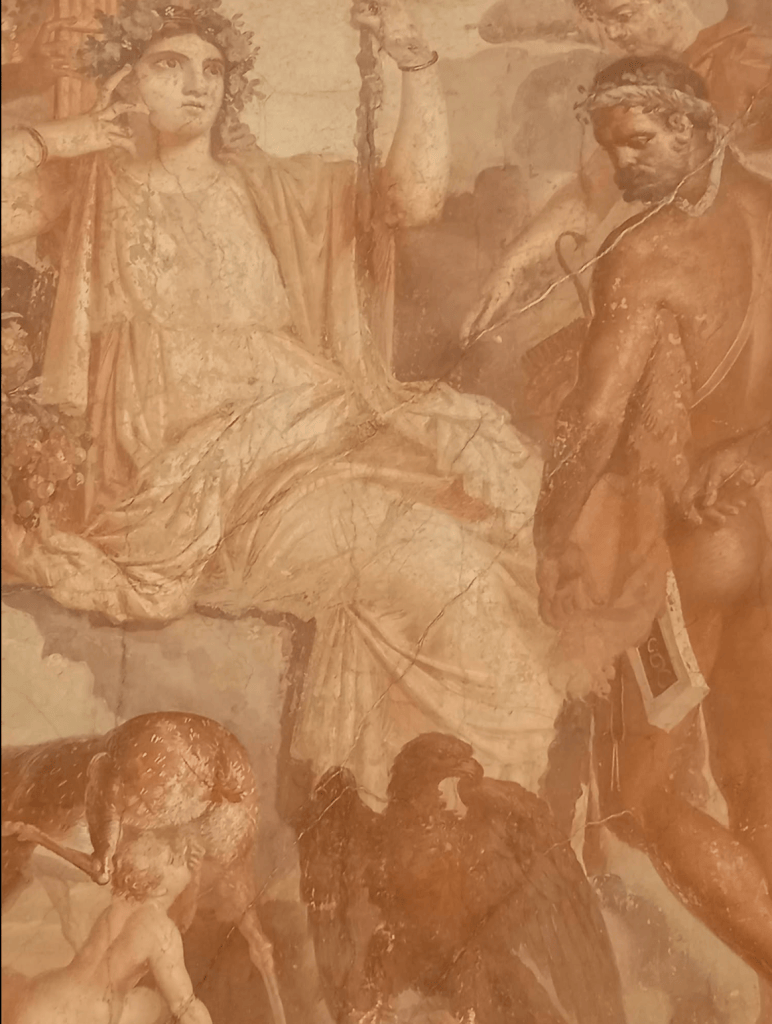
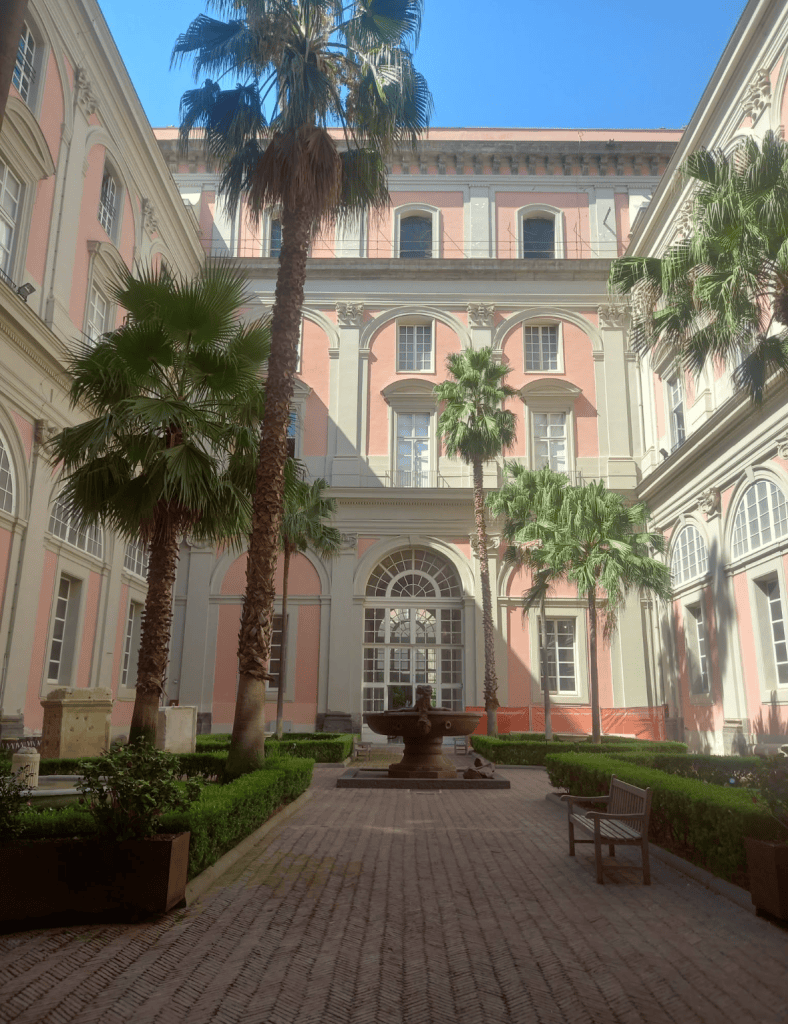
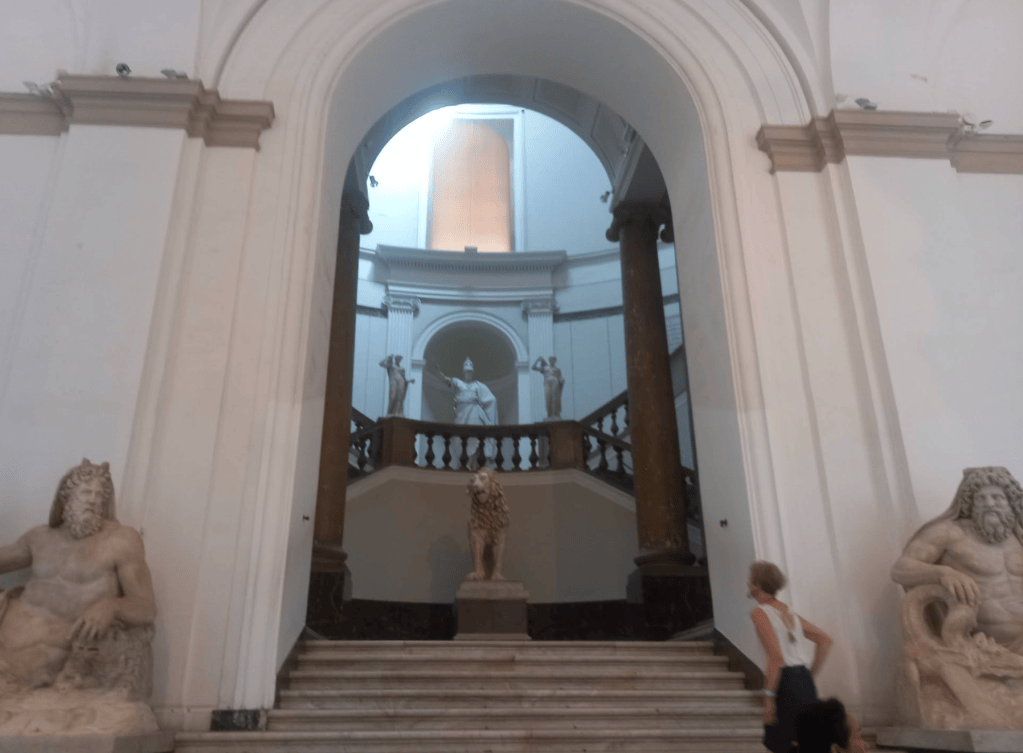
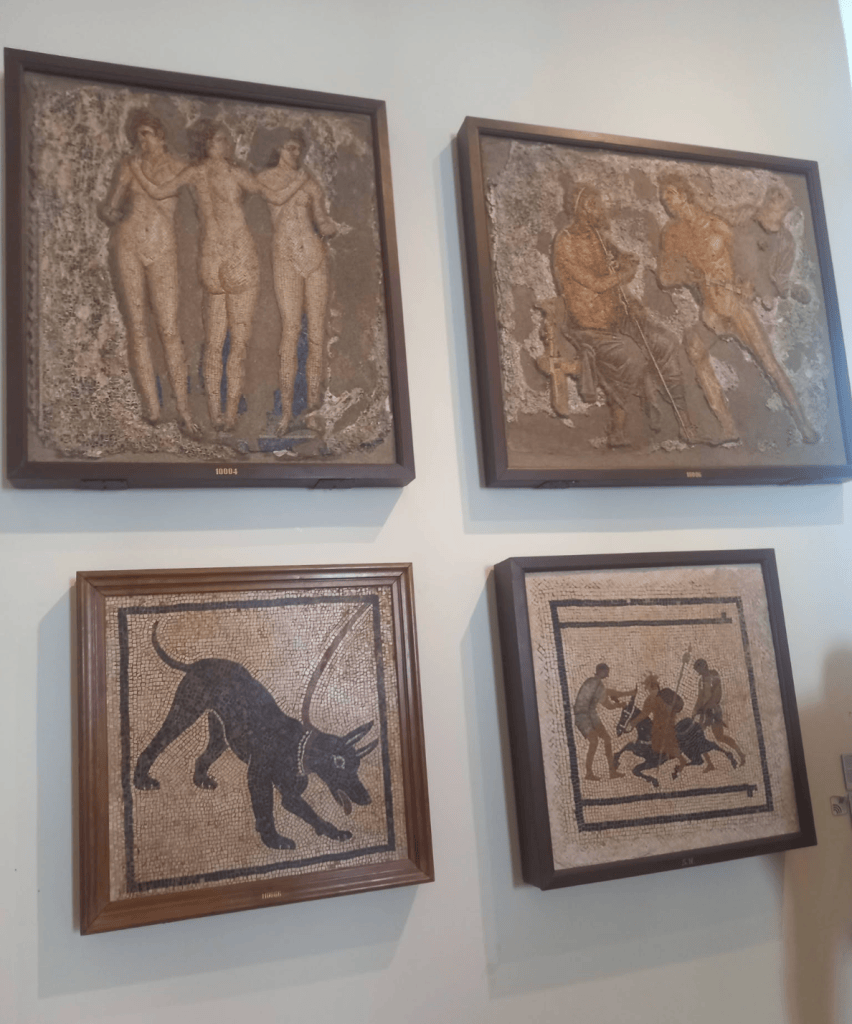
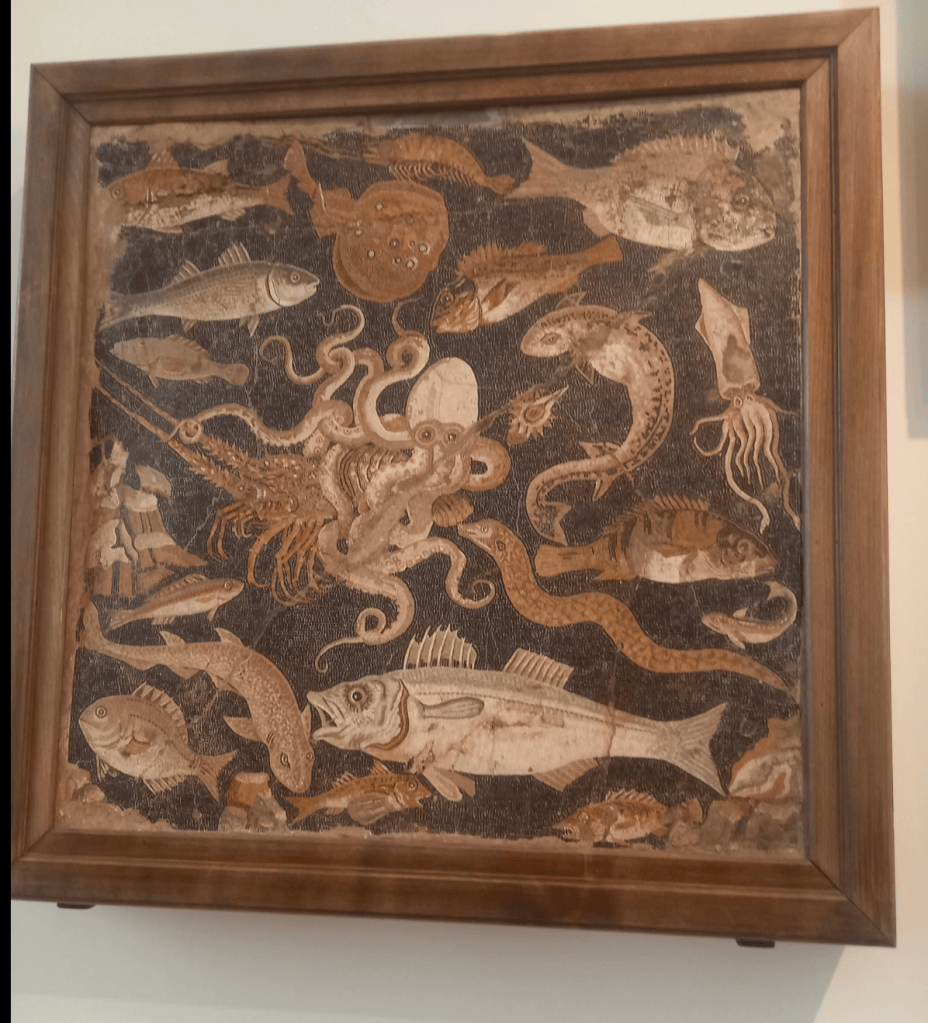
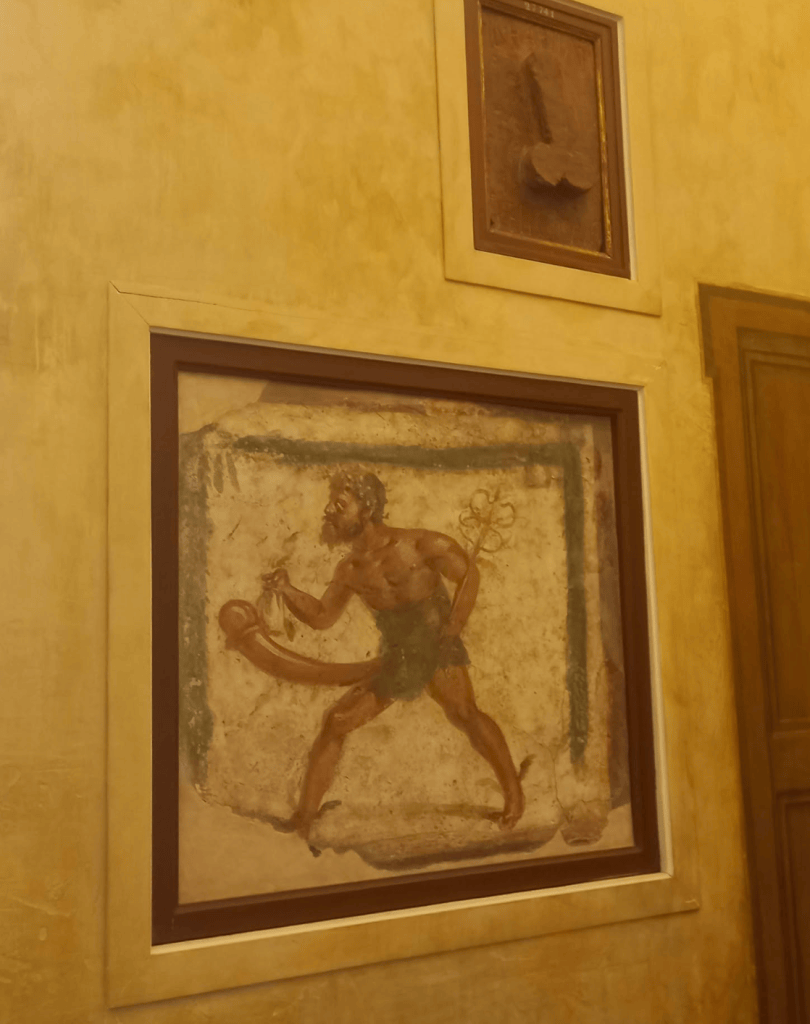
After that, we decided to purchase some hop-on, hop-off bus tickets in hopes of seeing a few of the city’s other key sites: the statue of the Veiled Christ at Sansevero Chapel, the Catacombs, the Spanish Quarter and the Museum of the Treasure of San Gennaro and hopefully the famous Caravaggio masterpiece ”The Seven Works of Mercy” at the Pio Monte della Misericordia.
Unfortunately, between problems finding the correct bus stops and my already-achy feet, the fact we hadn’t pre-booked a ticket for the Sansevero Chapel meant we’d only discovered AFTER hiking all the way up a steep city street in the blazing heat that it was fully booked. Being too exhausted to attempt any further disappointments in trying to see the other sites without pre-booked tickets, I let my friend to carry on sightseeing while I went back to the hotel to soak in the jacuzzi. I’m sorry to have missed those other sites, particularly the Caravaggio works, but I wasn’t ready to let my feet die just yet!
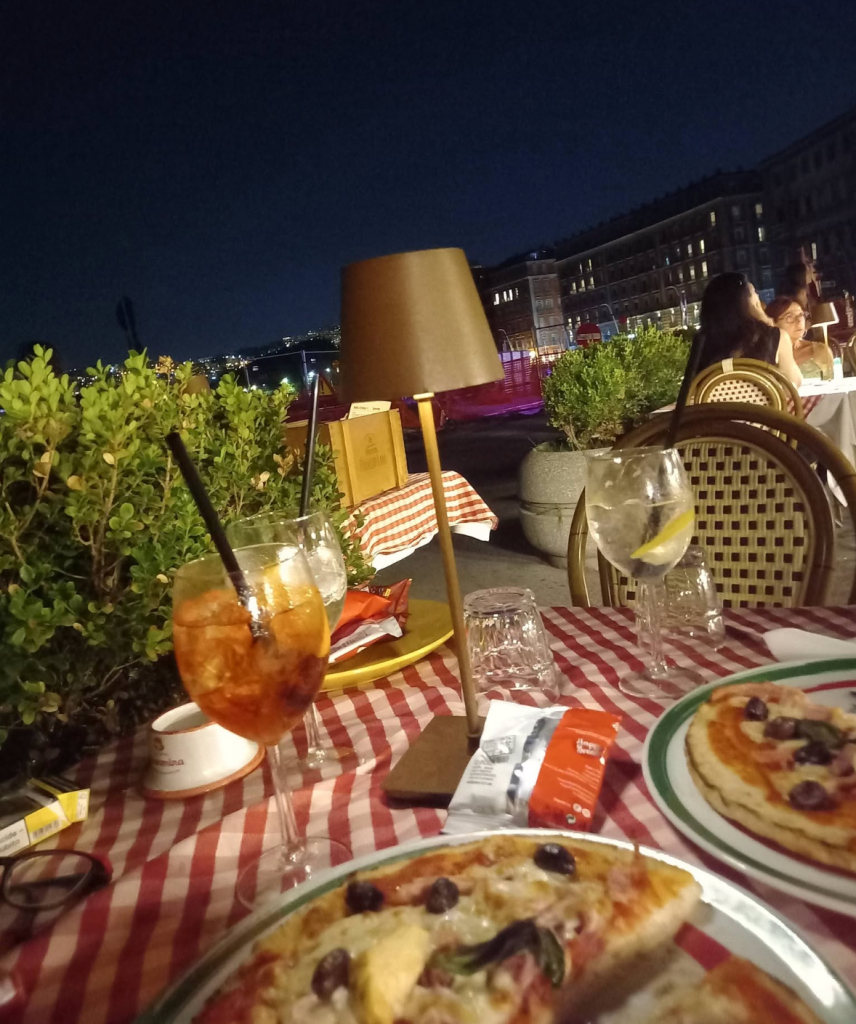
On the plus side, our hotel was near Naples’ famous landmark Castell del’Ovo; although we didn’t venture inside, we did see it each night as we sampled Neapolitan pizzas, pastas, spritzes and wines from the many restaurants along the Chaia coast. (I know everyone raves about Neapolitan pizza, but after sampling a few gluten-free pizzas there, I must confess I think my own home-made ones are infinitely better!)
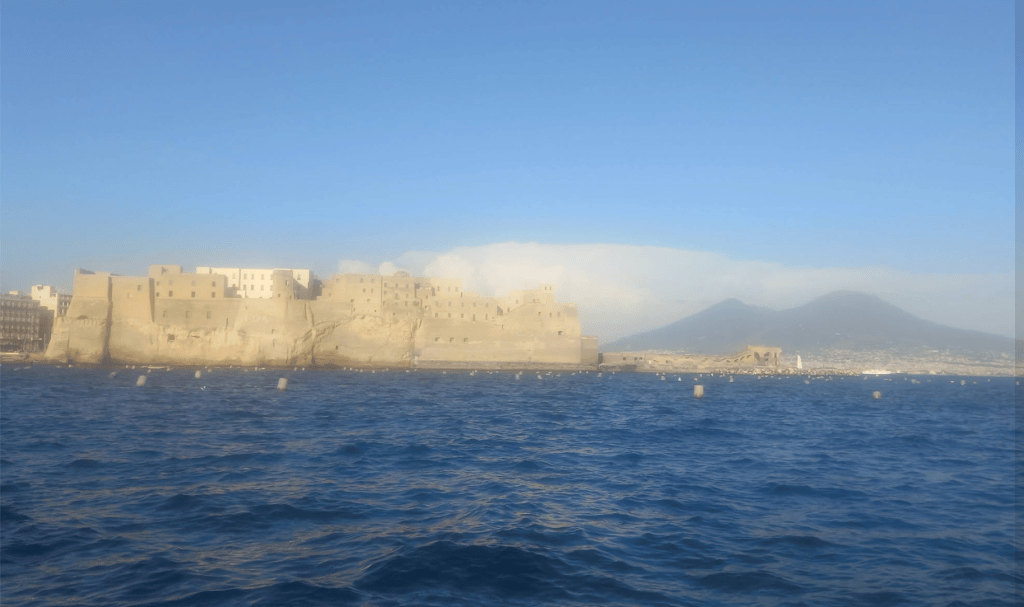
On to Capri, Sorrento and the Amalfi Coast
My decision to go straight on to Capri via a full-day boat tour group from the Molo Beverello port proved a good one, as it was both very relaxing and rewarding after all the trekking around Naples we’d already done.
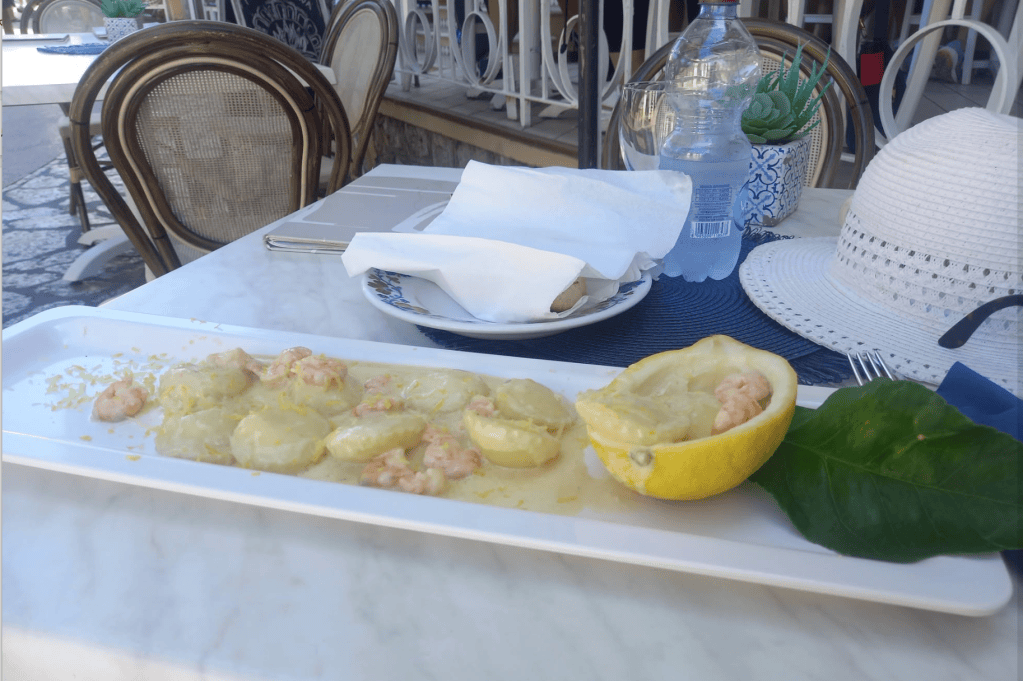
Famous for being a magnet for the jet-setting crowd, the island and bustling town of Capri are full of stunning natural beauty as well as many chi-chi designer shops and charming but generally pricey restaurants. However, I must say the lemon cream-infused prawn and GF ravioli dish I spontaneously ordered from a little off-the-beaten-track restaurant in the more laid-back town of Anacapri was probably the best meal of our entire trip, so was well worth it!
Sadly, on this occasion, we could not visit the island’s renowned Blue Grotto cave as the tides were too high, however we did get to take the chairlift to Monte Solaro — a wonderful way to take in the island’s splendid natural beauty as it passes over olive groves and wildflowers, offering stunning views of the Bay of Naples and Vesuvius — as well as sailing around the island for a jump-off-the-boat swim near its famed Faraglioni limestone stacks that jut out from the sea. I was delighted to find the 4* hotel (Hotel Syrene) in Capri town Roland and I had stayed at on our honeymoon; it was a special joy to sit in its lemon grove-covered terrace and sip a limoncello in his honour.
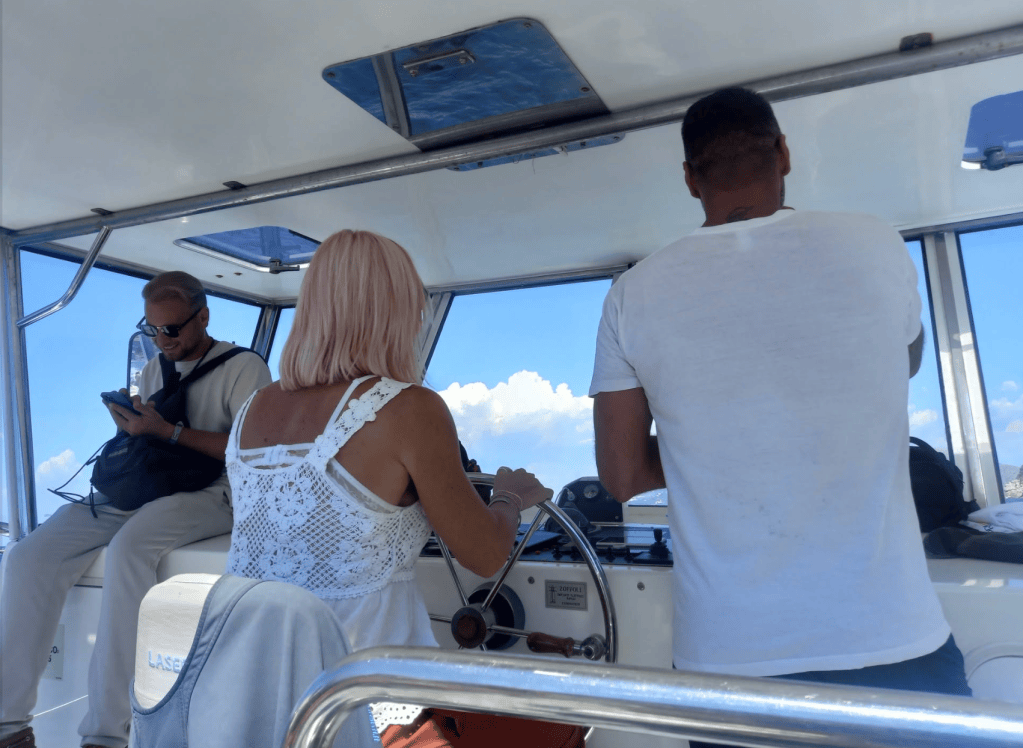
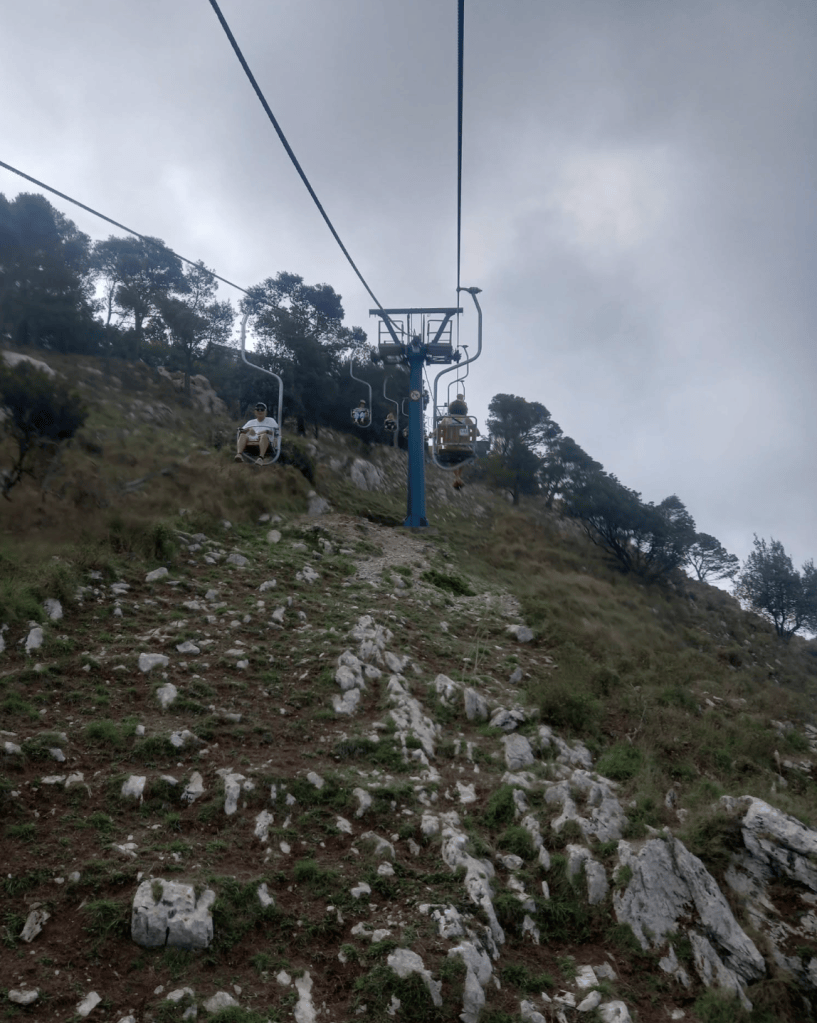
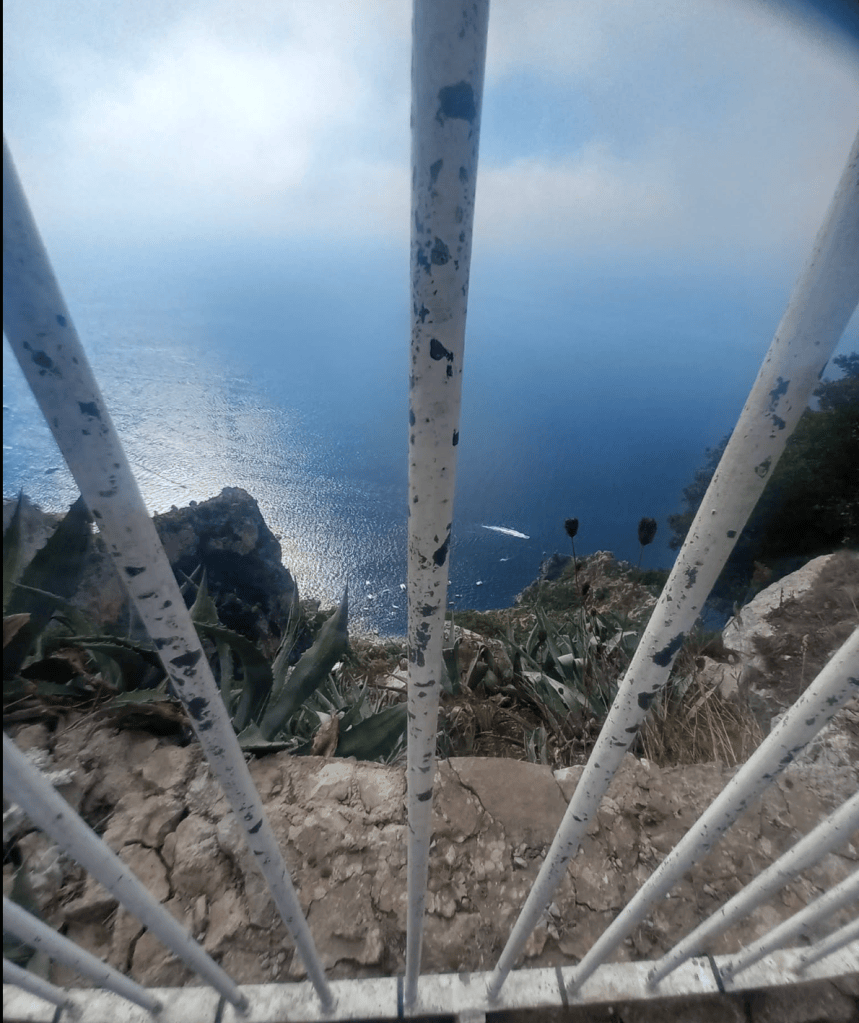
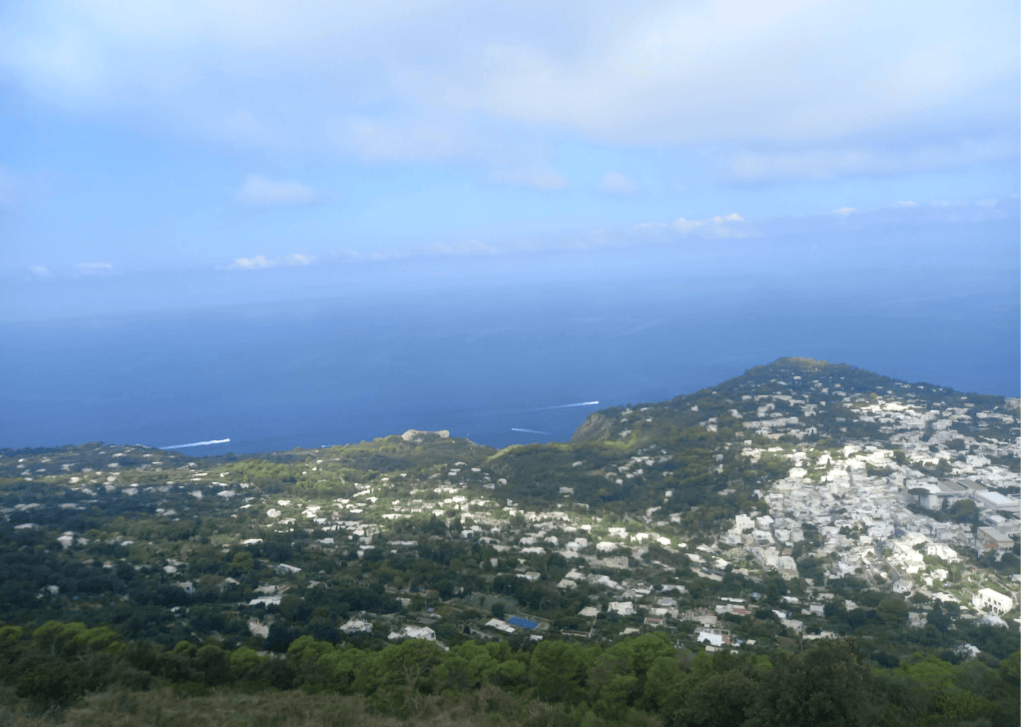
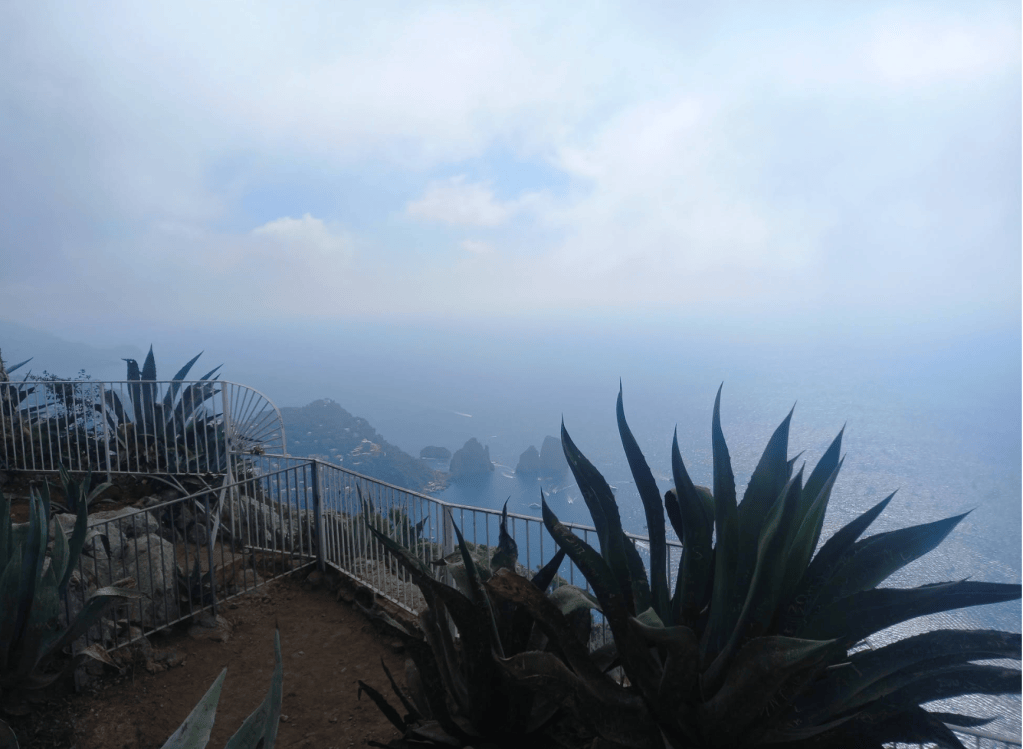
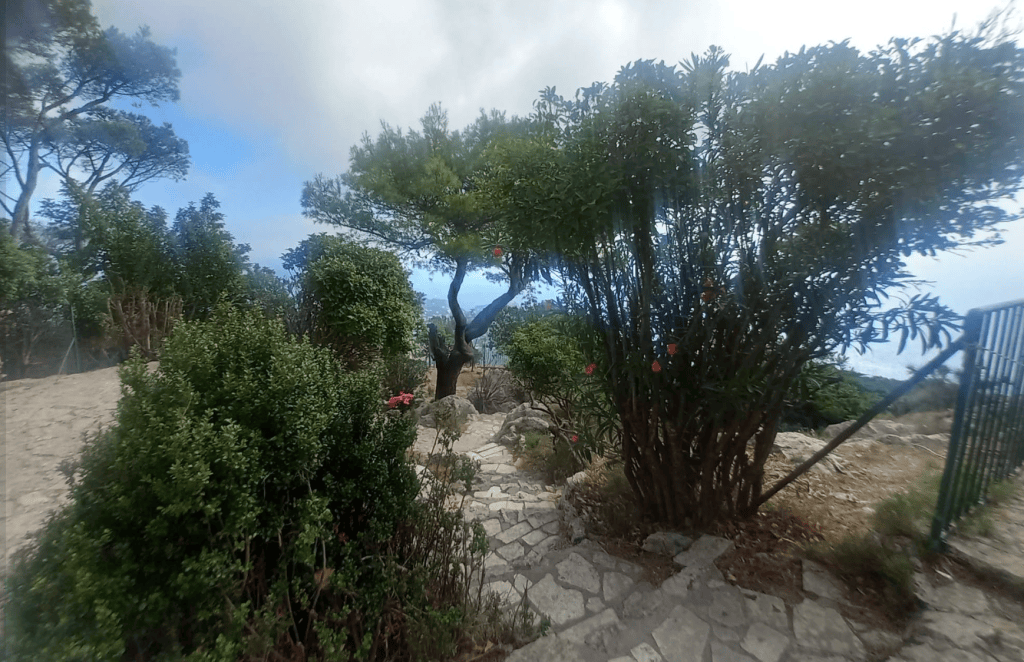
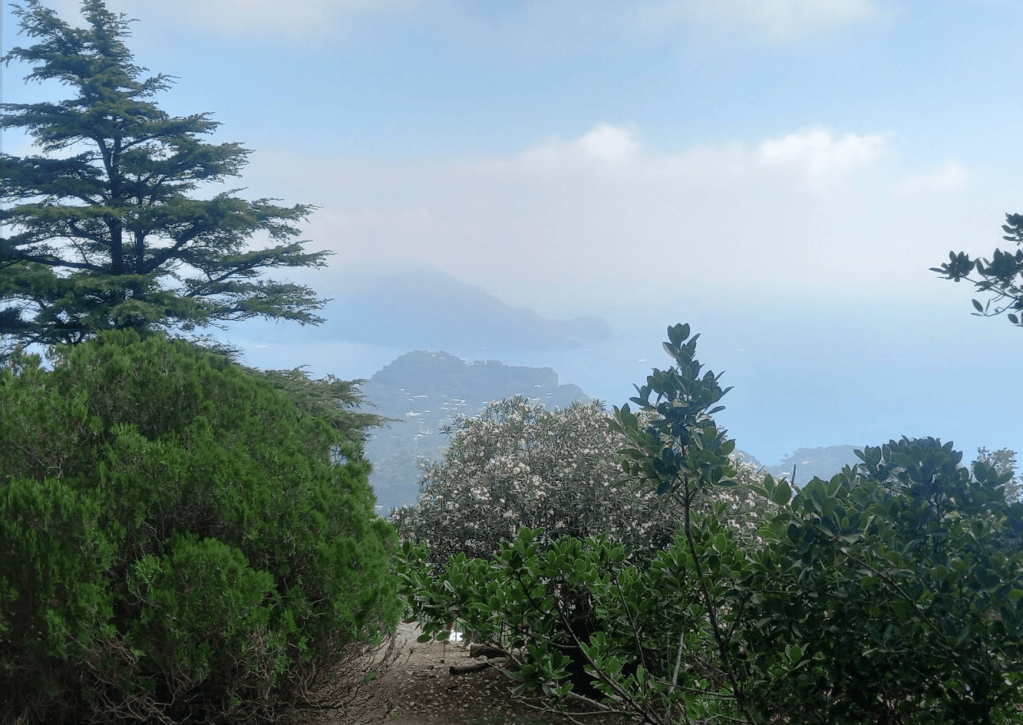
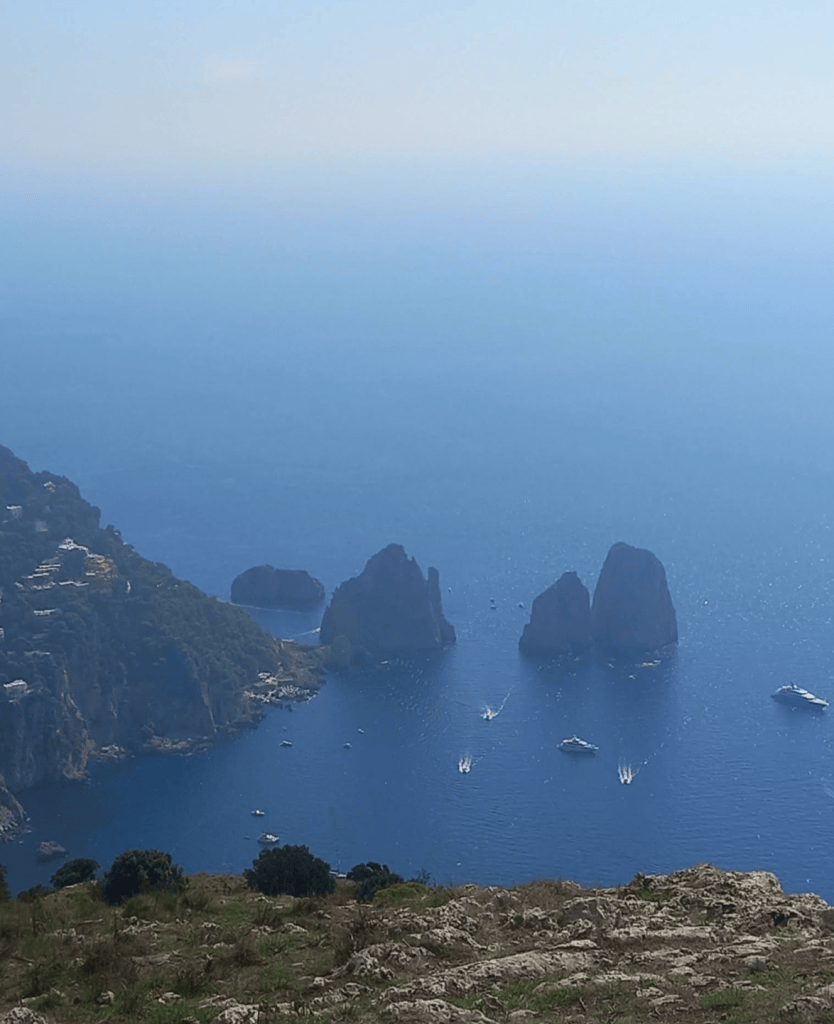
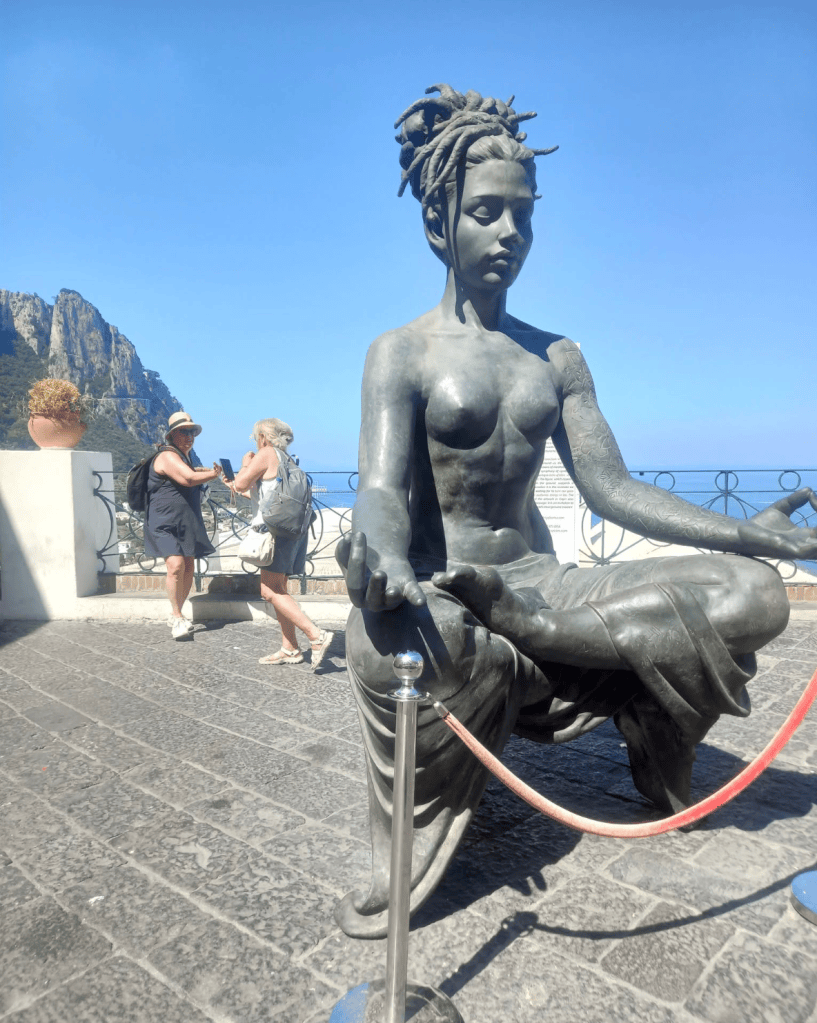
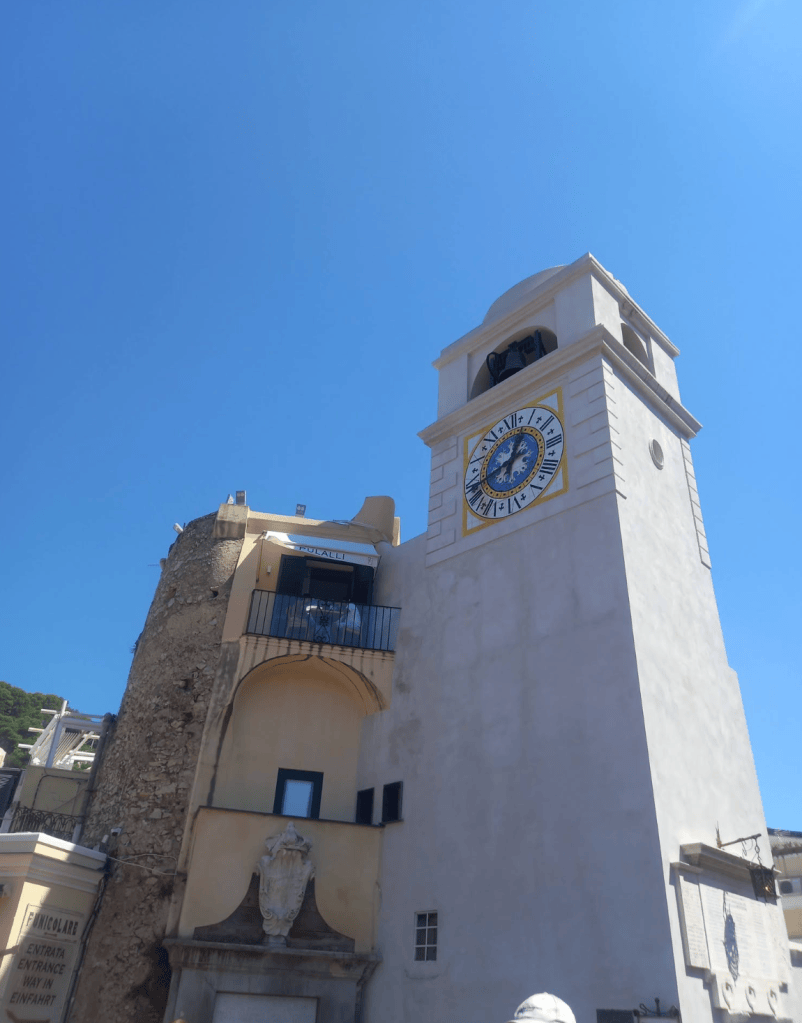
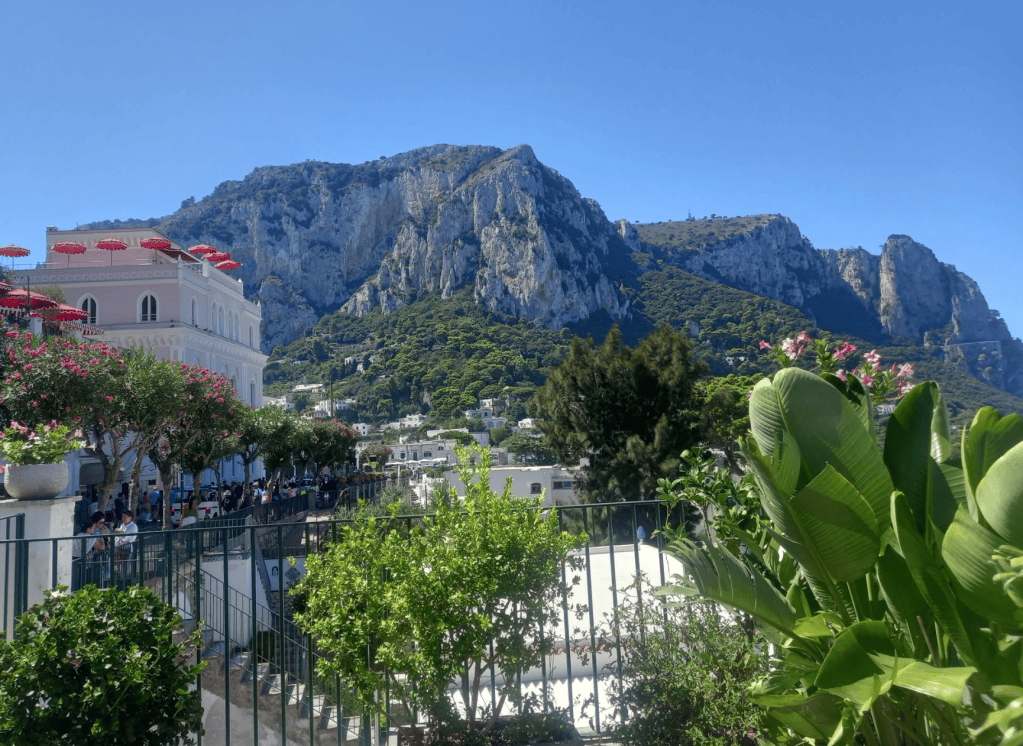
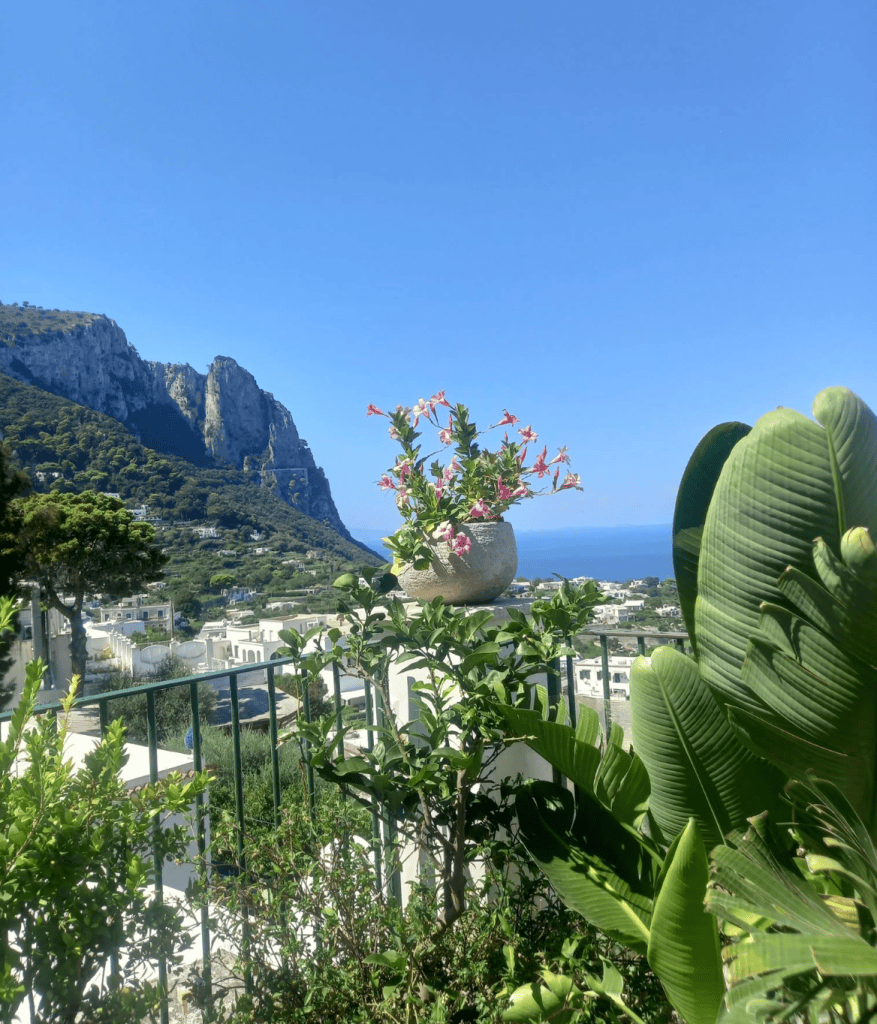
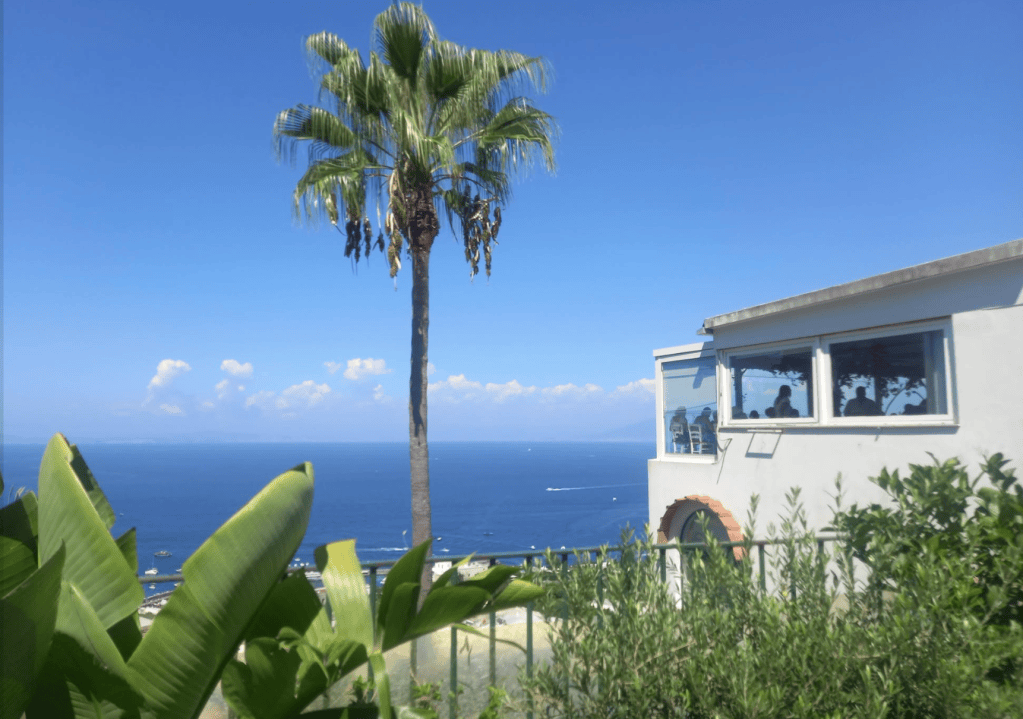
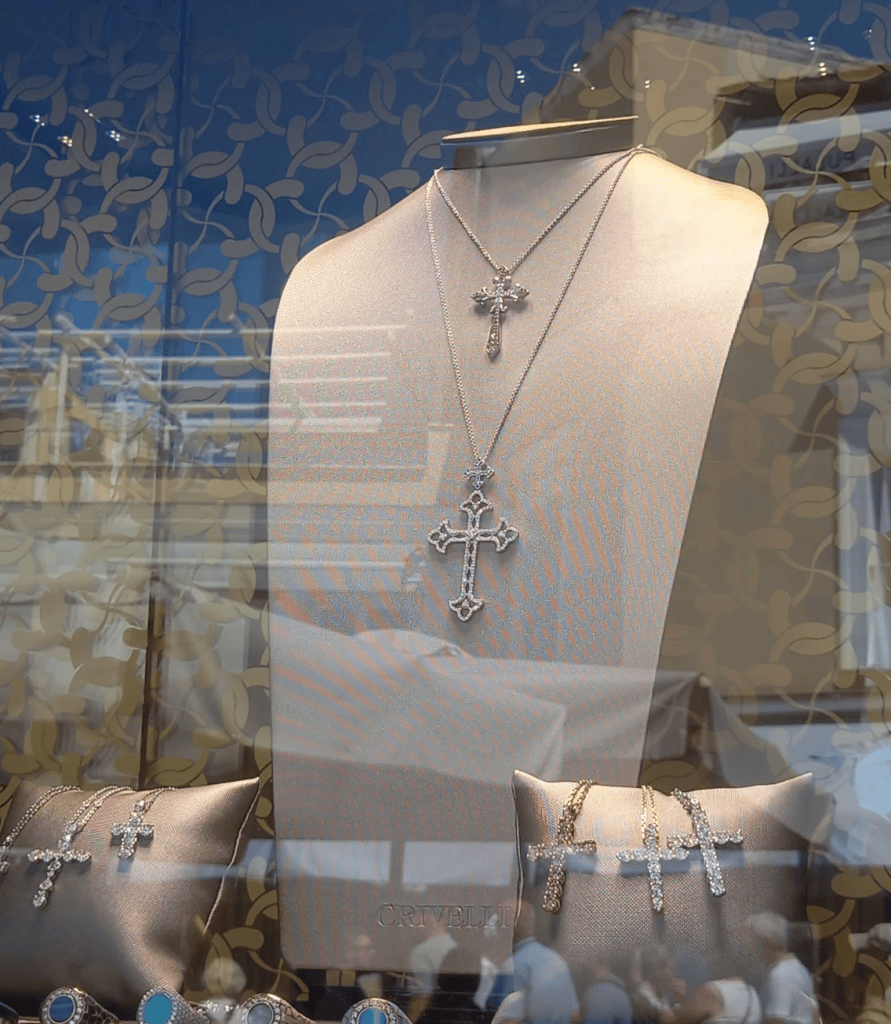
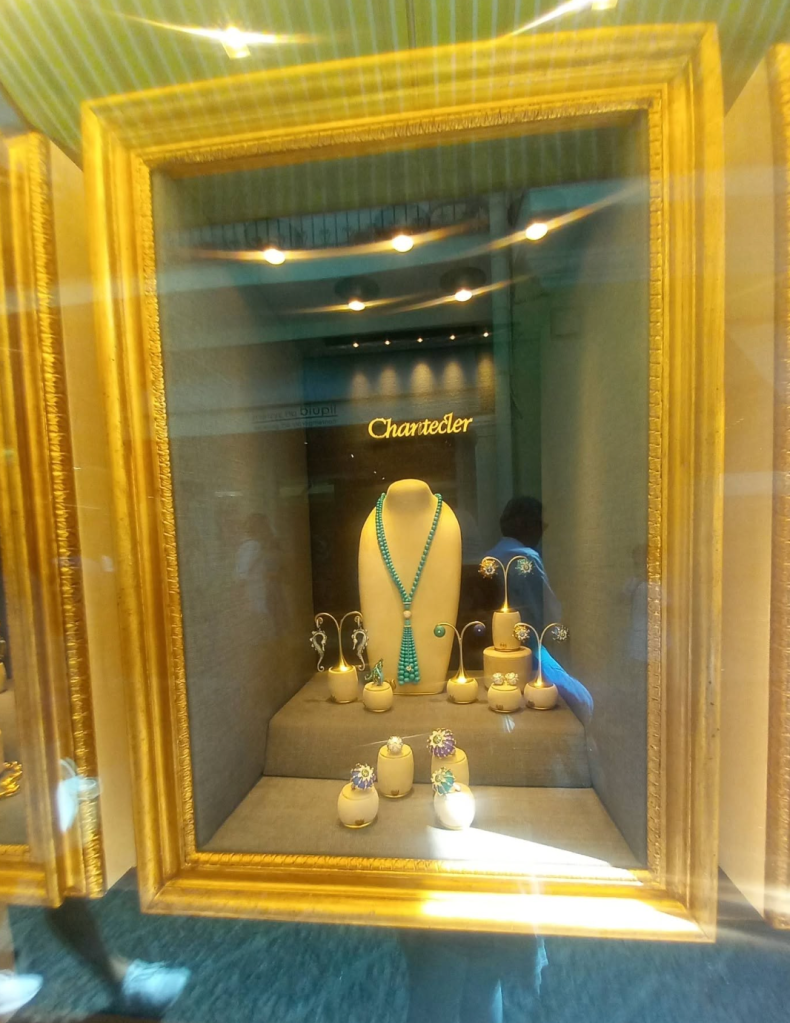
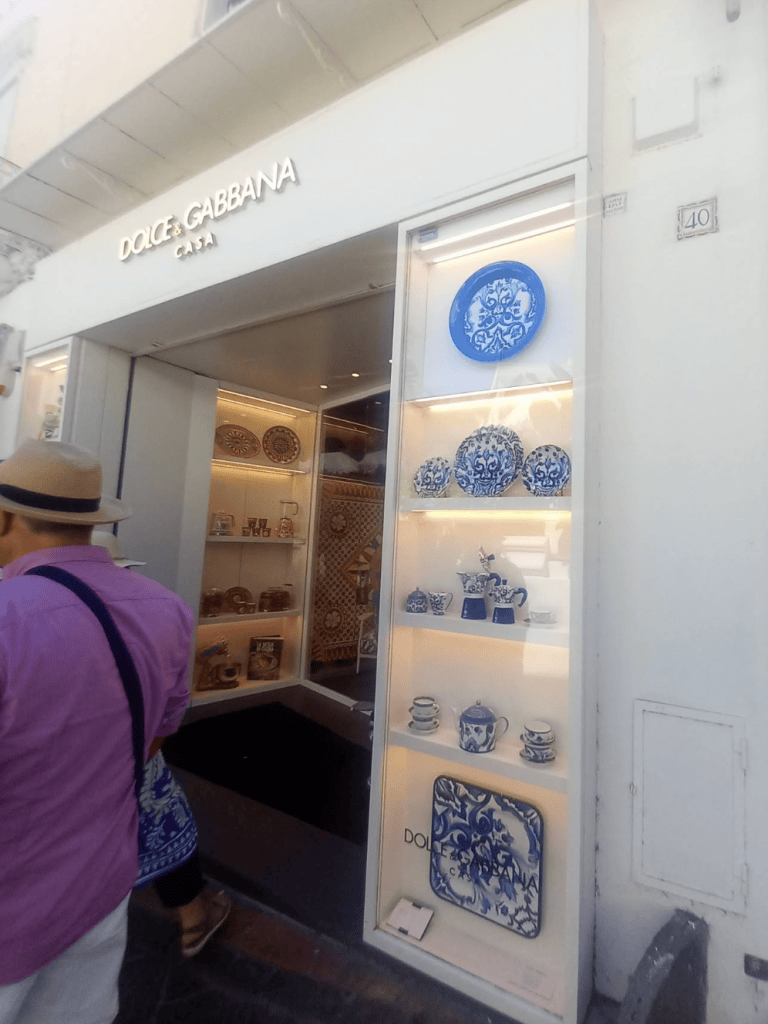
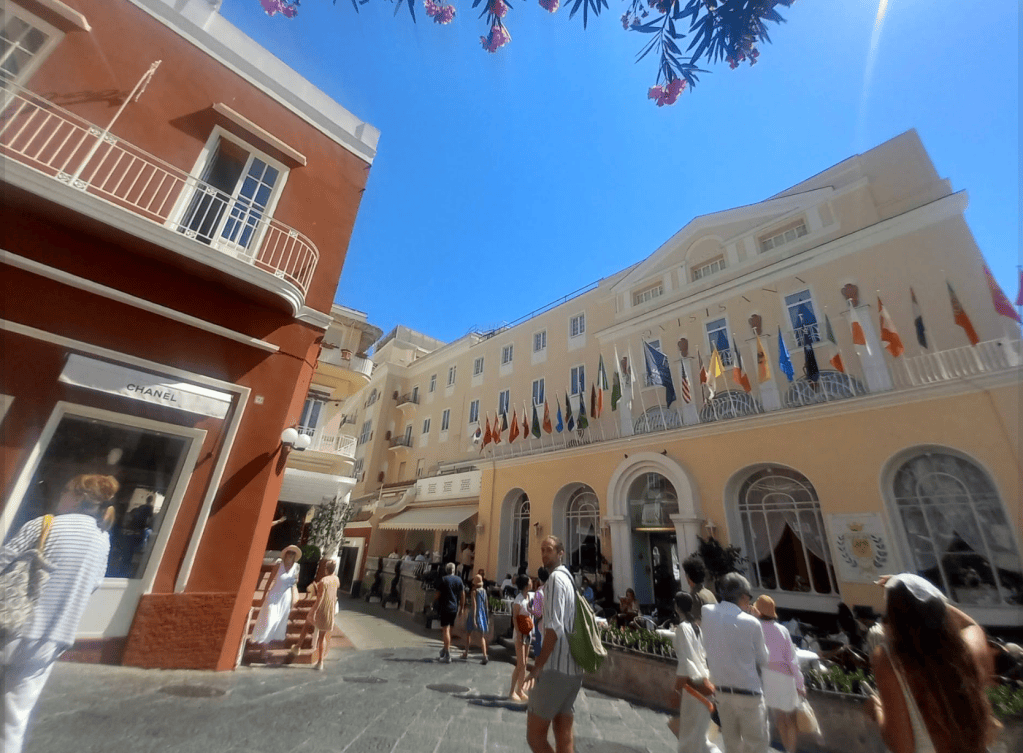
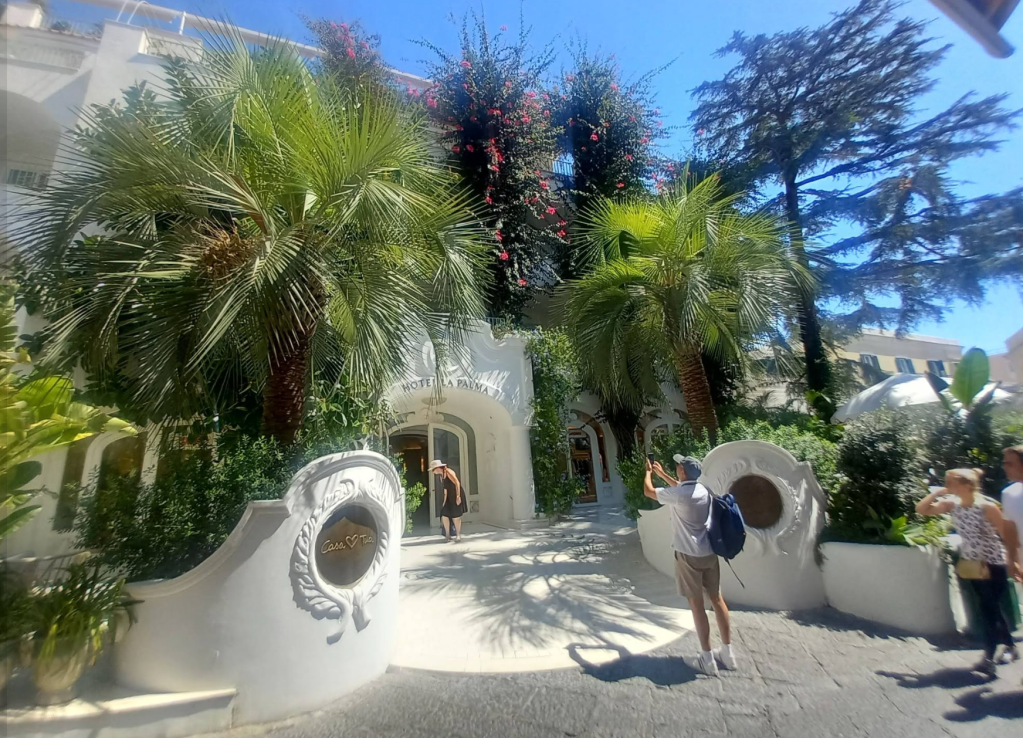
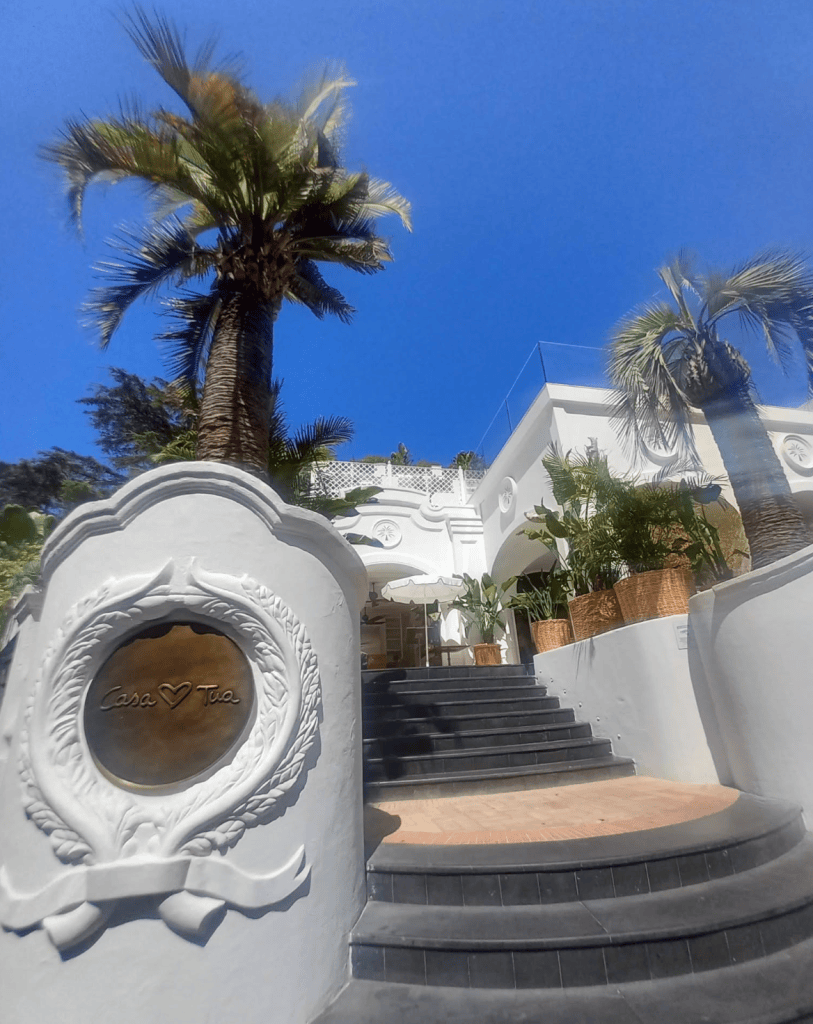
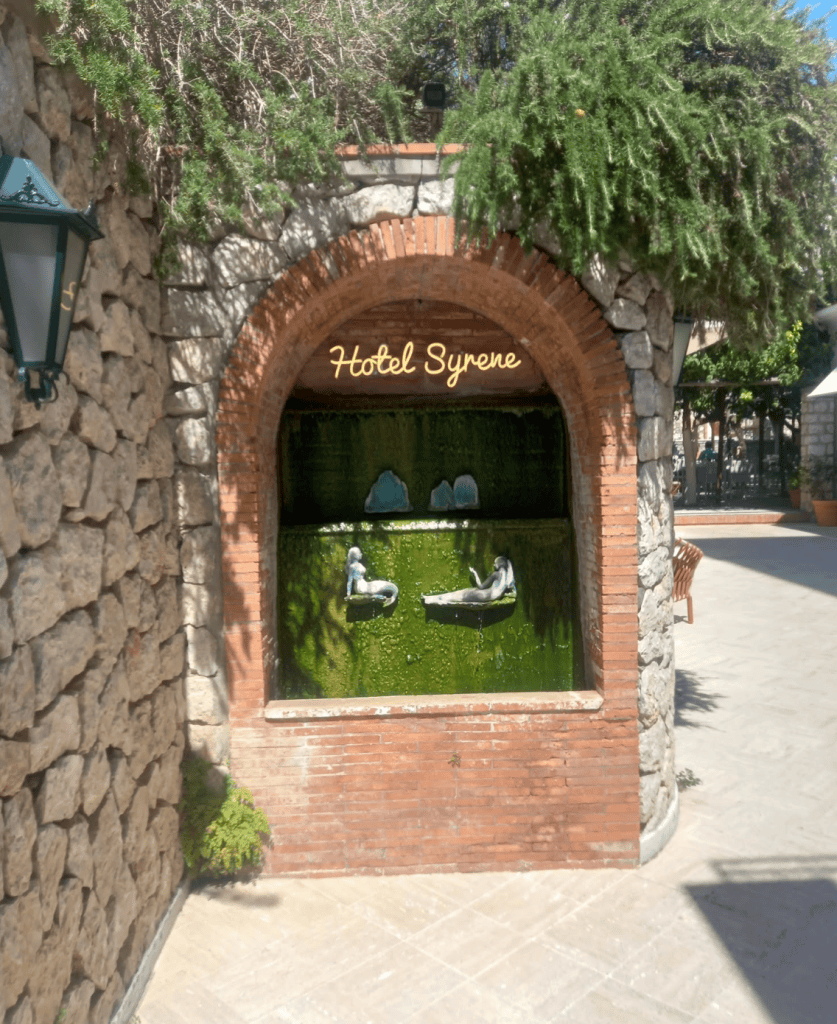
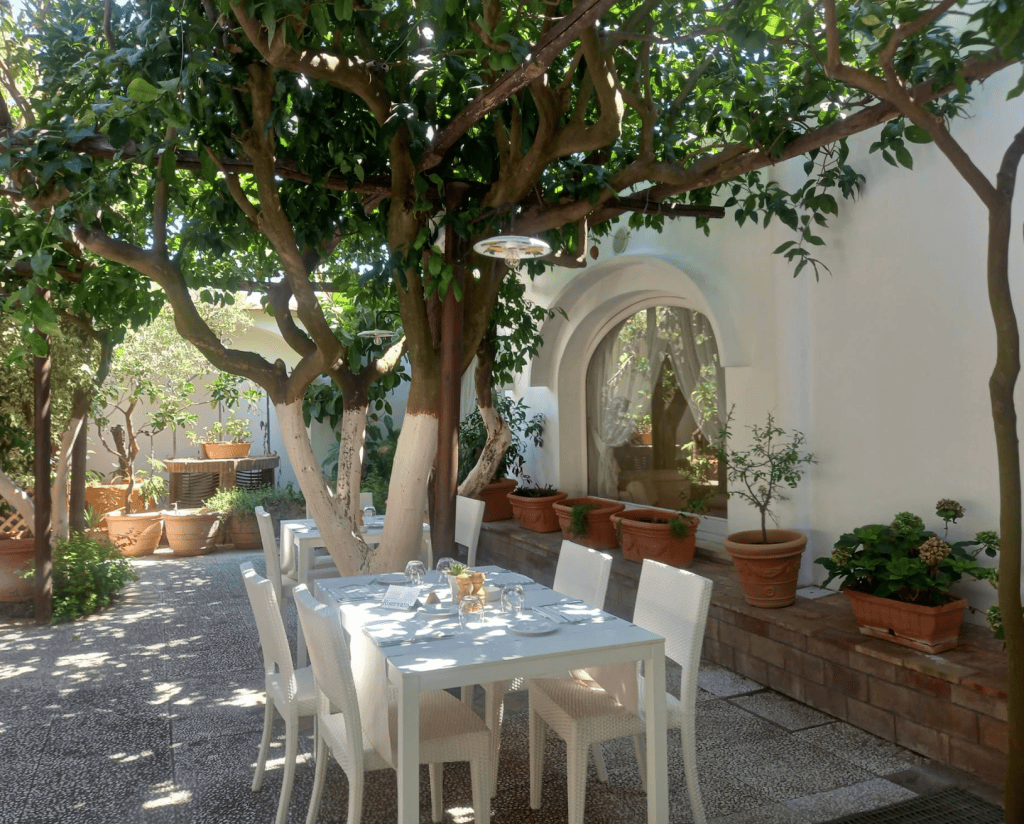
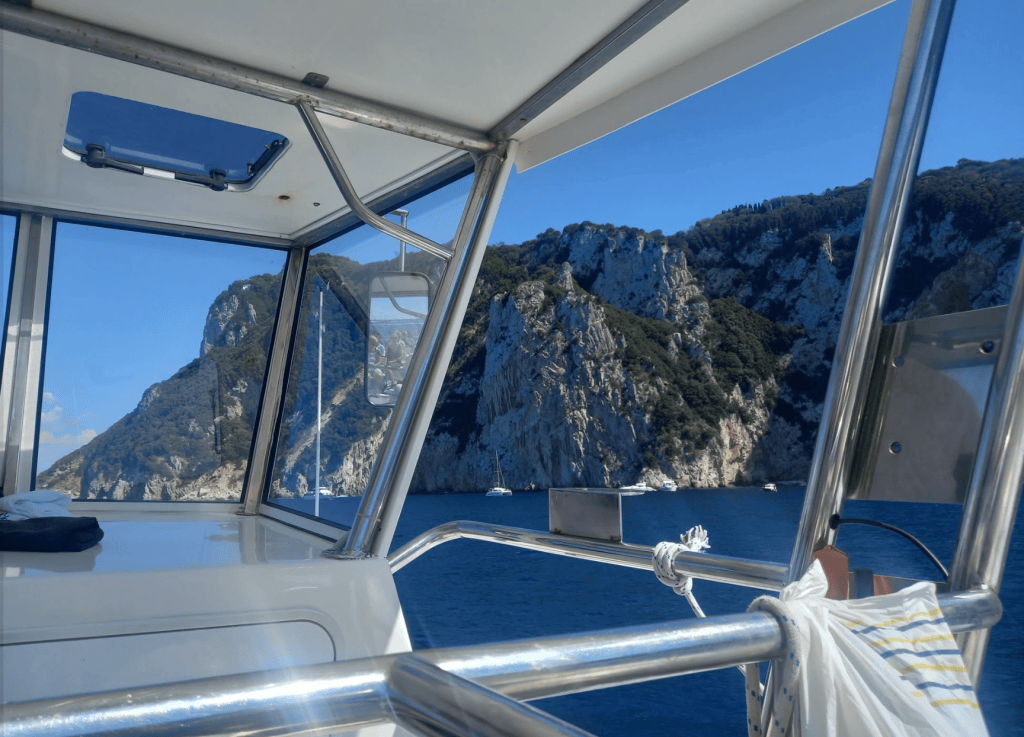
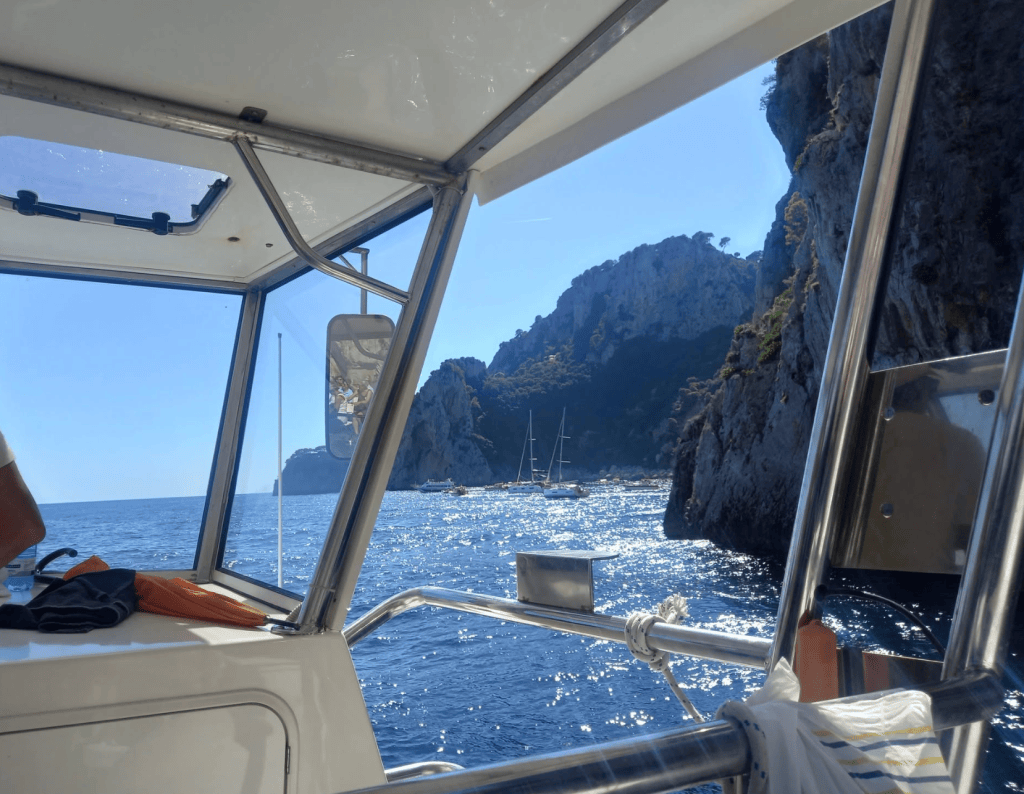
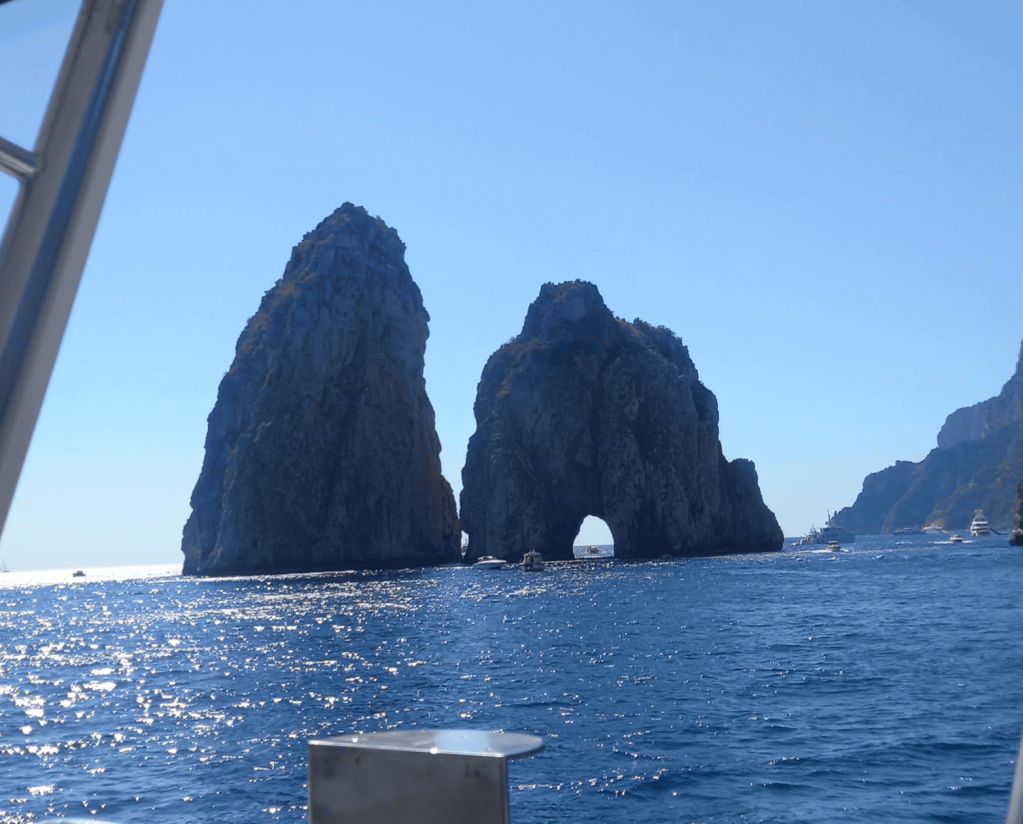
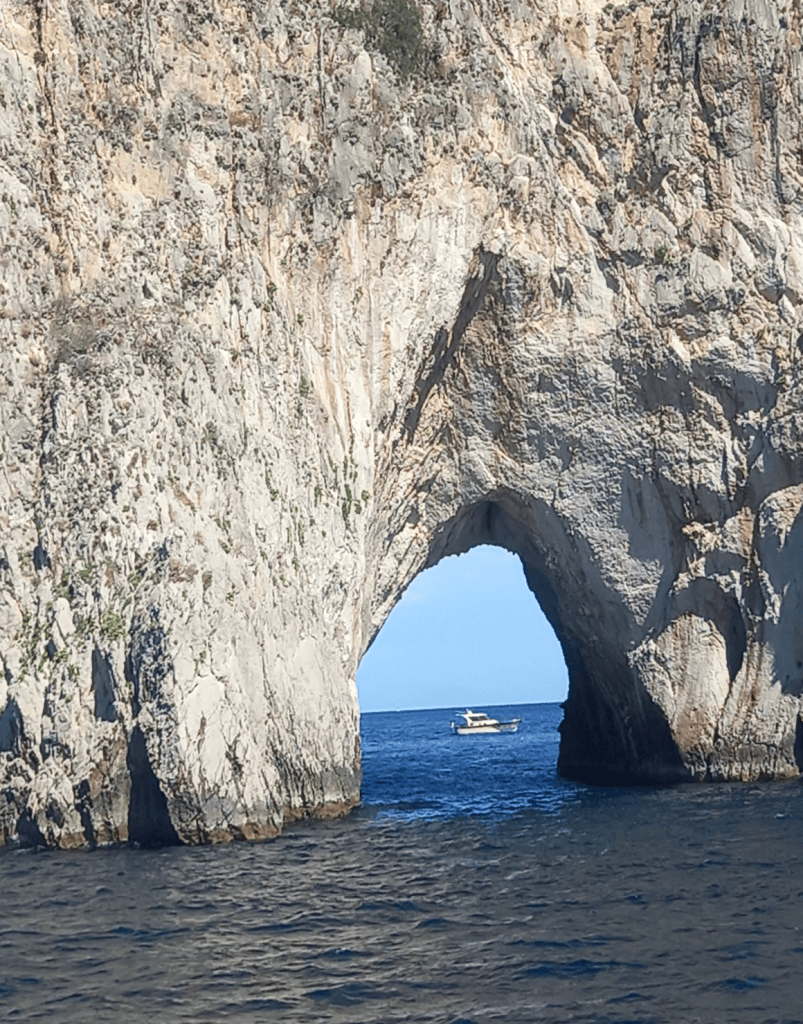
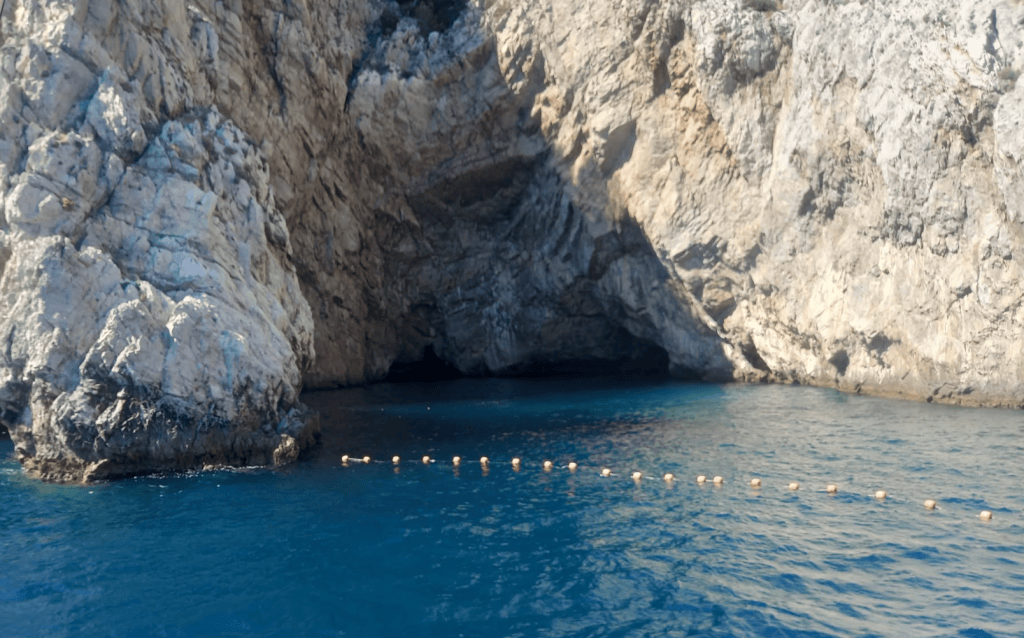
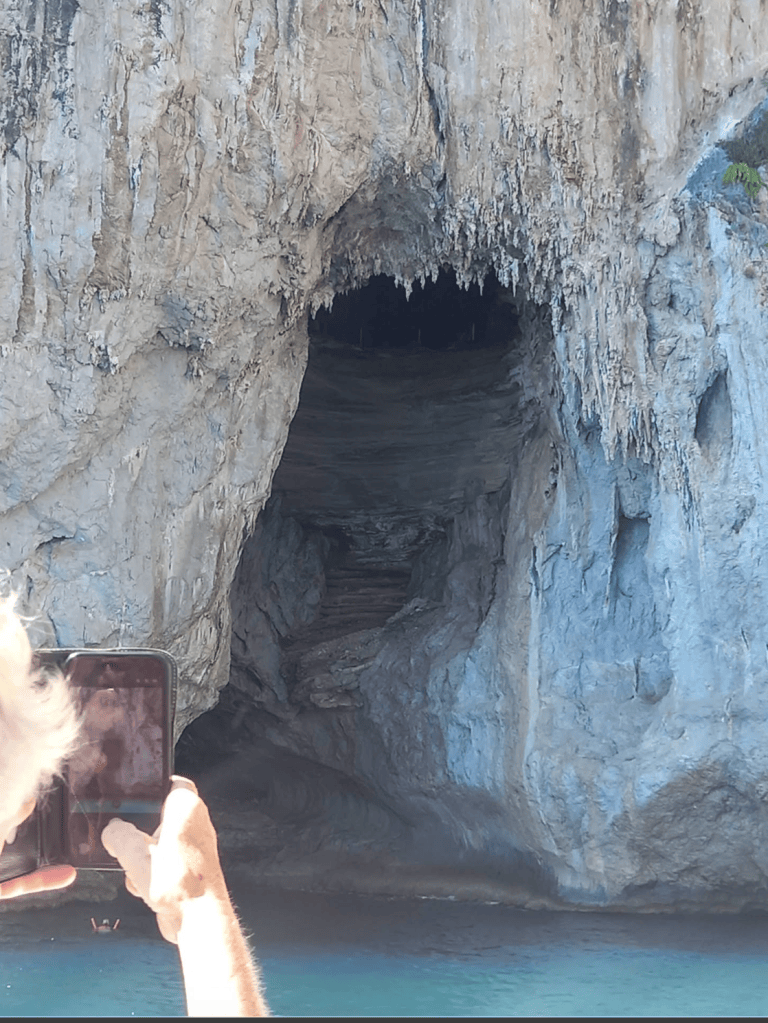
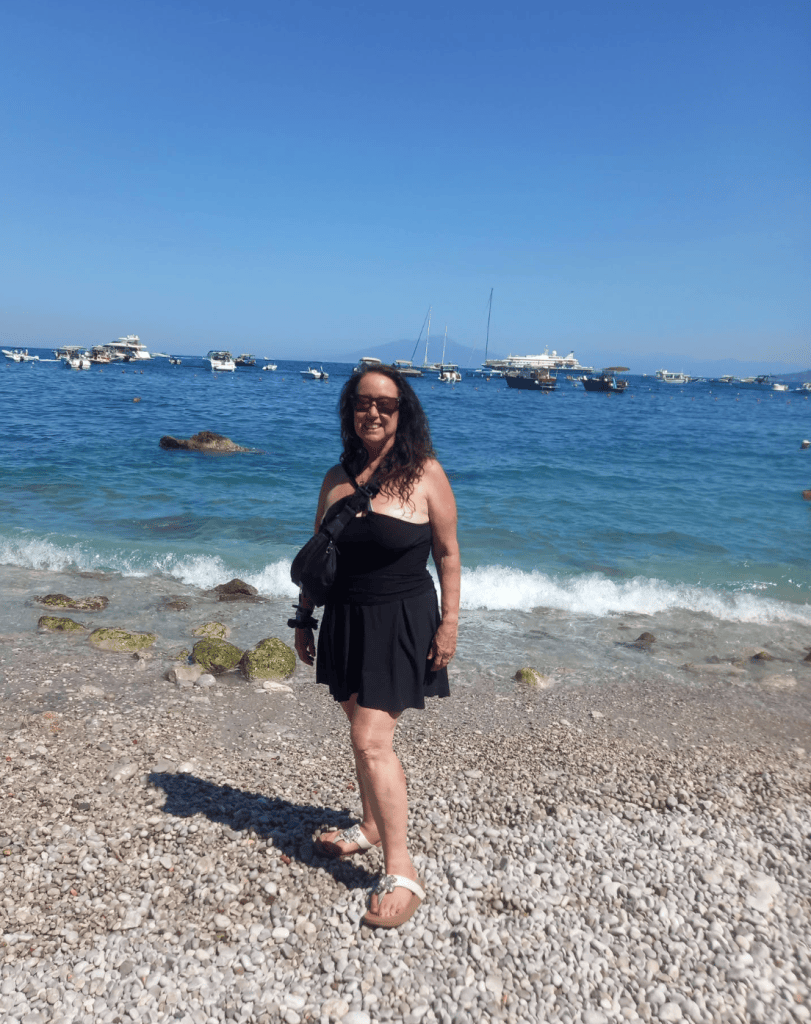
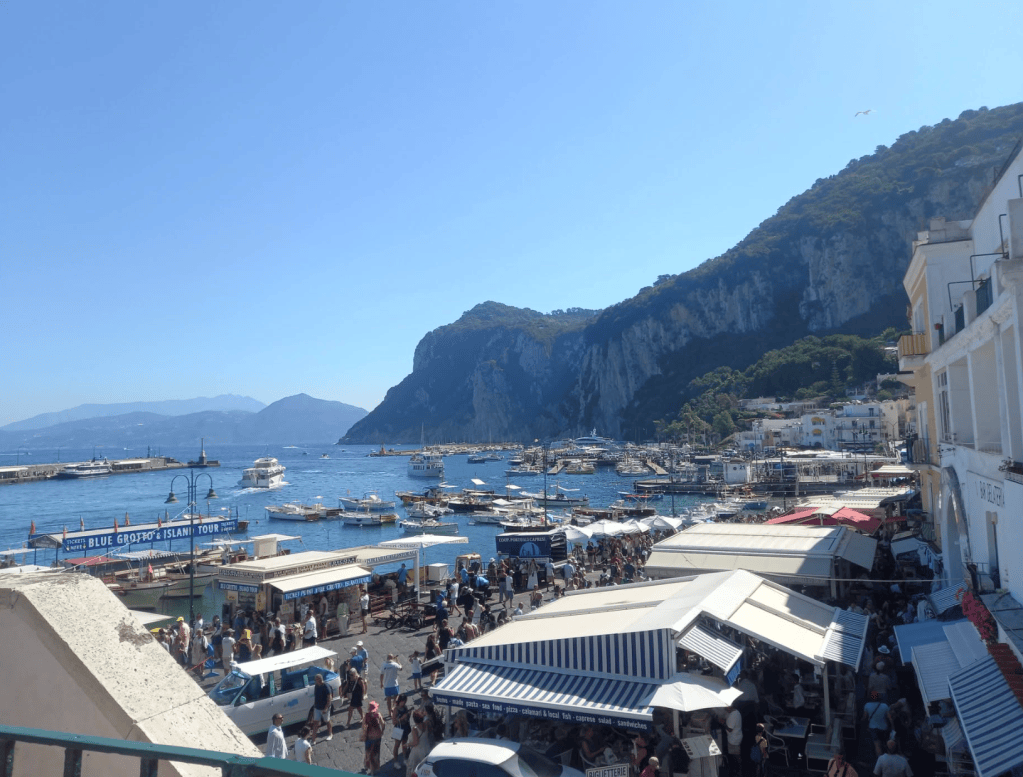
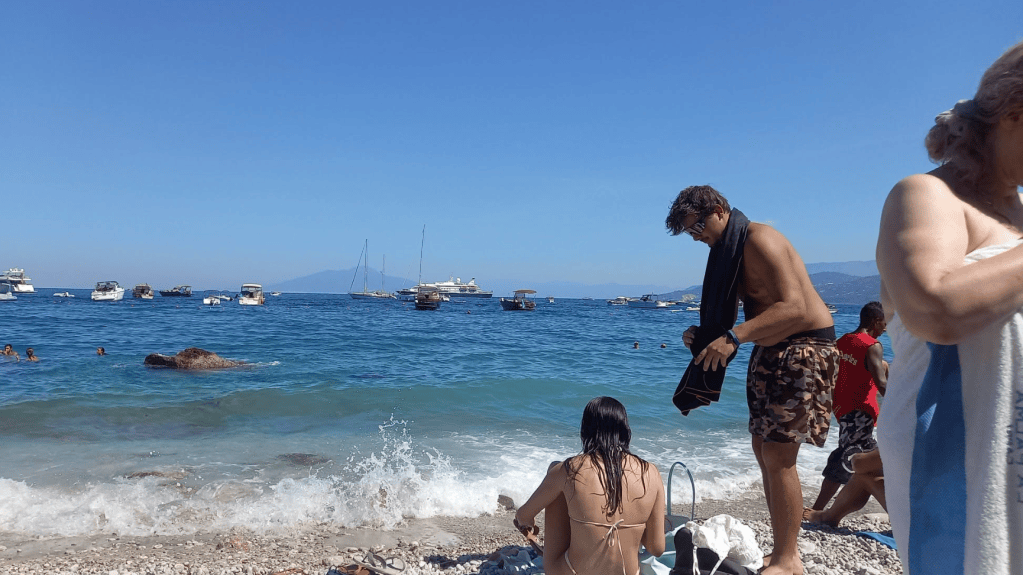
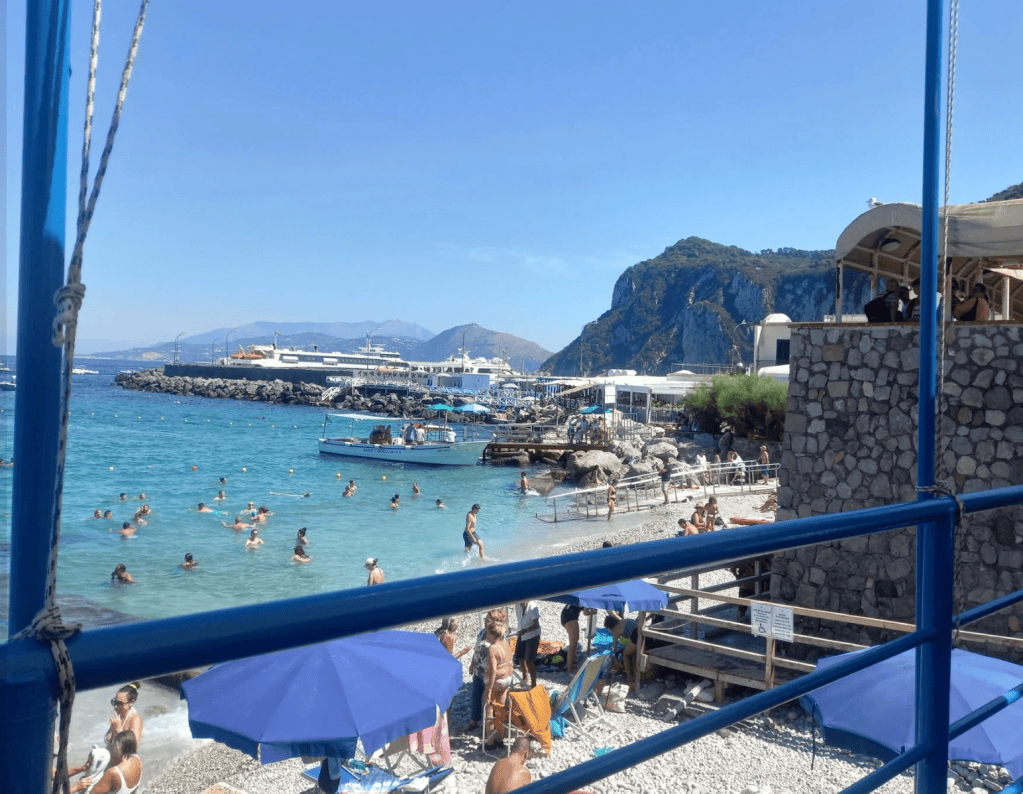
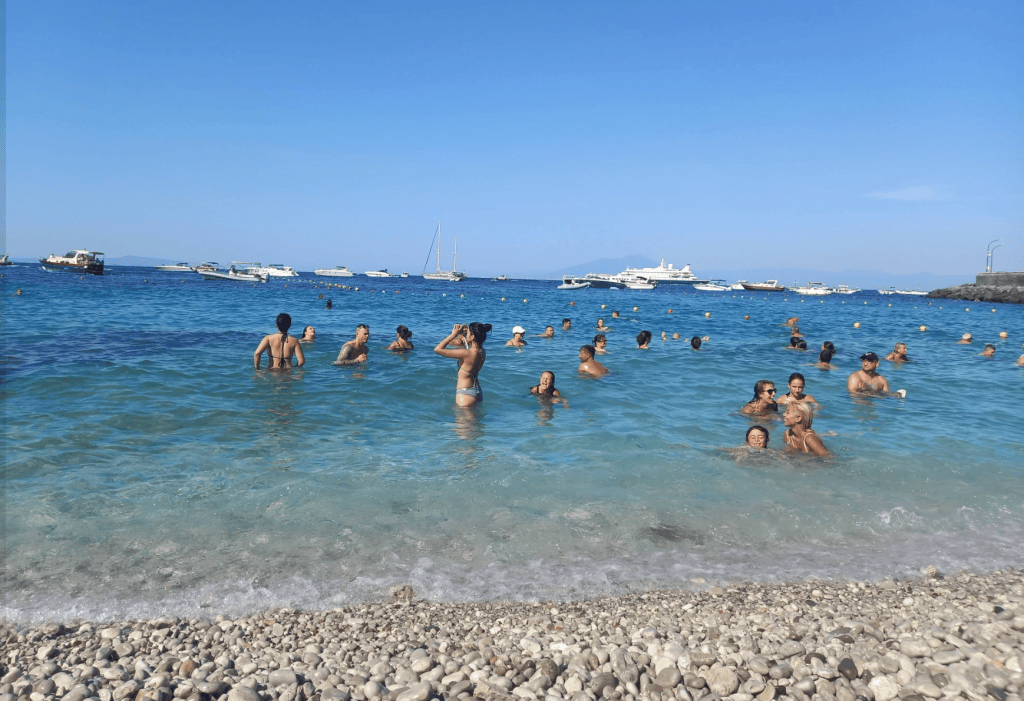
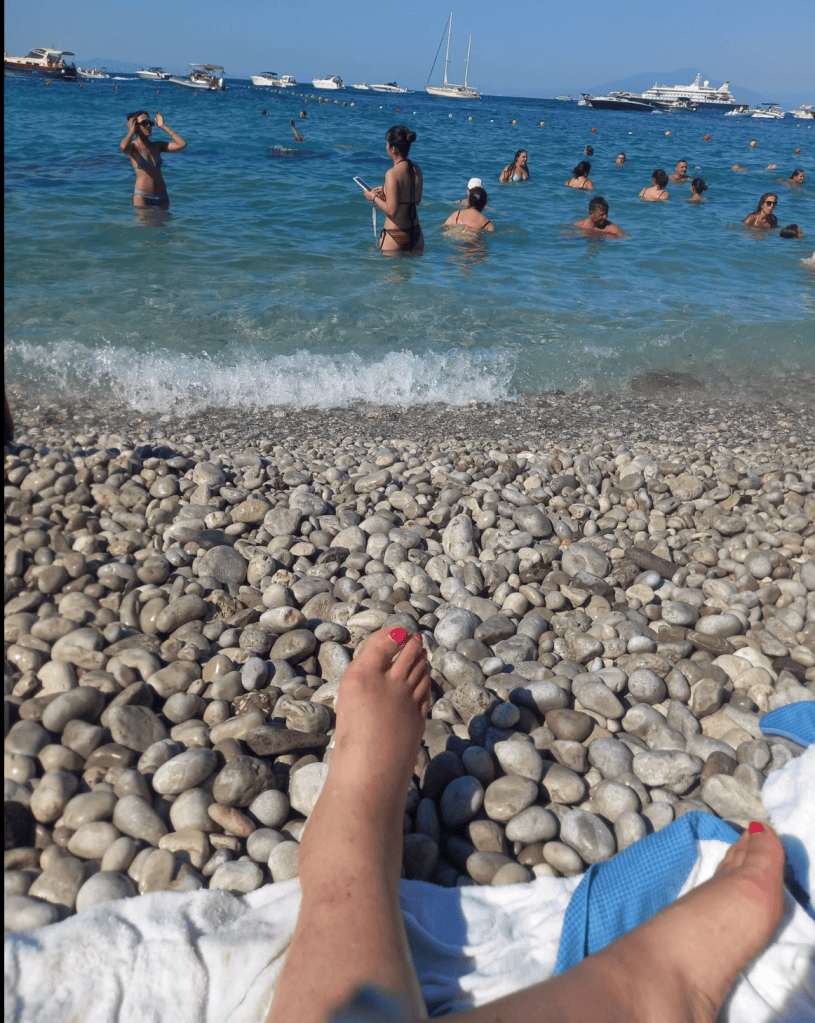
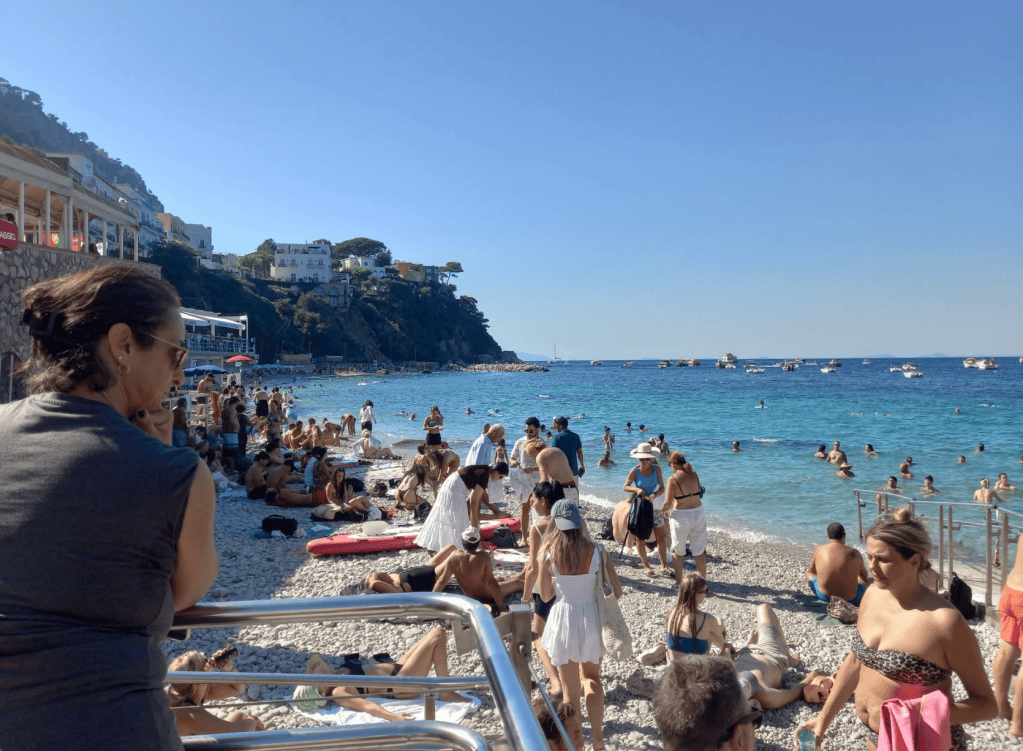
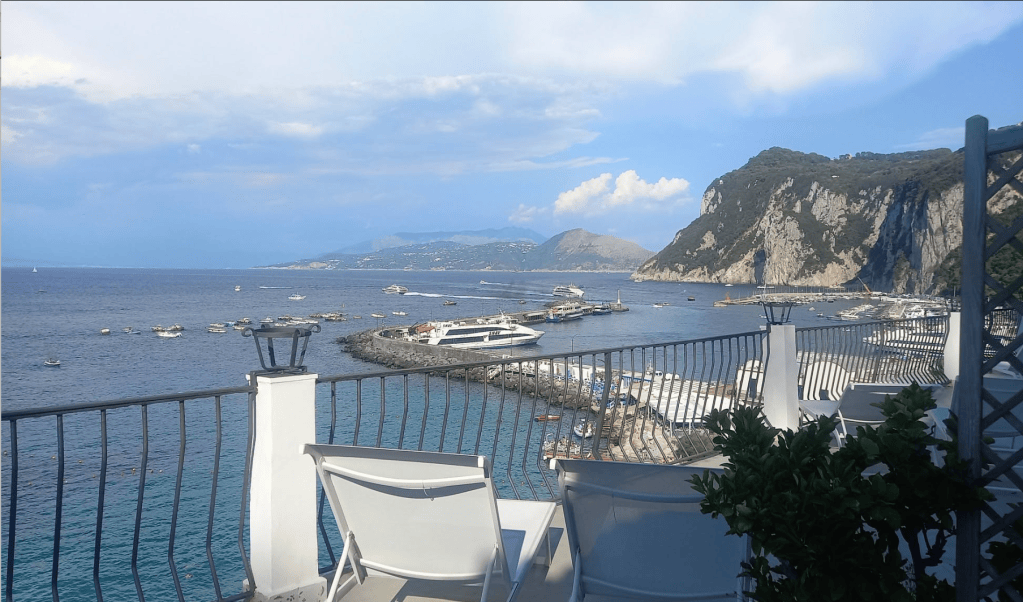
Rather than returning to Naples with the tour group, I’d booked a one-night stay at Hotel Belvedere e Tre Re — directly above the Marina Grande port and its pebbly beachfront — so we could enjoy a full day relaxing on the beach before taking the ferry from the island to our next destination in Sorrento. The room was a bit small, but its large terrace — plus our host’s generous welcome bottle of prosecco and kind offer of towels and storing our luggage so we could relax on the beach more than compensated. It was much nicer to relax and enjoy Capri at night after all the day-tripping tourists departed. Although using the beach meant navigating pebbles, a steep drop and choppy waves, it was wonderful to chill over lunch at Le Ondine Beach Club and Da Gemma restaurant.
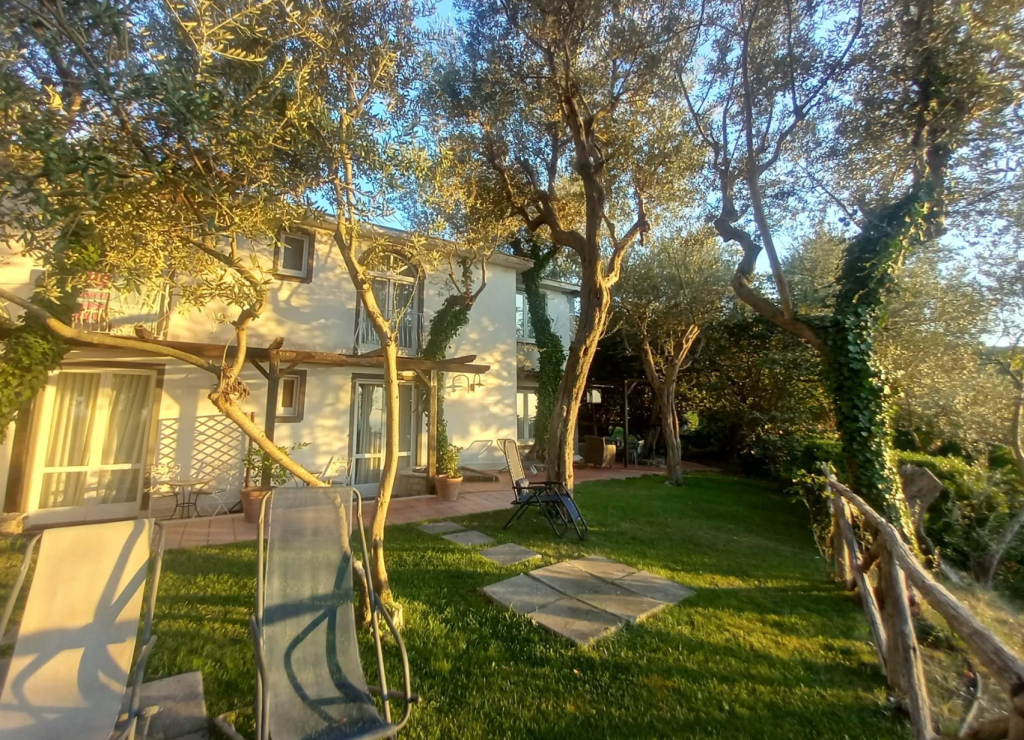
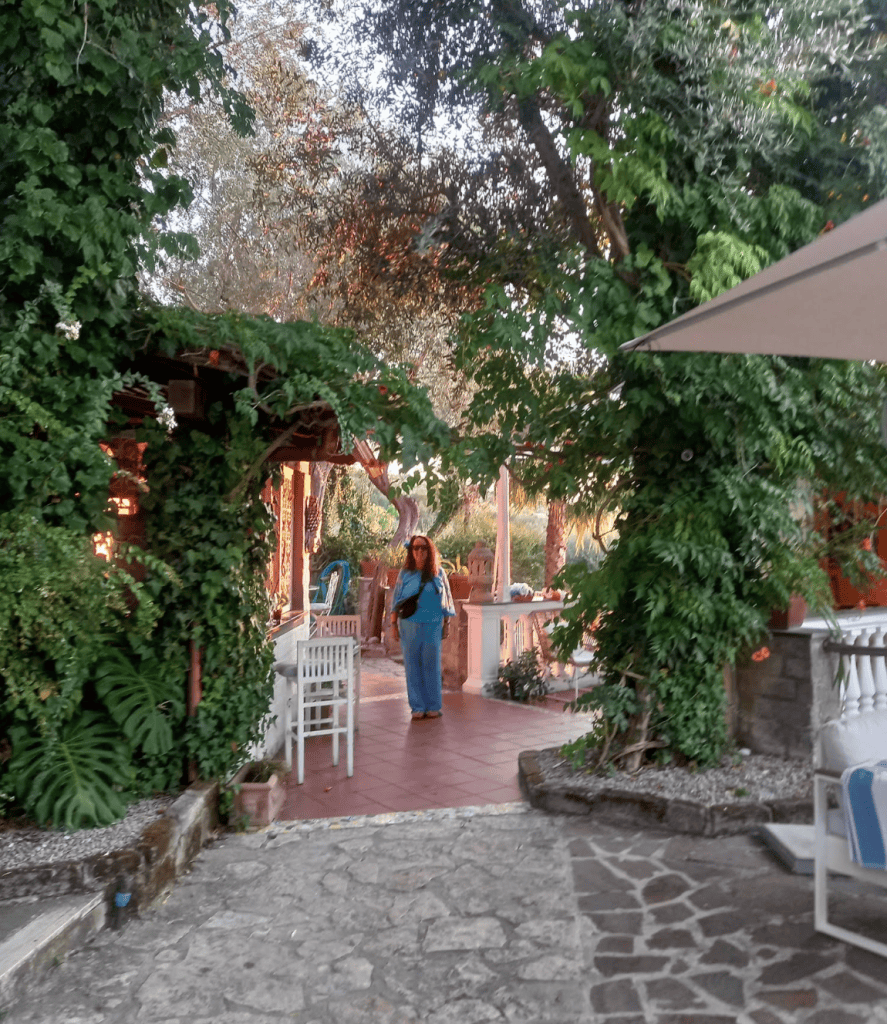
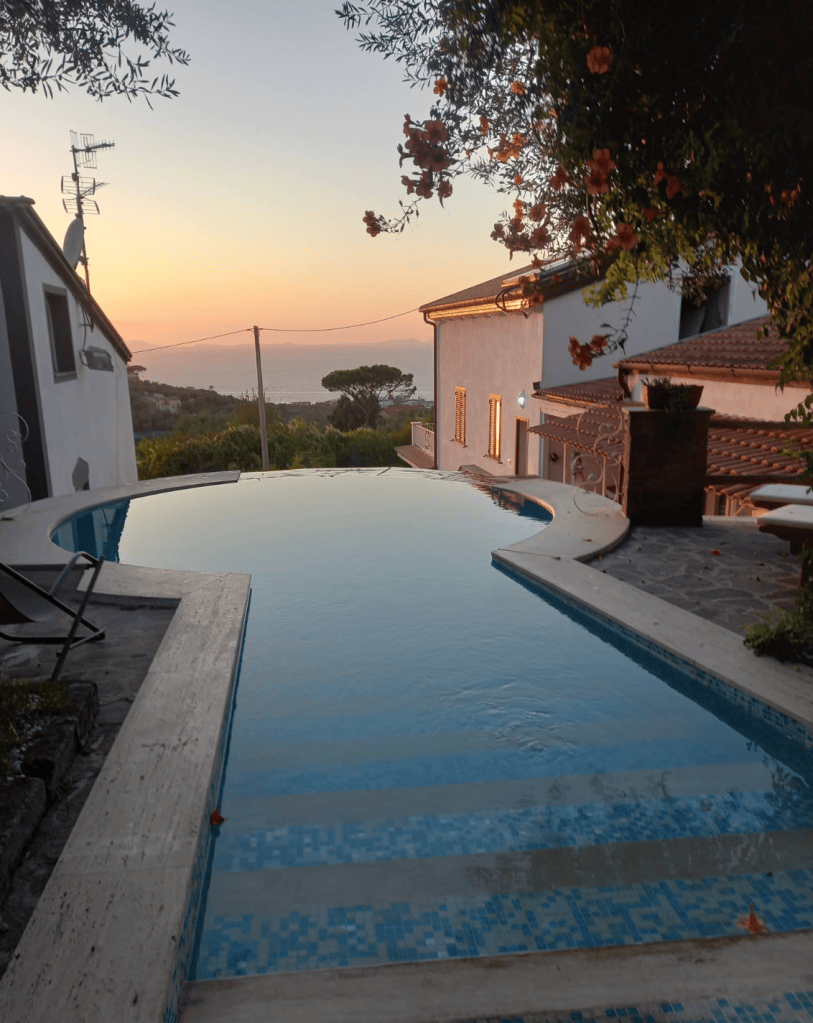
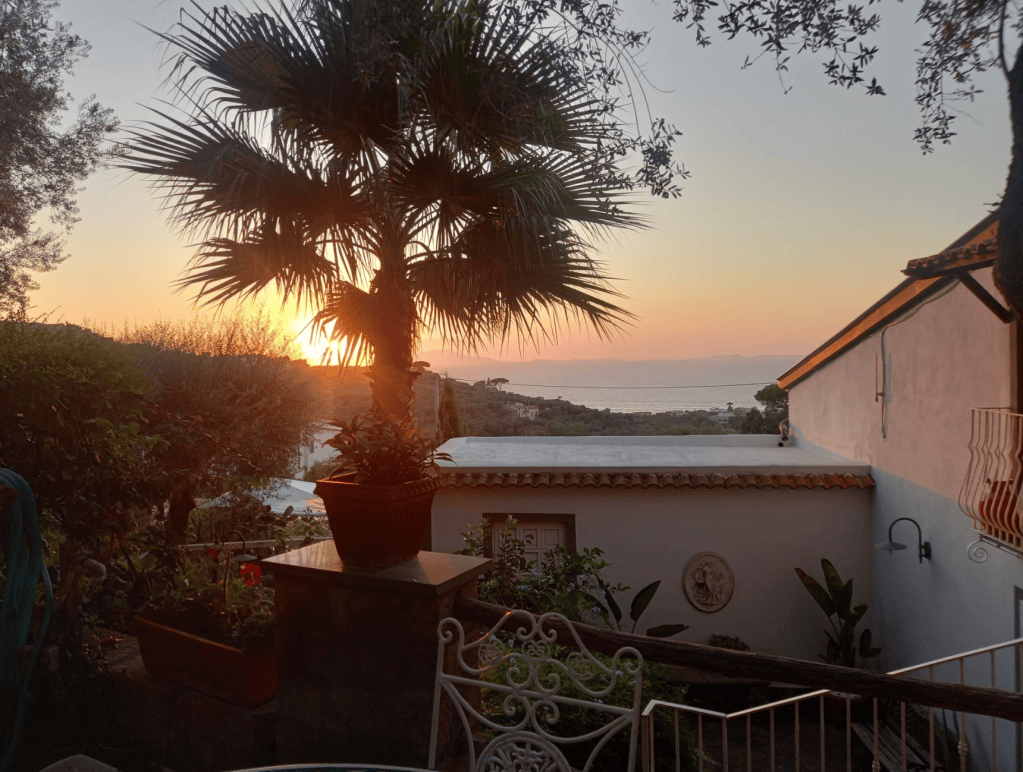
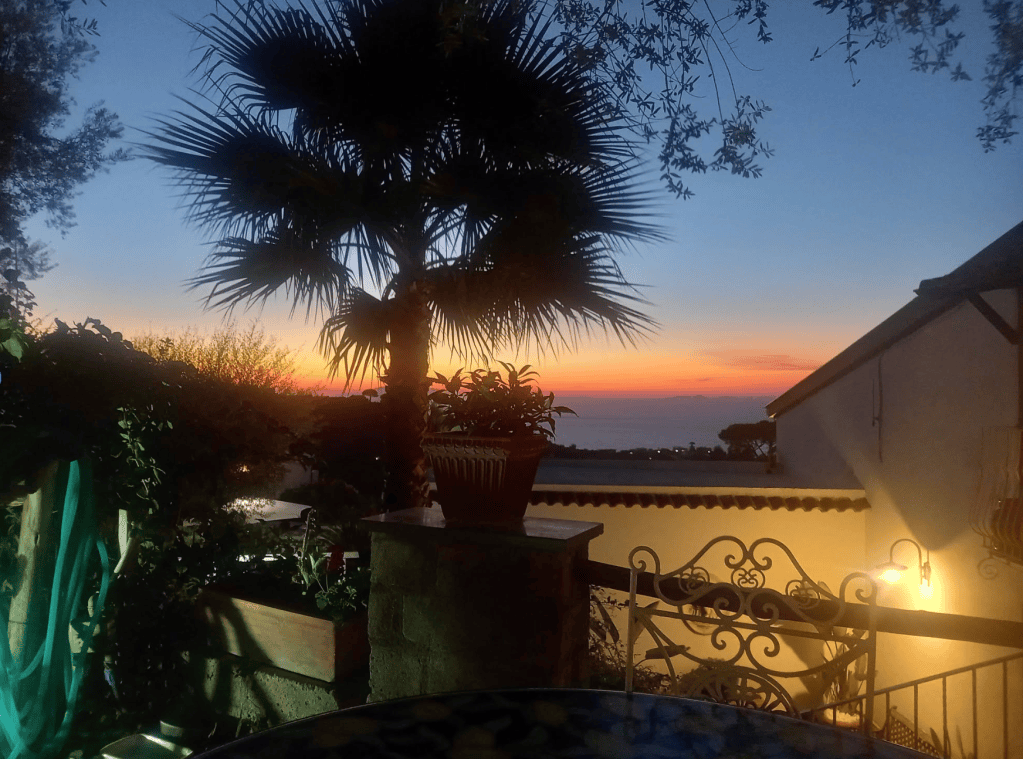
Next up, we moved on to our B&B accommodation at Villa Giovanna. Perched up in the hills outside of Sorrento’s city centre, this charming, family-run villa offered a relaxing escape with its tropical gardens, sea and Sorrentine coastal views, small pool, ample breakfasts, and frequent free shuttles to and from the city centre. The hosts were gracious and helpful, kindly moving us to a double room when requested and offering mosquito repellent to keep the bug bites at bay, also booking our transfer to Ravello.
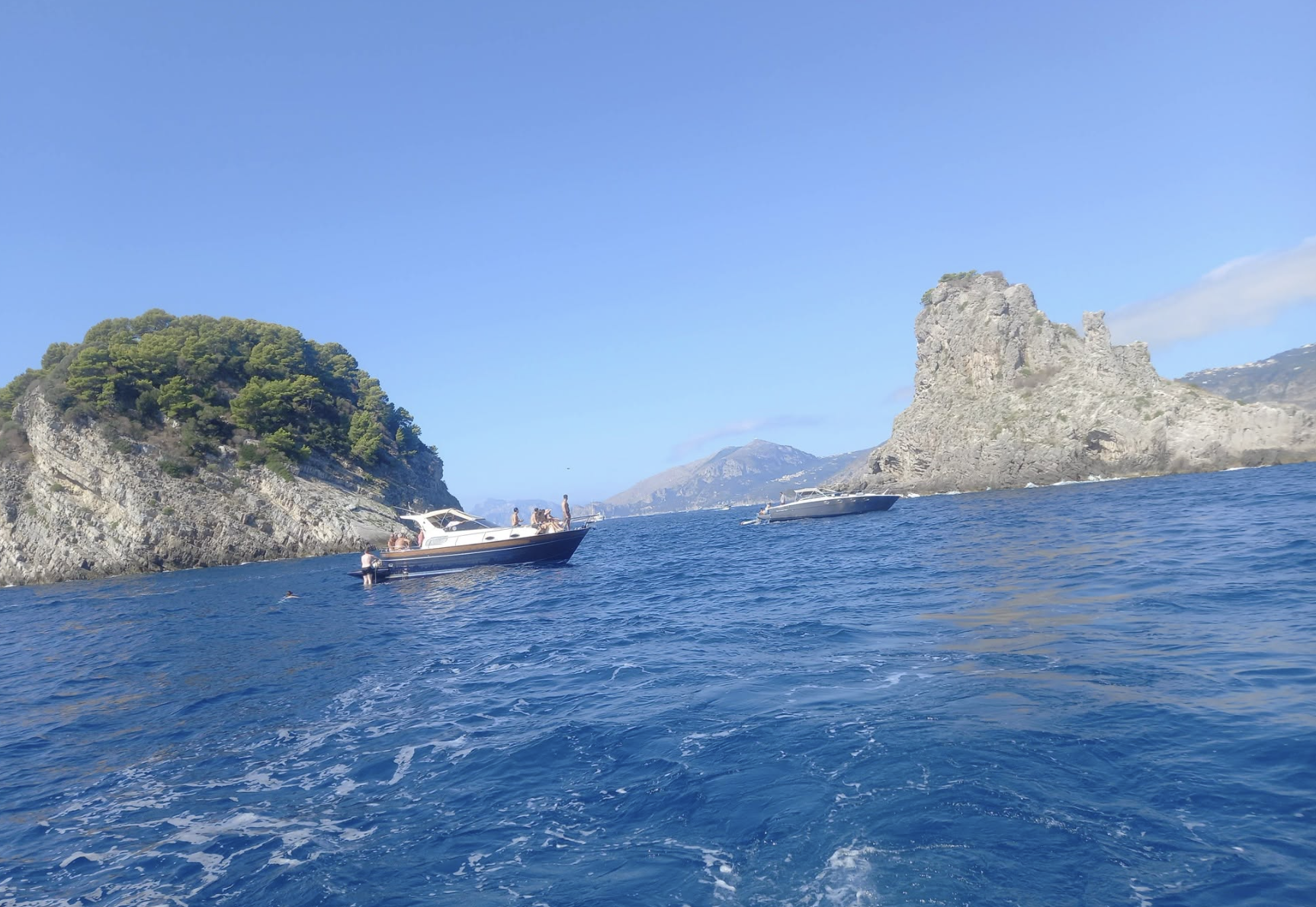
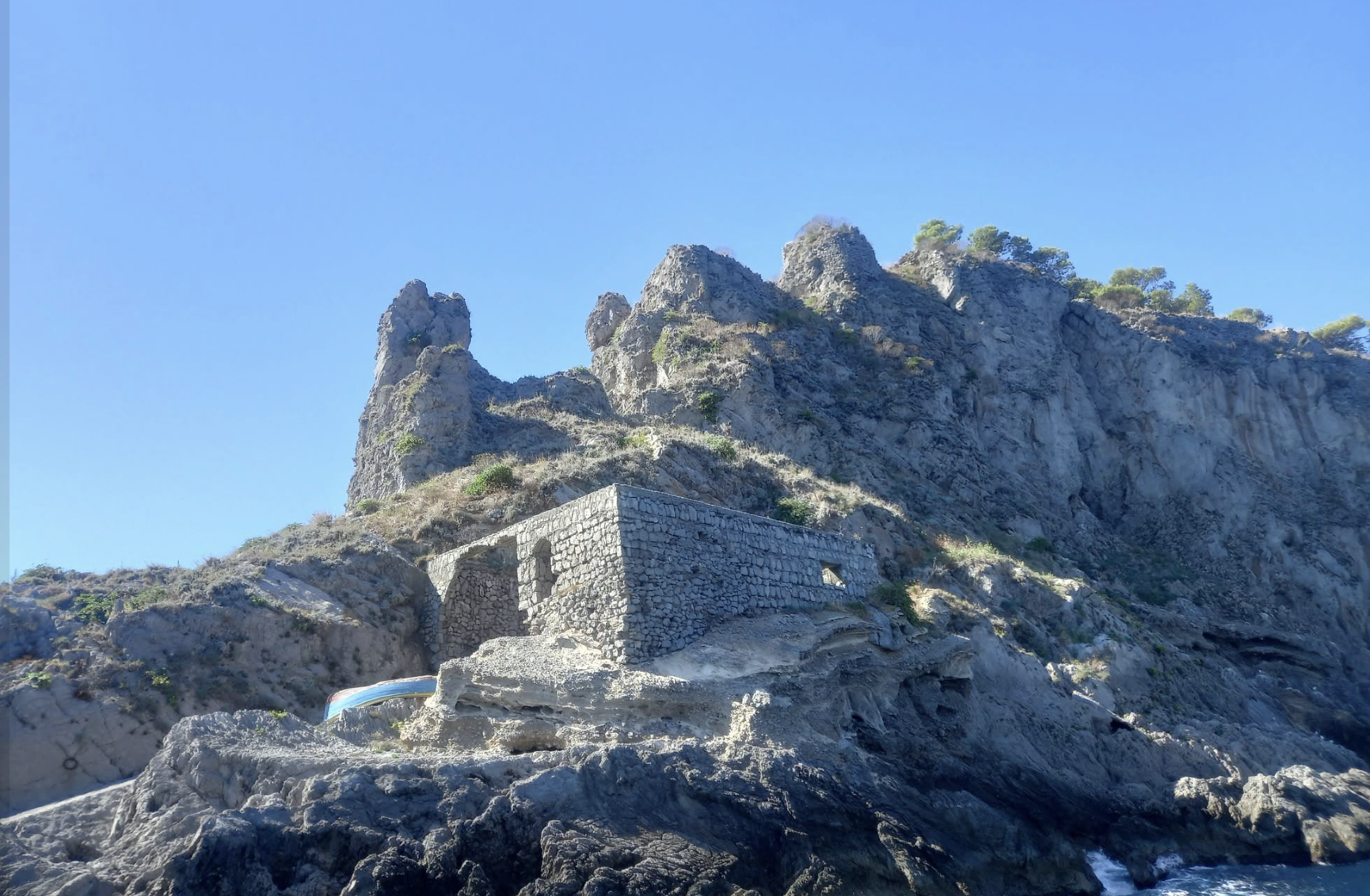
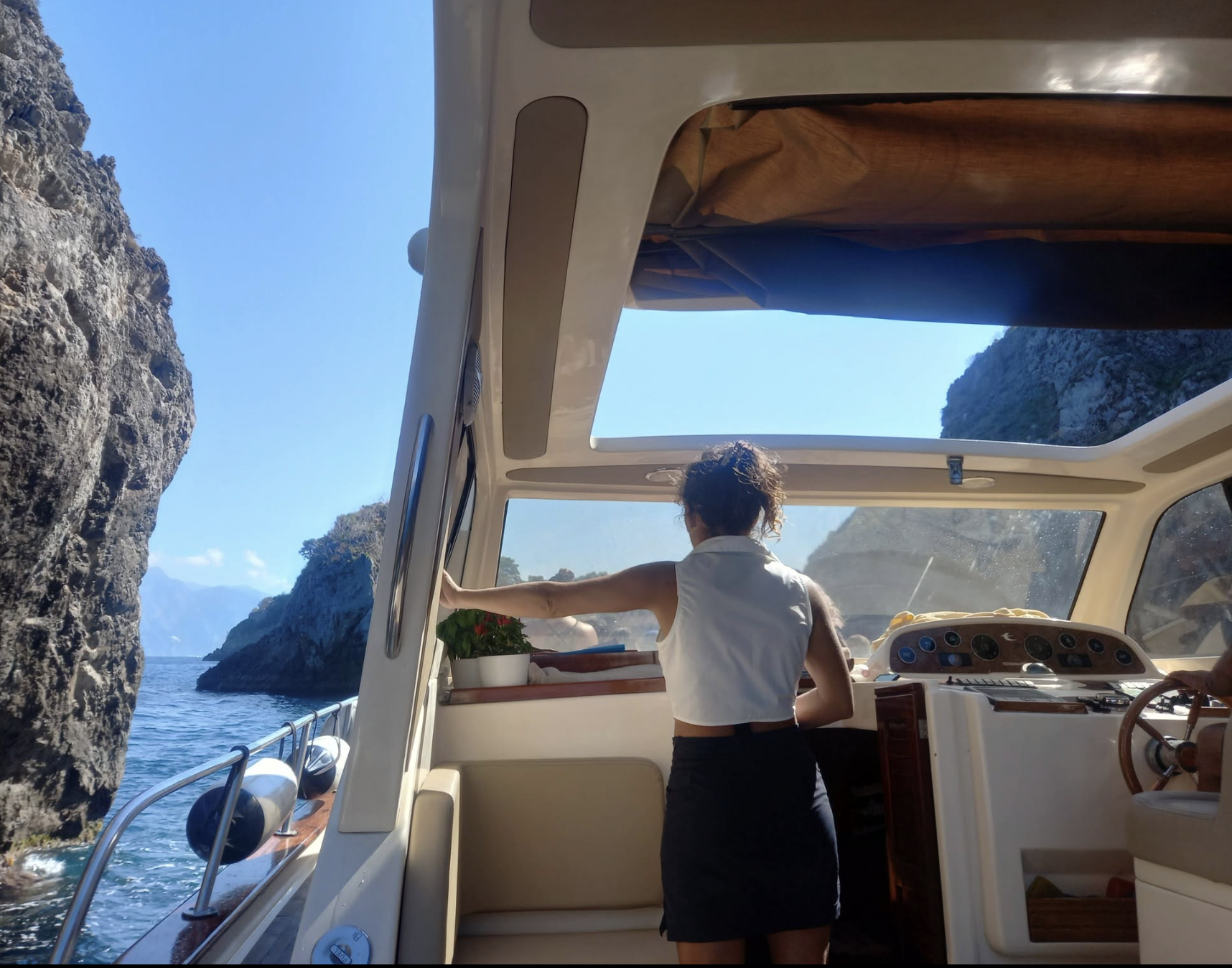
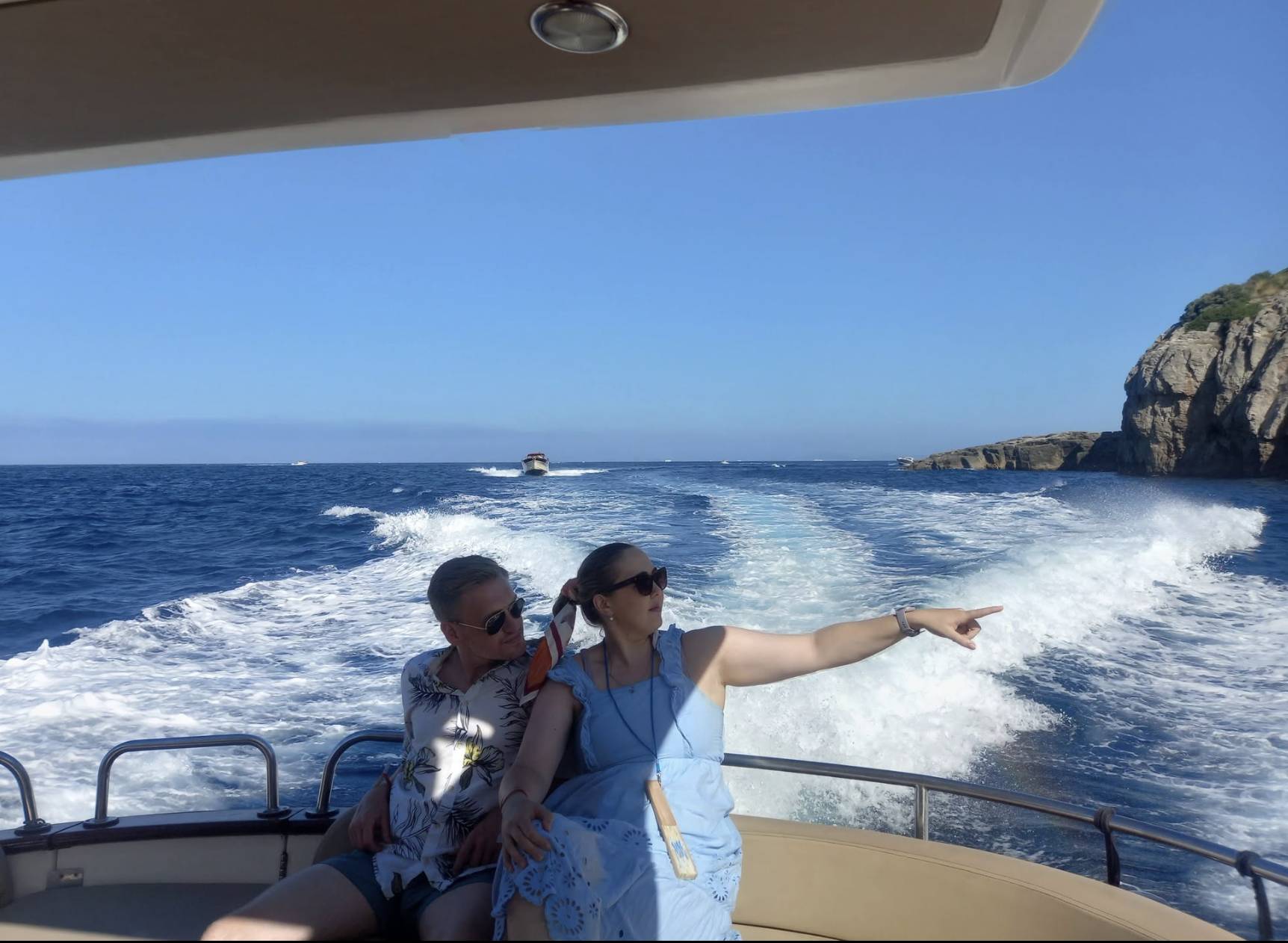
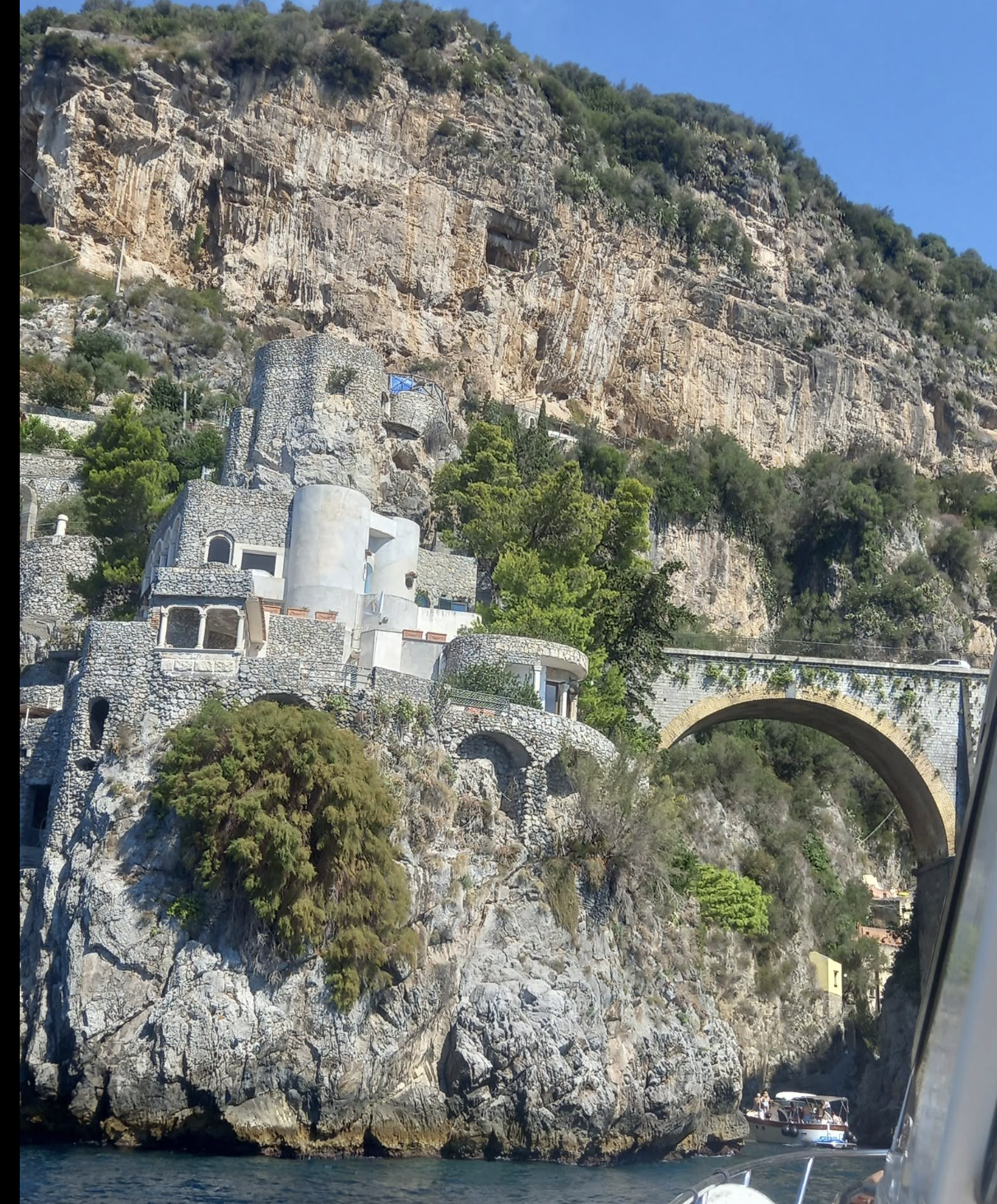
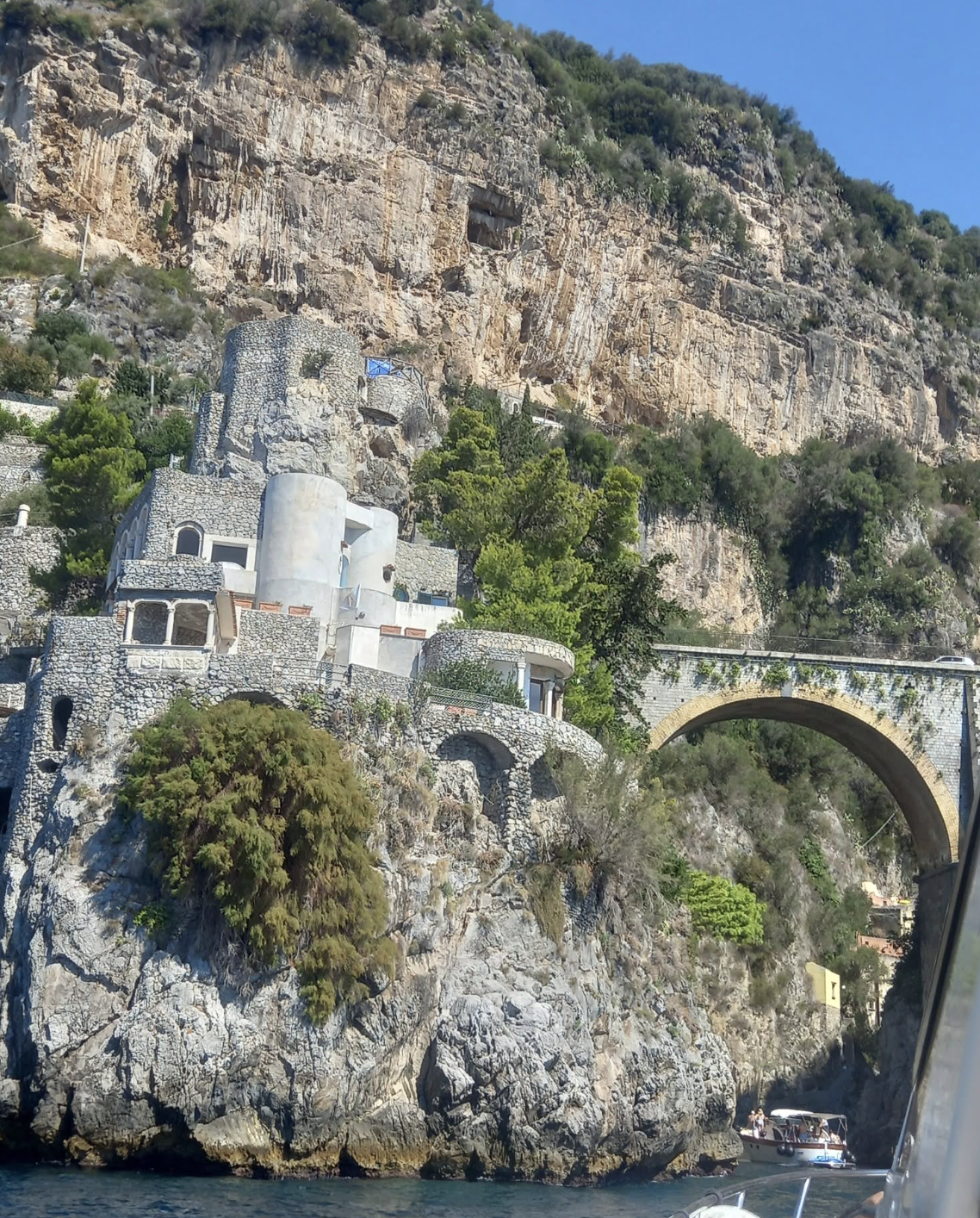
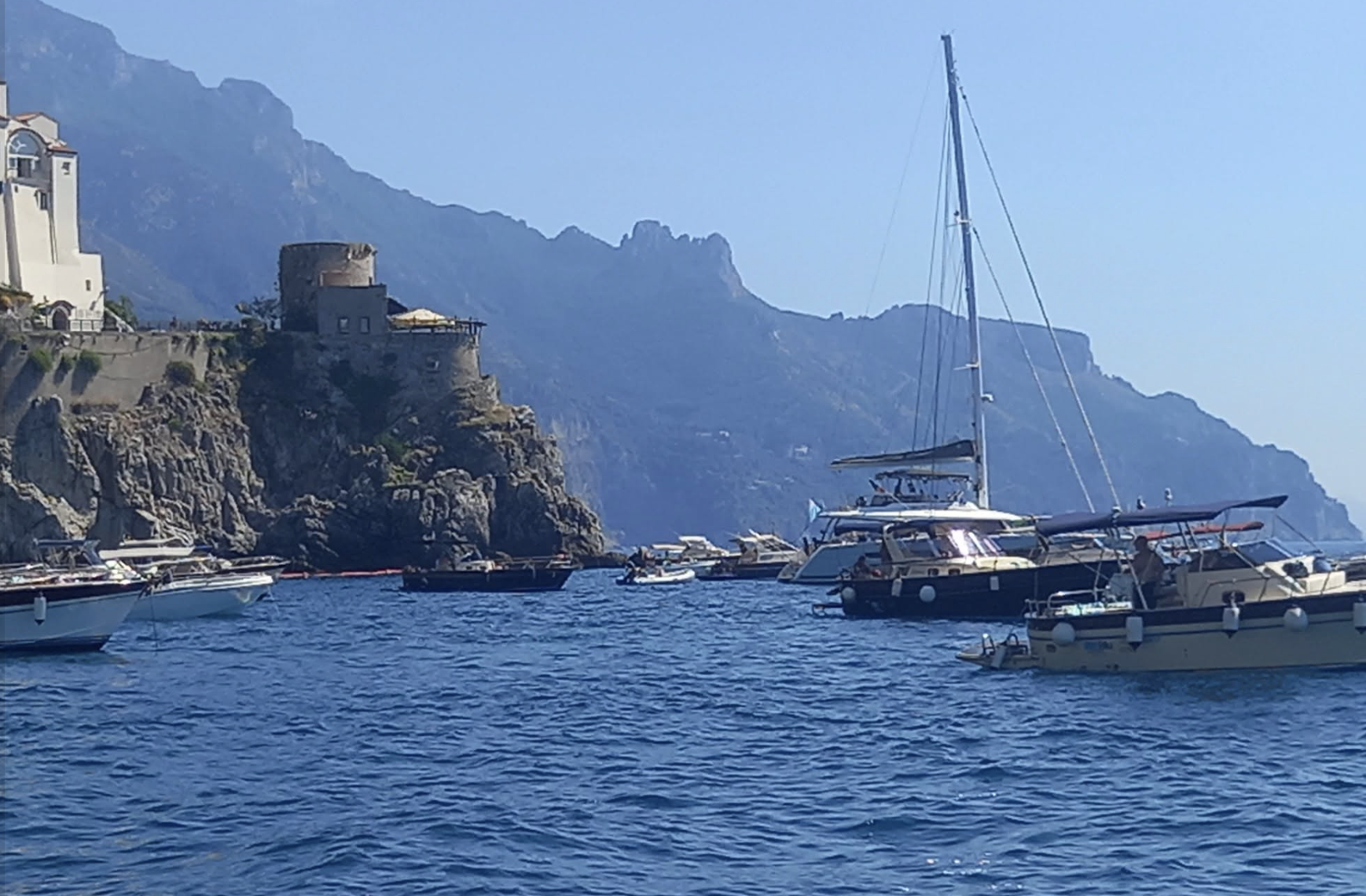
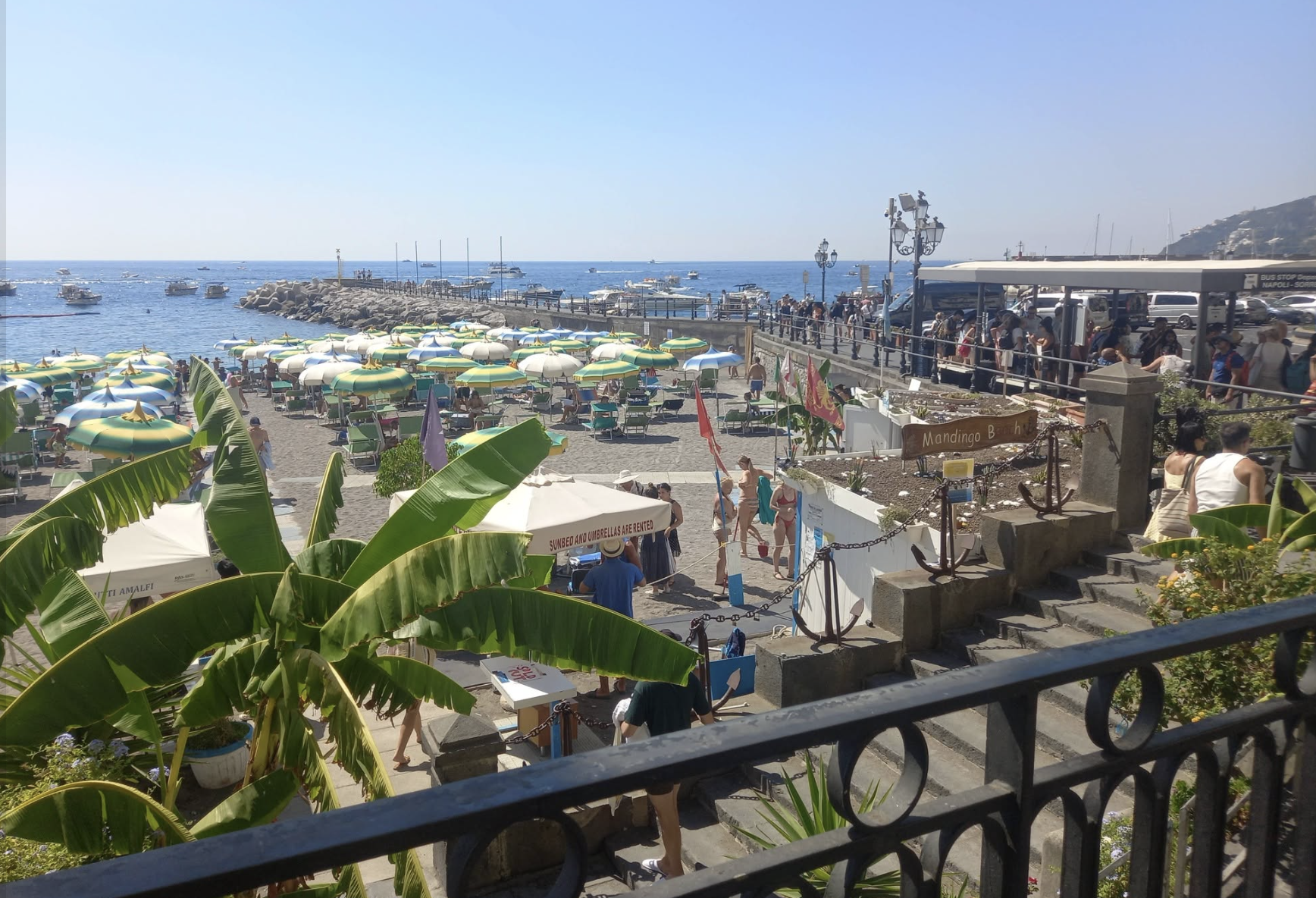
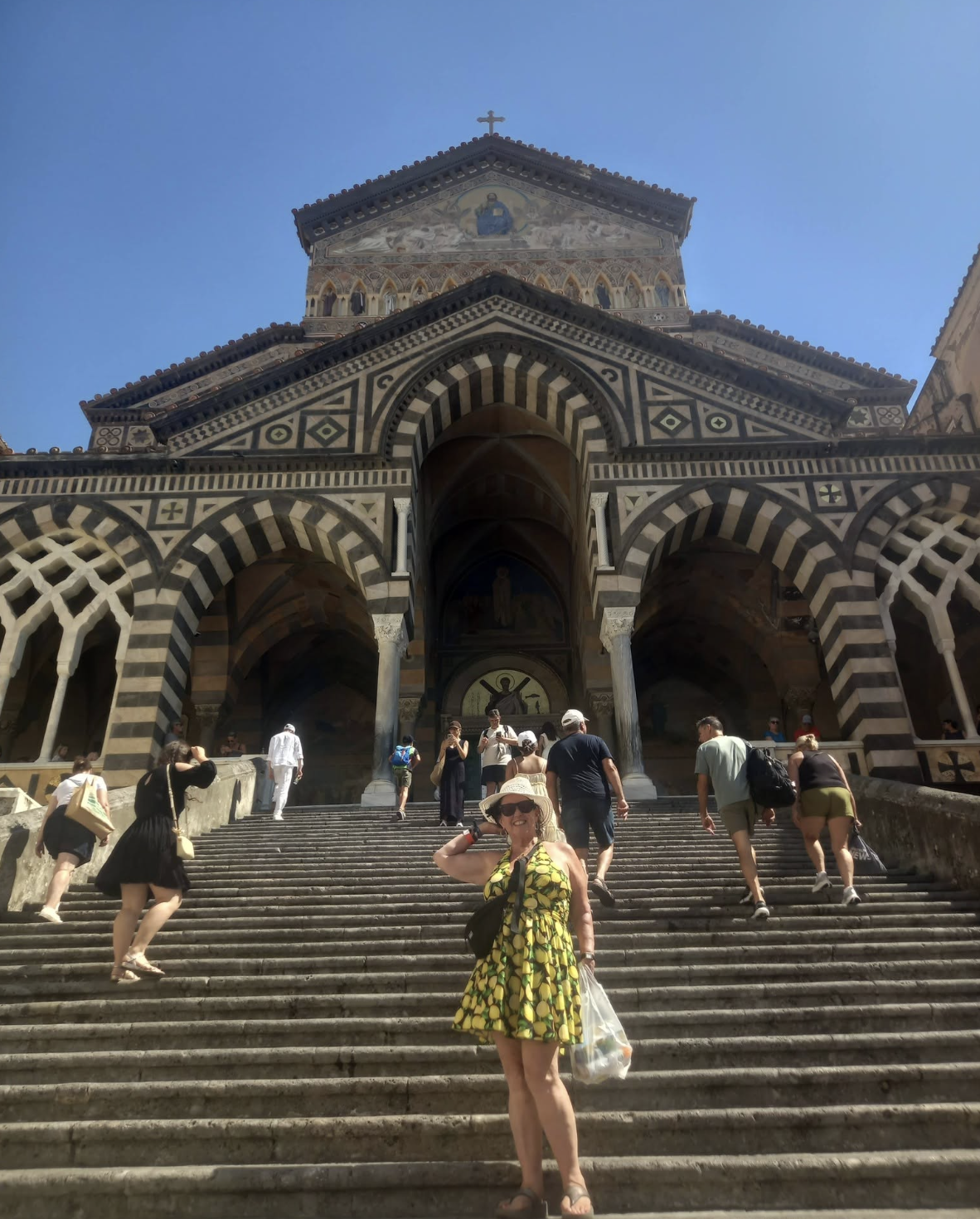
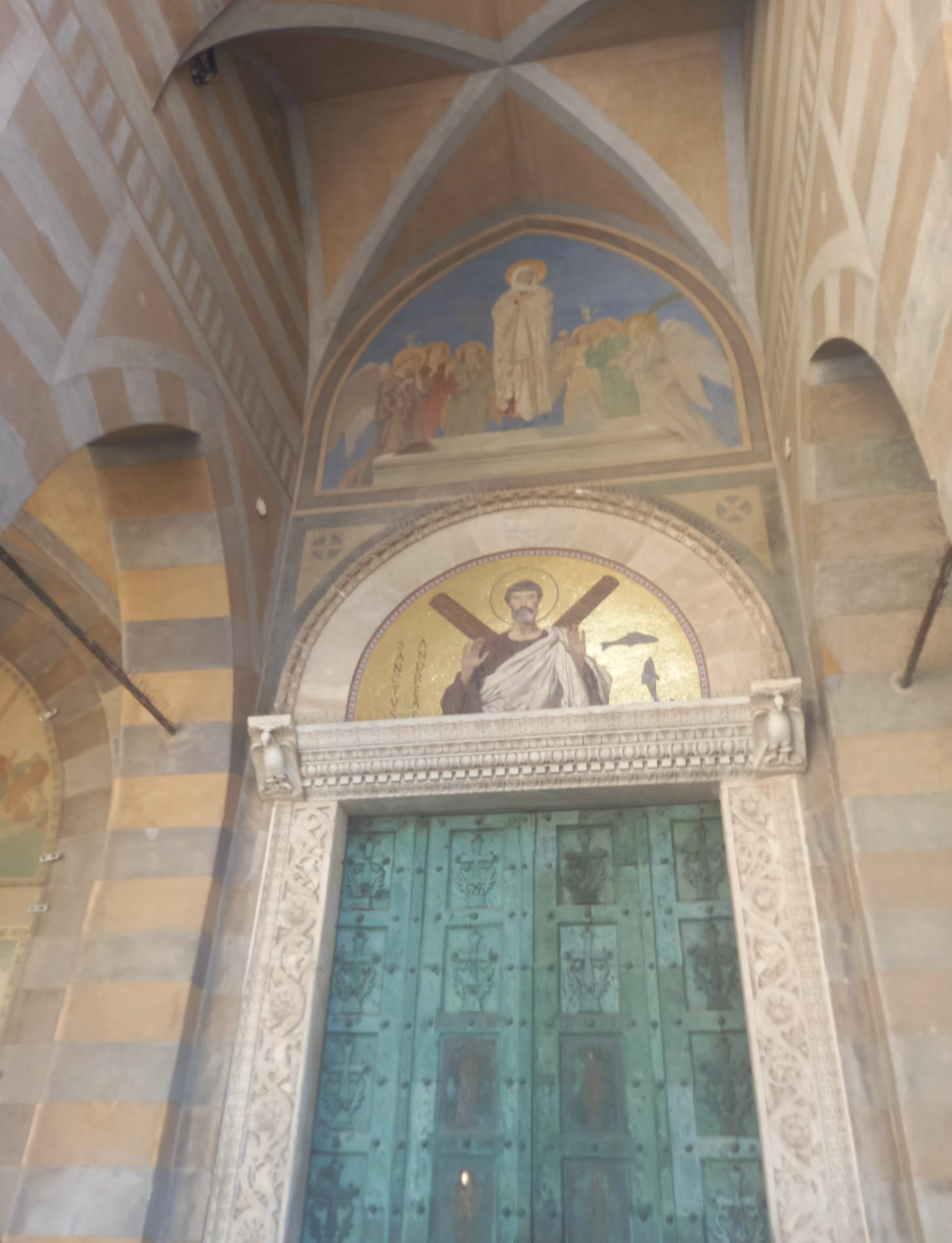
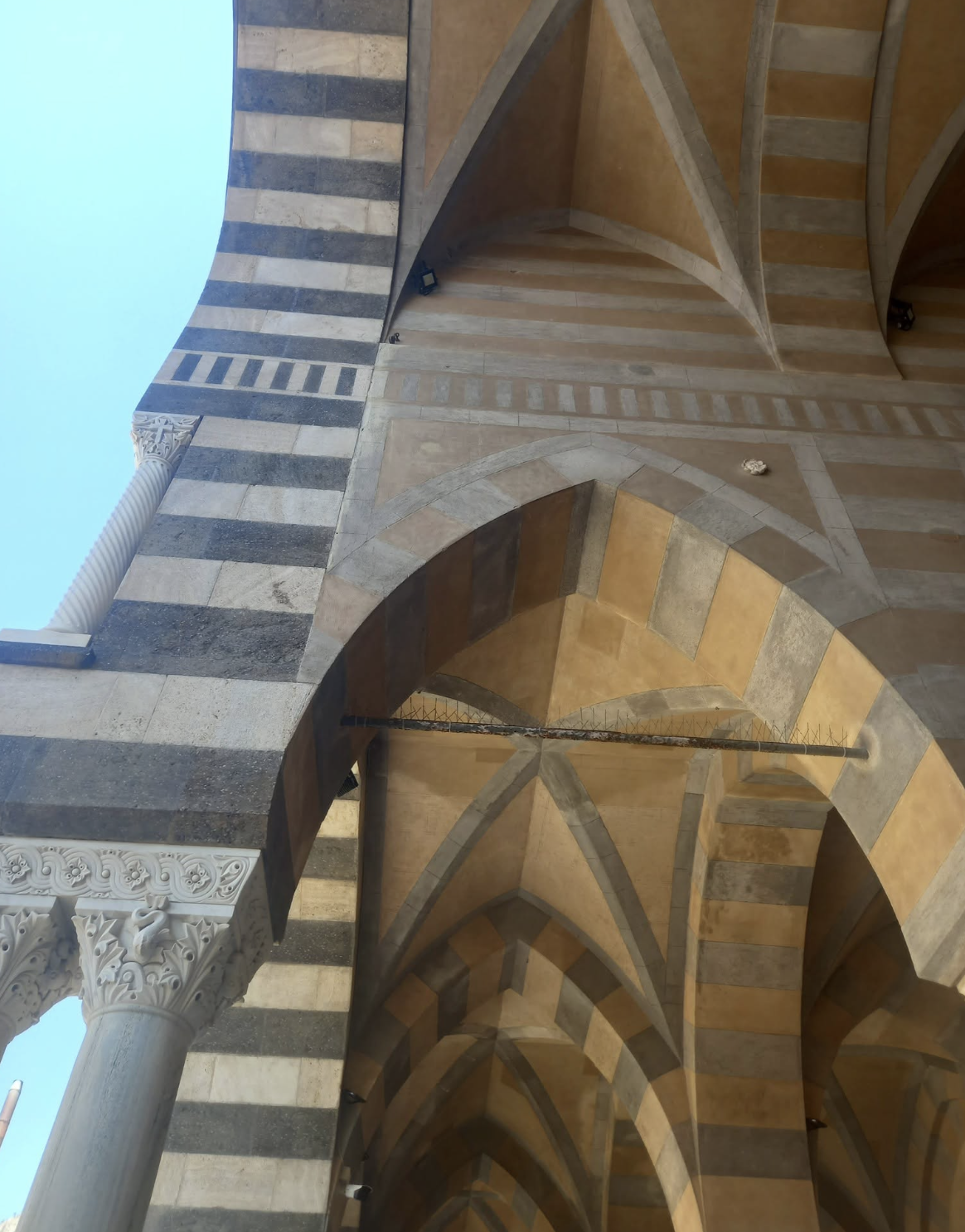
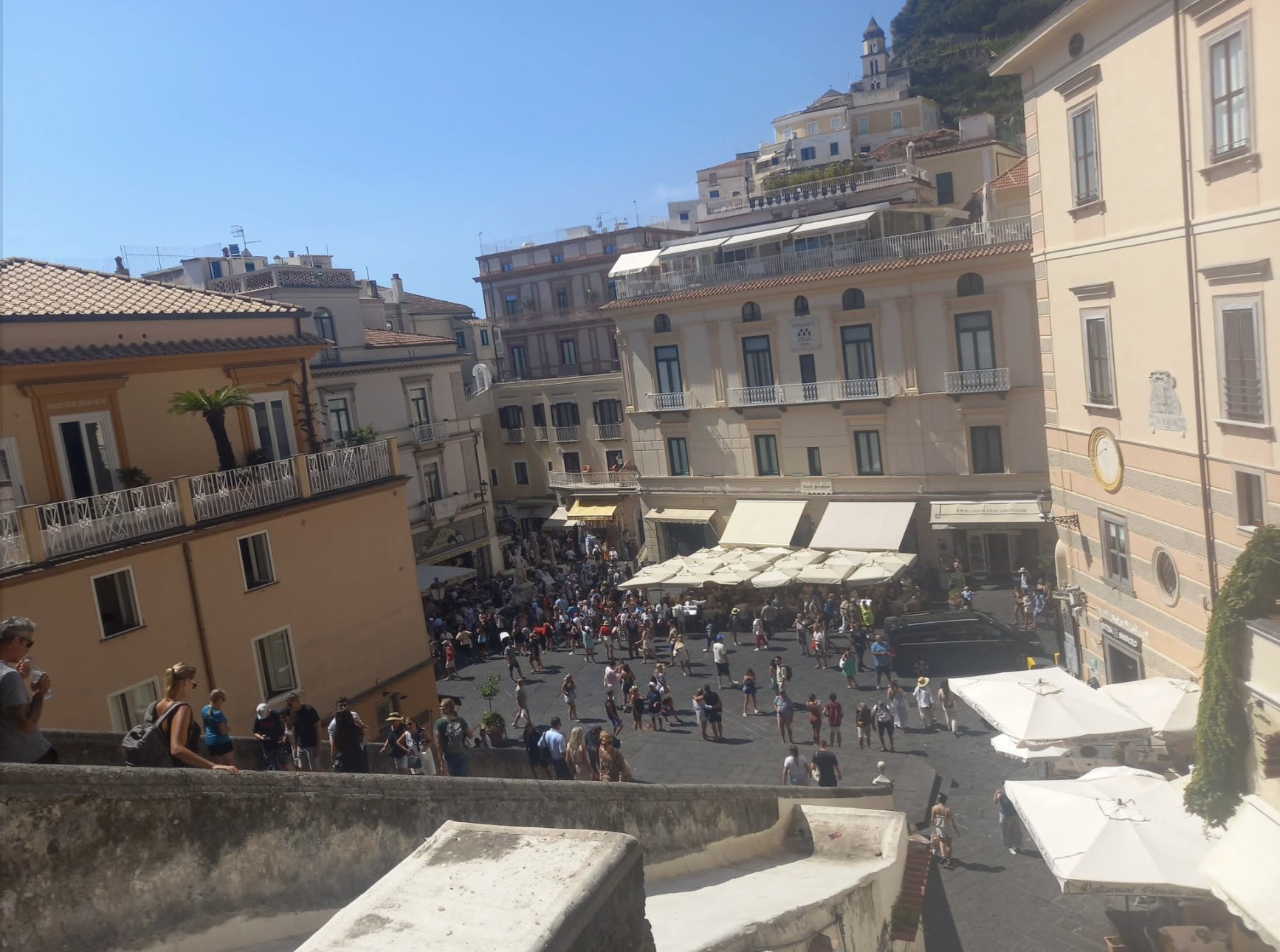
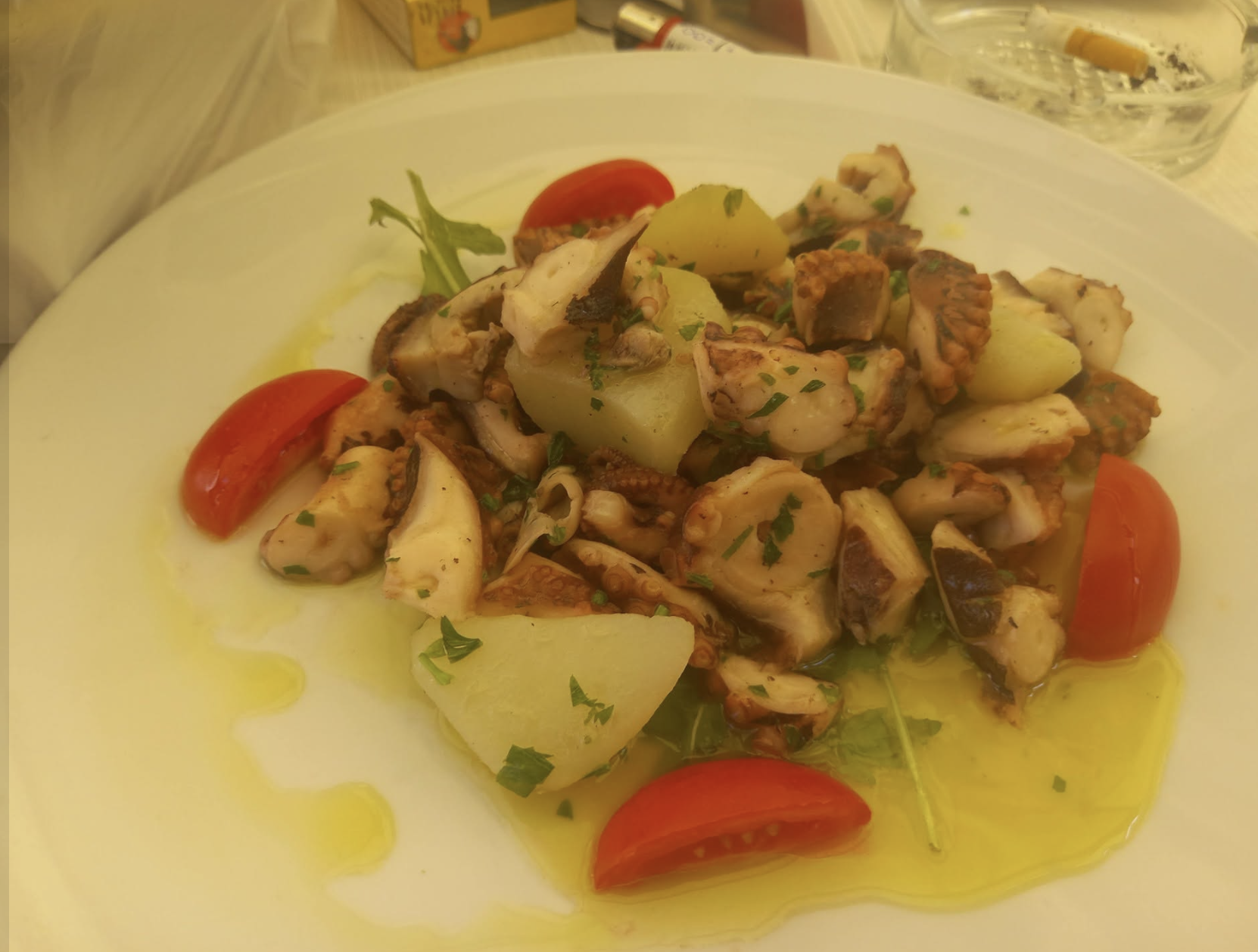
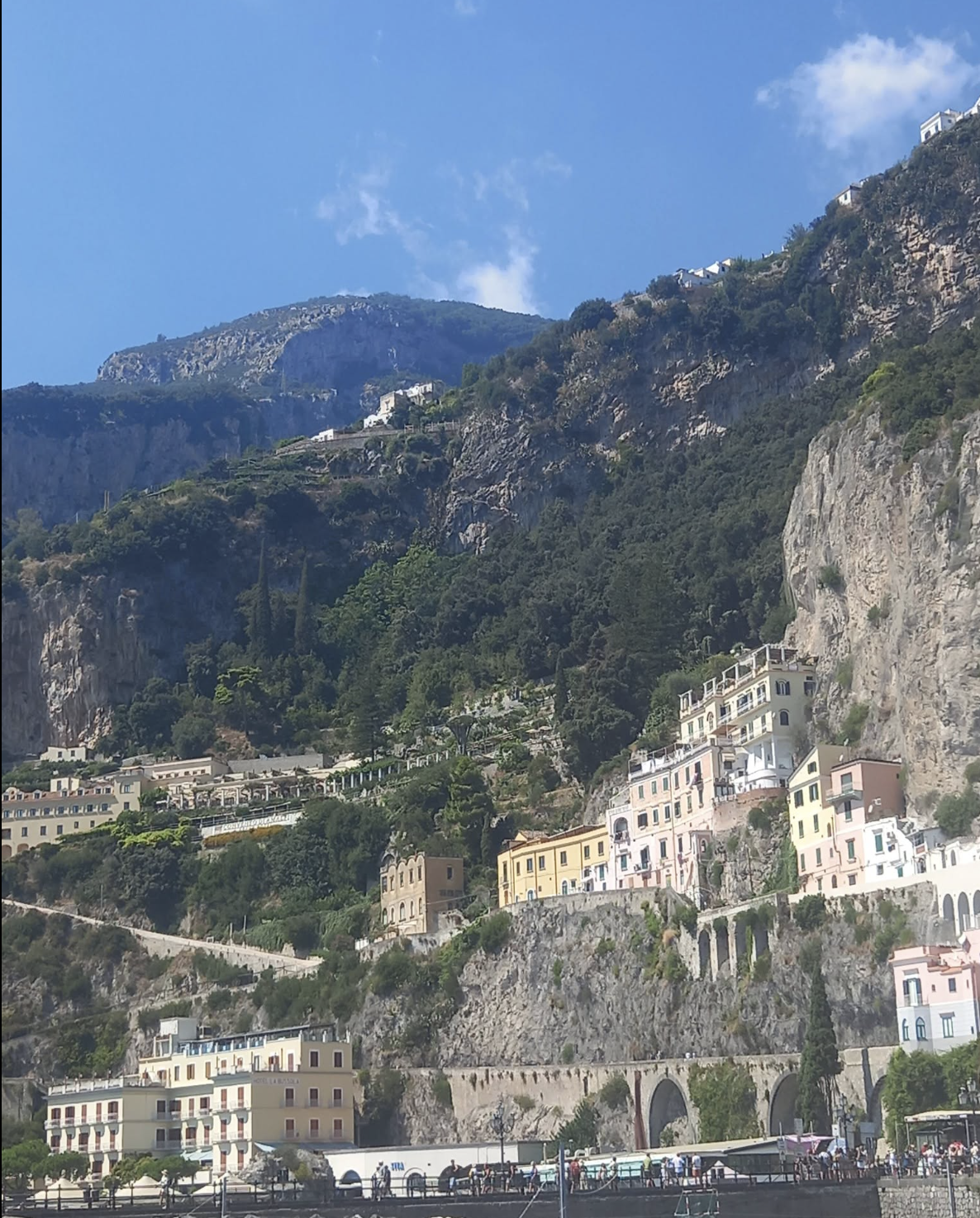
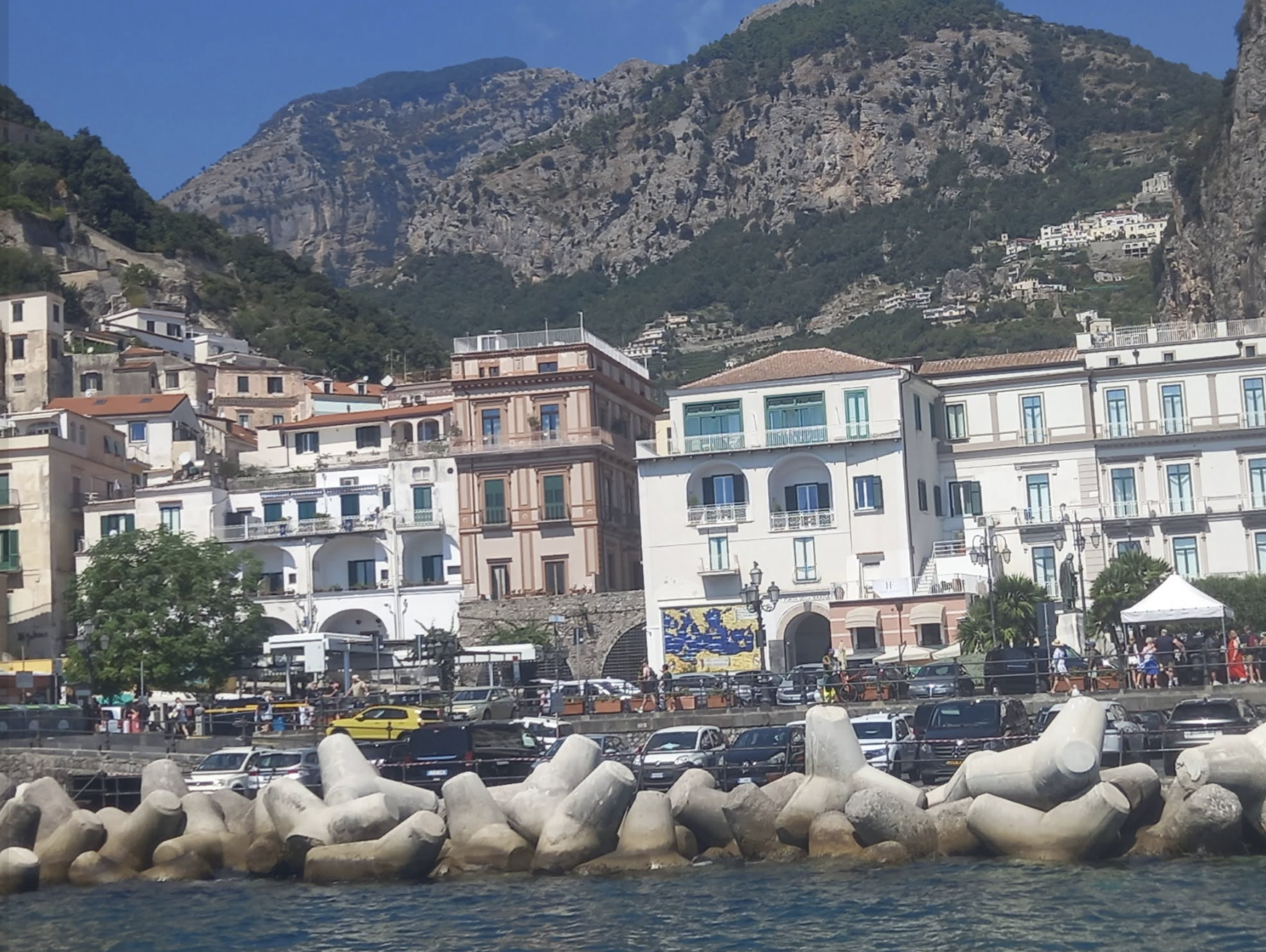
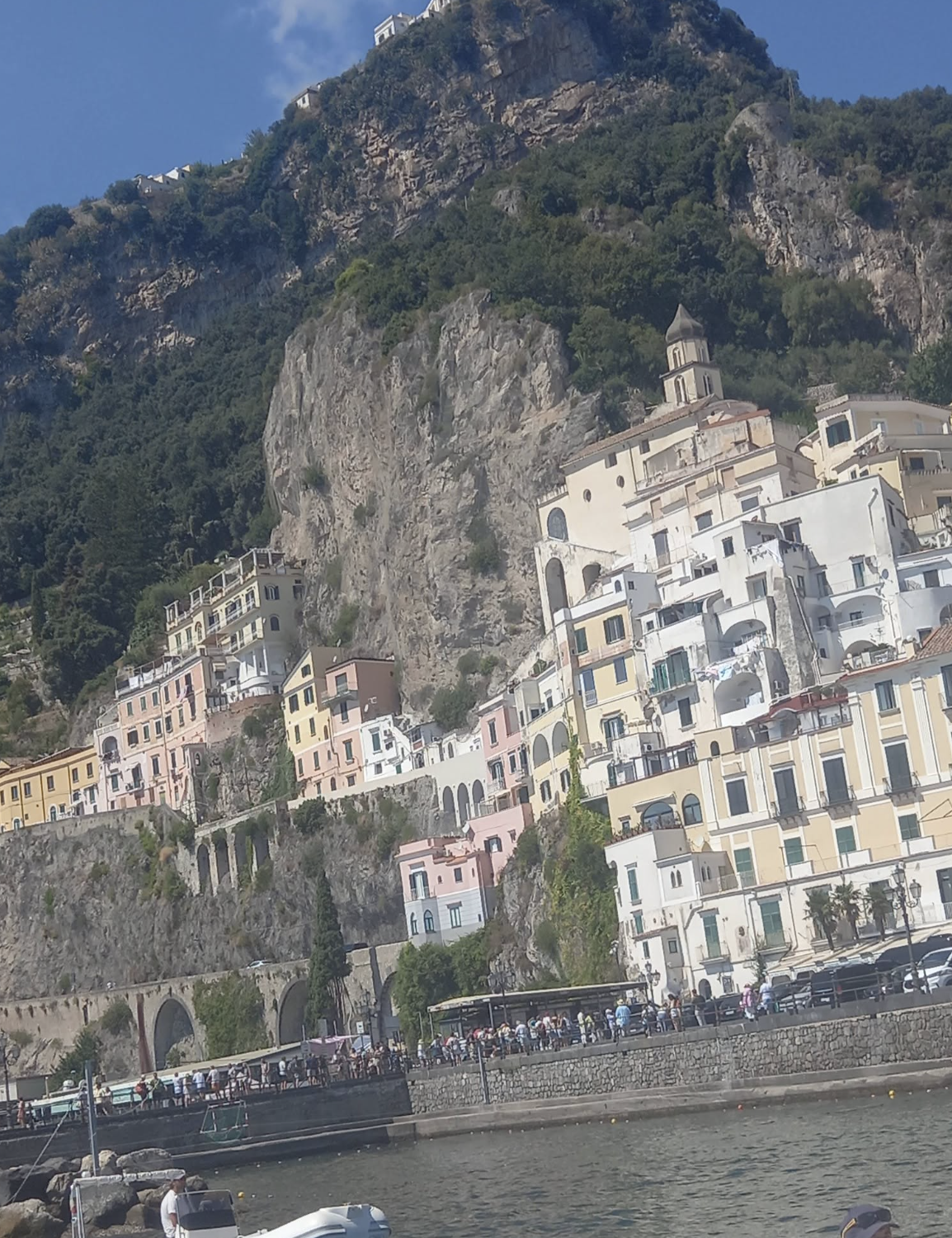
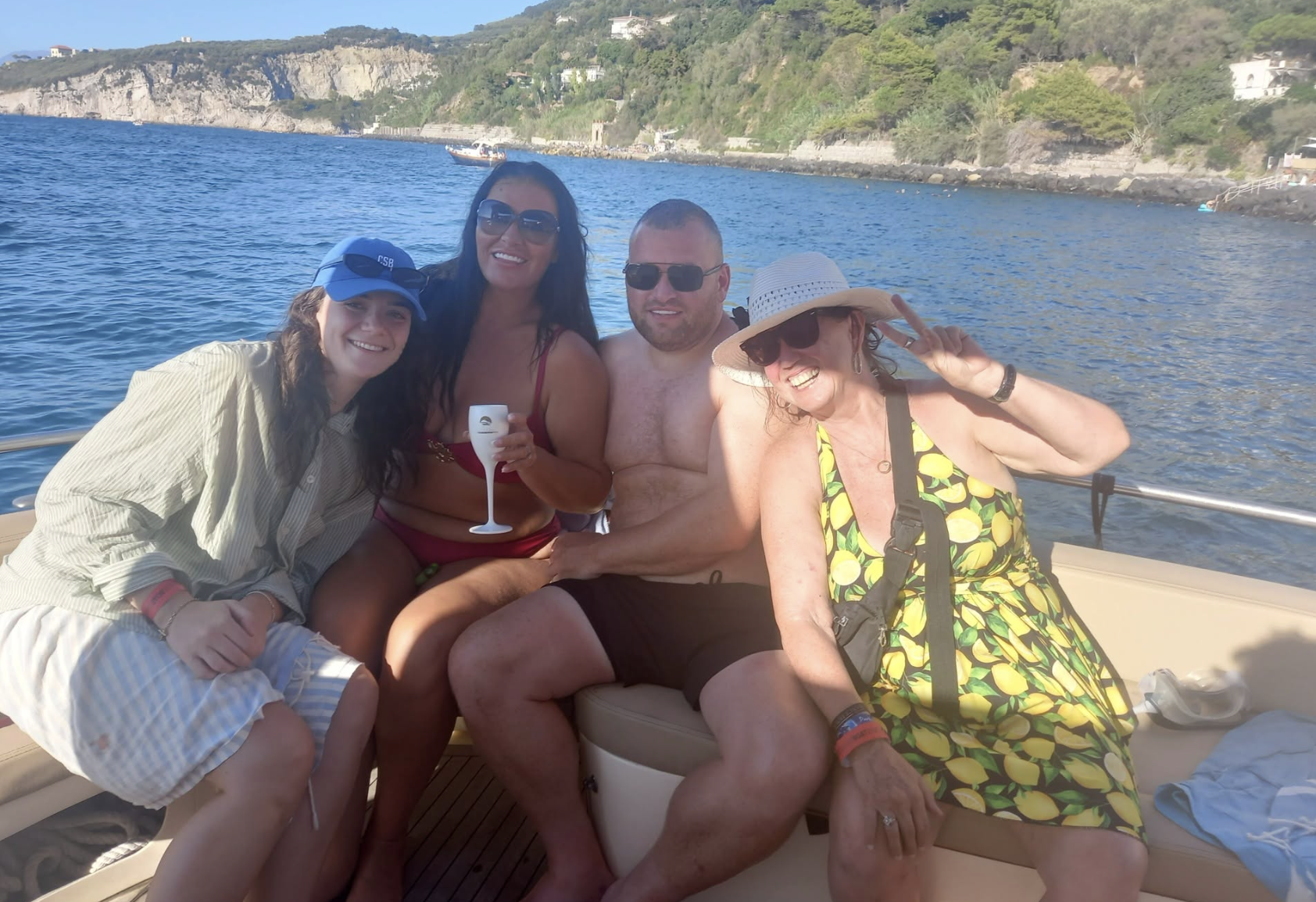
The next day, we took a full-day boat-trip excursion to Positano and Amalfi, which was a wonderful experience, not least for the free-flowing prosecco on the boat and the lively hosts and tour companions who joined us in yet more off-boat swimming. Much as I would have liked to get out and explore Positano — where I’d also stayed with Roland previously — after walking around Amalfi and visiting its Mediaeval Duomo di Sant’Andrea, then stopping for a lunch of octopus and potato salad, my feet weren’t up to traversing the city’s steep stairs. Instead, I whiled away the time enjoying the scenery while tucking into some snacks and limoncello spritz in a café near the port, recalling my time there with Roland.
As a couple on this boat tour had recommended a few restaurants in Sorrento, we were keen to try these out. Although another boat cruise with Headout around Sorrento harbour (billed as a ’Sunset tour with swim stops and limoncello’) wasn’t all that, due to the seas being quite choppy and the limoncello offering on the stingy side compared to other boat trips we’d been on, this certainly whetted our appetite for the tasty dinner we had at Zi ’Ntonio, one of the restaurants they had recommended.
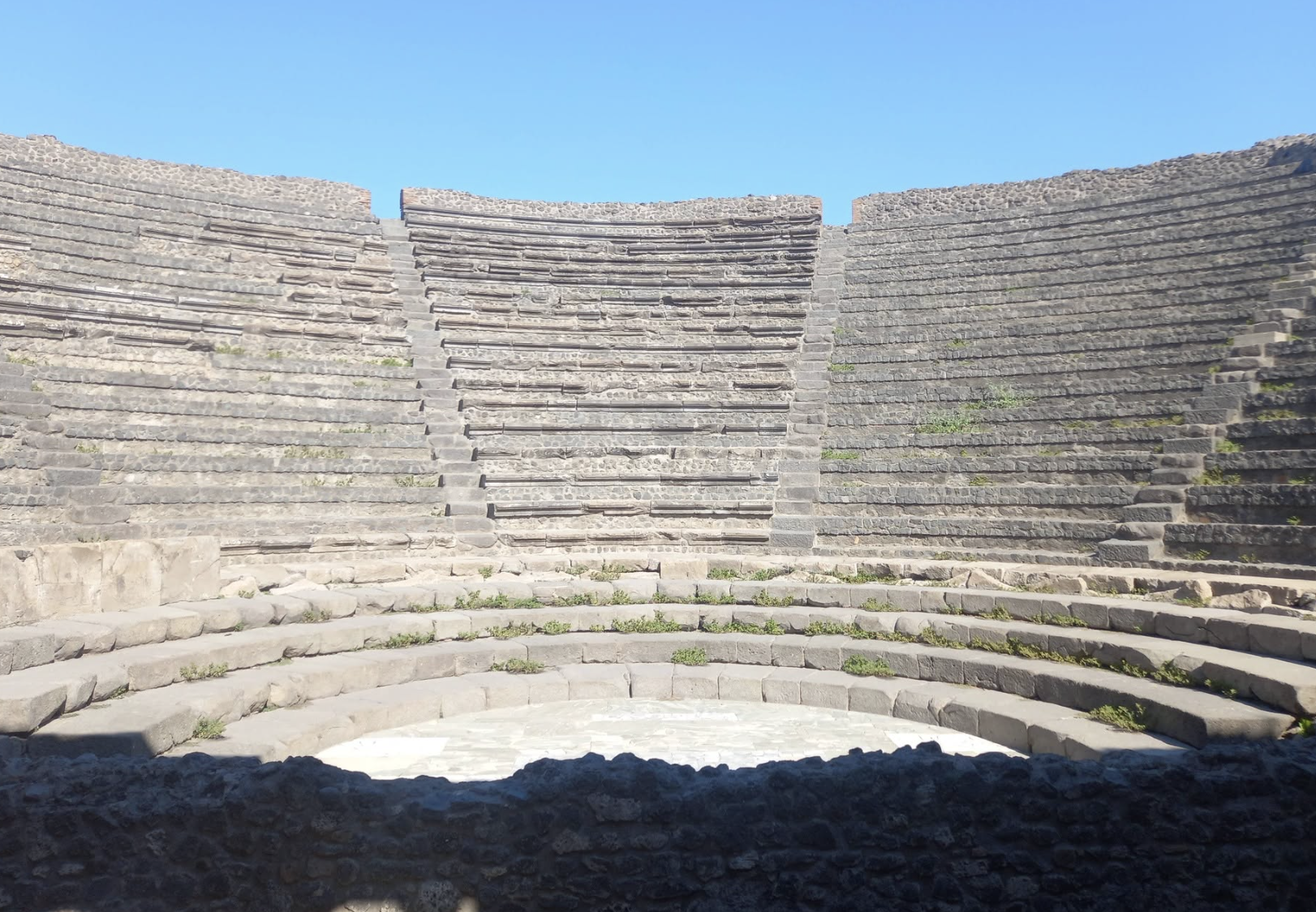
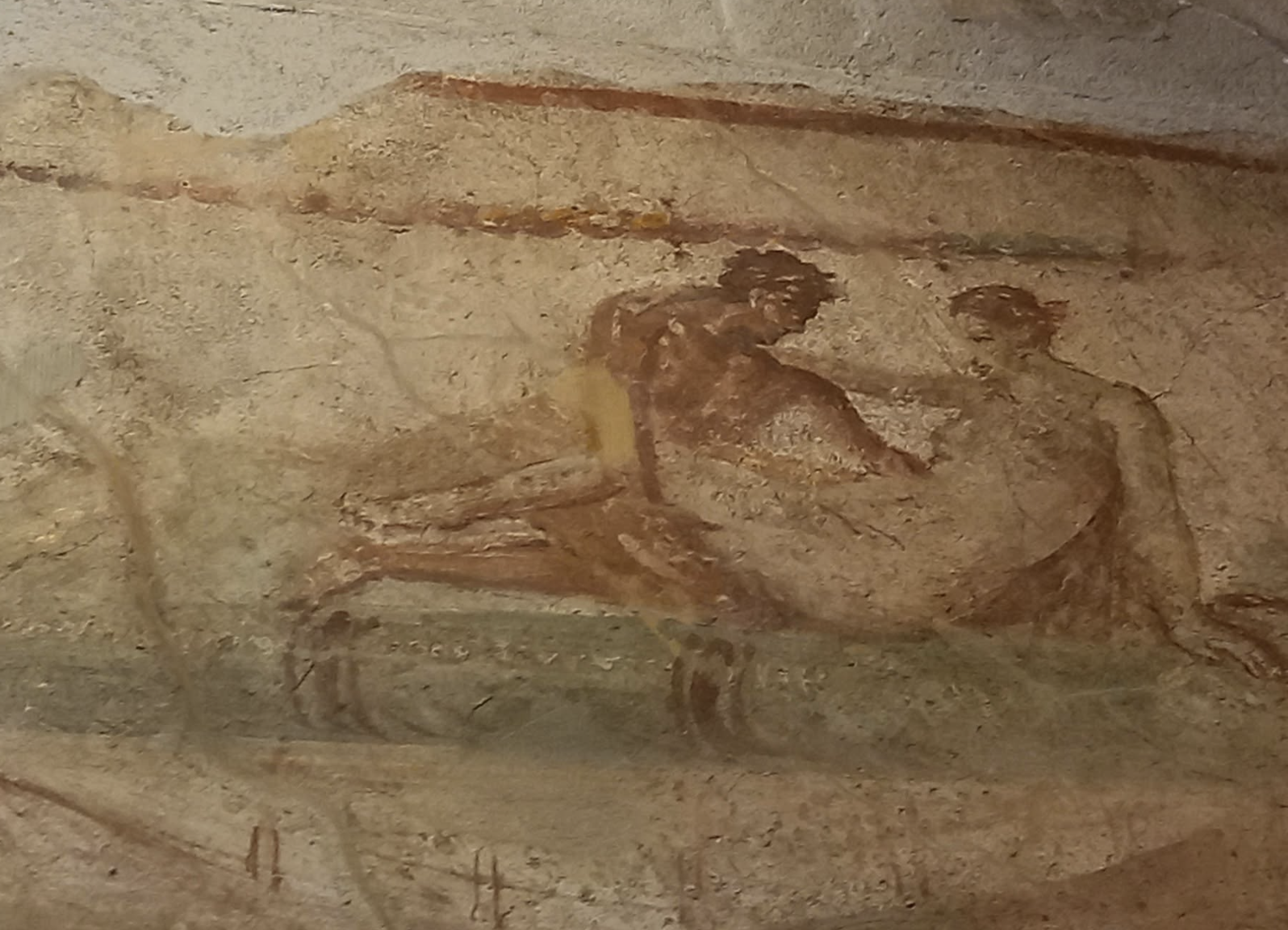
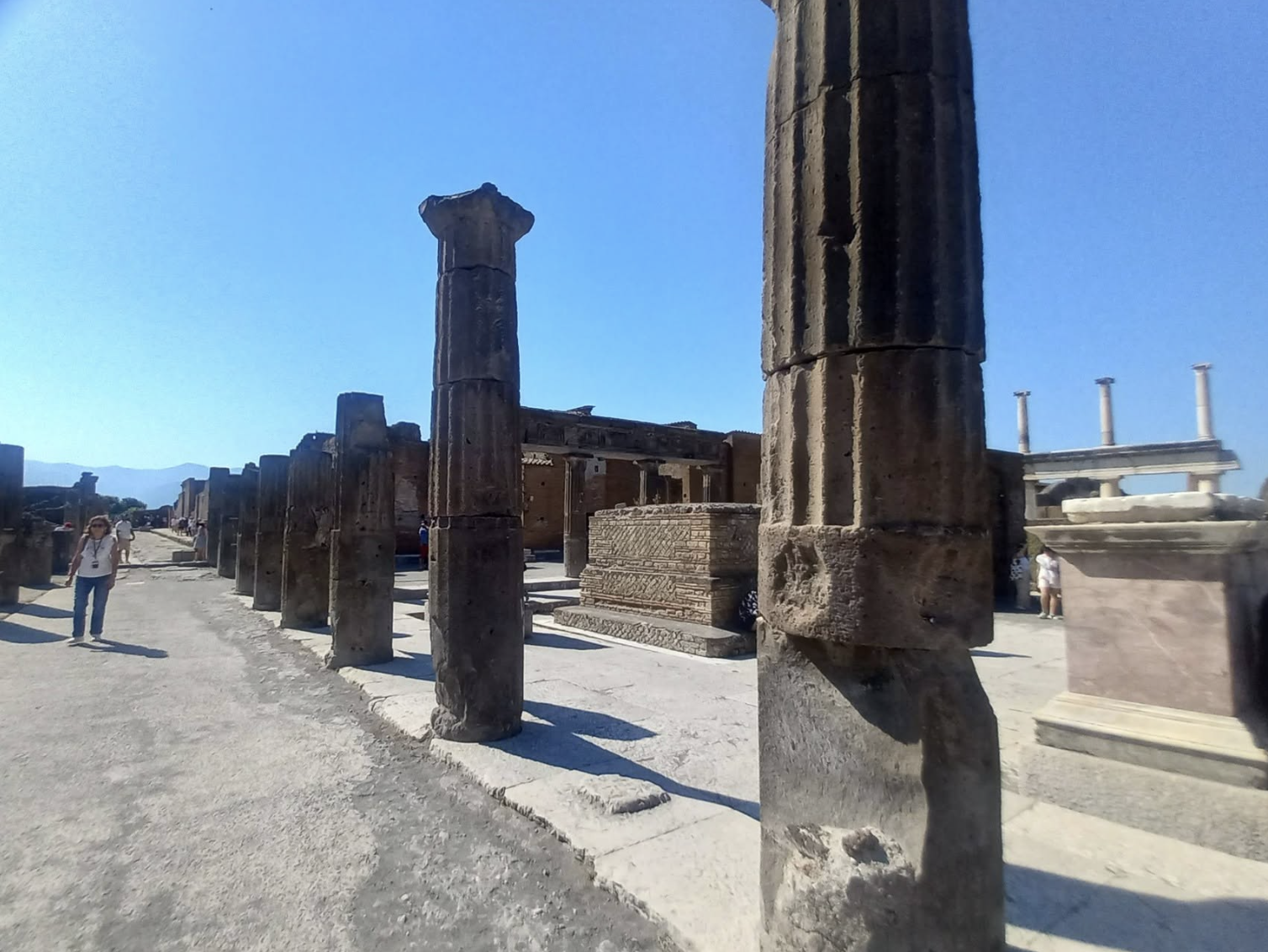
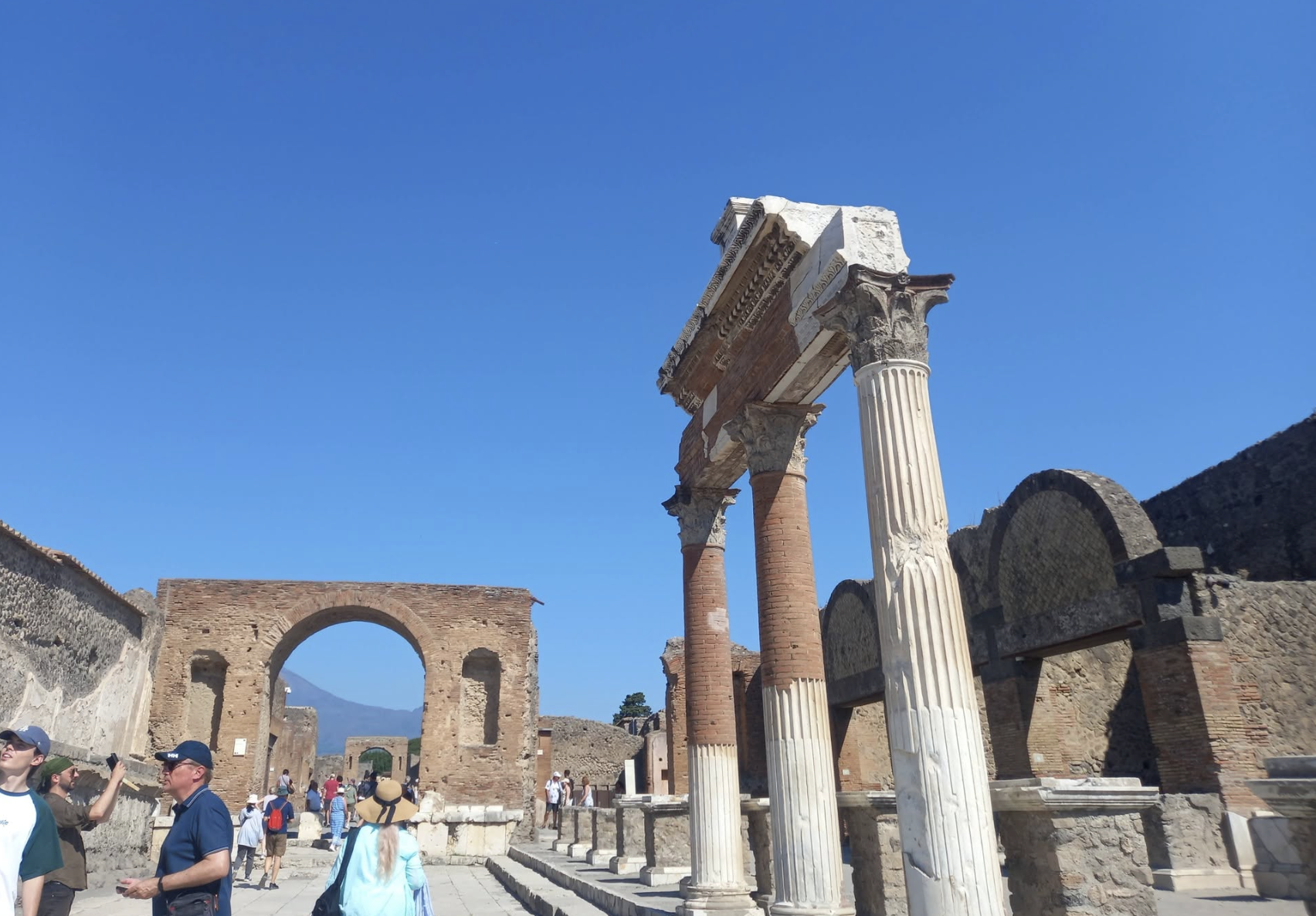
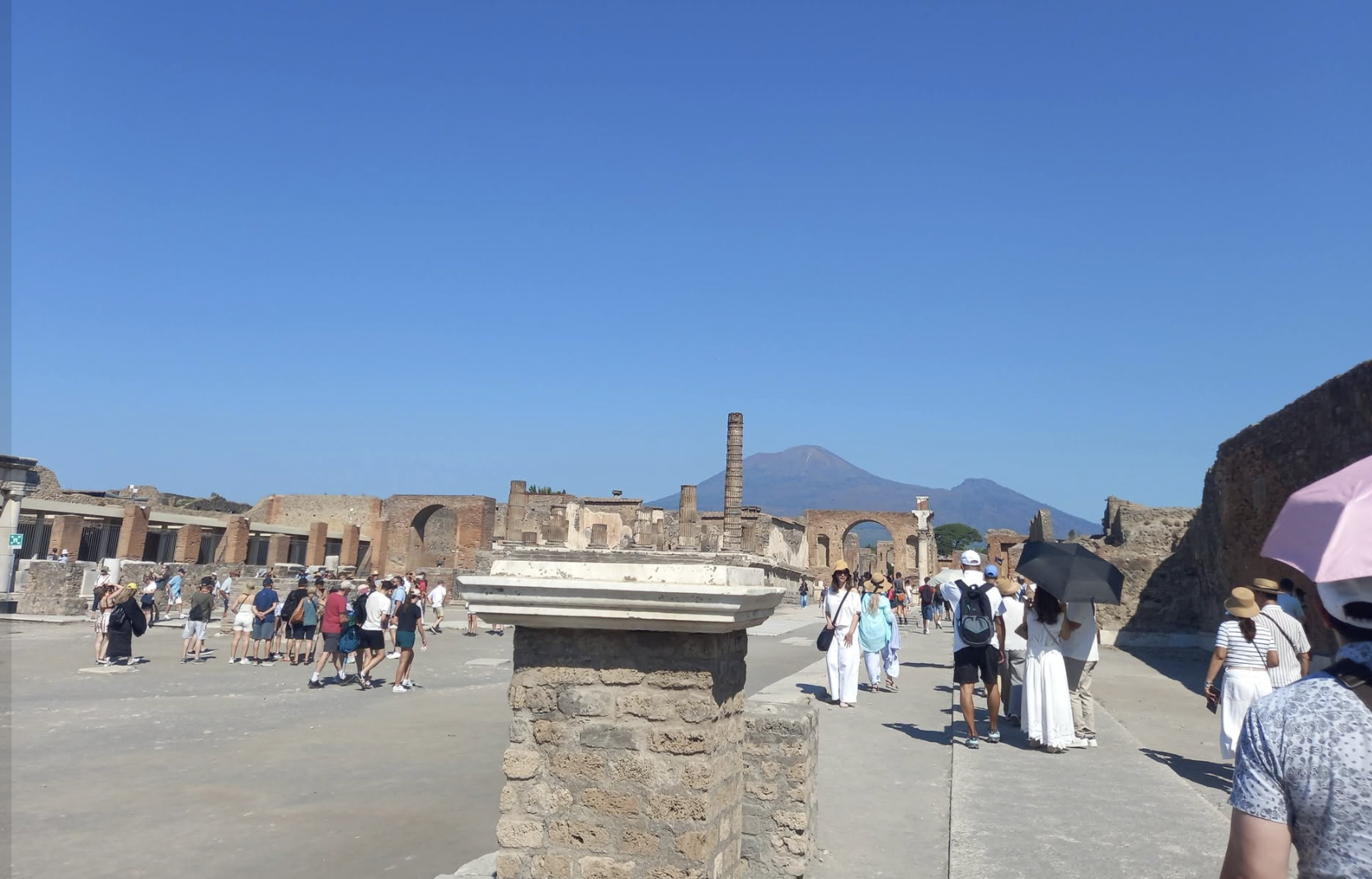
Suitably rested and replenished, we headed into Sorrento early the next day with the B&B’s shuttle to catch our full-day guided coach trip to Pompeii and Vesuvius with lunch. Unfortunately, the lack of clear meeting-point added stress and extra foot pain for me, being that I not only pulled a foot muscle before the tour, but also pulled another while trying desperately not to lose our group among all the other umbrella-carrying tour guides and hordes of tourists in Pompeii while stopping to take pictures, with the result I got lost and missed a lot of it. (Though at least I did get a laugh from seeing the colourful ‘menu item’ sex-position frescoes in what our guide explained was the original red-light [or lantern] district; funny how little has changed, apart from technology!)
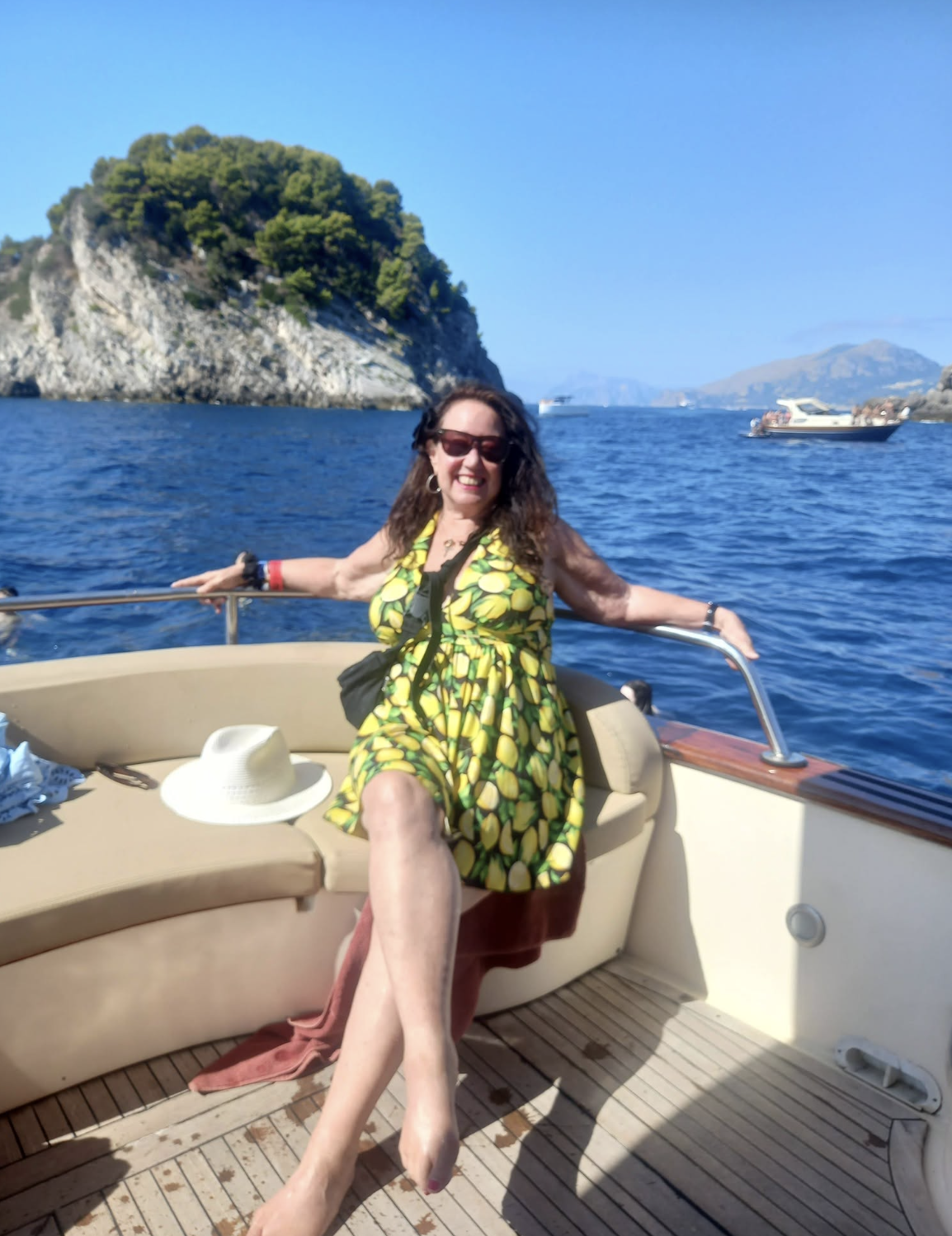
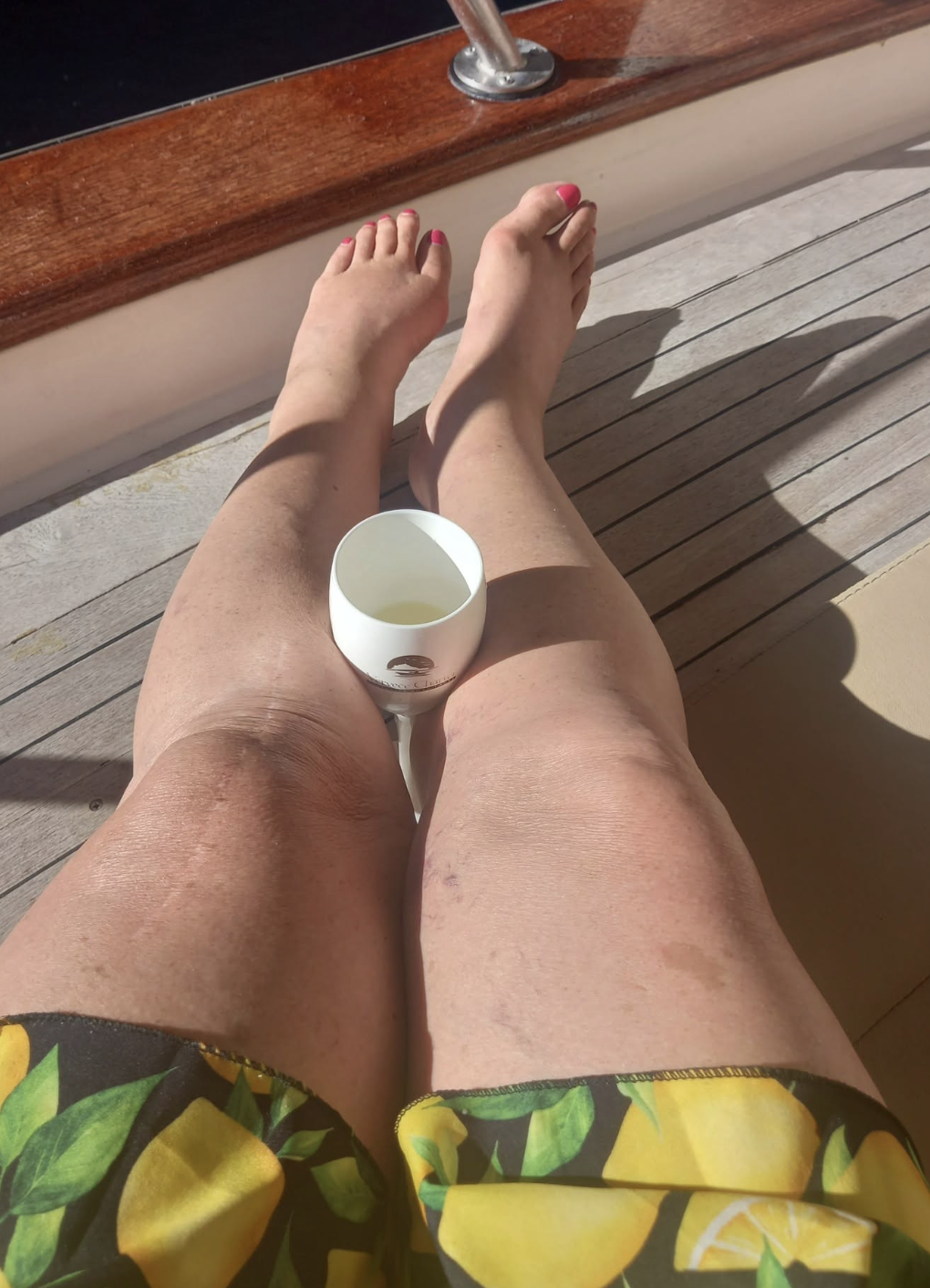
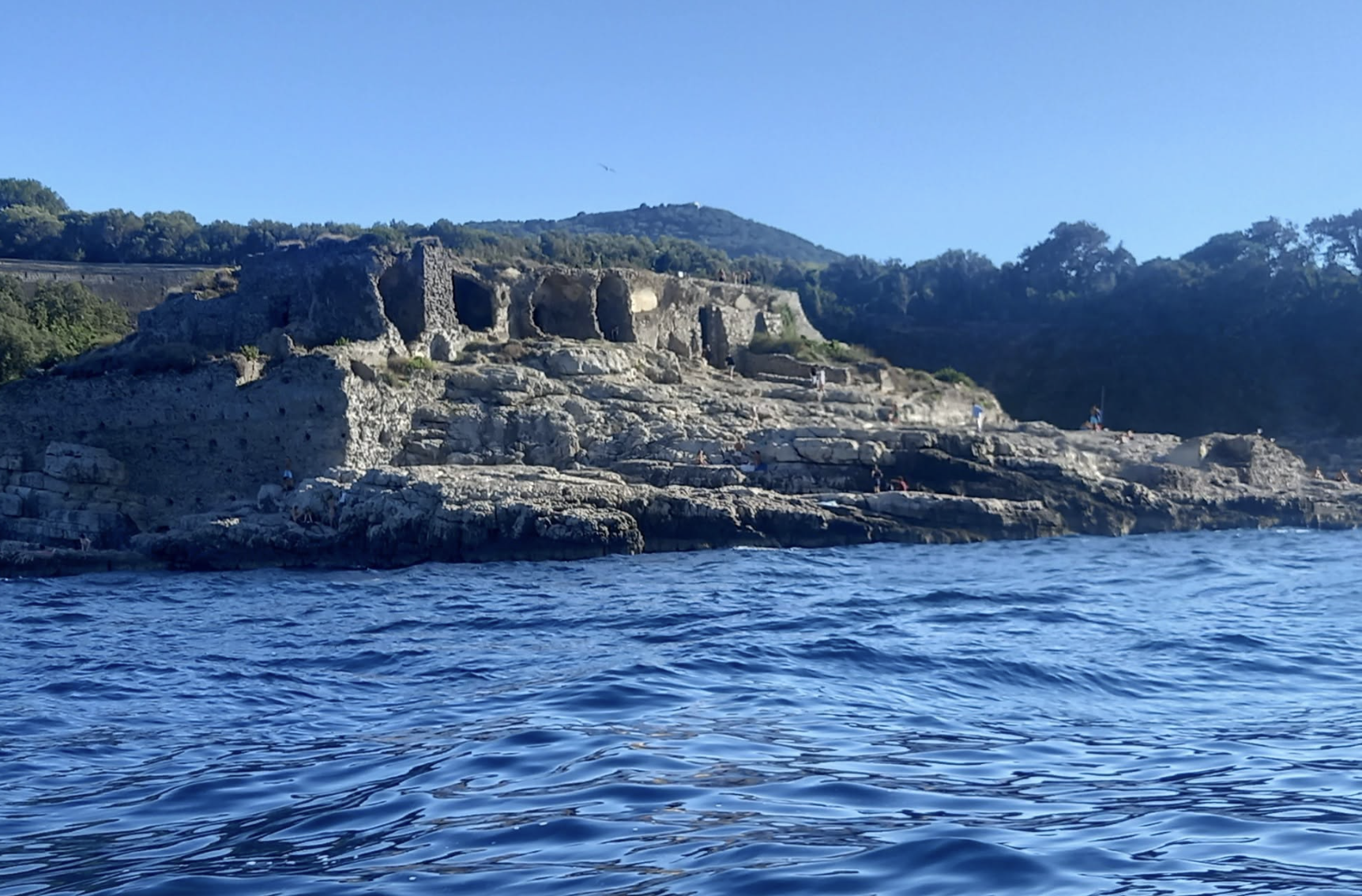
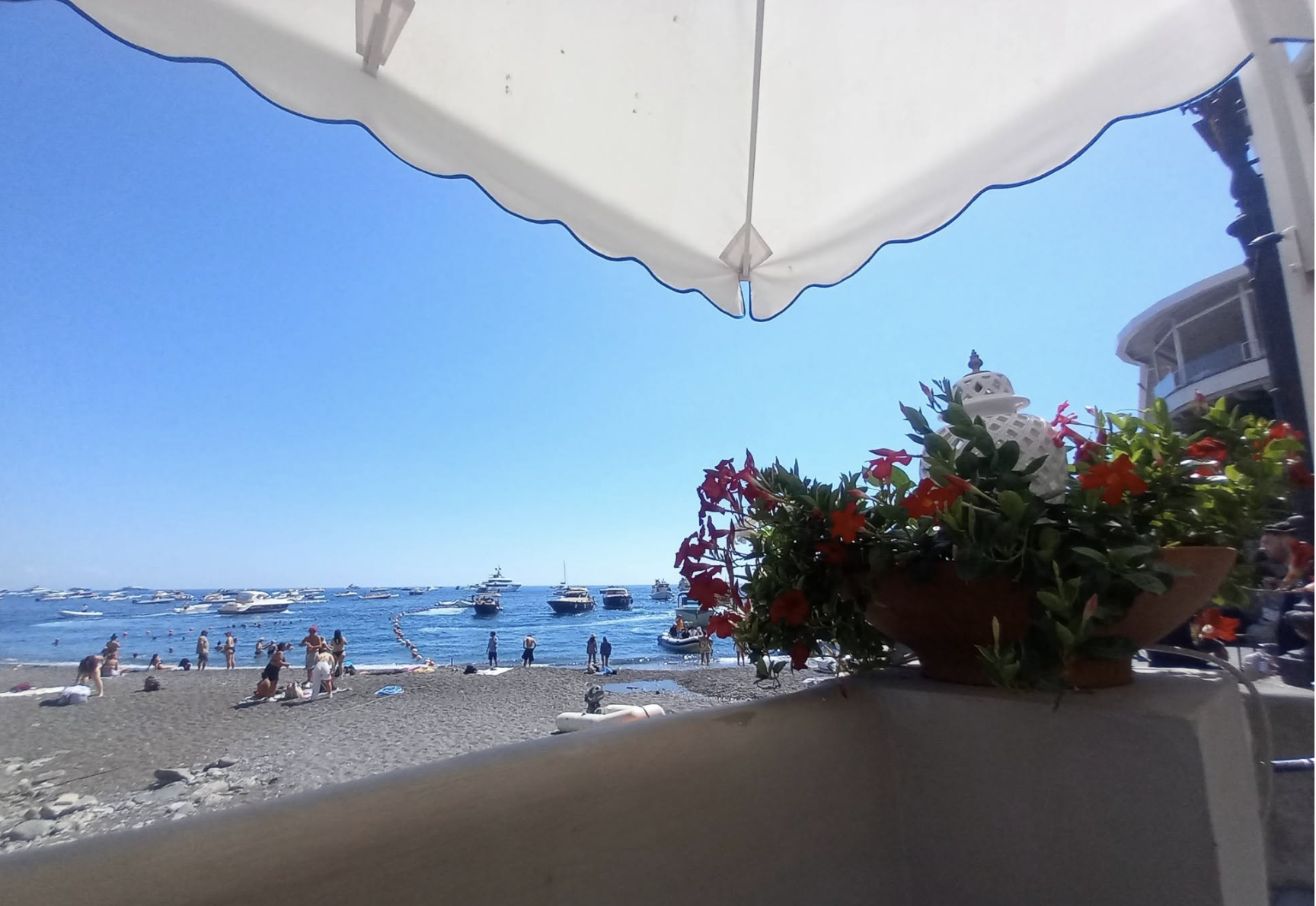
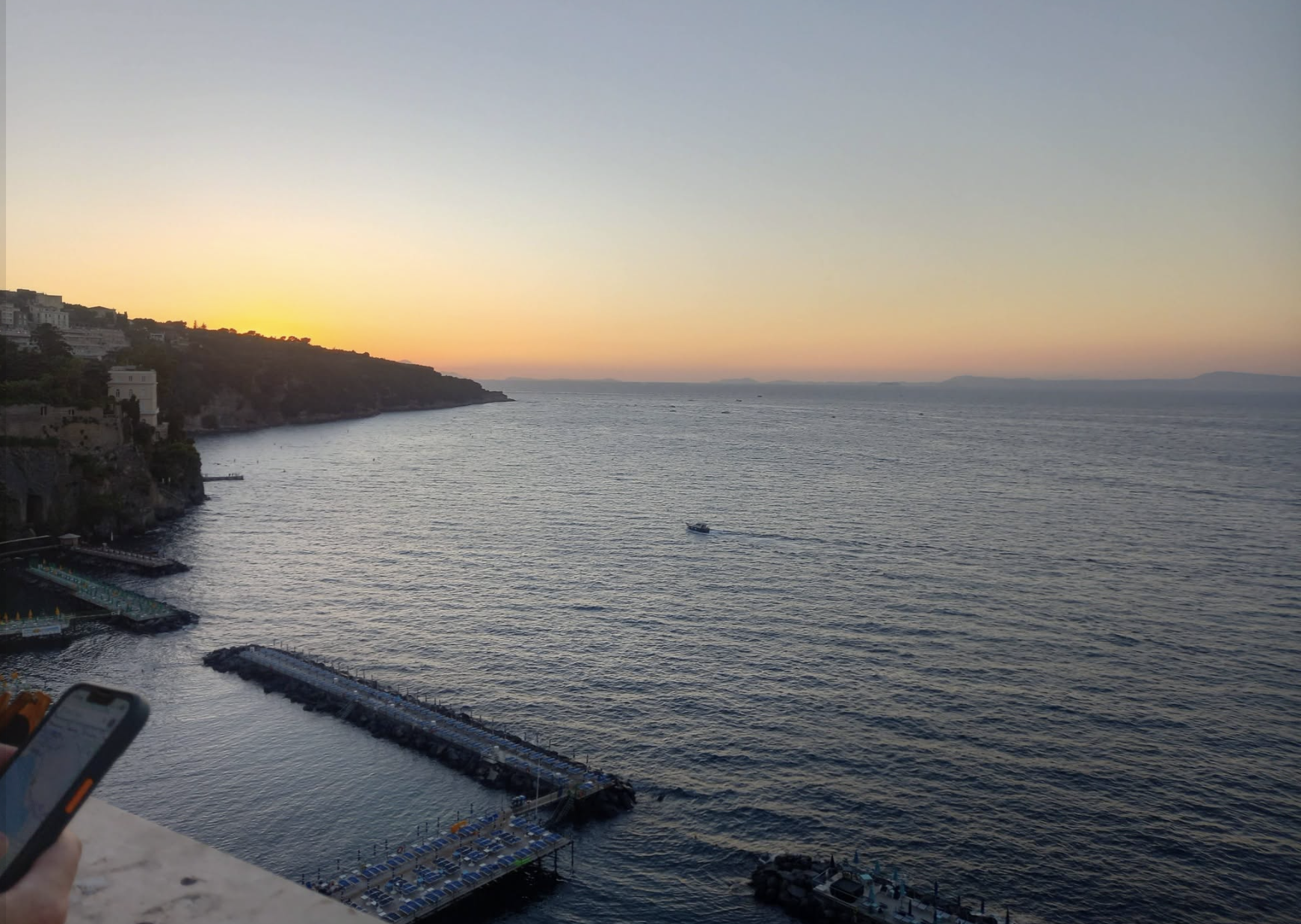
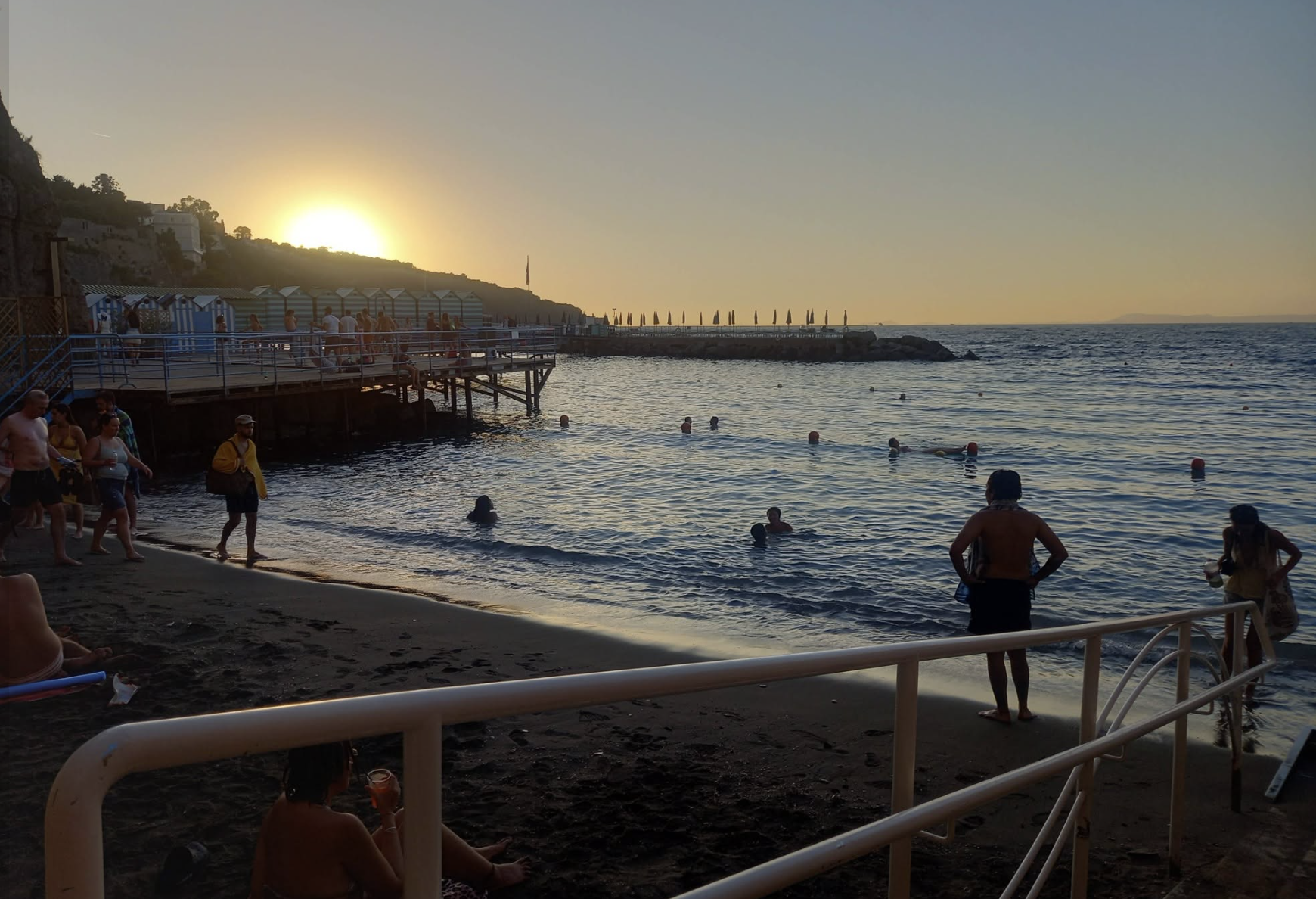
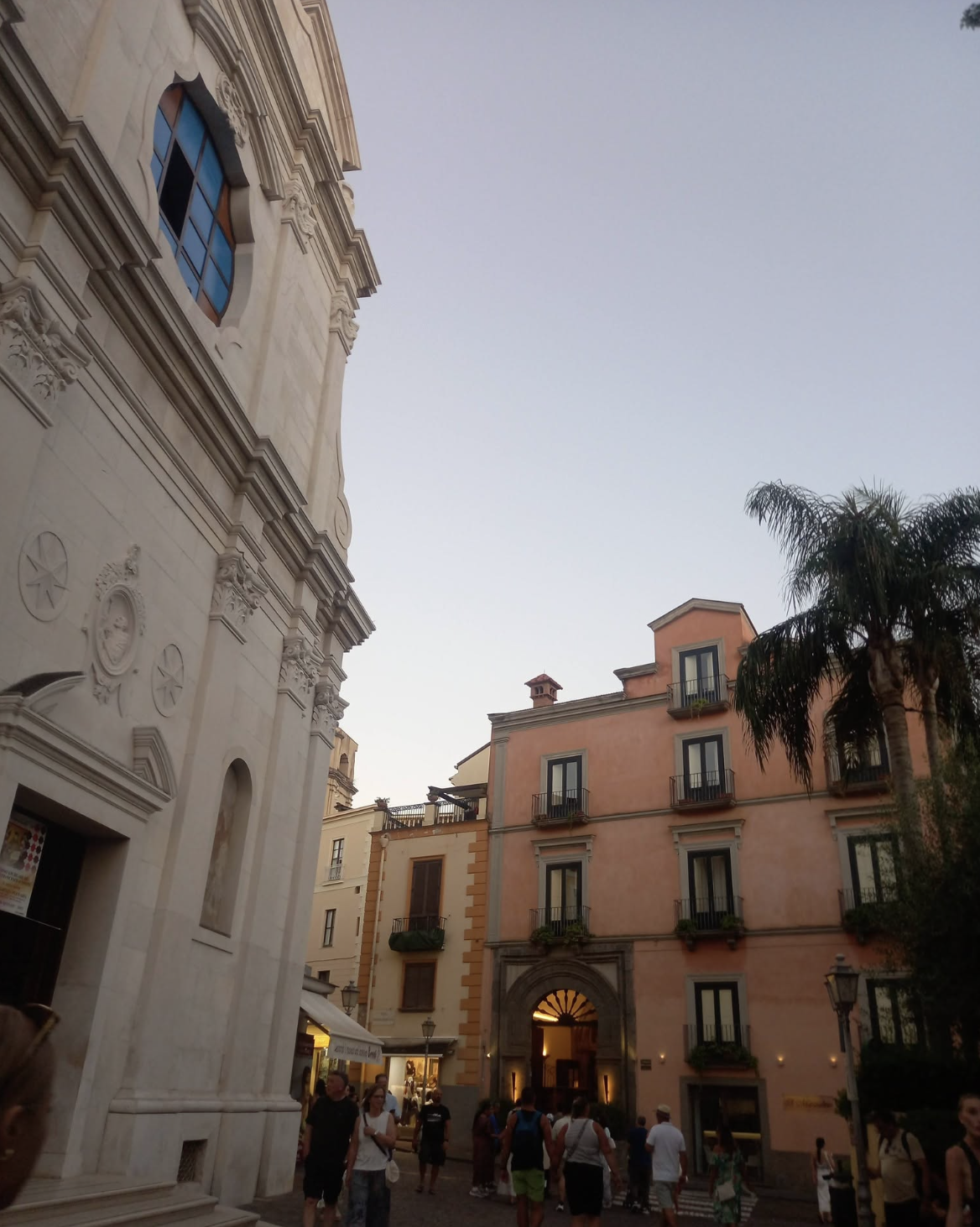
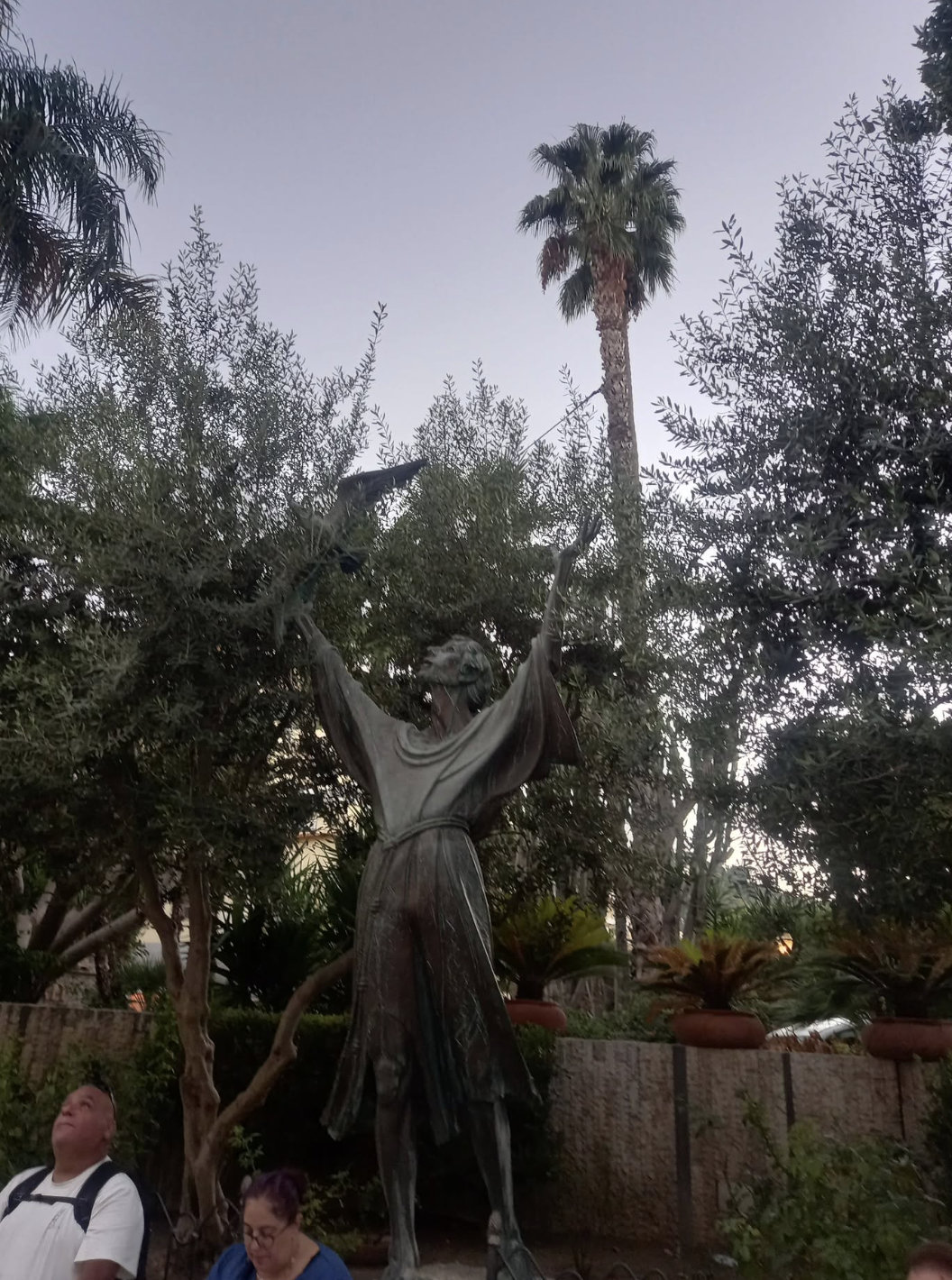
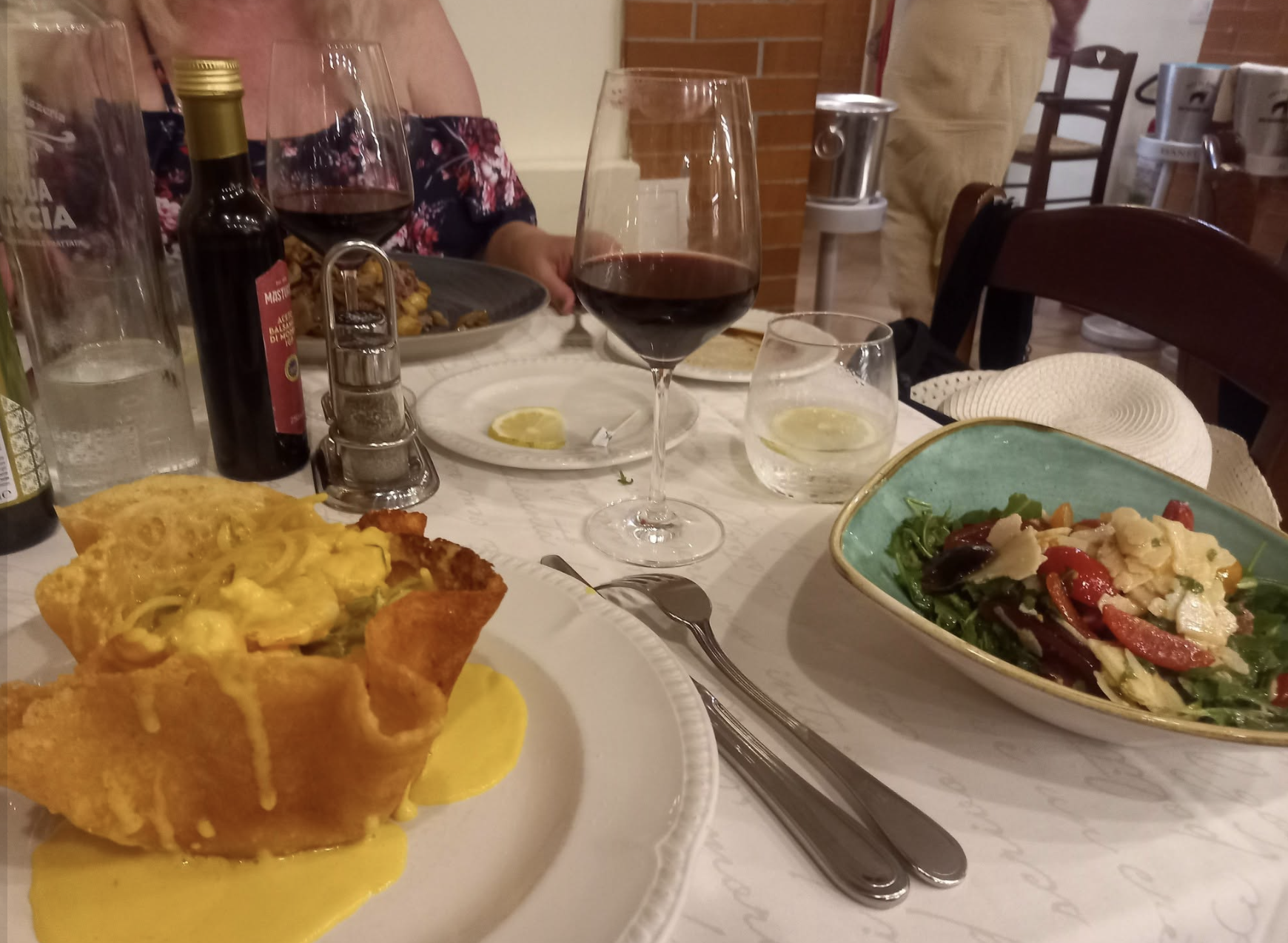
Clockwise from top below: Me relaxing on the swim + prosecco boat cruise from Sorrento along the Amalfi coast; first stop in Amalfi, visiting its Mediaeval Duomo and lunching in its main piazza; next, Positano, with its pretty pastel-hued houses ascending the steep hills; back in Sorrento, enjoying its beach and street art, then finally a fantastic dinner.
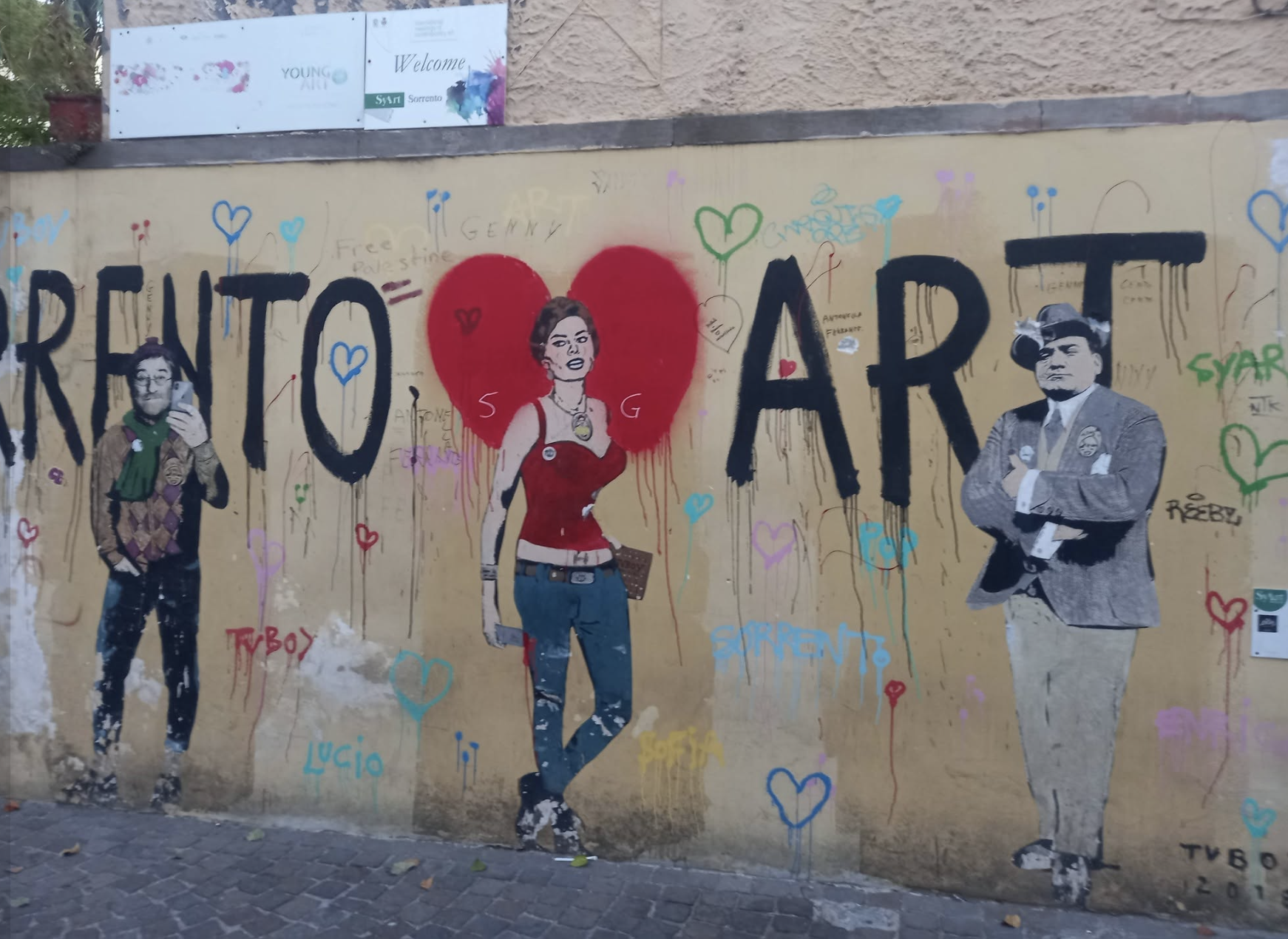
The additional foot strain alas meant I had to scrap the idea of climbing up the Vesuvius crater after our rather unexciting lunch, so I instead spent the time in the shade trying to think of a reasonable version on ‘I came, I saw, I conquered’ (or ‘it conquered me’) to put on social media — which, considering the baking heat, was probably for the best, as all who reached the top complained how steep and challenging the descent was. As most of the less-agile (I would say, older, but that wasn’t always the case!) acknowledged, trying to do both these activities in the same day/tour was NOT a good idea! Therefore, unless you’re very fit/keen, it’s probably best to save Vesuvius for a cooler time of year and visit Pompeii in earlier or later hours for a less-crowded view.
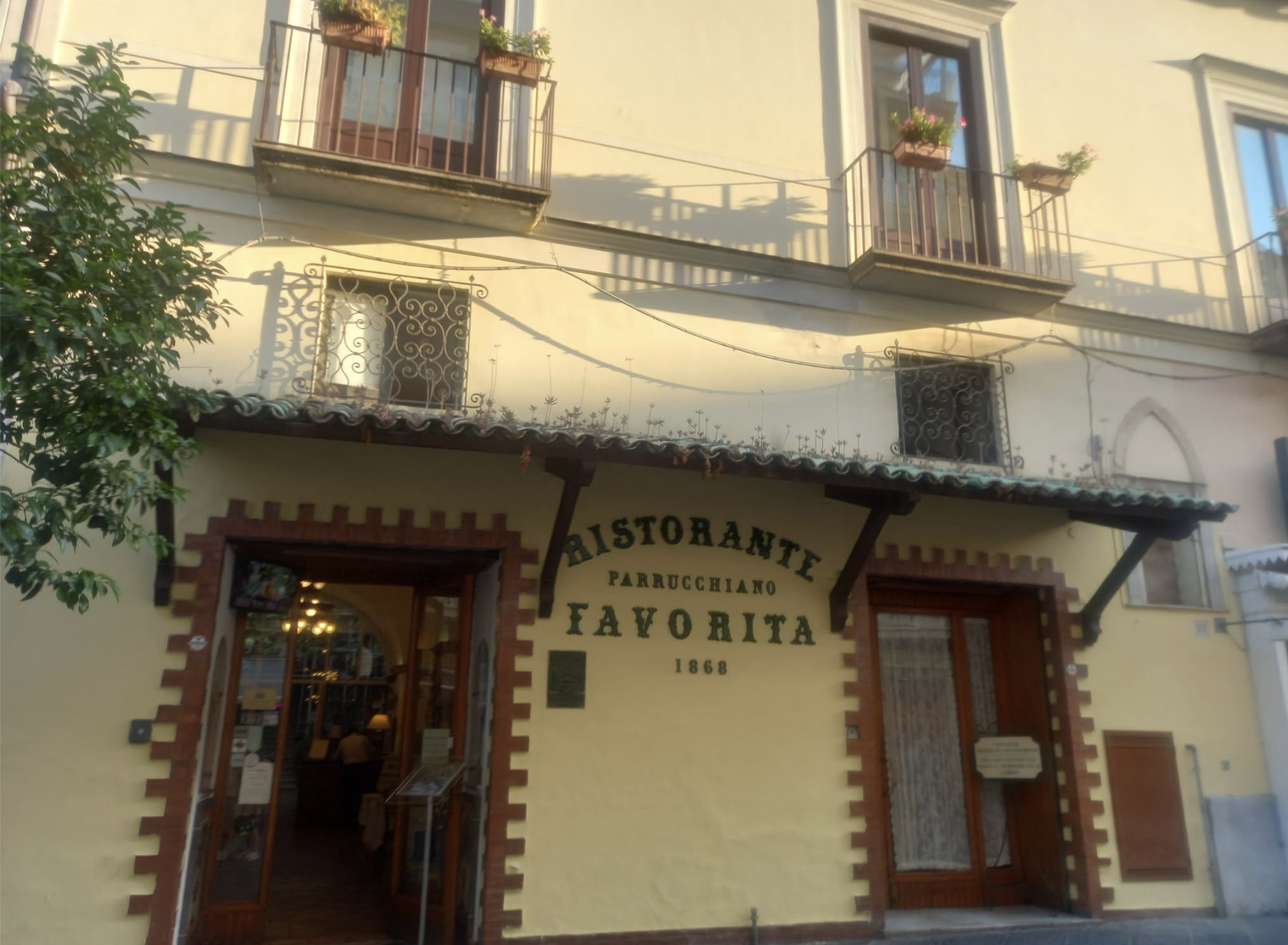
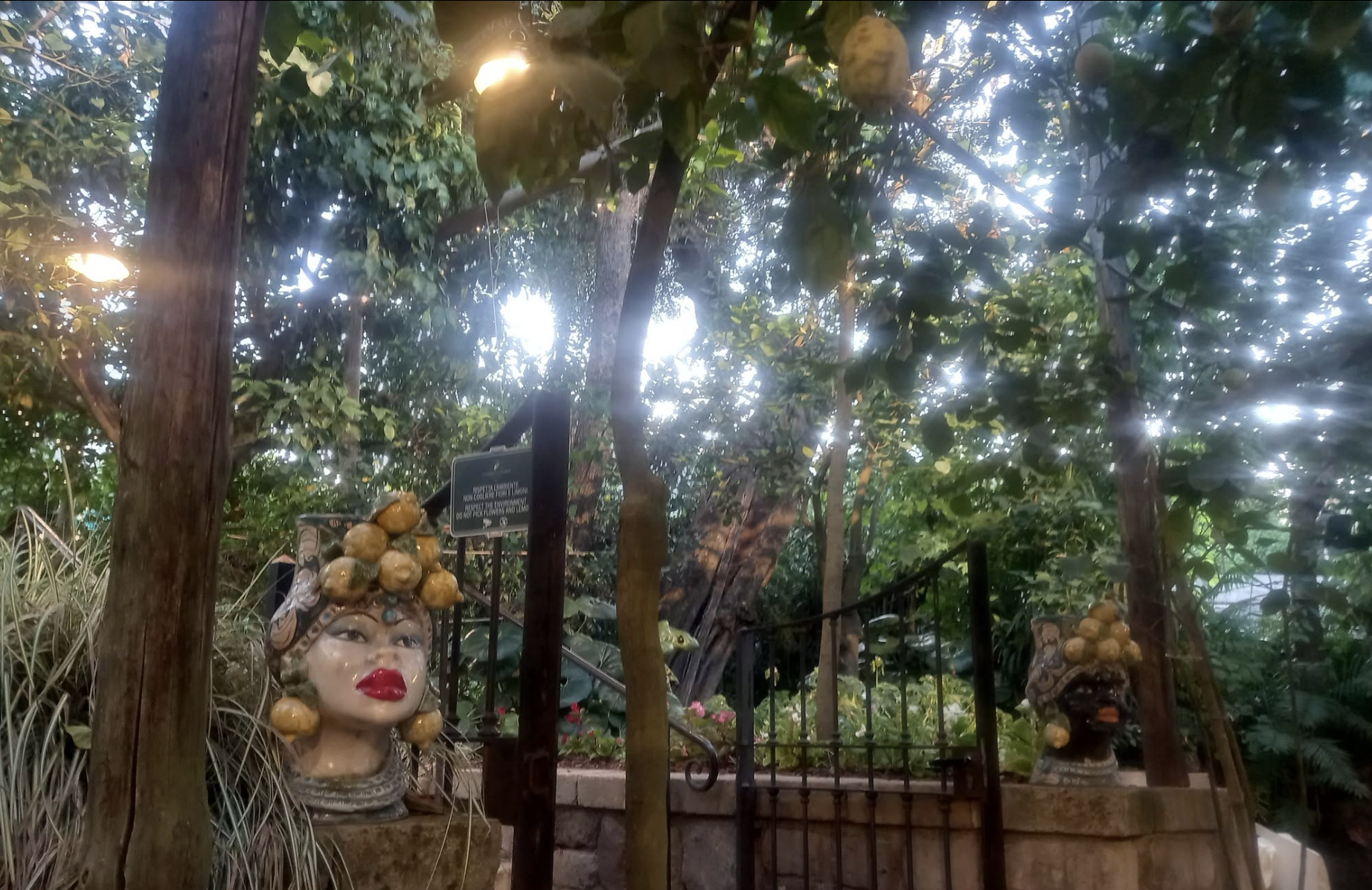
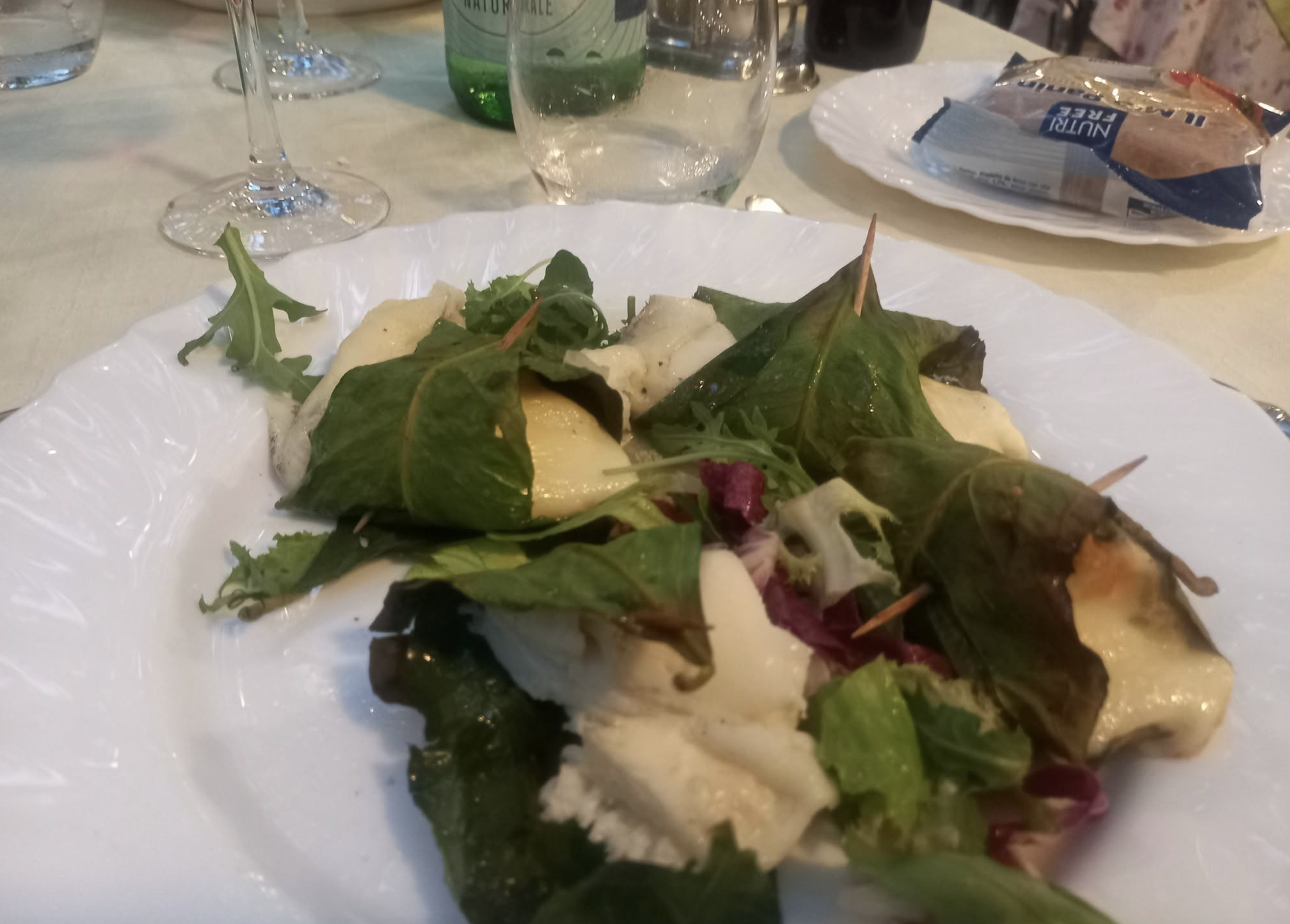
Once we returned to Sorrento, I happily waited over an hour in the lobby of Sorrento’s popular traditional restaurant, O’Parruchiano La Favorita (creators of cannelloni, renowned for its historic charm), to get a table in its enchanting, ceramic objets d’art-filled garden. The dishes here were not only authentic but quite substantial; the lemon-scented mozzarella starter was both divine and a meal on its own!
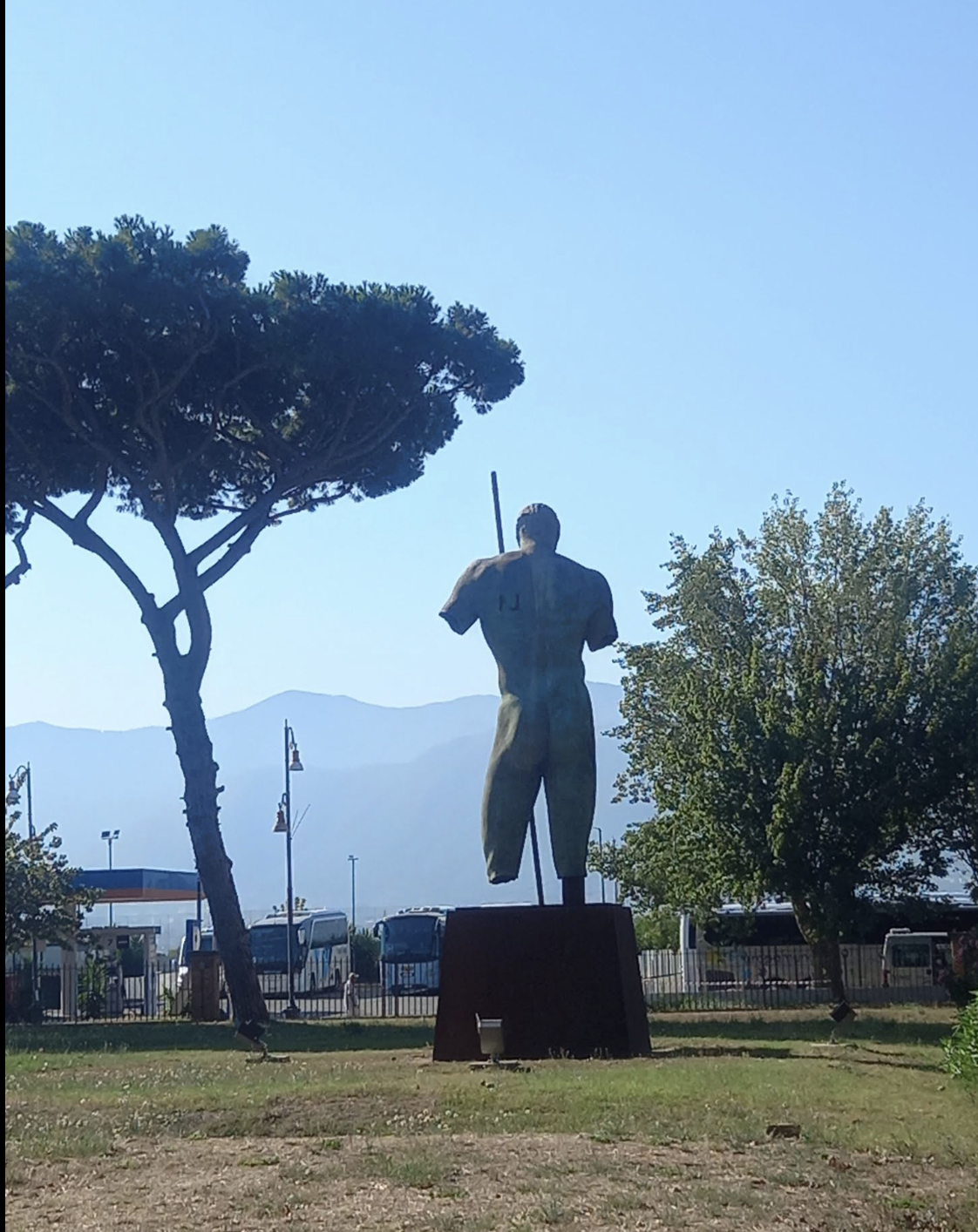
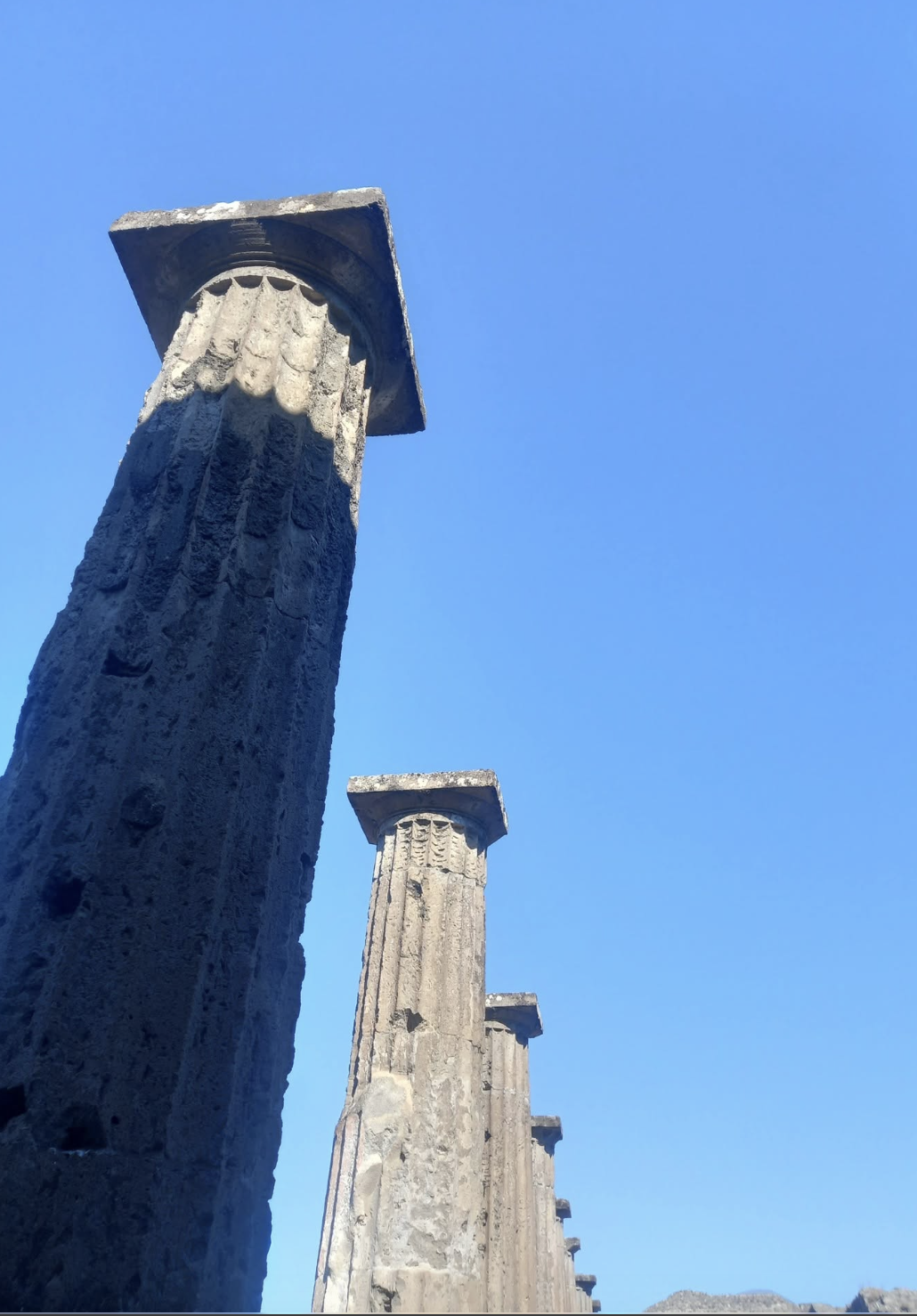
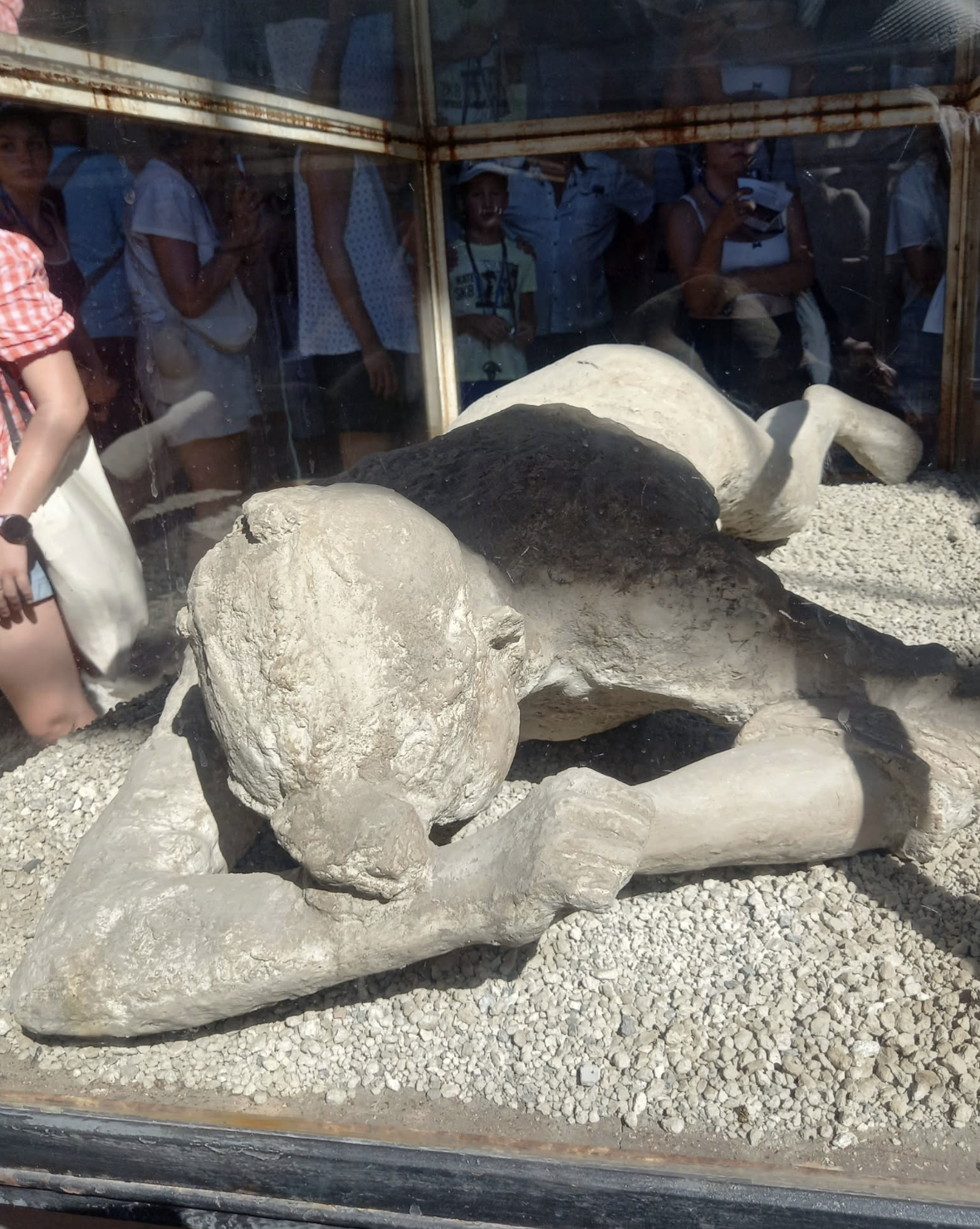
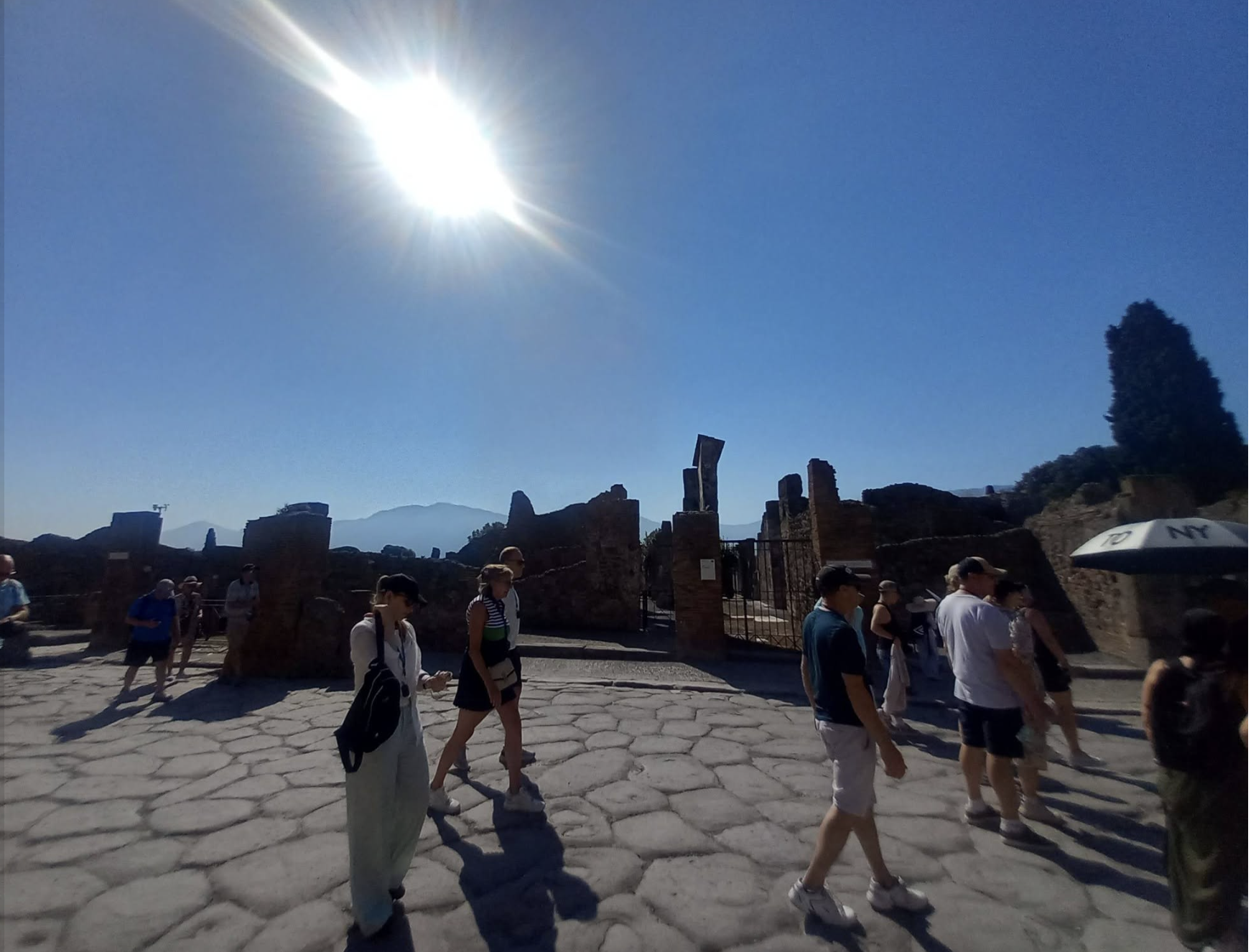
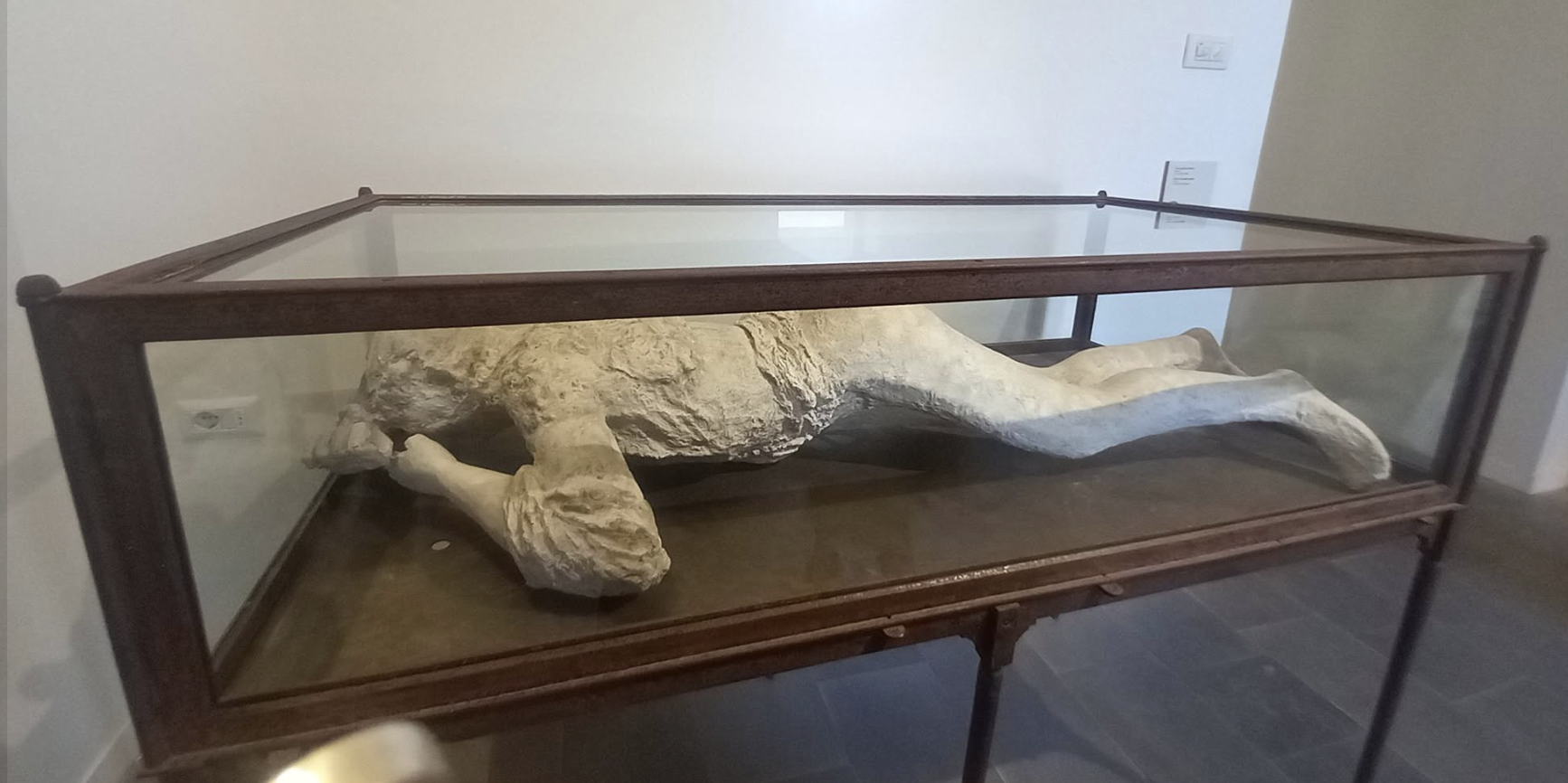
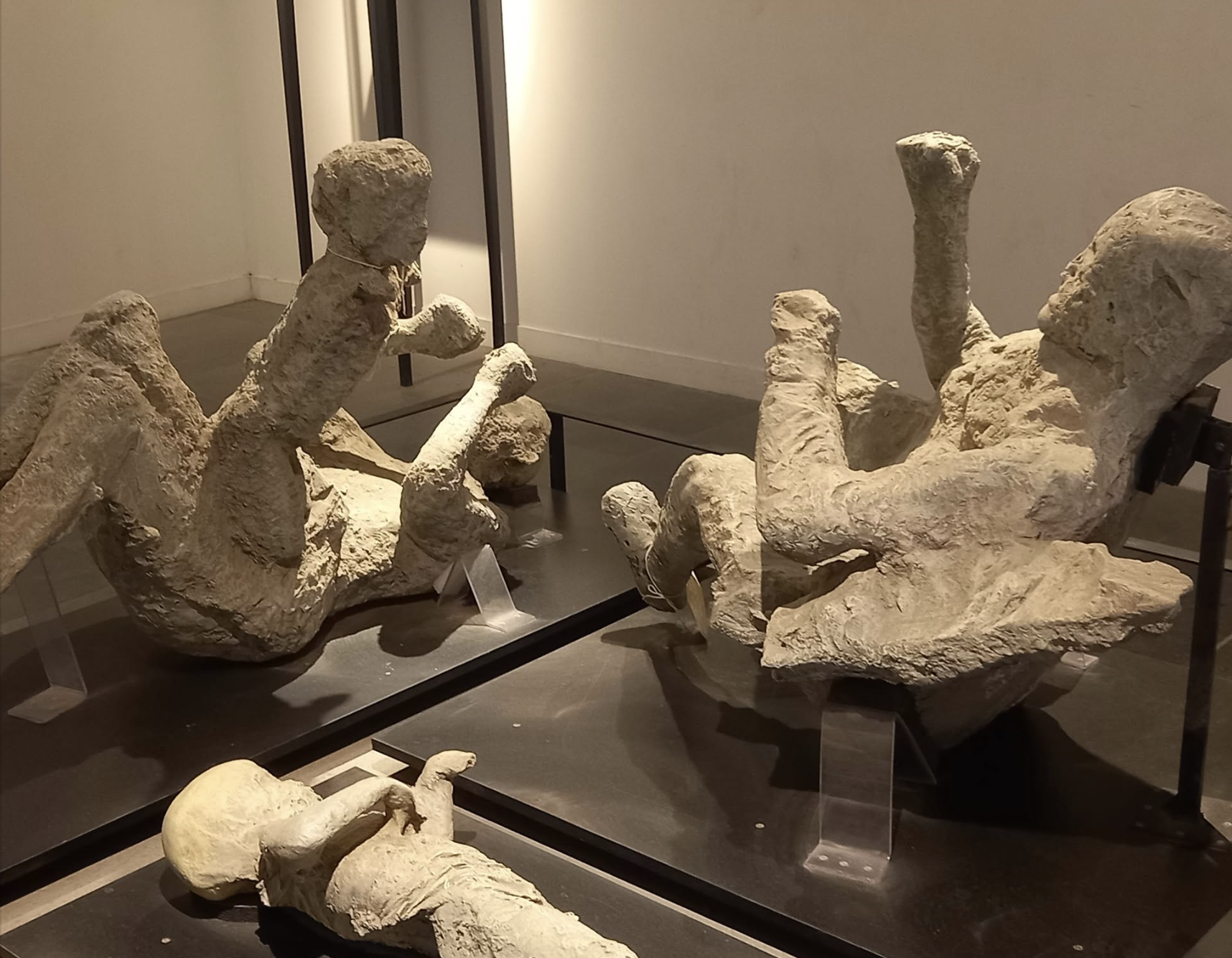
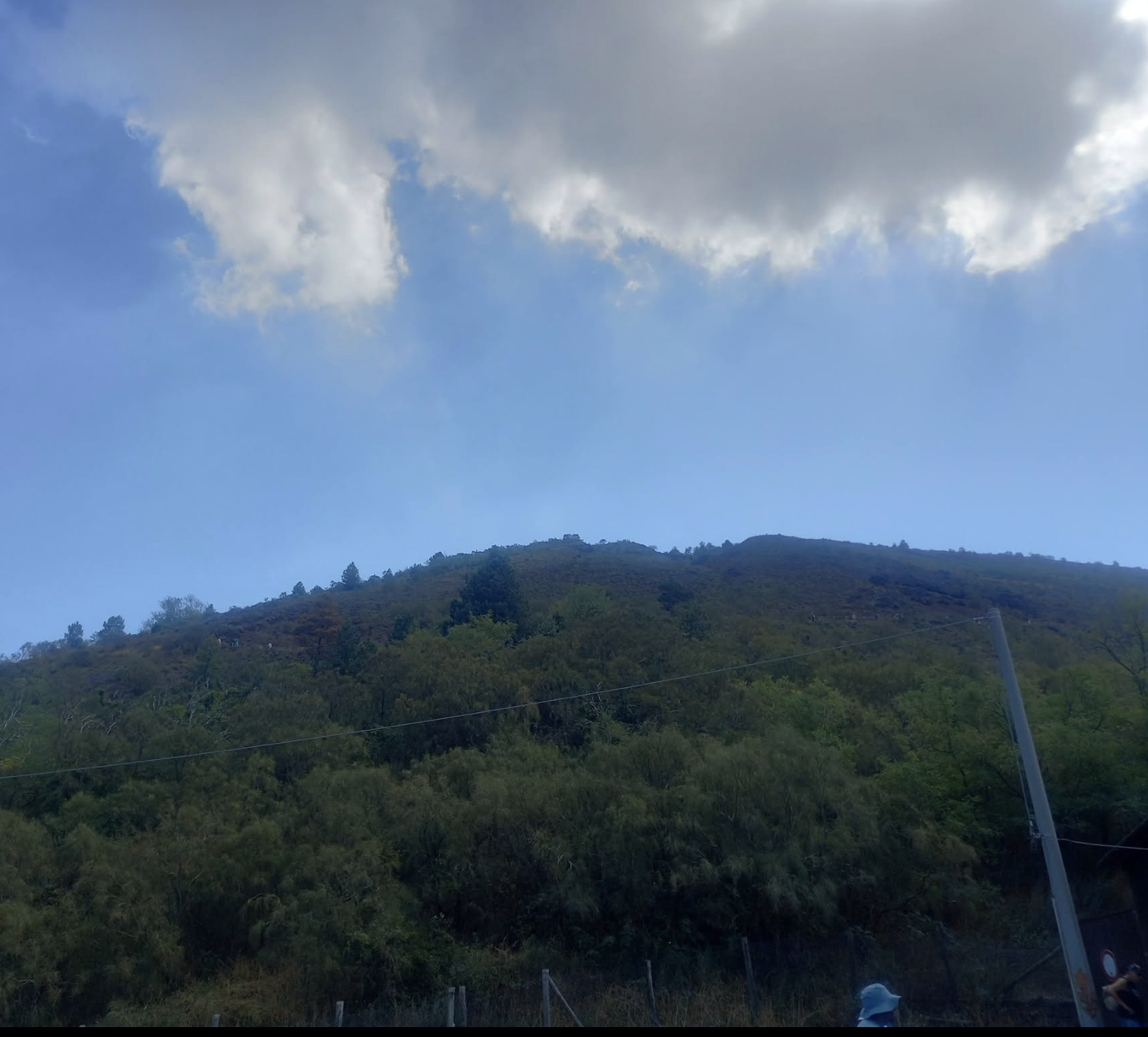
Clockwise from top left below: Entrance to the Pompeii Archaeological Park; pillars; one of the bodies (these are plaster casts made from cavities left by actual human forms during the excavation); fresco depicting one of the sexual offerings on the menu in the red-lantern district; more columns of pillars; Pompeii city ruins with Vesuvius in the background; another eruption victim; the top of Vesuvius; pics from O’Parruchiano restaurant in Sorrento; more plaster casts and views of Pompeii; colosseum at Pompeii
Ravello-oh-oh-oh
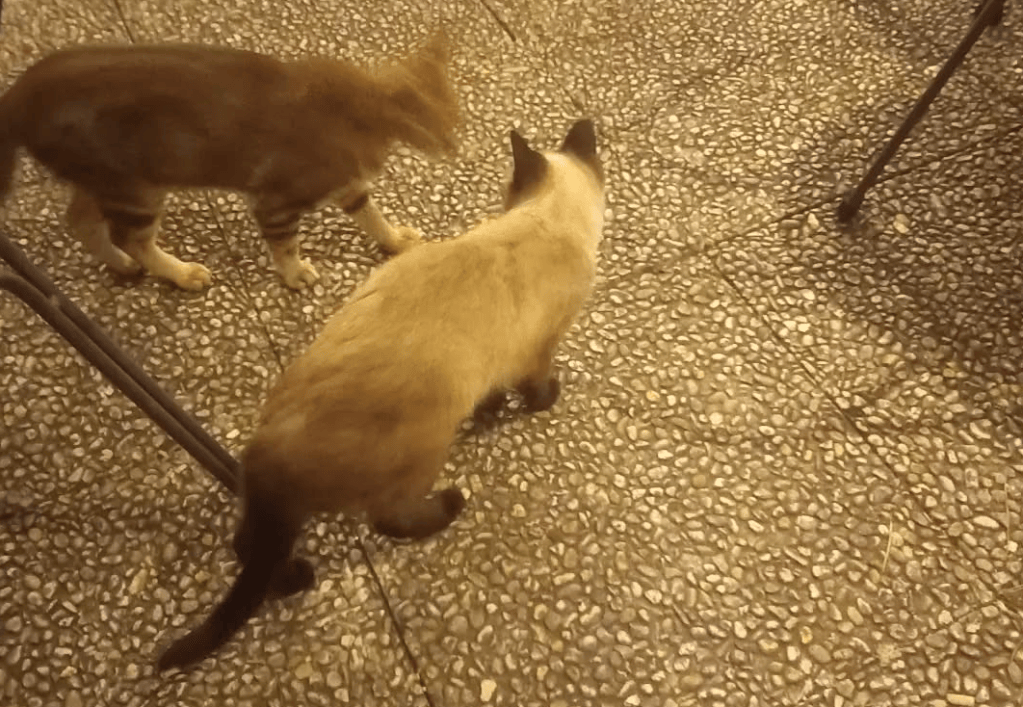
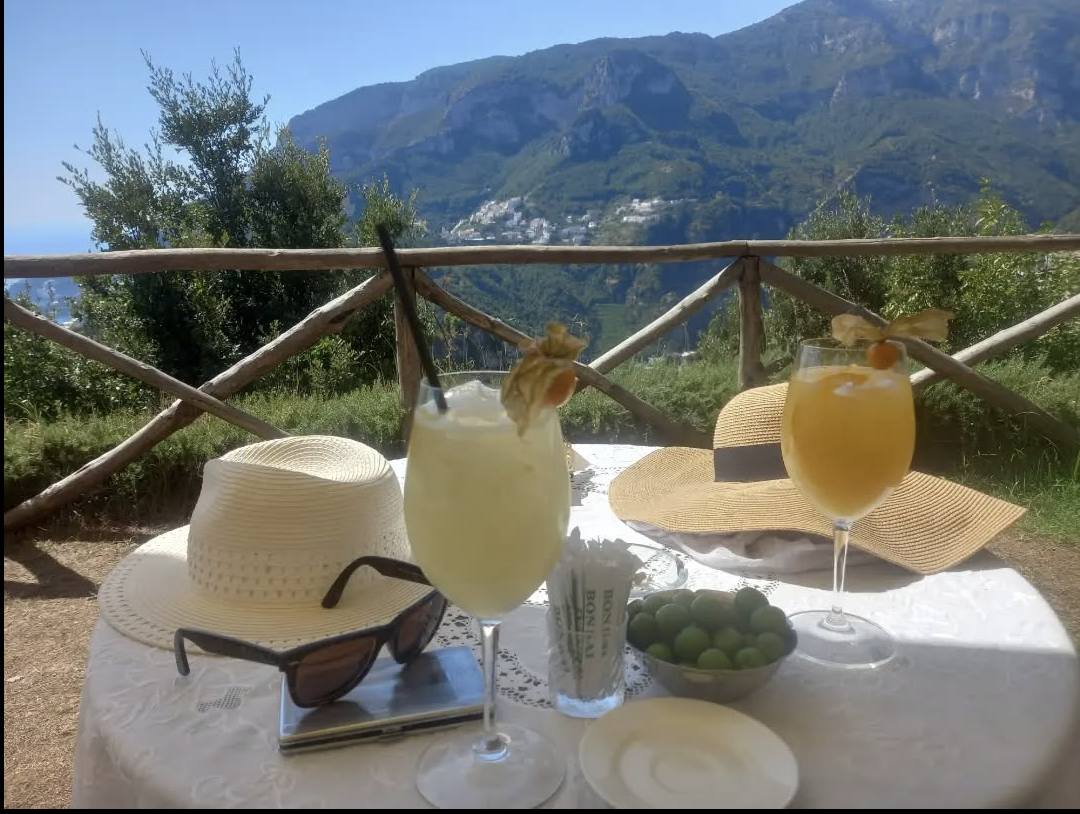
Considering all the walking and sightseeing and swimming off boats we’d done up until now, we were both beyond grateful to focus on simply relaxing on our last four days in Ravello. And what a glorious place for doing exactly that! (Ravello also happens to be a cat sanctuary; I even spotted a Siamese among the many hungry kitties looking for treats from guests of the outdoor bar/café near our hotel, where I happily whiled away several hours simply soaking in the vibes over several limoncello, Hugo and Aperol spritzes and chatting to friendly locals and fellow tourists.)
As I’d remembered driving along the famously twisty-turn-y, ’Mamma Mia!’ Amafli Coast Road with Roland 27 years ago, it was a delight to revisit this part of our trip with a private transfer from Villa Giovanna. Being that Ravello is pedestrian-only, unless you came with a car or booked a taxi — or are fit enough to tackle the steep 1,700 stone stairs from the smaller but equally enchanting seaside town of Atrani (best to visit if you wish to avail of a somewhat sandy though still rocky public beach) — it’s a bit difficult to go anywhere except by public bus. However, judging by my experience of queuing for over an hour to get on the crowded local bus for a day trip to Amalfi (I gave up in the end, opting for a refreshing swim in the infinity pool at our 4-star spa hotel, Hotel Villa Fraulo), it is best simply to relax and be ravished by Ravello’s quintessentially Italian Mediterranean charms — of which there are many.
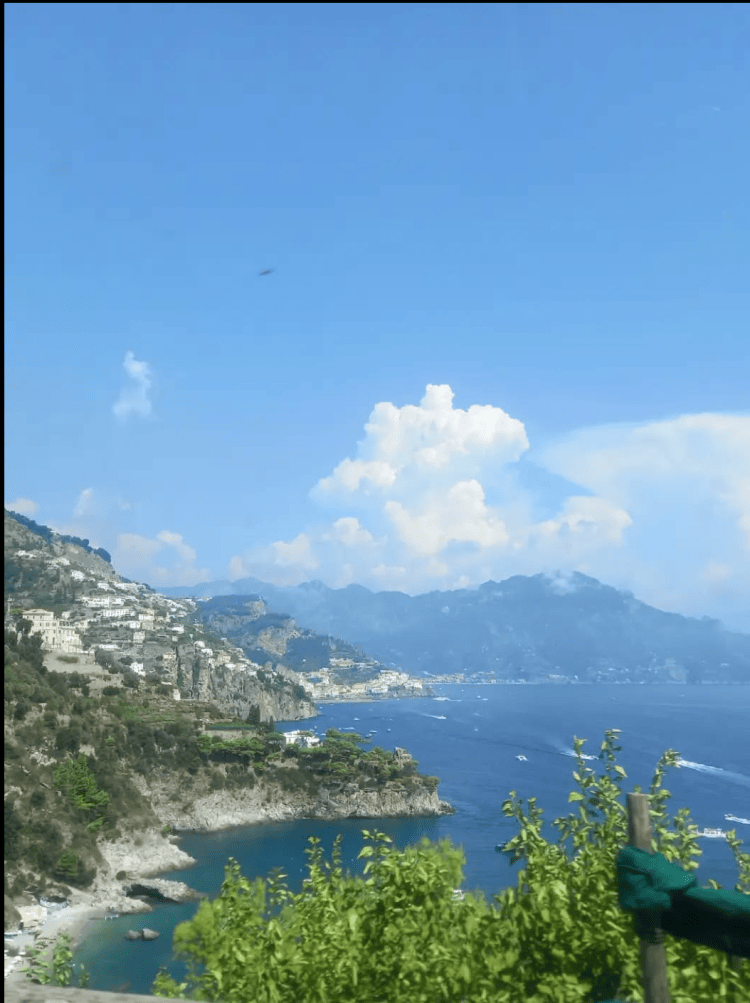
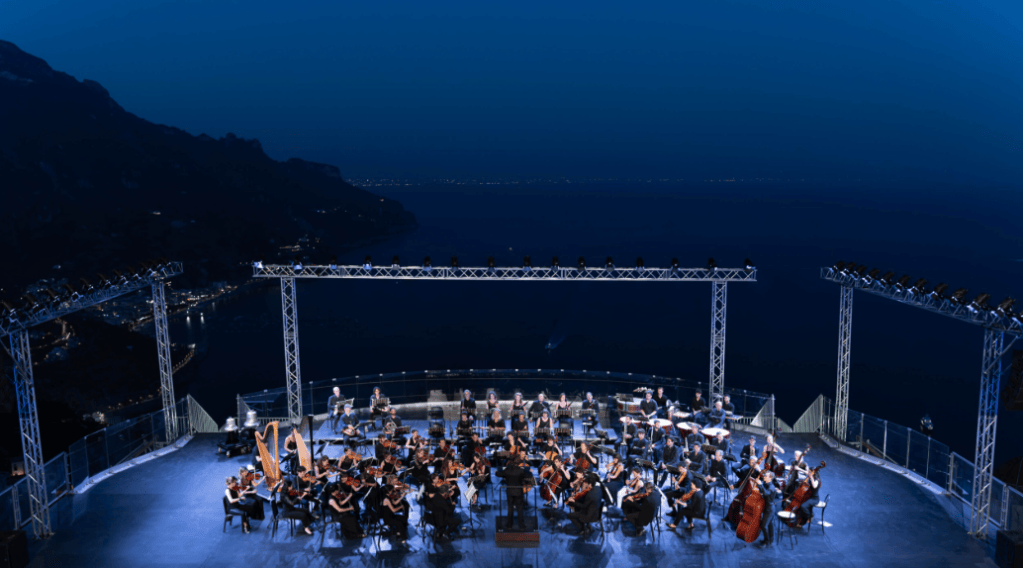
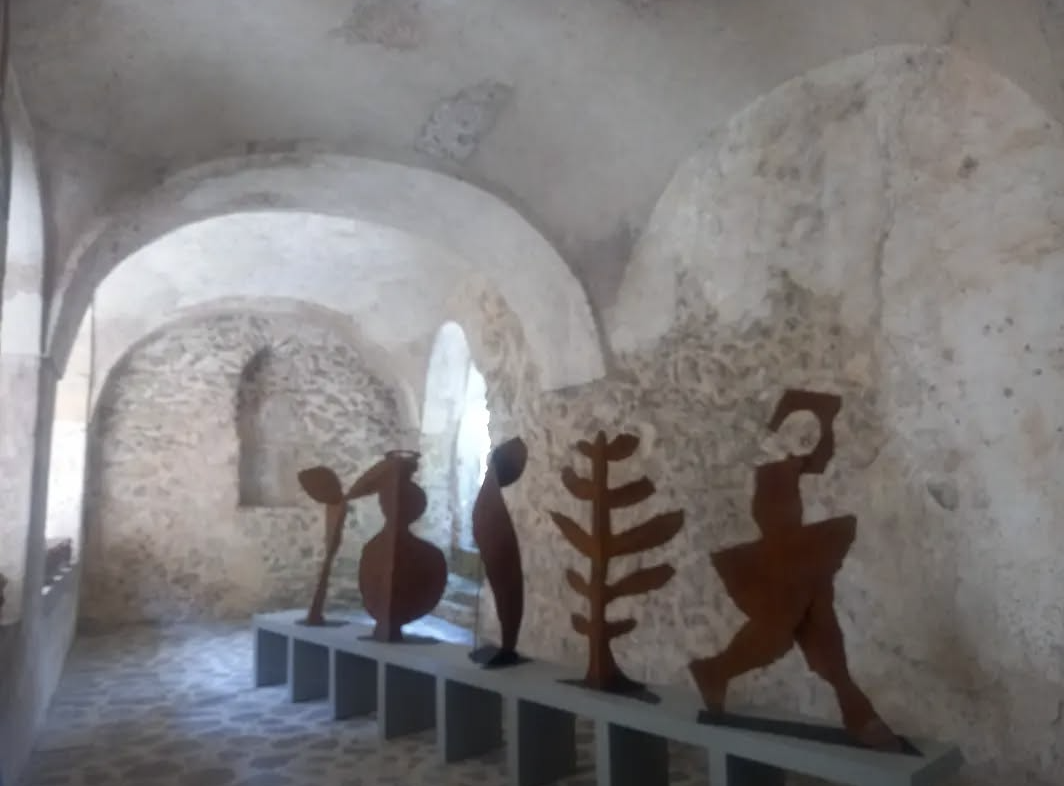
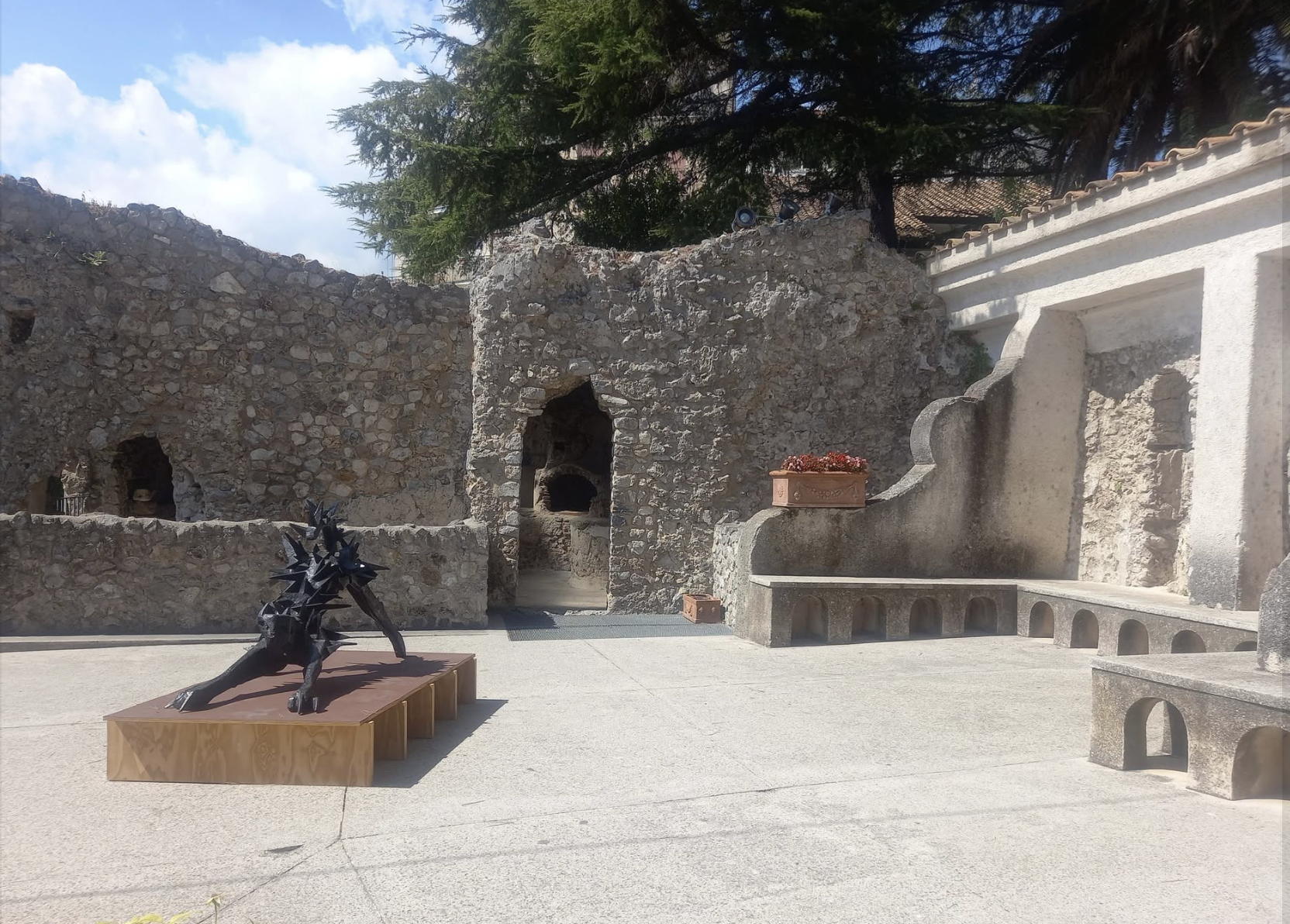
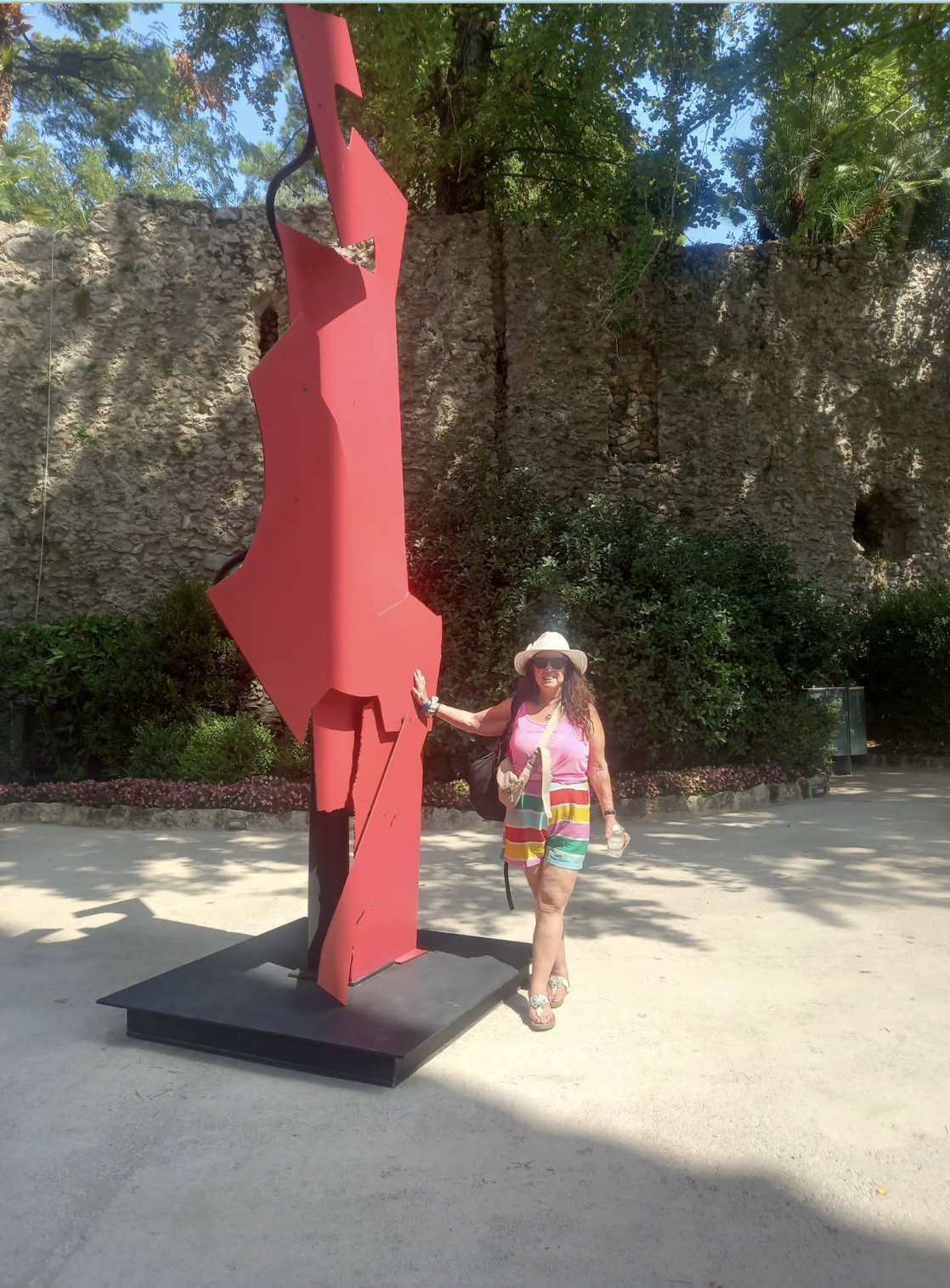
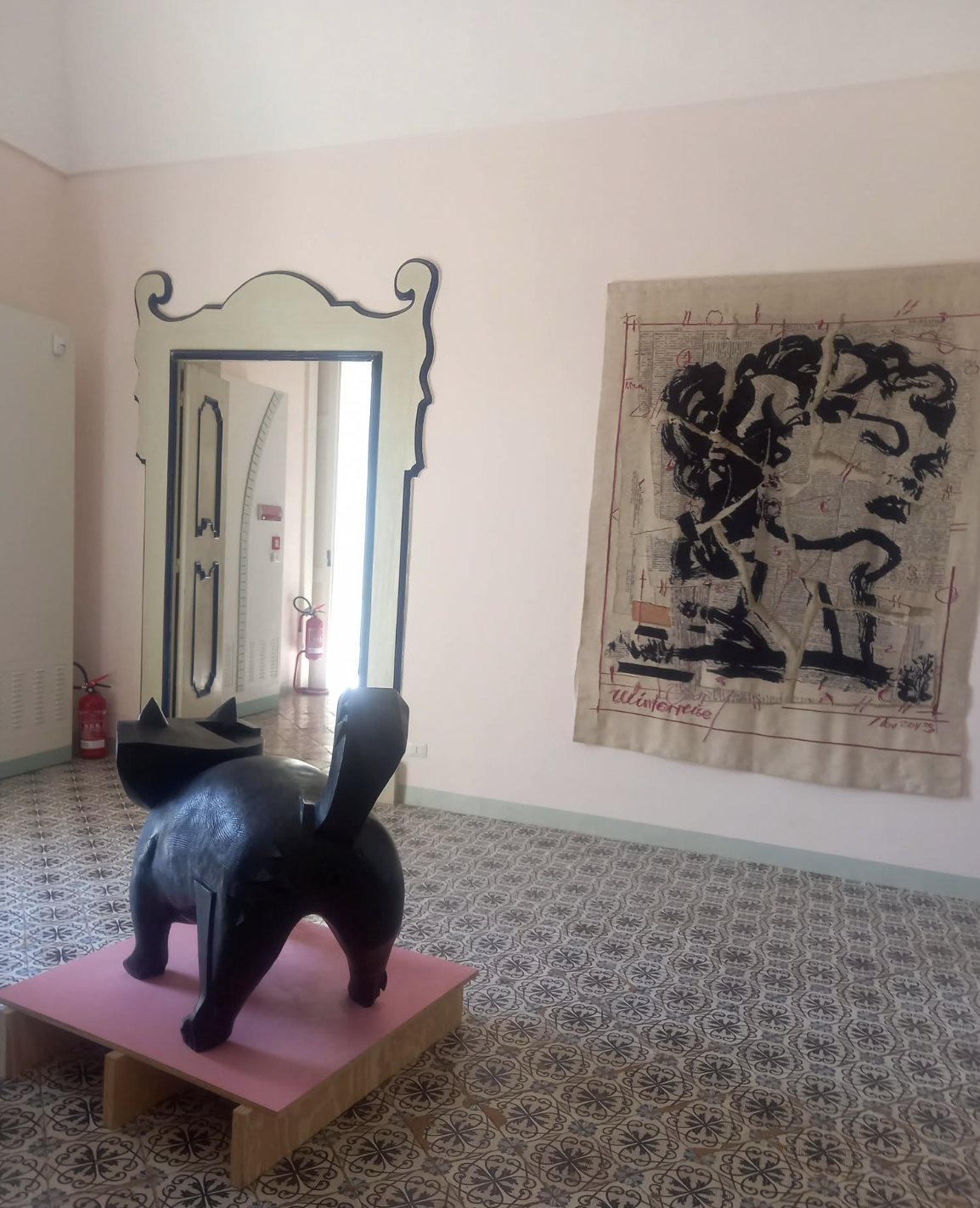
Perched 1,200 feet up from the coast, this spectacularly beautiful, charming, historic hilltop town, now a UNESCO World Heritage Site, commands the most breath-taking views of the Amalfi Coast. Famous for being a ‘city of music’ due to its associations with Wagner, whose 1880 visit inspired Parsifal, it hosts the acclaimed Ravello Festival from July to September each year. This is held in the landscaped belvedere gardens at Ravello’s impressive, 5th-century-origin landmark Villa Rufolo, which directly overlooks the Mediterranean and dramatic Amalfi coastline — arguably the most stunning open-air theatre backdrop in the world. (Villa Rufolo also hosts significant art exhibitions, including a stirring exhibition of South Africa’s renowned, multi-discipline artist William Kentridge’s sculptures, paintings, charcoal drawings, prints and films, which we were privileged to see while visiting there.)
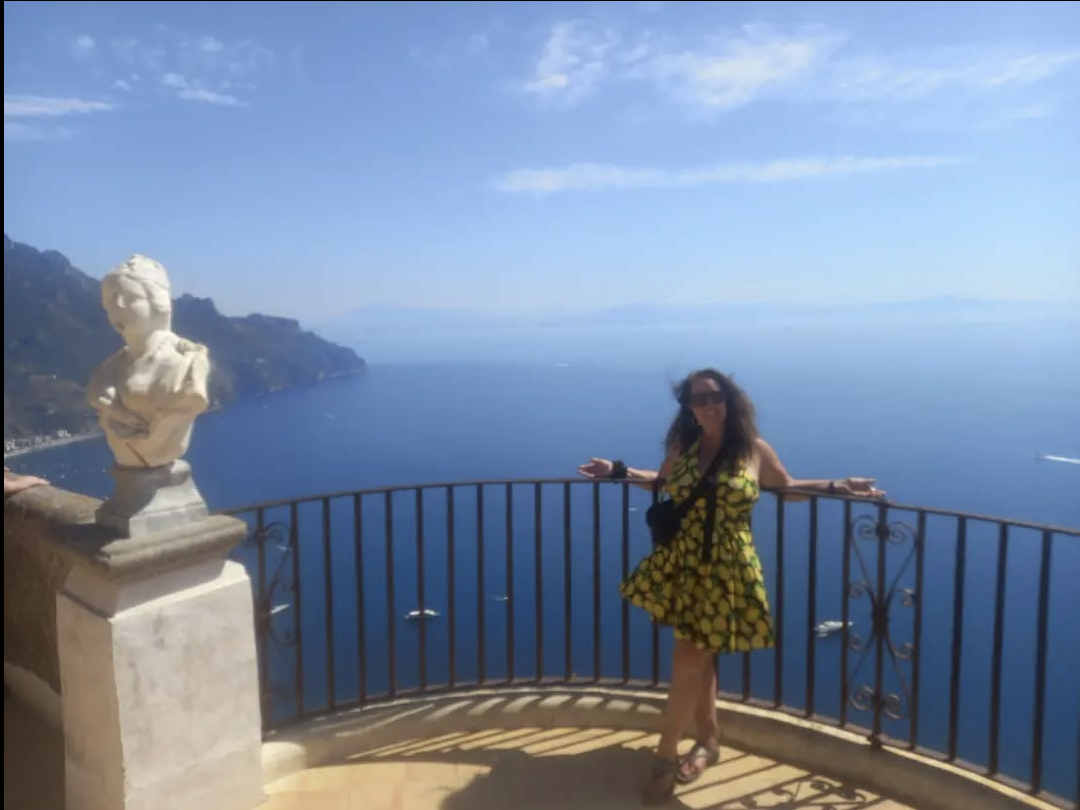
Considering Ravello was originally founded in the 5th century as a sanctuary from invading northern barbarians, it later became the home of wealthy patrician families such as the Rufolos, members of mercantile nobility. It was these families who created Villa Rufolo (near the Duomo in the city’s centre), successively adding the gardens and additional features, such as the Moorish-influenced cloisters, and connecting it with the wider art world. The other famous villa, Villa Cimbrone, with its infinitely Instagrammable Terrazza dell’Infinito (Terrace of Infinity) belvedere — dates back to the 11th century, but it was British nobleman Lord Grimsby who renovated the villa and its gardens, introducing its most famous standout feature.
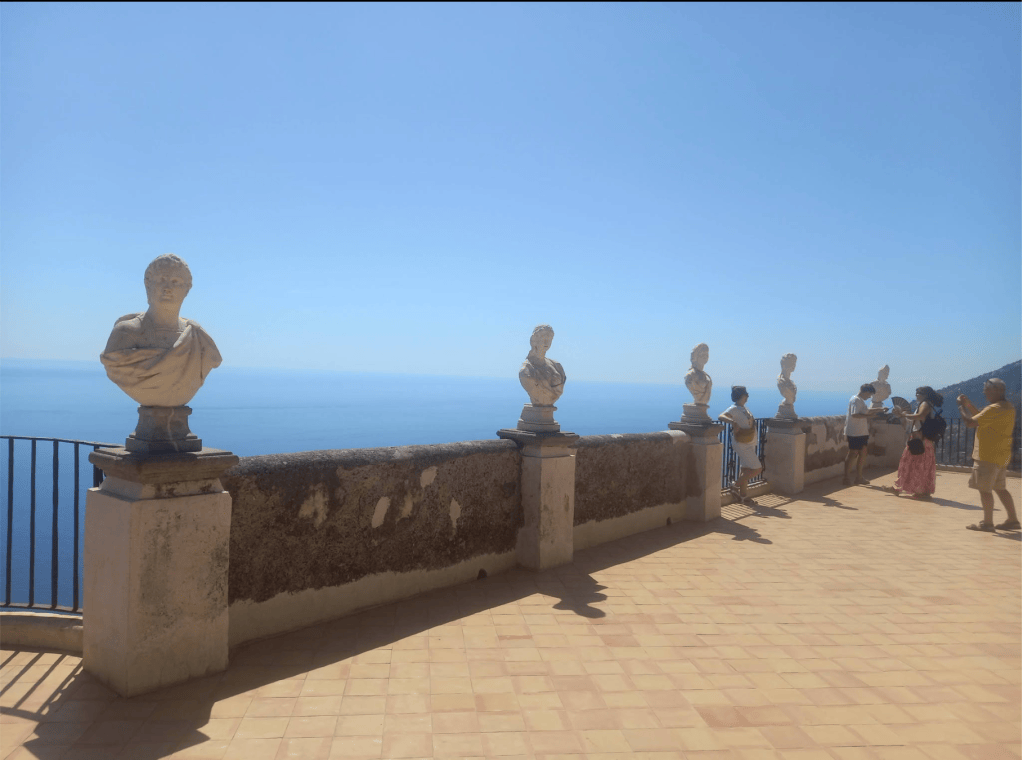
“The most beautiful place that I had ever seen in all my travels [is] the view from the belvedere of the Villa Cimbrone on a bright winter’s day, when the sky and the sea were each so vividly blue that it was not possible to tell one from the other.”
—
— GORE VIDAL
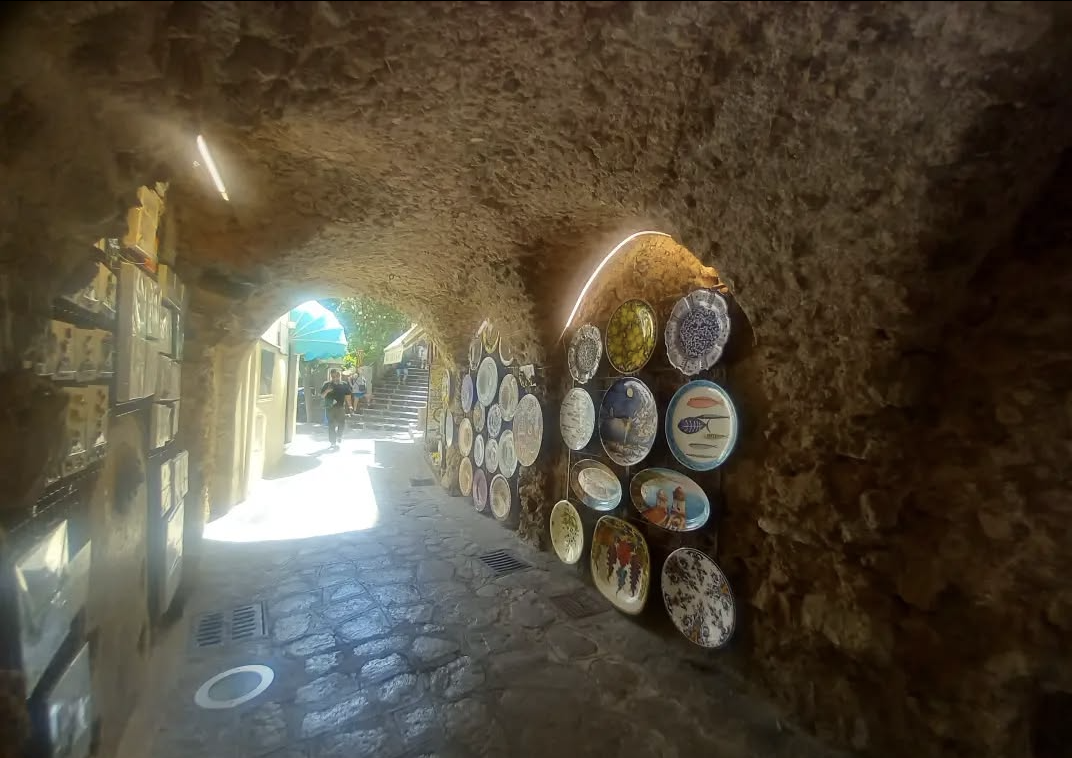
Wandering around Ravello’s beautifully preserved Mediaeval alleyways and churches, palazzos, boutique shops and restaurants selling local artisanal goods such as olive oil, ceramics and limoncello (not to omit the area’s signature lemon sorbet inside a frozen, hollowed-out lemon), and relaxing in the landscaped grounds and open-air terraces of its centuries-old villas and magnificent palazzos (now mostly 4* and 5* hotels and restaurants), you can see why celebrities from every era have flocked here to sample the true essence of ‘La Dolce Vita’.
These include: composers Richard Wagner, Edvard Grieg and Leonard Bernstein; artists MC Escher, Joan Miró and Frederick Turner; writers Boccaccio (who set part of The Decameron in Villa Rufolo), Oscar Wilde, Ernest Hemingway, Truman Capote, DH Lawrence, EM Forster, Tennessee Williams, Virginia Woolf, André Gide, John Maynard Keynes and Gore Vidal; dancer Rudolf Nureyev; opera singer Maria Callas; directors Franco Zeffirelli, John Huston and Pier Paolo Pasolini; and actors Greta Garbo (commemorated with a plaque within the Villa Rufolo Hotel grounds), Gregory Peck, Humphrey Bogart, Gina Lollobrigida, Peter Lorre, Antony Burgess, Elizabeth Taylor, Richard Burton and Lawrence Olivier, among others. Even British PM Winston Churchill, US president Dwight Eisenhower, and first lady Jackie Kennedy and her Greek shipping magnate second husband Aristotle Onassis came here.
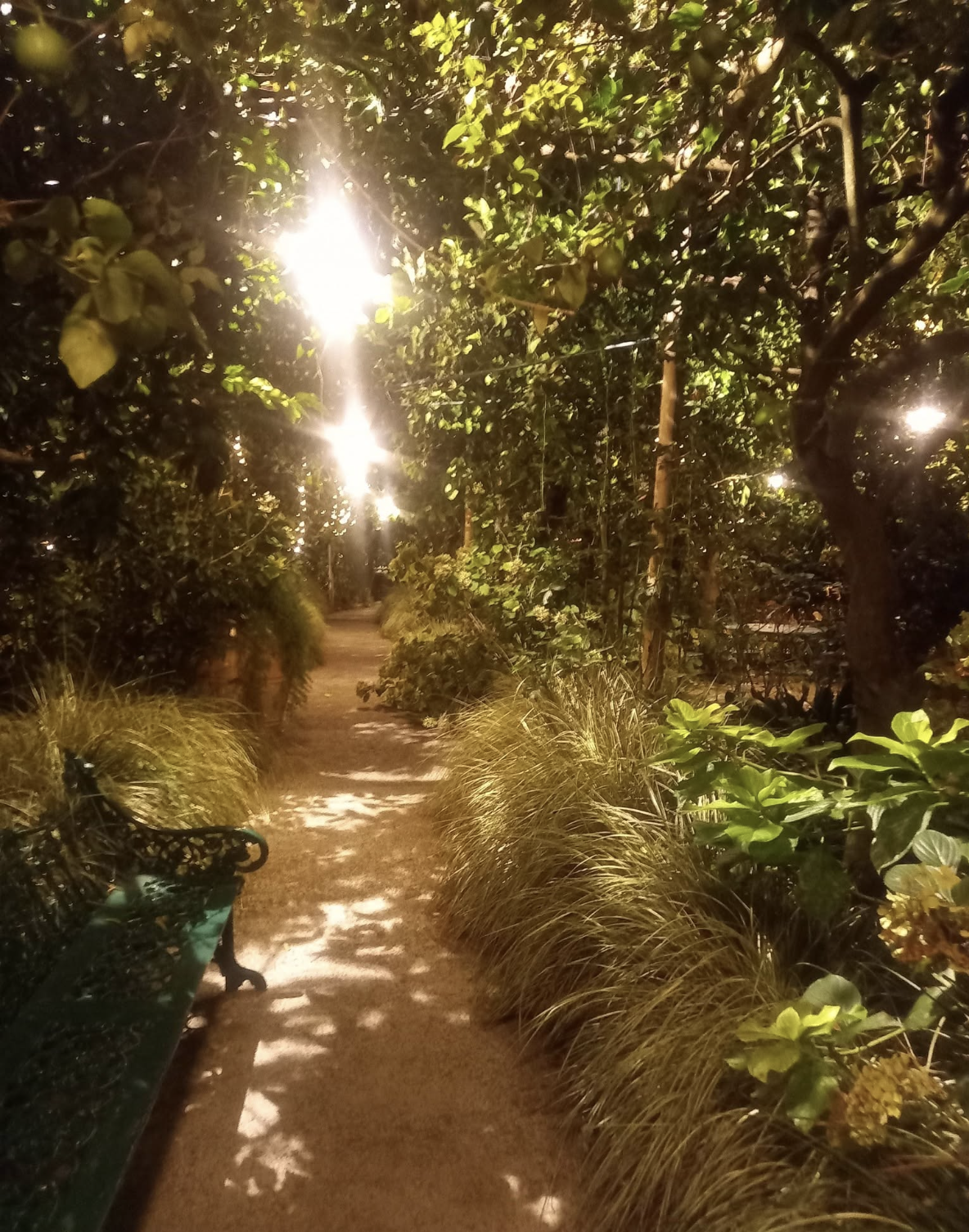
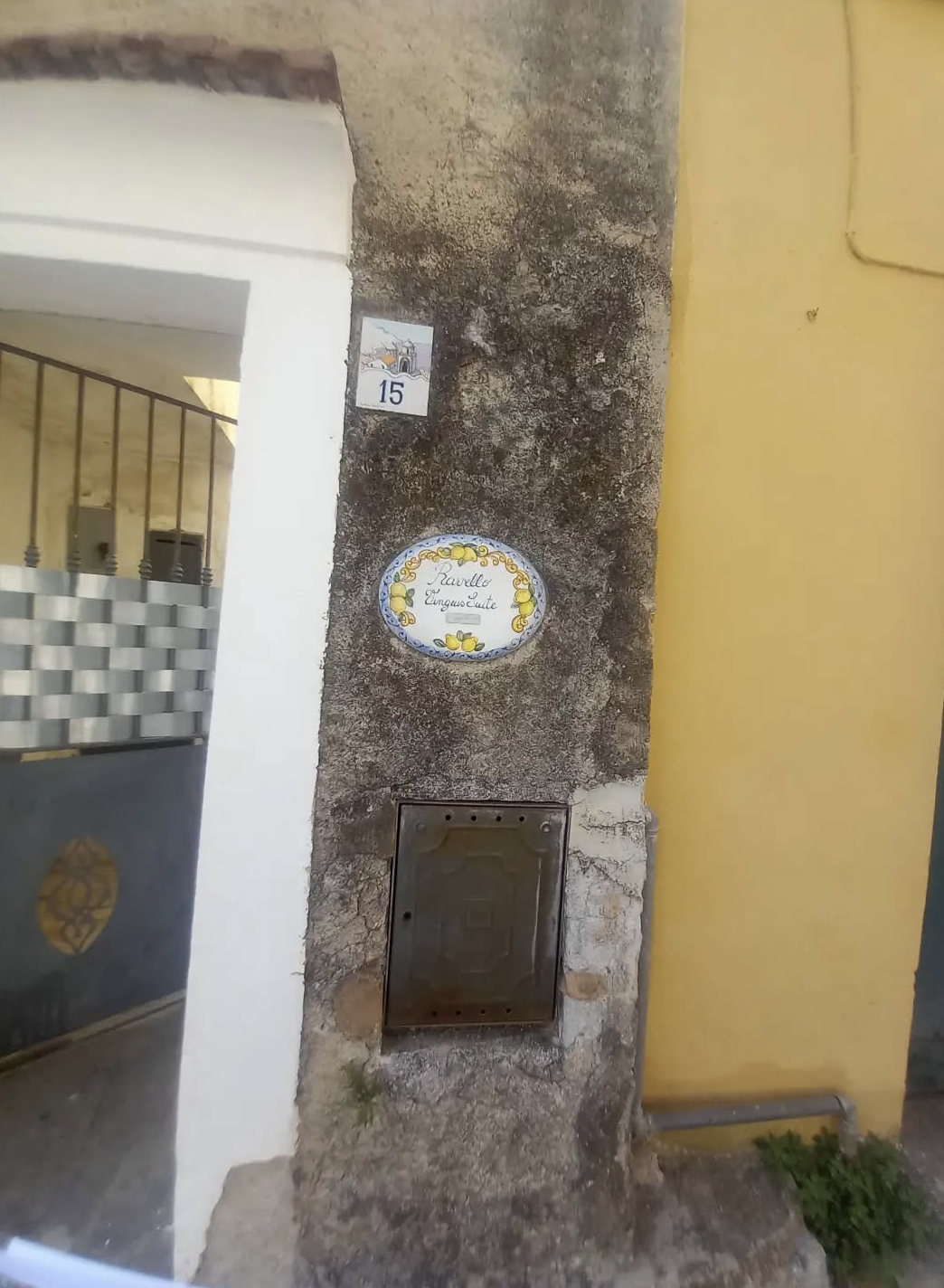
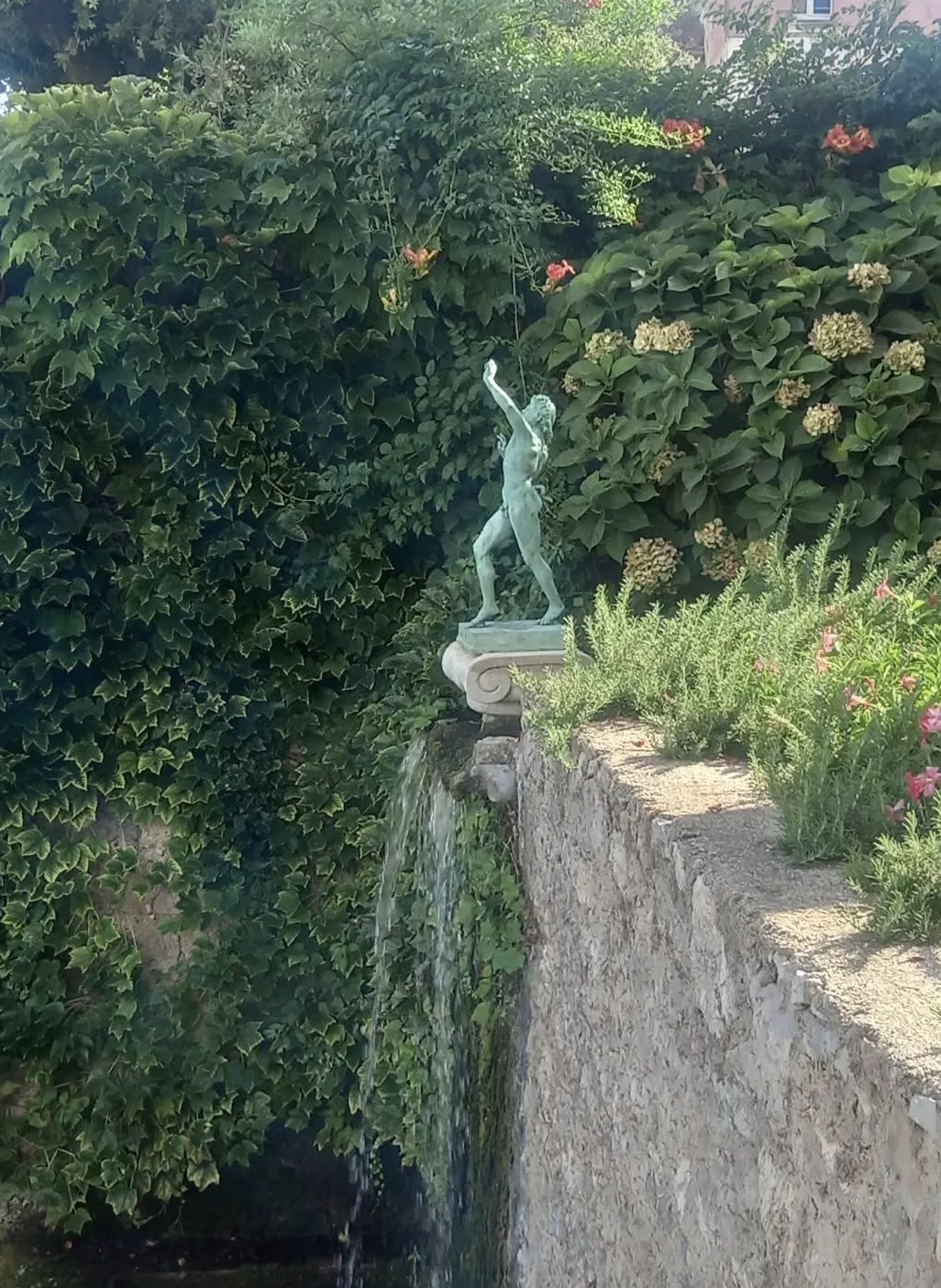
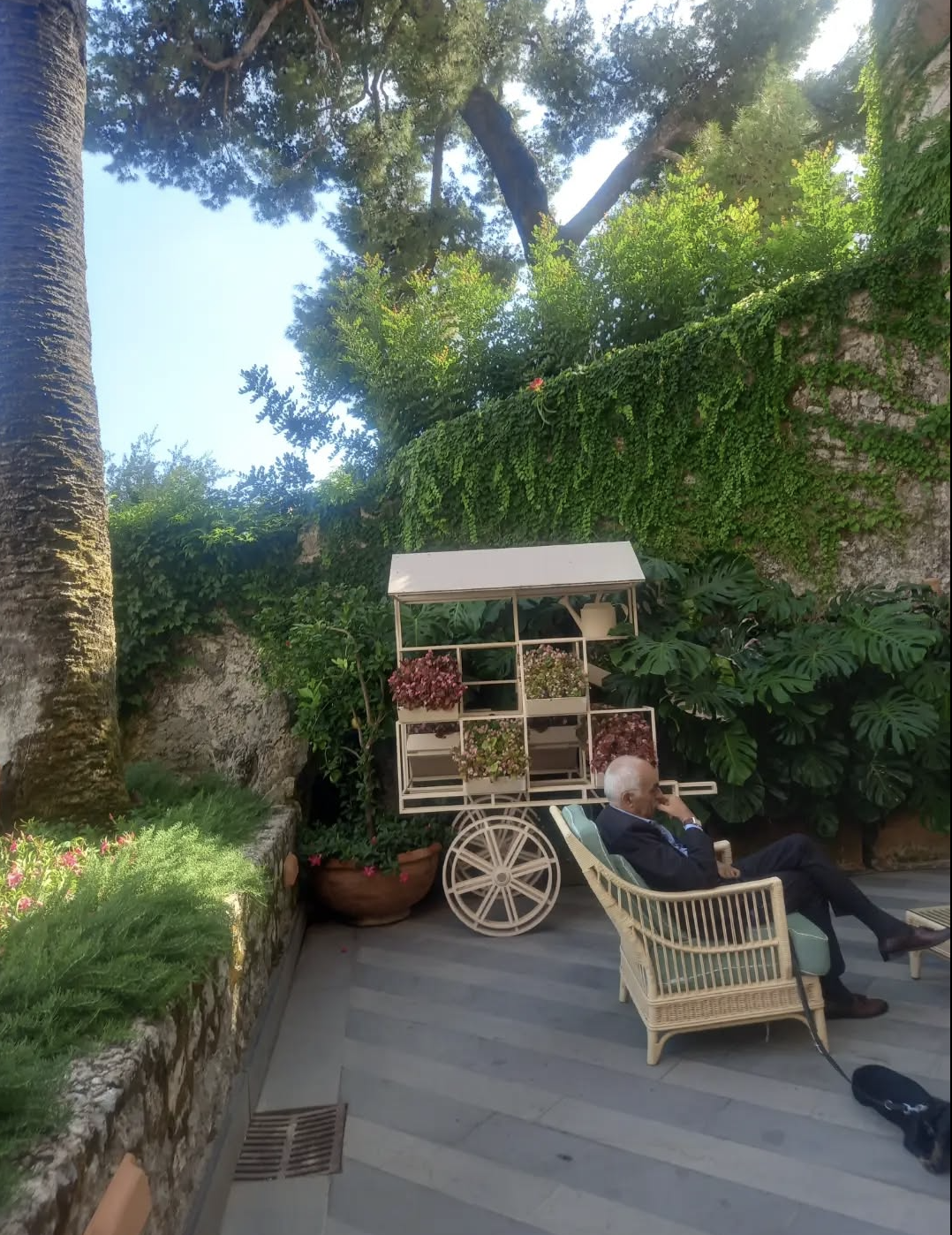
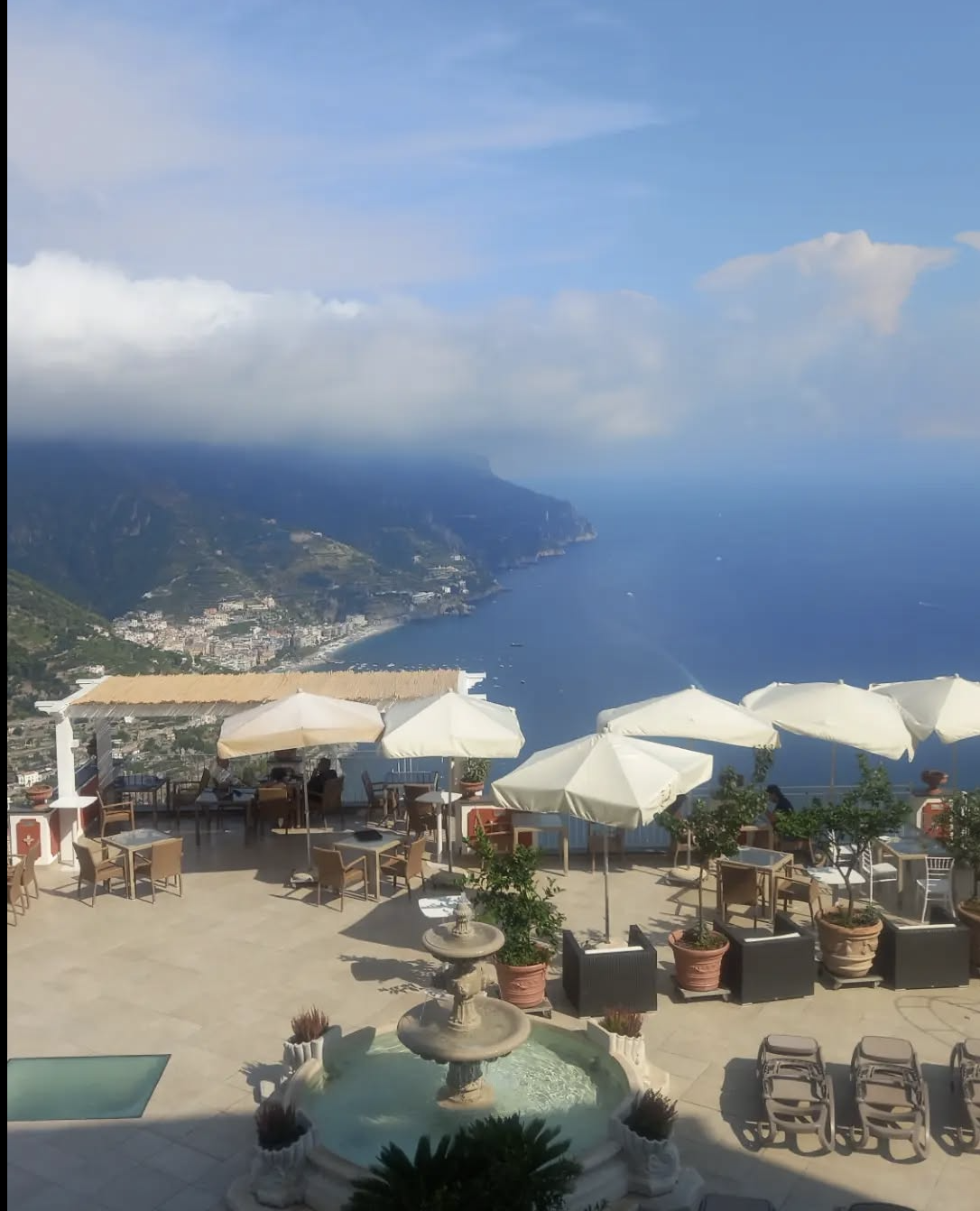
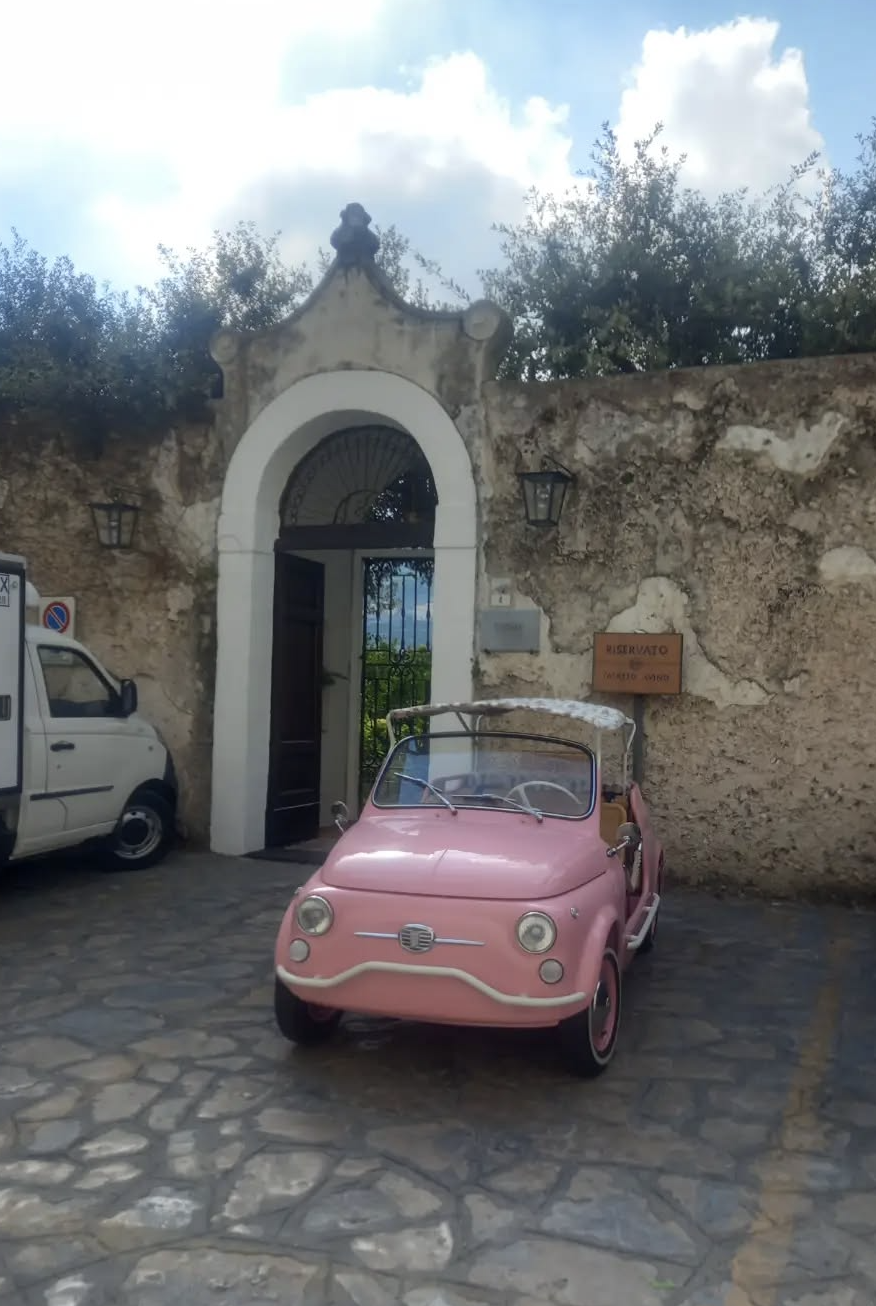
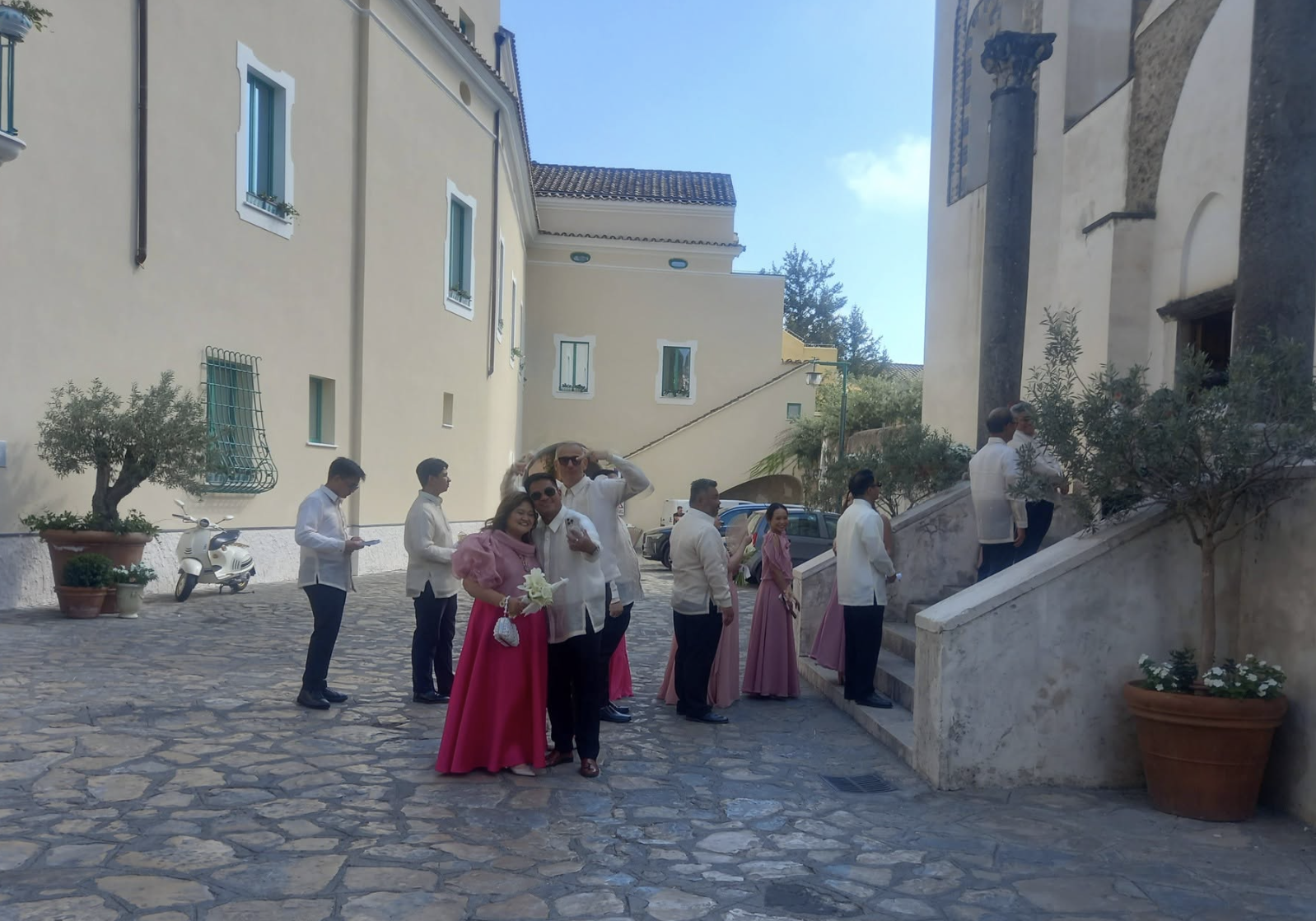
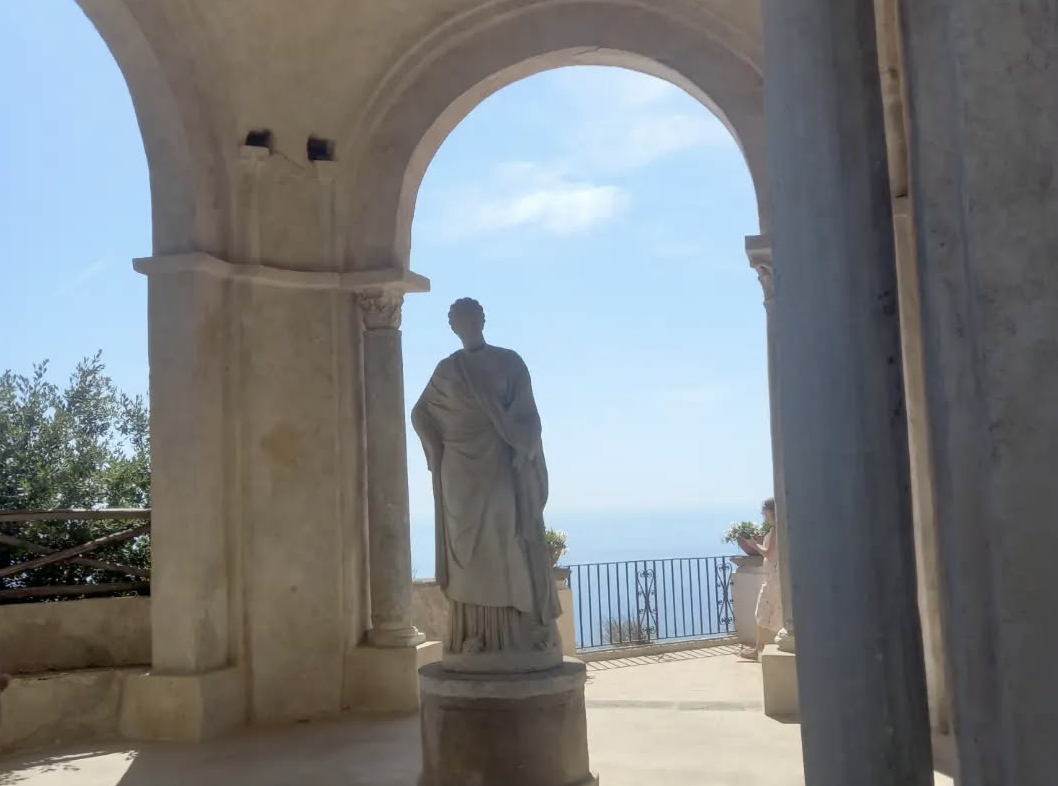
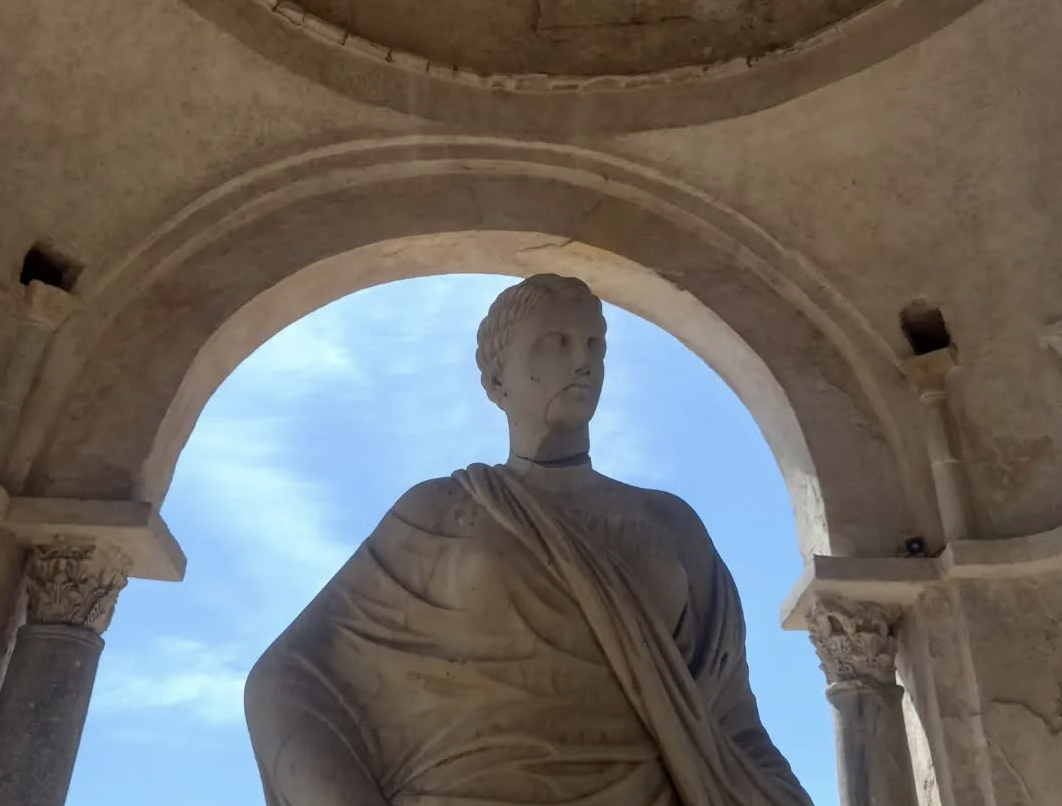
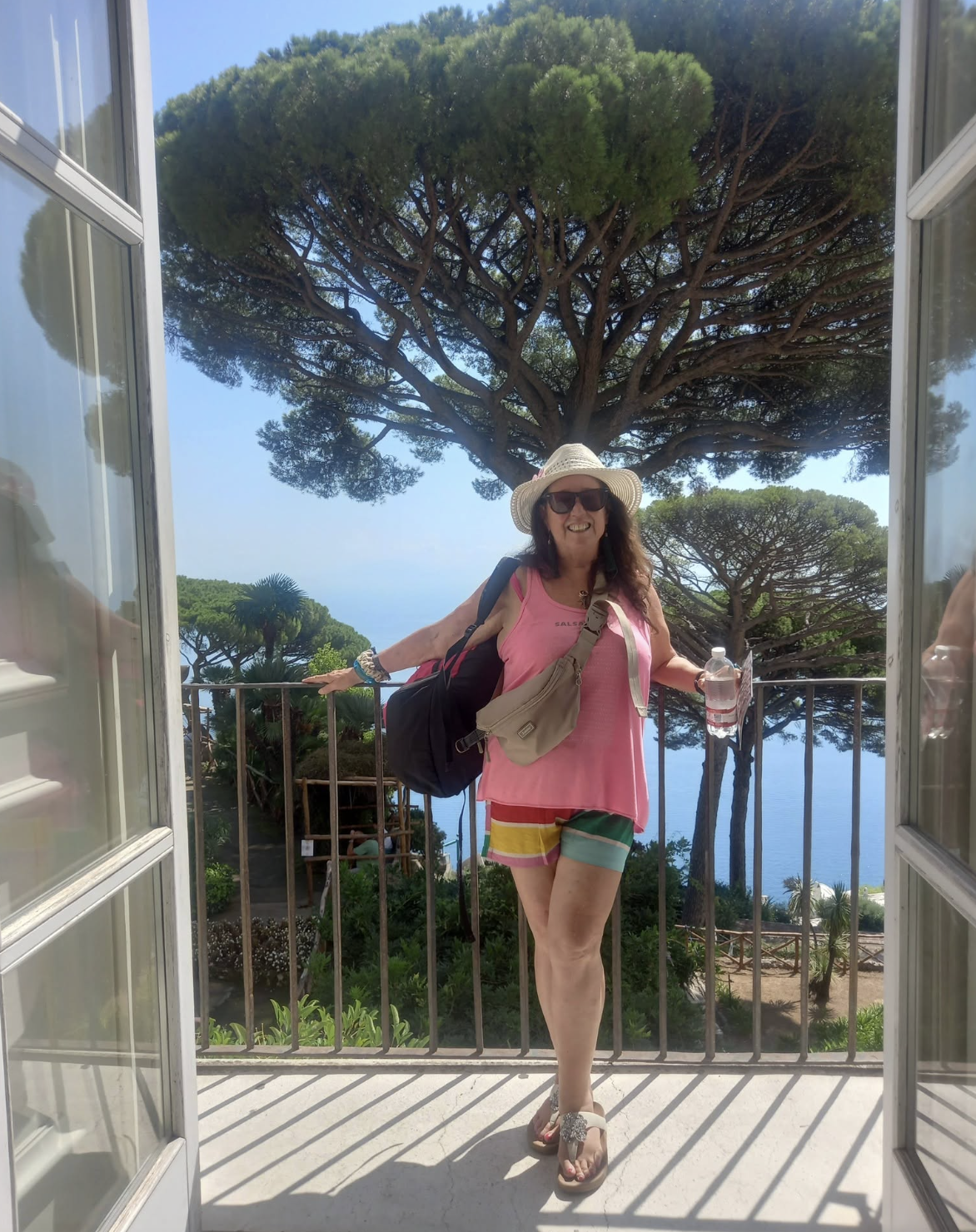
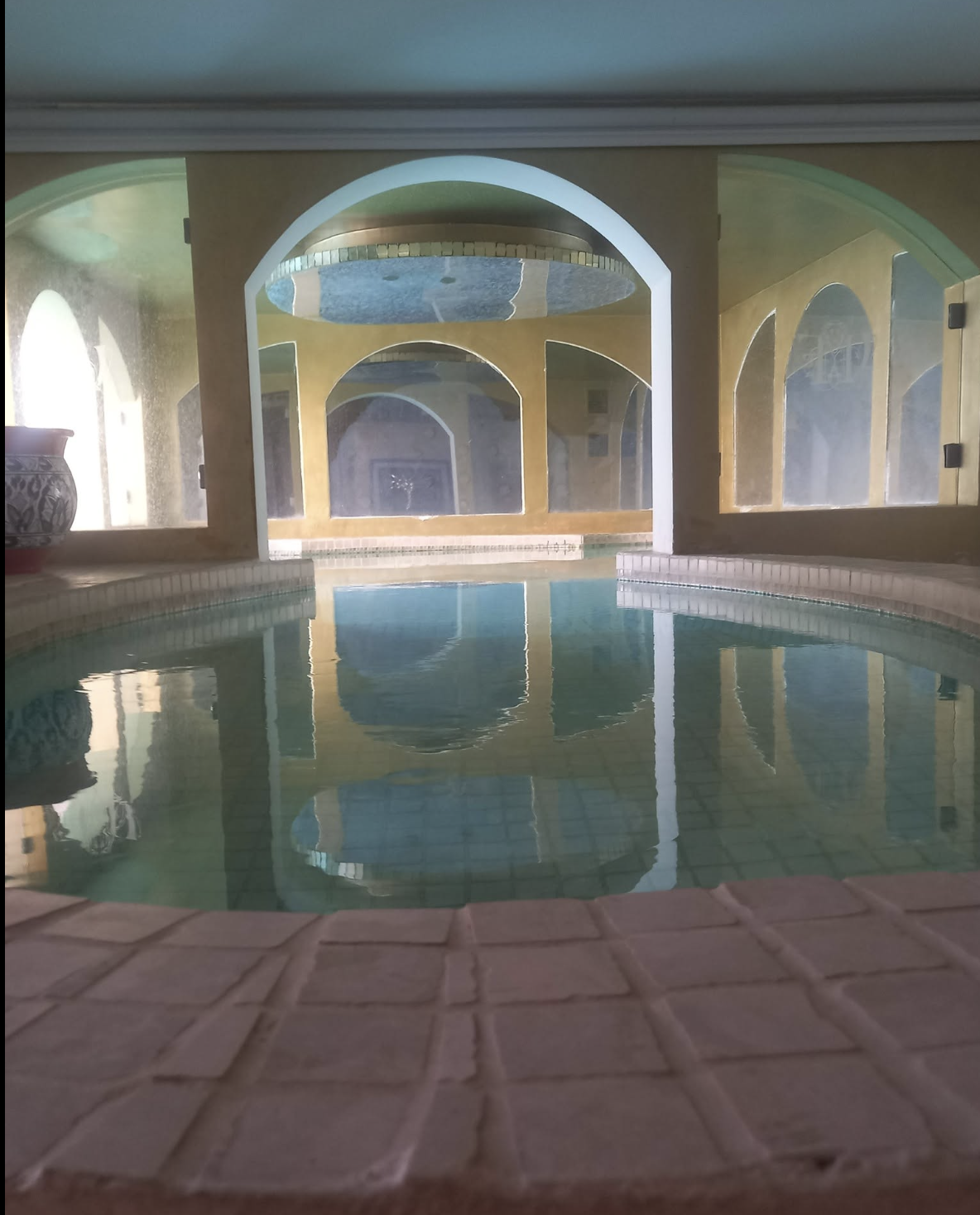
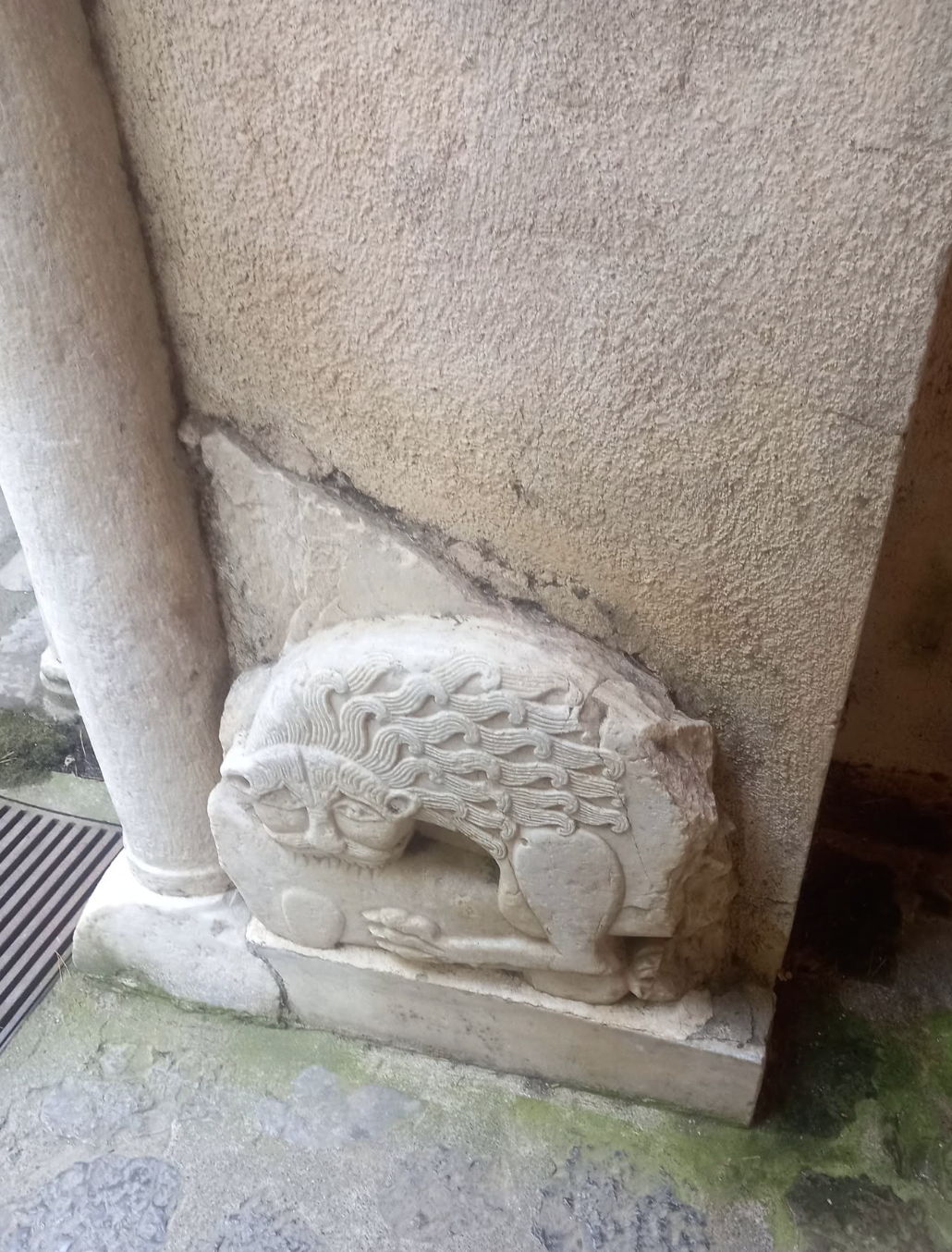
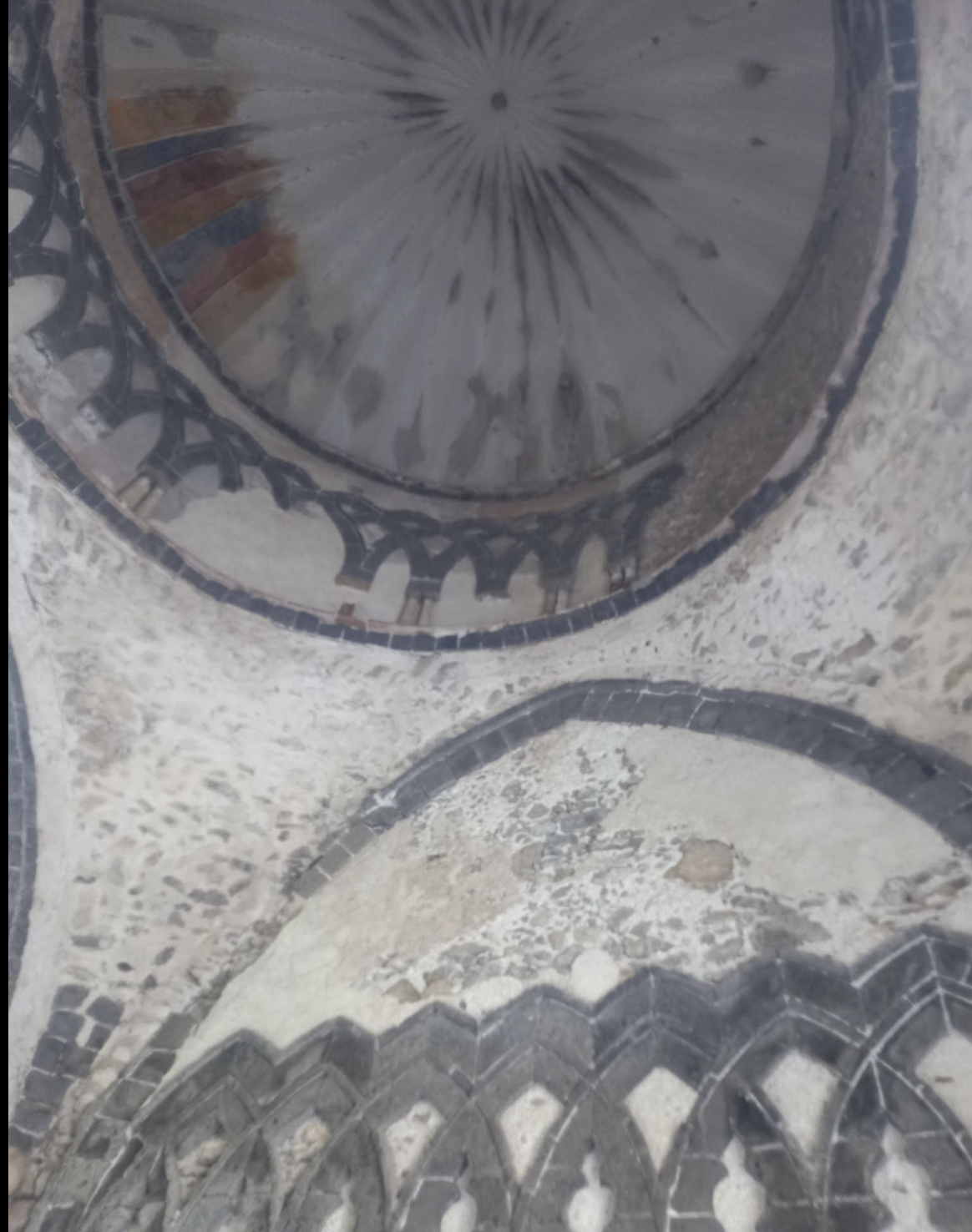
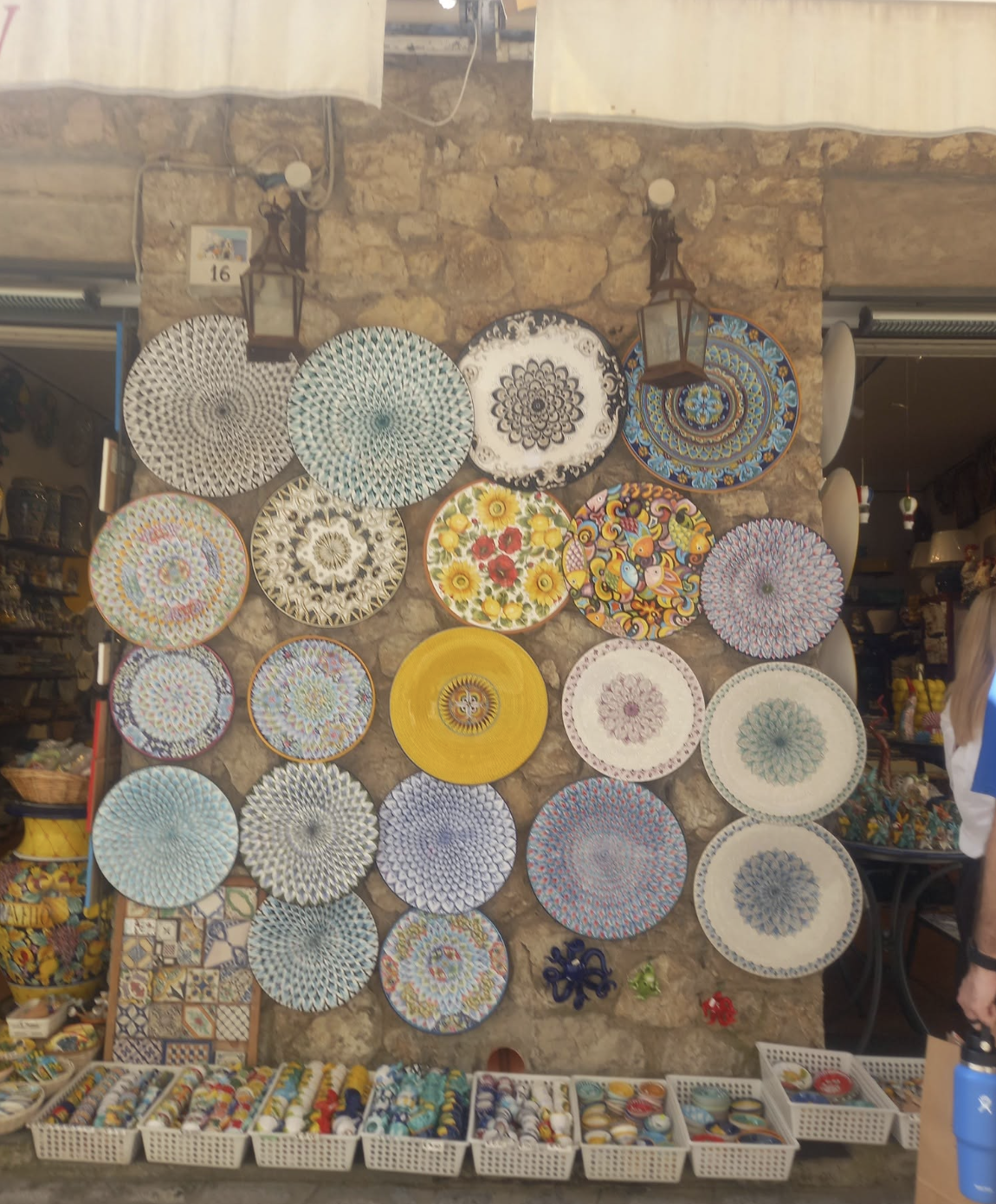
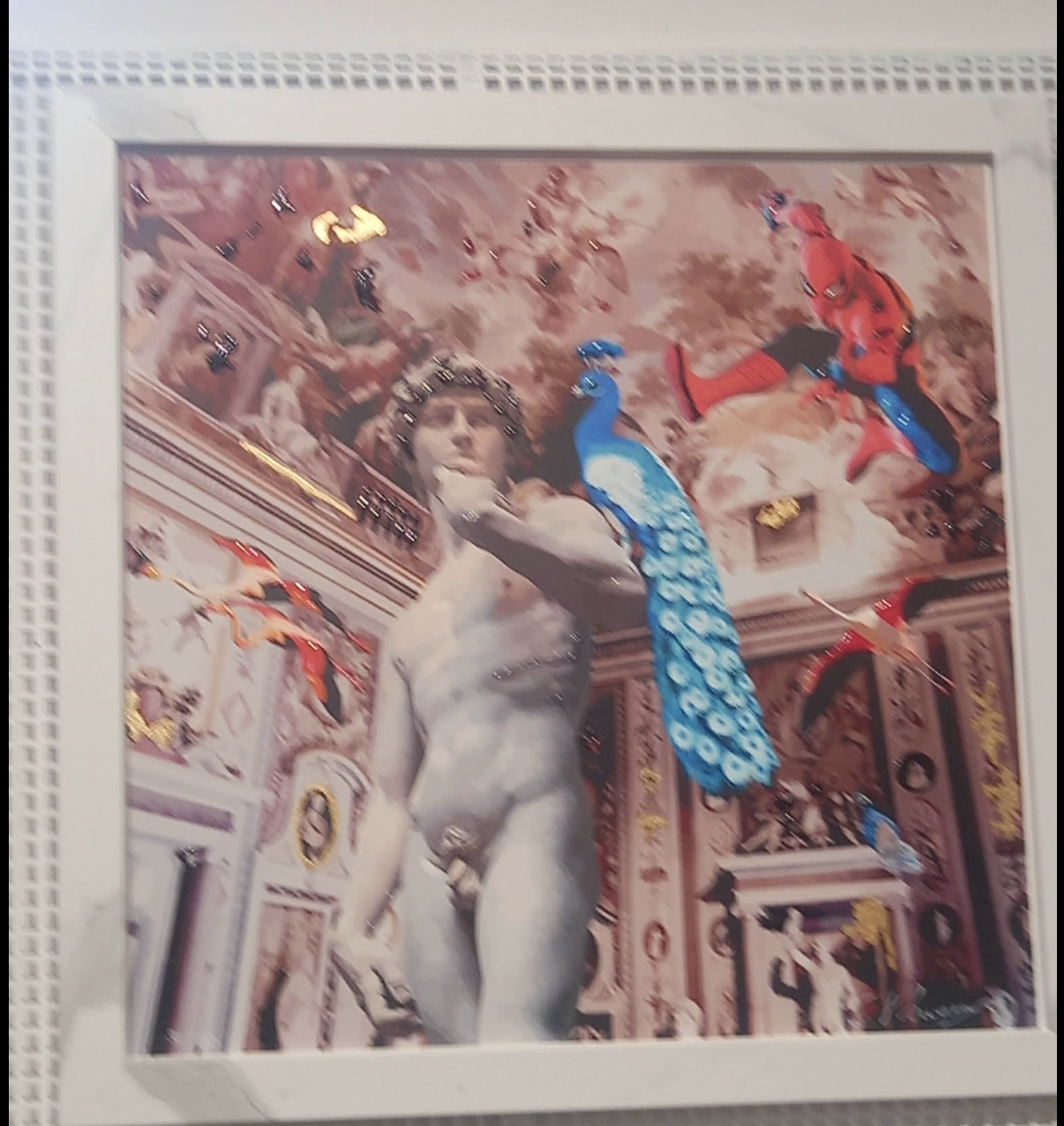
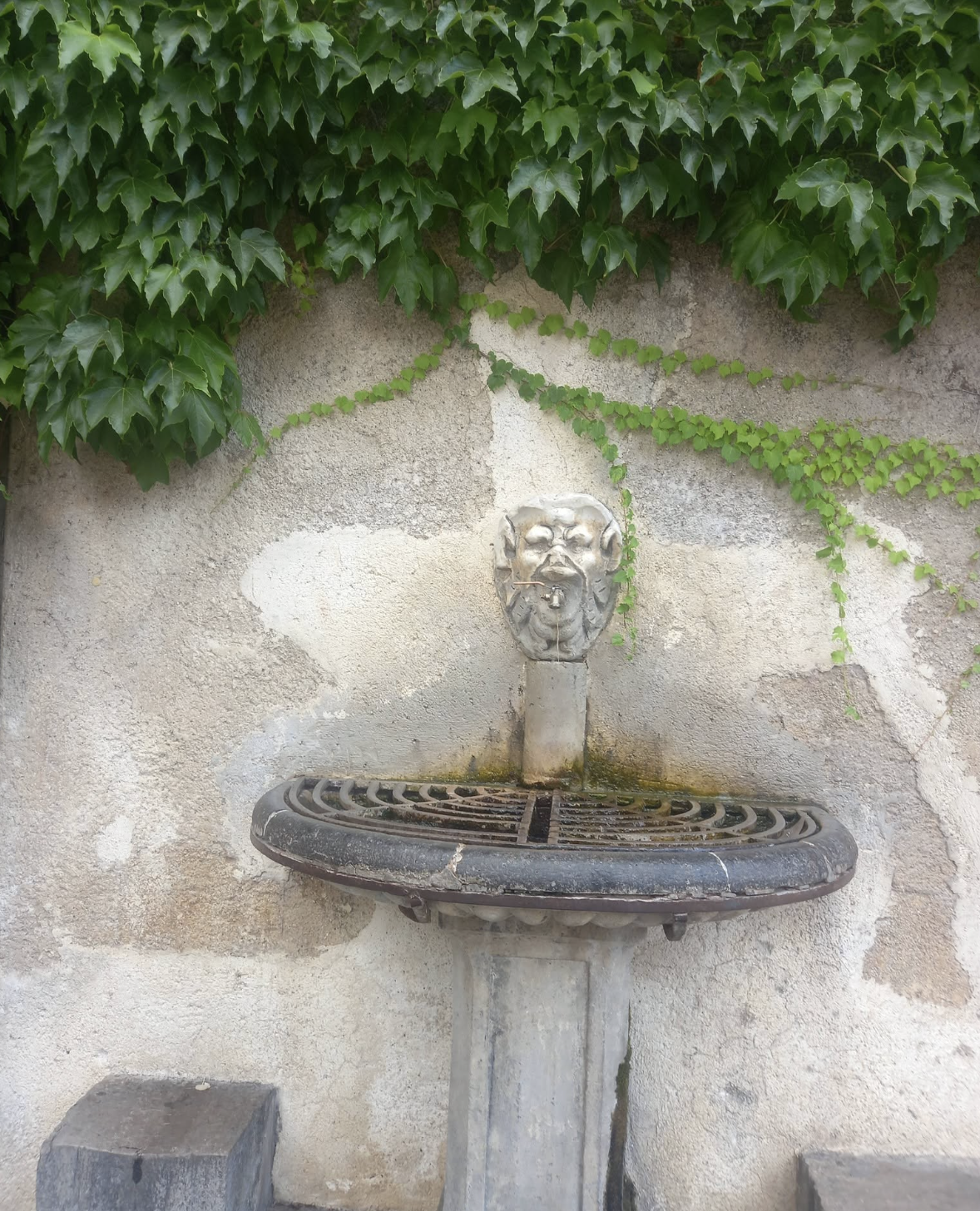
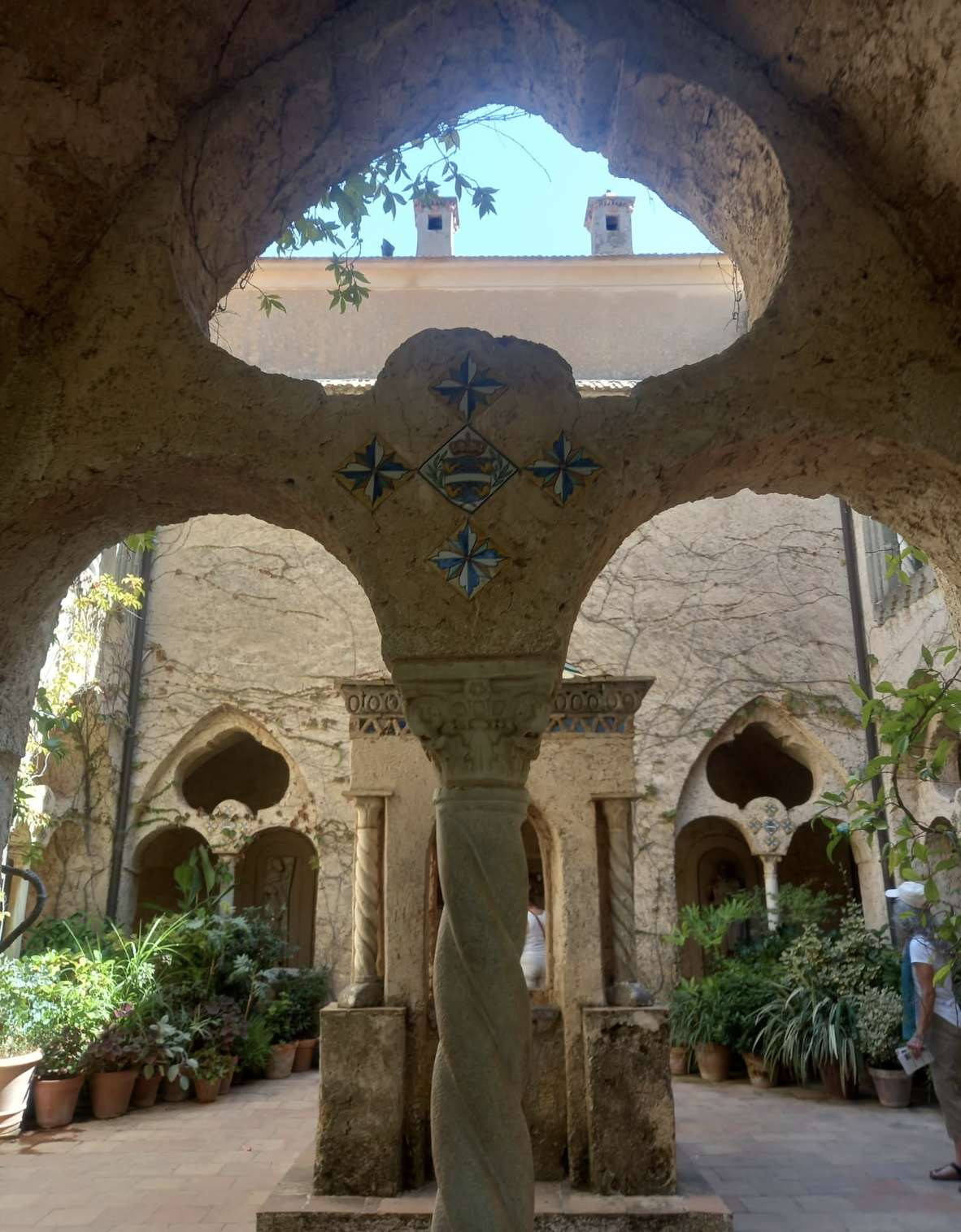
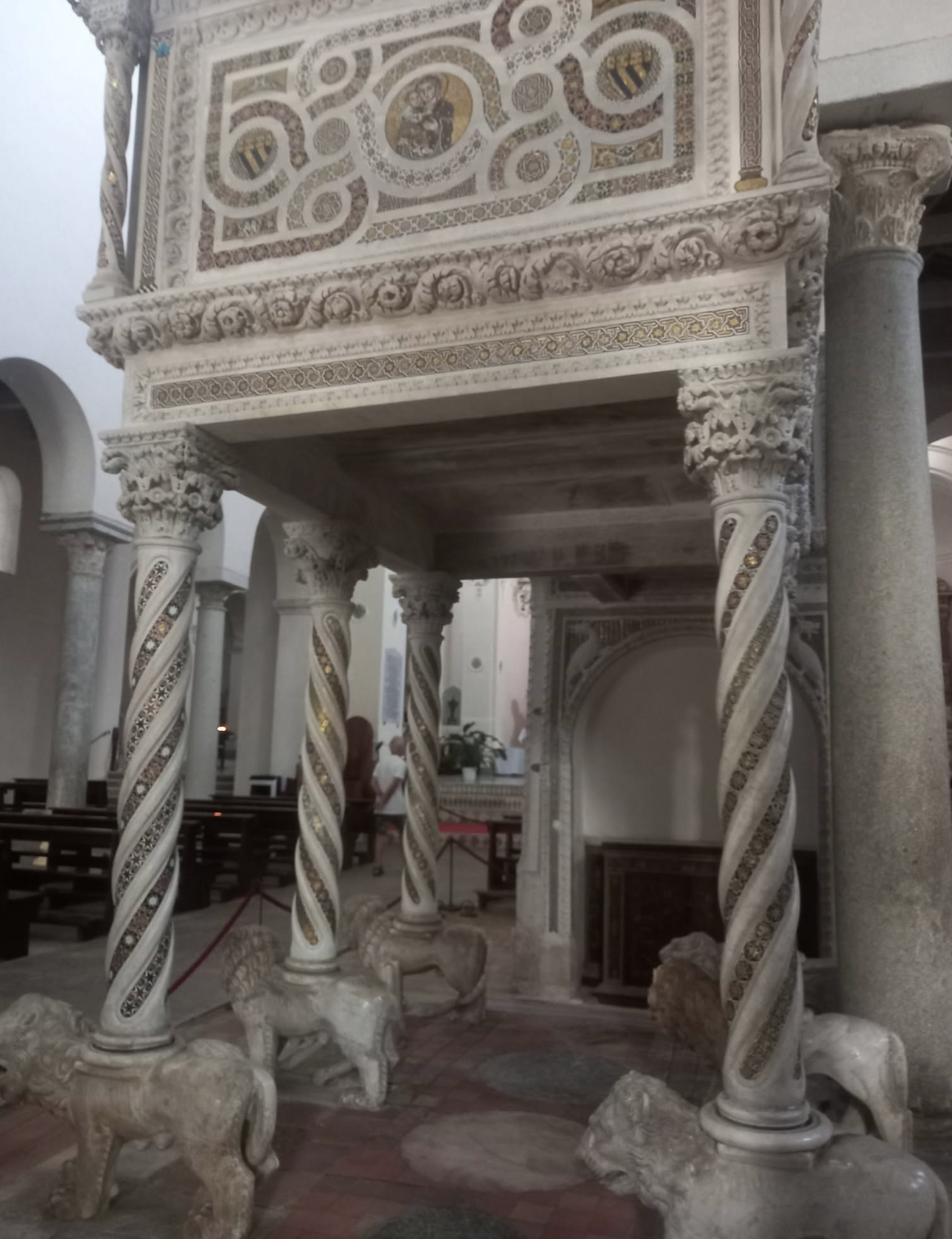
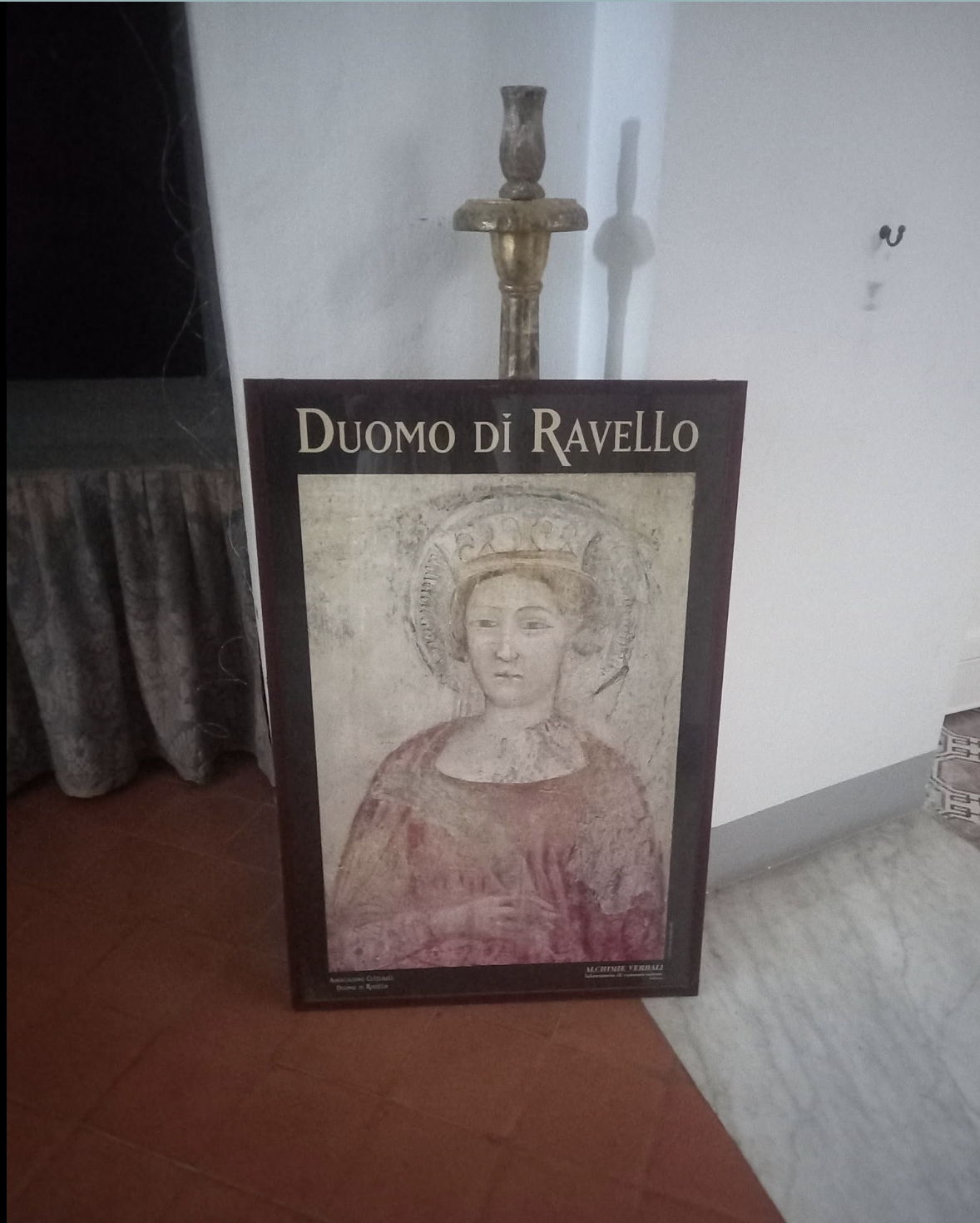
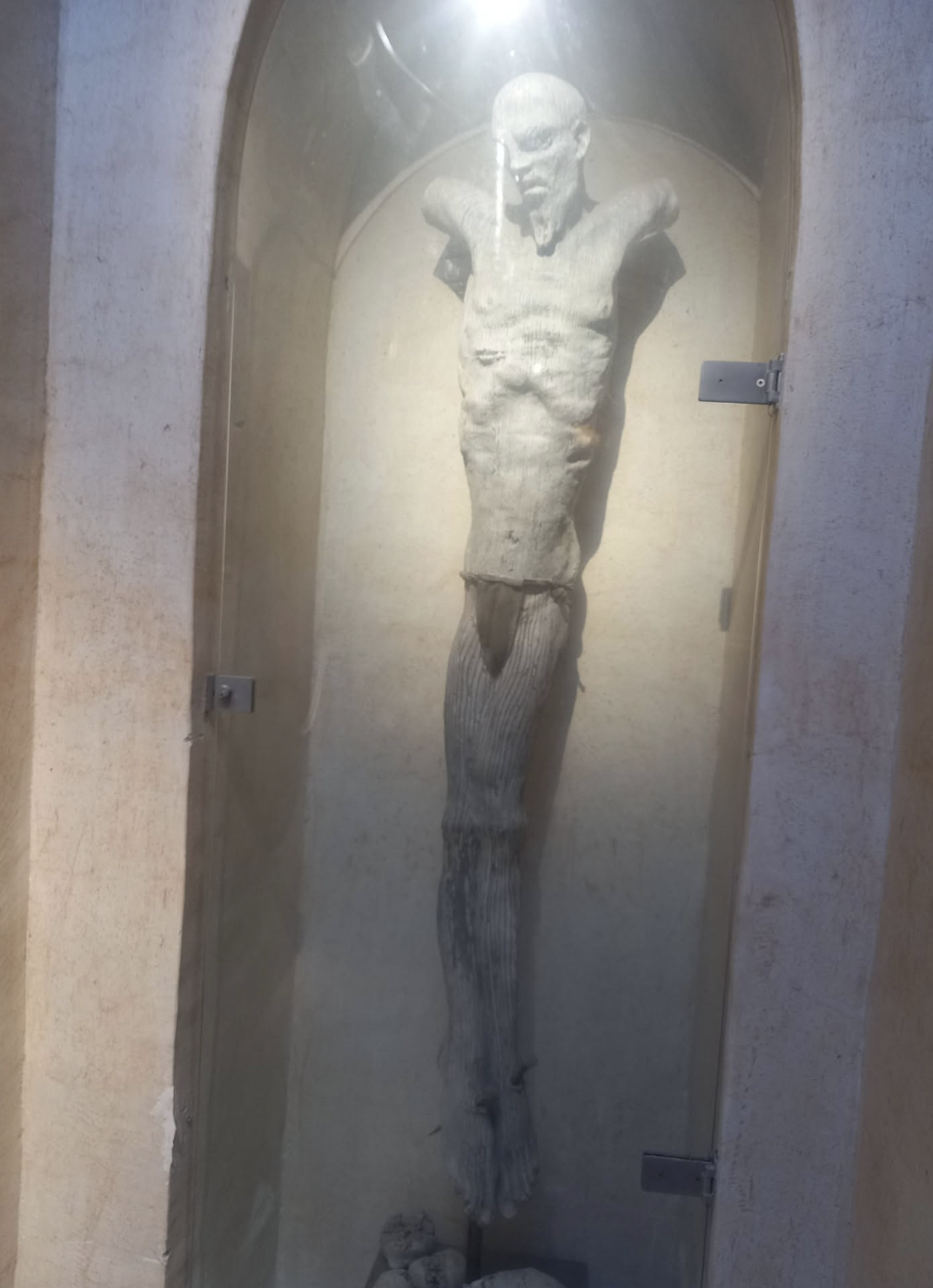
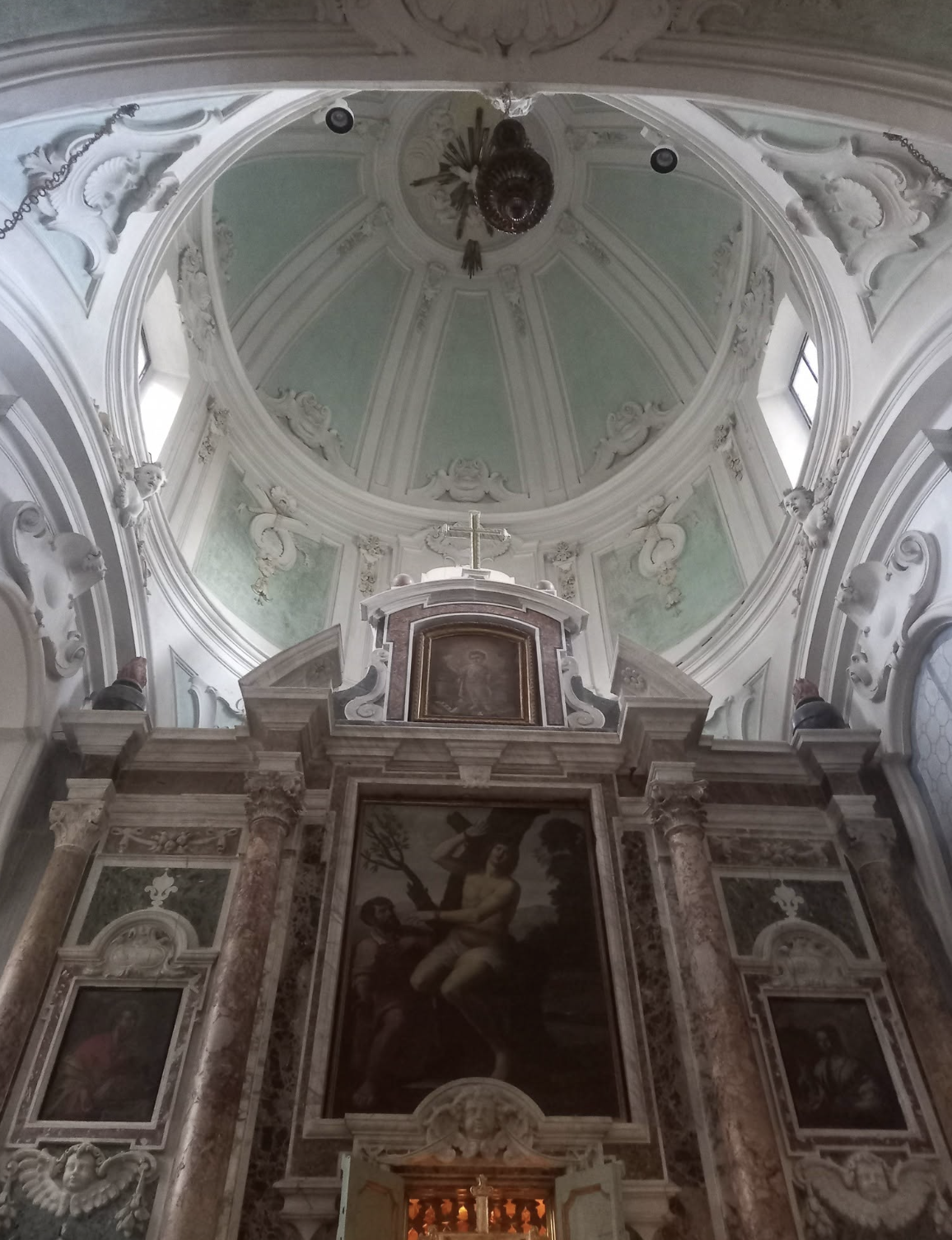
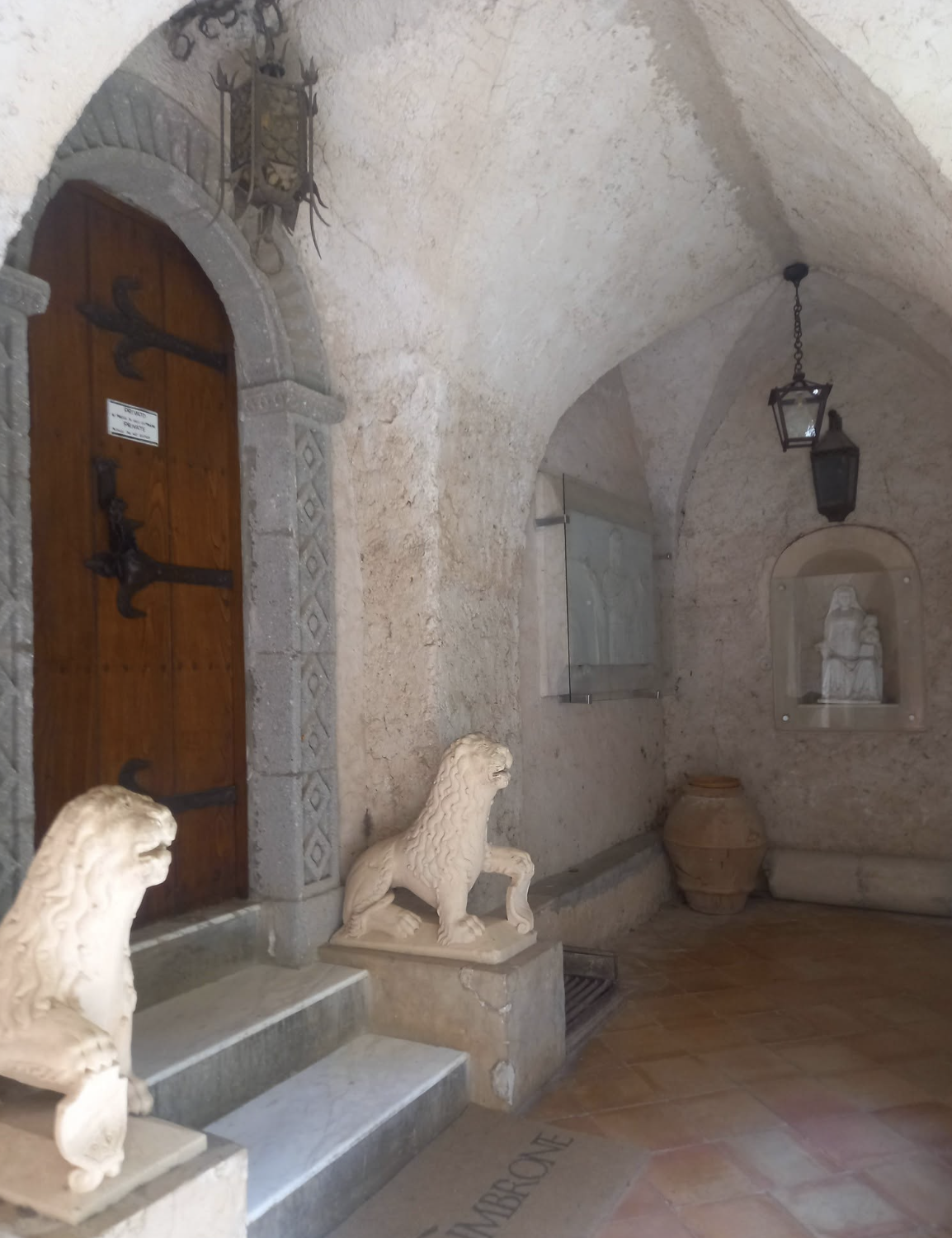
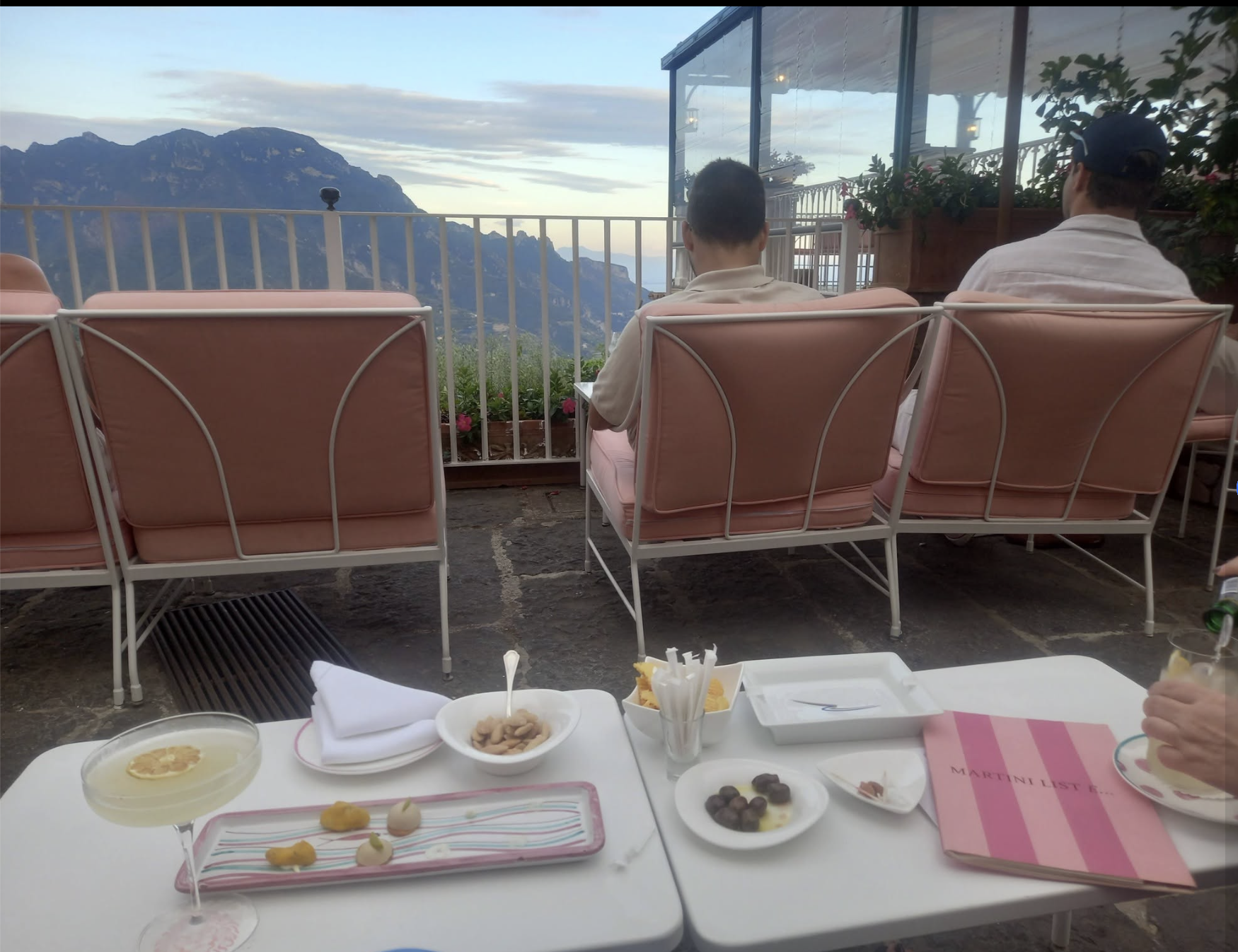
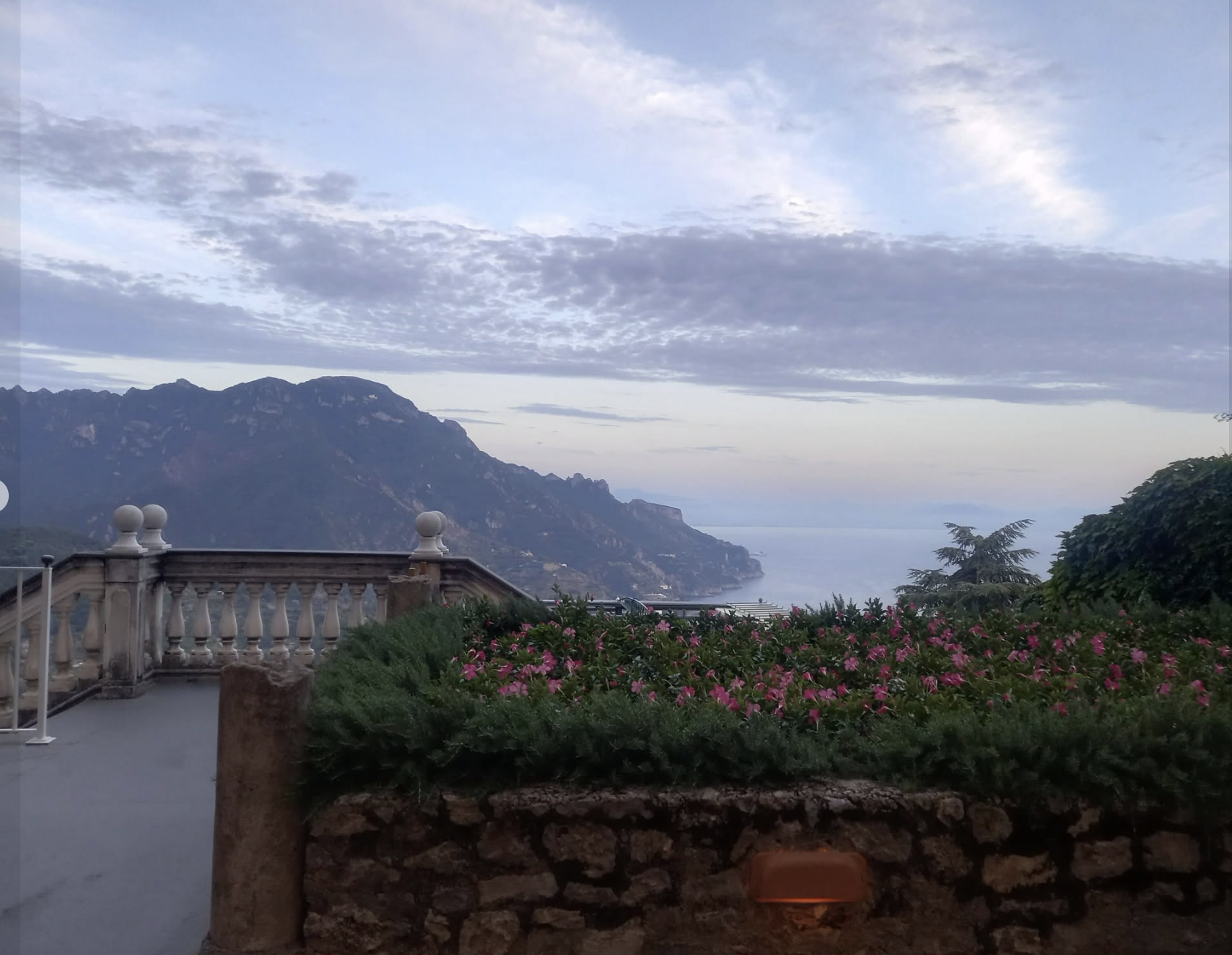
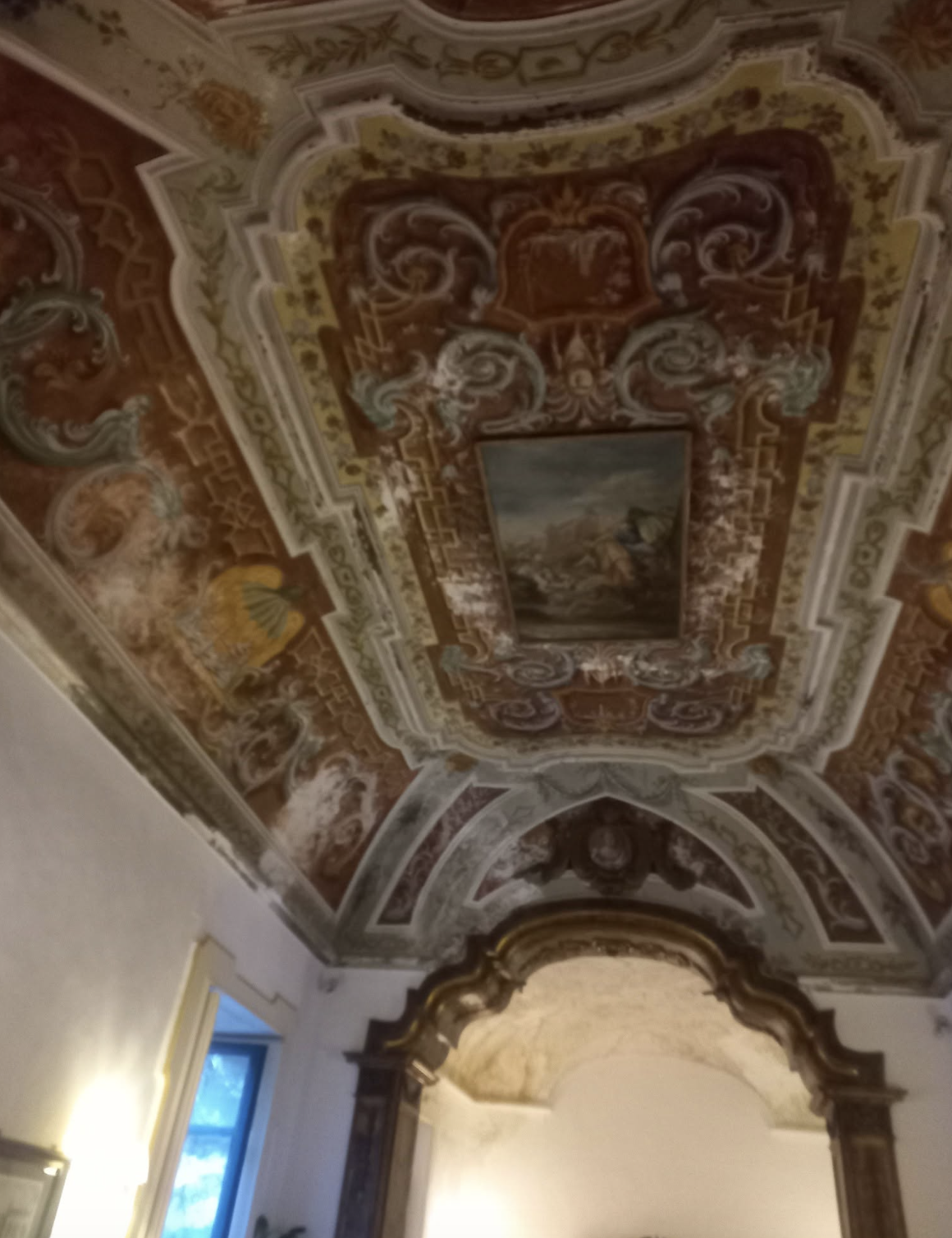
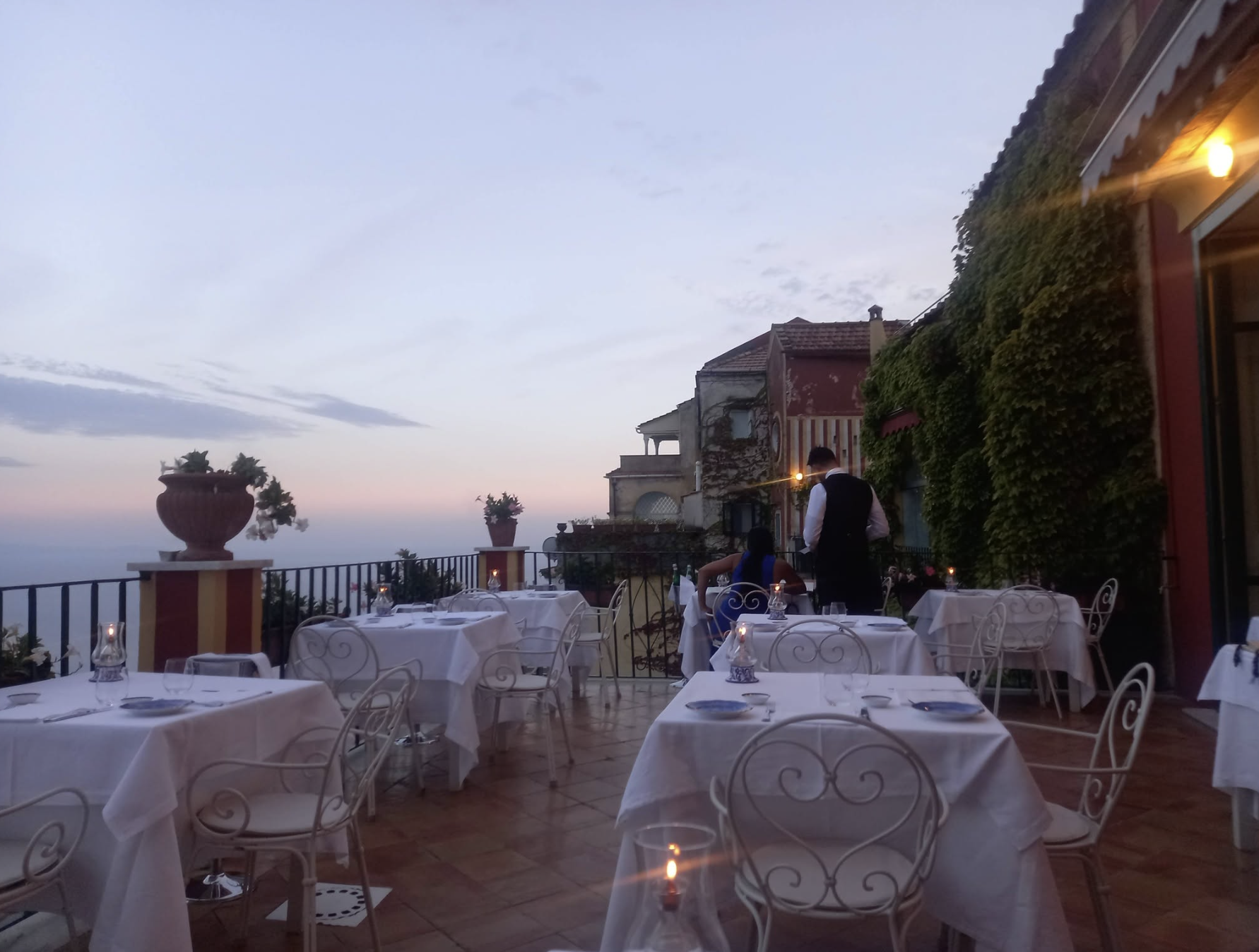
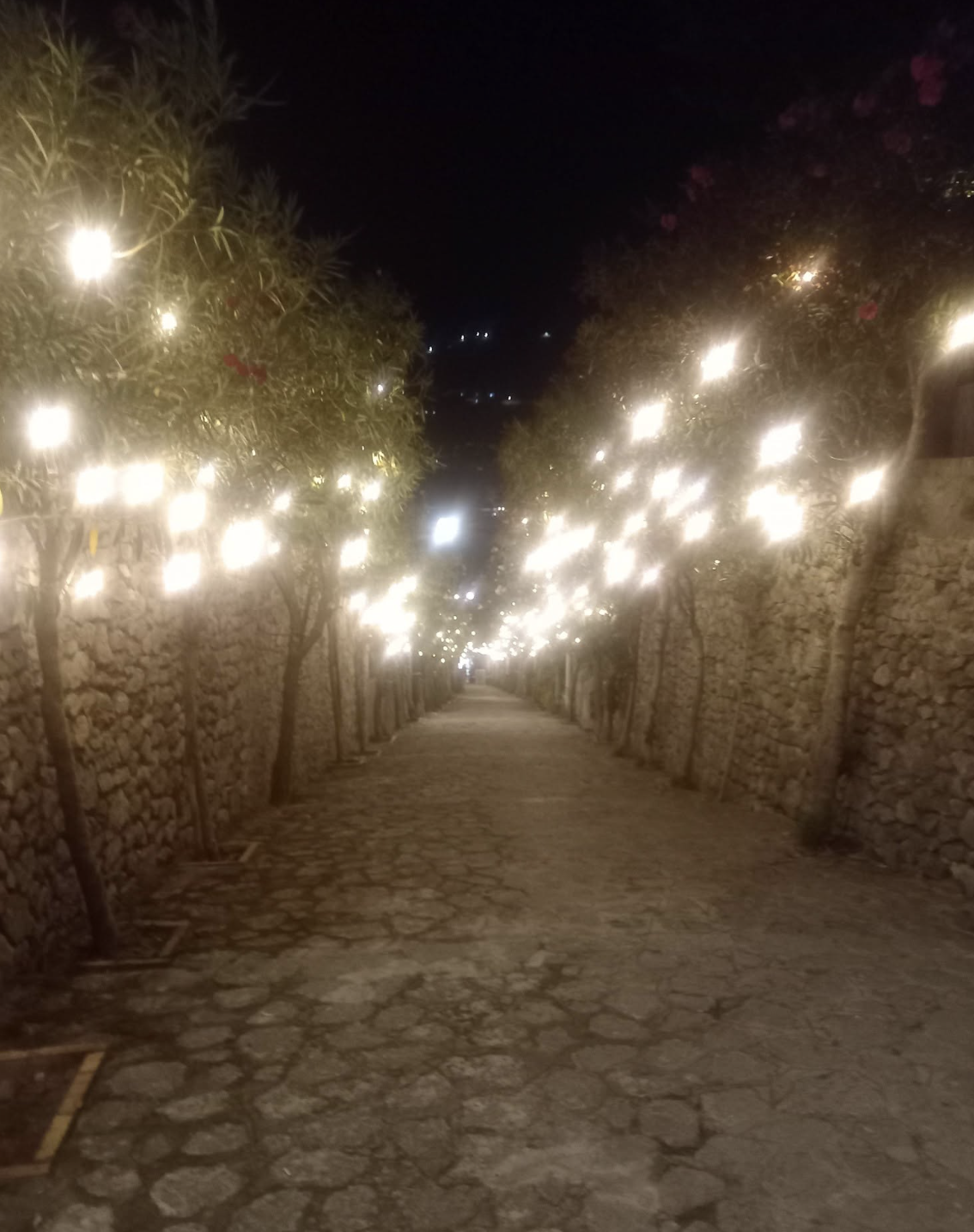
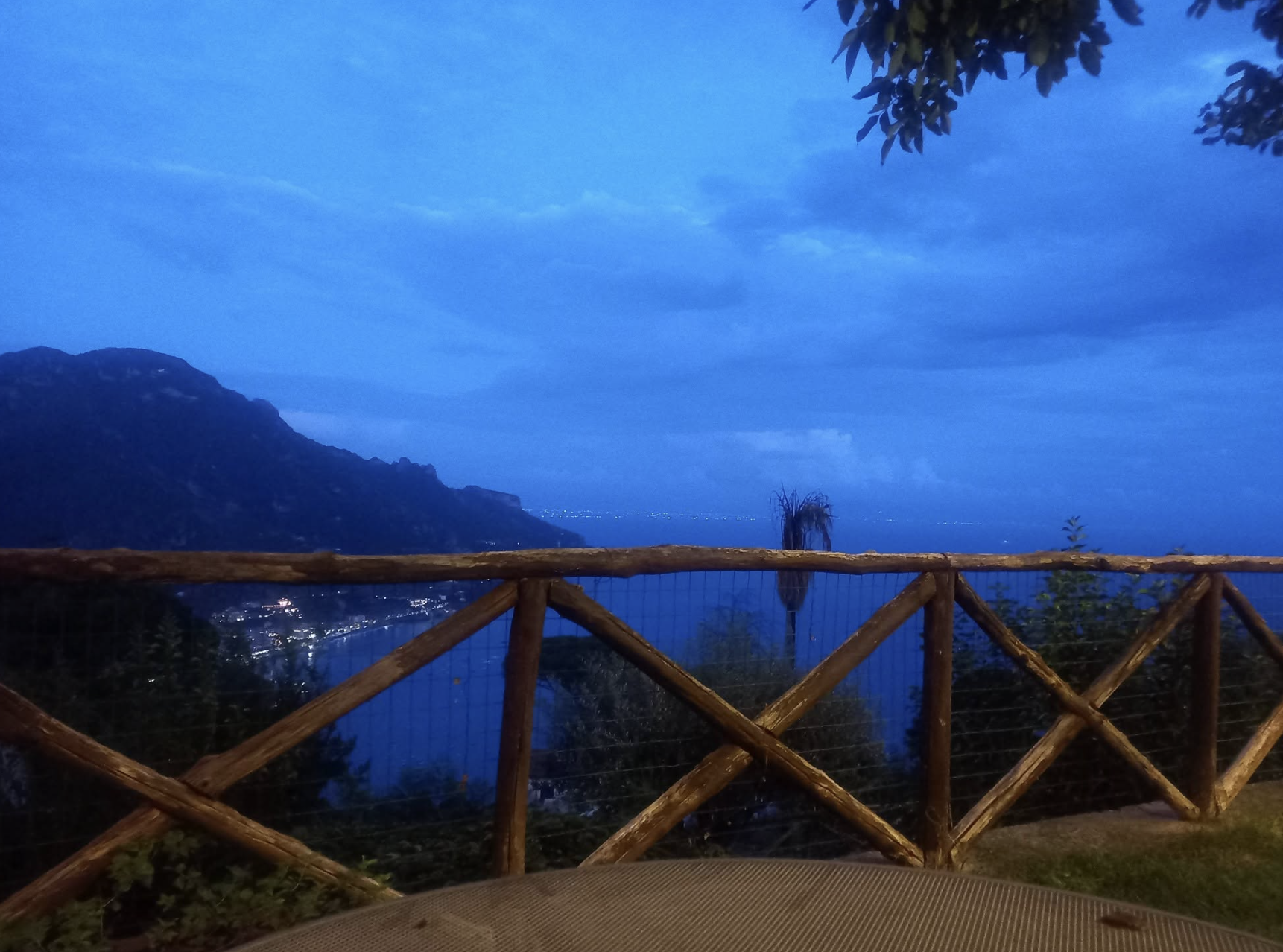
Clockwise from top left below: Ceramic sign outside a villa; view from the 7th floor exit at Villa Fraullo; church where one of several weddings was taking place; the honorary wedding Vespa; figure near a fountain in a converted 5*-star palazzo; looking out from our balcony at the terraced dining area at Villa Fraullo; wedding couple and guests posing for pics; statues in the pergola at Villa Rufolo; exterior of the Ravello Duomo; exterior of converted palazzo, now a posh hotel and restaurant; interior cloister area at Villa Rufolo; me posing with one of William Kentridge’s sculptures exhibited at Villa Rufolo; views from the terrace at Villa Rufolo — note the umbrella pines common to this area; even the design of the spa / infinity pool at Villa Fraullo echoes eternity; kitsch pop and ceramics at Ravello side-street galleries; courtyard in Villa Cimbrone; ceiling and interior of the Duomo di Ravello, with statue of Ravello’s martyred patron saint St Pantaleone; more architectural details, archway and views from Villa Cimbrone; glamming up to go out for dinner in a posh palazzo restaurant, whose Baroque ceilings even rivalled the church’s (see pic on left); views from the terraces of a few restaurants in Ravello, including the Hotel Villa Rufolo, where I toasted Roland in memory of our honeymoon there in 1999; posing on the breakfast terrace at Villa Fraullo before we left; the classic Amalfitan treat: lemon sorbet inside a frozen lemon; our last lunch was simple but perfect; Wagner street lit up at night; enjoying evening drinks, amuse-bouches, piano music and great views from the posh Martini & Lobster bar; gardens with cloister at Villa Cimbrone; baptistery font, fresco and from the Duomo; fountain, ceiling and carved cat at Villa Cimbrone; garden terrace and view from Villa Cimbrone; infinity pool at Villa Fraullo; sculptural and other artworks by William Kentridge at Villa Rufolo; classic pink mini-car; old man relaxing on a terrace with his dog; and sculpture-decorated grounds of Villa Rufolo.
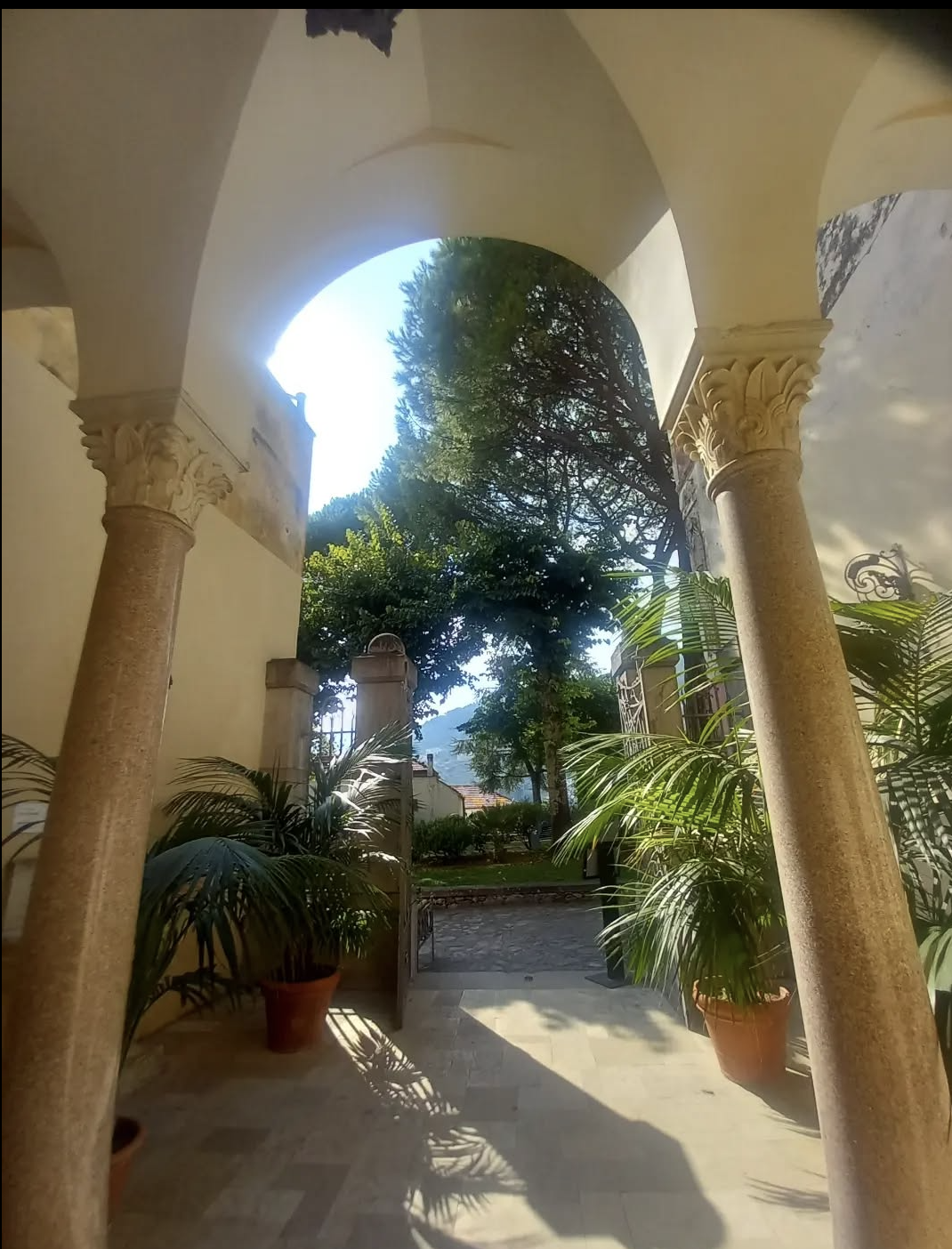
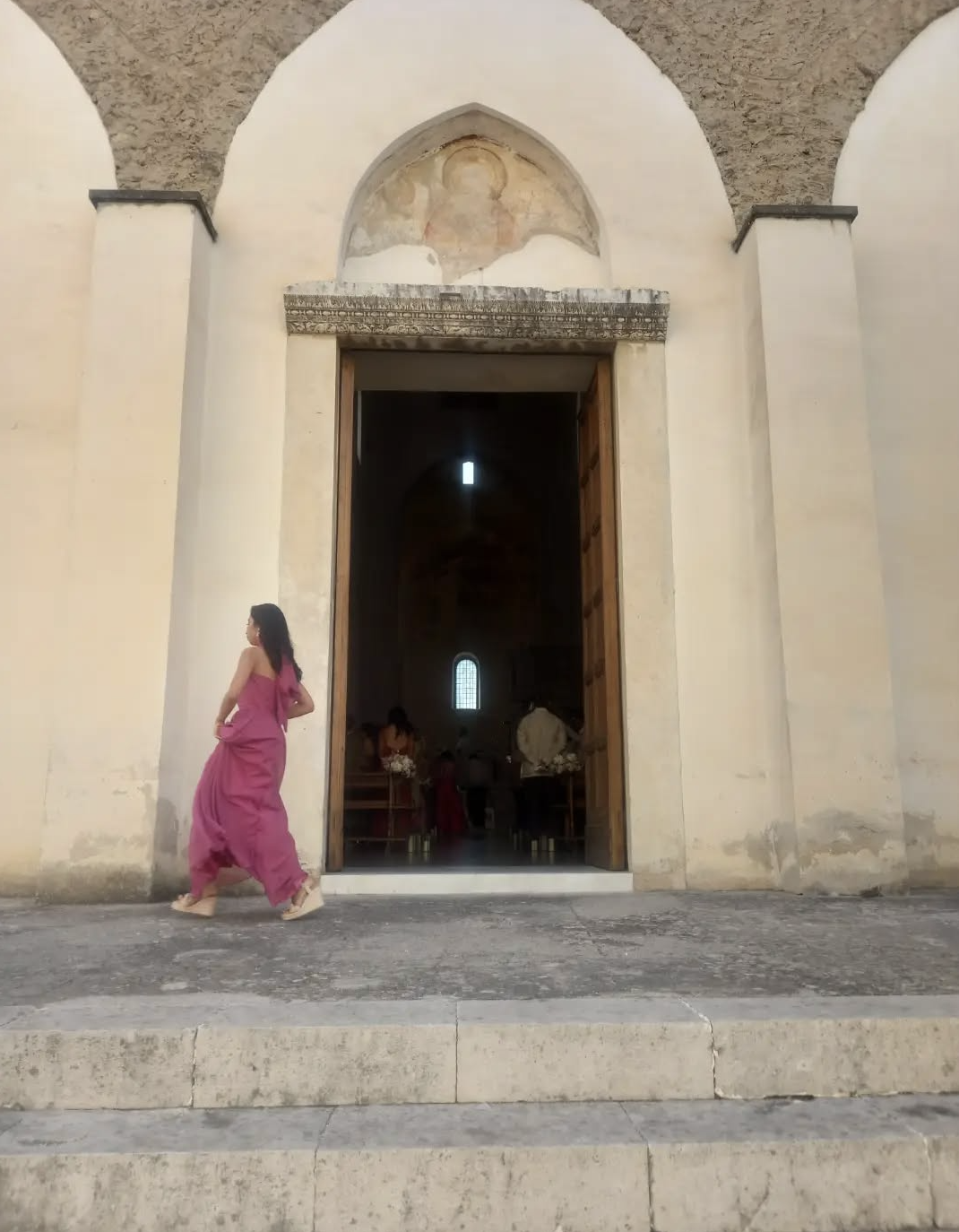
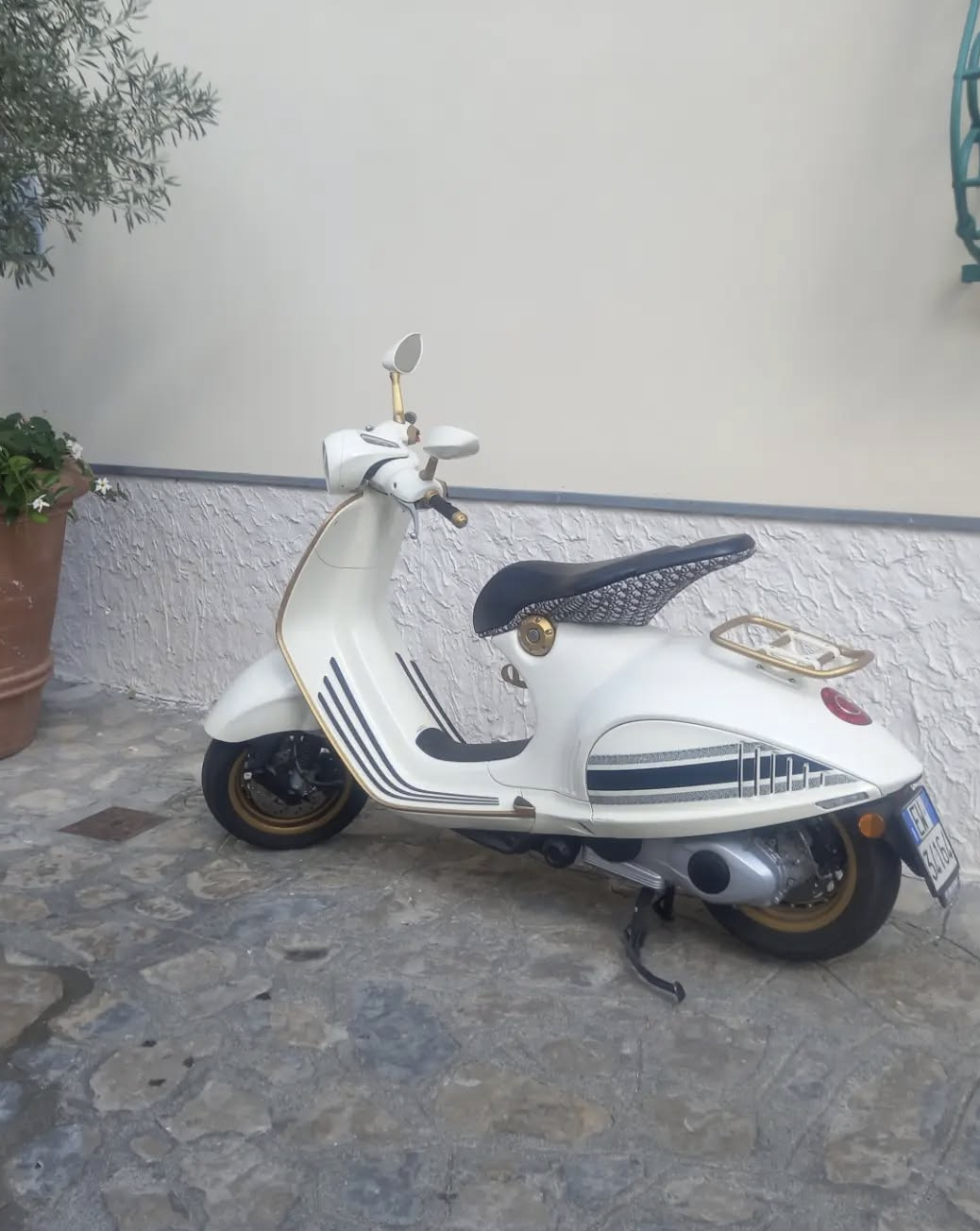
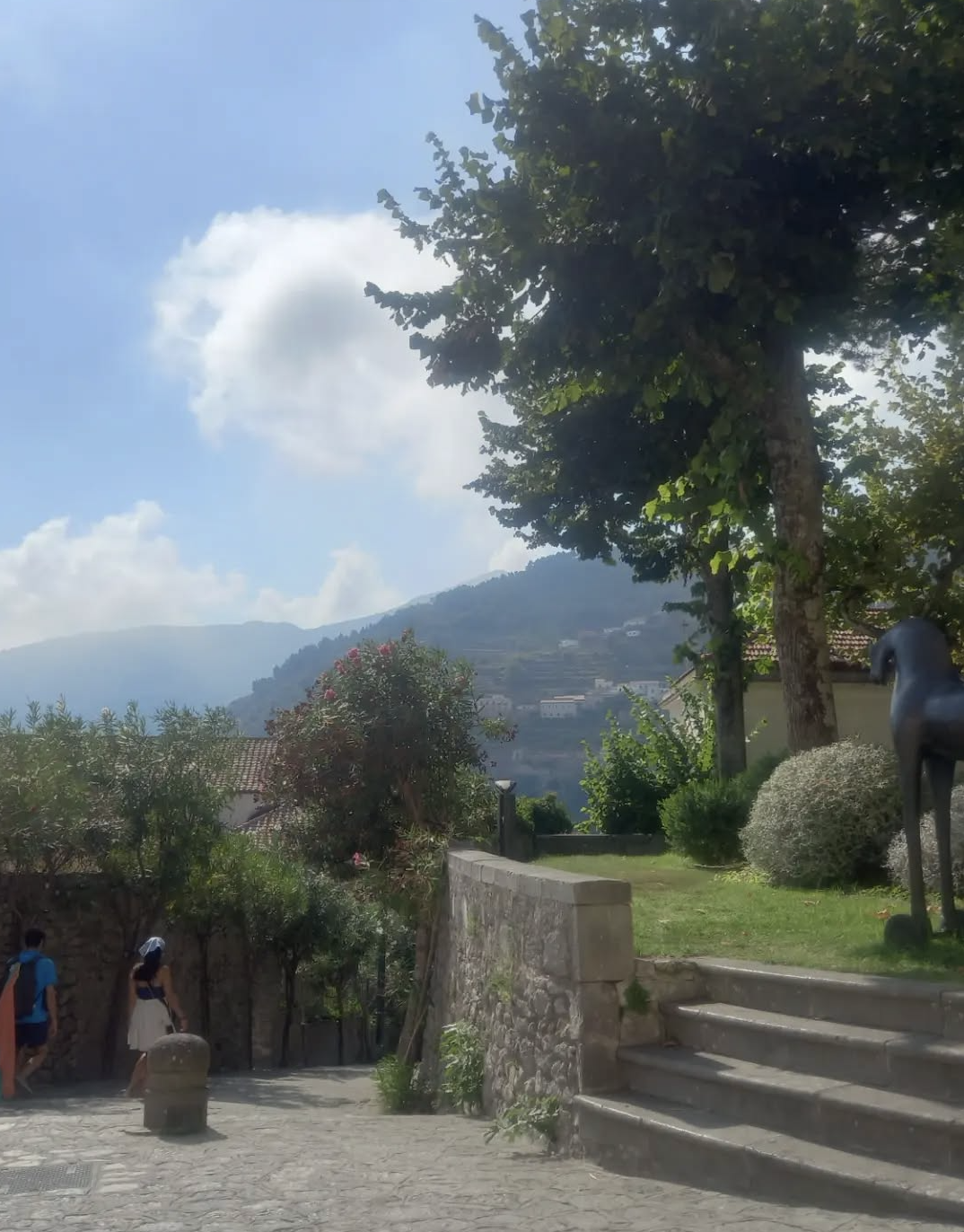
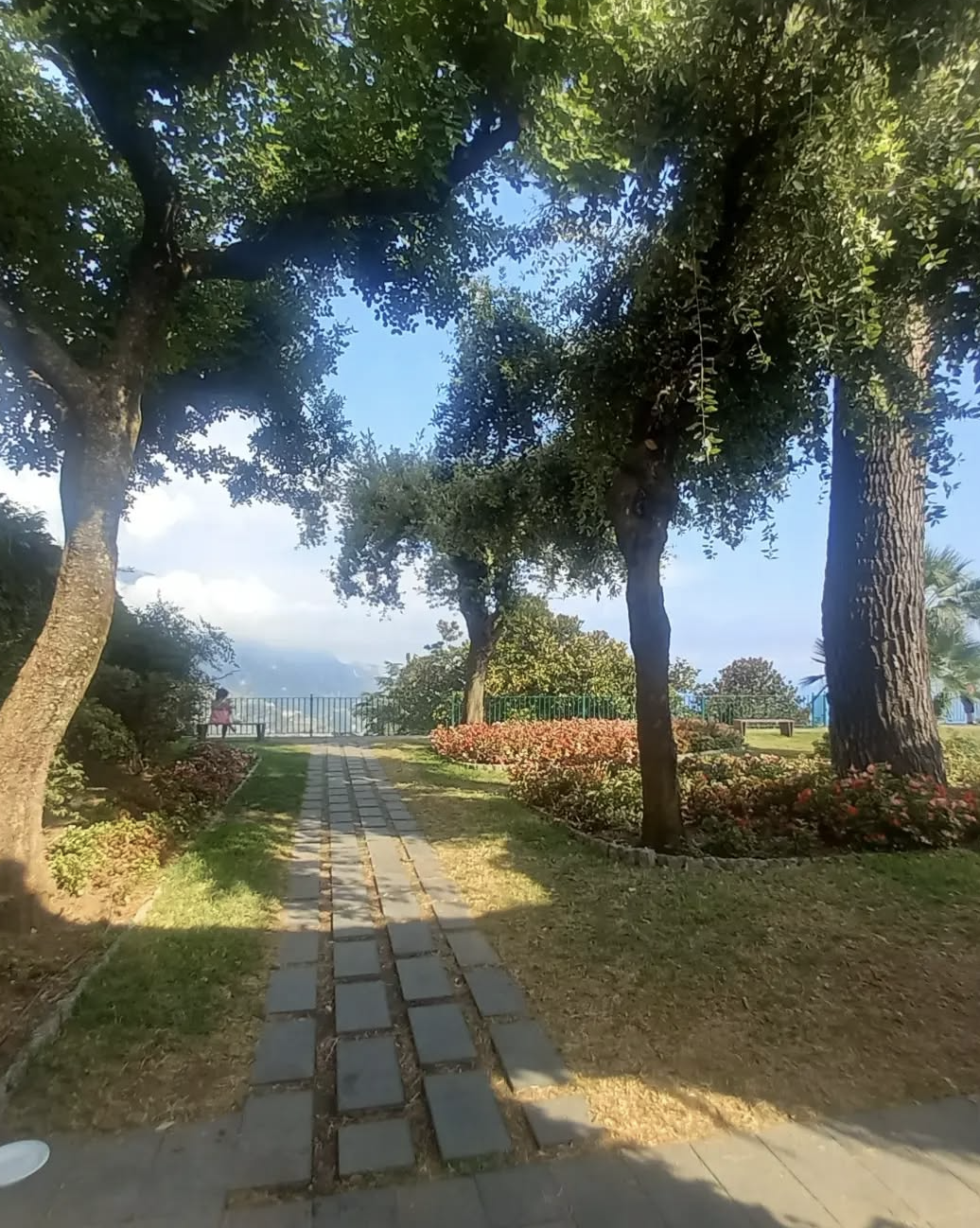
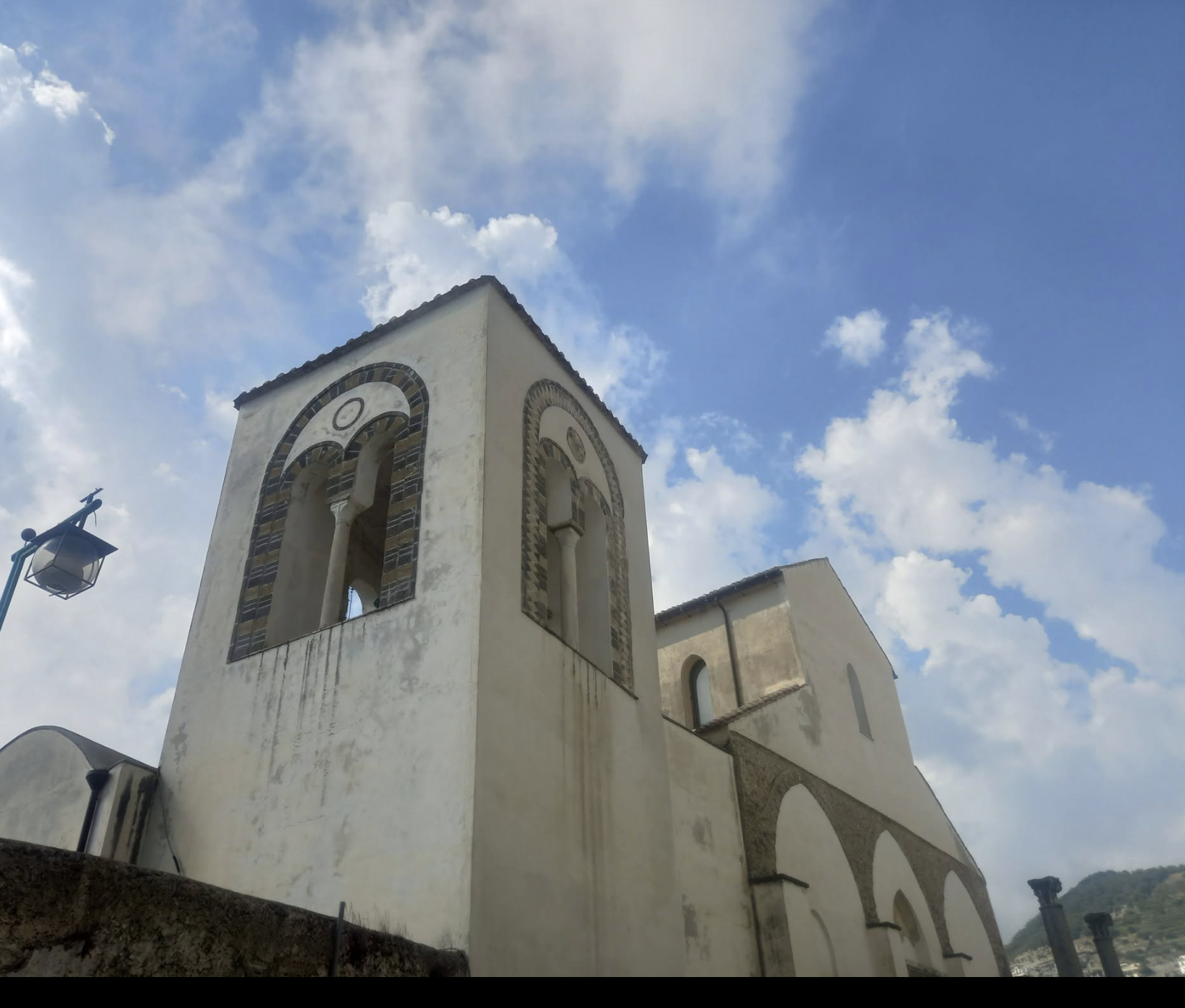
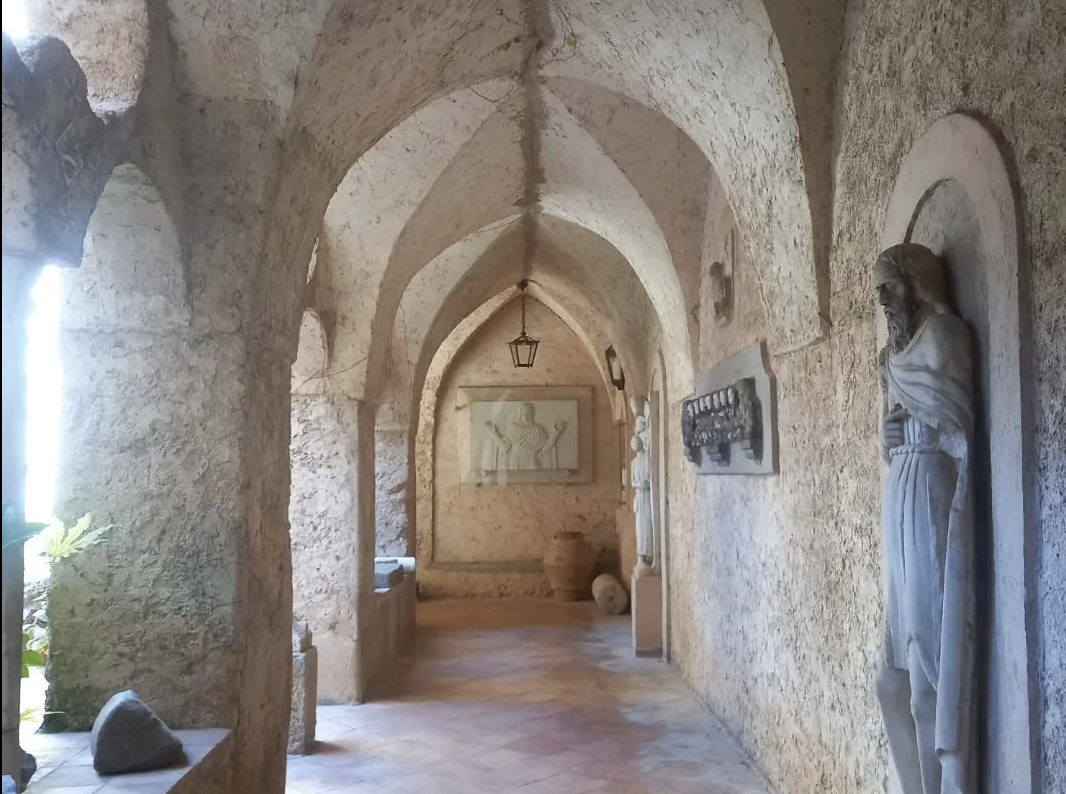
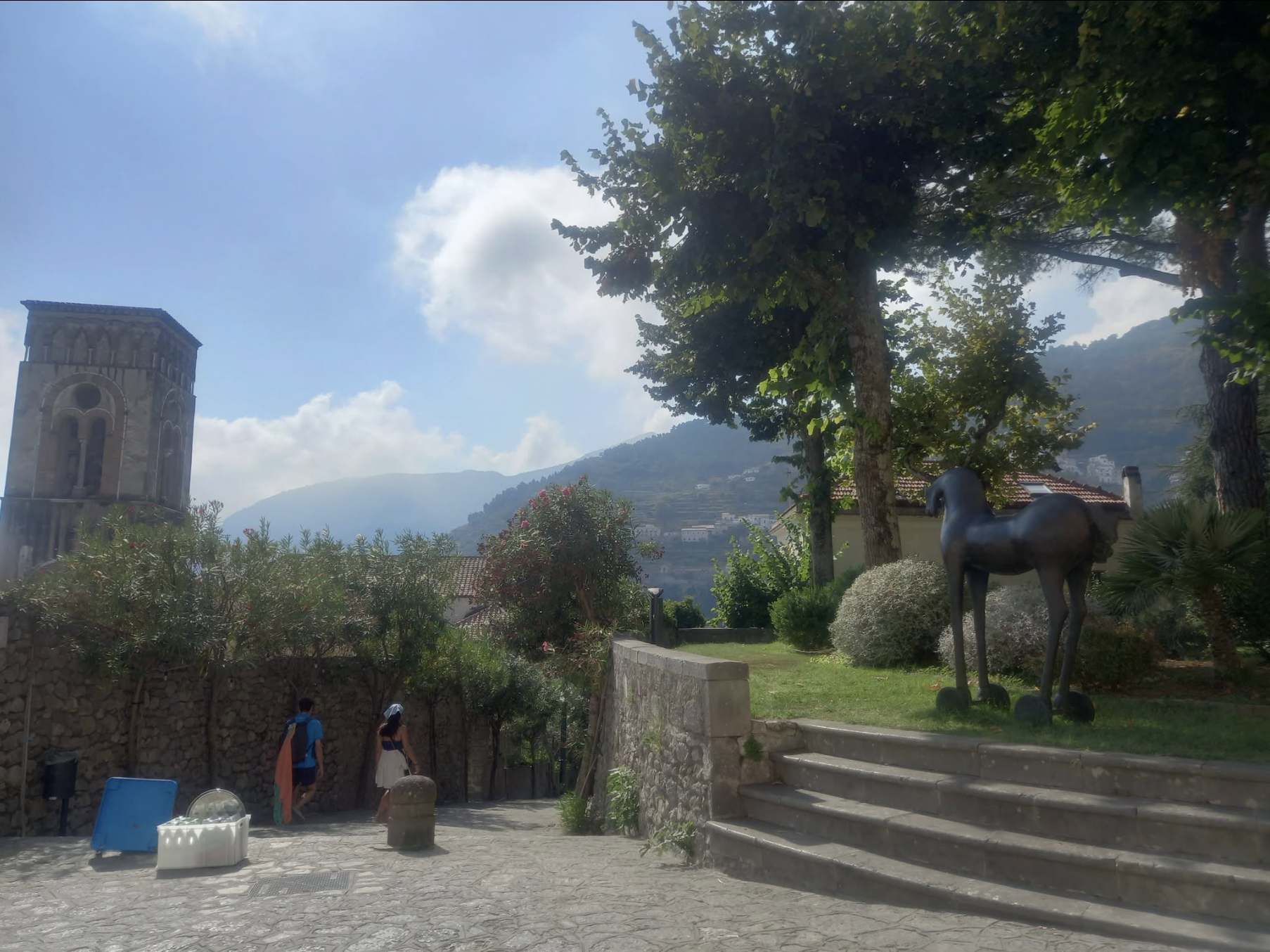
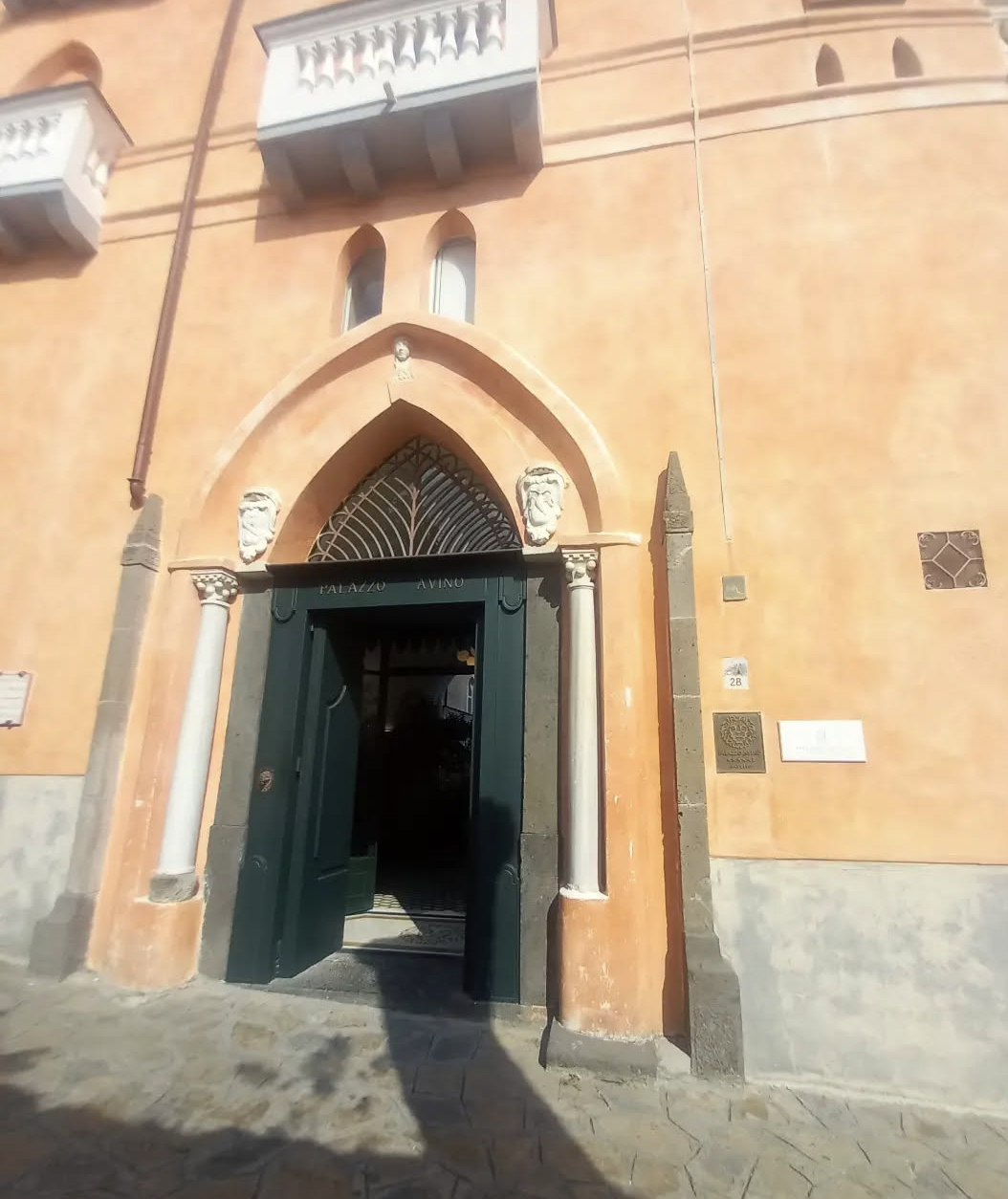
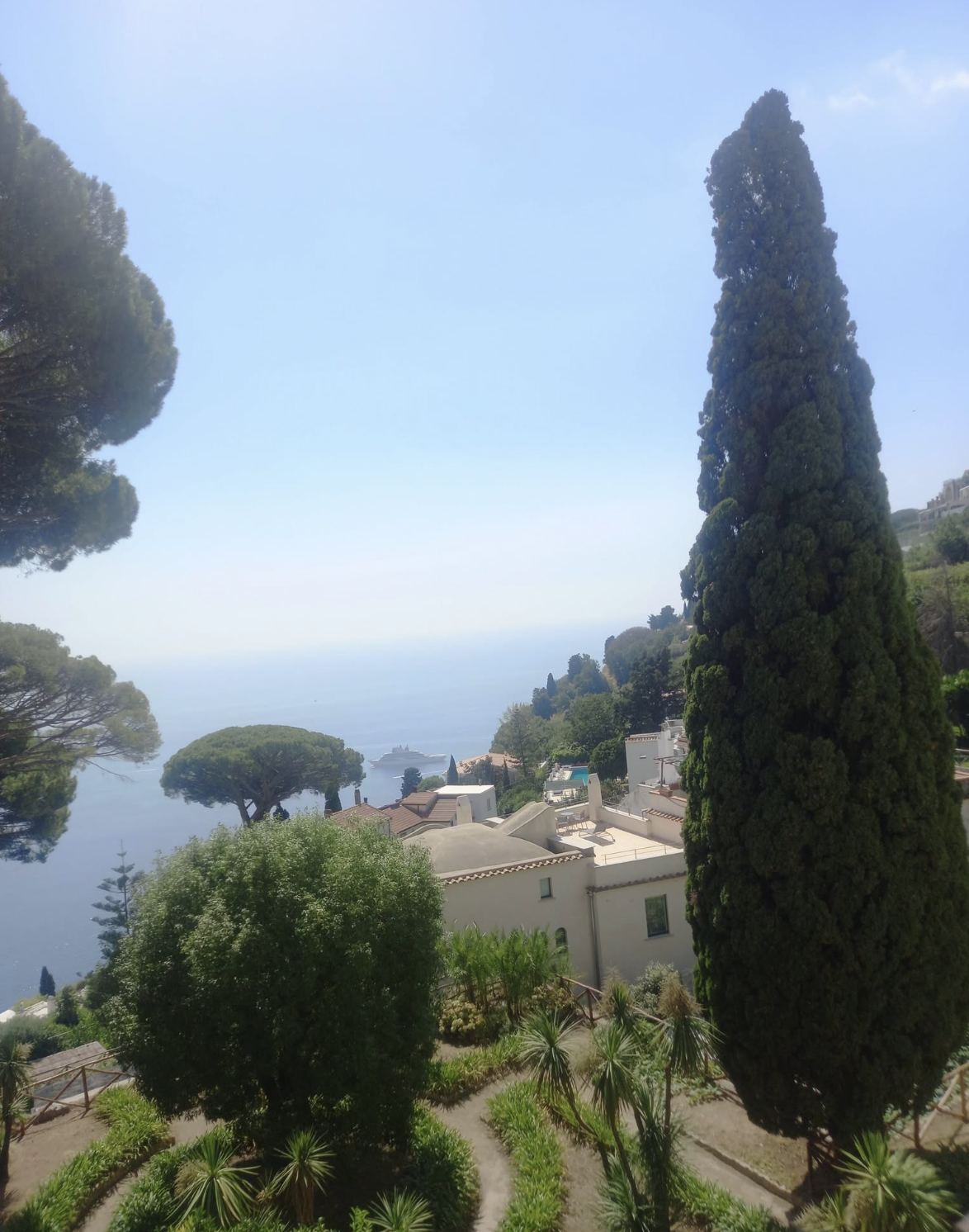
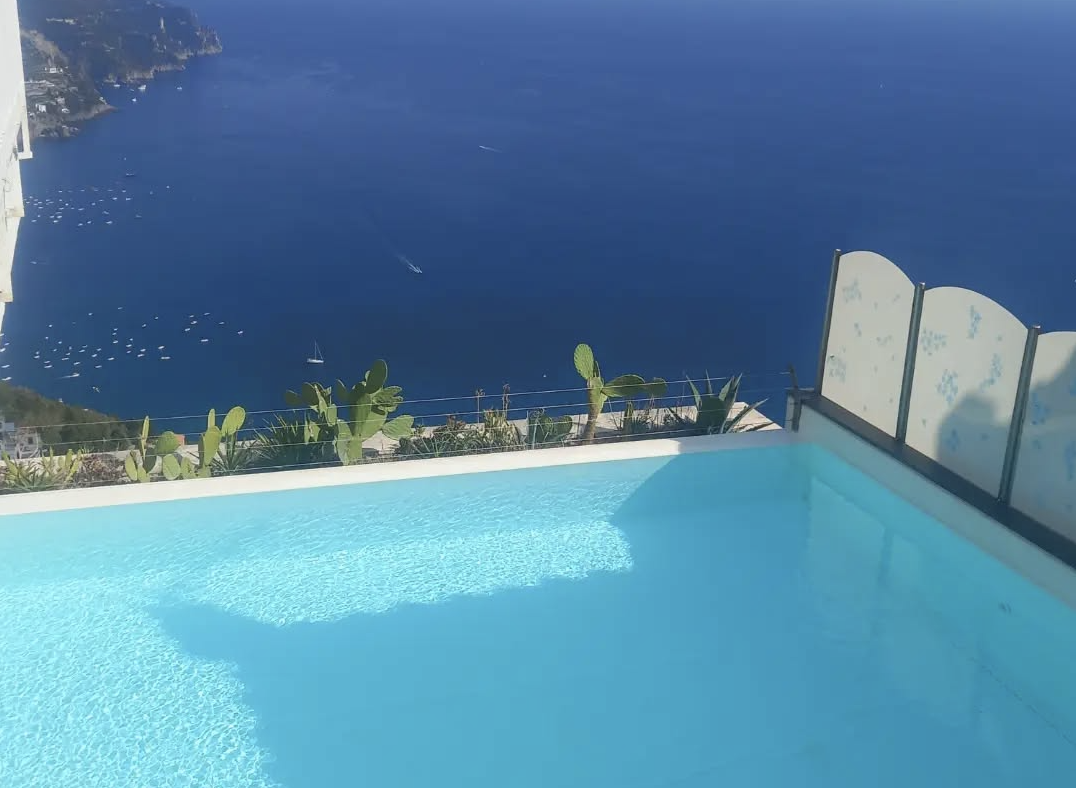
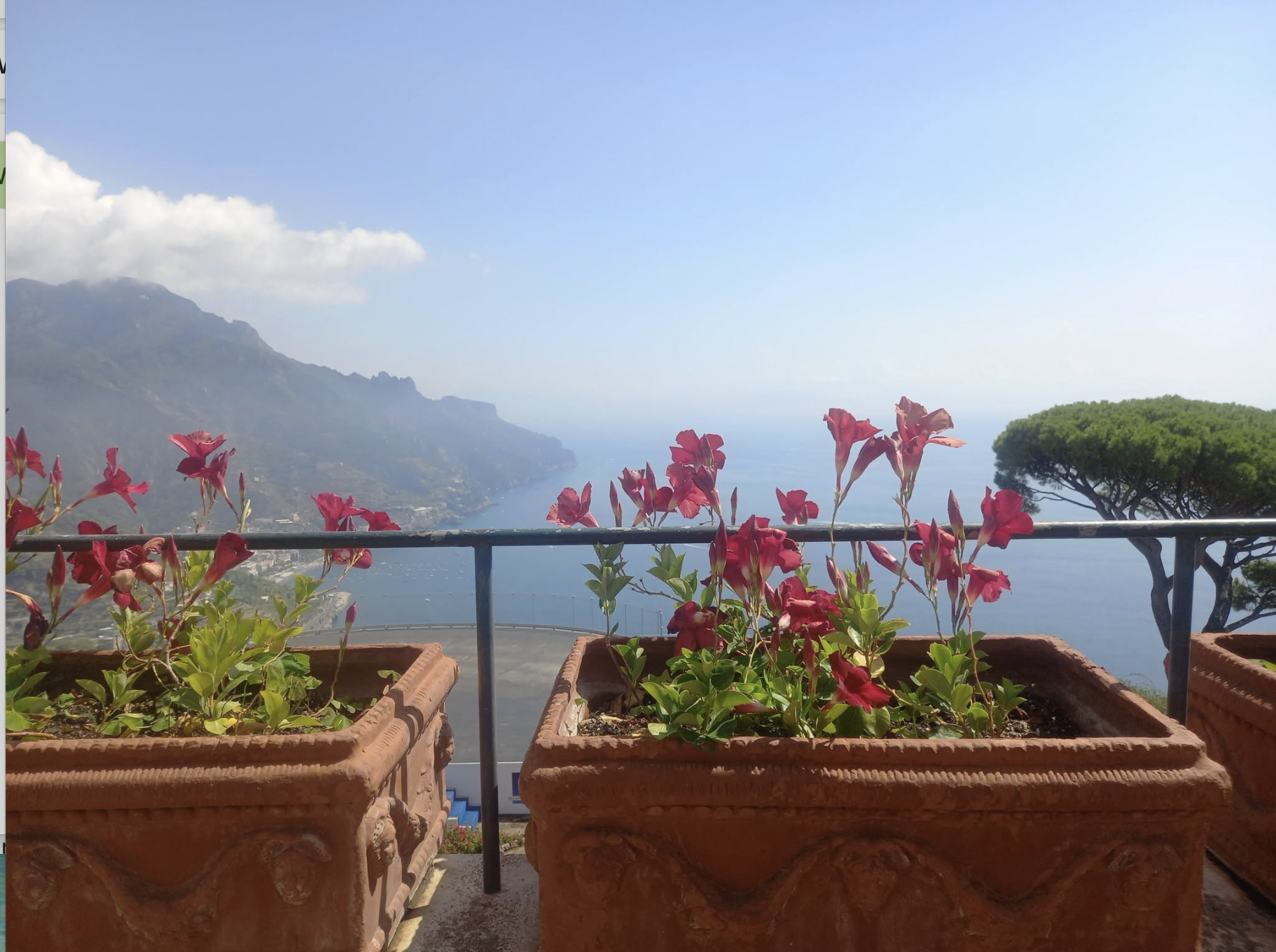
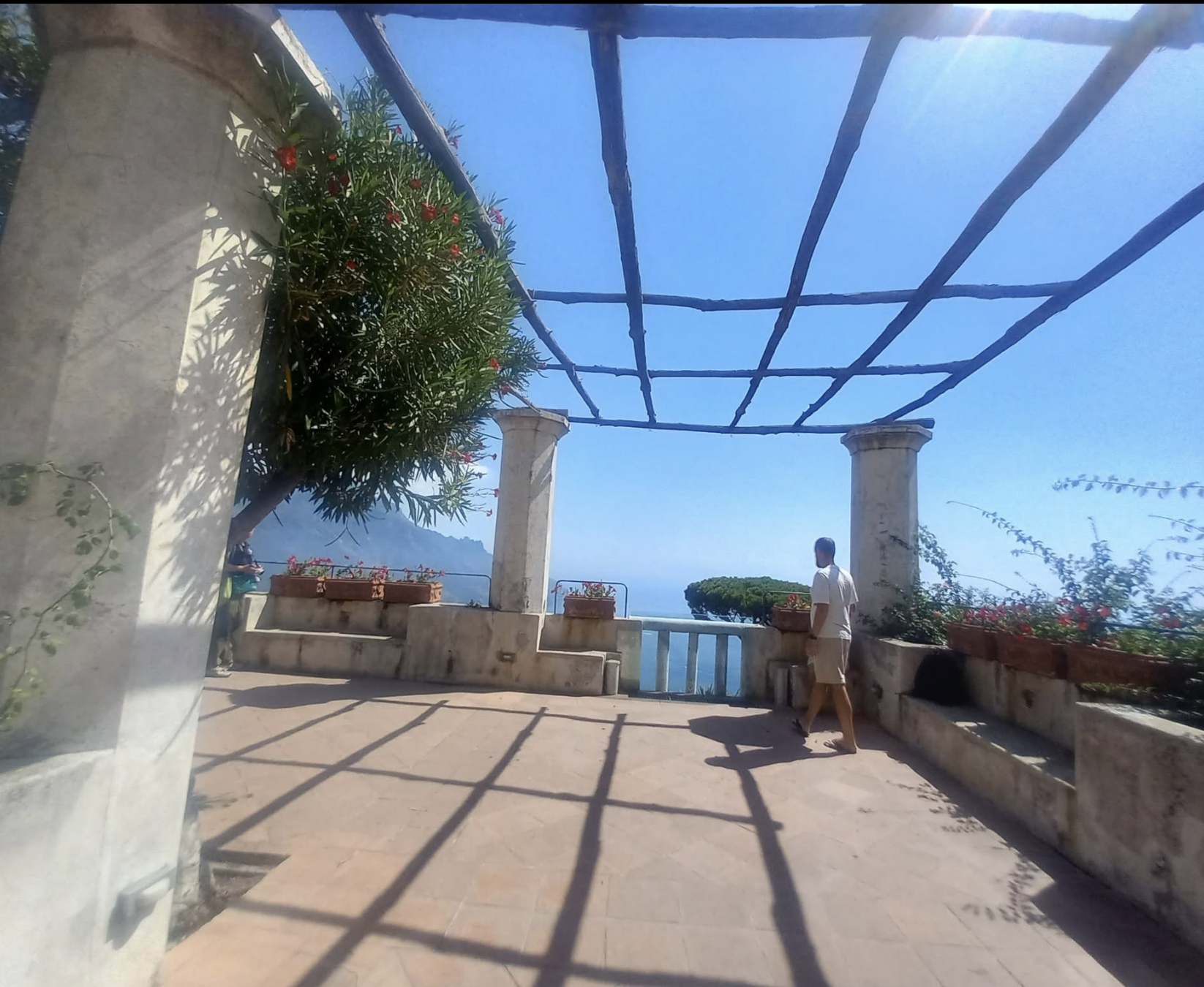
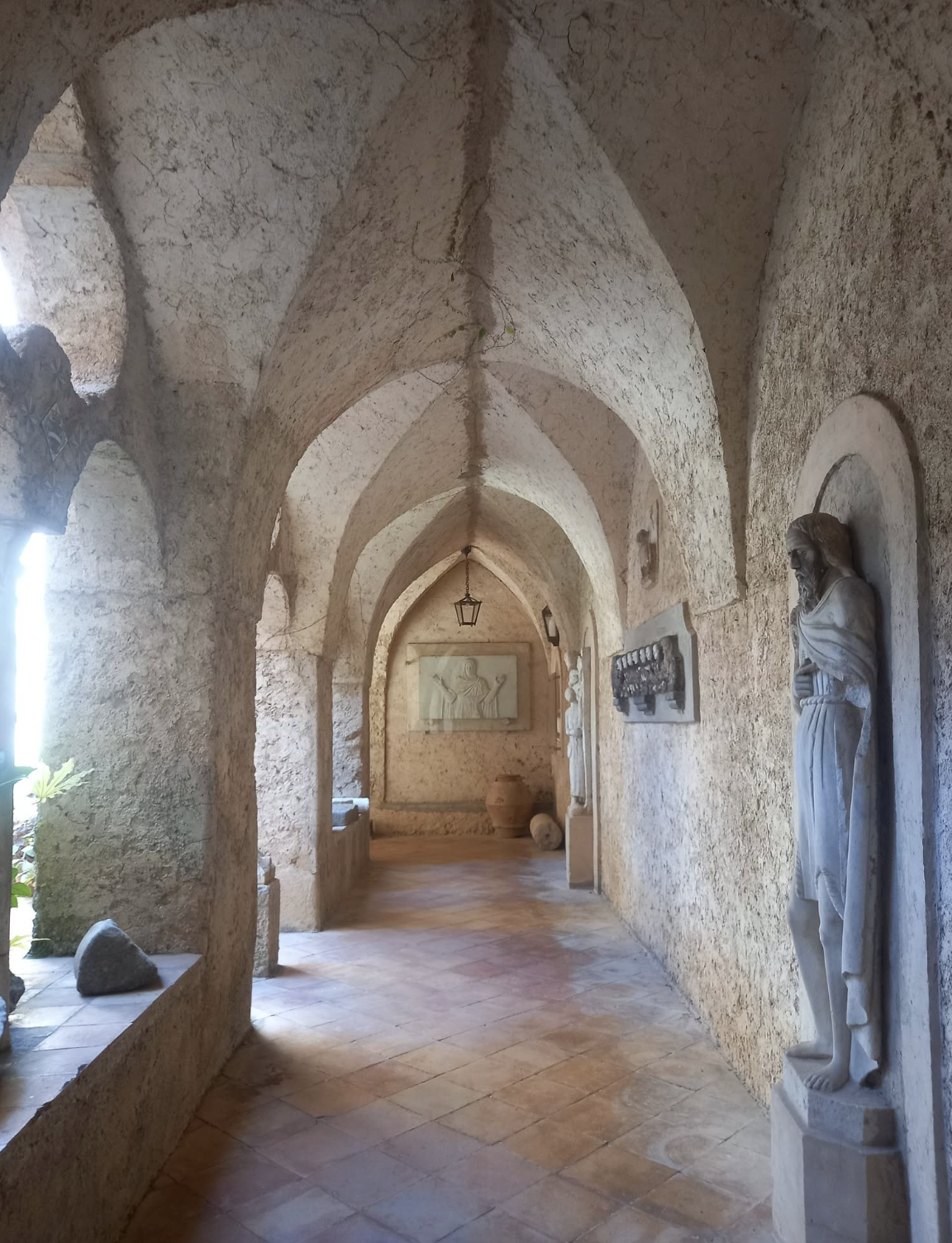
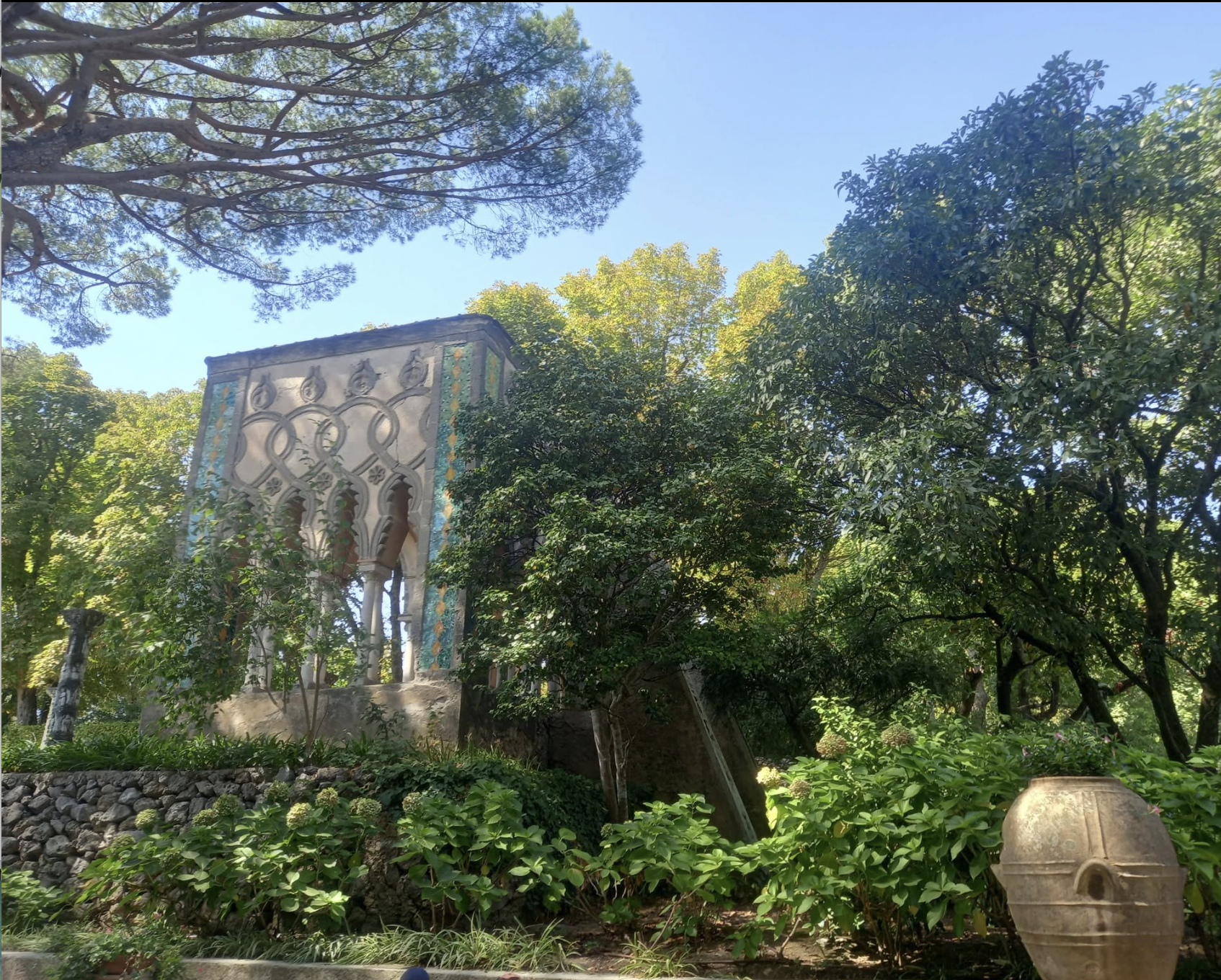
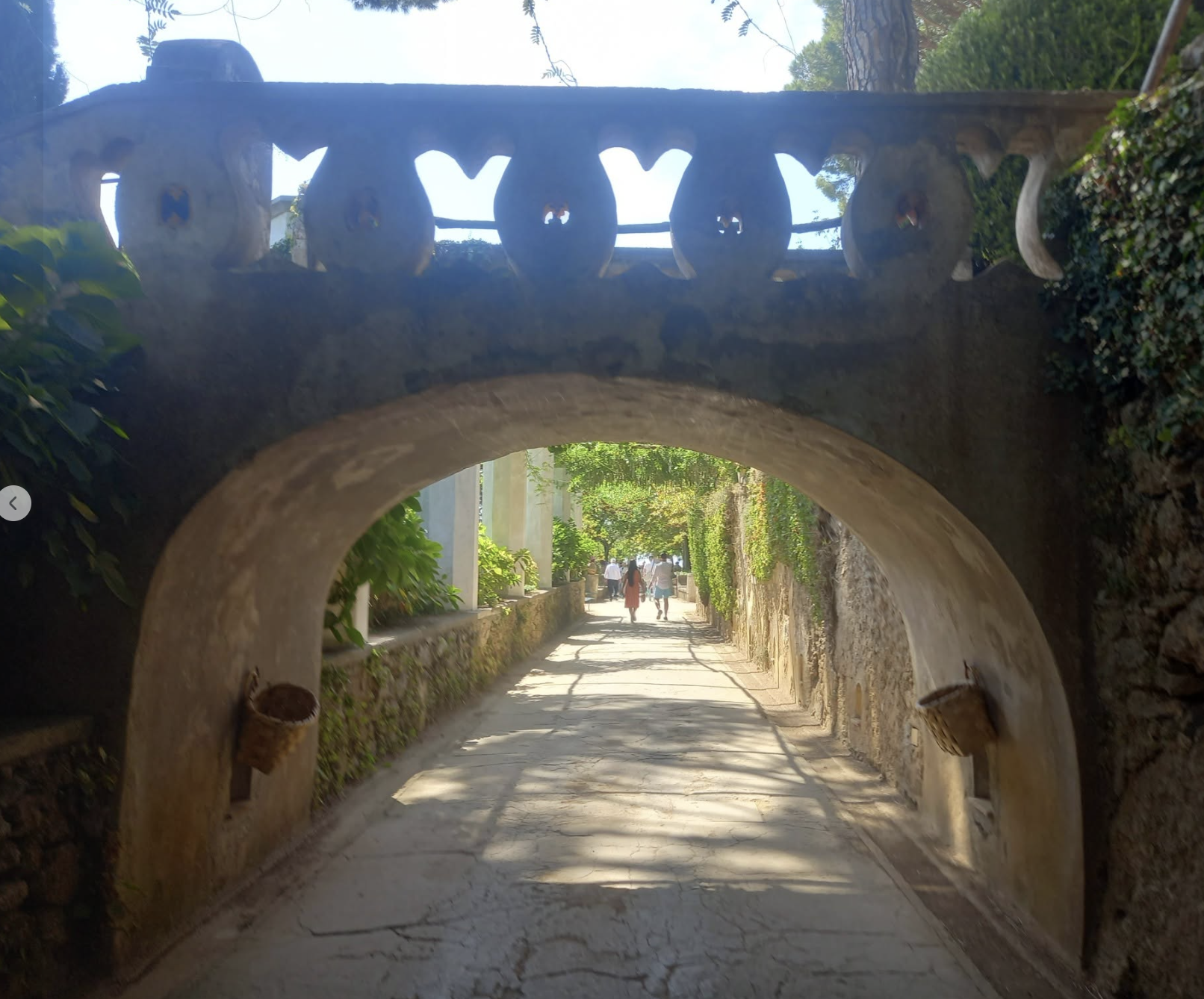
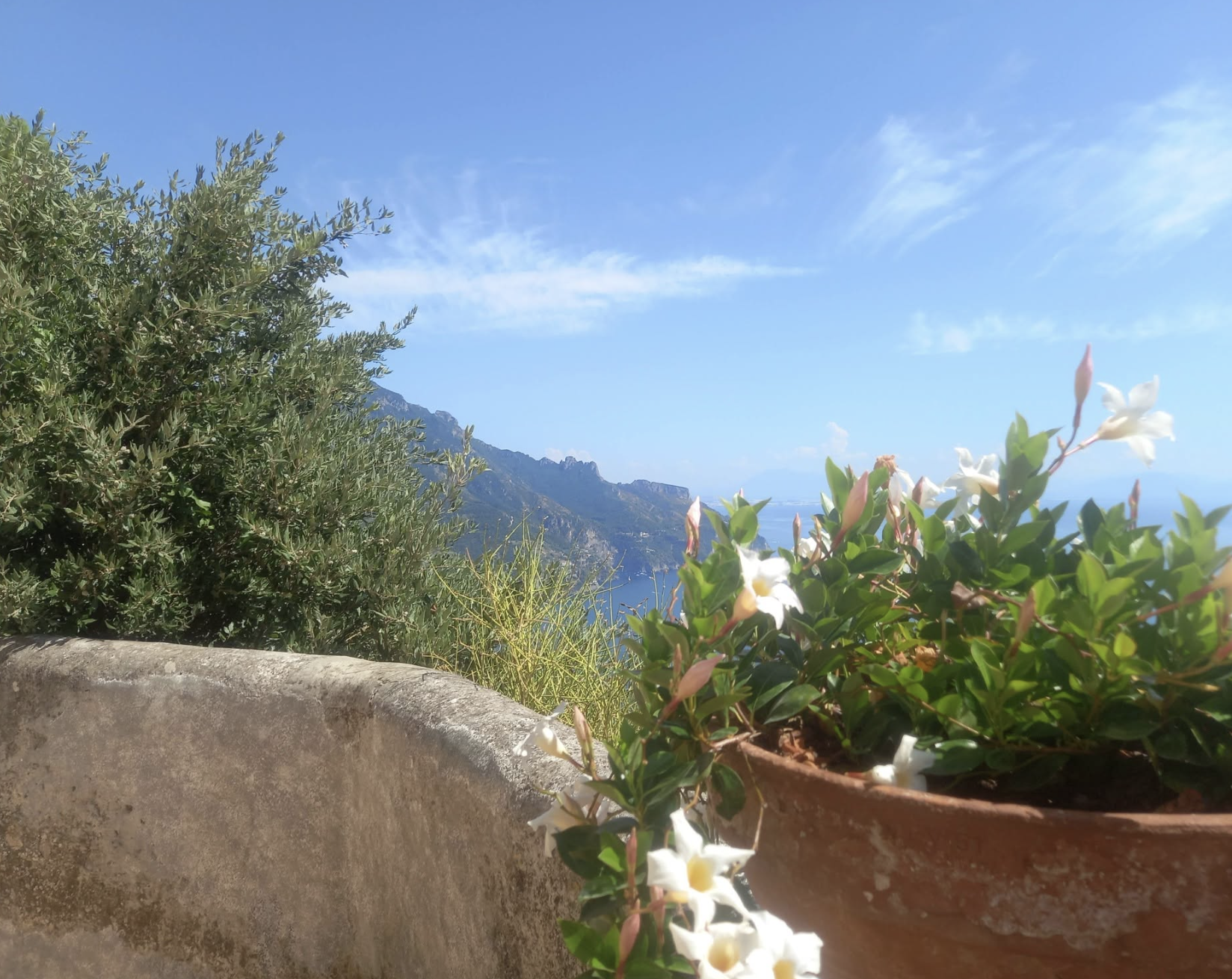

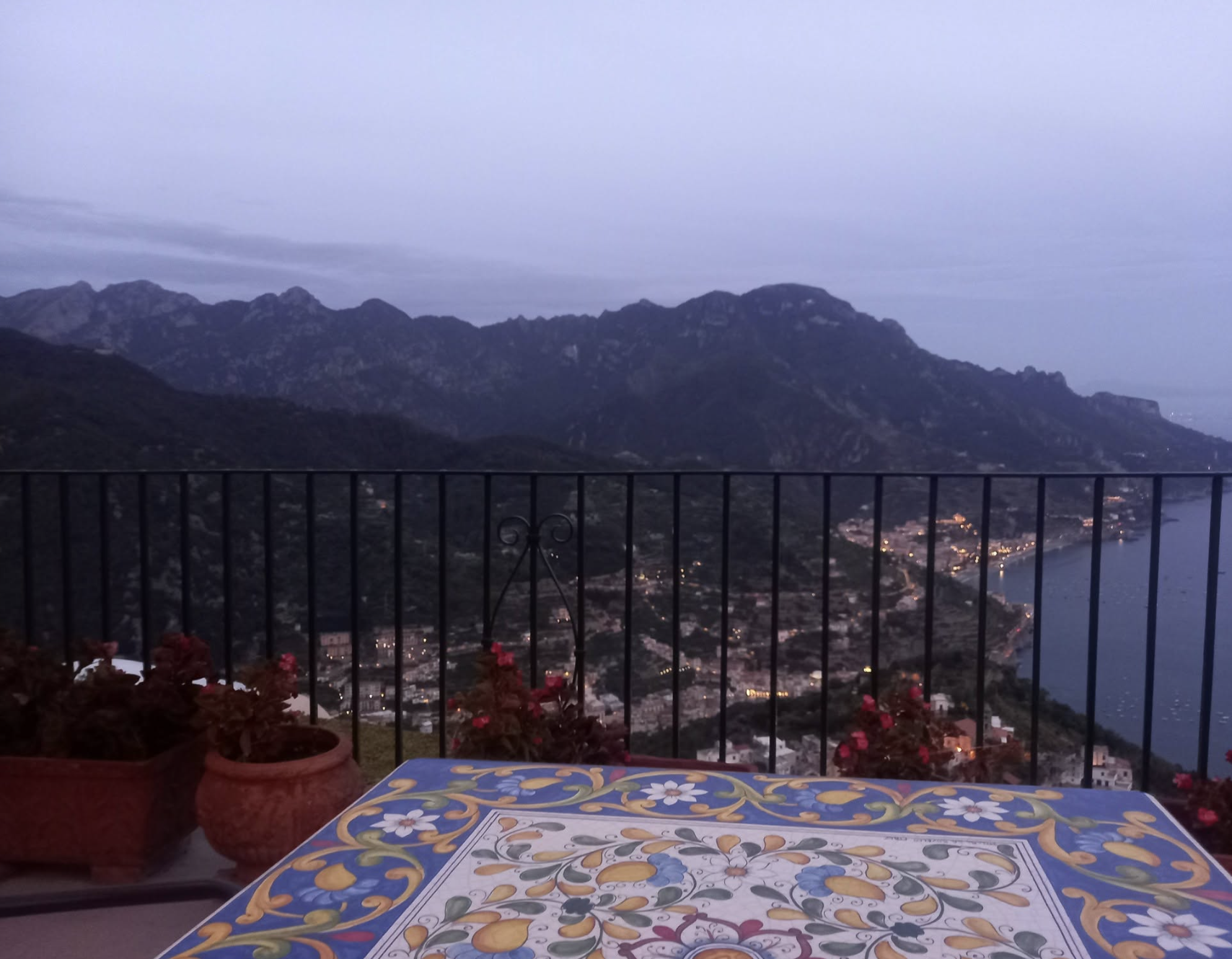
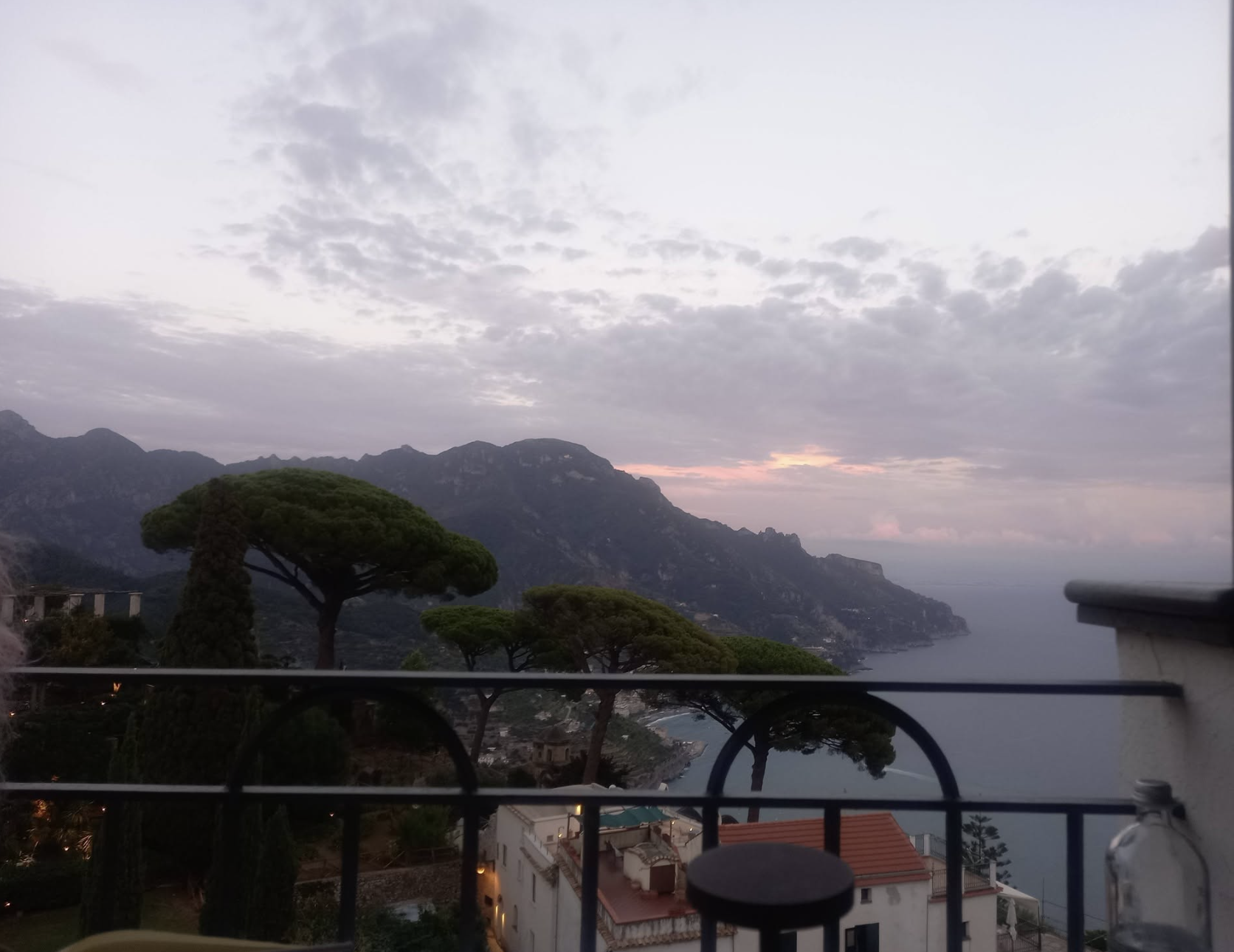
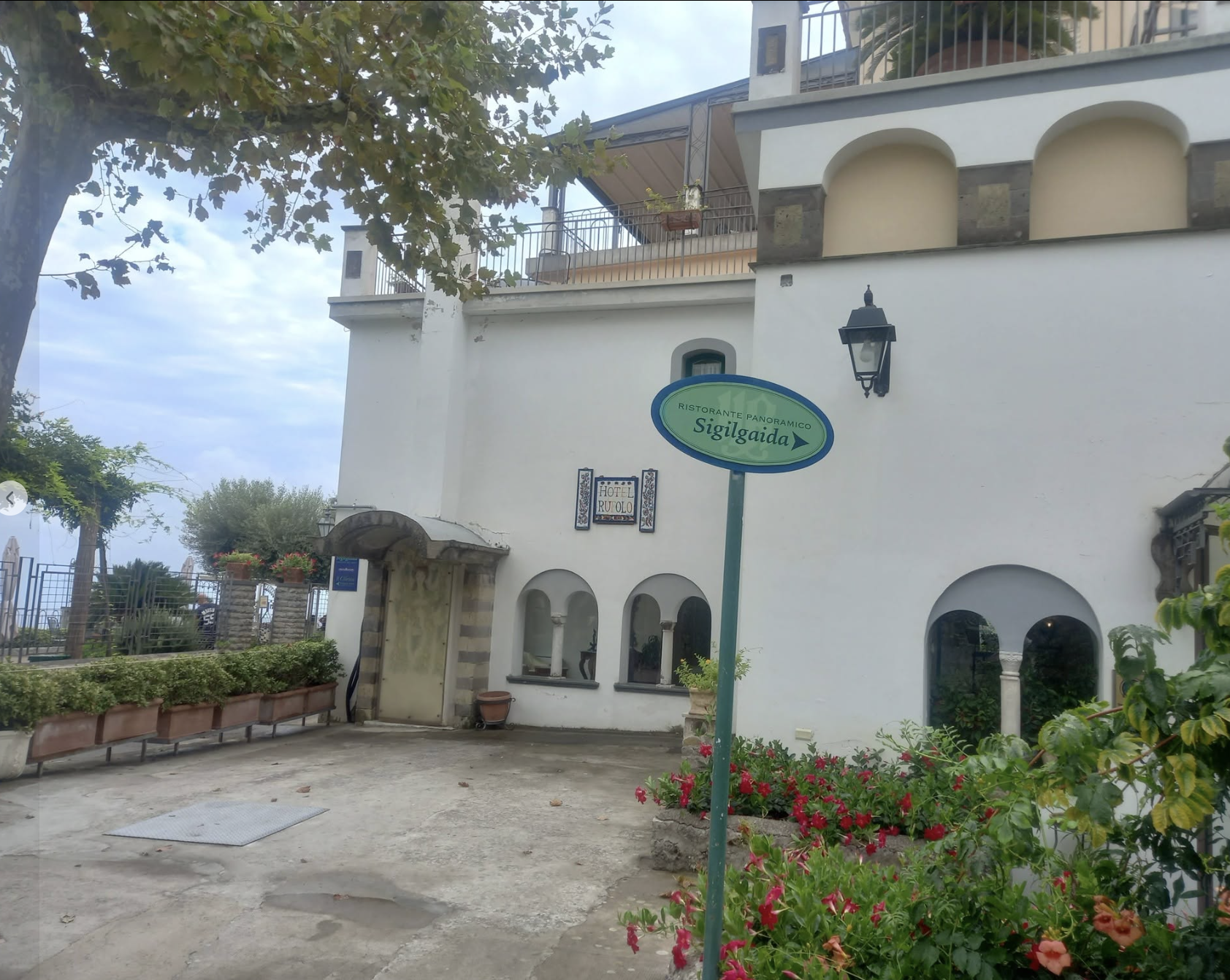
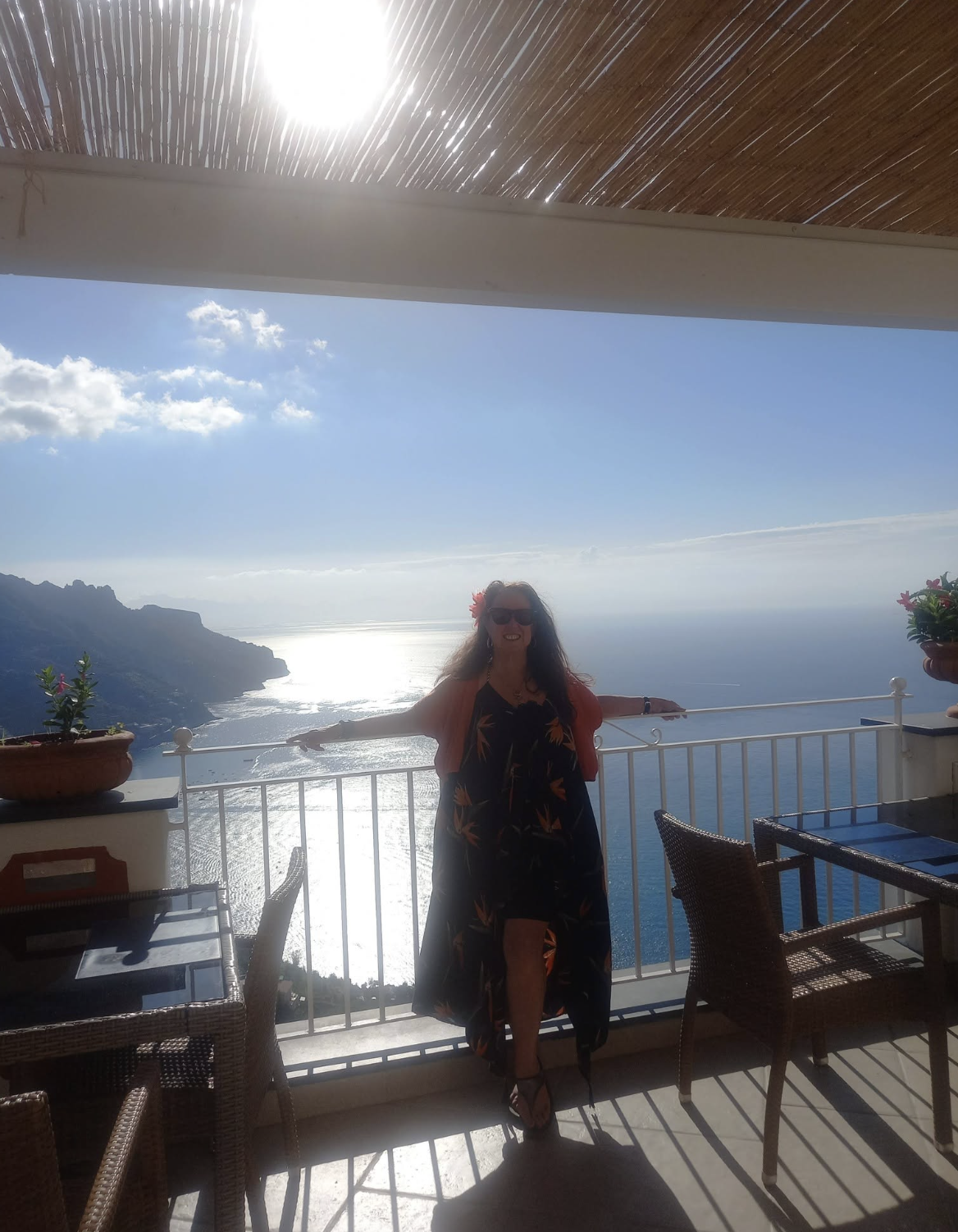
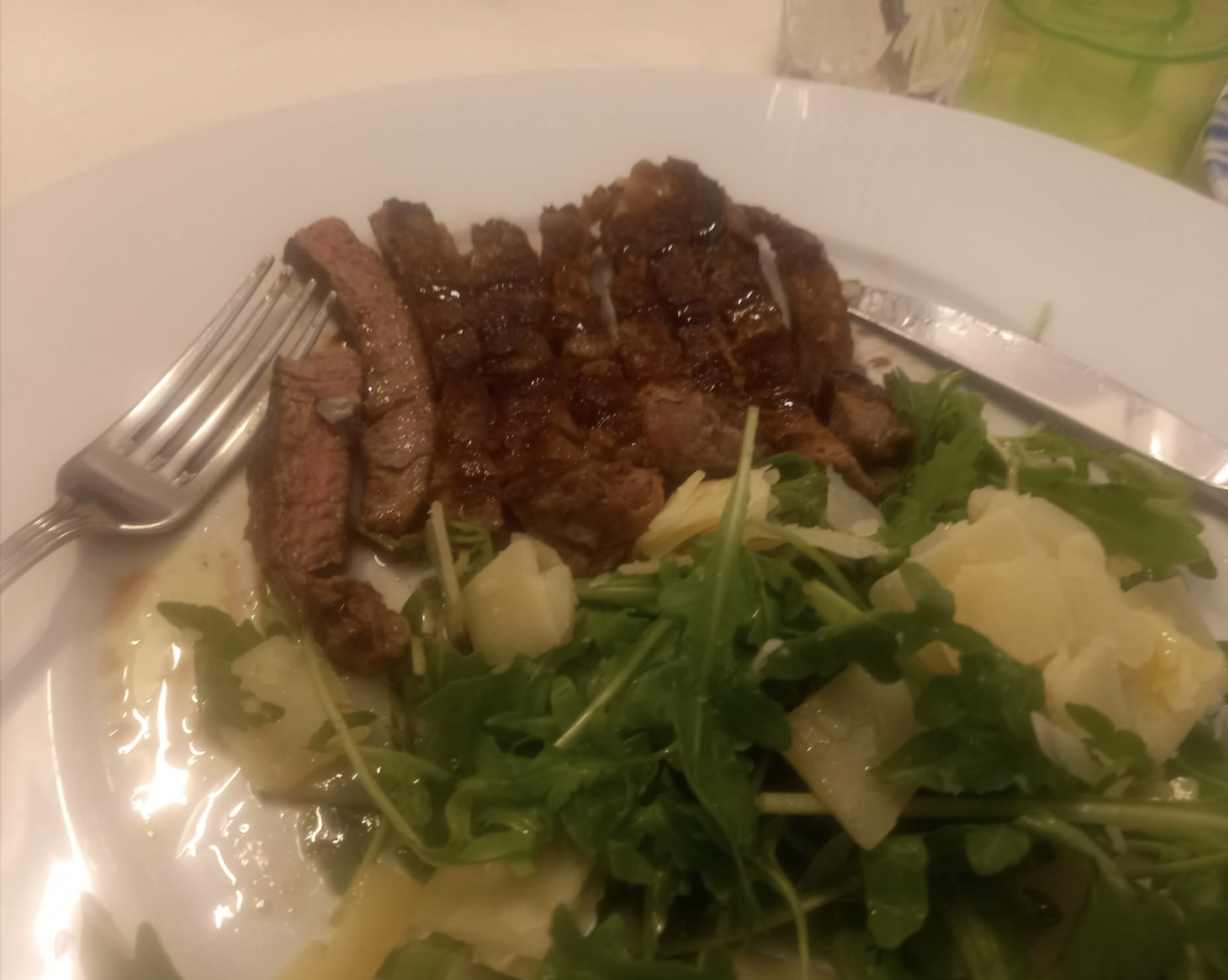
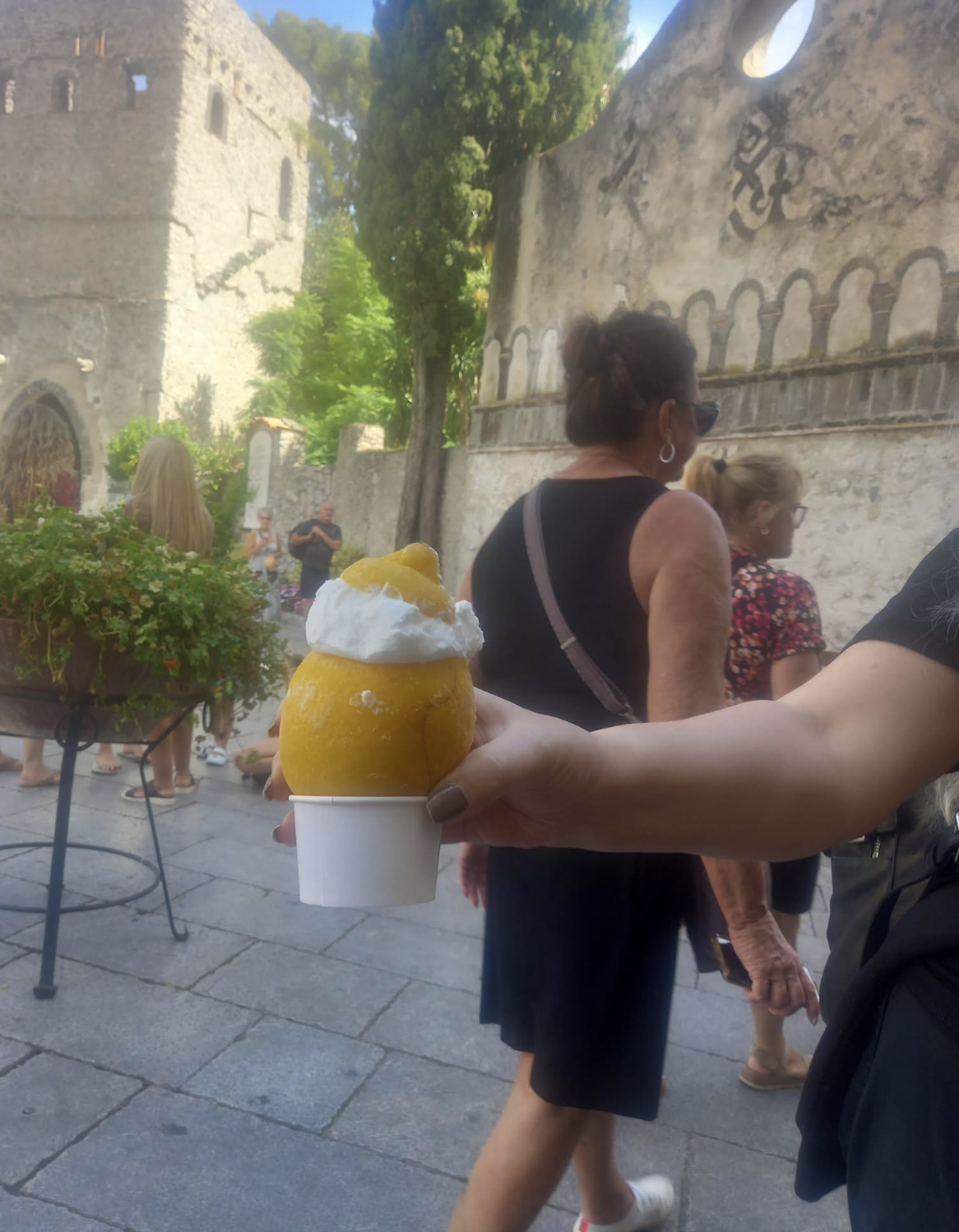
Fortunately for us lesser mortals, Ravello’s star-attractions are easily accessible by foot from its city centre. Also, while both villas now have luxury hotels and restaurants catering for higher-end clientele — also enjoying a brisk trade in deluxe weddings and honeymoons (having stayed at the Hotel Villa Rufolo on our honeymoon, I recommend it for its supremely romantic qualities) — the actual buildings and gardens are available to the public. These are well worth multiple visits as much for their myriad historical architectural elements, art exhibitions and festivals as for their spectacular views.
In sum (Cogito ergo, anyone?)
Naples was fascinating and well worth a visit for its numerous historical sites, though probably best seen at a more leisurely pace (and essential to book in advance). Could I visit again? Certainly — I could have quite happily done that sunset cruise with Aperol spritz every night! Did I feel I could die now I’d seen it? No, but the surrounding Neapolitan region truly is to die for, so there is a certain veracity to that saying.
Capri will always be amazing and beautiful; even though I missed the Blue Grotto this time, it was great to see the view from Monte Solaro, which confirms there is more to discover and delight in here. So yes, I’d gladly return, presuming I can still afford it!
Much as we’d initially dismissed Sorrento as not being interesting, I would happily return for an opportunity to relax a bit longer at Villa Giovanna and explore more of its great restaurants (in which case, my theme would surely be ‘See Naples and diet’!).
But for me, the biggest star of the Neapolitan, Sorrentine and Amalfitan coasts was undoubtedly Ravello. Having been on that sunny infinity terrace and soaked in the city’s eternal-seeming beauty, and become quite intoxicated on its wonderful limoncello spritzes, this memory will indeed stay with me forever.
As for Pompeii, Herculaneum and Vesuvius: these will always conjure images of mortality, contrasting significantly with the eternal landscape of its surrounds. And if I were going to die or the world as we know it were suddenly end for me as it did for those who perished in the AD 79 eruption (see Tom Hiddleston’s fascinating National Geographic docu-drama, Pompeii: Out of Time, for more on this), I couldn’t think of a better place to be when it happened.
Credit: Cover photo by Danilo D’Agostino on Unsplash

