
One of the unexpected hazards of being a widow — especially after a long (25+ years) happy marriage — is learning to navigate the tricky streams of modern dating. It’s hard enough to see the love of your life fade to a deeply treasured memory and adapting to doing life on your own, but should loneliness prompt you to venture into the dating game circa 2026, you’ll soon discover the ‘rules’ have changed dramatically. Even what was once common dating etiquette no longer exists — and don’t get me started on manners!
Most of this contemporary societal fallout is due to the shift in communicating predominantly online with literally virtual strangers via apps and social media. Unfortunately, such widespread use of the internet and smartphones has unleashed a veritable Pandora’s box of shysters, scammers, fraudulent tricksters and assorted other fakes ’n’ flakes, all vying for a piece of you — not only in dating but in every other sphere.
And when it comes to online dating, what piece they are actually after is a whole other kettle of fish! Speaking of fish: have you seen the state of our rivers and oceans lately? If so, you’ll realise your chances of finding a single fish that is not riddled with plastics, pollution or other toxins — not to mention, truly real and/or available — is indeed a challenge. Although I thought I’d done plenty of hideous frog-kissing back in the offline dating days, these absolutely pale in comparison to the online version. Here be more frogs than the Everglades — and some seriously toxic specimens to boot!
Sure, some lucky people do get that second (or perhaps third or more) chance in the contemporary dating scene; some even find that while their next chapter may be vastly different, they are still having fun turning the pages. But such serendipities are increasingly the exception rather than the rule.
It’s dating Jim, but not as we’ve known it

Once upon a time, people met their life partners in real life — perhaps at a bar, church, work or dance event or special-interest club, or via arranged or introduced matches and fancy-dress balls (for those of us who still turn to Jane Austen films or the steamier contemporary Bridgerton series to get our romance fix). They then proceeded to date or ‘court’ in a series of in-person meet-ups, finally escalating to the hotly anticipated ‘I do’.
But nowadays, such quaintness smacks of a long-bygone epoch — and we aren’t talking Austen’s era here: the dating landscape has changed dramatically in just the past 20–60 years. So what happened? And, for those of us blissfully outside this loop for some time, when and how did all this take place?
Although we may think online dating is a relatively recent phenomenon, the first computer-aided dating was created as far back as 1964 when frustrated British businesswoman Joan Ball launched the St James Computer Dating Service (aka ComPat), pioneered computerised compatibility assessments. Next, computer-led matchmaking via online questionnaires came into play when a group of Harvard men launched Operation Match in 1965. This inspired Brit John Patterson to create Dateline in 1966. Then, in 1993, Match.com was launched. By the time its beta version came out in 1995, online dating began to emerge as a highly lucrative business, spawning a slew of emulators and subsidiary companies eager to cash in on the fruitful lurve business.
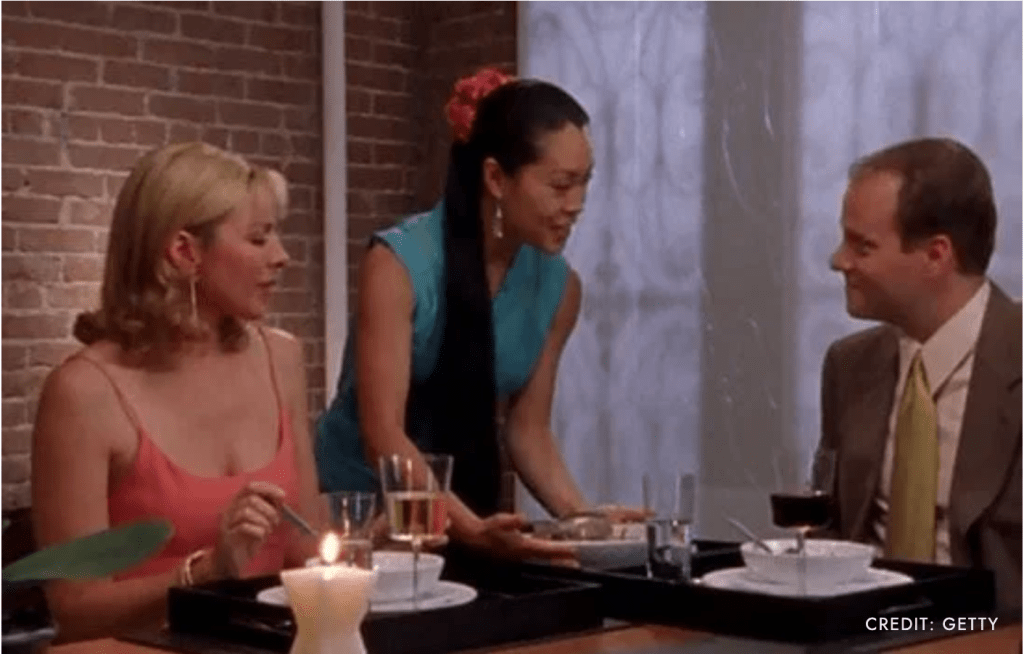
The next revolution emerged with the release of iPhones and android smartphones in 2007–2008. First, the Grindr app appeared in 2009, targeting the gay, trans, lesbian and bisexual community, easily facilitating hook-ups online. When Tinder (now part of the Match Group) came in 2012, its convenient ‘swipe right/swipe left’ feature swiftly grabbed the public imagination, becoming an instant cultural phenomenon in the same way popular US sitcom Sex and the City (SATC) radicalised ideas about contemporary dating after first airing in 1998 (see here for an illuminating discussion on how different the show might have been had it been released post-Tinder).

‘People now have sex with people to figure out if they like them, whereas, 15 years ago, people went out with people to see if they liked them.’
—Joanna Coles, author of Love Rules: How To Find A Real Relationship In A Digital World
Initially launched as a free app, Tinder began monetising in 2015 after acquiring a billion followers, and by 2017 had achieved over $1bn profits. As of today, statistics reveal it is still the world’s leading dating app, with a 31.4% share of the online dating-app market’s annual $6.6bn profit, comprising 30%–50% of the Match Group’s total. By comparison, its closest competitor, Bumble — the 2014-launched, women-led dating platform created by another pioneering female, Whitney Wolfe Herd — now commands 14%–30% of the online dating-app market worldwide.
With such rampant success, it was not long before most established online dating services (eg, eHarmony, around since 2000; Badoo, around since 2006 [now part of Bumble]) quickly expanded into the booming mobile dating-app market. Of these, Match.com remains the biggest, having merged with successful European version Meetic (launched in France in 2001); altogether, the Match Group offers 11 diversified dating-app brands, including well- and less-well-known brands Tinder, Hinge, OkCupid, Plenty of Fish, Chispa (targeting Latinos) and BLK (targeting Blacks).
Don’t worry, be ’appy — or not?
Fast-forward to the 2020s, and tonnes of dating apps have since flooded the market. Want a casual hook-up for sex? There’s a sea of apps for that. Looking for a mature partner, possibly a fellow widower? There are plenty of apps for that, too. Looking for a fellow Christian who shares your beliefs? Yes, there are also apps for that.
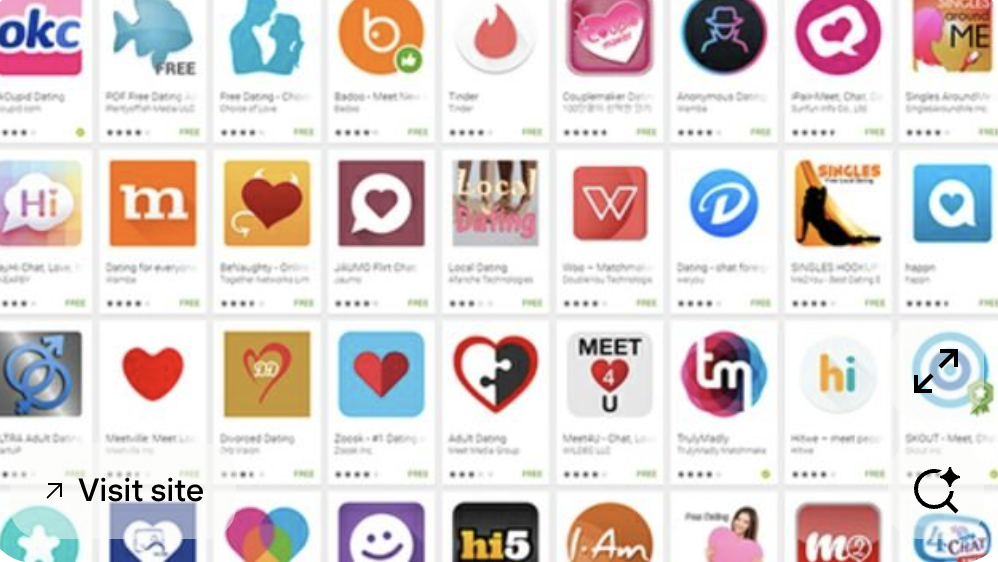
The app market is continually diversifying, targeting ethnic groups, geographical regions, lifestyles, music tastes and even fashion likes/dislikes (Flirtini). Yet despite this plethora of apps, a recent study by psychologists at the University of Wroclaw, Poland, found that only 16% of 6,646 partnered couples globally met their current partner online, with figures rising to 21% for those who met in or after 2021.
As of 2024, market-leader Tinder claims at least 5.5bn people met their partner through the app. However, the Polish study also concludes couples who met in person rather online have better happiness and endurance statistics. Indeed, recent statistics suggest people are beginning to tire of dating, known as ‘online dating fatigue’. Many prefer instead to meet people in real life or via shared interest groups. Reasons cited include:
- being overwhelmed by choice (decision fatigue — because someone else might be better);
- continuous rejection belittling users’ self-esteem;
- sexual harassment and safety issues for women;
- disproportionate time online and effort compared to numbers of real in-person dates;
- frustrating algorithms on inefficient platforms;
- fraud and deception issues; and
- the exorbitant subscription (and frequently unasked-for) autorenewal fees.
“Swiping left and right—it’s almost like a horizontal slot machine. You really don’t know what you’re going to get”—Natasha Dow Schüll, Addiction by Design
Along with online-dating fatigue, there is the inevitable tailing off of the initial dopamine rush of receiving so many ego-boosting likes. Many less-than-’appy users have compared the endless cycle of swiping, texting, meeting and deleting profiles to being as addictive as gambling; an article in Wired suggests parallels with gambling, noting how the formatting, structure and setup of online dating apps mirrors techniques used by casinos to hook people into gaming addiction.
Along with the dangerously addictive quality and seemingly unlimited smorgasbord of dating-app options, there are far more nefarious toils and snares awaiting the unwary lovelorn. These have been highlighted in several recent (2017–2025) TV documentaries, shows and films (for example, Netflix’s The Tinder Swindler and Lover, Stalker, Killer; the BBC’s Dating’s Dangerous Secrets and Dating Apps: The Inside Story; IMDb’s The Dangers of Online Dating and The Good Liar [also on BBC]). Even my brief fling with online dating as below shows how easily such scenarios can happen.
Yet the dangers and recent drop-off in interest haven’t stopped developers producing new dating apps. As of 2025, there are over 1,500 online dating apps. Some canny businesses have also begun introducing alternative meet-up options centred around dining, gardening, hiking or localised speed-dating events, where singles on the lookout for love can meet others for quick in-person interviews to determine compatibility.
Alas, as long as romantic hope springs eternal and new technology or social trends emerge, you can bet your bottom dollar clever marketers will be waiting to cash in!
So why risk going online then?
Before I relay a few of my own experiences with various dating apps, allow me to explain what propelled my venture into such unknown and potentially risky territory.
It’s true I have what most people would consider a very active, busy, fulfilling social and creative life; one reason I’ve delayed publishing this is I wanted to finish the concluding part of my historical fiction novel(s), which I finally did on 17 March (woohoo!). Keeping busy with creative projects, dancing, church, spending time in nature or at cultural events, and connecting with friends and family gives me a deep sense of fulfilment and joy, so in many ways I am quite content being single.
However, the initial incentive came from being fed up with dining alone and suddenly having to wash dishes all the time (I formerly did all the cooking while my husband did the washing-up; sadly, I have no room in my kitchen for an electric dishwasher). Also, while learning to enjoy spending the Friday nights that used to be our date night alone has been an important stage in my grieving process, it has forced me to face the fact my loving hubby is never coming back. Not. Ever. And while I do greatly miss him, remaining solo is not really an option for I or anyone else with any joie de vivre still left in them.

Though some might assume going to dance events as often as I do would be the best way to meet a new partner, some dance styles (eg, tango) require a partner, not least as it really does take two to practise it! Most tangueros are already partnered or only dance with those they know — it can be somewhat cliquier than salsa, and without the freedom as a woman to invite a man to dance. Also, while people do partner up in salsa, it can be awkward when break-ups occur in a scene where everyone knows you and attends the same events — if you know, you know (or, as my German salsa friend Ulrike said, “you don’t f*** in the same pool you swim in”, or something to that effect).
So, after a few female friends spoke positively about online dating, I thought, well, what could I lose from a brief trial or two? Well, a lot more than I bargained for, perhaps!
App trials and tribulations

The first online dating platform I tried was eHarmony, which claims to have some 4.5 million users in the UK, with two million people who found love. It offers a ‘science-backed compatibility matching system’ enabling users to find matches based on alignments of values, beliefs and personalities.

Initially it seemed good, offering a range of potential matches with successful, interesting men across the UK. Some identified as Christians as well. However, I soon found most of those claiming to be Christian were only nominal believers, though I did chat briefly to a 50-something guy, a very devout Catholic and still a virgin — some mothers do still have ’em!
After a few months of on-off chats with potential bachelors of various ages and locations, I became less and less impressed with the matches the eHarmony AI bots selected. I concluded this was because the profile its system created for me did not accurately reflect who I am. While I might technically be a woman of a certain age, I am hardly that by either looks or activities, and certainly not ready to become any lonely geriatric’s nursemaid! Although I did go on a few dates, most of these men turned out to be using inaccurate profile pics (typically much younger than their real-life images), inactive members or what I call ‘fly-by-nights’, in that they’d initially show lots of interest but then suddenly disappear — essentially displaying avoidant or non-committal ghosting behaviours.
I also became more and more frustrated with the non-user-friendliness of the platform, especially when I decided to cancel my initial six-month subscription and then faced endless problems with trying to contact or communicate in person with any customer service reps. In the end, I had no option but to contact my bank and ask them to block any further payments.

After this, I put up a ‘free’ profile on Christian Dating for Free. While I did meet a few genuine local Christians through this, most were too busy working for more than sporadic texts or meet-ups. But I was touched when one guy from Gambia (my sister amusingly translated this as ‘Game Boy’ [GB]) offered to fast and pray for my stressful passport situation. However, after a few weeks of fellowship via chats and video calls, GB began referring to me as his ‘future wife’ and begging me to come to Gambia to be ‘treated like a queen’!
When he eventually asked for money (£50) to help pay for unlimited WiFi — a supposed one-off ‘donation’ — I suspected this would soon lead to higher amounts, so politely and firmly said no. Having heard stories about African or other international fraudsters targeting widows and scamming them out of their entire life savings after a bogus ‘wedding’ abroad, I decided to end the regular prayer chats. He still messages me, insisting God has destined us to be together, but I certainly don’t share his conviction!

Next, I experimented briefly with DateMyAge, where I was instantly bombarded with interest from several men of all ages and nationality/ethnic backgrounds, some of whom were unbelievably handsome, fit and in some cases charming, articulate/well-educated and interesting.
Many declared themselves smitten and began to profess undying love. One of these guys even quoted poet Pablo Neruda, and seemed very genuinely interested in continuing to get to know me, despite being based in Brazil (not exactly convenient for an in-person meeting). Talk about an initial dopamine rush! This one was like slot machines on steroids!
Talk about an initial dopamine rush! This one was like slot machines on steroids! However, the cost of buying credits to interact began to accelerate ridiculously
However, I soon found the costs (the platform operates on a paid credits system, with video calls or charges for sending ‘love notes’ costing exponentially more) accelerating ridiculously — for example, a few mere two- to five-minute video calls (some of which were clearly AI-manipulated) would quickly ratchet up £45 in credit fees. Also, as none of these online ‘undying love’ swains was willing to communicate with me freely via WhatsApp, I concluded they are most likely paid by the platform to lure and keep unwary users on the site, and that is why they themselves remain ‘free’ members.
Amid other evidence of it being a pure money-making scam site, I decided to leave — however, once again it was impossible to contact the site to cancel the auto-renewal. I therefore had no option but to contact my bank and instruct them to block any further debits from the company, which was registered in Malta.


Alas, that did not stop them from immediately signing me up to their sister site YourTravelMates, which was set up in the exact same way, requiring absurdly expensive credits to communicate with any of these paid-to-woo models. I later watched a YouTube interview with a man who had spent an absolute fortune on a woman met through this site, only to find she was already married — so women clearly aren’t the only ones targeted. So I called the bank again to block this one too.

Last, I decided to try OurTime, a 50+-oriented subsidiary of Match.com/Meetic (the Match Group) for three months. Match claims to have helped circa 2.6 million people meet their next partner; considering I know people who have met their current partner through one of their apps, it seemed a better investment of time and money. But despite its long tenure in the market, this site also proved to be riddled with fakes, flakes, shammers and scammers — much of them operating according to a well-oiled, slick schtick.
Would you buy a used car from this man?
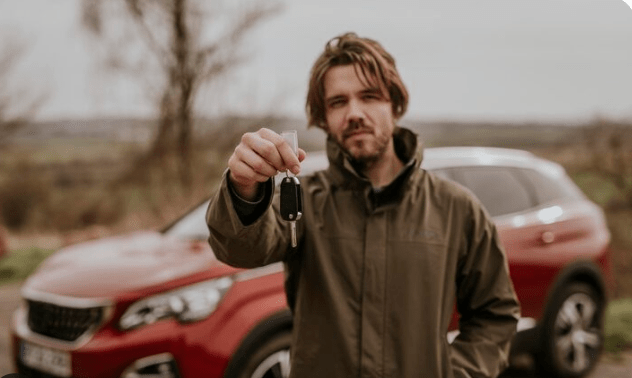
Initially, OurTime seemed to offer an even better dopamine rush than other platforms, with a daily tally of 50+ likes or loves. Some became fairly serious soon, professing undying love after only a few weeks or months of online-only chats via the site or other social media. Some were objectively attractive, interesting, accessible and local-ish men seemingly keen to meet. I even discovered one of the eHarmony chaps I’d dismissed as a ‘fly-by-night’ was also on this site (we talked again, had a video call and planned a date, but he again cancelled and disappeared again, confirming his ‘fly-by-night’ status).
However, after chatting with a few of these men, I soon found at least 50% — excluding the nerdy, needy or pervy ones who immediately sent rude images or audibly frothed at the mouth about their desires for kinky sex — were using fake profiles and/or employing grooming tactics ahead of a financial ask. I realise now describing myself as a widow made me an automatic target for any would-be scammers, online swindlers and any other dodgy dealers scouring the internet in search of their next victim. I didn’t know much about red flags then, but boy do I now!
At least 50% of these men — excluding the nerdy, needy or pervy ones sending rude images or frothing about kinky sex — were routinely using fake profiles and employing grooming tactics ahead of a financial ask
Surprisingly, while several of these men had more obviously too-good-to-be-true model looks, there were an equal number of ‘ordinary’-looking guys trying it on (including those pretending to be committed Christians). Unfortunately for some of these catfishers (people who create fake profiles to lure victims into parting with cash, etc), it did not take me long to cop on to the incongruities and inconsistencies in their stories.
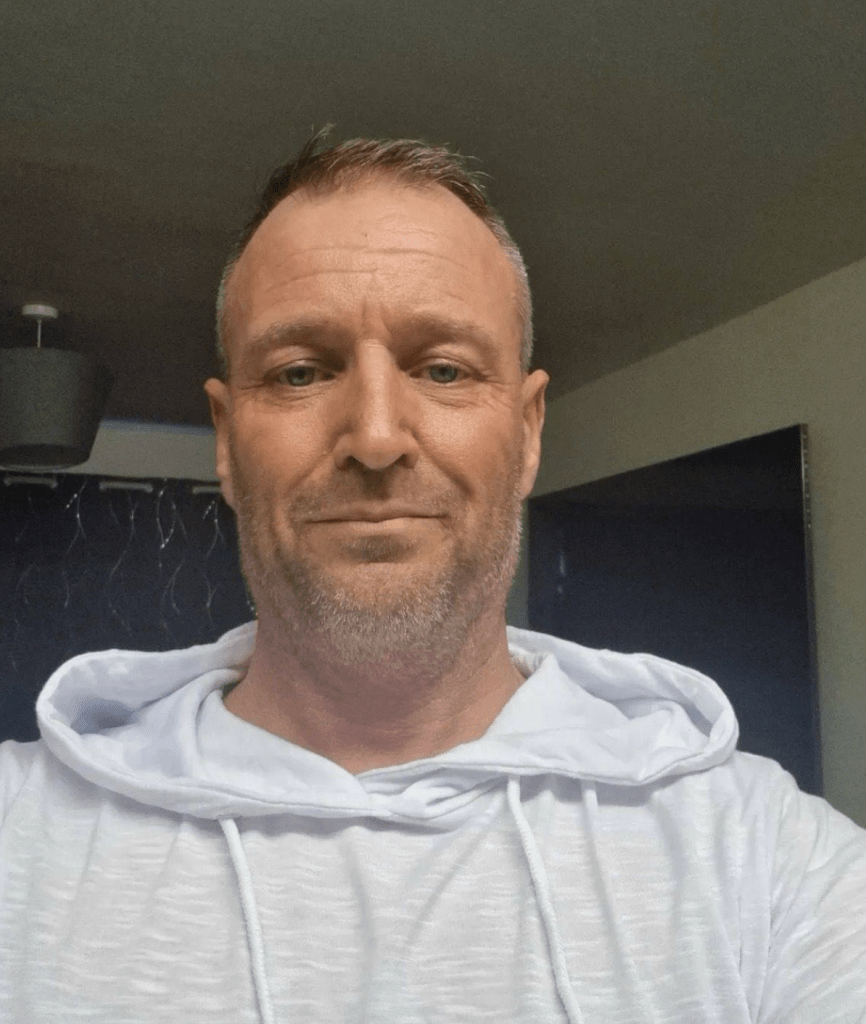

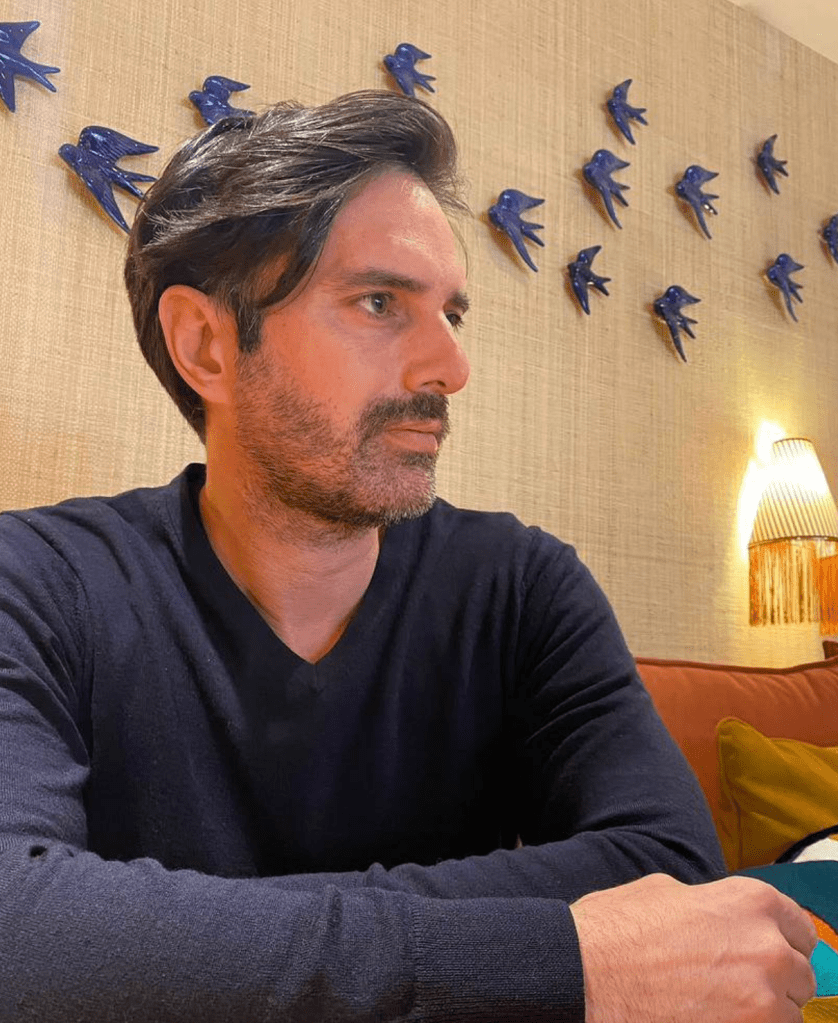
After catching the above three fake-profile cat-fishers in action (I’m sharing this rogues’ gallery should their borrowed profiles still be circulating), I began regularly using the reverse-image check feature on Google to filter every new online swain’s image. Sadly, this feature is no longer available, but before you could simply drop a screenshot of the profile into the Image section of Google’s search bar, and it quickly revealed where the profile pic came from.
But, you may ask, do all these online romance fraudsters and fake-profilers really think we are that dumb we can’t see through their BS? Apparently they do, as romance frauds — 85% of which begin online, according to the Financial Conduct Authority (FCA) — are increasingly common. UK Banks reported a rise of 9% of such cases in 2024/2025, with victims’ losses totalling £106 million. And with artificial intelligence (AI) advances, this is only bound to get worse as the technology becomes more sophisticated.
Words to the wise 1: Romance scam tactics
I also noticed some lines I was being fed sounded all-too polished, well-practised and familiar; the more I examined these, certain patterns emerged, usually in a predictable sequence as below just before a money ask.
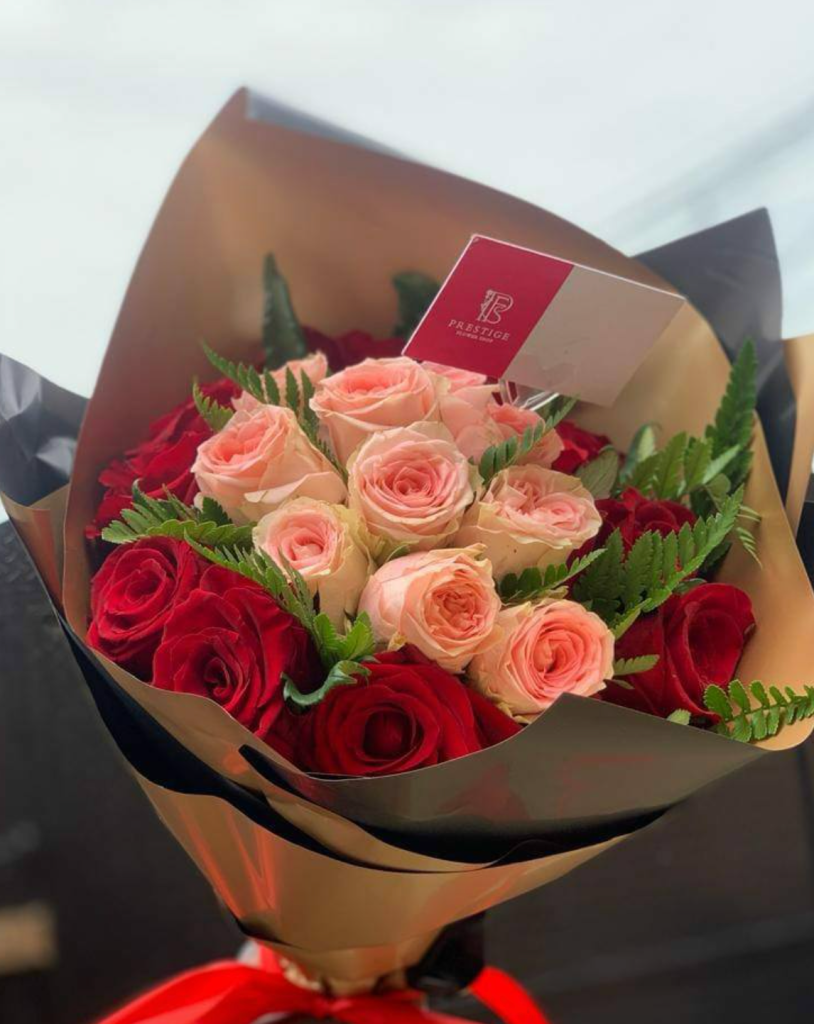
- Most scammers typically groom their victims from over a few weeks to a few months before they finally present their urgent ‘need’ for money.
- They soon ask targets to move off the dating platform and on to Whatsapp, Telegram or some other messaging app, citing vague business reasons as to why they need to keep moving to different channels.
- They love-bomb targets daily with gifs of flowers, etc , progressing from basic ‘good morning/afternoon/ evening’ messages to asking how your day went and what you ate for dinner (weirdly, most scammers seem obsessed with your daily food consumption!).
- Their responses to your questions about their own lives or activities are tactically minimal — presumably to limit chances of exposing themselves — and generally fairly superficial (including the schmoozy love talk).
- They employ ‘mirroring’ tactics, repeating what you’ve told them and sugar-coating it with praise and admiring comments to make you feel they are ‘on your side’.
- They gradually introduce future plans, promising more when you eventually meet (which obviously won’t happen when they go away on an urgent business deal or oil- rig contract — nudge nudge, wink wink).
- Having fed you daily doses of ‘affection’, they suddenly begin to withdraw, citing conflicts at work or business problems, often of a financial nature.
- They often try to isolate you, inviting you to a private, ‘special’ conversation with them, leading you to believe they are sharing something deeply personal. This is usually when they finally reveal their end-game, telling you their employer has cancelled their bank cards, they have an urgent family or business need for an immediate loan, and are turning to you as their ‘special friend’ to help them out. (If you ask logically why they haven’t asked for help from family members, they’ll give some excuses, for example they are all dead or in debt.)
- They usually want an immediate payment via a particular form of wire money transfer or payment system, sometimes involving cryptocurrency.
- NOTE: DO NOT, UNDER ANY CIRCUMSTANCES, GIVE YOUR BANK DETAILS OR AGREE TO ANY TRANSFER IN RESPONSE TO A REQUEST FOR MONEY!!!!

‘I said in my alarm, “All men are liars” ’ (Psalm 116:11)
Not long after the seventh consecutive money-scamming effort on OurTime in less than three months (see below), in addition to the cancelled, delayed, just plain weird or disappearing/ghosting dates I’d experienced, the psalmist’s quote rang all too true.
This last big money ask on OurTime came from a supposed ‘Christian’ named ‘Michael Elliott’ (ME) a friendly and intelligent-sounding engineer/manager. After 2.5 months of texting (‘how was your day’, ‘what did you have for dinner’/‘what did you watch on television’/‘how was church today’, etc), he announced he was taking a contract on a US oil rig (eye roll), and said he needed to switch our contact platform to Telegram.
Although I was reluctant to transfer to Telegram, I eventually agreed out of frustration with being cut off mid-flow on WhatsApp. But ‘ME’ soon claimed his company had frozen his bank accounts and began asking for a ‘loan’ of £10,000 using cryptocurrency to help pay his way out of a work-debt situation. When he then became extremely pushy, manipulative and demanding, that was enough. Reader, I blocked (and deleted) him!
When he then started being pushy, manipulative and demanding, Reader, I blocked (and deleted) him!
As if not to be undone by this, yet another online ‘Christian’ friend, who for months had been sending very sweet, supportive messages, suddenly not only pulled the money ask, but as soon as I said no, he sent me video of himself masturbating, pleading to join him in the joys of ‘sexting’. Perhaps if I’d fancied him in the slightest I might have found this tantalising, but to have it thrust in my face like that was just a super-big ‘Eugh!’
Although I was aware of cybercrime and fraud, I had hardly expected to encounter such a sheer number of romance fraudsters in such a short time — it is nearly as bad as the shock of learning of the staggering numbers of men (62 million) who have visited a website to learn how to drug and rape women, etc. You may rightly wonder if some of these abusers also graduated from the romance scam academy!
Words to the wise 2: Protecting yourself on dates
In retrospect, although a few men I met online were genuinely seeking companionship of some kind, most seemed after either easy sex or easy money. I encountered not a few sex-hungry pervs, narcissists and decidedly strange dudes, each needing to be issued with their own warning hazard. Some were even downright creepy; you’d be right to worry they might begin stalking or harassing you.
Now, while I know some women might turn to dating apps out of a desire for casual hook-ups, unless you ARE truly asking for that, the standard advice when meeting someone new or unknown for an in-person date is:
- always meet in a public place;
- drive yourself there — don’t get into anyone’s car (unless you want to risk a sudden lunge with a tongue down your throat as happened to me;
- let someone else know where you’ve gone; and
- have a good back-up plan in case anything goes wrong [for example, most bars have posters promoting ‘Ask Angela’ as a service for women who are being harassed, abused or are uncomfortable with a date]).
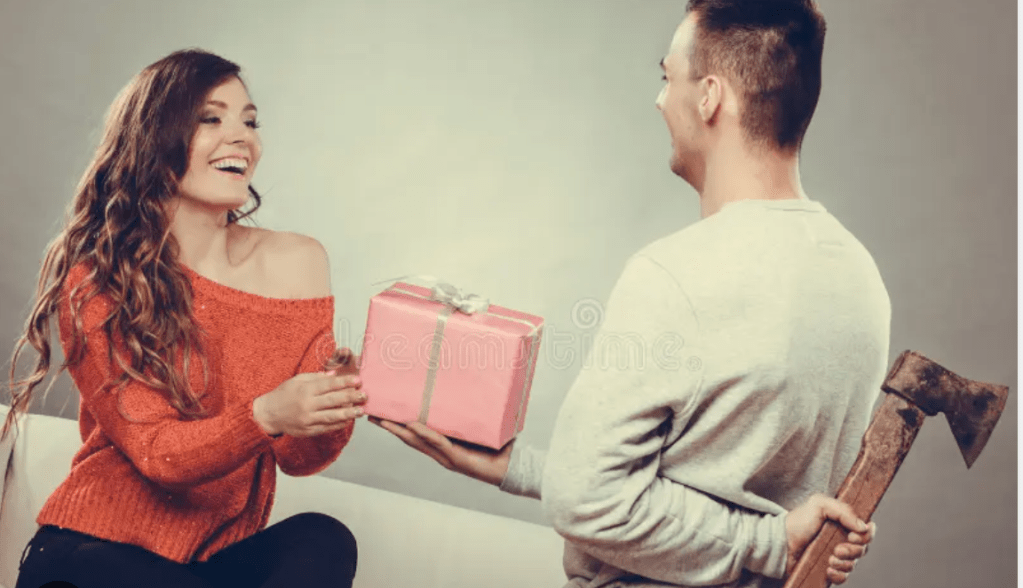
Vive la différence! — ou non?
After sobbing my eyes out, convinced I deserve better, I decided to quit looking on dating apps and simply trust God to bring someone into my life organically, without the ‘help’, hazards or heartaches of communicating online. I’d already concluded my chances of finding any man — online or not — who would understand what I meant by avoiding Ishmaels (a Biblical allusion) or false Florimells (a literary one) were next to zero. Besides, if God could bring my last husband into my dance sphere in London all those years ago, surely He can do it again!
Although I am still talking to and/or meeting (or at least talking about meeting) a few men friends from OurTime, I really don’t need — nor can I afford — to spend any more money for membership on a dating site purely to furnish them with more scam fodder!
Of course, OurTime still messages me daily about the numbers of men viewing and loving my profile to get me to resubscribe, the best thing I can say about this app is at least cancelling membership is fairly straightforward. However, considering the number of scammers (not to omit sex pests) I’d encountered in only three months, this means that, contrary to Match Group’s claims, they have effectively left consumers to take the hits. Surely such an established group should take more pains to screen out fake profiles to protect its members? There really ought to be more laws to protect consumers!
(I did briefly consider going on one of those in-person dinner meet-up events [like speed-dating, but with four-course meals], but was put off when a salsa friend told me the men are usually quite nerdy, so the women back off collectively. Nevertheless, the idea of an in-person meet-up with like-minded people is definitely the way forward.)
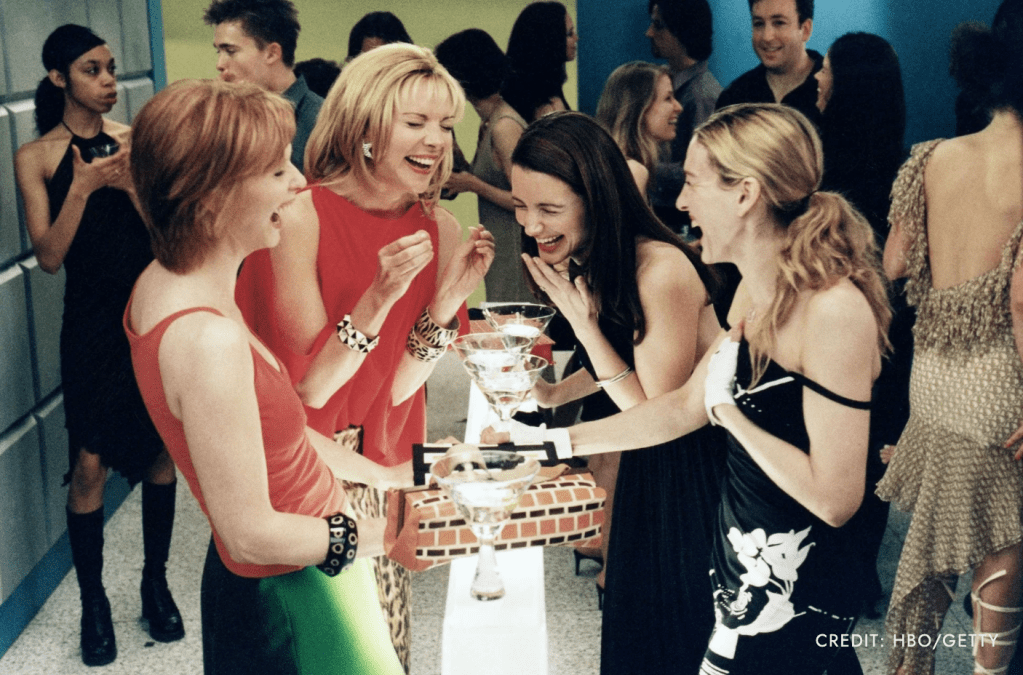
Alas, as even the most sincere-sounding of the ‘undying love’ swains I was still talking to online had failed to materialise for an in-person date on Valentine’s Day (he had to go abroad suddenly for work), I decided to take myself out for a nice dinner with another female friend. I bought myself the dozen long-stemmed red roses and some of the nice lingerie he would have bought me, concluding Whitney Houston was right: ‘Learning to love yourself / is the greatest love of all’.
Of course it is essential for all of us to learn self-love before we are ready for any other kind, but unless you find other aspects of self-love 100% satisfying (I refer to self-pleasuring here) and do not crave the feel of someone else’s touch, the sound of their voice, the joys of physical intimacy or even simply the pleasure of connecting with a like-minded soul over drinks or food, etc, it doesn’t quite match the real thing. Which I then began to crave — fiercely — desire welling up determinedly inside this long-dammed river. Blame it on spring, then!
Self-love is essential to being ready for any other kind, but unless you find other aspects 100% satisfying (I refer to self-pleasuring here), it doesn’t quite match the real thing!
Imagine my surprise a few days later when I found myself out on what at last felt like a genuine ‘date’ — a random meet-up with a certain charming and undoubtedly sexy art colleague. Our initial cup of tea turned into shared cocktails and vaguely flirty exchanges, with an even more intoxicating sense of connection through shared interests and curiosities. At last, a real conversation with a kindred spirit/like mind!
We soon began exchanging several hilariously fun, flirty, friendly (even raunchy) texts, openly communicating our interests, desires and curiosities. This proved even more of an addictive dopamine rush then chatting with interesting and attractive men on dating apps, especially as it felt quite liberating for me to express myself freely like that to a male friend (he is not gay, but nearly as much fun as a good gay friend, which as the SATC girls know, every woman should have). I can literally hear my husband applauding at the idea of me finally letting go, having fun and being less prude-ish! I am, after all, an adult; why not have some ‘adult’ fun? As long as it is just harmless banter, why not?!
Although this friend really can’t be more than a friend, I remain infinitely grateful to him for helping to break the virtual stalemate I’ve been in through months of text-only ‘friendship’ scenarios. Actually meeting in person, having drinks and laughing together as well as talking openly talking about your real interests, etc has opened my eyes to what I really want and need from any other relationship, as well as building my confidence that it can, indeed, happen… eventually. But certainly not on any dating app, at least as far as I am presently convinced!
Words to the wise 3: Spotting online scammers
While you might find it entertaining to wind up a scammer once you have caught on to their game, most of us do not have unlimited time to waste on anything that’s going nowhere fast. So here’s a few further tips for which online players to just say no to:
- Any offshore oil-rig workers, those on an overseas work or business contract (eg military service abroad) — though a few of these might be genuine, at least 98.9% are bogus (particularly the offshore oil-rig workers);
- Anyone who fails routinely to answer any of your questions or only gives vague answers that don’t identify who or where they are, or what they actually do for a living / who they work for or who regularly contradicts themselves when explaining their lack of public profiles, etc (Note: if they are genuinely employed, they should be on LinkedIn or have a professional web address).
- Anyone who looks like a model, yet is inexplicably single, lonely and madly in love with you (if it looks and sounds too good to be true, it is!).
- Anyone who declares you are the woman / partner of their dreams and begins making long-term plans with you in a relatively short space of time (eg < two months‚ especially if this is before you have even met in person) — it’s a dead cert they are either living in la-la land or have some ulterior motive.
- Anyone who flat-out resists online video calls. This is usually because they are using a fake or much-younger profile picture (please note, however, some scammers can use AI to manipulate a fake profile for a ‘live’ video call, though usually the movements will seem a bit jerky or unnatural).


While a wealth of experience there. Rather discouraging! Well done for persevering Jane.
LikeLike
Thank you – hope you think it lived up to the title you’d suggested!
LikeLike
Well done Jane. An enjoyable yet squirming read at times, but good to know. It takes power back from the scammers when one is aware of their/its tactics.
LikeLike
Thanks Kitty!
LikeLike